

P0011 on 2013-2016 Mazda CX-5: Intake Camshaft Timing Over-Advanced Causes and Fixes
On a 2013-2016 CX-5, P0011 is most often caused by low or dirty engine oil, or a failing intake oil control valve (VVT solenoid). Always check your oil first, ensuring it's clean and the correct 0W-20 synthetic. If the oil is fine, the oil control valve is the next likely culprit. For some 2015 models, a faulty electric VVT actuator is a known issue covered by a TSB.
- Always check your engine oil first. The P0011 code on a SkyActiv engine is very sensitive to oil level, condition, and viscosity. Use only full-synthetic 0W-20 oil.
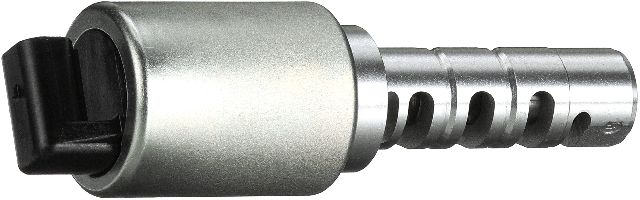
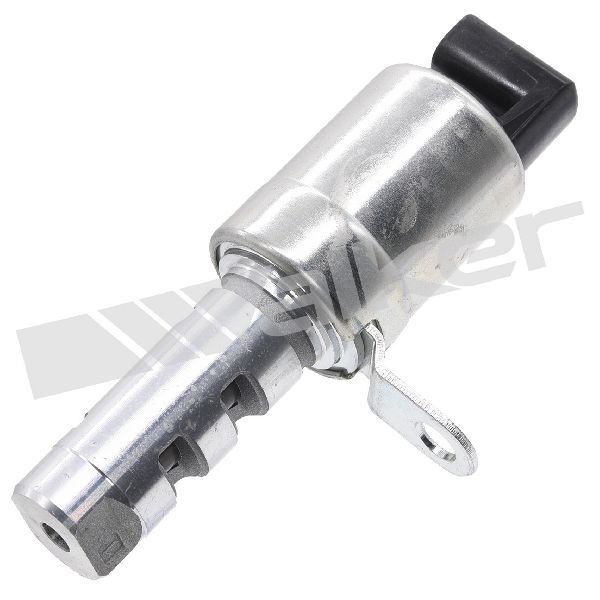
- The most common faulty part is the intake Oil Control Valve (VVT solenoid), which is relatively inexpensive and accessible for DIY replacement.
- This engine uses a unique electric motor for the intake VVT system, which is different from the hydraulic exhaust side. This motor or the phaser it controls can fail.
- A TSB exists for some 2015 models pointing directly to a faulty VVT actuator as the cause.
- Do not immediately assume the timing chain is the problem, as this is a less common failure point on these engines compared to VVT control components.
What's Unique About the 2013-2016 Mazda CX-5
The SkyActiv-G engine in this generation of CX-5 has a unique VVT setup. While the exhaust camshaft timing is adjusted using traditional hydraulic oil pressure, the intake camshaft—which code P0011 refers to—is controlled by an electric motor integrated with the VVT actuator. This is an electro-hydraulic system. While oil-related issues are still a primary cause, diagnosis must also consider electrical failures of the VVT motor, its relay, and its wiring, not just hydraulic blockages or a simple solenoid failure.
Symptoms You May Notice
- Check Engine Light is on
- Rough engine idle
- Engine stalling or hesitation, especially when coming to a stop
- Poor acceleration and loss of power
- Decreased fuel economy
- Rattling noise from the engine on startup
- Replacing the camshaft position sensor. The P0011 code indicates a performance problem with the timing adjustment, not a failure of the sensor's circuit itself. A faulty sensor would typically set a different code (e.g., P0340), though it can be a rare cause.
Most Likely Causes
- Low, Dirty, or Incorrect Viscosity Engine Oil 🔴 High Probability The entire VVT system, including the electric actuator and hydraulic components, relies on clean oil with the correct pressure and flow characteristics. The SkyActiv-G engine specifies full-synthetic 0W-20 oil; using a thicker oil or extending oil change intervals can clog small passages and cause timing issues.
How to confirm: Check the engine oil dipstick. The oil should be at the full mark, light amber in color, and not gritty. If the level is low or the oil is dark and overdue for a change, this is the most likely cause.
Typical fix: Perform an engine oil and filter change using the manufacturer-specified full-synthetic 0W-20 oil. Clear the code and drive to see if it returns.
Est. part cost: $40-$80 - Failed Intake Oil Control Valve (VVT Solenoid) 🔴 High Probability This solenoid is an electromechanical part that constantly actuates to control oil flow to the VVT system. It can fail by getting stuck, clogged with debris from dirty oil, or by electrical failure.
How to confirm: After confirming the oil is good, inspect the OCV's wiring. You can test the solenoid's resistance with a multimeter (typically 6.9-7.9 ohms). A more definitive test is to remove it and apply 12V to its terminals; a healthy solenoid will produce a distinct click as the plunger moves.
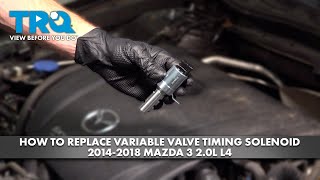
Typical fix: Replace the intake oil control valve. It is located on the front of the valve cover and is relatively easy to access. 🎬 See this walkthrough on replacing the VVT solenoid
Est. part cost: $40-$150 - Failed Electric VVT Actuator Motor or Phaser 🟡 Medium Probability A Mazda Technical Service Bulletin (01-007/15) was issued for some 2015 CX-5s (and 2014-15 Mazda3/6) due to VVT actuator spring shaft fatigue, causing this exact code. Furthermore, manufacturer TSB Bulletin #SA-033-25 notes that a malfunction in the intake EVVT motor can prevent it from accurately regulating the intake camshaft timing, triggering P0011.
How to confirm: This is a more advanced diagnosis. A scan tool monitoring desired vs. actual intake cam angle (PIDs VT_IN_DES and VT_IN_ACT) will show the actual angle is not matching the commanded angle. If the OCV and oil are good, and the vehicle falls within the TSB's VIN range (JM3KE**439966 to 461449), the actuator is the prime suspect.
Typical fix: Replace the electric variable valve timing actuator (motor) and/or the camshaft phaser assembly. This is a more involved repair that requires removing the valve cover.
Est. part cost: $250-$700 - Stretched Timing Chain ⚪ Low Probability While timing chain failure is not considered a common issue on well-maintained SkyActiv engines, it can occur on higher-mileage vehicles (>120,000 miles), especially if oil changes have been neglected. A stretched chain alters the base timing beyond what the VVT system can correct.
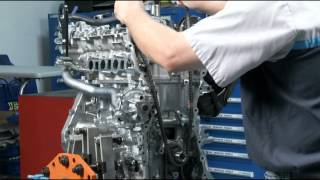
How to confirm: A distinct rattling noise from the front of the engine, especially on a cold start, is a strong indicator. Confirmation requires a physical inspection by removing the valve or timing cover to measure chain slack, which is a labor-intensive job. 🎬 Watch: SkyActiv timing chain replacement and alignment guide
Typical fix: Replace the timing chain, tensioner, and all guides as a kit.
Est. part cost: $150-$400
Rare But Worth Checking
- Wiring or Relay Issue for VVT Motor:
Diagnosis Steps
- Verify engine oil level and condition. If low, dirty, or the wrong viscosity, perform an oil and filter change with full-synthetic 0W-20 oil, clear the code, and re-test. This is the most common and cheapest fix.
- Use an OBD-II scanner with live data capability. Monitor the PIDs for desired intake cam angle (VT_IN_DES) and actual intake cam angle (VT_IN_ACT). Confirm if the actual angle is stuck or not responding correctly to commands from the ECM.
- Inspect the wiring harness and connector for the intake oil control valve (VVT solenoid) for any damage, corrosion, or loose connections.
- Test the oil control valve. Remove it and check its resistance with a multimeter (should be 6.9-7.9 Ohms). Carefully apply 12V power to see if the internal plunger clicks audibly.
- If the vehicle is a 2015 model, check its VIN against TSB 01-007/15 (JM3KE**439966 to 461449). If it falls in this range, the electric VVT actuator is highly suspect.
- Inspect the electric VVT motor relay and associated fuses (EVVT 20A) in the fuse box.
- If a rattling noise is present, especially at startup, suspect a stretched timing chain and prepare for a more in-depth inspection of timing components.
Parts You'll Likely Need
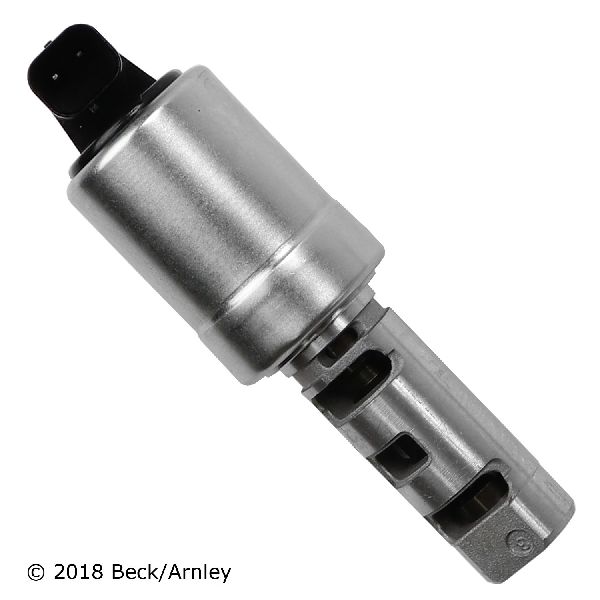
- Intake Oil Control Valve (VVT Solenoid)
(OEM #PE01-14-420A)— This is the most common part to fail after ruling out oil issues. It directly controls the VVT system's operation and is a frequent point of failure due to clogging or electrical malfunction.
Trusted brands: Mazda OE, Denso, Hitachi, Dorman
OEM price range: $120-$200
Aftermarket price range: $40-$100 - Intake VVT Actuator (Electric Motor)
(OEM #PE01-12-4Z0C (replaces PE01-12-4Z0A, PE01-12-4Z0B))— This electric motor can fail internally, especially on certain 2015 models as noted in TSB 01-007/15. If the OCV is working correctly, this is the next likely cause, particularly if the VIN matches the TSB.
Trusted brands: Mazda OE
OEM price range: $600-$800
Aftermarket price range: $250-$450
Related Codes That Often Appear With This One
- P0012 — This code is for 'Intake Camshaft Position Timing - Over-Retarded'. It points to the same components as P0011 (OCV, actuator) but indicates the opposite problem (stuck retarded instead of advanced). TSB 01-007/15 covers both codes.
- P0016 — This is a Crankshaft/Camshaft Correlation code. If the timing chain has stretched or jumped a tooth, the fundamental relationship between the crank and cam is wrong, which can trigger both a correlation code and an over-advanced code.
Technical Service Bulletins (TSBs) & Recalls
- 01-007/15: Multi-Model - Check Engine Light On With DTCs P0011:00 and/or P0012:00.
- 01-015/15: A separate TSB for cold weather starts causing DTC P011A, sometimes misdiagnosed.
- TSB #01-007-15-3025A: Specifically addresses vehicles experiencing a check engine light with P0011:00 (Electric Variable Valve Timing Control System - Over-Advanced) stored in memory.
- TSB Bulletin #SA-033-25: Notes that P0011 and P0012 may be caused by a malfunction in the intake EVVT motor that prevents accurate camshaft regulation.
Platform-Specific Known Issues
- Mazda TSB 01-007/15 was issued for some 2015 CX-5 vehicles (produced Jan 31, 2014 - Mar 21, 2014, VINs JM3KE**439966 to 461449) that may set P0011 or P0012 due to VVT actuator spring shaft fatigue, requiring replacement of the electric VVT actuator.
Mechanic-Grade Diagnostic Values
- Intake Oil Control Valve (OCV) Resistance — expected: 6.9 - 7.9 Ohms at 20°C (68°F). Failure: A reading outside this range, or infinite resistance (open circuit), indicates a failed solenoid coil.
- Scan Tool Live Data: Desired vs. Actual Intake Cam Angle (PIDs VT_IN_DES vs. VT_IN_ACT) — expected: Actual angle should closely track the desired angle.. Failure: The PCM flags a fault if the difference between the target and actual angle is greater than 15 degrees for approximately 10 seconds.
- Electric VVT Relay Voltage — expected: B+ (Battery Voltage) at terminal C of the relay connector (harness-side).. Failure: No voltage indicates a problem with the fuse (EVVT 20A) or the wiring from the battery.
- Electric VVT Actuator Mechanical Check — expected: The eccentric shaft on the actuator should rotate smoothly by hand. It takes 15.8 turns to go from maximum retard to maximum advance.. Failure: If the shaft does not rotate smoothly, the actuator is mechanically faulty and must be replaced.
Hidden / Shadow Codes Worth Checking
- P0011:00: The ':00' is a Failure Type Code (FTC) used by Mazda. For P0011, it specifies the failure as 'Electric variable valve timing control system - (Over-advanced)'. (see via This suffix is typically visible on the Mazda Modular Diagnostic System (M-MDS) and some advanced professional scanners. Basic OBD-II readers may only show 'P0011'.)
Scan Tool Commands That Help
- Mazda M-MDS (or equivalent professional scanner): PID Monitoring: VT_IN_DES and VT_IN_ACT — This is the primary diagnostic step after checking oil. It allows you to see in real-time if the actual camshaft angle is failing to match the angle commanded by the PCM, confirming a system performance issue.
- Mazda M-MDS (or equivalent professional scanner): VVT Actuator Test / Conformity Check — The official Mazda diagnostic procedure requires warming the engine and then cycling the RPM from idle to 3,000 five times while monitoring the cam angle PIDs to confirm the fault. Some tools may offer a specific bidirectional test to command the solenoid to activate, which should cause a noticeable change or hesitation in engine idle.
Wiring & Ground Locations
- G09 — Behind the instrument cluster.. A 2014 CX-5 wiring diagram shows the Electric Variable Valve Timing Relay is grounded at this location. A poor ground here could cause intermittent or failed relay operation, preventing the VVT motor from functioning correctly.
- G03 — Left front of the engine compartment.. This is a major engine compartment ground point. Corrosion or a loose connection here can cause a variety of sensor and actuator issues, including those related to the VVT system.
- EVVT 20A Fuse — In the main fuse block in the engine compartment.. This fuse supplies power to the electric VVT motor relay. If this fuse is blown, the entire electric portion of the intake VVT system will be inoperative.
"I Checked Everything" — The Actual Cause
- For the 2015 CX-5 model year in particular, a common scenario is for the P0011 code to persist even after a fresh oil change and replacement of a known-good Oil Control Valve (OCV). The root cause in this case is often the failure of the electric VVT actuator itself due to spring shaft fatigue, a specific issue addressed by Mazda TSB 01-007/15. Mechanics who stop at the OCV will fail to fix the car if the VIN falls within the affected range.
When the Usual Fixes Don't Work
- While dirty oil and a failed Oil Control Valve (OCV) are the most common fixes for P0011, a significant piece of counter-evidence exists for 2015 models. TSB 01-007/15 documents that a faulty electric VVT actuator is a known issue for a specific range of VINs. Owners and technicians may replace the oil and OCV, find the code returns, and assume a more complex issue like a stretched timing chain. However, for these specific vehicles, the true cause is the actuator itself, a known failure point that the common fixes will not address.
OEM Part Supersession History
PE01-12-4Z0A, PE01-12-4Z0B→PE01-12-4Z0C— The original electric VVT actuators were prone to internal failure, specifically 'spring shaft fatigue,' as documented in TSB 01-007/15. The updated part number represents a revised design to correct this flaw.
Model Year Variations Within This Range
- 2015 (specifically produced Jan 31, 2014 - Mar 21, 2014): A specific batch of 2015 CX-5s (VINs JM3KE**439966 to 461449) are subject to TSB 01-007/15 for a faulty electric VVT actuator. For these vehicles, the actuator is a high-probability cause for P0011, not just a medium or low one.
- 2016: The 2016 model year received a facelift. While the core SkyActiv-G engines are the same, the 2.0L engine was restricted to the base Sport trim with a manual transmission, with the 2.5L becoming standard on all automatic models. This is a trim/option variation rather than a change in how P0011 would be diagnosed.
Diagnostic Flowchart
Other Known Issues on This Vehicle
Issues unrelated to this code that are worth knowing about as an owner of this generation:
- Infotainment System Glitches (Ghost Touch, Reboots) 🟠 Medium — Common, especially on 2016 models. Can occur at various mileages. Issues include screen freezing, random reboots, and 'ghost touches' where the system acts on its own. (Ref: No recall for CX-5, but a similar issue was recalled for 2014-2016 Mazda3 models.)
- Shifter Park Detection Switch Failure 🟡 Low — A common nuisance where the vehicle does not detect it is in Park, preventing it from shutting down completely and potentially draining the battery.
- Prematurely Cracked Windshields 🟡 Low — Numerous owner reports of windshields cracking easily from small impacts or even temperature changes, suggesting they are weaker than average.
- LED Daytime Running Light (DRL) Failure 🟠 Medium — Specific to 2016 models, the DRLs can flicker or fail completely, requiring replacement of the entire headlight assembly. (Ref: Safety Recall 4320A was issued to address this.)
- Direct-Injection Carbon Buildup 🟡 Low — A potential long-term issue inherent to all GDI engines, though Mazda's SkyActiv design seems less prone than others. Can cause rough idle or misfires at very high mileage (>100k miles), especially with frequent short trips.
Used vs. New Parts: Buying Guide for This Vehicle
When a used part is the smart pick: For this specific P0011 repair, using used parts is highly discouraged. The Oil Control Valve (OCV) is relatively inexpensive new, and the Electric VVT Actuator is a known failure point due to fatigue, making a used part a significant gamble.
Donor-vehicle mileage cap: roughly under 40000 miles for the part to have meaningful remaining life.
What to inspect on the donor part:
- If considering a used VVT actuator, only source it from a low-mileage, post-2015 vehicle to minimize the chance of getting a part with the original design flaw.
- Before pulling any engine part, check the donor vehicle's oil condition. Remove the oil filler cap and look for signs of sludge or milky residue (coolant contamination). If sludge is present, do not use any lubricated engine components from that vehicle.
OEM-only on this vehicle (don't cheap out):
- Electric VVT Actuator (PE01-12-4Z0C). Due to the specific nature of the failure (spring shaft fatigue) addressed by a TSB and part supersession, using an aftermarket or salvaged original-design part is extremely risky and likely to fail again.
Aftermarket brands forum-validated for this vehicle:
- For the Oil Control Valve (OCV/VVT Solenoid), brands like Denso and Hitachi are often the original equipment manufacturers and are considered reliable alternatives to the Mazda-branded part.
Brands owners have reported issues with on this vehicle:
- No specific brands were consistently reported as problematic in search data, but caution is advised with un-reviewed, low-cost online marketplace options for critical engine components.
Real Owner Stories
Aggregated from forums and TSBs cited above. Mileages and costs reflect what owners reported in those sources.
2015 Mazda CX-5 SkyActiv-G
Symptoms: Check engine light on with code P0011 or P0012 due to VVT actuator spring shaft fatigue.
What fixed it: Replacement of the electric VVT actuator (motor) as specified in TSB 01-007/15.
Source hint: TSB 01-007/15
2014 Mazda CX-5
Symptoms: Diagnostic journey involving a related engine code and complex engine electronics.
What fixed it: Community-led diagnostic suggestions for P011A, highlighting the complexity of SkyActiv electronics.
Source hint: Mazdas247 Forum: P011A code discussion
2010 Mazda 3
Symptoms: Bad vibration at a stop and P0011 code.
What fixed it: Checking or replacing the oil control valve (OCV).
Source hint: Reddit /r/MechanicAdvice: 2010 Mazda 3 P0011 Code
2013-2016 Mazda CX-5 SkyActiv-G — ~125000 miles
Symptoms: Distinct rattling noise from the front of the engine, especially on a cold start.
What fixed it: Replacement of the timing chain, tensioner, and all guides.
Source hint: Article Context: Stretched Timing Chain section
Related OBD-II Codes
Frequently Asked Questions
Does Mazda TSB 01-007/15 apply to my 2015 CX-5?
What type of oil should I use in my SkyActiv-G engine to prevent P0011?
Can a faulty shifter cause engine codes on the CX-5?
Is there a recall for the LED lights on my 2016 CX-5?
How can I test if my Intake Oil Control Valve is failing?
What are the specific PIDs I should monitor with a scan tool for this issue?
Helpful Videos
We Have This Part in Stock


The information in this article is provided for general reference and educational purposes only. Vehicle specifications, procedures, and part compatibility can vary by production date, trim level, and region. Always consult your vehicle's factory service manual and verify part numbers before purchasing or performing repairs. Safety-critical components such as airbags, seat belts, and braking systems should be installed by a qualified professional.
- Mazda CX-5:
- 🎬 Helpful Videos
- 🛍️ Shop This Part
- What's Unique About the 2013-2016 Mazda CX-5
- Symptoms You May Notice
- Most Likely Causes
- Rare But Worth Checking
- Diagnosis Steps
- Parts You'll Likely Need
- Related Codes That Often Appear With This One
- Technical Service Bulletins (TSBs) & Recalls
- Platform-Specific Known Issues
- Mechanic-Grade Diagnostic Values
- Hidden / Shadow Codes Worth Checking
- Scan Tool Commands That Help
- Wiring & Ground Locations
- "I Checked Everything" — The Actual Cause
- When the Usual Fixes Don't Work
- OEM Part Supersession History
- Model Year Variations Within This Range
- Diagnostic Flowchart
- Other Known Issues on This Vehicle
- Used vs. New Parts: Buying Guide for This Vehicle
- Real Owner Stories
- 2015 Mazda CX-5 SkyActiv-G
- 2014 Mazda CX-5
- 2010 Mazda 3
- 2013-2016 Mazda CX-5 SkyActiv-G — ~125000 miles
- Related OBD-II Codes
- Frequently Asked Questions
- 🎟️ Get 5% Off