

P0011 on 2015-2021 Lincoln Navigator: Causes and Fixes for Camshaft Over-Advanced
On a 2015-2021 Lincoln Navigator with the 3.5L EcoBoost engine, code P0011 is most often caused by low/dirty engine oil or a failing Variable Camshaft Timing (VCT) solenoid on Bank 1 (passenger side). Start by checking your oil; if that's fine, replacing the VCT solenoid is the next likely fix. In some cases, especially on 2018-2020 models, this code can be a precursor to cam phaser failure, often identified by a cold start rattle.
- P0011 on a 2015-2021 Navigator points to the intake camshaft on the passenger side being too far advanced.
- The first and most important diagnostic step is to check your engine oil. Low or dirty oil is a very common cause.
- If the oil is fine, a sticking VCT solenoid is the next most likely culprit. This is a known issue on the 3.5L EcoBoost engine.
- Replacing the Bank 1 intake VCT solenoid is a common, relatively inexpensive, and DIY-friendly repair that often solves the problem.
- If the issue persists, it could be a faulty sensor or a more serious mechanical problem with the cam phasers or timing chain, which requires professional diagnosis.
What's Unique About the 2015-2021 Lincoln NAVIGATOR

The 3.5L EcoBoost engine in the Lincoln Navigator, particularly the second generation (2018+), is known for its advanced but sensitive VCT system. This system is highly dependent on clean engine oil of the correct viscosity and proper oil pressure to function correctly. Ford and Lincoln have issued multiple Technical Service Bulletins (TSBs), noting that small debris in the engine oil can clog the fine mesh screens on the VCT solenoids, causing them to stick and trigger timing-related codes like P0011. [SSM 48423, SSM 47170] Furthermore, the 2018-2020 models are subject to Customer Satisfaction Programs (21B10, 21N03) for cam phaser rattle, a mechanical issue that is directly linked to the VCT system and can also cause this code.
Diagnostic Flowchart
Tap your situation to follow the diagnostic path that matches what you're seeing on this vehicle.
Generation note: This range covers two Navigator generations: the third (2015-2017) with the first-gen 3.5L EcoBoost and the fourth (2018-2021) with the second-gen 3.5L EcoBoost. While both share VCT solenoid issues, the cam phaser rattle problem is more pronounced and specifically addressed by Ford programs for the 2018-2020 models. Part numbers for VCT solenoids and other components may differ, so always verify parts for your specific model year. The second-gen engine also added port injection, which helps reduce carbon buildup on intake valves, a problem more common on the first-gen engines.
Symptoms You May Notice
- Check Engine Light is on
- Rough or erratic idle
- Engine stalling, especially at low speeds or when coming to a stop
- Reduced engine power and poor acceleration, sometimes described as hesitation
- Decreased fuel economy
- Rattling or knocking noise from the engine, particularly a 2-5 second metallic rattle on a cold start
- Replacing the camshaft position sensor before checking the oil or testing the VCT solenoid. 🎬 Watch: Why you shouldn't replace parts before testing A sensor is less likely to fail than a solenoid is to stick due to oil issues.
- Immediately assuming a major timing chain or phaser job is needed without first ruling out the much cheaper and more common oil and VCT solenoid issues.
Most Likely Causes

- Low or Dirty Engine Oil 🔴 High Probability The VCT system is hydraulic and extremely sensitive to oil condition. Using the wrong viscosity (e.g., 10W-30 instead of the specified 5W-30) or extending oil change intervals can cause sludge and debris to clog the small passages in the VCT solenoids.
How to confirm: Check the oil level on the dipstick and inspect its color and consistency. If the level is low or the oil is dark, gritty, or thicker than expected, it needs to be changed. Verify the oil viscosity used during the last service.
Typical fix: Change the engine oil and filter using the manufacturer-recommended grade (typically 5W-30 synthetic blend or full synthetic) and a high-quality filter like Motorcraft.
Est. part cost: $50-$100 - Failing Variable Camshaft Timing (VCT) Solenoid 🔴 High Probability Multiple TSBs (SSM 48423, SSM 47170) state that debris can cause the VCT solenoid to stick. This is a well-documented failure point. The internal spool valve can get stuck, or the fine mesh screens can become clogged, preventing proper oil flow.
How to confirm: After an oil change, if the code persists, swap the Bank 1 (passenger side) intake VCT solenoid with the Bank 2 (driver side) intake VCT solenoid. Clear the codes and drive. If the code changes to P0021 (Bank 2), the solenoid is confirmed faulty.
Typical fix: Replace the Bank 1 intake VCT solenoid. It's often recommended to replace them in pairs (intake and exhaust on the same bank) or all four at once, as they are exposed to the same conditions.
Est. part cost: $40-$120 per solenoid - Faulty Camshaft Position Sensor 🟡 Medium Probability The sensor reports the camshaft's position to the PCM. If it sends incorrect data, the PCM may set a false code. While less common than a solenoid failure, it's a possible electronic fault.
How to confirm: Swap the Bank 1 intake cam sensor with the Bank 2 intake cam sensor. If the code moves to P0021, the sensor is the problem. This is a similar diagnostic step to testing the solenoid.
Typical fix: Replace the faulty camshaft position sensor.
Est. part cost: $30-$80 - Worn Camshaft Phasers or Stretched Timing Chain ⚪ Low Probability The 3.5L EcoBoost, especially the 2018-2020 models, is known for cam phaser failure. The internal locking pin wears out, causing a loud rattle on cold starts as the phaser flops around until oil pressure builds. This mechanical failure can prevent the cam from reaching its target angle, triggering P0011. Ford issued Customer Satisfaction Programs 21N03 and 21B10 to address this.
How to confirm: This is a complex diagnosis. The primary symptom is a distinct 2-5 second rattle on cold starts. A mechanic can confirm by removing the valve and timing covers for physical inspection. This is best left to a professional.
Typical fix: First, dealers perform a PCM reprogram under program 21B10. If the noise persists, program 21N03 extends the warranty for replacing all four cam phasers, along with the timing chain, tensioners, and guides. This is a major and expensive repair if not covered by warranty.
Est. part cost: $800-$1500+
Diagnosis Steps

- Check the engine oil level and condition. Verify that the correct viscosity oil was used. If low, dirty, or incorrect, perform an oil and filter change with the manufacturer-specified products, clear the code, and see if it returns.
- Use an OBD-II scanner to check for any other pending or active trouble codes. Codes like P0016 or P0021 can provide additional diagnostic clues.
- If the code returns, listen carefully for a 2-5 second rattle on a cold start. If present, research Ford Customer Satisfaction Programs 21B10 and 21N03 for your vehicle's VIN, as it may indicate a cam phaser issue.
- If no rattle is present, test the VCT solenoid. The easiest method is to swap the Bank 1 (passenger side) intake solenoid with the Bank 2 (driver side) intake solenoid.
- Clear the codes and drive the vehicle. If the code returns as P0021, the solenoid you moved is faulty and needs replacement.
- If the P0011 code returns, the issue is not the solenoid. The next step is to test the camshaft position sensor by swapping the Bank 1 and Bank 2 sensors.
- Clear the codes and drive again. If the code changes to P0021, the sensor is the culprit.
- If the code P0011 persists after testing the oil, solenoid, and sensor, the problem may be more severe, such as a wiring issue, a clogged oil passage in the cylinder head, or a mechanical failure in the cam phaser or timing chain. At this point, professional diagnosis is recommended.
Parts You'll Likely Need
- Engine Variable Valve Timing (VVT) Solenoid
(OEM #HL3Z-6M280-A)— This is the most common point of failure for code P0011 on this engine, often due to sticking from oil debris, as noted in TSBs like SSM 48423. This part number is for the second-generation 3.5L EcoBoost (2017+).
Trusted brands: Motorcraft, Dorman, NTK
OEM price range: $40-$70
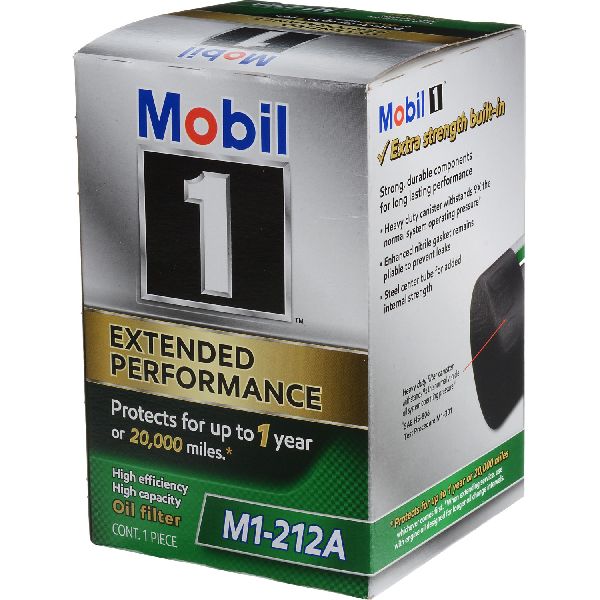
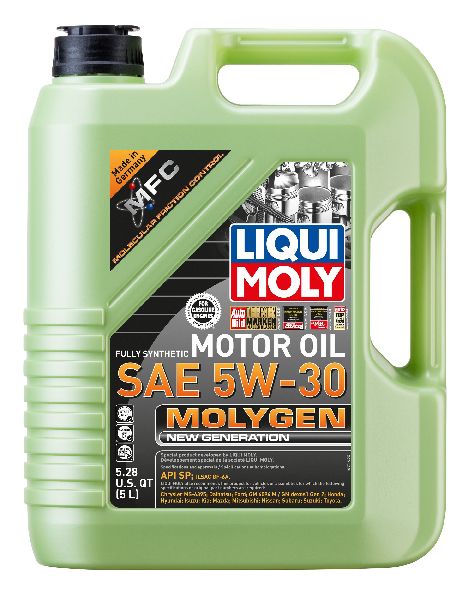
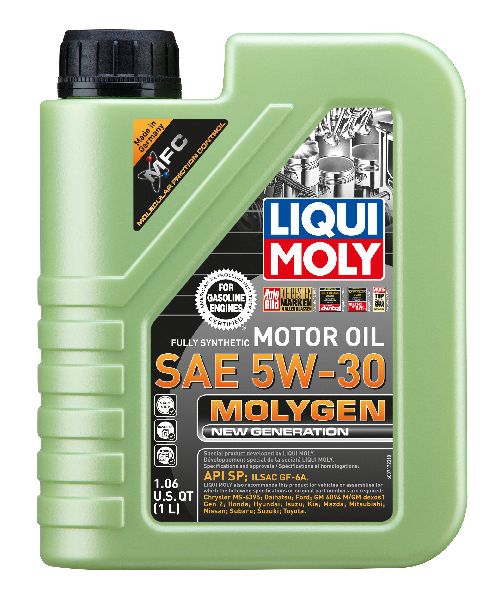
Aftermarket price range: $30-$60 - Engine Oil and Filter — Incorrect or degraded oil is a primary cause of VCT system faults. Using the correct Motorcraft oil (typically 5W-30 Synthetic Blend) and a Motorcraft filter is the first step in troubleshooting.
Trusted brands: Motorcraft
OEM price range: $60-$100
Aftermarket price range: $50-$80 - Camshaft Position Sensor — Though less common than a solenoid failure, a faulty sensor can send incorrect data and trigger this code. It's a common misdiagnosis but can be the root cause.
Trusted brands: Motorcraft, Bosch, Standard Motor Products
OEM price range: $40-$70
Aftermarket price range: $25-$50
Related Codes That Often Appear With This One
- P0021 — This is the same 'over-advanced' code but for Bank 2 (driver's side). Seeing both P0011 and P0021 together often points to a systemic issue like low/dirty oil affecting both banks.
- P0016 — This code indicates a correlation issue between the crankshaft and the Bank 1 intake camshaft. It can appear alongside P0011 if the timing has physically jumped or if a phaser has failed mechanically.
- P0012, P0014, P0015 — These are other VCT-related codes for Bank 1 (over-retarded, exhaust cam issues). They are often grouped in TSBs with P0011 as they relate to the same system and share common causes like faulty solenoids or oil problems. [SSM 54366]
Technical Service Bulletins (TSBs) & Recalls
- SSM 54366: Notes P0011 among a list of VCT-related DTCs.
- SSM 48423: States that P0011 may be due to small debris causing the VCT solenoid to stick.
- TSB-16-0093: Mentions P0011 on low-mileage 3.5L GTDI engines.
- TSB160038: Also addresses P0011 on low-mileage engines.
- 21B10: Customer Satisfaction Program to reprogram the PCM for cam phaser rattle on 2018-2020 Navigators.
- 21N03: Customer Satisfaction Program providing extended warranty coverage for cam phaser replacement on 2018-2020 Navigators if the 21B10 reprogram did not solve the noise.
Platform-Specific Known Issues

- Sticking VCT Solenoids: TSBs #SSM 54366, #SSM 48423, and #SSM 47170 all mention that P0011 (and related codes) may be caused by small debris causing the VCT solenoid to stick.
Mechanic-Grade Diagnostic Values
- VCT Solenoid Resistance — expected: Generally 5.0 to 25.0 Ohms, but this is not a definitive test.. Failure: A reading outside the specified range (e.g., 0 Ohms for a short or infinite for an open circuit). However, a solenoid can have correct resistance but be mechanically stuck internally.
- Camshaft Position Sensor (3-wire Hall Effect) Voltage Test — expected: With ignition on, engine off, and sensor connected: Backprobe Pin 1 (Power): ~5V DC. Backprobe Pin 2 (Signal): ~5V DC. Backprobe Pin 3 (Ground): Test by placing red probe on positive battery terminal and black probe on ground wire; should read ~12.6V.. Failure: Any reading significantly different from the expected values points to a wiring or PCM issue. To test the sensor itself, remove it, reconnect it, and pass a piece of metal over its tip; the signal voltage should drop from ~5V to near 0V.
- Scan Tool Live Data - VCT PIDs — expected: Monitor PIDs such as VCTADV (commanded advance), VCTADVERR (error between commanded and actual), and RCAM (actual cam angle). At idle, commanded advance should be near 0 degrees. Error should be less than a few degrees.. Failure: A large, persistent value for VCTADVERR indicates the phaser is not responding to commands. If VCTADV is commanded to change but RCAM does not follow, it points to a mechanical or hydraulic issue.
- Mode 6 Data - VVT Monitor — expected: For CAN-bus systems, look for Monitor ID (MID) $35, Test ID (TID) $81 for VVT Monitor Bank 1. The value should be below the maximum limit specified by the scanner.. Failure: A test result value that exceeds the maximum limit indicates the camshaft timing deviation was too large during the last monitor cycle, confirming a performance issue.
Hidden / Shadow Codes Worth Checking
- Mode 6, TID $81: This is not a DTC but a specific test result within the OBD-II Mode 6 data. It represents the VVT (Variable Valve Timing) monitor for Bank 1. It measures the camshaft's timing error during a test cycle. (see via A professional scan tool or an app like FORScan that can access and interpret Ford's Mode 6 data. A failing value here can precede a full-blown P0011 code.)
Scan Tool Commands That Help
- Ford IDS, FORScan, or equivalent professional scanner: On-Demand Self-Test (KOER/KOEO) — Running this test will command the PCM to cycle all actuators, including the VCT solenoids. A technician can connect a NOID light to the VCT solenoid connector during this test; if the light flashes, it confirms the PCM driver and wiring to the solenoid are functional.
- Ford IDS, FORScan, or equivalent professional scanner: VCT Solenoid Duty Cycle Command — This bidirectional control allows a technician to manually command a specific duty cycle (e.g., 0% to 50%) to the VCT solenoid while monitoring the actual camshaft angle (RCAM PID). This directly tests the solenoid's and phaser's mechanical response to a command. A lack of change in cam angle indicates a stuck solenoid or phaser.
Wiring & Ground Locations
- G105 — Located on the right side of the engine compartment, on the frame rail.. A poor engine or chassis ground can cause erratic voltage signals for various engine sensors and actuators, including the VCT solenoids and camshaft position sensors. Ensuring this ground is clean and tight is a fundamental step in diagnosing any electronic fault.
- VCT Solenoid Connector — On top of the valve cover for Bank 1 (passenger side), under the plastic engine cover.. This is the primary connection point for testing. It has two pins: one for 12V power (key on) and one for the ground-side control signal (a PWM signal) from the PCM. A NOID light or multimeter is used here to verify the command signal from the PCM.
- Engine Compartment Power Distribution Box — Located in the engine compartment.. This box contains the fuses and relays that provide power to the PCM and, by extension, the VCT system. A fault here could cut power to the entire system.
Real Owner Repair Stories
- Reddit user on r/f150 (2018 F-150 3.5L EcoBoost, 70k miles) — Intermittent hesitation, rough idle, and P0011 code.
❌ Tried (didn't work) The owner noted the cam phasers had already been replaced under warranty at 40k miles, so that was not the suspected cause.
✅ What actually fixed it Replaced both VCT solenoids (intake and exhaust) on Bank 1 (passenger side). The owner also opted to replace the valve cover (Part HL3Z6582F) since the seals can become brittle. The fix resolved the hesitation and the code did not return. - Ford F150 Forum user (2019 F-150 3.5L EcoBoost) — Long crank/no start, drop in acceleration, codes P0011 and P0016 appeared after other fuel-related codes.
❌ Tried (didn't work) Replaced high-pressure fuel pump (HPFP)., Replaced in-tank fuel pump., Replaced Fuel Pump Driver Module (FPDM).
✅ What actually fixed it Another user reported a similar issue was caused by a technician reinstalling the high-pressure fuel pump with the cam lobe in the wrong position. This damaged the new pump and caused timing codes. The fix was to correctly install a new HPFP and ensure the cam lobe was not damaged.
"I Checked Everything" — The Actual Cause
- While not a smoke test issue, a common diagnostic trap is relying solely on a resistance test for the VCT solenoid. A solenoid can test perfectly with a multimeter (showing 5-25 Ohms) but be mechanically stuck internally due to sludge or debris. The definitive test is swapping the solenoid with the one from the other bank or using a scan tool to command it and watch for a response.
OEM Part Supersession History
Unknown, multiple revisions exist.→HL3Z-6M280-A (for Bank 1 Intake/Exhaust & Bank 2 Intake/Exhaust on 2nd Gen 3.5L)— Ford has released updated VCT solenoids to improve durability and resistance to sticking.
Heads up: Always verify the part number with your vehicle's VIN. While older part numbers like AT4Z-6M280-A may exist, it is critical to use the latest specified revision to ensure compatibility and longevity.
Model Year Variations Within This Range
- 2018-2020: These model years are specifically covered by Ford's Customer Satisfaction Programs 21B10 and 21N03 for cam phaser rattle. Program 21B10 involves a PCM reprogram to help prevent the rattle. If the rattle persists after the reprogram, program 21N03 provides an extended, prorated warranty for the replacement of the cam phasers. Eligibility for 21N03 is dependent on having 21B10 performed by a specific date.
- 2015-2017 vs 2018-2021: The 2015-2017 models use the first-generation 3.5L EcoBoost, while 2018-2021 models use the second-generation engine. While they share the same fundamental VCT design and P0011 causes, part numbers for solenoids, phasers, and timing components are different. The cam phaser failure is significantly more pronounced and covered by specific Ford programs on the second-gen engine.
Helpful Videos
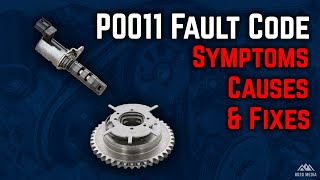
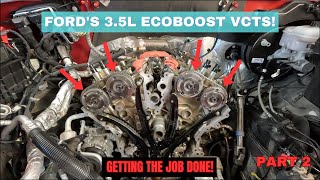
Used OEM Parts in Stock


New Aftermarket Parts Available


The information in this article is provided for general reference and educational purposes only. Vehicle specifications, procedures, and part compatibility can vary by production date, trim level, and region. Always consult your vehicle's factory service manual and verify part numbers before purchasing or performing repairs. Safety-critical components such as airbags, seat belts, and braking systems should be installed by a qualified professional.
- Lincoln NAVIGATOR:
- 🎬 Helpful Videos
- 🛍️ Shop This Part
- What's Unique About the 2015-2021 Lincoln NAVIGATOR
- Diagnostic Flowchart
- Symptoms You May Notice
- Most Likely Causes
- Diagnosis Steps
- Parts You'll Likely Need
- Related Codes That Often Appear With This One
- Technical Service Bulletins (TSBs) & Recalls
- Platform-Specific Known Issues
- Mechanic-Grade Diagnostic Values
- Hidden / Shadow Codes Worth Checking
- Scan Tool Commands That Help
- Wiring & Ground Locations
- Real Owner Repair Stories
- "I Checked Everything" — The Actual Cause
- OEM Part Supersession History
- Model Year Variations Within This Range
- 🎟️ Get 5% Off