

P0011 on 2007-2014 GMC Sierra 1500: 'A' Camshaft Position Timing Over-Advanced Causes and Fixes
On a 2007-2014 GMC Sierra 1500, code P0011 is most often caused by low/dirty engine oil or a faulty Camshaft Position Actuator Solenoid on the passenger side (Bank 1). The first step is always to check the oil. If the oil is clean and full, replacing the solenoid (ACDelco Part #12679099) is a common, affordable DIY fix, with the part costing between $30 and $85. If the problem persists, low oil pressure from a hardened oil pickup tube O-ring is a likely underlying cause.
- Before buying any parts, check your engine oil. Low, old, or dirty oil is the #1 cause of P0011 on this truck.
- The most common part to fail is the Bank 1 (passenger side) Camshaft Position Actuator Solenoid. It's relatively inexpensive and accessible for DIY replacement.
- This code can cause serious drivability issues, including stalling and preventing the engine from starting, so it should be addressed promptly. [Bulletin #PIP5130K]
- If a new solenoid and fresh oil don't fix the code, you should have the engine's oil pressure professionally tested before proceeding to more complex repairs like timing chain inspection. [Bulletin #PIP-5258]
What's Unique About the 2007-2014 Gmc SIERRA 1500

The V8 engines in this generation of GMC Sierra (GMT900 platform) are known for having issues with the VVT system that are highly sensitive to oil quality and pressure. As documented in multiple GM Technical Service Bulletins (TSBs), a sticking Camshaft Position Actuator Solenoid is a very common failure point leading to P0011. [Bulletin #PIP5130K] Furthermore, a significant number of owners on forums have discovered that a persistent P0011 code, which doesn't resolve after replacing the solenoid, is often caused by low oil pressure from a hardened and cracked oil pump pickup tube O-ring in the oil pan—a well-documented weak point on these trucks.
Diagnostic Flowchart
Tap your situation to follow the diagnostic path that matches what you're seeing on this vehicle.
Generation note: This range covers the GMT900 platform (2007-2013) and the first year of the K2XX platform (2014). The engines (4.8L, 5.3L, 6.0L, 6.2L V8s) and the VVT system design are similar, making the causes and fixes for P0011 largely consistent across this year range. The 2014 models introduced the new EcoTec3 engine family (L83, L86), which also experienced this issue, as noted in GM TechLink information regarding sticking solenoids causing a P0011.
Symptoms You May Notice
- Check Engine Light is on
- Engine running rough or poor idle
- Engine stalling, especially at low speeds or after highway driving
- Reduced engine power and acceleration
- Engine rattling, ticking, or knocking noise
- Hard starting or crank-no-start condition [Bulletin #PIP5130K]
- Decreased fuel economy
- Harsh or violent transmission shifting
- Replacing the camshaft position *sensor* when the problem is the camshaft position actuator *solenoid*.
- Replacing the timing chain when the issue is simply low oil pressure from a bad pickup tube O-ring or dirty oil.
- Replacing the VVT solenoid multiple times without checking for underlying oil pressure issues.
- Replacing the ECM, which is almost never the cause for this specific code.
Most Likely Causes
- Low or Dirty Engine Oil 🔴 High Probability The VVT system is entirely dependent on clean oil of the correct viscosity (typically 5W-30) to function. Sludge or low levels will prevent the system from operating the cam phasers correctly. Using the wrong oil viscosity can also trigger this code.
How to confirm: Check the engine oil dipstick for level and inspect the oil's color and consistency. If it's low, black, sludgy, or past its change interval, this is the likely cause.
Typical fix: Perform an oil and filter change using a full synthetic oil meeting the manufacturer's specification (e.g., Dexos1 5W-30) and a quality filter.
Est. part cost: $40-$90 - Faulty Camshaft Position Actuator Solenoid (VVT Solenoid) 🔴 High Probability This is a well-documented issue in GM TSBs like #PIP5130K. The solenoid's internal screens can become clogged with debris from engine oil, or the internal spool valve can stick, causing it to fail. [9, 19, Bulletin #PIP5130K]
How to confirm: Use a scan tool to command the solenoid on and off while monitoring engine data. A common and effective DIY method is to swap the Bank 1 (passenger side) solenoid with the Bank 2 (driver side) solenoid. Clear the codes and drive. If the trouble code changes to P0021 (for Bank 2), the solenoid is confirmed to be faulty.
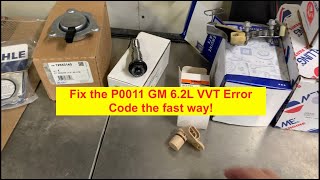
Typical fix: Replace the Bank 1 intake camshaft position actuator solenoid, located on the front of the passenger-side valve cover. 🎬 Watch: Step-by-step guide to replacing the VVT solenoid.
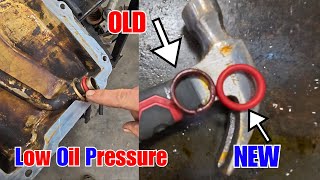
Est. part cost: $30-$85 - Low Engine Oil Pressure (due to Pickup Tube O-Ring) 🟡 Medium Probability The O-ring on the oil pump pickup tube inside the oil pan becomes hard and brittle with age, allowing air to be sucked into the oiling system. This aerates the oil, causing low pressure that starves the VVT system and triggers P0011, often without an oil pressure warning light. TSB #PIP-5258 also recommends checking oil pressure if other diagnostics fail.
How to confirm: Connect a mechanical oil pressure gauge. A healthy engine should have >20-22 PSI at hot idle. If the pressure is low or fluctuates, the O-ring is the likely culprit. Many forum users confirm this was the fix after a new solenoid did not solve the problem.
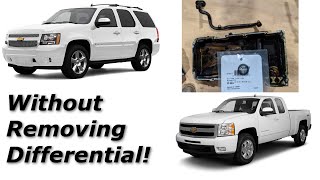
Typical fix: Replace the oil pickup tube O-ring (GM Part #12557752). This is a labor-intensive repair that requires dropping the oil pan (and the front differential on 4WD models 🎬 See how to replace the O-ring without removing the differential.).
Est. part cost: $150-$600 (Parts are cheap, labor is high) - Stretched Timing Chain or Worn Phaser ⚪ Low Probability On higher-mileage engines (typically over 150,000 miles), the timing chain can stretch, or the camshaft phaser (actuator) can fail mechanically, causing timing to be out of sync with the ECM's commands.
How to confirm: This is an advanced diagnosis. After removing the valve cover, check for excessive slack in the timing chain. A definitive check requires removing the engine front cover to inspect all timing components and alignment marks.
Typical fix: Replace the timing chain, tensioners, guides, and camshaft phaser.
Est. part cost: $400-$1200
Rare But Worth Checking
- Faulty Camshaft Position Sensor: While less common than the solenoid, the sensor that reads the camshaft's position can fail, sending incorrect data to the ECM. This is often misdiagnosed; P0011 is a performance code, usually pointing to the solenoid or oil issues, not the sensor itself.
- Wiring Issues: A damaged wire or loose, corroded connection at the VVT solenoid or camshaft position sensor can mimic a failed component. Always inspect the harness for damage, especially where it might rub against other engine parts.
- Worn Camshaft Bearings: As mentioned in TSB #PIP5258A, excessive wear on the #2 cam bearing can cause a localized loss of oil pressure to the VVT actuator, leading to P0011. This is an engine-out repair and is very rare. [20, Bulletin #PIP5258A]
Diagnosis Steps
- Check the engine oil level and condition. Top off or change the oil and filter with the correct 5W-30 synthetic oil if necessary. Clear the code and see if it returns. This is the most critical first step.
- Scan for any other related trouble codes. Address codes like P0010 (circuit fault) or P0521 (oil pressure) first.
- Inspect the wiring and connector for the Bank 1 intake camshaft position actuator solenoid (passenger side) for any visible damage, corrosion, or loose connections.
- Perform a solenoid swap. Exchange the Bank 1 (passenger) and Bank 2 (driver) intake solenoids. They are identical. Clear codes and drive. If the code changes to P0021 (Bank 2), the solenoid you moved is bad and needs replacement. This is a highly reliable DIY diagnostic test. 🎬 Watch: A quick walkthrough for fixing the P0011 code.
- If the code does not change after the swap, test the engine's oil pressure with a mechanical gauge. At hot idle, pressure should be above 20-22 PSI. If it's low or fluctuating, suspect a failing oil pump pickup tube O-ring.
- If oil pressure is good and the solenoid is functional, the next step is to inspect the timing chain for stretch and the camshaft phaser for damage. This is an advanced, labor-intensive step for high-mileage vehicles.
Parts You'll Likely Need
- Camshaft Position Actuator Solenoid (VVT Solenoid)
(OEM #12679099)— This is the most frequent point of failure for the P0011 code on this vehicle, as confirmed by multiple TSBs and countless owner experiences. It controls the oil flow that adjusts camshaft timing and is prone to sticking from sludge or wear. [1, Bulletin #PIP5130K]
Trusted brands: ACDelco (OEM), Dorman (e.g., 917-216, 916-886XD), NTK
OEM price range: $45-$85
Aftermarket price range: $30-$60 - Engine Oil and Filter — The VVT system is highly sensitive to oil quality and level. A frequent cause of P0011 is simply low or degraded oil.
- Oil Pump Pickup Tube O-Ring
(OEM #12557752)— This O-ring is a known failure point on high-mileage GM V8s. It hardens and cracks, allowing air into the oil system, which causes low oil pressure and starves the VVT system, leading to code P0011 after other more common causes are ruled out.
Trusted brands: ACDelco (OEM), Fel-Pro
OEM price range: $5-$15
Aftermarket price range: $3-$10
Related Codes That Often Appear With This One
- P0010 — This code points to an electrical circuit fault for the Bank 1 VVT solenoid. If you see P0010 with P0011, it strongly suggests a wiring problem or an electrically failed solenoid.
- P0300 — A random/multiple cylinder misfire code can be triggered because the erratic camshaft timing from P0011 causes combustion instability and a rough idle.
- P0521 — This code for 'Engine Oil Pressure Sensor/Switch Performance' often appears with P0011. Seeing them together is a strong indicator that the root cause is low oil pressure, very likely from a failing oil pump pickup tube O-ring.
- P00C6 — This code is mentioned alongside P0011 in TSBs #PIP5130K and #PIE0359A as a code that can set during a crank-no-start condition caused by the same VVT issue. [Bulletin #PIP5130K, Bulletin #PIE0359A]
Technical Service Bulletins (TSBs) & Recalls
- PIP5130K
- PIP5258A
- PIE0359A
- PIP5130D
- PIP5130C
- PIP-5258
Platform-Specific Known Issues

- TSB #PIP5130K: Crank-No-Start Condition: This TSB specifically calls out the Camshaft Position Actuator Solenoid sticking or binding, leading to a crank-no-start condition with code P0011. It advises technicians to use a scan tool (GDS) to cycle the solenoid to try and un-stick it as a diagnostic step.
- TSB #PIP5258A: Undiagnosed P0011 - Check Oil Pressure: This bulletin advises technicians to check engine oil pressure with a mechanical gauge if standard diagnostics for P0011 do not reveal the root cause. This points to GM's awareness that underlying oil pressure issues are a potential cause for this code.
- Common Forum Complaint: Oil Pickup Tube O-Ring Failure: A widespread issue discussed on forums like TahoeYukonForum.com is the failure of the oil pickup tube O-ring. Owners report chasing P0011 by replacing solenoids and sensors, only to find the true cause was low oil pressure at hot idle due to this hardened O-ring. The fix is labor-intensive but permanent.
Mechanic-Grade Diagnostic Values

- Camshaft Position Actuator Solenoid Resistance — expected: 8 to 13 Ohms. Failure: A reading of infinite resistance (open circuit) or a wildly fluctuating reading indicates a failed solenoid.
- Engine Oil Pressure (Mechanical Gauge) — expected: Greater than 20-22 PSI at hot idle; 30-40 PSI while cruising.. Failure: Pressure at hot idle below 20 PSI, or pressure that fluctuates significantly, points to issues like a bad pickup tube O-ring or worn bearings.
- VVT Solenoid Connector Voltage — expected: Should show battery voltage (approx. 12V) with key on, engine off. The ECM controls the ground side with a pulse-width modulated (PWM) signal when the engine is running.. Failure: No voltage at the connector suggests a wiring or fuse issue upstream from the solenoid.
- Stuck Solenoid Spool Valve (2014+ EcoTec3) — expected: The center spool should be flush with or slightly protruding from the solenoid body.. Failure: A measurement of less than 6mm from the spool to the outer body indicates the valve is stuck retarded, a direct cause for P0011 on these engines.
Scan Tool Commands That Help
- GDS2 (Global Diagnostic System 2): Camshaft Position Actuator Solenoid Valve Test — This bidirectional control allows a technician to command the solenoid on and off to check for an audible click and mechanical response. It can help confirm if the solenoid is sticking or has an internal electrical failure, as mentioned in TSB #PIP5130K. [1, Bulletin #PIP5130K]
Wiring & Ground Locations
- G103 — On the front of the passenger side (Bank 1) cylinder head.. This is a primary engine ground. A poor connection here can cause erratic behavior in various engine sensors and actuators on Bank 1, potentially contributing to timing control issues.
- G102 — On the rear of the driver's side (Bank 2) cylinder head.. This ground is for the ignition coils. While on the opposite bank, electrical noise or poor grounding can sometimes affect the overall engine management system and sensor readings.
- X115 Connector — The electrical connector for the Bank 1 (passenger side) intake camshaft position actuator solenoid.. This is the direct connection point for the solenoid. Testing for voltage and ground here is a key diagnostic step. The terminals must be clean and the connection secure.
Real Owner Repair Stories
- Reddit user in r/Silverado (2011 Silverado 5.3L with 130,000 miles) — Low oil pressure at hot idle (dropping to 18-20 PSI) after the engine warms up. Pressure was normal when cold (40 PSI).
❌ Tried (didn't work) Replaced the oil pressure sending unit., Replaced the small filter screen underneath the sending unit., Changed the oil filter.
✅ What actually fixed it The community confirmed that 18-20 PSI at hot idle is considered normal for this generation of engine, but the user's underlying issue was likely a failing oil pickup tube O-ring, which is a very common cause for gradually dropping oil pressure as the oil thins out when warm. - GM-Trucks.com forum user (2009 GMC Sierra 6.0L) — P0016 (Cam/Crank Correlation), which is closely related to P0011, and a no-start condition when hot. Oil pressure was 22 PSI at hot idle.
❌ Tried (didn't work) Replaced camshaft phaser., Replaced timing chain and tensioner., Replaced VVT solenoid.
✅ What actually fixed it The user's issue was not definitively resolved in the thread, but another expert user pointed out that worn cam bearings were the ultimate cause in a nearly identical scenario, leading to oil pressure loss at the phaser that isn't always obvious with a standard oil pressure test. This highlights an edge-case scenario where common part replacements do not solve the problem.
When the Usual Fixes Don't Work
- In some high-mileage cases, owners have replaced the VVT solenoid (the most common fix) and even performed an oil change, only for the P0011 code to return. In many of these instances, the actual root cause was found to be low oil pressure due to a hardened and cracked oil pump pickup tube O-ring in the oil pan. This repair, while more labor-intensive, permanently resolved the code by restoring proper oil pressure to the VVT system when the solenoid itself was not the ultimate point of failure.
OEM Part Supersession History
12578517, 12628347, 12646783, 12655420→12679099— GM regularly updates service parts to integrate new materials and technologies for improved durability and performance. Earlier versions may have been more prone to sticking or screen failure.
Model Year Variations Within This Range
- 2014: The 2014 model year introduced the new EcoTec3 engine family (5.3L L83, 6.2L L86). For these engines, GM issued a TechLink bulletin specifically for P0011 and crank/no-start conditions. A key diagnostic step is to measure the depth of the solenoid's center spool valve; a measurement of less than 6mm indicates the valve is stuck and must be replaced.
Helpful Videos
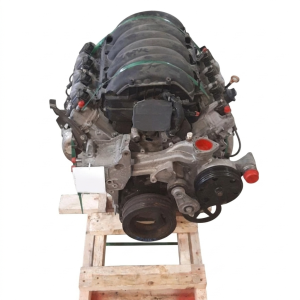
Used OEM Parts in Stock
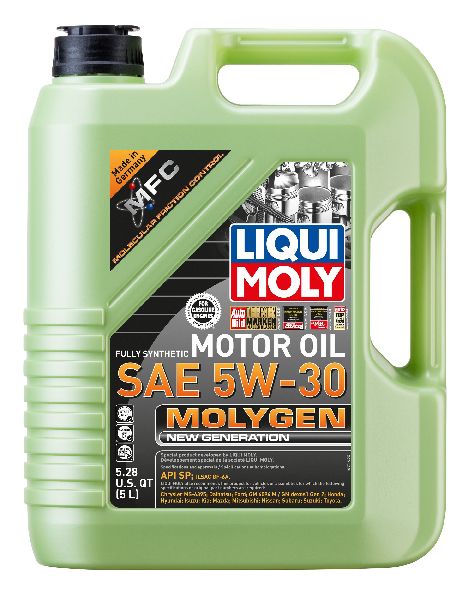
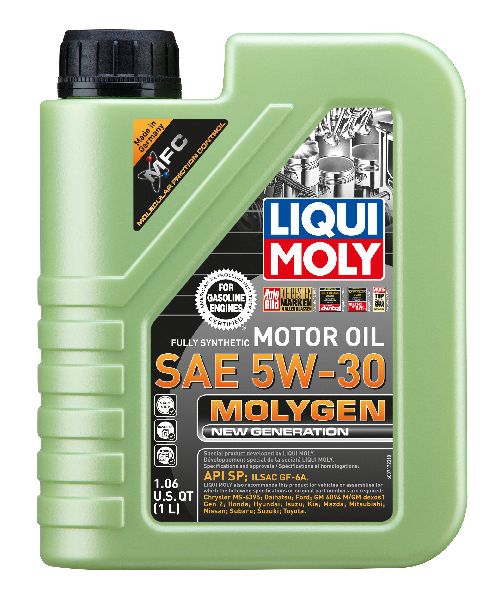
New Aftermarket Parts Available


The information in this article is provided for general reference and educational purposes only. Vehicle specifications, procedures, and part compatibility can vary by production date, trim level, and region. Always consult your vehicle's factory service manual and verify part numbers before purchasing or performing repairs. Safety-critical components such as airbags, seat belts, and braking systems should be installed by a qualified professional.
- Gmc SIERRA 1500:
- 🎬 Helpful Videos
- 🛍️ Shop This Part
- What's Unique About the 2007-2014 Gmc SIERRA 1500
- Diagnostic Flowchart
- Symptoms You May Notice
- Most Likely Causes
- Rare But Worth Checking
- Diagnosis Steps
- Parts You'll Likely Need
- Related Codes That Often Appear With This One
- Technical Service Bulletins (TSBs) & Recalls
- Platform-Specific Known Issues
- Mechanic-Grade Diagnostic Values
- Scan Tool Commands That Help
- Wiring & Ground Locations
- Real Owner Repair Stories
- When the Usual Fixes Don't Work
- OEM Part Supersession History
- Model Year Variations Within This Range
- 🎟️ Get 5% Off