

P0011 on 2007-2016 GMC Acadia 3.6L: Causes and Fixes for Over-Advanced Cam Timing
On the 3.6L V6 Acadia, code P0011 is most often caused by low or dirty engine oil, or a faulty Bank 1 (rear) intake camshaft actuator solenoid. An oil change is the first step. If that doesn't work, a new solenoid is about $30-$60. However, this code is also a primary symptom of a stretched timing chain, a very common and serious issue on this engine covered by GM's Special Coverage program #11340C.
- Always check your engine oil level and condition first. A simple oil change with 5W-30 full synthetic oil is the easiest and cheapest potential fix.
- The most common failed part is the Bank 1 (rear) intake camshaft actuator solenoid. It's affordable and a common DIY repair.
- Do NOT ignore this code on a 3.6L Acadia. It is a very strong indicator of a potential stretched timing chain, a known and serious issue with this engine.
- If you hear a rattling or scraping noise from the engine on startup, it is highly likely the timing chains are failing and you should seek professional diagnosis immediately.
- Do not confuse the camshaft position *sensor* with the actuator *solenoid*. The solenoid is the part that fails and causes this code.
What's Unique About the 2007-2016 GMC Acadia
The first-generation Acadia's 3.6L V6 engine (both the early LY7 and the later direct-injected LLT) is notorious for premature timing chain stretching. This was so common that GM issued special coverage programs (like #11340C) extending the warranty for this specific failure. While on many cars P0011 is a simple fix like an oil change or a cheap solenoid, on this specific platform it must be taken very seriously as a potential early warning of timing chain failure, which is an expensive, labor-intensive repair. Ignoring this code, especially if accompanied by a rattling noise on startup, can lead to catastrophic engine damage as it is an interference engine.
Generation note: The 2007-2016 model years cover the first generation of the GMC Acadia. It uses two versions of the 3.6L V6: the LY7 (2007-2008) and the direct-injected LLT (2009-2016). Both are known for timing chain issues that can cause P0011, but the problem is particularly well-documented on the LLT engine due to its higher complexity and sensitivity to oil quality. There are specific differences in VVT solenoid resistance between these engines.
Symptoms You May Notice
- Check Engine Light is on
- Rough or unstable idle
- Engine hesitates or stalls, especially when slowing down or at stops
- Reduced engine power and poor acceleration
- Worse than normal fuel economy
- Rattling or scraping noise from the engine, especially on a cold start (strong indicator of a timing chain issue 🎬 See how to diagnose a misfire and timing chain rattle.)
- Engine may run rough or vibrate excessively
- Replacing the camshaft position *sensor* instead of the camshaft position actuator *solenoid*. The sensor's job is to report the camshaft's position, while the solenoid is the part that actively controls it via oil pressure. The solenoid is the much more common failure point for this code.
Most Likely Causes
- Low or Dirty Engine Oil 🔴 High Probability The VVT system is hydraulic and extremely sensitive to oil pressure and cleanliness. The 3.6L engine's timing components are known to wear quickly if oil changes are extended, leading to sludge that clogs the small passages in the solenoids and phasers.
How to confirm: Check the oil level on the dipstick. Examine the oil's color and consistency. If it is low, dark, thick, or past a 5,000-mile change interval, this is the first and most important step. Low oil level is a very common trigger for this code.
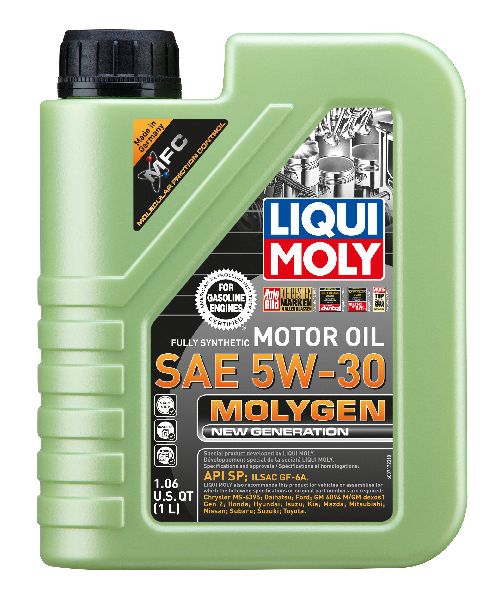
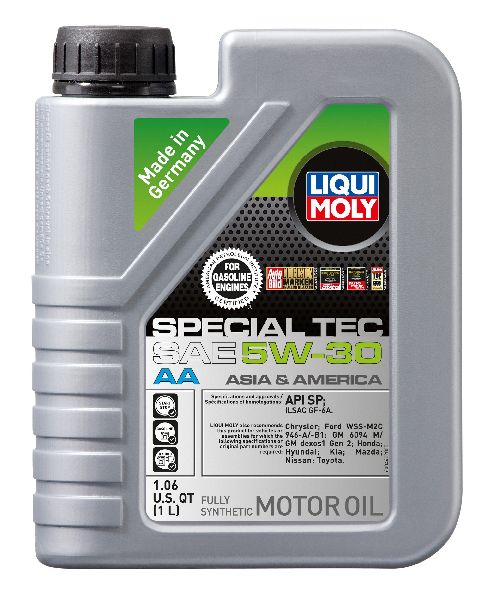
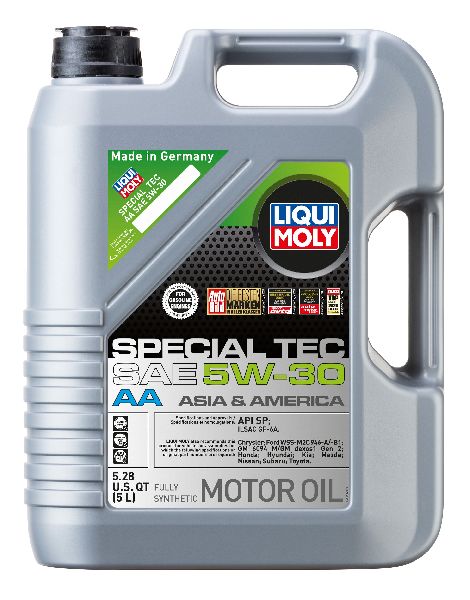
Typical fix: Perform an engine oil and filter change using a quality 5W-30 full synthetic oil that meets GM's Dexos specification. Clear the codes and see if P0011 returns.
Est. part cost: $50-$100 - Faulty Bank 1 Intake Camshaft Actuator Solenoid 🔴 High Probability These solenoids control oil flow to the cam phasers and are a common failure point, often failing around 80,000-100,000 miles. They can become clogged with debris from infrequent oil changes or fail electrically, sometimes leaking oil into the electrical connector itself.
How to confirm: Swap the Bank 1 (rear bank) intake solenoid with the Bank 1 exhaust solenoid. They are identical parts. Clear the codes. If the trouble code changes to P0014 (Exhaust Cam Position Bank 1), the original intake solenoid is confirmed to be faulty. The rear solenoids are difficult to access and may require removing brackets or jacking up the engine slightly for clearance.
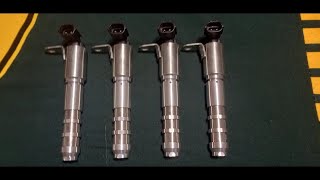
Typical fix: Replace the Bank 1 intake camshaft actuator solenoid. It is located on the rear cylinder head (closest to the firewall). Given the difficult access, some owners choose to replace both the intake and exhaust solenoids 🎬 Watch: Step-by-step VVT solenoid replacement for 2010-2016 models. on the bank at the same time.
Est. part cost: $30-$80 - Stretched Timing Chains 🟡 Medium Probability This is a widely documented factory issue with the 3.6L V6 engine family due to the original chain design and sensitivity to oil life. A stretched chain causes the camshafts to go out of sync with the crankshaft, directly triggering timing correlation codes.
How to confirm: This is difficult to confirm without significant disassembly. A key symptom is a startup rattle. The presence of other codes like P0008, P0017, or P0021 alongside P0011 is a very strong indicator of a timing chain problem. A mechanic can use a scan tool to compare commanded vs. actual camshaft angles; a significant and persistent variance points to a stretched chain.
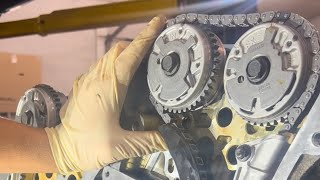
Typical fix: This is a major repair that involves replacing all three timing chains, the tensioners, and the guides. It is labor-intensive (10-15 hours) and expensive. 🎬 Watch: Pro tips and tricks for replacing the timing chain. GM issued Special Coverage Adjustment #11340C for this issue, but it has since expired for most vehicles.
Est. part cost: $400-$700 for a full kit
Rare But Worth Checking
- Failed Camshaft Phaser (Actuator): The mechanical gear that the solenoid controls can fail internally and get stuck. This is less common than a solenoid failure but can happen, especially on high-mileage engines or if metal debris from a failing chain circulates in the oil. Manufacturer Bulletin #PIP5921B notes that a rattle or ticking noise can occur from the intake cam actuator or from cover plate screws backing out and contacting the actuator.
- Excessive Camshaft End Play: GM Technical Service Bulletin 08-06-01-011K points to this as a possible cause if other diagnostics fail. It requires measuring the physical fore/aft movement of the camshaft and is a job for a professional.
- Wiring Harness Issues: The wiring to the Bank 1 solenoid can become damaged from heat and vibration, or the connector can become contaminated with oil if the solenoid seal fails. A visual inspection of the harness leading to the rear cylinder head is warranted.
Diagnosis Steps
- Check the engine oil level and condition. If low, top it off. If old or dirty, perform an oil and filter change using 5W-30 full synthetic oil meeting the Dexos spec.
- Use an OBD-II scanner to clear the code and see if it returns after a test drive.
- Scan for other stored or pending codes. Note if codes like P0008, P0017, or P0021 are present, as this points towards a timing chain issue.
- Inspect the electrical connector and wiring for the Bank 1 (rear) intake camshaft actuator solenoid for any damage or oil contamination.
- To confirm a bad solenoid, swap the intake and exhaust solenoids on Bank 1. They are typically identical parts. Clear the codes and drive the vehicle. If the code returns as P0014, the solenoid you moved is faulty and needs to be replaced.
- If the code remains P0011 after the swap, the problem is not the solenoid. The next step is to test the wiring to the solenoid.
- If the code remains P0011 after the swap, or if you hear a rattling noise from the engine, the issue is likely more severe (stretched timing chains or failed phaser). At this point, professional diagnosis is strongly recommended.
Parts You'll Likely Need
- Intake Camshaft Position Actuator Solenoid (Bank 1)
(OEM #12655420 (Superseded by 12679099))— This is the most common component to fail, either by getting clogged with debris or failing electrically, directly causing the P0011 code.
Trusted brands: ACDelco (GM Genuine), Delphi, Dorman
OEM price range: $40-$60
Aftermarket price range: $25-$45 - Engine Oil and Filter — Low or contaminated oil is a primary cause of VVT system faults. An oil change is the cheapest and easiest first step in fixing the problem.
Trusted brands: Mobil 1 Full Synthetic, Pennzoil Platinum Full Synthetic, ACDelco Dexos1 Full Synthetic
OEM price range: $50-$100
Aftermarket price range: $40-$80 - Timing Chain Kit
(OEM #N/A (Kits vary))— Required if diagnosis confirms the timing chains have stretched, a very common major issue on this specific engine leading to P0011 and other timing codes.
Trusted brands: Cloyes (e.g., Kit 9-0753S), Melling, ACDelco
OEM price range: $500-$700
Aftermarket price range: $300-$500
Related Codes That Often Appear With This One
- P0021 — This is the same over-advanced timing code but for Bank 2 (front bank). If P0011 and P0021 appear together, it strongly suggests a systemic problem affecting the entire engine, like low/dirty oil or stretched timing chains.
- P0008 / P0017 — These codes indicate a loss of correlation between the crankshaft and the Bank 1 camshaft(s). Their presence with P0011 is an almost certain sign that the timing chains have stretched and is the classic combination of codes for this engine's most notorious problem.
- P0014 — This is the over-advanced code for the exhaust camshaft on the same bank (Bank 1). It can appear if both solenoids on Bank 1 fail, or it will appear after swapping a bad intake solenoid to the exhaust position during diagnosis, confirming the solenoid is the faulty part.
Technical Service Bulletins (TSBs) & Recalls
- GM Special Coverage #11340C / TSB 10-06-01-008: Premature Timing Chain Wear - This document extended warranty coverage for stretched timing chains on 3.6L engines.
- GM Special Coverage #14329B: Power Steering Intermittent Loss of Assist - Extended coverage for power steering pump and gear replacement due to loss of assist at low speeds.
- TSB 08-06-01-011K: Check Engine Light with various DTCs including P0011 - Points to checking camshaft end play as a potential cause if other diagnostics fail.
- TSB 14404B: Special Coverage for 3-5-Reverse Clutch Plate Failure - Addressed the broken wave plate issue in the 6T70/6T75 transmission.
- TSB 09-07-30-012F: Diagnosis and Repair for 3-5-R Clutch Wave Plate Breakage - Provides detailed repair instructions for the transmission wave plate issue.
- Bulletin #PIP5921B: Preliminary information regarding DTC P0011 and P0016, noting the potential for a rattle or ticking noise from the Intake Cam Actuator or cover plate screws backing out.
Platform-Specific Known Issues
- Premature Timing Chain Wear: The 3.6L V6 in this vehicle is widely known for its timing chains stretching well before 100,000 miles
Mechanic-Grade Diagnostic Values
- VVT Solenoid Resistance (LLT Engine, 2009-2016) — expected: 7 to 13 Ohms. Failure: A reading outside this range, or an open/short circuit, indicates a failed solenoid.
- VVT Solenoid Resistance (LY7 Engine, 2007-2008) — expected: 4.6 to 7.5 Ohms. Failure: A reading outside this range. Using a solenoid with the wrong resistance for the engine type can cause issues.
- Scan Tool 'Camshaft Position Variance' PID — expected: Near 0 degrees at idle and steady RPM.. Failure: A consistent variance greater than 4-5 degrees at idle strongly suggests a mechanical timing issue like a stretched chain.
- Scan Tool 'Desired vs. Actual' Camshaft Angle — expected: Actual angle should closely track the desired angle with less than 2 degrees of variance.. Failure: The ECM may set P0011 if the variance exceeds 5 degrees for more than 2.5 seconds.
- Camshaft End Play (as per TSB 08-06-01-011K) — expected: Less than 0.40 mm (0.016 in). Failure: End play equal to or greater than 0.40 mm (0.016 in) requires mechanical correction (installing a thrust washer).
Scan Tool Commands That Help
- GM GDS2 / Tech2: Camshaft Position Actuator Control — This is a bidirectional control that allows a technician to command the VVT solenoid on and off while monitoring the engine's response. It is used to verify if the solenoid is physically working and if the oil passages are clear enough for it to affect timing, helping to isolate a bad solenoid from a clogged passage or faulty phaser.
Wiring & Ground Locations
- G110 — Right front of the engine, mounted to the cylinder head.. A poor ground at the cylinder head could potentially affect sensors and actuators located there, including the VVT solenoids.
- G113 — Left side of the engine, at the engine-to-transmission stud.. This is a major engine ground point. Corrosion or looseness here can cause a wide range of difficult-to-diagnose electrical issues.
- G101 — Left side of engine compartment, on the left frame rail.. This ground point serves the Engine Control Module (ECM). A faulty ground here can cause erratic ECM behavior and incorrect diagnostic codes.
Real Owner Repair Stories
- O'Reilly Auto Parts Reviewer 'Casperman' (2011 Buick Enclave 3.6L VVT (platform mate to Acadia)) — Implied timing chain failure.
✅ What actually fixed it Replaced timing components with a Cloyes kit. The user noted that the new tensioner bolts should be used as the factory ones were found to be over-torqued and cracked, providing a valuable installation tip. - NHTSA ODI #10558806: An owner of a platform-mate vehicle reported a loud sound as if there were no oil in the engine, occurring with both cold and hot engines; the problem was resolved after the P0011 error solenoid was replaced.
- NHTSA ODI #11143310: An owner experienced multiple stalls after coming to a full stop at lights, with diagnostics detecting code P0011 for the intake camshaft position sensor/solenoid.
Documented NHTSA Reports
- NHTSA ODI #11698105: A report on a similar GM model noted a "reduced engine power" message and codes P0011, P0014, P0016, and P0017, where investigation found a rocker had fallen off and excessive debris was present on the head.
- NHTSA ODI #11700684: An owner reported metal shavings in the oil and misfires alongside a P0011 code, matching a known GM lifter and camshaft failure pattern.
OEM Part Supersession History
12655420→12679099, 12646783, 12628347, 12578517— GM often updates parts to improve durability, material quality, or resolve a known failure pattern. The multiple supersessions indicate an evolving design.
Heads up: The key incompatibility is between engine types. The solenoid for an LY7 (2007-2008) has a different resistance spec (4.6-7.5 Ohms) than one for an LLT (2009-2016) (7-13 Ohms). While they may be physically identical, using the wrong electronic spec part can cause performance issues or codes.
Model Year Variations Within This Range
- 2007-2008 vs 2009-2016: The early LY7 engine (2007-2008) and the later direct-injected LLT engine (2009-2016) use VVT solenoids with different internal resistance specifications. LY7 solenoids are specified at 4.6-7.5 Ohms, while LLT solenoids are 7-13 Ohms. It is critical to use the correct part for the specific engine, not just the vehicle model year.
- 2007-2009: These early model years were the primary focus of GM's Special Coverage Adjustment #11340C for premature timing chain wear. While the issue can affect all years in this range, it was most pronounced on the early LY7 and LLT engines.
Diagnostic Flowchart
Other Known Issues on This Vehicle
Issues unrelated to this code that are worth knowing about as an owner of this generation:
- Transmission 3-5-R Wave Plate Failure 🔴 High — Very common on 2007-2009 models, typically before 100,000 miles. Results in loss of 3rd, 5th, and Reverse gears, often requiring a full transmission rebuild. (Ref: TSB 14404B / Special Coverage Adjustment)
- Power Steering Leaks & Intermittent Failure 🟠 Medium — Widespread across all first-generation models. Leaks from the power steering rack and lines are common, and the pump can fail, causing a sudden loss of steering assist at low speeds. (Ref: TSB 14329B / Special Coverage Adjustment)
- Leaking Water Pump 🟠 Medium — Common failure item, often leaking coolant from the weep hole. If not addressed, it can lead to overheating. The location makes replacement moderately labor-intensive.
- Stretched Timing Chains 🔴 High — Extremely common across the entire 2007-2016 range, especially on the LLT engine. Often manifests as P0011, P0008, and other timing codes, typically between 70,000 and 120,000 miles. (Ref: Special Coverage #11340C)
- Excessive Oil Consumption 🟠 Medium — Many owners report the 3.6L engine consumes oil, requiring frequent top-offs between oil changes. This can exacerbate timing chain and VVT issues if the oil level becomes low.
Used vs. New Parts: Buying Guide for This Vehicle
When a used part is the smart pick: For this specific repair, sourcing used parts is not recommended. The primary failure components are either inexpensive wear items (solenoids) or critical wear items (timing chains), neither of which are suitable for used purchase.
What to inspect on the donor part:
- Not applicable. Do not use salvaged VVT solenoids or timing components for this repair.
OEM-only on this vehicle (don't cheap out):
- While not strictly OEM-only, using a GM Genuine (ACDelco) VVT solenoid is highly recommended due to the low cost and electronic sensitivity of the part.
Aftermarket brands forum-validated for this vehicle:
- For Timing Chain Kits: Cloyes (e.g., 9-0753S) and Melling are frequently cited as high-quality aftermarket alternatives to OEM.
- For VVT Solenoids: Delphi and Dorman are commonly available and generally accepted aftermarket brands.
Brands owners have reported issues with on this vehicle:
- Avoid unbranded, no-name solenoids and timing kits from online marketplaces. The labor involved, especially for the timing chains, is too high to risk using parts of unknown quality.
Real Owner Stories
Aggregated from forums and TSBs cited above. Mileages and costs reflect what owners reported in those sources.
2012 GMC Acadia Denali 3.6L V6
Symptoms: Check engine light on for VVT solenoid issues.
What fixed it: Discussion regarding VVT solenoid replacement and location on the LLT engine.
Source hint: Reddit r/gmc thread titled '2012 gmc acadia denali awd vvt solenoid'
2007-2010 Saturn Outlook 3.6L LY7 V6 — ~100000 miles
Symptoms: Timing chain stretch and power steering issues; vehicle was part of the early Lambda platform group experiencing these failures.
What fixed it: Repairs covered under Special Coverage Adjustment #11340C for timing chains.
Source hint: GM Special Coverage #11340C / TSB 10-06-01-008
2009 GMC Acadia 3.6L V6 — ~95000 miles
Symptoms: Loss of 3rd, 5th, and Reverse gears.
What fixed it: Repair of the 3-5-Reverse Clutch Plate (wave plate) failure in the 6T70/6T75 transmission.
Source hint: TSB 14404B: Special Coverage for 3-5-Reverse Clutch Plate Failure
Related OBD-II Codes
Frequently Asked Questions
Is there a special warranty extension for the timing chain issues on my GMC Acadia?
My Acadia is throwing P0011 and P0008 at the same time. What does this mean?
Can I just swap the solenoids to see if the part is bad?
What type of oil should I use to prevent P0011 in my 3.6L LLT engine?
Is the power steering failure related to the P0011 code?
I hear a rattling noise when I start my Acadia in the morning. Is this related to P0011?
Helpful Videos
Used OEM Parts in Stock
New Aftermarket Parts Available



The information in this article is provided for general reference and educational purposes only. Vehicle specifications, procedures, and part compatibility can vary by production date, trim level, and region. Always consult your vehicle's factory service manual and verify part numbers before purchasing or performing repairs. Safety-critical components such as airbags, seat belts, and braking systems should be installed by a qualified professional.
- GMC Acadia:
- 🎬 Helpful Videos
- 🛍️ Shop This Part
- What's Unique About the 2007-2016 GMC Acadia
- Symptoms You May Notice
- Most Likely Causes
- Rare But Worth Checking
- Diagnosis Steps
- Parts You'll Likely Need
- Related Codes That Often Appear With This One
- Technical Service Bulletins (TSBs) & Recalls
- Platform-Specific Known Issues
- Mechanic-Grade Diagnostic Values
- Scan Tool Commands That Help
- Wiring & Ground Locations
- Real Owner Repair Stories
- Documented NHTSA Reports
- OEM Part Supersession History
- Model Year Variations Within This Range
- Diagnostic Flowchart
- Other Known Issues on This Vehicle
- Used vs. New Parts: Buying Guide for This Vehicle
- Real Owner Stories
- 2012 GMC Acadia Denali 3.6L V6
- 2007-2010 Saturn Outlook 3.6L LY7 V6 — ~100000 miles
- 2009 GMC Acadia 3.6L V6 — ~95000 miles
- Related OBD-II Codes
- Frequently Asked Questions
- 🎟️ Get 5% Off