

P0011 on 2015-2018 Ford C-MAX: Causes and Fixes for Over-Advanced Camshaft Timing
On a 2015-2018 Ford C-MAX, code P0011 is most often caused by low or dirty engine oil, or a failing Variable Camshaft Timing (VCT) solenoid. An oil change and/or replacing the VCT solenoid usually resolves the issue. This is a known issue across many Ford platforms.
- P0011 on your C-MAX means the intake camshaft timing is stuck in an over-advanced position.
- The most likely cause is either low/dirty engine oil or a faulty VCT solenoid. Always check your oil first.
- Ford has issued service bulletins (SSM 48423, SSM 47170) confirming that debris in the oil can cause the VCT solenoid to stick, triggering this code.
- On this specific 2.0L Hybrid engine, the VCT solenoids are located under the valve cover, which makes their replacement a more involved job than on many other engines.
- Before replacing the solenoid, a technician with a capable scan tool can run a diagnostic routine to cycle the solenoid and potentially clear the debris without disassembly.
What's Unique About the 2015-2018 Ford C-MAX
The 2.0L hybrid engine in the Ford C-MAX is generally reliable, but like many modern Ford engines, it is sensitive to oil condition for the VCT system to work properly. Ford has issued multiple Technical Service Bulletins (TSBs) for this platform, noting that P0011 can be triggered by small debris in the oil causing the VCT solenoid to stick. This makes checking your oil level and quality the absolute first step before replacing any parts. A key detail for this specific vehicle is that the VCT solenoids are located under the valve cover, making replacement a more involved job than on some other engines where they are externally accessible.
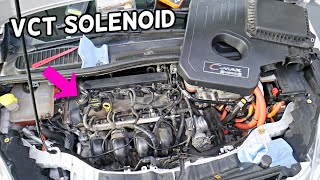
🎬 Watch: See where the VCT solenoid is located on this engine.Diagnostic Flowchart
Tap your situation to follow the diagnostic path that matches what you're seeing on this vehicle.
Symptoms You May Notice
- Check Engine Light is on
- Rough or unstable idle
- Engine hesitation or stalling, especially at low speeds
- Reduced fuel economy
- Difficulty starting the engine
- Loss of power and sluggish acceleration
- Rattling noise from the engine
- Replacing the camshaft position sensor before checking the oil or VCT solenoid.
- Replacing the cam phaser (a major repair) before ruling out the much simpler and more common VCT solenoid failure.
- Assuming the VCT solenoid is easily accessible without realizing the valve cover must be removed on this specific engine.
Most Likely Causes
- Low or Dirty Engine Oil 🔴 High Probability The VCT system is hydraulic and relies on clean oil at the correct pressure to function. TSBs for this vehicle specifically mention debris in the oil as a potential cause for VCT solenoid failure. Using the incorrect oil viscosity can also trigger this code.
How to confirm: Check the engine oil dipstick for level and inspect the oil's color and consistency. If it's low, black, sludgy, or smells burnt, it needs to be changed.
Typical fix: Perform an engine oil and filter change using the manufacturer-specified grade of oil (for the 2.0L Hybrid, this is typically SAE 0W-20 Full Synthetic). Clear codes and test drive.
Est. part cost: $30-$70 - Failing Variable Camshaft Timing (VCT) Solenoid 🔴 High Probability As noted in TSBs SSM 48423 and SSM 47170, the VCT solenoid can stick due to small debris in the oil. This is a very common failure point for this code across many Ford vehicles. On the 2.0L engine in the C-MAX, the solenoids are located under the valve cover, making replacement more labor-intensive.
How to confirm: Use a bidirectional scan tool to command the solenoid on and off (Pinpoint Test HK11) while monitoring camshaft position data to see if it frees the solenoid. You can also remove the valve cover to access the solenoid and test its resistance with a multimeter (typically 7-14 ohms) or apply 12V to check for mechanical clicking. A visual inspection may reveal a clogged screen on the solenoid.
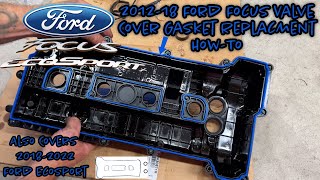
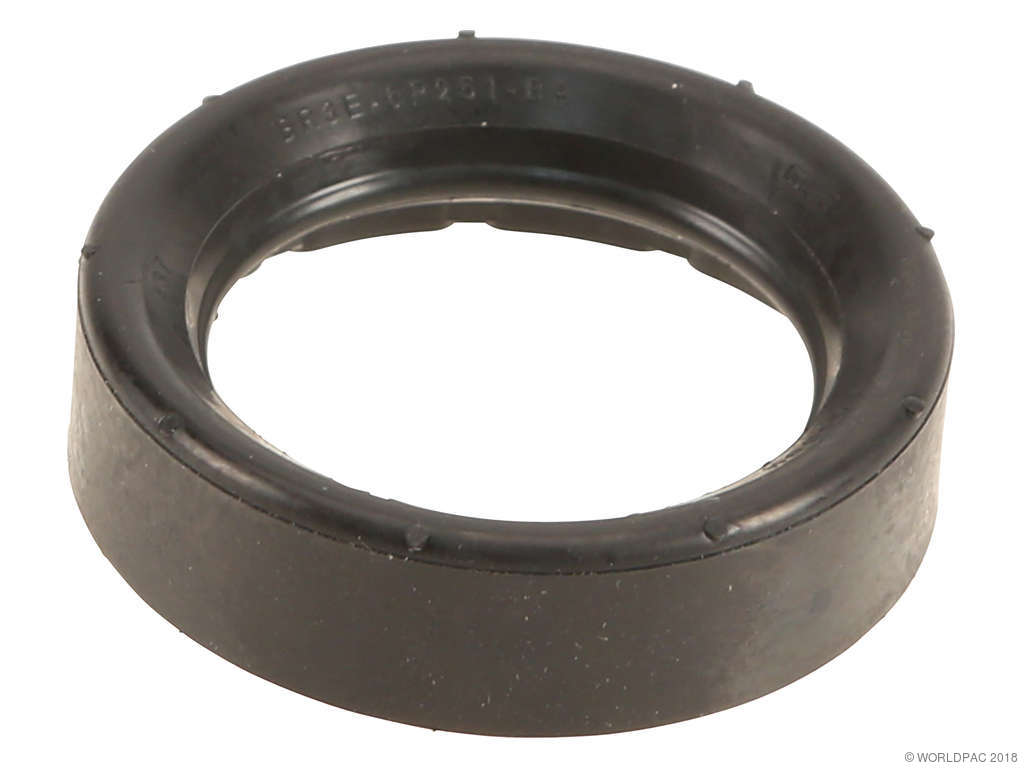
Typical fix: Replace the VCT solenoid for the intake camshaft on Bank 1. This requires removing the valve cover, so it is recommended to replace the valve cover gasket and spark plug tube seals at the same time. 🎬 See this step-by-step guide for replacing the valve cover gasket.
Est. part cost: $40-$100 - Faulty Camshaft Position Sensor ⚪ Low Probability
How to confirm: Monitor the sensor's output on a scan tool for erratic readings or dropouts. Inspect the sensor and its wiring for damage. A failing sensor can sometimes cause no-start or long-crank conditions and may trigger other codes like P0340.
Typical fix: Replace the Bank 1 intake camshaft position sensor. The OEM part number may have been superseded by 6M8Z-6B288-D.
Est. part cost: $25-$60
Rare But Worth Checking
- Stretched Timing Chain or Worn Cam Phaser: While less common, if oil changes and solenoid replacement do not fix the code, the issue could be with the base timing components. This is a more complex and expensive repair that requires significant mechanical diagnosis.
- Clogged Oil Passages: Severe oil sludging can block the small passages that feed the VCT system, preventing proper operation even with a new solenoid. An engine flush may help, but in severe cases, more significant disassembly is required.
- Wiring or Connector Issues: Damage to the wiring or a poor connection at the VCT solenoid or camshaft position sensor can mimic a component failure. Always inspect the harness before replacing parts.
Diagnosis Steps
- Verify the Check Engine Light is on and code P0011 is present using an OBD-II scanner.
- Check the engine oil level and condition. If low, dirty, or the wrong viscosity, perform an oil and filter change with the correct SAE 0W-20 oil, clear the code, and test drive to see if it returns. 🎬 Watch: How to diagnose VVT solenoids for a P0011 code.
- Using a bidirectional scan tool, access the PCM and run the VCT solenoid cleaning procedure (often listed as Pinpoint Test HK11). This cycles the solenoid 10 times to dislodge debris. Clear the code and see if it returns.
- Inspect the wiring harness and connectors for the Bank 1 intake VCT solenoid and camshaft position sensor. Look for any signs of damage, corrosion, or loose connections.
- If the code persists, the next step is to test the VCT solenoid directly. This requires removing the valve cover to access it.
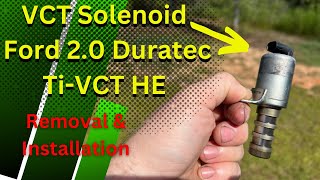
- Once the valve cover is off, remove the VCT solenoid (typically held by one 8mm bolt). Inspect its screens for debris. Test its internal resistance with a multimeter (should be around 7-14 ohms) and check for mechanical action by applying 12V power.
- If the solenoid tests bad or is clogged, replace it. It is highly recommended to replace the valve cover gasket and spark plug tube seals at the same time.
- If the solenoid and wiring are good, the problem may be with the camshaft position sensor. Monitor its signal for dropouts or erratic behavior.
- If all electronic components test good, the issue may be mechanical, such as a worn timing chain, tensioner, or cam phaser. This requires a more in-depth mechanical inspection.
Parts You'll Likely Need
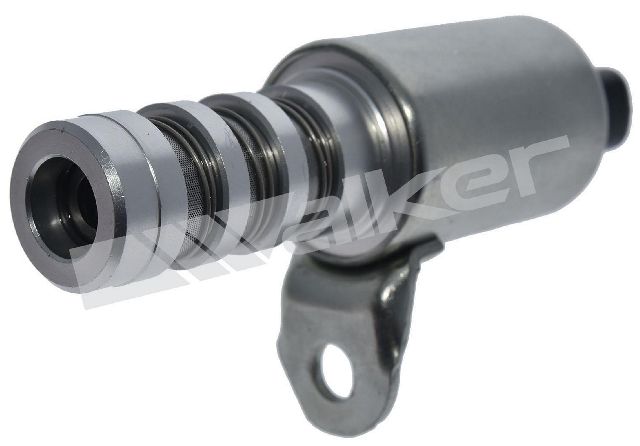
- Engine Variable Valve Timing (VVT) Solenoid
(OEM #CM5Z-6M280-C)— This is the most frequent point of failure for code P0011 on this vehicle, often due to sticking caused by oil debris, as cited in manufacturer TSBs. This part number may supersede CM5Z-6M280-A.
Trusted brands: Motorcraft, Standard Motor Products, Dorman
OEM price range: $60-$90
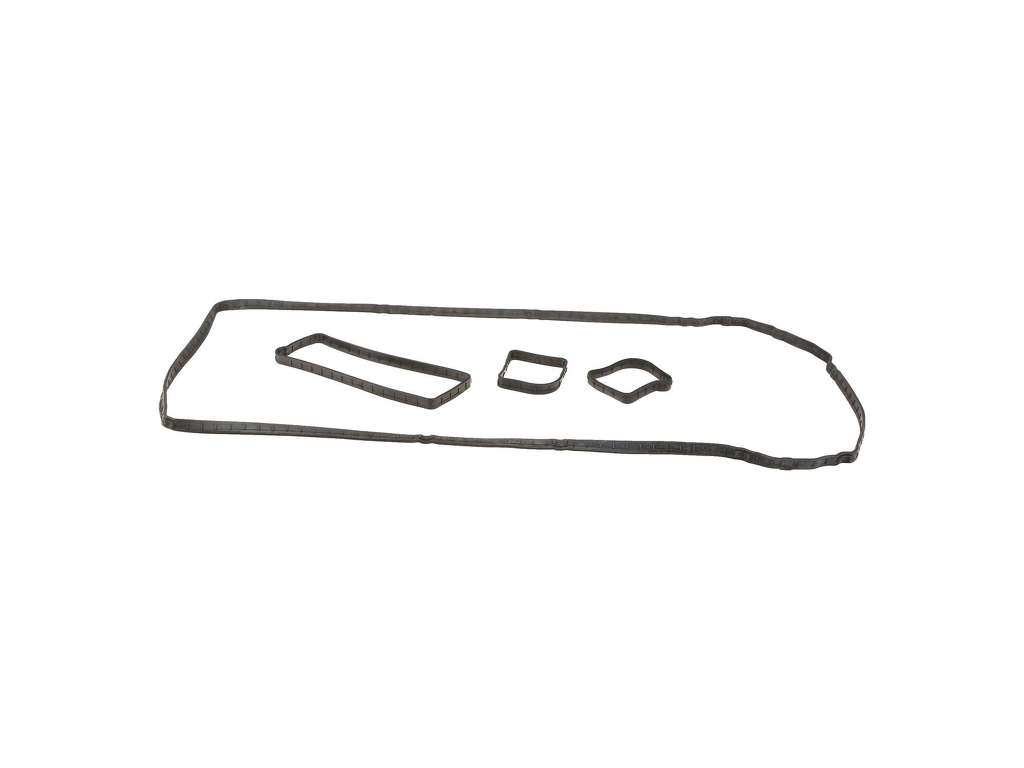
Aftermarket price range: $40-$70 - Valve Cover Gasket Kit — Required for replacing the VCT solenoid, as the solenoid is located under the valve cover. The kit should include the main gasket and spark plug tube seals.
Trusted brands: Fel-Pro, Mahle, Motorcraft
OEM price range: $50-$80
Aftermarket price range: $30-$50
Related Codes That Often Appear With This One
- P0012 — Intake Camshaft Position Timing - Over-Retarded (Bank 1). This code relates to the same system and can appear if the VCT system is malfunctioning erratically.
- P0014 — Exhaust Camshaft Position Timing - Over-Advanced (Bank 1). If the vehicle has VCT on the exhaust cam, a similar issue can occur there.
- P0016 — Crankshaft Position - Camshaft Position Correlation (Bank 1 Sensor A). This indicates a general timing mismatch and can be triggered by a faulty VCT system.
- P0021 — Intake Camshaft Position Timing - Over-Advanced (Bank 2). This code would appear on V-type engines, which the C-MAX does not have, but it is part of the same family of codes.
Technical Service Bulletins (TSBs) & Recalls
- SSM 54366: Notes that various 2015-2021 Ford vehicles may exhibit P0011 and other VCT codes, directing technicians to a specific diagnostic test.
- SSM 48423: States that P0011 on 2015-2020 models may be due to small debris causing the VCT solenoid to stick. It recommends running pinpoint test HK11 to cycle the solenoid before replacement.
- SSM 47170: An earlier bulletin with the same guidance as SSM 48423, pointing to debris sticking the VCT solenoid as a cause for P0011.
Platform-Specific Known Issues
- TSB SSM 48423 & SSM 47170: Ford noted that on some 2015-2020 vehicles, including the C-MAX, DTCs like P0011 may be set due to 'small debris causing the VCT solenoid to stick.' The official procedure is to first run a diagnostic test (Pinpoint Test HK11) to cycle the solenoid 10 times to attempt to clear it before replacement.
- Valve Cover Removal: A critical piece of information for DIYers and for estimating labor costs is that the VCT solenoids on the 2.0L engine are located under the valve cover, unlike on some other Ford engines where they are externally accessible. This makes the job more complex.
Mechanic-Grade Diagnostic Values
- VCT Solenoid Internal Resistance — expected: 7 to 14 Ohms. Some sources for similar Ford 2.0L engines specify a tighter range of 6.9-7.9 Ohms.. Failure: A reading of OL (Open Loop/infinite resistance) indicates a broken internal coil. A reading significantly below the expected range indicates a short.
- VCT Solenoid Connector Voltage (KOEO) — expected: Battery Voltage (approx. 12V) on the power supply pin.. Failure: No voltage or low voltage points to a problem in the power supply wiring, fuse, or PCM power relay, not the solenoid itself.
- Scan Tool PID: VCTADVERR (Camshaft Timing Error) — expected: Close to 0 degrees at idle.. Failure: A persistent value greater than +/- 5 degrees indicates the camshaft is not reaching its commanded position.
Hidden / Shadow Codes Worth Checking
- Mode $06, TID $53: While not a hidden code for VCT, Ford uses Mode $06 to show results for non-continuous monitors. TID $53, for example, shows cylinder-specific misfire rates before a P030x code is set. A technician can use Mode $06 to look for underlying engine performance issues that might contribute to timing problems, even without specific VCT-related TIDs being widely documented. (see via A professional scan tool with Mode $06 capability.)
Scan Tool Commands That Help
- Ford IDS (or equivalent bidirectional scanner): Pinpoint Test HK11 — This is the manufacturer-specified first step for this code. It commands the PCM to cycle the VCT solenoid 10 times to attempt to dislodge small debris, which can potentially fix the issue without part replacement.
- Ford IDS (or equivalent bidirectional scanner): VCT Solenoid Duty Cycle Command — While monitoring PIDs like VCT_INT_ACT1 (actual angle) and VCT_INT_DIF1 (difference from commanded), a technician can manually command the solenoid to activate to see if the camshaft angle responds accordingly. This directly tests the solenoid's and phaser's mechanical response.
Wiring & Ground Locations
- VCT Solenoid Connector — Under the valve cover, connected to the VCT solenoid.. The connector has two pins: one is a ~12V power supply from the PCM power relay, and the other is a control line that the PCM provides a ground to for activation. Checking for power here is a key first step in electrical diagnosis.
- G104 — On the rear of the transmission.. This is a major powertrain ground point. A poor connection here can cause erratic behavior from various engine sensors and actuators, including the PCM's ability to control the VCT system. While not a primary cause, it should be checked if electrical issues are suspected.
Real Owner Repair Stories
- YouTube Commenter (Vehicle with P0011) — P0011 code returned after two separate oil changes.
❌ Tried (didn't work) Oil change #1, Oil change #2
✅ What actually fixed it The owner removed the VVT solenoids, cleaned them with carburetor cleaner, performed an engine flush, and then added fresh oil. The code did not return after 1,000 miles. - Reddit user on r/f150 (Ford F-150 (different vehicle, but same Ford VVT system principle)) — P0011 code, engine hesitation, and rough idle.
❌ Tried (didn't work) Initial diagnosis
✅ What actually fixed it Replacing the VVT solenoids. The user noted the job required removing the valve cover and that a low-range torque wrench was necessary for the plastic components. The repair resolved all symptoms.
"I Checked Everything" — The Actual Cause
- A common scenario for P0011 is not a failed diagnostic test, but a misdiagnosis where parts are replaced when the root cause is fluid-related. If the code appears shortly after an oil change, the cause is very likely the use of incorrect oil viscosity (e.g., 10W-30 instead of the required 0W-20) or a low-quality, restrictive oil filter. The thicker oil cannot flow properly through the tiny passages of the VCT solenoid, causing a timing error that mimics a hardware failure. The correct first step in this scenario is to drain the incorrect fluid and replace it with the manufacturer-specified oil and a quality filter.
When the Usual Fixes Don't Work
- While the most common fixes are an oil change or VCT solenoid replacement, there are documented cases where these do not resolve the issue. If P0011 returns after these steps, the root cause could be a more persistent issue like severe oil sludge clogging passages that a simple oil change won't clear, requiring an engine flush. If that fails, the problem may be mechanical with the cam phaser itself or the timing chain, which are significantly more involved repairs. Recurring codes point away from the simple fixes and toward a deeper system problem.
OEM Part Supersession History
CM5Z-6M280-A→CM5Z-6M280-C— Part revision and update by the manufacturer, likely for improved reliability or material changes.
Heads up: While CM5Z-6M280-C is the correct replacement for -A, always verify fitment with a VIN. Another part, CJ5Z-6M280-A, is also listed for Ford 2.0L engines but may be for non-hybrid applications. Using the wrong part can lead to incorrect oil flow.
Model Year Variations Within This Range
- 2015-2018: For the North American market, the 2015-2018 Ford C-MAX used a consistent 2.0L Atkinson-Cycle Hybrid powertrain. While a facelift occurred in 2015, there were no significant changes to the VCT system or engine components relevant to a P0011 diagnosis within this year range.
Helpful Videos

Used OEM Parts in Stock

New Aftermarket Parts Available


The information in this article is provided for general reference and educational purposes only. Vehicle specifications, procedures, and part compatibility can vary by production date, trim level, and region. Always consult your vehicle's factory service manual and verify part numbers before purchasing or performing repairs. Safety-critical components such as airbags, seat belts, and braking systems should be installed by a qualified professional.
- Ford C-MAX:
- 🎬 Helpful Videos
- 🛍️ Shop This Part
- What's Unique About the 2015-2018 Ford C-MAX
- Diagnostic Flowchart
- Symptoms You May Notice
- Most Likely Causes
- Rare But Worth Checking
- Diagnosis Steps
- Parts You'll Likely Need
- Related Codes That Often Appear With This One
- Technical Service Bulletins (TSBs) & Recalls
- Platform-Specific Known Issues
- Mechanic-Grade Diagnostic Values
- Hidden / Shadow Codes Worth Checking
- Scan Tool Commands That Help
- Wiring & Ground Locations
- Real Owner Repair Stories
- "I Checked Everything" — The Actual Cause
- When the Usual Fixes Don't Work
- OEM Part Supersession History
- Model Year Variations Within This Range
- 🎟️ Get 5% Off