

P0010 on 2016-2021 Honda Civic 1.5L Turbo: VTC Solenoid Circuit Causes and Fixes
On a 2016-2021 Honda Civic 1.5T, code P0010 is almost always caused by low/dirty engine oil or a faulty 'A' (intake) VTC oil control solenoid. The L15B7 engine can be prone to oil dilution, which degrades oil quality and can trigger this code. Start by checking your oil; if it's clean and full, the solenoid (OEM Part #15830-59B-004) is the likely culprit, costing around $40-$80 for an aftermarket part or $90-$120 for OEM.
- P0010 on your Civic is an electrical circuit code for the intake VTC solenoid; it is not a mechanical timing failure.
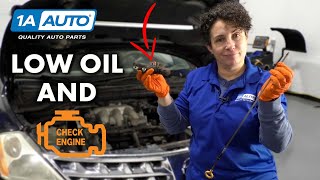
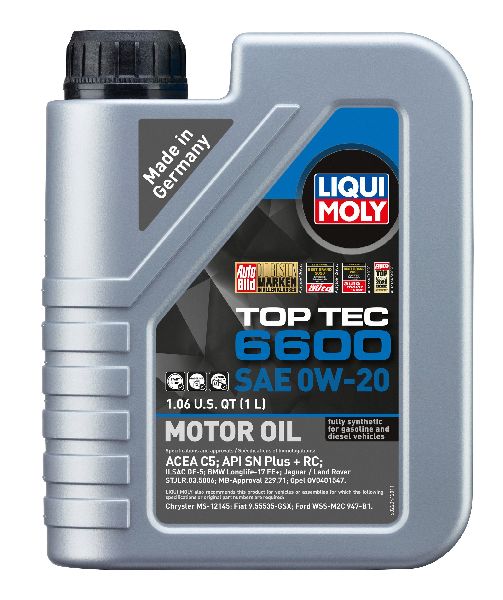
- Always check your engine oil level and condition first. A simple oil change with the correct 0W-20 oil can sometimes fix the problem, especially given the platform's tendency for oil dilution.
- If the oil is good, the VTC oil control solenoid (Part #15830-59B-004) is the most likely failed part. It is a relatively inexpensive and accessible part to replace for a DIYer.
- Do not immediately replace the camshaft position sensor or the VTC phaser gear, as these are rarely the cause for this specific electrical circuit code.
What's Unique About the 2016-2021 Honda Civic
The 10th generation Civic's L15B7 engine relies heavily on clean, correct-viscosity oil for its dual VTC system to function. Some of these 1.5L turbo engines, particularly 2016-2018 models, are known for a well-documented oil dilution issue where unburned fuel mixes with the engine oil, especially in cold climates or during frequent short trips. This fuel contamination degrades the oil's lubricating properties and can clog the fine mesh screens on the VTC solenoid, leading to malfunction and the P0010 code. Honda addressed this with software updates (Product Update 18-137) and warranty extensions. Therefore, checking oil condition is the critical first step on this platform.
Symptoms You May Notice
- Check Engine Light is on
- Rough or unstable idle
- Poor acceleration and loss of power
- Decreased fuel economy
- Engine may hesitate or stumble
- Rattling or ticking noise from the engine area.
- Replacing the Camshaft Position Sensor: P0010 is a circuit code for the actuator (solenoid), not the position sensor. A bad sensor would typically set a code like P0340 or P0341.
- Replacing the VTC Actuator (Cam Phaser): The VTC actuator is the mechanical gear on the end of the camshaft. P0010 is an electrical circuit code. A failed mechanical actuator would usually cause a loud startup rattle or a timing correlation code like P0011.
Most Likely Causes
- Low or Dirty Engine Oil 🔴 High Probability The VTC system is hydraulic and highly sensitive to oil pressure and cleanliness. Sludge from extended oil change intervals or fuel dilution (a known issue on 2016-2018 models) can clog the small passages and screen on the VTC solenoid, causing it to malfunction.
How to confirm: Check the engine oil dipstick. Note if the level is low or if the oil appears unusually dark, thick (sludgy), or smells strongly of gasoline, which is a sign of oil dilution.
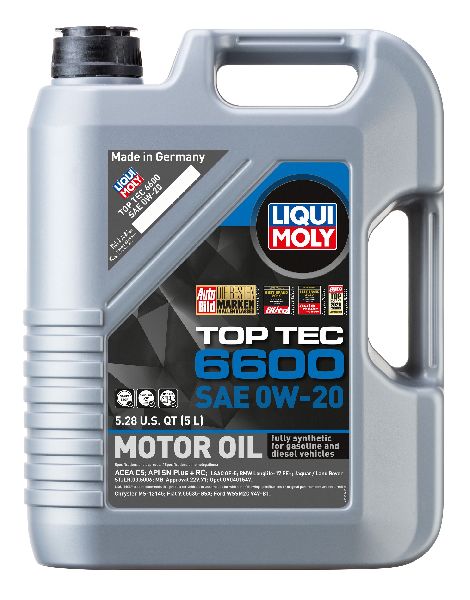
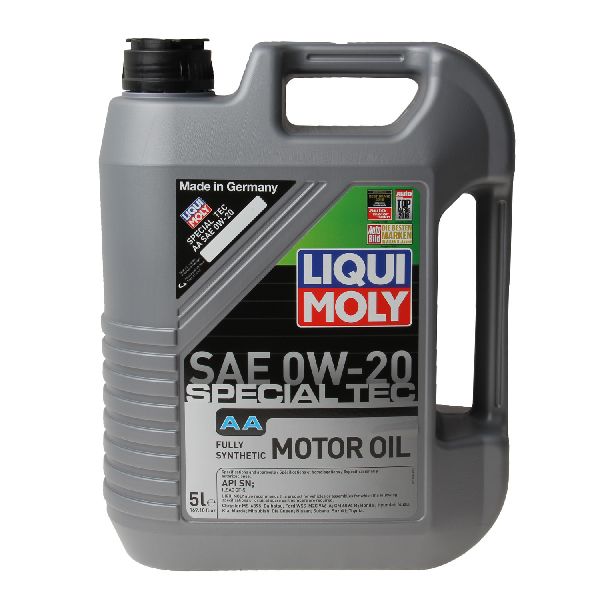
Typical fix: Perform an oil and filter change using the manufacturer-specified 0W-20 full synthetic oil. If oil dilution is suspected, ensure the vehicle's software is up to date per Honda's service bulletins.
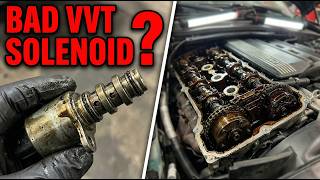
Est. part cost: $40-$80 - Faulty 'A' (Intake) VTC Oil Control Solenoid 🔴 High Probability This solenoid is the most common part to fail for this code. The internal coil can develop an open or short circuit, or the valve mechanism can get stuck from debris or sludge in the oil.
How to confirm: Disconnect the solenoid's electrical connector and measure the resistance across its two pins with a multimeter. A healthy solenoid should read between approximately 7.0 and 8.3 ohms. A reading of infinity (OL) indicates an open circuit, while a reading near zero indicates a short. You can also apply 12V directly to the solenoid pins to see if it 'clicks', but a resistance test is more definitive.
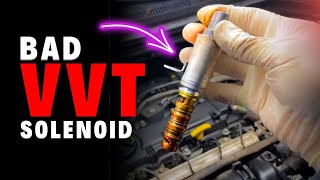
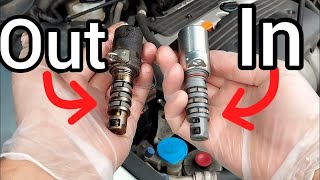
Typical fix: Replace the VTC oil control solenoid (Honda Part #15830-59B-004). It is mounted on the cylinder head and held in by a single 10mm bolt, making it a very accessible DIY repair. 🎬 Watch this walkthrough of a Honda VTC solenoid replacement.
Est. part cost: $90-$150 - Wiring or Connector Issue ⚪ Low Probability
How to confirm: Visually inspect the wiring harness and two-pin connector leading to the VTC solenoid for any signs of damage, corrosion, frayed wires, or loose pins. With the key on and engine off, use a multimeter to check for a 5-volt reference signal at one of the pins in the connector.
Typical fix: Repair the damaged section of wiring or clean/replace the connector pigtail.
Est. part cost: $10-$30
Rare But Worth Checking
- Faulty Powertrain Control Module (PCM): This is very uncommon. Only consider this after the solenoid and its entire circuit have been thoroughly tested and confirmed to be in good working order.
- Stretched Timing Chain: While P0010 is an electrical code, a severely stretched timing chain can cause the VTC actuator to work constantly at its limit, potentially stressing the control solenoid circuit. This would typically be accompanied by other timing correlation codes (like P0011) or a startup rattle.
Diagnosis Steps
- Read the code with an OBD-II scanner to confirm P0010 is present.
- Check the engine oil level and condition. Pay close attention to a gasoline smell, indicating oil dilution. If low, dirty, or contaminated, perform an oil and filter change with 0W-20 synthetic oil, clear the code, and drive to see if it returns.
- If the oil is fine, locate the 'A' (intake) VTC oil control solenoid on the engine. It is on the passenger side of the cylinder head.
- Inspect the electrical connector and wiring to the solenoid for any visible damage, corrosion, or loose connections.
- Disconnect the solenoid and measure its internal resistance with a multimeter. Compare the reading to the specification (typically 7.0-8.3 Ohms). If it's out of spec (OL or near zero), the solenoid is bad and needs replacement.
- If resistance is good, check for voltage at the wiring harness connector with the ignition on. One wire should have a reference voltage (typically 5V or battery voltage depending on the system).
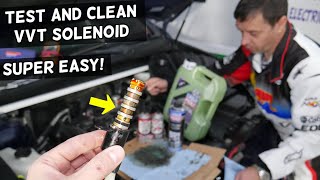
- If voltage is present and resistance is good, the solenoid may be mechanically stuck with sludge. You can try removing it (one 10mm bolt) and cleaning it with brake cleaner, paying attention to the small screen. 🎬 See how to test and clean your VVT solenoid. However, replacement is often the most reliable fix.
- If no voltage is present at the connector, there is an open or short in the wiring between the PCM and the solenoid, which will require circuit tracing.
Parts You'll Likely Need
- 'A' (Intake) VTC Oil Control Solenoid
(OEM #15830-59B-004)— This is the component whose electrical circuit is monitored by the PCM. It is the most common part to fail, either electrically (internal short/open) or mechanically (sticking from oil sludge).
Trusted brands: Honda (Genuine OEM), Denso, Dorman, Standard Motor Products
OEM price range: $90-$120
Aftermarket price range: $40-$80 - Engine Oil and Filter (0W-20 Full Synthetic) — Low, old, or contaminated oil is a primary cause of VTC system faults, including the P0010 code. This is especially critical on the L15B7 engine due to the potential for oil dilution.
Trusted brands: Mobil 1, Castrol EDGE, Pennzoil Platinum, Idemitsu
OEM price range: $60-$90
Aftermarket price range: $40-$70
Related Codes That Often Appear With This One
- P0011 — If the solenoid circuit fault causes the cam timing to become stuck in an over-advanced position, the PCM may also flag P0011 ('A' Camshaft Position - Timing Over-Advanced).
- P0172 — In cases related to the oil dilution issue, drivability problems may also trigger a P0172 (Fuel System Too Rich) code.
Technical Service Bulletins (TSBs) & Recalls
- Honda Product Update 18-137: Addresses oil dilution on 2016-18 Civic 1.5T by updating engine and transmission software to increase engine warm-up speed.
- Honda Warranty Extension (related to oil dilution): Extends warranty on camshafts and rocker arm assemblies to 6 years/unlimited miles for certain 2016-18 Civics due to potential wear from diluted oil. See bulletins 19-032, 19-037.
- Manufacturer Service Bulletin #A18-090: Notes that a malfunction in the variable valve timing control (VTC) system may cause the MIL to illuminate with DTC P0010.
- Manufacturer Service Bulletin #ABOM10042018901: Indicates that an issue with PCM software may lead to incorrect operation of the EVTC, causing DTC P0010 to set.
- Manufacturer Service Bulletin #A18-079: Describes a software update for the EVTC and 3-way valve to address the MIL coming on with DTC P0010.
Platform-Specific Known Issues
- Owner Experience with DIY Solenoid Replacement: A YouTube tutorial for a generic P0010 fault demonstrates the ease of replacement. The repair involves removing the air intake hose for access, unplugging the sensor, removing a single 10mm bolt, and swapping the part. The entire process took under 30 minutes, confirming this is a very manageable DIY job.
- Oil Dilution Context: Owners on forums like CivicX and Reddit discuss the oil dilution issue extensively, particularly for 2016-2018 models. They confirm that symptoms are worse in cold climates with short commutes and that Honda's software update (TSB 18-137) was the official remedy. While many feel the issue is overblown for causing catastrophic failure, it's accepted that it degrades oil quality faster, making regular oil changes crucial.
Mechanic-Grade Diagnostic Values
- VTC Oil Control Solenoid Resistance — expected: 6.75 - 8.25 Ohms at room temperature.. Failure: A reading of infinity (OL) indicates an open circuit, while a reading near zero ohms indicates a short circuit. Readings outside the specified range indicate a faulty solenoid.
- PCM Malfunction Threshold (VTC Current vs. Duty Cycle) — expected: The PCM expects VTC current to be proportional to the commanded duty cycle.. Failure: DTC P0010 is set if the PCM commands a duty cycle of 40% or more and sees 200 mA or less of current for 5 seconds, OR if it commands 5% or less and sees 800 mA or more for 5 seconds.
Scan Tool Commands That Help
- Honda Diagnostic System (HDS): VTC TEST (in INSPECTION MENU) — This is a bidirectional test used to confirm the VTC system's mechanical operation after electrical checks are complete. The HDS commands the solenoid to activate in stages and monitors the camshaft angle response to see if it meets the target angle. This can verify if the solenoid is mechanically stuck or if oil passages are blocked, even if the solenoid's electrical resistance is good.
- Honda Diagnostic System (HDS): Clear DTCs — After a repair, the code must be cleared. The MIL (Check Engine Light) will only turn off on its own after three consecutive drive cycles where the diagnostic monitor runs and the fault does not reappear.
Wiring & Ground Locations
- G101 — Located on the left rear side of the cylinder head.. This is a primary engine ground point. A loose or corroded G101 can cause various electrical issues, including erratic sensor readings and incorrect voltages for actuators like the VTC solenoid, potentially triggering a P0010.
- VTC Solenoid Connector (Intake 'A') — On the front of the cylinder head (passenger side on US models), connected to the VTC oil control solenoid.. This 2-pin connector is where all electrical tests for the solenoid are performed. Pin 1 is the control wire (VTCP) from the PCM, and Pin 2 is the power supply. A wiring diagram shows Pin 1 is a Green wire and Pin 2 is a Brown wire on a 2018 Civic 1.5T.
OEM Part Supersession History
Unknown→15830-59B-004— Standard part lifecycle and potential minor revisions.
Heads up: Part number 15830-59B-004 is the specified OEM part for the 2016-2021 Honda Civic 1.5L Turbo and is also used on CR-V and Accord models with the same engine family. There are no known incompatible revisions within this part number's history.
Model Year Variations Within This Range
- 2016-2018: These earlier model years are more susceptible to the oil dilution issue, which is a primary contributor to dirty oil that can clog the VTC solenoid screen and cause P0010. Honda issued Product Update 18-137 with software changes to help the engine warm up faster, mitigating fuel from mixing with oil. While the P0010 fault can occur on any year, it is more closely linked with oil quality issues on these specific years.
Diagnostic Flowchart
Other Known Issues on This Vehicle
Issues unrelated to this code that are worth knowing about as an owner of this generation:
- Engine Oil Dilution 🔴 High — Common on 2016-2018 models, especially in cold climates or with frequent short trips. Honda issued software updates to mitigate the issue on later models and as a fix for earlier ones. (Ref: Honda TSB 18-137 (Product Update) & related warranty extensions (See TSBs 19-032, 19-037).)
- Air Conditioning (A/C) Condenser Leaks 🔴 High — A very common problem across the 2016-2021 model years, causing the A/C to stop blowing cold air. The issue is caused by a manufacturing defect leading to tiny holes in the condenser. (Ref: Honda Service Bulletin 19-091 (Warranty Extension to 10 years/unlimited miles).)
- Low-Pressure Fuel Pump Failure 🔴 High — Affects a specific production range of vehicles and can cause the engine to lose power or stall while driving. (Ref: Safety Recall (e.g., NHTSA Campaign 20V-314))
Used vs. New Parts: Buying Guide for This Vehicle
When a used part is the smart pick: A used OEM VTC solenoid from a low-mileage, rear-ended donor vehicle can be a cost-effective and reliable option. Since this is not a complex electronic module, a functional used part from a reputable salvage yard is a reasonable choice if budget is a primary concern.
Donor-vehicle mileage cap: roughly under 60000 miles for the part to have meaningful remaining life.
What to inspect on the donor part:
- Check for any physical damage to the solenoid body or connector.
- Ensure the electrical connector pins are clean, straight, and free of corrosion.
- Inspect the oil screen at the base of the solenoid; it should be perfectly clean and free of metallic debris or sludge. A dirty screen indicates the donor car had poor oil maintenance.
OEM-only on this vehicle (don't cheap out):
- VTC Oil Control Solenoid
Aftermarket brands forum-validated for this vehicle:
- Denso (Often the Original Equipment Manufacturer for Honda)
- Standard Motor Products (SMP)
Brands owners have reported issues with on this vehicle:
- Dorman: While widely available, some owners have reported premature failure of Dorman VTEC/VTC solenoids, with some failing within a year or even just a few miles after installation.
- Unbranded/Generic (e.g., from Amazon/eBay): Forum users report very high failure rates for unbranded solenoids, with many failing within a year. It is strongly recommended to stick with OEM or a known-good OEM supplier like Keihin or Denso.
Real Owner Stories
Aggregated from forums and TSBs cited above. Mileages and costs reflect what owners reported in those sources.
2016-2018 Honda Civic 1.5L Turbo
Symptoms: Owners reported issues with oil quality degrading faster due to fuel mixing with the oil, particularly in cold climates with short commutes.
What fixed it: Honda's software update (TSB 18-137) was the official remedy to increase engine warm-up speed.
Source hint: CivicX and Reddit (r/civic) discussions regarding oil dilution context
2016-2021 Honda Civic 1.5L Turbo
Symptoms: A generic P0010 fault was diagnosed, requiring access to the cylinder head area.
What fixed it: Removing the air intake hose, unplugging the sensor, and removing a single 10mm bolt to swap the VTC solenoid. The process took under 30 minutes.
Source hint: YouTube tutorial cited in vehicle_specific_issues
2016-2018 Honda Civic 1.5L Turbo
Symptoms: Potential wear on camshafts and rocker arm assemblies linked to diluted engine oil.
What fixed it: Honda provided a warranty extension to 6 years/unlimited miles under bulletins 19-032 and 19-037.
Source hint: Honda Warranty Extension (TSB 19-032, 19-037)
Related OBD-II Codes
Frequently Asked Questions
Is there a specific TSB for the oil dilution issue on my 2016-2018 Civic 1.5T?
What is the specific part number for the VTC solenoid if I need to replace it?
Does Honda provide any extra warranty coverage for engine components affected by oil issues?
Can I use any engine oil to fix the P0010 code?
How can I tell if oil dilution is causing my VTC system to malfunction?
Is the VTC solenoid replacement a difficult DIY job?
Helpful Videos
Used OEM Parts in Stock
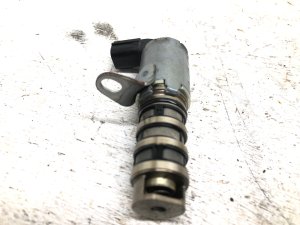
New Aftermarket Parts Available


The information in this article is provided for general reference and educational purposes only. Vehicle specifications, procedures, and part compatibility can vary by production date, trim level, and region. Always consult your vehicle's factory service manual and verify part numbers before purchasing or performing repairs. Safety-critical components such as airbags, seat belts, and braking systems should be installed by a qualified professional.
- Honda Civic:
- 🎬 Helpful Videos
- 🛍️ Shop This Part
- What's Unique About the 2016-2021 Honda Civic
- Symptoms You May Notice
- Most Likely Causes
- Rare But Worth Checking
- Diagnosis Steps
- Parts You'll Likely Need
- Related Codes That Often Appear With This One
- Technical Service Bulletins (TSBs) & Recalls
- Platform-Specific Known Issues
- Mechanic-Grade Diagnostic Values
- Scan Tool Commands That Help
- Wiring & Ground Locations
- OEM Part Supersession History
- Model Year Variations Within This Range
- Diagnostic Flowchart
- Other Known Issues on This Vehicle
- Used vs. New Parts: Buying Guide for This Vehicle
- Real Owner Stories
- 2016-2018 Honda Civic 1.5L Turbo
- 2016-2021 Honda Civic 1.5L Turbo
- 2016-2018 Honda Civic 1.5L Turbo
- Related OBD-II Codes
- Frequently Asked Questions
- 🎟️ Get 5% Off