

P0009 on 2015-2017 GMC Acadia: Causes and Fixes for Engine Timing Issues
On a 2015-2017 GMC Acadia with the 3.6L V6 (LFX) engine, code P0009 almost always indicates stretched timing chains. This is a well-documented, serious, and expensive repair costing $1,800-$4,000+. It requires immediate attention to prevent severe, potentially catastrophic engine damage. The root cause is often linked to oil quality and extended change intervals.
- P0009 on a 2015-2017 Acadia almost always means the timing chains have stretched and require replacement.
- This is a serious code. Do not ignore it, as continued driving can lead to catastrophic engine failure.
- Do not waste money replacing camshaft or crankshaft sensors; they are almost never the cause of this specific code on this engine.
- The repair is complex and expensive, typically costing between $1,800 and $3,500. This is not a recommended DIY job.
- Using high-quality, dexos-approved synthetic oil and changing it regularly (more often than the oil life monitor suggests) is the best way to prolong the life of the timing chains.
What's Unique About the 2015-2017 Gmc ACADIA
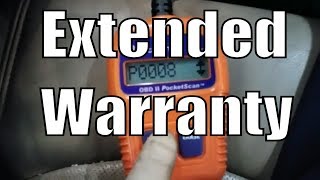
The first-generation GMC Acadia and its siblings with the 3.6L V6 engine are notorious for premature timing chain failure. The issue was so common on earlier models (pre-LFX engine) that GM issued Special Coverage Adjustment #11340C 🎬 Watch: Learn more about the GM extended warranty for timing chains., extending the warranty to 10 years/120,000 miles for this specific problem. The primary cause is attributed to the original timing chain design being prone to stretching, a problem often accelerated by extended oil change intervals recommended by the factory Oil Life Monitor (OLM). While the 2013+ LFX engine in the 2015-2017 Acadia features a redesigned, more durable timing chain system, they are still susceptible to failure, especially with poor oil maintenance or high mileage.
Diagnostic Flowchart
Tap your situation to follow the diagnostic path that matches what you're seeing on this vehicle.
Generation note: The 2015-2016 models are part of the first generation. The 2017 model year was a transition year, featuring both the first-generation 'Acadia Limited' and the all-new, smaller second-generation Acadia. This P0009 timing chain issue is primarily associated with the 3.6L V6 engine in the first-generation platform and its platform mates.
Symptoms You May Notice
- Check Engine Light is on
- Reduced engine power and sluggish acceleration
- Rough or unstable idle
- Rattling, whining, or 'marbles in a can' noise from the engine, especially on a cold start.
- Engine misfires, which may trigger a P0300 code
- Difficulty starting the engine
- Decreased fuel economy
- Replacing only the camshaft or crankshaft position sensors without verifying the mechanical timing. These sensors are rarely the root cause of P0009 on this engine.
- Replacing only one timing chain or only the tensioners. The entire system (all chains, guides, and tensioners) should be replaced as a kit to ensure a lasting repair.
- Replacing VVT solenoids without first confirming the base mechanical timing is correct.
Most Likely Causes
- Stretched Timing Chains 🔴 High Probability The 3.6L V6 engine family has a well-documented history of premature timing chain stretching. Even with the improved LFX design, factors like oil degradation from direct injection and extended oil change intervals can lead to wear.
How to confirm: A mechanic can use a scan tool to observe camshaft deviation data; a consistent deviation over 4-5 degrees suggests a mechanical timing issue, with the code often setting around 7-9 degrees. Physical confirmation requires removing the front timing cover to inspect the chains for slack, which is labor-intensive.
Typical fix: Replace all three timing chains (one primary, two secondary), all tensioners, and all guides as a complete kit. It is critical to use the latest updated OEM parts. Per TSB #12-06-01-009F, sprockets are typically not replaced unless visibly worn.
Est. part cost: $300-$600 - Failed Timing Chain Tensioners or Guides 🔴 High Probability The hydraulic tensioners rely on clean oil at the proper pressure. Oil sludge from extended change intervals or low oil levels can cause them to weaken, stick, or fail, allowing the chain to become slack.
How to confirm: These are inspected for wear, damage, or weakness when the timing cover is removed for a chain inspection. Broken plastic guide material may be found in the oil pan.
Typical fix: Tensioners and guides are always replaced as part of a complete timing chain service.
Est. part cost: $100-$200 (included in most kits) - Low or Degraded Engine Oil 🟡 Medium Probability The timing system is highly dependent on oil pressure and quality for lubrication and tensioner operation. The LFX engine is known to consume some oil, and the factory Oil Life Monitor can suggest intervals that are too long to prevent oil breakdown and sludge formation.
How to confirm: Check the oil level on the dipstick and inspect its condition. If it's low, black, or sludgy, this is a likely contributing factor. Many owners recommend 5,000-mile oil change intervals with full synthetic dexos-spec oil to prevent this issue.
Typical fix: Perform an oil and filter change with a high-quality, full-synthetic oil that meets GM's dexos specification. This is a critical first step but will not fix an already stretched chain or damaged components.
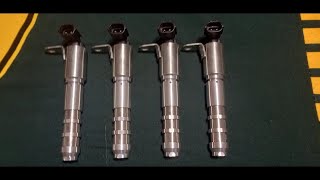
Est. part cost: $50-$100 - Failing Camshaft Actuator Solenoids (VVT Solenoids) ⚪ Low Probability These solenoids control the flow of oil to the cam phasers. They can become clogged with sludge or fail electronically, causing timing correlation issues. This is a common diagnostic step before committing to the full timing job.
How to confirm: Can be tested for resistance (typically 8 to 12 Ohms) with a multimeter and commanded on/off with a capable scan tool to check for response and changes in cam variance. They can also be removed and inspected for clogged screens. Swapping them between banks to see if the code follows is a valid test.
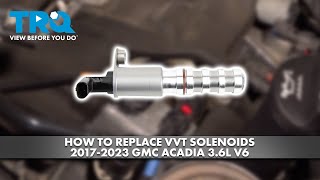
Typical fix: Replace the faulty solenoid(s). They are relatively easy to access on the top of the engine.
Est. part cost: $40-$80 per solenoid
Rare But Worth Checking
- Shifted Crankshaft Reluctor Wheel: As mentioned in TSB #PIP3423P, the reluctor wheel on the crankshaft (which the crank sensor reads) can sometimes move slightly, causing a timing correlation code even if the chains are good. This requires inspecting the wheel's position relative to the crankshaft, often with a borescope through the crank sensor hole.
- Faulty Crankshaft or Camshaft Position Sensor: While a sensor can fail, it is an uncommon cause for this code on this specific vehicle. The code indicates a *correlation* problem, which usually means the sensors are correctly reporting a *mechanical* issue. Replacing sensors is a common misdiagnosis.
Diagnosis Steps
- Read the codes with an OBD-II scanner to confirm P0009 and any other related codes (like P0008, P0017, etc.).
- Check the engine oil level and condition. If low or dirty, perform an oil and filter change using the correct dexos-spec oil. Clear codes and see if they return. This is a good first step but unlikely to be the final fix.
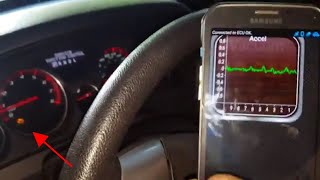
- Use an advanced scan tool to monitor live data for Camshaft Position Variance on Bank 2. A consistent reading above 2 degrees at idle or above 4-5 degrees under load strongly suggests a mechanical timing issue.
- Test the Bank 2 camshaft actuator solenoids. Command them on and off with the scan tool and listen for a click. Remove and inspect them for debris on the screens. Consider swapping with Bank 1 solenoids to see if the code migrates.
- If the above steps do not resolve the issue, the next step is a physical inspection of the timing components. This is labor-intensive and involves removing the engine's front timing cover.
- During physical inspection, check the timing chains for excessive slack and verify the integrity of the guides (checking for deep grooves) and tensioners.
- As per TSB #PIP3423P, it is also wise to inspect the crankshaft reluctor wheel for any signs of movement or misalignment. This can be done with a borescope through the crank sensor hole, looking for a measurement of 25 to 26 mm from the machined surface of the crankshaft throw to the edge of the open space in the reluctor.
Parts You'll Likely Need
- Engine Timing Chain Kit
(OEM #12700436)— This is the definitive fix. A complete kit includes all three chains, tensioners, guides, and necessary gaskets to address the common stretched chain issue. This part number supersedes previous versions like 12651450 and 12693218.
Trusted brands: ACDelco (OEM), Cloyes
OEM price range: $400-$600
Aftermarket price range: $250-$450 - Camshaft Position Actuator Solenoid
(OEM #12655421 (Intake), 12655420 (Exhaust) - Verify by VIN)— Sometimes a clogged or failed solenoid can cause this code. It's a much cheaper and easier part to replace as a diagnostic step before committing to a full timing job.
Trusted brands: ACDelco (OEM), Delphi
OEM price range: $50-$90
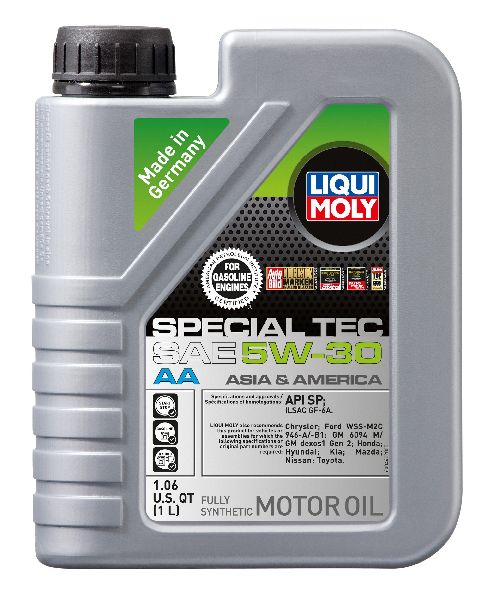
Aftermarket price range: $30-$60 - Engine Oil and Filter
(OEM #ACDelco PF63E (Filter))— Fresh, correct-spec oil is critical for the health and operation of the timing system's hydraulic tensioners.
Trusted brands: ACDelco (OEM), Mobil 1, Pennzoil
OEM price range: $15-$25 (Filter only)
Aftermarket price range: $8-$15 (Filter only)
Related Codes That Often Appear With This One
- P0008 — P0008 is the identical code but for Bank 1 (the front bank). It is very common for P0008 and P0009 to appear together, confirming a systemic timing chain issue affecting the entire engine, likely originating from the primary chain.
- P0017, P0018, P0019 — These are more specific correlation codes for the exhaust and intake camshafts on both banks. They often accompany P0008/P0009 and point to the same root cause of stretched timing chains, as noted in TSB #PIP3423P.
Technical Service Bulletins (TSBs) & Recalls
- PIP3423P: Diagnostic guide for technicians when codes like P0008/P0009 are present, advising inspection of timing chains, tensioners, and the crankshaft reluctor wheel.
- 12-06-01-009F: Announces availability of updated timing chain service kits and provides guidance on which parts to replace (chains, tensioners, guides) and which to reuse if not worn (sprockets).
- 11340C: A Special Coverage Adjustment (warranty extension) for earlier model years (pre-LFX) that extended coverage for timing chain wear to 10 years/120,000 miles due to the high failure rate.
- PIP5163G: Discusses potential causes of oil consumption and engine wear, which are contributing factors to timing chain failure.
Platform-Specific Known Issues
- The 3.6L V6 engine in the first-generation Acadia is widely known for premature timing chain stretching.
- GM Technical Service Bulletin #PIP3423P directly addresses code P0009 (and others) and instructs technicians to inspect for loose timing chains, faulty tensioners, or a shifted crankshaft reluctor wheel.
Mechanic-Grade Diagnostic Values
- Camshaft Position Actuator Solenoid (VVT Solenoid) Resistance — expected: 8 to 12 Ohms at 68°F (20°C).. Failure: A reading outside this range, or an open circuit (OL), indicates a failed solenoid coil.
- Crankshaft Reluctor Wheel Position Inspection — expected: A measurement of 25 to 26 mm from the machined surface of the crankshaft throw to the edge of the open space in the reluctor wheel.. Failure: Any significant deviation from this measurement indicates the reluctor has slipped on the crankshaft, which requires crankshaft replacement.
- Scan Tool Camshaft Position Variance — expected: Should be less than 2 degrees when commanding the actuator from 0 to 40 degrees and back.. Failure: A deviation greater than 7-8 degrees will set the DTC. A slow response or a deviation greater than 1.5 degrees for more than 2 seconds during the test also indicates a problem.
Scan Tool Commands That Help
- GDS2 (GM Global Diagnostic System 2): Camshaft Position Actuator Solenoid Test / Control — This bidirectional control allows a technician to command the VVT solenoids on and off (or to a specific percentage) while monitoring the 'Camshaft Position Variance' PID. It is used to verify if the solenoid is electrically functional and if the mechanical phaser is responding to commands, helping to isolate a bad solenoid from a clogged oil passage or stuck phaser.
- GDS2 (or high-end aftermarket scanner): Crankshaft Position Variation Learn — This procedure must be performed after replacing the crankshaft, crankshaft position sensor, or the ECM itself. It allows the ECM to learn the minor mechanical variations of the new reluctor wheel to ensure accurate timing and misfire detection. Failure to perform this can cause other running issues or codes.
Wiring & Ground Locations
- G110 — On the left rear of the engine (Bank 2 side), above the exhaust manifold for the 3.6L LFX engine.. This is a primary engine ground. A poor connection here can cause erratic signals from the Bank 2 camshaft position sensors, potentially leading to incorrect diagnostics, although the root cause is usually mechanical.
- Camshaft Position Sensor Connector — On the top/front of the valve covers, one for each camshaft.. This is a 3-wire connector. Damage to the wiring or corrosion in the connector for the Bank 2 sensors can interrupt the signal to the ECM. While not a common cause for P0009, it should be inspected before major disassembly.
OEM Part Supersession History
12651450→12693218, then 12679117, and currently 12700436.— Progressive updates to improve the durability of the timing chains and related components to combat premature stretching.
Heads up: Using an older kit (if found) is not advised as it will not have the latest design improvements. Always verify the latest part number with a GM dealer by VIN.
Helpful Videos



Used OEM Parts in Stock


New Aftermarket Parts Available



The information in this article is provided for general reference and educational purposes only. Vehicle specifications, procedures, and part compatibility can vary by production date, trim level, and region. Always consult your vehicle's factory service manual and verify part numbers before purchasing or performing repairs. Safety-critical components such as airbags, seat belts, and braking systems should be installed by a qualified professional.
- Gmc ACADIA:
- 🎬 Helpful Videos
- 🛍️ Shop This Part
- What's Unique About the 2015-2017 Gmc ACADIA
- Diagnostic Flowchart
- Symptoms You May Notice
- Most Likely Causes
- Rare But Worth Checking
- Diagnosis Steps
- Parts You'll Likely Need
- Related Codes That Often Appear With This One
- Technical Service Bulletins (TSBs) & Recalls
- Platform-Specific Known Issues
- Mechanic-Grade Diagnostic Values
- Scan Tool Commands That Help
- Wiring & Ground Locations
- OEM Part Supersession History
- 🎟️ Get 5% Off