

P0009 on 2016-2018 Buick Enclave: Timing Chain Causes and Fixes
On a 2016-2018 Buick Enclave, code P0009 almost always indicates the timing chains have stretched. This is a serious, complex, and expensive repair that should not be ignored. Expect costs to range from $2,000 to over $4,000 for a professional replacement. The root cause is a well-documented issue with the GM 3.6L V6 engine family, often accelerated by extended oil change intervals.
- P0009 on a 2016-2018 Enclave is a serious code that almost certainly indicates stretched timing chains, a known weak point of the GM 3.6L V6 engine.
- This is not a sensor issue. Do not waste money replacing camshaft or crankshaft sensors.
- The repair is complex and expensive, often costing $2,700-$4,000, and requires a professional mechanic with special tools.
- Driving with this code is not recommended as a chain failure can lead to catastrophic engine damage.
- The root cause is often linked to extended oil change intervals; using high-quality synthetic oil and changing it more frequently than the oil life monitor suggests can help prevent recurrence.
What's Unique About the 2016-2018 Buick ENCLAVE
The GM 3.6L V6 engine family (including the LFX and LFY in this Enclave) has a well-documented history of premature timing chain stretch. The primary cause is often linked to the original GM Oil Life Monitor (OLM) calibration, which could allow for excessively long oil change intervals (8,000-12,000 miles). This, combined with the engine's tendency to consume oil, can lead to low or degraded oil, which starves the hydraulic timing chain tensioners and accelerates chain wear. For this specific engine, P0009 is almost never caused by a faulty sensor; the root cause is overwhelmingly the mechanical failure of the timing chains.
Diagnostic Flowchart
Tap your situation to follow the diagnostic path that matches what you're seeing on this vehicle.
Generation note: The 2016-2017 models are the first generation Enclave, typically with the 3.6L LFX V6 engine. The 2018 model marks the beginning of the second generation, using the updated 3.6L LFY V6 which includes start-stop technology. While the engines differ slightly, they are both part of the same GM High Feature V6 family, and both can be affected by timing chain issues that trigger code P0009.
Symptoms You May Notice
- Check Engine Light is on
- Rough or unstable idle
- Reduced engine power and poor acceleration
- Decreased fuel economy
- Rattling or scraping noise from the engine, especially on a cold start, that may last for a few seconds.
- Engine misfires
- Replacing camshaft position sensors. The sensors are almost always functioning correctly; they are accurately detecting the mechanical timing error. Replacing them is a waste of money.
- Replacing crankshaft position sensor. Similar to the camshaft sensors, this sensor is rarely the cause of the problem.
- Replacing only one timing chain. The engine has three chains, and all should be replaced as a set to ensure a lasting repair.
- Replacing VVT Solenoids. While a stuck solenoid can cause timing issues, it's far less common than chain stretch for P0009 and often presents with different codes first.
Most Likely Causes
- Stretched Timing Chains 🔴 High Probability The GM 3.6L V6 engine family has a known history of premature timing chain wear. This is the most common cause for P0009 on this platform. The issue is exacerbated by long oil change intervals and oil degradation, which leads to improper lubrication and increased wear.
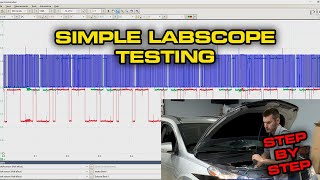
How to confirm: A mechanic can use a scan tool to observe cam/crank deviation data. A definitive diagnosis requires physical inspection of the chains, guides, and tensioners by removing the engine's front timing cover. Advanced diagnosis can be done with a lab scope to compare camshaft and crankshaft sensor waveforms without major disassembly. 🎬 Watch: How to use a lab scope to confirm timing issues.
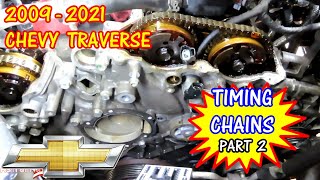
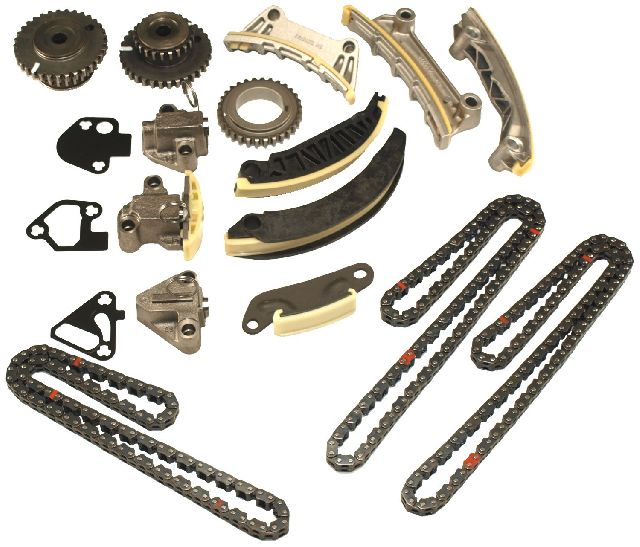
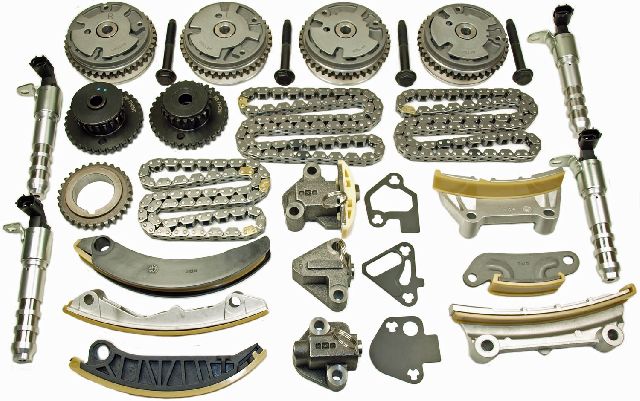
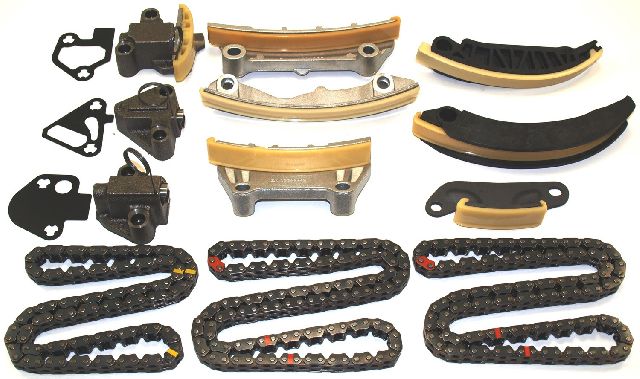
Typical fix: Replace all three timing chains (one primary, two secondary) along with all tensioners and guides. This is typically done as a complete kit.
Est. part cost: $400-$900 - Worn Timing Chain Tensioners or Guides 🟡 Medium Probability The tensioners are hydraulic and can fail or weaken due to sludgy oil or low oil pressure, allowing the chains to become slack. The plastic guides can also wear down or break, contributing to the problem. This is often a consequence of or contributor to stretched chains.
How to confirm: Physical inspection after removing the timing cover is the only way to confirm. A rattling noise on startup is a strong indicator of a failing tensioner.
Typical fix: Replace tensioners and guides. This is always done as part of a complete timing chain job.
Est. part cost: $100-$250 (as part of a kit) - Low or Degraded Engine Oil ⚪ Low Probability The timing chain tensioners and cam phasers are hydraulic, relying on clean oil at the proper pressure to function. GM's own Oil Life Monitor (OLM) system allowed for very long change intervals, which can lead to oil breakdown and sludge formation, accelerating wear on all timing components.
How to confirm: Check the oil level and condition on the dipstick. Review vehicle service history for oil change frequency. A history of following the OLM to 10,000+ miles between changes increases the risk.
Typical fix: Perform an oil and filter change with a high-quality, dexos-approved 5W-30 synthetic oil. Note: This is a preventative measure and will NOT fix chains that are already stretched enough to set code P0009.
Est. part cost: $50-$100
Rare But Worth Checking
- Slipped Crankshaft Reluctor Wheel: TSB #PIP3423P mentions that if timing chains are found to be okay, the reluctor wheel on the crankshaft may have physically moved. This is a rare but severe issue that can mimic the symptoms of a stretched chain. Diagnosis may be possible with a borescope through the crank sensor port, but the fix requires crankshaft replacement.
Diagnosis Steps
- Verify the engine oil level and condition. If low or dirty, correct this first, but do not assume it will fix the code.
- Use a professional OBD-II scanner to confirm P0009 and check for other related codes (P0008, P0016-P0019).
- Listen for a rattling or scraping noise from the engine bay, particularly at the front (passenger side) of the engine during a cold start.
- With a capable scan tool, monitor the camshaft and crankshaft position sensor data and check the cam phase variance PIDs. Significant deviation confirms a timing issue.
- For advanced diagnosis, use a lab scope to perform a cam/crank correlation test by comparing the sensor waveforms. This can confirm a timing issue without engine disassembly.
- If scan data is conclusive or a scope is unavailable, proceed to mechanical inspection. This involves removing the engine's front timing cover to physically check for timing chain slack and wear on the guides and tensioners.
- If the chains and tensioners appear to be in good condition, investigate the rare possibility of a slipped crankshaft reluctor wheel as per TSB #PIP3423P.
Parts You'll Likely Need
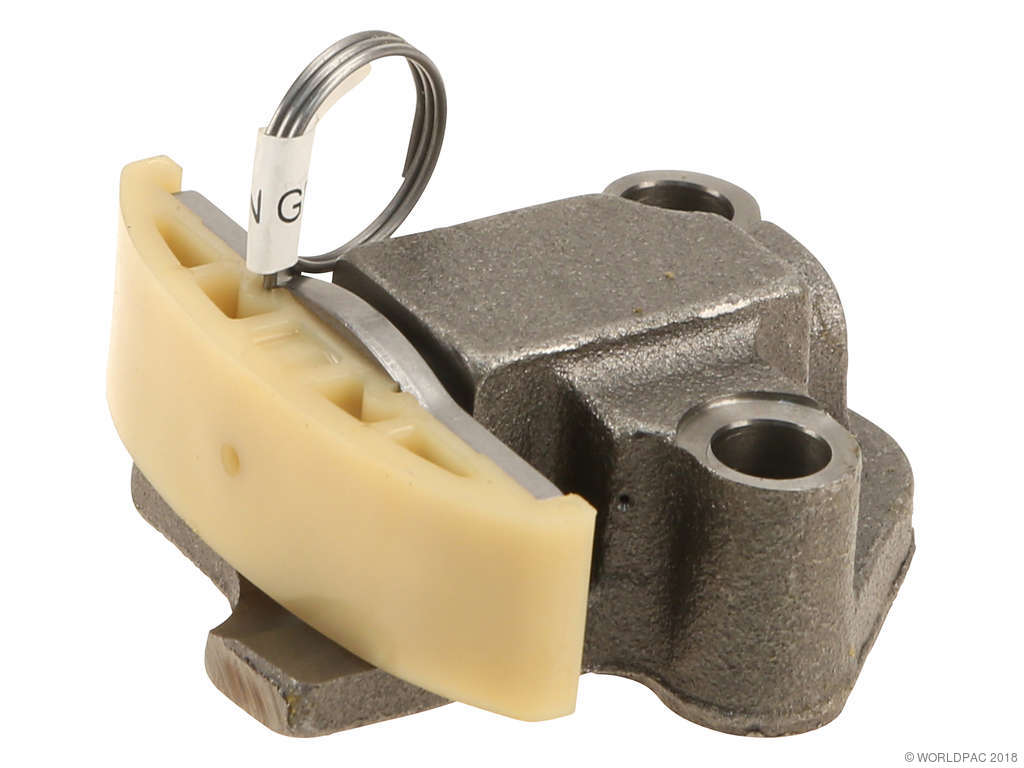
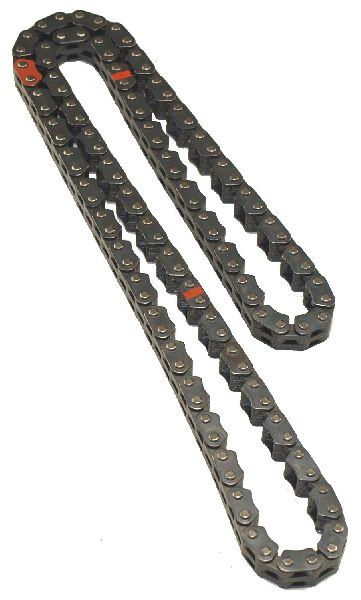
- Engine Timing Chain Kit
(OEM #ACDelco 12650230 (or superseding part number))— This is the definitive fix for the most common cause, stretched timing chains. A complete kit ensures all wearable components (chains, tensioners, guides) are replaced simultaneously.
Trusted brands: ACDelco, Cloyes
OEM price range: $500-$900
Aftermarket price range: $400-$650
Related Codes That Often Appear With This One
- P0008 — P0008 is the equivalent code for Bank 1 (the radiator side). Seeing P0008 and P0009 together is a very strong confirmation of a stretched primary timing chain affecting the entire engine.
- P0016, P0017, P0018, P0019 — These are more specific correlation codes for the intake and exhaust camshafts on both banks. They often appear with P0008/P0009 as the ECM pinpoints the timing deviations. TSB #12-06-01-009F explicitly lists these codes as being caused by stretched timing chains.
Technical Service Bulletins (TSBs) & Recalls
- PIP3423P: Instructs technicians to inspect for loose timing chains or tensioners when P0009 (and related codes) are set. Also mentions the rare possibility of a slipped crankshaft reluctor wheel.
- 12-06-01-009F: Announces the availability of comprehensive timing chain service kits for the High Feature V6 engine to address DTCs P0008, P0009, P0016, P0017, P0018, and/or P0019. It advises that components like sprockets and actuators usually do not need replacement for a simple stretched chain issue.
Platform-Specific Known Issues
- The 3.6L V6 engine family (LLT, LFX, LFY) used across many GM platforms, including the Enclave, is known for premature timing chain stretch.
- GM has issued multiple Technical Service Bulletins (TSBs) related to this issue, such as #PIP3423P and #12-06-01-009F, which guide technicians to inspect for loose timing chains when codes like P0009 are present.
- An earlier special coverage program for timing chains on older models (like 10287) does not apply to the 2016-2018 model years, meaning repairs are typically out-of-pocket for owners.
Mechanic-Grade Diagnostic Values
- Cam/Crank Deviation Angle (Scan Tool) — expected: < +/- 4 degrees at idle. Failure: A consistent deviation greater than +/- 4 degrees at idle strongly indicates a mechanical timing issue like a stretched chain.
- Cam/Crank Correlation (Lab Scope, Bank 1 - Firewall Side) — expected: The intake cam sensor signal transition should occur within the wide sync gap of the crank sensor signal. The exhaust cam signal should transition approximately three teeth after the sync gap.. Failure: A visible shift of the camshaft sensor signal relative to the crankshaft sensor's sync gap confirms a timing misalignment electronically.
- Engine Oil Pressure (LFX Engine) — expected: 20-25 psi at warm idle; can rise to 110 psi on cold start or under load.. Failure: Pressure consistently below 20 psi at warm idle suggests a lubrication problem that will accelerate timing component wear.
- Crankshaft Reluctor Wheel Position — expected: 25 to 26 mm from the machined surface of the crankshaft throw to the edge of the open space in the reluctor wheel.. Failure: Any measurement outside this range indicates the wheel has slipped, requiring crankshaft replacement. This is a rare condition outlined in GM TSBs.
Scan Tool Commands That Help
- GDS2 (GM Dealer Scan Tool): Crankshaft Position Variation Learn — This is a mandatory procedure after replacing the timing chains, crankshaft, or crankshaft position sensor. It allows the ECM to learn the precise position of the new crankshaft reluctor wheel teeth for accurate timing and misfire detection.
- GDS2 or high-end bidirectional scanner: Camshaft Position Actuator Solenoid Control — This test is used to diagnose a suspected VVT solenoid or phaser. The tool commands the solenoid to activate, and the technician observes the 'Camshaft Position Variance' PID to see if the phaser responds. This helps differentiate a timing chain issue from a VVT component failure.
Wiring & Ground Locations
- G105 — Typically located in the engine compartment, sometimes near the frame rail, firewall, or behind cooling fan relays.. This is a primary engine ground point. A loose or corroded connection here can cause erratic voltage references for the ECM and its sensors, including the cam and crank sensors, potentially leading to false or intermittent codes.
- G103 — Often found on the cowl at the left rear of the engine compartment, above the brake booster.. This ground serves the Body Control Module (BCM) and Instrument Panel Cluster (IPC). While not directly tied to the cam/crank sensors, a poor ground here can cause a wide range of bizarre electrical issues that could complicate diagnosis.
- Main Engine/Battery Ground — A large gauge wire running from the battery negative terminal to the engine block or transmission case.. This is the most critical ground for the entire engine management system. A poor connection here will affect the stability of all electronic components and is a primary check for any electrical fault diagnosis.
Real Owner Repair Stories
- Go-Parts.com citing a Camaro owner forum (Chevrolet Camaro with 3.6L LFX engine (platform mate)) — Persistent P0009 code.
❌ Tried (didn't work) A complete timing chain replacement (chains, guides, tensioners).
✅ What actually fixed it The crankshaft reluctor wheel had shifted its position on the crankshaft. Replacing the crankshaft resolved the code. This confirms the rare failure mode described in TSB #PIP3423P. - Reddit user Smooth-Box6570 in r/AskAMechanic (Vehicle with GM 3.6L V6 engine) — Engine failure requiring a rebuild.
❌ Tried (didn't work) Replacing the entire timing chain kit, sensors, and seals., Performing diligent oil changes every 3,000 miles or less.
✅ What actually fixed it The previous repairs did not provide a long-term solution; the engine failed two years after the timing chain service and required a complete rebuild. The owner stated they would never own another GM 3.6L engine.
OEM Part Supersession History
Various older timing chain kit part numbers→Updated kit designs (e.g., related to ACDelco 12650230)— The original timing chains were susceptible to premature stretching. GM released updated kits with improved chain construction to increase durability.
Heads up: It is critical to use the latest design kit for the specific engine (LFX/LFY). Using old stock or an incorrect kit will lead to a repeat failure.
Model Year Variations Within This Range
- 2018: The 2018 Enclave uses the newer 3.6L LFY V6, which includes engine start-stop technology. This feature, which causes frequent engine restarts, may increase stress and wear on the timing chains and tensioners due to repeated kickback during startup cycles.
Helpful Videos
Used OEM Parts in Stock

New Aftermarket Parts Available


The information in this article is provided for general reference and educational purposes only. Vehicle specifications, procedures, and part compatibility can vary by production date, trim level, and region. Always consult your vehicle's factory service manual and verify part numbers before purchasing or performing repairs. Safety-critical components such as airbags, seat belts, and braking systems should be installed by a qualified professional.
- Buick ENCLAVE:
- 🎬 Helpful Videos
- 🛍️ Shop This Part
- What's Unique About the 2016-2018 Buick ENCLAVE
- Diagnostic Flowchart
- Symptoms You May Notice
- Most Likely Causes
- Rare But Worth Checking
- Diagnosis Steps
- Parts You'll Likely Need
- Related Codes That Often Appear With This One
- Technical Service Bulletins (TSBs) & Recalls
- Platform-Specific Known Issues
- Mechanic-Grade Diagnostic Values
- Scan Tool Commands That Help
- Wiring & Ground Locations
- Real Owner Repair Stories
- OEM Part Supersession History
- Model Year Variations Within This Range
- 🎟️ Get 5% Off