

P0008 on 2010-2016 Hyundai Genesis Coupe 3.8L: Timing Chain and Sensor Guide
P0008 on a 3.8L Genesis Coupe almost always indicates a mechanical timing issue, most commonly a stretched timing chain or failed tensioner. This is a serious, labor-intensive repair costing $1,500-$3,000+. Always check engine oil level and condition first, but prepare for a timing system overhaul. Ignoring this can lead to catastrophic engine failure.
- P0008 on the 3.8L Genesis Coupe is a serious code that points to a mechanical timing problem.
- The most likely cause is a stretched timing chain and/or failed hydraulic tensioners, especially on cars with over 100,000 miles.
- Always check your engine oil level and condition first, as low or dirty oil can cause timing issues.
- Do not replace cam/crank sensors hoping for a cheap fix; they are almost never the root cause for this code.
- Repair is expensive and complex, requiring a full timing system replacement. Do not ignore this code, as it can lead to catastrophic engine failure.
What's Unique About the 2010-2016 Hyundai Genesis Coupe
The Hyundai 3.8L Lambda V6 engine, while generally robust, can be prone to timing chain issues as it accumulates high mileage. Some reports indicate that weak timing chain tensioners can contribute to chain slack or stretching over time, leading to codes like P0008 and P0009. Unlike some other manufacturers with similar engines who issued special warranty extensions for this problem (e.g., GM's 3.6L V6), Hyundai has not issued a widespread recall or special warranty extension for this specific issue on the Genesis Coupe, making it an out-of-pocket repair for most owners.
Generation note: This range covers the BK1 (2010-2012) and BK2 (2013-2016) generations. The BK1 uses a port-injected (MPI) 3.8L V6, while the BK2 uses a direct-injected (GDI) version. While the fuel systems differ, the fundamental timing chain system architecture is similar, and the primary causes for P0008 are consistent across both generations. However, Hyundai did issue a TSB (19-EM-001H) with updated timing chain and crankshaft sprocket part numbers for the BK2 GDI models, which are not interchangeable with the older parts.
Symptoms You May Notice
- Check Engine Light is on
- Rough or unstable idle
- Reduced engine power and poor acceleration
- Engine hesitation or stumbling
- Rattling or scraping noise from the front of the engine, especially on startup.
- Increased fuel consumption
- In severe cases, the engine may be hard to start or may not start at all
- Replacing only the camshaft or crankshaft position sensors. Mechanics often replace these first because they are cheap and easy, but they are rarely the root cause of P0008. The sensors are usually doing their job correctly by reporting the timing misalignment.
Most Likely Causes
- Stretched Timing Chain and/or Failed Tensioners & Guides 🔴 High Probability The 3.8L Lambda V6 can experience timing chain issues due to tensioners bleeding down pressure at rest, causing slack on startup, or failing over time. This leads to chain stretch and guide wear, a known issue in the wider Lambda engine family.
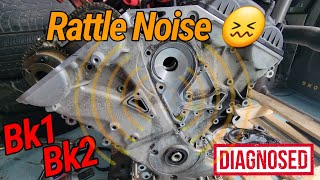
How to confirm: The most definitive method is using an oscilloscope to compare the crankshaft and camshaft position sensor signals to see if they are out of phase. A physical inspection after removing the engine's front timing cover is the final confirmation. A rattling noise on a cold start that goes away after a few seconds is a strong audible indicator of a failing tensioner. 🎬 Watch: Hear the rattling sound of a failing tensioner on startup.
Typical fix: Complete replacement of all three timing chains, all guides, and all tensioners. It is also wise to replace the water pump and VVT phasers (cam phasers) at the same time, as the labor to access them is the same. For BK2 models (2013-2016), use the updated parts specified in TSB 19-EM-001H.
Est. part cost: $400-$800 - Low or Dirty Engine Oil 🟡 Medium Probability The timing chain tensioners and VVT phasers are hydraulically operated by engine oil pressure. Low levels or dirty, sludgy oil can starve these components, preventing them from working correctly and leading to timing correlation errors. This is a primary contributor to premature timing component wear.
How to confirm: Check the oil level on the dipstick and inspect its color and consistency. If the oil is very dark, gritty, or below the 'low' mark, this could be a contributing factor. A history of infrequent oil changes significantly increases the risk.
Typical fix: Perform an oil and filter change using a high-quality full synthetic oil of the correct viscosity (refer to your owner's manual). Clear the codes and see if the problem returns. This is a critical first step but is unlikely to fix a chain that is already permanently stretched.
Est. part cost: $50-$100 - Faulty Oil Control Valve (OCV) / VVT Solenoid ⚪ Low Probability
How to confirm: The OCVs for Bank 1 can be tested by checking their internal resistance with a multimeter or by applying 12V to see if the solenoid actuates. A scan tool can also command them to operate while monitoring engine timing angles. A common diagnostic step is to swap the Bank 1 and Bank 2 OCVs to see if the code follows to the other bank (e.g., P0009).
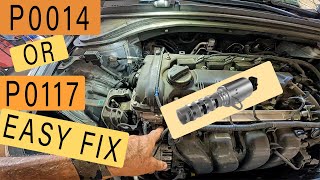
Typical fix: Replace the faulty OCV for Bank 1. 🎬 Watch: How to replace the VVT solenoid or oil control valve. There is one for the intake camshaft and one for the exhaust camshaft. The exhaust OCV is easily accessible, but the intake OCV on GDI models is under the intake manifold, requiring more labor.
Est. part cost: $60-$120
Rare But Worth Checking
- Faulty Camshaft or Crankshaft Position Sensor: While a sensor can fail, it is much less common for this code than a mechanical timing issue. The code P0008 indicates a correlation problem the sensors are correctly detecting, not necessarily a failure of the sensor itself. However, a sensor providing an erratic signal or one contaminated with metallic debris from a failing chain could theoretically trigger the code.
- Failed VVT Phaser (Cam Phaser): The VVT phaser is the gear on the end of the camshaft. It can get stuck or fail internally, but this is usually a consequence of poor oil maintenance or is replaced during a full timing chain service anyway. A broken pin on the phaser has also been reported.
Diagnosis Steps
- Check Engine Oil: Verify the oil level is full and the oil is clean. If low or dirty, perform an oil change, clear the codes, and see if the code returns.
- Scan for Other Codes: Check for other related codes (P0009, P0016, P0017, P030x) to help pinpoint the issue.
- Use an Advanced Scan Tool: Monitor the live data for camshaft and crankshaft position. A professional scan tool can show the commanded vs. actual cam timing angles. A deviation of more than a few degrees at idle often indicates a mechanical issue.
- Test Oil Control Valves (OCVs): Command the Bank 1 intake and exhaust OCVs with a scan tool to verify they are functioning and affecting cam timing. If they don't respond, test them electrically and check for clogged oil passages. Consider swapping with Bank 2 OCVs as a diagnostic test.
- Oscilloscope Analysis: Connect an oscilloscope to the Bank 1 camshaft position sensor(s) and the crankshaft position sensor. Compare the resulting waveforms to a known-good pattern. A stretched chain will show the cam signal lagging behind the crank signal. This is the most accurate non-invasive test.
- Mechanical Inspection: If all other tests point to a mechanical fault, the final step is to remove the engine's front timing cover to physically inspect the timing chains for slack, check the tensioners for proper extension, and look for broken plastic guides. This is a labor-intensive confirmation.
Parts You'll Likely Need
- Timing Chain Kit
(OEM #See TSB 19-EM-001H for BK2. BK1 kit includes: 24312-3C100 (Chain), 24410-3C300 (Tensioner), etc.)— This is the most common root cause. A complete kit ensures all wearable components (chains, guides, tensioners) are replaced at once.
Trusted brands: Hyundai (OEM), Beck/Arnley, Cloyes
OEM price range: $500-$700
Aftermarket price range: $300-$500 - Oil Control Valve (VVT Solenoid) - Bank 1
(OEM #Varies by intake/exhaust and production date.)— A potential, though less common, cause that is worth testing before committing to a timing chain job.
Trusted brands: Hyundai (OEM), Standard Motor Products (SMP)
OEM price range: $100-$150
Aftermarket price range: $60-$100
Related Codes That Often Appear With This One
- P0009 — This is the identical code but for Bank 2 (driver's side). If both P0008 and P0009 are present, it almost guarantees the primary timing chain (connecting the crankshaft to the intermediate sprockets) is stretched, as it affects both banks.
- P0016, P0017 — These are more specific timing correlation codes for Bank 1 (P0016 for intake cam, P0017 for exhaust cam). They often appear with P0008 and further confirm a timing problem on that specific bank, often pointing towards a specific camshaft or phaser issue.
- P0300, P0301, P0302, P0303 — These are misfire codes. P0300 is a random misfire, while P0301, P0302, etc., point to specific cylinders. Incorrect cam timing can cause misfires on the affected bank.
Technical Service Bulletins (TSBs) & Recalls
- TSB 19-EM-001H: Documents updated part numbers for timing chains and crankshaft sprockets for 2013-16 3.8L GDI engines. Crucially, it states the new and old parts cannot be interchanged and must be replaced as a set.
- TSB 10-EM-006: Provides a revised procedure for replacing timing chain tensioners on 3.3L/3.8L engines without removing the engine, suggesting the issue was common enough to warrant a streamlined repair process.
Mechanic-Grade Diagnostic Values
- Oil Control Valve (OCV) Coil Resistance — expected: 6.7 - 7.9 Ohms at 68°F (20°C), depending on supplier (Delphi or Denso).. Failure: A reading of infinity (open circuit) or near zero (short circuit).
- Crankshaft Position Sensor (CKPS) Coil Resistance (BK1) — expected: 630 - 770 Ohms at 77°F (25°C).. Failure: A reading significantly outside this range.
- Scan Tool Live Data: CVVT Timing Error — expected: Difference between 'Cam Actual Position' and 'Cam Desired Position' should be less than 20 degrees.. Failure: A persistent deviation greater than 20 degrees will trigger a fault code.
- Oil Control Valve (OCV) Bolt Torque — expected: 7.2 ~ 8.7 lb-ft (9.8 ~ 11.8 Nm).. Failure: N/A - This is a specification, not a diagnostic value. Incorrect torque can cause leaks or damage.
Scan Tool Commands That Help
- Hyundai GDS (or advanced generic scanner): CVVT (VVT) Solenoid Activation Test — Use this bidirectional command to manually activate the Bank 1 intake and exhaust OCVs. While monitoring live data for cam angle, a functioning valve should cause a noticeable change in the actual cam position. No change suggests a stuck/clogged valve, a wiring issue, or a failed solenoid.
Wiring & Ground Locations
- Engine Ground (Bank 2) — A key ground point for driver's side (Bank 2) components is located on the intake manifold itself.. While this ground is for Bank 2, a poor engine ground network can cause floating ground references and erratic sensor readings across the entire engine management system, potentially contributing to correlation codes like P0008. It's especially important to check after any work involving intake manifold removal.
- Primary ECU Ground Strap — Typically found in the engine bay on the driver's side, bolted to the chassis or shock tower area.. A loose or corroded main ECU ground can cause a host of unpredictable electrical issues and fault codes, including sensor correlation problems. The ECU needs a stable ground reference to accurately interpret signals from the crank and cam sensors.
Real Owner Repair Stories
- Reddit user on r/genesiscoupe (2012 (stated as 2013 model year) Genesis Coupe 3.8 Track, 46,000 miles) — RPMs dipping when stopped, occasional stalling at red lights. No startup rattle was reported.
❌ Tried (didn't work) The user took the car directly to a dealership for diagnosis.
✅ What actually fixed it The Hyundai dealership diagnosed the issue as a failed timing chain and recommended replacement of the timing chain and CVVT components. While the user was debating the high cost of the repair, this serves as a real-world example of P0008 symptoms leading to a professional diagnosis of timing chain failure even at low mileage and without the classic startup rattle. - Reddit user on r/genesiscoupe (2010 Genesis Coupe 3.8, 120,000 miles) — Unspecified 'timing chain problem'.
❌ Tried (didn't work) N/A, user was seeking advice on a $2,000 repair quote.
✅ What actually fixed it The community confirmed that a timing chain job was the necessary fix. One user advised to ensure the quote included replacing all CVVTs, tensioners, and chains, confirming that a complete system overhaul is the correct procedure, not just replacing one part.
OEM Part Supersession History
Timing Chain: 24312-3CGA2, Crank Sprocket (LH): 23121-3CGA3, Crank Sprocket (RH): 23122-3CGA1→Timing Chain: 24312-3L100, Crank Sprocket (LH): 23121-3L100, Crank Sprocket (RH): 23122-3L100— Hyundai updated the design of the timing chains and crankshaft sprockets for the 3.8L GDI engine.
Heads up: CRITICAL: The old and new parts cannot be interchanged. They must be replaced as a complete set (two chains and both crank sprockets). The tooth root diameter is different between the old and new designs. Using a new chain on an old sprocket or vice-versa will cause immediate timing issues and potential engine damage.
Model Year Variations Within This Range
- 2013-2016 (BK2): These models use the GDI (Gasoline Direct Injection) version of the 3.8L engine. They are subject to TSB 19-EM-001H, which specifies updated, non-interchangeable timing chain and crankshaft sprocket part numbers. The intake OCVs are also located under the intake manifold, making them harder to access than on the BK1.
- 2010-2012 (BK1): These models use the MPI (Multi-Port Injection) version of the 3.8L engine. While still prone to timing chain stretch, they use different timing chain part numbers than the later BK2 models and are not subject to TSB 19-EM-001H. Forum discussions suggest the BK2 chain design is stronger, but direct compatibility is not officially confirmed and should be approached with caution.
Diagnostic Flowchart
Other Known Issues on This Vehicle
Issues unrelated to this code that are worth knowing about as an owner of this generation:
- Manual Transmission Grind / Lockout 🟠 Medium — Very common, especially on earlier BK1 (2010-2012) models. Can occur when shifting into 2nd, 3rd, or 5th/6th gears. (Ref: No official recall, but widely discussed. Community fixes include using better transmission fluid (e.g., Redline MT-85), replacing the soft OEM transmission mount, and installing a stainless steel clutch line.)
- GDI Engine Carbon Buildup (BK2) 🟠 Medium — An inherent issue for all Gasoline Direct Injection (GDI) engines, including the 2013-2016 3.8L. Becomes problematic around 60,000-100,000 miles, causing reduced performance and rough idle. (Ref: No TSB. The only effective cleaning method is manual (walnut blasting or chemical soak), as fuel additives do not wash over the intake valves.)
- Taillight Condensation / Water Leak 🟡 Low — Extremely common across all model years. The foam gaskets for the taillight assemblies fail, allowing water to enter the lights and sometimes the trunk. (Ref: Hyundai has a general TSB for lamp condensation (e.g., 22-BD-002G) that distinguishes normal condensation from a water leak requiring repair, but no specific recall for the Genesis Coupe gaskets. The common fix is to replace the OEM gaskets with better ones or use silicone/weather stripping.)
- Peeling Interior Chrome Accents 🟡 Low — Common on higher-mileage vehicles. The chrome-like finish on plastic interior parts like door handles and cupholder rims flakes off.
- Excessive Oil Consumption 🟠 Medium — Reported by some owners, potentially due to worn piston rings or valve stem seals over time.
Used vs. New Parts: Buying Guide for This Vehicle
When a used part is the smart pick: For this repair, used parts are generally not recommended due to the high labor cost. However, if needed, a used Oil Control Valve (OCV) or a Cam/Crank Position Sensor from a low-mileage, verified-running donor car could be a cost-effective option. A complete used engine from a reputable salvage yard is a viable, though expensive, alternative to repairing a catastrophically failed engine.
Donor-vehicle mileage cap: roughly under 70000 miles for the part to have meaningful remaining life.
What to inspect on the donor part:
- For a complete engine, check for evidence of regular oil changes (no thick sludge under the oil cap).
- Ensure the donor vehicle was not in a severe front-end collision, which could damage the front engine cover and accessories.
- Ask for a video of the engine running before it was pulled, if possible.
- For small electronic parts like sensors, ensure there is no physical damage to the housing or connector.
OEM-only on this vehicle (don't cheap out):
- Timing Chain Kit (Chains, Guides, Tensioners): This is a high-labor, critical-tolerance job. The risk of premature failure with unverified aftermarket parts is too high. Use only Hyundai OEM or a top-tier OEM supplier like Cloyes.
- VVT Phasers (Cam Phasers): If these need replacement, OEM is strongly recommended due to the precise hydraulic and mechanical tolerances required.
Aftermarket brands forum-validated for this vehicle:
- Beck/Arnley (Often repackages OEM parts)
- Cloyes (A major OEM supplier for timing components)
Brands owners have reported issues with on this vehicle:
- Unnamed, no-brand 'complete' timing kits from online marketplaces. Forum users frequently warn against using cheap, unvetted timing components as they can fail quickly, requiring the entire expensive job to be redone.
Real Owner Stories
Aggregated from forums and TSBs cited above. Mileages and costs reflect what owners reported in those sources.
2013-2016 Hyundai Genesis Coupe 3.8L GDI — ~80000 miles
Symptoms: Reduced performance and rough idle; the engine was experiencing inherent GDI issues alongside timing concerns.
What fixed it: Manual cleaning of intake valves via walnut blasting or chemical soak to address carbon buildup, though mechanical timing components required the updated parts from TSB 19-EM-001H.
Source hint: Context regarding GDI Engine Carbon Buildup (BK2) and TSB 19-EM-001H
2010-2012 Hyundai Genesis Coupe 3.8L (BK1)
Symptoms: Rattling noise from the front of the engine, especially on startup.
What fixed it: Complete replacement of all three timing chains, all guides, and all tensioners using the OEM Hyundai Timing Set.
Source hint: Gencoupe Store - OEM Hyundai Timing Set: Genesis Coupe 3.8 BK1
Related OBD-II Codes
Frequently Asked Questions
Does TSB 19-EM-001H apply to my 2013-2016 Genesis Coupe 3.8L GDI?
I hear a rattling noise from the front of my engine only during cold starts; is this related to P0008?
Can I just replace the tensioners on my 3.8L Lambda engine without pulling the whole engine out?
Is there a specific oil I should use to prevent timing issues on my Genesis Coupe?
My 2014 Genesis Coupe is idling roughly and has P0008; could this be carbon buildup instead of the timing chain?
If I have to replace the timing chains, what else should I swap while the engine is open?
Helpful Videos

We Have This Part in Stock


The information in this article is provided for general reference and educational purposes only. Vehicle specifications, procedures, and part compatibility can vary by production date, trim level, and region. Always consult your vehicle's factory service manual and verify part numbers before purchasing or performing repairs. Safety-critical components such as airbags, seat belts, and braking systems should be installed by a qualified professional.
- Hyundai Genesis Coupe:
- 🎬 Helpful Videos
- 🛍️ Shop This Part
- What's Unique About the 2010-2016 Hyundai Genesis Coupe
- Symptoms You May Notice
- Most Likely Causes
- Rare But Worth Checking
- Diagnosis Steps
- Parts You'll Likely Need
- Related Codes That Often Appear With This One
- Technical Service Bulletins (TSBs) & Recalls
- Mechanic-Grade Diagnostic Values
- Scan Tool Commands That Help
- Wiring & Ground Locations
- Real Owner Repair Stories
- OEM Part Supersession History
- Model Year Variations Within This Range
- Diagnostic Flowchart
- Other Known Issues on This Vehicle
- Used vs. New Parts: Buying Guide for This Vehicle
- Real Owner Stories
- 2013-2016 Hyundai Genesis Coupe 3.8L GDI — ~80000 miles
- 2010-2012 Hyundai Genesis Coupe 3.8L (BK1)
- Related OBD-II Codes
- Frequently Asked Questions
- 🎟️ Get 5% Off