

P0008 on 2017-2018 Chevrolet Traverse: Stretched Timing Chain Causes and Fixes
Code P0008 on a 2017-2018 Traverse almost always indicates stretched timing chains, a well-known issue with the 3.6L V6 engine. This is a major, expensive repair often costing $2,500-$4,000 that requires replacing the chains, tensioners, and guides. Ignoring the code can lead to catastrophic engine failure.
- P0008 on a 2017-2018 Traverse indicates a serious mechanical engine timing problem, not a simple sensor fault.
- The cause is almost certainly stretched timing chains, a known, widespread issue with the GM 3.6L V6 engine.
- This is a very expensive repair ($2,500+) and should not be ignored, as continued driving risks catastrophic engine failure.
- The correct fix involves replacing the complete timing chain system (chains, tensioners, guides) with updated parts.
- Using high-quality full synthetic oil and adhering to regular oil change intervals is critical to maximizing the life of the new timing components.
What's Unique About the 2017-2018 Chevrolet Traverse
The GM 3.6L High Feature V6 engine family (including the LFX and LFY) has a long, well-documented history of premature timing chain stretching. The problem is so common it's considered a pattern failure. Key contributing factors include the original timing chain design being prone to wear, and the factory's long recommended oil change intervals (based on the Oil Life Monitor), which can lead to oil degradation. Degraded or low oil cannot properly supply the hydraulic tensioners, accelerating wear. GM has released multiple updated timing chain kits and TSBs over the years to address this, such as TSB #12-06-01-009G.
Diagnostic Flowchart
Tap your situation to follow the diagnostic path that matches what you're seeing on this vehicle.
Generation note: The 2017 model year was the last of the first-generation Traverse, while 2018 marked the start of the second generation. Both primarily used a 3.6L V6 engine (the LFX in 2017, and the updated LFY/LGX in 2018) and both are known to be susceptible to the timing chain issues that cause code P0008. The underlying engine architecture and timing system design remained similar, carrying the pattern failure forward.
Symptoms You May Notice
- Check Engine Light is on
- Rattling, scraping, or chain-like noise from the engine, especially on cold starts, that may quiet down as the engine warms up. 🎬 Hear the clattering noise and learn how to fix it. [ODI #11433973, 5]
- Reduced engine power or sluggish acceleration. [ODI #11204288, 26]
- Rough or unstable idle.
- Poor fuel economy.
- Other warning lights, such as "Service Stabilitrak" may appear in conjunction. [ODI #11399127]
- Slightly longer engine cranking time before it starts.
- Replacing only the camshaft or crankshaft position sensors without verifying mechanical timing.
- Performing an engine oil flush hoping it will fix the problem, as mentioned in owner complaint ODI #10819772. An oil change cannot reverse mechanical stretch in a timing chain.
- Replacing only one or two of the three timing chains, or reusing old tensioners or guides. A complete kit is required for a lasting repair.
Most Likely Causes
- Stretched Timing Chains 🔴 High Probability This is a widely documented issue on the GM 3.6L V6 engine family due to the original chain design being susceptible to wear in the chain link pin holes. TSB #PIP3423P and the more comprehensive TSB #12-06-01-009 series directly point to this cause for codes like P0008.
How to confirm: An advanced scan tool can read cam/crank deviation data; a consistent deviation beyond +/- 4 degrees often confirms a timing issue. The definitive method is physical inspection by removing the timing cover to measure chain slack. An oscilloscope can also be used to compare cam and crank sensor waveforms against a known-good pattern to diagnose stretch electronically. 🎬 Watch: How to test timing chain stretch using a labscope.
Typical fix: Replace all three timing chains (one primary, two secondary), all tensioners, and all guides with a complete, updated kit.
Est. part cost: $400-$800 - Failed Timing Chain Tensioners 🔴 High Probability The tensioners are hydraulic and can weaken, get clogged with sludge, or fail, allowing the chains to become slack. They are considered a wear item and are always replaced as part of a complete timing chain service. TSB #PIP3423P also lists tensioners as a primary inspection point.
How to confirm: A rattling noise on startup that quickly fades is a classic symptom. Definitive diagnosis occurs during physical inspection when replacing the timing chains. A failed tensioner will not hold pressure or will be visibly stuck.
Typical fix: Replace as part of a complete timing chain kit. It is not recommended to replace only the tensioners.
Est. part cost: $100-$200 (if bought separately) - Low or Degraded Engine Oil 🟡 Medium Probability The timing chain tensioners and VVT phasers are hydraulically operated. Low oil levels or oil that has broken down from extended change intervals cannot provide adequate hydraulic pressure, accelerating wear on the chains and guides. Using oil that does not meet GM's dexos1 specification can also contribute to premature wear.
How to confirm: Check the oil level on the dipstick and inspect its condition and service history. This is a primary contributing factor, not a standalone cause once the code is set and chains are already stretched.
Typical fix: Perform an oil and filter change with a high-quality full synthetic oil meeting GM's dexos1 Gen 2 or Gen 3 specification. This is critical for the longevity of new timing components but will not fix an already stretched chain.
Est. part cost: $50-$100
Rare But Worth Checking
- Faulty Camshaft or Crankshaft Position Sensor: While a sensor can fail, it is a very uncommon cause for P0008 on this engine. Many owners and shops mistakenly replace these sensors first, only to find the code returns because the underlying mechanical issue was not addressed. This should only be considered after mechanical timing has been verified as correct.
- Slipped Crankshaft Reluctor Wheel: Multiple GM service bulletins (including PIP3423P) mention the possibility of the reluctor wheel on the crankshaft moving from its pressed-on position. This throws off the crankshaft position sensor's readings and perfectly mimics a stretched chain. Diagnosis may involve removing the oil pan for visual inspection or using a borescope.
Diagnosis Steps
- Verify the code P0008 and any other related codes with an OBD-II scanner.
- Check the engine oil level and condition. Low or dirty oil is a major contributing factor and can indicate neglect that accelerates chain wear.
- Listen for a distinct rattling or scraping noise from the front of the engine (passenger side), especially during a cold start.
- Use a professional scan tool to monitor live data for Camshaft Angle Variance PIDs. A consistent deviation of more than 4-6 degrees on Bank 1 camshafts at idle or 2000 RPM points to a mechanical timing issue.
- If scan data confirms a timing issue, the required fix is to replace the timing components. Physical inspection is performed during the repair itself.
- If timing components are replaced and the code persists, or if scan data is ambiguous, inspect the crankshaft reluctor wheel for movement as per TSB PIP3423P, which may require oil pan removal.
Parts You'll Likely Need
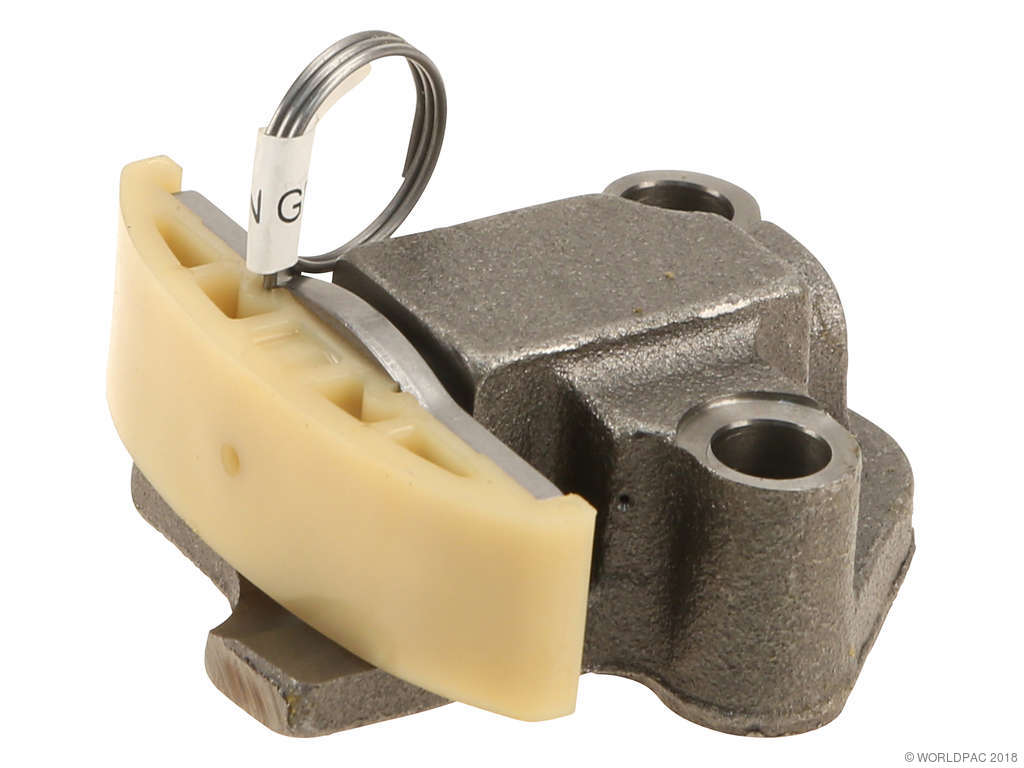
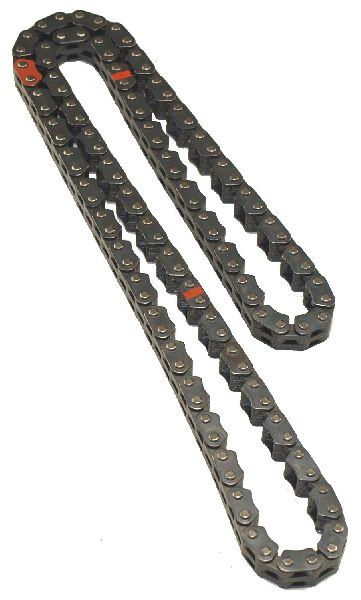
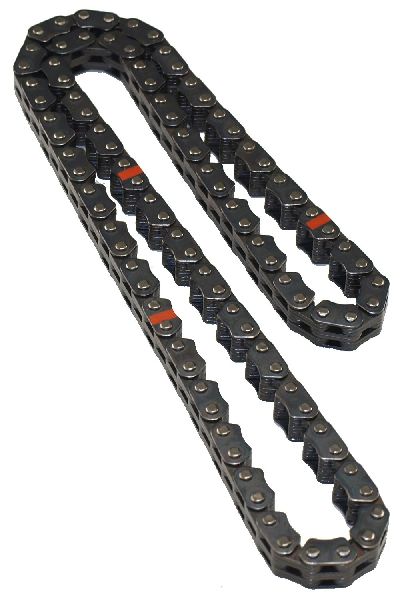
- Engine Timing Chain Kit
(OEM #12651450 (This is a common kit number for LFX engines, verify by VIN))— This is the definitive fix. A complete kit replaces all three chains, all tensioners, and all plastic guides, which are the components that wear out and cause the code. Using an updated kit from GM or a reputable aftermarket brand is crucial.
Trusted brands: ACDelco (GM Original Equipment), Cloyes
OEM price range: $500-$900
Aftermarket price range: $400-$700
Related Codes That Often Appear With This One
- P0017 — Crankshaft Position - Camshaft Position Correlation Bank 1 Exhaust. This is a more specific code pointing to the same bank and is often set with P0008. [ODI #11399127, ODI #10819772]
- P0009 — Engine Position System Performance Bank 2. This is the equivalent code for the other cylinder bank (front of the engine). If both P0008 and P0009 are present, it strongly confirms a stretched primary timing chain affecting both banks.
- P0016, P0018, P0019 — These are all additional crankshaft-to-camshaft correlation codes for both banks. Their presence alongside P0008 reinforces the diagnosis of a major mechanical timing system failure. TSB #12-06-01-009 and PIP3423P explicitly list all these codes as being related to the same timing chain issue.
Technical Service Bulletins (TSBs) & Recalls
- PIP3423P: Advises technicians to inspect for loose timing chains or tensioners when codes P0008, P0009, P0016, P0017, P0018, or P0019 are set. Also mentions checking for a slipped crankshaft reluctor wheel.
- 12-06-01-009G (and previous versions): Provides information on updated timing chain kits and clarifies that guides should only be replaced
Platform-Specific Known Issues
- The GM 3.6L V6 engine has a well-documented history of premature timing chain failure across numerous models and years.
- GM issued Technical Service Bulletin #PIP3423P and the #12-06-01-009 series, which directly link code P0008 to loose timing chains or tensioners and provide diagnostic guidance.
- Owner complaints filed with the NHTSA for earlier model years confirm this issue, with reports of stretched chains leading to expensive repairs. [ODI #11433973, ODI #11204288]
- While special coverage programs (e.g., #11340C) were issued for older models with this engine, they are unlikely to apply to the 2017-2018 model years and have expired for most others.
Mechanic-Grade Diagnostic Values
- Scan Tool Cam/Crank Correlation Variance — expected: Less than 6 degrees of variance.. Failure: The ECM will set P0008 if it detects a misalignment greater than 6 degrees for a cumulative period.
- VVT Actuator Solenoid Coil Resistance — expected: 8 - 12 Ohms.. Failure: A reading significantly outside this range, such as an open circuit (OL) or very high resistance, indicates a failed solenoid coil.
- Crankshaft Reluctor Wheel Position Measurement — expected: 25 to 26 mm from the machined surface of the crankshaft throw to the edge of the open space in the reluctor.. Failure: Any measurement outside this range indicates the reluctor has slipped, which requires crankshaft replacement.
Scan Tool Commands That Help
- GDS2 (GM Techline): Camshaft Position Actuator Solenoid Test — This bidirectional command allows a technician to manually command the VVT solenoids on and off while monitoring cam position sensor data. It helps determine if a solenoid is mechanically stuck or not responding to ECM commands, which is a useful (though unlikely) diagnostic step before condemning the timing chains.
Wiring & Ground Locations
- G110 — On the right rear of the engine, mounted to the back of the cylinder head, sometimes on a bracket above the power steering pump hose.. This is a primary engine ground on the same bank as the P0008 fault (Bank 1). A loose or corroded G110 could impact the reference voltage or signal integrity for the Bank 1 camshaft sensors and VVT solenoids, potentially causing erratic readings.
- G103 — Located at the left rear of the engine compartment on the cowl, often above the brake booster.. This is a major ground point for the Engine Control Module (ECM). A poor connection here can cause unpredictable ECM behavior and a wide range of false codes, so it's a critical point to check for any electrical-related engine issue.
- ECM Connectors (X1/X2) — The ECM is typically located in the engine compartment. Its connectors are the central hub for all sensor inputs and actuator outputs.. All signals from the crankshaft and camshaft position sensors, as well as control signals to the VVT solenoids, route through these connectors. Verifying pin integrity and checking for corrosion is a key step if a wiring issue is suspected.
Real Owner Repair Stories
- Reddit user on r/ChevyTraverse (2010 Chevrolet Traverse LTZ, 179,000+ miles) — Check Engine Light with code P0008, vehicle running sluggishly.
❌ Tried (didn't work) The user was contemplating the repair and had not yet tried any fixes.
✅ What actually fixed it The user was quoted $2,500+ for a timing chain replacement, which is the standard and accepted fix for this code and symptom on a high-mileage 3.6L engine. The story confirms the high cost and commonality of the issue.
OEM Part Supersession History
Various early part numbers, including 12651450→12693218, then 12700436, then 12700437 (for LFX)— GM released multiple revisions of the timing chain kits to improve the durability of the chains and tensioners, addressing the premature stretching and wear issues.
Heads up: It is critical to verify the correct kit part number using the vehicle's VIN. Different kits exist for different engine codes (LY7, LLT, LFX) and vehicle platforms. Using the latest available part number ensures the most durable components are installed.
Model Year Variations Within This Range
- 2017 vs 2018: The 2017 Traverse (first generation) uses the 3.6L LFX V6. The 2018 Traverse (second generation) introduced the updated 3.6L LFY/LGX V6. While both engines are part of the same 'High Feature' family and can suffer from timing chain issues, the LGX was a significant redesign with a reportedly more durable timing system. However, the fundamental cause of P0008 (cam/crank correlation) remains the same, and timing chain wear is still the primary suspect on both engines.
Helpful Videos
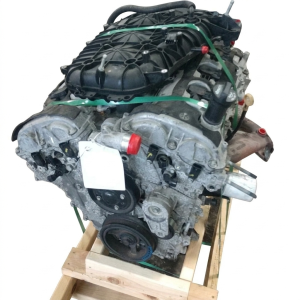
Used OEM Parts in Stock

New Aftermarket Parts Available

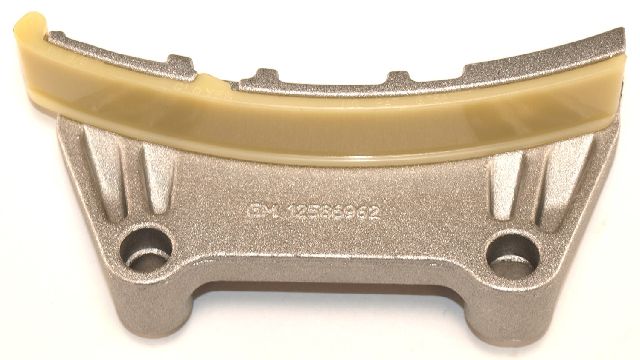

The information in this article is provided for general reference and educational purposes only. Vehicle specifications, procedures, and part compatibility can vary by production date, trim level, and region. Always consult your vehicle's factory service manual and verify part numbers before purchasing or performing repairs. Safety-critical components such as airbags, seat belts, and braking systems should be installed by a qualified professional.
- Chevrolet TRAVERSE:
- 🎬 Helpful Videos
- 🛍️ Shop This Part
- What's Unique About the 2017-2018 Chevrolet Traverse
- Diagnostic Flowchart
- Symptoms You May Notice
- Most Likely Causes
- Rare But Worth Checking
- Diagnosis Steps
- Parts You'll Likely Need
- Related Codes That Often Appear With This One
- Technical Service Bulletins (TSBs) & Recalls
- Platform-Specific Known Issues
- Mechanic-Grade Diagnostic Values
- Scan Tool Commands That Help
- Wiring & Ground Locations
- Real Owner Repair Stories
- OEM Part Supersession History
- Model Year Variations Within This Range
- 🎟️ Get 5% Off