

C1717 on 2010-2020 Rolls-Royce Ghost: Phantom Code and Air Suspension Faults
On a 2010-2020 Rolls-Royce Ghost, code C1717 is almost always a 'phantom code' from a generic OBD-II scanner that cannot read Rolls-Royce/BMW specific faults. The first and only step should be to have the vehicle scanned with a professional, BMW-compatible tool like ISTA to find the true chassis fault, which is likely related to the air suspension system causing a 'Chassis Stabilization Malfunction' warning.
- Code C1717 on a Rolls-Royce Ghost is not a real fault code. It is an error from a generic scanner.
- Do NOT buy any parts or attempt any repairs based on C1717.
- The first and most important step is to have the vehicle scanned with a professional tool that can read Rolls-Royce/BMW specific codes.
- The actual problem is most likely a leak in an air spring or a failing air suspension compressor.
- Due to the complexity and need for specialized tools, this issue should be diagnosed and repaired by a professional service center familiar with Rolls-Royce or BMW vehicles.
What's Unique About the 2010-2020 Rolls-Royce Ghost
The Rolls-Royce Ghost from this era is built on the BMW 7 Series (F01) platform and shares its complex electronic architecture, including the four-corner air suspension and chassis stability systems. In the BMW world, C1717 is widely known as a 'phantom code' that appears when using non-specialized scan tools. Therefore, the experience on a Ghost is identical: the code is a red herring, and the true fault can only be read by a diagnostic tool capable of communicating with BMW/Rolls-Royce specific modules, such as ISTA/D (Integrated Service Technical Application/Diagnosis).
Generation note: The 2010-2020 period covers the Ghost Series I (2009–2014) and the facelifted Ghost Series II (2014–2020). Both are based on the same BMW F01 platform and share the same air suspension and chassis systems, so the diagnostic approach for code C1717 is identical for both series.
Symptoms You May Notice
- A 'Chassis Stabilization Malfunction' or 'Suspension Fault' warning message on the driver information display.
- The vehicle's rear or one corner is sagging or sitting lower than normal, especially after being parked overnight.
- A harsh, bouncy, or uncomfortable ride quality.
- The air suspension compressor is heard running constantly, very loudly, or not at all.
- A hissing sound from the rear of the vehicle, indicating a potential air leak.
- Vehicle ride height cannot be adjusted or the 'lift' function is inoperative.
- Replacing any part based on the C1717 code itself. The code is not a valid diagnosis and will lead to wasted time and money.
- Replacing a single air spring when the compressor is also worn out. If a new spring is installed and the car still won't lift, the overworked compressor is likely the next point of failure.
Most Likely Causes
- Use of a Generic OBD-II Scanner 🔴 High Probability The complex, proprietary nature of BMW/Rolls-Royce chassis modules (like the EHC - Electronic Height Control) cannot be interpreted by basic code readers, which then display a default or 'phantom' code like C1717.
How to confirm: Scan the vehicle with a professional, dealer-level diagnostic tool (like Autologic, Snap-on with European software, or BMW's ISTA software). The true, specific fault code will be revealed in the chassis module.
Typical fix: No parts are replaced for C1717 itself. The fix is to obtain the correct code and diagnose the actual problem, which is often one of the causes listed below.
Est. part cost: $0 - Leaking Air Spring / Air Strut 🟡 Medium Probability The rubber bellows of the air springs are a common wear item. Over time, they develop microscopic cracks from age and environmental exposure, leading to slow leaks. This is a very common failure on the underlying BMW F01 platform.
How to confirm: After parking, listen for hissing or observe if a corner of the car sags over several hours. A definitive test involves spraying the air springs (especially the fold creases) with soapy water and looking for bubbles. A professional scan tool will likely show codes related to 'control time' or 'pressure loss when filling'.
Typical fix: Replace the leaking air spring. It is highly recommended to replace them in pairs (both rears) to ensure even performance and prevent premature failure of the other side. Rear strut replacement requires significant interior disassembly to access the top mounting bolts.
Est. part cost: $800-$1500 per strut - Failed Air Suspension Compressor ⚪ Low Probability The compressor, often a WABCO unit, fails from being overworked due to an undetected leak in the system. It runs constantly trying to maintain pressure until the internal piston wears out or the motor burns out.
How to confirm: The compressor makes no noise when it should be running, or it runs very loudly with a noticeable knocking sound. A professional scan may show codes related to the compressor relay, temperature sensor, or its inability to generate pressure in the allotted time.
Typical fix: Replace the air suspension compressor and its associated relay. It is critical to find and fix any leaks in the system *before* replacing the compressor to prevent the new one from failing.
Est. part cost: $700-$1200
Rare But Worth Checking
- Faulty Ride Height Sensor: These sensors, located on the control arms, are exposed to the elements. Physical damage to the sensor or its linkage, or electrical failure from corrosion, can provide incorrect data to the suspension module, causing a fault. A scan tool can read the live data from each sensor to check for plausibility.
- Leaking Air Line or Valve Block: Less common than a leaking spring, the valve block that distributes air or the lines themselves can develop leaks, usually at the brass fittings. A stuck solenoid inside the valve block can also prevent a corner from raising or lowering.
- Low Battery Voltage: These vehicles are extremely sensitive to battery voltage. An old or weak battery can cause numerous, seemingly random electronic faults, including chassis system errors, during startup. If the 'Chassis Stabilization' error appears only on startup and disappears after a restart, low voltage is a strong suspect.
Diagnosis Steps
- STOP. Do not proceed with any diagnosis based on code C1717.
- Take the vehicle to a qualified independent specialist or a Rolls-Royce dealer.
- Request a full diagnostic scan using a tool compatible with Rolls-Royce/BMW chassis systems (e.g., ISTA/D).
- Record the specific, proprietary fault codes stored in the EHC (Electronic Height Control) or ICM (Integrated Chassis Management) modules.
- Diagnose the problem based on the *actual* fault codes found. For example, if a code for 'pressure loss when filling' is found, proceed to check for leaks.
- If a leak is suspected, perform a soapy water test on air springs and air lines to locate the source. Pay close attention to the rubber bellows of the air springs.
- If a compressor fault is indicated, check the associated 40-amp relay (often a green relay located near the compressor or in a fuse panel) before condemning the compressor itself. The relay is a mandatory replacement item when installing a new compressor.
- If a ride height sensor is suspected, use the scan tool to monitor live data from all four sensors while raising and lowering the vehicle to spot erratic readings.
Parts You'll Likely Need
- Professional Diagnostic Scan — This is not a physical part, but it is the mandatory first step. It is required to translate the phantom C1717 code into a real, actionable Rolls-Royce/BMW fault code.
OEM price range: $150-$350 - Rear Air Spring
(OEM #37126851605 (Left), 37126851606 (Right). Supersedes: 37126795873, 37126795874.)— Leaking rear air springs are the most common underlying cause of air suspension faults on this platform.
Trusted brands: Arnott (Part #A3636 for rebuild kit), Aerosus, Bilstein
OEM price range: $1000-$1500
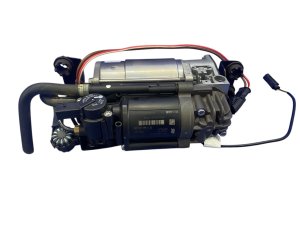
Aftermarket price range: $400-$700 - Air Suspension Compressor
(OEM #37206886059 (Supersedes: 37206850319, 37206782222).)— The compressor is the second most likely component to fail, usually as a consequence of an unaddressed air leak.
Trusted brands: WABCO (OEM Supplier), Arnott, Aerosus
OEM price range: $1200-$1800
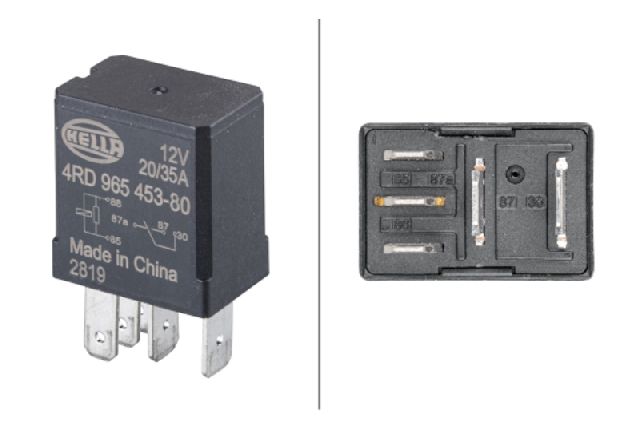
Aftermarket price range: $600-$900 - Air Suspension Compressor Relay
(OEM #61366901469)— This relay is a known failure point and can get stuck, burning out the compressor. It is mandatory to replace it whenever the compressor is replaced to ensure warranty coverage and prevent repeat failure.
Trusted brands: Genuine BMW/Rolls-Royce
OEM price range: $20-$40
Aftermarket price range: $10-$20
Related Codes That Often Appear With This One
- BMW-specific codes like '4809B1 - EHC: Control time, lifting, rear axle' or '4809B2 - EHC: Control time, lowering, rear axle', which indicate the system is taking too long to reach the target height, often due to a leak or weak compressor.
Technical Service Bulletins (TSBs) & Recalls
- Recall for 2009-2011 Ghost models regarding a potential fault in the auxiliary water pump for the turbocharger cooling system, which could lead to overheating and a fire risk. While not directly related to the C1717 code, it is a significant known issue for early models.
Platform-Specific Known Issues
- Rear strut replacement on the Ghost is significantly more labor-intensive than on its BMW 7 Series platform-mate. Accessing the three top mounting bolts requires removing the rear seats, C-pillar trim, and the rear parcel shelf.
Mechanic-Grade Diagnostic Values
- Ride Height Sensor Supply Voltage — expected: 5V. Failure: No voltage or significantly lower voltage indicates a wiring or module issue.
- Ride Height Sensor Signal Voltage — expected: A variable analog voltage that changes linearly as the suspension compresses and rebounds.. Failure: A static, zero, or maxed-out voltage reading when the suspension is moved indicates a failed sensor or broken linkage.
- Air Compressor Maximum Output Pressure (Bi-directional Test) — expected: Approximately 180 PSI. Failure: A compressor that cannot reach target pressure in the allotted time during a scan tool activation test is weak and likely worn out.
- Air Compressor Current Draw — expected: Varies, but should be a steady draw when running.. Failure: An unusually high current draw can indicate a struggling motor, while no draw indicates an open circuit or failed motor. An amp clamp is used for this test.
Hidden / Shadow Codes Worth Checking
- 4809B1 / 4809B2: EHC: Control time, lifting/lowering, rear axle. This means the system took too long to reach the target ride height, usually due to an air leak or a weak compressor. (see via BMW ISTA/D or equivalent professional scanner connected to the EHC (Electronic Height Control) module.)
- EHC 45 / EHC 245: A generic 'Level Control System Failure' code stored in the EHC module, indicating a fault has been detected within the system. (see via BMW ISTA/D or equivalent professional scanner.)
Scan Tool Commands That Help
- ISTA/D: Ride Height Calibration / Ride-level adjustment — This is required after replacing any suspension height-related component like a sensor or air spring. It is also used to correct an uneven stance. The function reads the current height values and allows the technician to enter new target values to level the vehicle.
- ISTA/D or equivalent (Autologic, etc.): Component Activation (Compressor, Valve Block Solenoids) — Used to individually test components. A technician can command the compressor to run to test its output, or command individual solenoids in the valve block to open/close to check for sticking valves or blockages.
- ISTA/D: System Bleeding / Venting — To safely depressurize an air spring before removal. This prevents injury and damage to components.
- ISTA/D: ICM Start-up Procedure — After replacing or disconnecting the Integrated Chassis Management (ICM) module, this procedure may be required to re-initialize the system and ensure all chassis components communicate correctly.
Wiring & Ground Locations
- EHC Control Unit (A61) — In the luggage compartment (trunk), on the right-hand side, mounted in a module carrier behind the trim panel.. This is the brain of the air suspension system. All sensor inputs and component commands originate here. It is a primary point for checking connectors and for potential water damage if the trunk has a leak.
- Air Suspension Compressor Relay — In the luggage compartment (trunk), on the right-hand side, often near the battery or EHC module carrier. It is typically a green 5-pin relay.. This relay is a common failure point. If it gets stuck in the 'on' position, it will burn out the compressor. If it fails open, the compressor will never turn on. It's a cheap part that should always be checked and replaced with the compressor.
- Air Supply Unit (Compressor and Valve Block) — Mounted underneath the vehicle on the trunk floor, typically near the center, and protected by a plastic cover.. This is the location for physically inspecting the compressor, valve block, and their associated air line connections and electrical plugs.
Real Owner Repair Stories
- Bimmerpost user M_Bimmer on 7Post forum (2014 BMW 750Li xDrive (F02 Platform, mechanically similar to Ghost)) — Chassis stabilization malfunction, vehicle not raising.
❌ Tried (didn't work) Replacing fuses., Charging the battery (though low voltage is a common cause)., Clearing codes without a systematic diagnosis.
✅ What actually fixed it The user was guided through a professional diagnostic process using ISTA. The key steps were: 1. Verifying the EHC module (A61) in the right rear trunk was not damaged by water. 2. Physically inspecting the ride height sensor arms to ensure they were intact. 3. Running the ICM (Integrated Chassis Management) 'start-up' procedure. 4. Finally, performing the 'Ride Height Calibration' service function in ISTA to re-level the system. The resolution was procedural and software-based after confirming hardware integrity. - YouTube channel 'LMAC VLOGS' (BMW F11 5-Series Touring (uses the same rear air suspension principle)) — Rear of the car sitting low, compressor running but car not lifting.
❌ Tried (didn't work) Initially suspecting the compressor was completely dead, but it would run intermittently.
✅ What actually fixed it A systematic diagnosis was performed: 1. Checked the 40A fuse (it was good). 2. Manually bridged the compressor relay to force the compressor on, confirming the relay worked and the compressor could run. 3. Used an amp clamp to find the compressor had a high current draw, indicating it was worn. 4. Used a diagnostic tool (Autologic) to try and inflate the springs, but it failed. 5. Applied soapy water to the left air spring and found significant bubbling, confirming a large leak. The final fix was replacing the leaking left air spring and the overworked compressor.
OEM Part Supersession History
37206782222→37206850319, then 37206886059— Component revision and updates by the manufacturer (WABCO/BMW/Rolls-Royce).
Heads up: The part number 37206886059 is listed for the compressor/valve block assembly and fits the Ghost, Wraith, and Dawn models from this era, indicating broad compatibility.
Model Year Variations Within This Range
- 2014-2020 (Series II): The Ghost Series II received a refined suspension system with tweaked rear axle bearings for improved stability and noise reduction. It also introduced Satellite Aided Transmission (SAT), which uses GPS to anticipate curves and select gears, but this system is separate from the EHC air suspension control. The fundamental components and diagnostic approach for air suspension faults remain identical to the Series I.
Diagnostic Flowchart
Other Known Issues on This Vehicle
Issues unrelated to this code that are worth knowing about as an owner of this generation:
- High-Pressure Fuel Pump (HPFP) Failure 🔴 High — A known weak point on the N74 engine. Failure can occur at various mileages, causing long crank times, rough running, and power loss.
- Oil Leaks (Valve Cover Gaskets, Turbo Oil Lines) 🟠 Medium — Common on high-performance, high-heat twin-turbo engines. Gaskets degrade over time, leading to oil smells and drips.
- Electric Water Pump / Cooling System Issues 🔴 High — The electric water pump can fail without warning, leading to rapid overheating which can cause severe engine damage. Coolant leaks are also common. (Ref: A recall was issued for an auxiliary water pump on 2009-2011 models.)
- Carbon Buildup on Intake Valves 🟠 Medium — A common issue for all direct-injection engines. Over 50,000-80,000 miles, buildup can restrict airflow, causing misfires and reduced performance.
- Piezo Fuel Injector Failure 🔴 High — Early index injectors were prone to failure. When one fails, it is often recommended to replace the entire bank or all 12, which is very expensive.
- Heavy Brake Wear 🟡 Low — Due to the vehicle's substantial weight, brake pads and rotors wear more quickly than on lighter cars, especially with frequent hard braking.
Used vs. New Parts: Buying Guide for This Vehicle
When a used part is the smart pick: Control modules (like the EHC) and valve blocks are generally safe to purchase used from a reputable dismantler, provided they come from a vehicle with no signs of water damage. A used compressor can be a cost-effective option if it's from a low-mileage, accident-damaged vehicle where the suspension was known to be working.
Donor-vehicle mileage cap: roughly under 60000 miles for the part to have meaningful remaining life.
What to inspect on the donor part:
- For EHC modules, insist on photos of the connectors to check for any pin corrosion.
- For compressors, check the manufacturing date on the unit; newer is always better.
- Verify the donor vehicle's VIN to ensure it wasn't parted out due to a suspension-related failure.
OEM-only on this vehicle (don't cheap out):
- Compressor Relay: This is a low-cost, high-importance part. There is no reason to use a used or unverified aftermarket relay when an OEM one is inexpensive and critical for the compressor's longevity.
Aftermarket brands forum-validated for this vehicle:
- Bilstein: Often the original equipment manufacturer for the shock absorber component of the strut. Considered a top-tier replacement that retains factory ride quality.
- WABCO: The OEM supplier for the air suspension compressor. Buying a WABCO-branded compressor is equivalent to getting the genuine part without the dealer markup.
Brands owners have reported issues with on this vehicle:
- Arnott (with caution): While very popular and previously offering a lifetime warranty (now 2-year), some owners on forums have reported premature clunking noises from their remanufactured struts after a couple of years. Their new (non-remanufactured) struts may not retain the vehicle's adaptive damping features.
- Unbranded/No-name eBay/Amazon parts: These often use inferior rubber for the air spring bellows and cheaper internal components for compressors, leading to very short service life. The low initial cost is often negated by the need for frequent replacement.
Real Owner Stories
Aggregated from forums and TSBs cited above. Mileages and costs reflect what owners reported in those sources.
2015 Rolls-Royce Ghost
Symptoms: The vehicle displayed a 'cornering ability restricted' light and the ride height control became inoperative immediately following a tire puncture.
What fixed it: The issue was linked to the tire failure affecting the chassis management system's ability to regulate height.
Source hint: PistonHeads - 'RR Ghost diagnostics'
2010 Rolls-Royce Ghost V12 — ~65000 miles
Symptoms: Owner noted the vehicle was sagging on one corner after being parked overnight and described the ride as harsh and bouncy.
What fixed it: Replacement of the leaking rear air springs (bellows) which had developed microscopic cracks due to age.
Source hint: Article Context - common_causes and symptoms
Related OBD-II Codes
Frequently Asked Questions
My 2010 Rolls-Royce Ghost is sagging in the rear; is there a recall for the air suspension?
Why does my generic scanner show code C1717 when my Ghost has a 'Chassis Stabilization Malfunction' message?
I hear a hissing sound from the rear of my Ghost after parking. What should I check?
Can I just replace one rear air strut to save on costs?
My compressor is running constantly and loudly. Is the compressor the only part I need to replace?
Does the Ghost share suspension parts with any other vehicles?
Helpful Videos
Used OEM Parts in Stock

New Aftermarket Parts Available

The information in this article is provided for general reference and educational purposes only. Vehicle specifications, procedures, and part compatibility can vary by production date, trim level, and region. Always consult your vehicle's factory service manual and verify part numbers before purchasing or performing repairs. Safety-critical components such as airbags, seat belts, and braking systems should be installed by a qualified professional.
- Rolls-Royce Ghost:
- 🎬 Helpful Videos
- 🛍️ Shop This Part
- What's Unique About the 2010-2020 Rolls-Royce Ghost
- Symptoms You May Notice
- Most Likely Causes
- Rare But Worth Checking
- Diagnosis Steps
- Parts You'll Likely Need
- Related Codes That Often Appear With This One
- Technical Service Bulletins (TSBs) & Recalls
- Platform-Specific Known Issues
- Mechanic-Grade Diagnostic Values
- Hidden / Shadow Codes Worth Checking
- Scan Tool Commands That Help
- Wiring & Ground Locations
- Real Owner Repair Stories
- OEM Part Supersession History
- Model Year Variations Within This Range
- Diagnostic Flowchart
- Other Known Issues on This Vehicle
- Used vs. New Parts: Buying Guide for This Vehicle
- Real Owner Stories
- 2015 Rolls-Royce Ghost
- 2010 Rolls-Royce Ghost V12 — ~65000 miles
- Related OBD-II Codes
- Frequently Asked Questions
- 🎟️ Get 5% Off