

C1219 on 2005-2019 Hyundai Sonata: Steering Angle Sensor Causes and Fixes
Code C1219 on a Hyundai Sonata means the Electronic Stability Control (ESC) is disabled due to an erratic signal from the Steering Angle Sensor (SAS). The most common fix is a simple SAS recalibration after an alignment or battery change. If the steering wheel was removed for a repair, it may have been reinstalled 360 degrees off, requiring physical re-indexing. If hardware has failed, the repair differs by generation: on 2005-2010 (NF) models, it's often a failed clock spring assembly. On 2011-
- C1219 means your stability control is off due to a steering sensor fault. Drive with extra care.
- Always try a Steering Angle Sensor (SAS) calibration with a scan tool first, especially after an alignment or battery change. This is the cheapest and most common fix.
- If calibration doesn't work, check for other failed steering wheel functions (horn, buttons). If they are also broken, the clock spring is the likely problem.
- Be aware that on many 2011+ Sonatas, the sensor is inside the steering column, making it a very expensive repair if the sensor itself has failed.
- This is not a DIY-friendly repair for beginners due to the need for a professional scan tool and the dangers of handling the airbag.
What's Unique About the 2005-2019 Hyundai Sonata
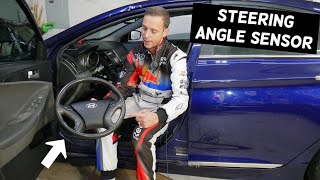
On the Hyundai Sonata, the location of the Steering Angle Sensor (SAS) can differ by generation, which significantly changes the repair. On the NF generation (2005-2010), the SAS is often integrated with the clock spring behind the steering wheel. However, on later YF/LF generations (2011-2019), the sensor is an internal component of the Motor Driven Power Steering (MDPS) column itself, separate from the clock spring. A YouTube video on a 2013 Sonata explicitly points out that the SAS is internal to the power steering unit, not the clock spring as some believe. This makes replacement a far more complex and expensive job, sometimes requiring disassembly of the entire steering column.
Generation note: This guide covers the NF (2005-2010), YF (2011-2014), and LF (2015-2019) generations of the Hyundai Sonata. The primary difference is the location of the Steering Angle Sensor. On NF models, it is commonly part of the clock spring. On YF and LF models with Motor Driven Power Steering (MDPS), it is internal to the steering column, making replacement much more difficult. TSB 21-ST-003H addresses bearing noise in the MDPS column for 2017-2019 LF models, indicating known issues with this assembly that houses the SAS.
Symptoms You May Notice
- Electronic Stability Control (ESC) warning light is on
- ABS warning light may be on
- Traction Control warning light is on
- Steering wheel-mounted controls (cruise, audio) may not work if the clock spring has failed
- Horn may not work if the clock spring has failed
- Airbag (SRS) warning light may be on if the clock spring has failed
- Replacing wheel speed sensors. While part of the ESC system, C1219 specifically points to a fault with the steering angle signal, not wheel speed.
- Replacing the ABS/ESC module. This is rarely the cause and should only be considered after all sensor, wiring, and calibration issues have been ruled out.
Most Likely Causes
- Lost Steering Angle Sensor (SAS) Calibration 🔴 High Probability This is common on most modern vehicles after service. The sensor's 'zero point' or center position is lost following a wheel alignment, battery replacement, or any repair that involves disconnecting the battery or steering components.
How to confirm: The code appeared immediately after a wheel alignment, battery replacement, or suspension/steering repair. A scan tool will show the steering angle value is not zero when the wheels are straight.
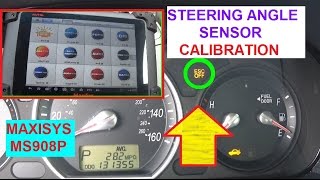
Typical fix: Perform a 'Steering Angle Sensor Calibration' using a compatible bi-directional scan tool. This procedure resets the sensor's zero point.
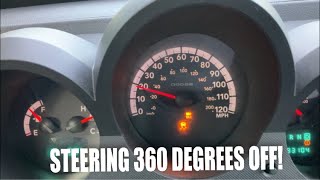
Est. part cost: $0 - Incorrect Steering Wheel Physical Alignment 🟡 Medium Probability This can occur if steering components (rack, intermediate shaft) are reassembled incorrectly after a repair. The steering wheel can be off by a full 360-degree rotation, which the SAS reads as a major error.
How to confirm: Visually inspect the steering wheel. Is it crooked when driving straight? A scan tool's live data may show a large angle (e.g., -360 or +360 degrees off) when the wheel appears straight. This exact scenario has been documented by owners after steering rack work.
Typical fix: The steering shaft must be disconnected from the column or rack and re-indexed to the correct position so the wheel is physically straight when the tires are. This should be done while monitoring the live SAS data on a scan tool to achieve a 0-degree reading. This is then followed by an SAS calibration.
Est. part cost: $0 - Failed Clock Spring Assembly (NF Generation) 🟡 Medium Probability On 2005-2010 models where the SAS is often integrated, the clock spring's flexible ribbon of wires can break from the constant turning of the steering wheel over many years.
How to confirm: Check for other symptoms of clock spring failure, such as the airbag light being on, or the horn and steering wheel buttons not working. If these functions fail along with the ESC light, the clock spring is the primary suspect.
Typical fix: Replace the clock spring assembly located behind the steering wheel. This requires removing the airbag and steering wheel. An SAS calibration is required after replacement.
Est. part cost: $80-$450 - Failed Steering Angle Sensor (Internal to Steering Column on YF/LF) ⚪ Low Probability On 2011-2019 Sonatas, the SAS is not part of the clock spring but is integrated into the Motor Driven Power Steering (MDPS) column. This assembly has other known failure points, like the flexible coupler and worm shaft bearings.
How to confirm: If calibration fails, the steering wheel is physically centered, and the clock spring is known to be good (or separate from the SAS), the fault lies with the internal sensor. A scan tool may show no data or a fixed, incorrect value from the SAS. TSBs for related codes often point to replacing the entire column and housing assembly if calibration fails.
Typical fix: This is a complex repair. Officially, Hyundai may require replacing the entire steering column assembly, which is very expensive. Some specialized shops may be able to replace just the sensor (Part No. 93480-3R000 for YF models) by disassembling the column.
Est. part cost: $1000-$3000+
Diagnosis Steps
- Connect a professional-grade scan tool (e.g., Autel, Foxwell, Hyundai GDS) capable of reading ABS/ESC codes and live data.
- Read the fault codes. Confirm C1219 is present, and note any other codes like C1260 or C123F.
- View live data for the 'Steering Angle Sensor'. With the engine on and the front wheels pointed perfectly straight, the angle should read within ±15 degrees of zero. Ideally, it should be as close to 0 as possible.
- If the angle is off but consistent (e.g., 15 degrees) and the code appeared after a recent alignment or battery change, proceed to the 'Steering Angle Sensor Calibration' function on the scan tool and follow the on-screen prompts.
- If the angle is off by a large, specific amount (e.g., -360 or +360 degrees), the steering shaft was likely re-installed incorrectly. The shaft must be disconnected and physically rotated to center the sensor while monitoring live data, then reconnected.
- If calibration and physical alignment are correct, suspect a hardware failure. On NF models (2005-2010), check if other steering wheel functions (horn, buttons, airbag light) are failing. If so, the clock spring/SAS assembly is the most likely culprit.
- On YF/LF models (2011-2019), if calibration fails, the issue is likely the internal SAS or its wiring. Inspect connectors first. If connectors are good, the sensor itself is the likely point of failure, which may require steering column disassembly or full replacement per Hyundai procedures.
Parts You'll Likely Need
- Clock Spring Assembly
(OEM #93490-3S110 (example for YF, often without SAS), 93490-38001 (example for NF))— On NF models, this part often includes the SAS. On all models, it's a common failure point for airbag lights, horn, and button issues. The internal ribbon cable breaks from constant movement.
Trusted brands: Hyundai (OEM), Dorman, Standard Motor Products (SMP)
OEM price range: $150-$450
Aftermarket price range: $60-$200 - Steering Angle Sensor
(OEM #93480-3R000)— For YF generation models (2011-2014) where the SAS is a separate component from the clock spring but internal to the steering column. This part can fail independently.
Trusted brands: Hyundai (OEM), Mando, Aftermarket sellers on eBay/Amazon
OEM price range: $250-$400
Aftermarket price range: $80-$150 - Steering Column Assembly — On YF/LF models with an integrated SAS inside the MDPS column, a failed sensor may require the replacement of the entire assembly per dealer procedures. This is the most expensive and labor-intensive fix.
Trusted brands: Hyundai (OEM)
OEM price range: $2000-$2800
Aftermarket price range: N/A
Related Codes That Often Appear With This One
- C1260 — This is a general 'Steering Angle Sensor Circuit Malfunction' code that often appears alongside C1219, indicating a problem with the sensor or its communication.
- C1688 — This code points to an issue with the Motor Driven Power Steering (MDPS) module, which can be related if the SAS is internal to the steering column.
- C123F — A 'Steering Angle Sensor Comparative Performance' code that may be set along with C1219. Some diagnostic procedures recommend addressing C123F first.
Technical Service Bulletins (TSBs) & Recalls
- TSB 21-ST-003H: Addresses a 'bearing noise' within the MDPS column on 2017-2019 Sonatas, among other models. While not for C1219 directly, it provides service procedures for the column assembly that houses the SAS on these later models.
- TSB 19-ST-001H-1 / TSB 20-ST-001H-2: Provides information on repairing the column-mounted MDPS system by replacing separate components. It lists DTCs like C1260 (Steering Angle Sensor Signal Error) and advises that if calibration fails, the entire column and housing assembly may need replacement.
- Hyundai Campaign 110 (NHTSA ID 10036734): A 2010 service campaign for early 2011MY (YF) Sonatas to inspect and tighten bolts on the steering column intermediate shaft, indicating early production issues with the steering assembly.
Platform-Specific Known Issues
- A Technical Service Bulletin (TSB 21-ST-003H) was issued for 2017-2019 Sonata models for a bearing noise in the Motor Driven Power Steering (MDPS) column. While not directly for code C1219, it highlights known issues within the steering column assembly where the SAS may be located.
Mechanic-Grade Diagnostic Values
- Steering Angle Sensor Live Data (Wheels Straight) — expected: 0° (±15°). Failure: A value significantly outside the ±15° range, or a value that is fixed (e.g., -360°) and doesn't change when the wheel is turned.
Scan Tool Commands That Help
- Hyundai GDS / GDS-M / Autel MaxiSys / KINGBOLEN Ediag: Steering Angle Sensor Calibration / Reset — This function is required after replacing the SAS, clock spring, or steering column, or after a wheel alignment, to reset the sensor's zero-point. It is the primary fix when the code appears without any hardware failure.
- Hyundai GDS / Autel / Launch: Longitudinal G Sensor Calibration — While not directly for C1219, this calibration is often performed at the same time when servicing the ESC system, especially after an accident. It resets the sensor that measures the vehicle's forward and backward tilt.
Wiring & Ground Locations
- MDPS Column Connectors — Under the driver's side dashboard, on the Motor Driven Power Steering (MDPS) column assembly.. On YF/LF (2011-2019) models, the SAS is internal to the MDPS column. Loose or corroded connectors between the main harness and the MDPS ECU can interrupt the SAS signal, triggering C1219. Checking these connections is a critical step before condemning the expensive column assembly.
- Steering Column Intermediate Shaft Bolt — Connects the bottom of the steering column inside the cabin to the intermediate shaft that goes through the firewall.. This is the connection point that must be disconnected to re-index a steering wheel that is 360 degrees off. A recall campaign (097) for early 2011 Sonatas involved inspecting this bolt to ensure it was properly torqued and seated in its groove, highlighting its importance for steering safety and alignment.
Real Owner Repair Stories
- YouTube user @aricwithautoreplay (SUV (Make/Model not specified, but diagnostic process is identical for Sonata)) — EPS and BAS (Brake Assist) lights on the dash after installing a new steering rack and getting an alignment.
❌ Tried (didn't work) Erasing the code initially did not work as the fault was immediately detected again.
✅ What actually fixed it The mechanic read the live data and saw the steering angle was at -360 degrees. He disconnected the steering column shaft, rotated the steering wheel a full 360 degrees to the left while watching the live data approach zero, and then reconnected the shaft. After clearing the code, the light stayed off. - Reddit user rachel961 (2017 Hyundai Sonata, 63k miles) — Power steering warning light and ESC light came on, steering wheel would lock up intermittently.
❌ Tried (didn't work) A local shop diagnosed it as needing a complete new steering column for $3600 based on '3 sensors being out'.
✅ What actually fixed it The owner took the car to a Hyundai dealership. The dealership found it only needed a new torque cable, which was replaced under warranty at no cost. This highlights that a full column replacement is not always necessary, even when multiple sensor codes are present.
OEM Part Supersession History
95690-1H000→Not specified, but this is a common Yaw Rate Sensor part number.— Part updates and revisions.
Heads up: While not for the SAS, the related Yaw Rate Sensor (which can also cause ESC lights) has part numbers like 95690-1H000. Always verify the correct part number for your specific VIN, as using the wrong sensor can prevent calibration.
Model Year Variations Within This Range
- 2011-2014 (YF): These models are particularly known for failure of the flexible MDPS steering coupler (Part # 56315-2K000-FFF). While this part's failure typically causes a clunking noise and does not directly set code C1219, the extensive work to replace it can lead to C1219 if the steering column is not reassembled or calibrated correctly.
- 2008-2010 (NF): A recall was issued for some Elantra models of this era for an issue where the EPS torque sensor could set an incorrect diagnostic code, causing a loss of power steering. While this was not for the Sonata specifically, it shows a history of steering sensor logic issues in Hyundai vehicles from this period, which could be relevant context for diagnosing C1219.
Diagnostic Flowchart
Other Known Issues on This Vehicle
Issues unrelated to this code that are worth knowing about as an owner of this generation:
- Theta II Engine Failure 🔴 High — Very common on 2011-2019 models with 2.0L and 2.4L GDI engines. Failure is due to premature connecting rod bearing wear. (Ref: Multiple recalls (e.g., NHTSA 15V-568, 17V-226) and class-action lawsuit settlements have resulted in lifetime warranties for the engine short block for affected vehicles.)
- Subframe Corrosion (NF Generation) 🔴 High — Common on 2006-2010 Sonatas operated in 'Salt Belt' regions. Severe rust can cause suspension components to detach. (Ref: Hyundai Recall 113 (NHTSA Campaign 13V-354) was issued to inspect, rust-proof, or replace the rear crossmember. An earlier recall covered front subframes on 1999-2004 models.)
- MDPS Flexible Steering Coupler Failure 🟠 Medium — Extremely common on YF/LF (2011-2019) Sonatas. The rubber coupler disintegrates, causing a distinct clicking or clunking noise when turning the steering wheel. Typically occurs after 70,000 miles. (Ref: While no specific recall exists, it is a widely known issue with many DIY guides available. The part is inexpensive, but labor can be significant.)
- Excessive Oil Consumption (LF Generation) 🟠 Medium — Frequently reported by owners of 2015-2019 Sonatas. Can lead to spark plug fouling and potential engine damage if oil levels are not monitored closely.
- Peeling Exterior Paint 🟡 Low — Common complaint on LF generation (2015-2019), particularly with white paint, where the clear coat and paint can bubble and peel. (Ref: No recall, but many owner complaints filed.)
Used vs. New Parts: Buying Guide for This Vehicle
When a used part is the smart pick: For the YF/LF generations (2011-2019), a complete used steering column assembly from a low-mileage, non-wrecked donor car can be a cost-effective alternative to a new OEM unit, which can cost thousands. This is especially true if the failure is confirmed to be the internal, non-serviceable steering angle sensor.
Donor-vehicle mileage cap: roughly under 80000 miles for the part to have meaningful remaining life.
What to inspect on the donor part:
- Verify the part number matches your original column exactly.
- Ensure the donor vehicle was not in a frontal collision, which could have damaged the column.
- Check that electrical connectors are intact with no bent or corroded pins.
- Ask for the donor vehicle's VIN to check for any open recalls related to the steering system.
- If possible, confirm the donor vehicle did not have any steering-related fault codes prior to being dismantled.
OEM-only on this vehicle (don't cheap out):
- Steering Angle Sensor (if purchased separately). Aftermarket sensors may have quality control issues that prevent successful calibration.
Aftermarket brands forum-validated for this vehicle:
- Dorman (for Clock Spring): Dorman is a widely available aftermarket option, though quality can be inconsistent. For a non-critical component like a clock spring (on models where the SAS is separate), it can be a viable budget choice.
- Standard Motor Products (SMP): Often considered a reliable aftermarket brand for electronic components.
Brands owners have reported issues with on this vehicle:
- Unbranded, no-name parts from online marketplaces should be avoided for critical steering and safety components like the clock spring (which contains the airbag circuit) and the steering angle sensor.
Real Owner Stories
Aggregated from forums and TSBs cited above. Mileages and costs reflect what owners reported in those sources.
2013 Hyundai Sonata
Symptoms: The owner experienced Steering Angle Sensor communication faults and an ESC light.
What fixed it: The issue was traced to a faulty cable connection, similar to a fix performed on a Hyundai Elantra.
Source hint: https://www.carly.com/blog/en/hyundai-sonata-steering-angle-sensor-issues/
2011 Hyundai Sonata
Symptoms: Codes C1219 and C2205 appeared immediately after the owner reinstalled a steering rack.
What fixed it: The steering rack was incorrectly reinstalled, causing mechanical misalignment that the sensor flagged as an error.
Source hint: https://www.reddit.com/r/MechanicAdvice/comments/15q7p8z/steering_angle_sensor_problems/
2013 Hyundai Sonata
Symptoms: ESC warning light and C1219 code; owner needed to locate the sensor for replacement.
What fixed it: Confirmed the SAS is internal to the MDPS column rather than the clock spring, requiring column-specific service.
Source hint: https://www.youtube.com/watch?v=i9_BcvuY31A
Related OBD-II Codes
Frequently Asked Questions
I have a 2013 Hyundai Sonata and the ESC light is on. Is the Steering Angle Sensor (SAS) part of the clock spring?
My 2018 Sonata has a bearing noise in the steering column; could this be related to my C1219 code?
Can I fix C1219 on my 2011 Sonata by tightening the steering bolts mentioned in Campaign 110?
Will a simple wheel alignment fix the C1219 code on my 2015 Sonata?
If calibration fails on my 2014 Sonata, do I have to replace the whole steering column?
My horn and cruise control buttons stopped working along with the ESC light on my 2008 Sonata. Is this the SAS?
Helpful Videos

We Have This Part in Stock



The information in this article is provided for general reference and educational purposes only. Vehicle specifications, procedures, and part compatibility can vary by production date, trim level, and region. Always consult your vehicle's factory service manual and verify part numbers before purchasing or performing repairs. Safety-critical components such as airbags, seat belts, and braking systems should be installed by a qualified professional.
- Hyundai Sonata:
- 🎬 Helpful Videos
- 🛍️ Shop This Part
- What's Unique About the 2005-2019 Hyundai Sonata
- Symptoms You May Notice
- Most Likely Causes
- Diagnosis Steps
- Parts You'll Likely Need
- Related Codes That Often Appear With This One
- Technical Service Bulletins (TSBs) & Recalls
- Platform-Specific Known Issues
- Mechanic-Grade Diagnostic Values
- Scan Tool Commands That Help
- Wiring & Ground Locations
- Real Owner Repair Stories
- OEM Part Supersession History
- Model Year Variations Within This Range
- Diagnostic Flowchart
- Other Known Issues on This Vehicle
- Used vs. New Parts: Buying Guide for This Vehicle
- Real Owner Stories
- 2013 Hyundai Sonata
- 2011 Hyundai Sonata
- 2013 Hyundai Sonata
- Related OBD-II Codes
- Frequently Asked Questions
- 🎟️ Get 5% Off