

OBD-II Code C1260: Steering Angle Sensor Signal Fault
The Ultimate Guide to Diagnosing and Fixing C1260
- Code C1260 flags a corrupt steering angle sensor signal, instantly disabling your vehicle's Electronic Stability Control (ESC) and ABS.
- On 2007-2018 Hyundai and Kia models, a disintegrated $10 rubber flexible steering coupler causes 80% of C1260 codes and creates a distinct steering clunk.
- Always attempt a zero-point scan tool calibration before replacing parts, as a simple battery disconnect or recent wheel alignment often triggers this code.
- Fix this code immediately; driving without ESC doubles your risk of a rollover or spin-out during emergency swerves or on slick roads.
What Does C1260 Mean?

The trouble code C1260 means the vehicle's main computer (specifically the ABS/ESC module) detects an illogical, corrupt, or missing signal from the Steering Angle Sensor (SAS). This sensor tells the computer the precise angle and direction of the steering wheel. This data is essential for the proper functioning of modern safety systems like the Anti-lock Braking System (ABS), Electronic Stability Control (ESC), and adaptive cruise control.
Technical definition: The official SAE/ISO definition for C1260 is "Steering Angle Sensor (SAS) Circuit - Signal." This indicates the signal from the SAS is erratic, missing, or fails a plausibility check against data from other sensors (like wheel speed or yaw rate sensors). The control module sets the code when the received signal falls outside expected parameters, such as reporting a sharp turn when the vehicle moves straight, or exceeding its maximum rotational limits.
Can I Drive With C1260?

Yes, But With Caution. Driving with C1260 gambles with your vehicle's active safety systems. While the car steers and brakes normally in most conditions, your margin for error vanishes. In a sudden swerve or on a slippery surface, Electronic Stability Control (ESC) will not intervene, turning a controllable skid into a serious accident. On vehicles where this code causes intermittent loss of power steering, the sudden increase in steering effort causes drivers to lose control. Limit driving to an absolute minimum and repair the vehicle promptly.
Common Causes

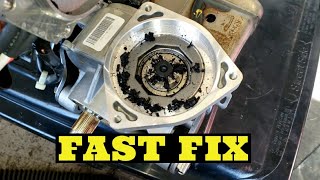
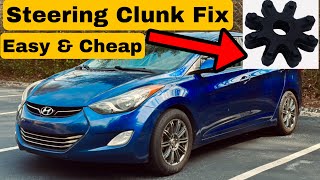
- Worn or failed flexible steering coupler (Hyundai/Kia) (Very Common) — This small, star-shaped rubber piece inside the electronic power steering (EPS) motor is the number one cause of C1260 🎬 Watch: How to fix the common Hyundai and Kia steering clunk. on Hyundai and Kia vehicles. It degrades over time, turning into dust and creating excessive play between the steering motor and the steering shaft. The sensor interprets this 'slop' as an erratic or impossible signal.
- Incorrect Steering Angle Sensor calibration or poor wheel alignment (Common) — After a wheel alignment, steering component replacement, or a prolonged battery disconnection, the SAS requires a zero-point reset. 🎬 See how to perform a Steering Angle Sensor calibration. Without this calibration, the sensor reports a turning angle while driving straight, causing a conflict with other sensors and triggering the code.
- Failed Steering Angle Sensor (SAS) (Common) — The sensor fails electronically or mechanically. Internal components, such as optical discs or magnetic rings used to read the steering angle, wear out or become contaminated, causing an incorrect or complete loss of signal.
- Damaged Clock Spring Assembly (Less Common) — The SAS often integrates with or mounts directly behind the clock spring. If the steering column is serviced improperly or turned too many times with the steering linkage disconnected, the delicate ribbon cable inside the clock spring snaps, breaking the electrical connection to the SAS.
- Wiring or connector issues (Less Common) — Damaged wires, corroded pins, or a loose connector between the SAS and the ABS/ESC module interrupt or corrupt the signal. Moisture intrusion is a common culprit for connector corrosion.
- Low or Unstable Battery Voltage (Less Common) — Control modules are highly sensitive to voltage fluctuations. A failing battery or alternator provides inconsistent power during engine start-up, leading to spurious communication codes and faults like C1260.
- Faulty ABS/ESC control module (Rare) — In rare instances, the control module that receives and interprets the SAS signal fails internally, rendering it incapable of processing data even if the sensor and wiring are perfect.
- External Electrical Interference (Very Rare) — Poorly installed aftermarket electronics (like remote starters or HID headlights) generate electromagnetic interference that disrupts sensitive CAN bus communication signals from the SAS.
Symptoms

- Electronic Stability Control (ESC/ESP) warning light is on — The ESC light (often a car with squiggly lines) illuminates immediately because the system disables itself due to untrustworthy steering angle data.
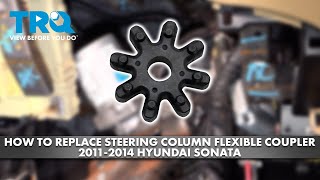
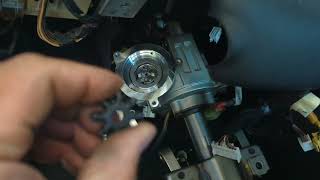
- Clunking or clicking noise when turning the wheel — A distinct clunking or clicking noise when turning the wheel at low speeds or when parked is the classic sign of a disintegrated 🎬 Watch this step-by-step guide to replacing the flexible steering coupler. flexible steering coupler in Hyundai and Kia models.
- ABS warning light is on — The ABS light frequently accompanies the ESC light, as both systems rely on the SAS for crucial calculations during braking and turning.
- Steering feels heavy, loose, or intermittent — Electronic power steering assist reduces or disables entirely, making the wheel difficult to turn. A loose or disconnected feeling is also common with a failed flexible coupler.
- Power Steering warning light is on (EPS/MDPS) — On vehicles with electronic power steering, a dedicated EPS/MDPS warning light illuminates.
Diagnostic Flowchart
Tap your situation to follow the diagnostic path that matches what you're seeing on this code.
Common Fixes & Costs
- Replace Flexible Steering Coupler
— Parts: $5-$20, Labor: $200-$400, ~2.5 hr book time
(Intermediate)
: OEM
: OEM - Perform Wheel Alignment and SAS Calibration — Parts: $0, Labor: $120-$250, ~1.5 hr book time (Professional)
- Replace Steering Angle Sensor
— Parts: $120-$350, Labor: $150-$500, ~1.2 hr book time
(Professional)
: OEM
: OEM - Repair Damaged Wiring or Connector — Parts: $5-$50, Labor: $100-$400, ~2 hr book time (Intermediate)
- Replace Power Steering Motor/Column Assembly
— Parts: $500-$1800, Labor: $250-$800, ~3.5 hr book time
(Professional)
: OEM
Used vs. New Parts: Buying Guide
When a used part is worth it: For a complete steering column assembly, a used part from a low-mileage, accident-free donor offers significant savings. Never buy a used stand-alone Steering Angle Sensor or flexible coupler. The sensor is a sensitive electronic part with unknown history, and the coupler is an inexpensive wear item that requires a new, updated version.
Donor-vehicle mileage cap: roughly under 60000 miles for the part to have meaningful remaining life.
Donor quality checklist:
- Verify the donor vehicle was not involved in a frontal collision, which damages the column.
- Match part numbers exactly; columns vary based on trim level and features.
- Prefer sellers who offer a warranty (even 30-90 days) and have good reviews.
Decision logic:
- If The required part is the flexible coupler → Always buy new; the part costs less than $20.
- If The required part is the Steering Angle Sensor only → Favor a new OEM or high-quality aftermarket part. The risk of a defective used sensor and paying for labor twice is not worth the small savings.
- If The entire steering column/motor assembly is required and costs over $1000 new → A used assembly from a low-mileage donor is a reasonable choice to manage costs.
Warranty tradeoff: Used parts typically come with a 30-90 day warranty. New aftermarket parts often have a 1-year to limited lifetime warranty. New OEM parts carry a 1-year/12,000-mile warranty.
Worst-case if a used part fails: $300-900 if a used steering column or sensor fails after installation, as you pay for the labor a second time plus the cost of another replacement part.
What Happens If You Wait — Timeline
- 0-1 month: ESC/ABS warning lights illuminate. On Hyundai/Kia, a faint clunking noise begins when turning the wheel at low speeds. Active safety systems are disabled. (MPG impact: 0%% · Added cost: $0)
- 1-4 months: If caused by a flexible coupler, the clunking noise becomes more pronounced and steering feels looser or has more play. If caused by a sensor/calibration issue, the warning lights remain on, and there is a persistent safety risk. Power steering assist becomes intermittently heavy. (MPG impact: 0%% · Added cost: $0)
- 4-12 months: The disintegrated flexible coupler turns to dust, causing significant 'slop' in the steering, making it feel disconnected. While this doesn't typically damage other parts, the poor steering feel and lack of ESC become a major daily annoyance and safety hazard. The risk of sudden, complete loss of power steering assist increases. (MPG impact: 0-1%% · Added cost: $0)
- 12+ months: The primary cost remains the significant and prolonged safety risk. While C1260 alone rarely causes cascading mechanical failures, if it's accompanied by a motor code like C2412, continued operation leads to a complete failure of the power steering column, resulting in a very expensive repair bill. (MPG impact: 0-1%% · Added cost: $0 - $2200+)
Cost of Not Fixing It
- Immediate: Active safety systems (ESC, ABS, Traction Control) are disabled. The risk of losing control in an emergency maneuver or on a slippery surface is significantly increased. (Added cost: N/A)
- 0-6 months: Continued driving with a disintegrated flexible coupler (on applicable Hyundai/Kia models) causes the steering to feel progressively looser or 'sloppy'. The safety risk persists and worsens. (Added cost: $0)
- 6+ months: There is no evidence of significant progressive mechanical damage from ignoring C1260 alone. If the code is accompanied by other codes like C2412 (motor fault), ignoring it leads to a complete and sudden loss of power steering assist. (Added cost: $0 - $2500+)
Diagnosis Steps

- Read Codes and Analyze Live Data
Use an advanced OBD-II scanner capable of reading Chassis (C-prefix) codes. Confirm C1260 is present. Navigate to the ABS/ESC control module's live data stream and monitor the 'Steering Angle Sensor' parameter. With the steering wheel perfectly straight, the reading must be within +/- 5 degrees of 0. Turn the wheel lock-to-lock; the angle must change smoothly without jumping. An erratic or stuck reading points to a sensor or wiring issue.
Tools: Advanced OBD-II Scanner (Beginner) - Inspect the Flexible Steering Coupler (Hyundai/Kia)
If a clunking noise is present on a Hyundai/Kia, this is the primary suspect. Access the electronic power steering motor by lowering the steering column. Once partially disassembled, inspect the star-shaped coupler. If it is broken or disintegrated into black powder, replace it immediately.
Tools: Socket set, screwdrivers, trim removal tools, T30 Torx socket (Advanced) - Attempt a Steering Angle Sensor Calibration
If your scan tool supports it, perform a 'Steering Angle Sensor Calibration' or 'Zero-Point Calibration'. This is mandatory after an alignment or component replacement and resolves the code if triggered by a loss of calibration memory. On modern vehicles with Electric Power Steering (EPS), initiate this calibration through the EPS/MDPS module.
Tools: Advanced OBD-II Scanner (Intermediate) - Perform a Thorough Visual Inspection
Inspect the wiring harness leading to the steering column for chafing, pinching, or damage. Check the connectors at the base of the steering column and at the ABS/ESC module for corrosion or loose pins.
Tools: Flashlight, trim removal tools (Beginner) - Test the Sensor's Power and Ground Circuits
Using a vehicle-specific wiring diagram, identify the power, ground, and signal wires at the steering angle sensor connector. With the key on, use a multimeter to verify the sensor receives the correct reference voltage (typically 5V or 12V) and has a solid ground connection (less than 0.1V on the ground wire).
Tools: Multimeter, wiring diagram (Advanced) - Check Signal Wire Integrity
If power and ground are good, check the signal wire(s) for continuity between the sensor connector and the ABS/ESC module connector. Perform this test with both ends disconnected to identify breaks in the wire. Check for a short to ground or a short to power on the signal line.
Tools: Multimeter, wiring diagram (Advanced) - [PRO TIP] Analyze the Sensor's Scope Pattern
For optical/digital sensors with multiple signal wires, use an oscilloscope to back-probe the signal lines. As you turn the steering wheel, you must see two corresponding square wave patterns that are out of phase with each other. The voltage toggles cleanly between a low state (approx. 1.5V) and a high state (approx. 3.5V). A missing, noisy, or flat-lined signal confirms a failed sensor.
Tools: Oscilloscope, wiring diagram, back-probe pins (Professional) - [PRO TIP] Perform a CAN Bus Network Integrity Test
If communication is the suspected issue (especially if a U-code is present), perform a basic network health check. Disconnect the battery. At the DLC (Data Link Connector), measure the resistance between Pin 6 (CAN High) and Pin 14 (CAN Low). A healthy network reads approximately 60 Ohms. A reading of 120 Ohms indicates a missing terminating resistor or an open circuit, while a reading near 0 Ohms indicates a short circuit.
Tools: Multimeter (Professional) - [PRO TIP] Test CAN Bus Voltage Levels
With the battery connected and ignition on, perform a live voltage check of the CAN network. Measure the voltage between DLC Pin 6 (CAN High) and a known good ground. The reading must be between 2.5V and 3.0V. Measure between DLC Pin 14 (CAN Low) and ground; this must read between 2.0V and 2.5V. Deviations indicate a short to power or ground.
Tools: Multimeter (Advanced)
When This Code Triggers (Freeze-Frame Conditions)
- Vehicle Speed: 15-45 mph (The fault is often detected during city or suburban driving, especially during turning maneuvers where the sensor's input is expected to change.)
- Steering Angle: Variable (or stuck) (The code triggers if the sensor reports an angle greater than a plausible limit (e.g., 800+ degrees), if the angle doesn't change while turning, or if it reports an angle while the vehicle drives straight.)
- System Voltage: 12.0V - 14.8V (The code typically sets when system voltage is normal. If the voltage was low during startup, it indicates a battery issue as the root cause.)
- Ignition Cycles: 1-3 cycles (The fault is usually detected and the code sets within a single drive. Intermittent faults take a few drive cycles for the warning lights to illuminate.)
Related Codes
- C1261 — This code for 'Steering Angle Sensor Not Calibrated' is a status code, not a fault code. It means the system knows it needs calibration. If you only have C1261, a calibration fixes it. If you have C1260 and C1261 together, you must fix the root cause of C1260 (the signal fault) before a calibration completes successfully.
- C2412 — This code for 'MDPS Motor Short or Open' is common on Hyundai/Kia vehicles. When seen with C1260, it strongly suggests a failure within the electronic power steering motor or column assembly itself. This combination means the fix is an expensive replacement of the entire unit, not just the SAS or flexible coupler.
- U0126 — This code means 'Lost Communication With Steering Angle Sensor Module.' U0126 indicates a total communication breakdown—the SAS is completely offline. This points to a power/ground failure, a dead sensor, or a CAN bus wiring fault. C1260 means communication exists, but the data is corrupt or illogical.
- C1259 — This code indicates a 'Steering Angle Sensor Plausibility Failure.' The ABS module compares the SAS input to data from wheel speed and yaw rate sensors and sees a conflict. For example, the SAS says you're turning, but the wheels say you're going straight. C1260 is a direct fault with the sensor's internal signal itself.
Climate & Environmental Factors
- High Humidity and Heat: This is a significant factor for the flexible steering coupler failure on Hyundai and Kia vehicles. The original rubber material degrades more quickly in hot, humid climates, particularly in states near warm ocean waters. Kia acknowledged this in warranty extension programs.
- Cold Weather: There is no direct evidence that cold weather causes the C1260 fault. However, any pre-existing electrical issue, such as a weak battery or corroded connector, is exacerbated by cold temperatures, leading to communication glitches that trigger the code.
How to Talk to a Mechanic About This Code
Say this: "I have an ESC/ABS light on and a C1260 code. If it's a Hyundai/Kia, I also hear a clunking in the steering. I'd like a diagnostic to confirm the cause. Please check the flexible coupler first if it's a Hyundai/Kia. If not, please check the live data from the steering angle sensor and confirm if a calibration is all that's needed before quoting a sensor replacement."
This directs the mechanic to the most common, cheapest fix first (the coupler), saving diagnostic time. It prevents them from immediately quoting an expensive sensor replacement without checking if a simple recalibration is the issue.
Avoid saying:
- 'My traction control light is on, can you just fix it?'
- 'The steering feels funny.'
- 'Just replace the steering sensor.'
Questions to ask before authorizing the repair:
- Did you visually inspect the flexible coupler? Was it degraded?
- What was the steering angle sensor reading on the scan tool when the wheels were straight?
- Have you tried to perform a steering angle sensor calibration? Did it complete successfully?
- If you are recommending a sensor or column replacement, can you guarantee this will fix the C1260 code?
- What is the warranty on the parts and labor for this repair?
Where to Take It: Dealer vs Independent vs Chain
- Dealer:
A safe but expensive choice. Best for warranty work or if you suspect a complex electrical issue beyond the common failures.
Best for: Vehicles under warranty (the repair should be free)., Complex cases involving multiple codes (e.g., C1260 + C2412) requiring a full steering column replacement., Confirming if a specific Technical Service Bulletin (TSB) or warranty extension applies to your vehicle.
Downsides: Highest labor rates., Defaults to replacing the entire steering column assembly when an independent shop replaces a smaller component. (Typical cost: +50% vs. baseline) - Independent Shop:
The best fit for most C1260 situations. An experienced independent shop sees this code frequently, especially the flexible coupler issue, and provides a cost-effective repair.
Best for: Most out-of-warranty C1260 repairs, especially on common Hyundai/Kia models., Diagnosing and replacing the flexible coupler or the steering angle sensor., Performing a wheel alignment and SAS calibration.
Downsides: Quality varies; look for shops with good reviews and ASE-certified technicians comfortable with electronic diagnostics. (Typical cost: +0% vs. baseline) - Chain Shop:
Use with caution. Acceptable for a post-repair alignment and calibration if you trust the location, but not recommended for the initial diagnosis or the primary repair itself.
Best for: Performing a wheel alignment after which you need an SAS calibration.
Downsides: Technician skill varies dramatically. They lack the advanced diagnostic tools or experience to properly diagnose beyond a simple code read., Not equipped or willing to do the labor-intensive flexible coupler replacement. (Typical cost: -10% vs. baseline)
When to Walk Away From the Repair
If the estimated repair cost for C1260 exceeds 40-50% of your car's current private-party value (e.g., from Kelley Blue Book), seriously consider alternatives to fixing it.
- Car worth $4000, fix is $2200: Walk away. A $2,200 steering column replacement on a $4,000 car is rarely a good investment.
- Car worth $8000, fix is $400: Fix it. A $400 flexible coupler replacement is a minor cost that restores a major safety feature and the car's value.
- Car worth $2500, fix is $850: Borderline. The repair is a significant percentage of the car's value. Get a second opinion to confirm the diagnosis before proceeding. If other major repairs are also needed, walk away.
What Scan Tool You Need for This Code
Minimum: An OBD-II scanner with ABS/SRS system access and Steering Angle Sensor (SAS) calibration function.
A basic $20 code reader will not see Chassis codes like C1260. It lacks the essential function to recalibrate the sensor after the repair, meaning the warning lights stay on. You need a tool that communicates with the ABS/ESC module.
Budget: Ancel BD310 (~$90) — Provides a cost-effective entry point. While primarily a code reader, its app accesses some ABS data, but it lacks the dedicated SAS calibration function needed for a complete fix. It's a good first step for diagnosis but does not finish the job.
Mid-range: Innova 5610 / Foxwell NT510 Elite (~$350) — This is the sweet spot for serious DIYers. These tools offer full ABS/SRS diagnostics, read live steering angle data, and include the specific SAS calibration/reset function required to complete the repair.
Professional: Autel MaxiCOM MK808BT / Launch X431 Series (~$450-900) — Offers full bidirectional control, allowing you to read data, calibrate, and perform active tests on steering components. These professional-grade tools provide dealer-level capabilities for complex diagnostics.
Rent vs buy: Most auto parts stores offer free code reading, but their loaner tools are typically basic readers that cannot perform the necessary SAS calibration. For C1260, if you plan to DIY the repair, you must buy or borrow a mid-range scanner with calibration capabilities.
How to Clear the Code After You Fix It
- Use an ABS-capable OBD-II scan tool to clear the C1260 fault code.
- Perform Steering Angle Sensor (SAS) calibration using the scan tool.
- Turn the ignition off for at least 15-30 seconds to allow modules to reset.
- Perform a verification drive cycle.
Drive cycle (~15 minutes): After clearing the code and performing calibration, start the engine. Drive the vehicle straight at a speed above 15-20 mph for several minutes. Include some gentle left and right turns. The goal is for the ABS/ESC module to verify that the steering angle reading is logical and matches the data from the wheel speed sensors. If the repair was successful, the warning lights remain off.
Readiness monitors affected: This is a chassis code (C-code) and does not directly affect emissions readiness monitors like the Catalyst or O2 sensor monitors.
Watch out for:
- Forgetting to perform the SAS calibration after the repair is the most common reason for the light to return immediately.
- Using a basic OBD-II reader that cannot access the ABS/ESC module to clear the code or perform calibration.
- Not fixing the underlying issue (e.g., a bad flexible coupler or wiring fault), which causes the code to return as soon as the fault condition is met again.
Will This Fail Emissions / State Inspection?
No — by itself this code doesn't fail OBD inspection (but it can keep readiness monitors from setting, which causes a separate fail).
- California: An illuminated ABS or ESC light will NOT cause a failure of the emissions portion (smog check) of the inspection. The check engine light is the only light that results in an automatic smog test failure.
- New York: New York performs an annual safety inspection that includes checking the ABS system. An illuminated ABS light is a cause for failure. Therefore, a C1260 code that turns on the ABS light fails the NYS safety inspection.
- Texas: During the Texas safety inspection, the brake warning lamp is checked. However, an illuminated ABS light is specifically listed as NOT being a cause for rejection. Your vehicle passes the Texas inspection with the ABS light on.
Most Commonly Affected Vehicles
- Hyundai Sonata (2011-2015) — Extremely common failure of the flexible steering coupler (Part # 56315-2K000-FFF). This is the first component to check.
- Hyundai Elantra (2007-2016) — Prone to flexible steering coupler disintegration. On 2011-2016 (MD) models, the SAS is integrated into the MDPS motor assembly, complicating replacement.
- Kia Optima (2011-2014) — Shares steering components with the Sonata. When C1260 appears with code C2412 (Motor Short/Open), it typically requires replacement of the entire steering column/motor assembly at a high cost.
- Hyundai Santa Fe (2013-2018) — Widely affected by the flexible coupler issue. Hyundai issued TSB 17-ST-001 for this problem, and the updated coupler part is 56315-2K000-FFF.
- Kia Soul (2010-2013) — The electronic power steering system is known for the flexible coupler wearing out, causing a steering clunk and triggering C1260.
- Hyundai Genesis Coupe (2009-2016) — The ECU sets this code if the steering angle exceeds 800 degrees or if no angle change is detected for 3 seconds while cornering.
- Hyundai Tucson (2010-2015) — On these models, the SAS communicates via CAN bus, and the system flags a fault if the signal is abnormal or differs from the calculated angle speed by more than 50 deg/s.
- Chevrolet Equinox / GMC Terrain (2010-2017) — Logs a C1260 code related to a failed steering angle sensor or issues with the power steering control module. Always verify the code definition, as it differs on GM vehicles.
Manufacturer-Specific Notes
- Hyundai / Kia: The overwhelming quirk is the failure of the flexible steering coupler (part # 56315-2K000-FFF). It causes a signature 'clunk' and is the primary cause of C1260. Always suspect this part first. Hyundai's TSB 19-ST-001H provides a detailed diagnostic flowchart for this issue.
- Kia: Warranty Extension Program CS1604 extended the warranty for the flexible coupler to 10 years/unlimited mileage for certain 2011-2014 Optima models due to accelerated wear in high-humidity regions.
- Hyundai: Safety Recall Campaign 127 was issued for 2008-2010 Elantra and Elantra Touring vehicles to reprogram the Electronic Power Steering (EPS) module to prevent a loss of steering assist.
- General Motors: On certain GM vehicles (Buick, Cadillac, Chevrolet, GMC), C1260 has a completely different definition: 'Power Transfer Unit Clutch Position Sensor Circuit High Voltage'. This is related to the All-Wheel Drive (AWD) system, not the steering. Always verify the code definition with a tool specific to your vehicle's VIN.
- Hyundai: A rare but critical alternate definition for C1260 on some Hyundai models is 'Deployment Commanded.' This is a serious airbag system code indicating the restraint control module commanded a deployment. This is a safety-critical fault and should not be confused with the common steering/ABS issue.
- Hyundai (Genesis): On models equipped with Smart Cruise Control (SCC), the SCC module independently monitors the SAS. It sets a C1260 code if it detects an excessive offset value, even if the main ESC/ABS system does not see a fault.
Real Owner Stories
2012 Hyundai Elantra with clunking noise
Owner experienced a clunking noise when turning the steering wheel, followed by the ESC and power steering warning lights. The code present was C1260.
What they tried:
- A diagnostic scan confirmed the C1260 code.
- Inspection of the steering column revealed the flexible coupler had completely disintegrated.
Outcome: The owner replaced the flexible steering coupler (Part # 56315-2K000-FFF). After replacement, a steering angle sensor calibration was performed using a scan tool, which cleared the code and restored normal function.
Lesson: On a Hyundai or Kia with a steering clunk and C1260, the flexible coupler is the most likely culprit and a very inexpensive part. The repair requires mechanical skill but saves a significant amount compared to a shop.
2014 Kia Optima with multiple codes and high repair quote
The steering became incredibly hard to turn. The dealer found codes C1260 (Steering Angle Sensor Circuit-Signal) and C2412 (Motor Short or Open) after replacing a dead battery.
What they tried:
- The dealer quoted $2,271 for a new power steering motor assembly.
Outcome: The owner sought advice and learned that the combination of C1260 and C2412 points to a failure of the entire steering column assembly. An independent shop or a DIY replacement with a used assembly from a low-mileage car (around $200 for the part) were suggested as much cheaper alternatives.
Lesson: If C1260 appears with C2412, the problem is beyond just the sensor or coupler. Always get a second opinion from an independent shop, as dealer quotes for full column replacement are extremely high.
2010 Hyundai Elantra with intermittent power steering loss
Roughly every 6 months, the driver experienced a sudden loss of power steering assist at low speeds. Restarting the car fixed it temporarily. Codes C1260 and C1290 (Steering Angle Sensor Not Initialized) were found.
What they tried:
- A steering angle sensor recalibration was performed, which worked for a few months before the issue returned.
- The flexible coupler was inspected and found to have no play or clunking noise.
Outcome: The issue was intermittent and difficult to diagnose. Other owners with the same model reported that replacing the entire steering column was the eventual solution, as the sensor was integral to the column on that model.
Lesson: Intermittent electrical faults are the hardest to solve. If a simple calibration provides only a temporary fix and the common mechanical failure (coupler) isn't present, the issue lies deeper within the sensor or its integrated components, requiring a full assembly replacement.
2017 Hyundai Sonata, post-accident
Immediately after a minor accident that impacted the front left wheel, the ESC and traction control lights came on, and code C1260 was stored. The insurance company claimed it was a pre-existing electrical fault.
What they tried:
- The owner challenged the insurance company's assessment.
Outcome: It is very common for a collision, even a minor one, to knock the steering angle sensor out of alignment or damage it. The appearance of the code immediately after impact is strong evidence of a causal link. The fix requires a recalibration after the alignment is corrected, or a new sensor if physically damaged.
Lesson: If C1260 appears directly after an accident, it is almost certainly related to the impact. Do not accept an insurance denial without pushing back; suspension or steering work following an accident necessitates an SAS recalibration.
How to Prevent This Code From Triggering
- Perform regular wheel alignments. (Every 1-2 years or when new tires are installed.) — Ensures the steering wheel is centered when driving straight, which is the baseline for the SAS. A proper alignment reduces stress on steering components and prevents the SAS from operating with a constant, incorrect offset.
- Ensure SAS is recalibrated after steering/suspension work. (Any time alignment, tie rods, or steering column are serviced.) — Many C1260 codes are caused by a failure to perform this final, critical step. Always confirm with your mechanic that a 'Zero-Point Calibration' was done.
- Inspect flexible steering coupler during other maintenance (Hyundai/Kia). (Every 30,000-50,000 miles.) — The original couplers degrade and fail. While not a standard maintenance item, a visual inspection for cracks or disintegration when working near the steering column catches the problem before it triggers a code or causes a complete loss of steering feel.
- Avoid turning the steering wheel when the car is off. (Daily habit.) — Dry-turning the wheels without power steering assist puts maximum strain on all steering components, including the sensor, column, and coupler.
- Maintain a healthy battery and electrical system. (Ongoing.) — Low or fluctuating voltage causes communication errors between the SAS and other control modules, leading to spurious fault codes. Replace aging batteries before they fail completely.
Frequently Asked Questions
Is it safe to drive with code C1260?
You can technically drive the vehicle, but it is highly dangerous. Your primary active safety systems (ESC and ABS) are disabled. This significantly increases the risk of losing control in an emergency maneuver or on slippery roads.
Can a bad wheel alignment cause code C1260?
Yes. If a technician performs a wheel alignment but fails to recalibrate the steering angle sensor afterward, the computer detects a conflict. It sees a difference between the steering angle and the vehicle's actual direction of travel, triggering the code.
How much does it cost to fix C1260?
Costs vary widely based on the root cause. Replacing a Hyundai/Kia flexible coupler costs $200-$400, while replacing a failed steering angle sensor runs $300-$850. In worst-case scenarios requiring a full power steering column replacement, costs exceed $2,200.
What is the flexible steering coupler?
It is a small, star-shaped rubber piece acting as a vibration damper between the electric power steering motor and the steering shaft. The original part on many Hyundai and Kia vehicles disintegrates over time. This causes a clunking noise and triggers the C1260 code.
Can I replace the steering angle sensor myself?
This is an advanced DIY repair requiring airbag and steering wheel removal, which is dangerous if done incorrectly. After replacement, the new sensor requires calibration with a professional-grade scan tool. Stop DIY and take it to a shop if you lack a bidirectional scanner.
Why did my ESC light come on again after fixing the C1260 code?
This almost always means the Steering Angle Sensor calibration was not performed or failed. Replacing the sensor or fixing the wiring is only the first half of the job. The system must learn the new 'straight-ahead' position via a scan tool calibration.
Can a bad battery cause a C1260 code?
Yes, low or unstable voltage during startup causes communication glitches between modules, leading to spurious codes. If you have other electrical codes or a battery over 4 years old, test the charging system first. This prevents wasting money on expensive sensor diagnostics.
Key Takeaways
- Code C1260 flags a corrupt steering angle sensor signal, instantly disabling your vehicle's Electronic Stability Control (ESC) and ABS.
- On 2007-2018 Hyundai and Kia models, a disintegrated $10 rubber flexible steering coupler causes 80% of C1260 codes and creates a distinct steering clunk.
- Always attempt a zero-point scan tool calibration before replacing parts, as a simple battery disconnect or recent wheel alignment often triggers this code.
- Fix this code immediately; driving without ESC doubles your risk of a rollover or spin-out during emergency swerves or on slick roads.
Helpful Videos


The information in this article is provided for general reference and educational purposes only. Vehicle specifications, procedures, and part compatibility can vary by production date, trim level, and region. Always consult your vehicle's factory service manual and verify part numbers before purchasing or performing repairs. Safety-critical components such as airbags, seat belts, and braking systems should be installed by a qualified professional.
- 🎬 Helpful Videos
- What Does C1260 Mean?
- Can I Drive With C1260?
- Common Causes
- Symptoms
- Diagnostic Flowchart
- Common Fixes & Costs
- Used vs. New Parts: Buying Guide
- What Happens If You Wait — Timeline
- Cost of Not Fixing It
- Diagnosis Steps
- When This Code Triggers (Freeze-Frame Conditions)
- Related Codes
- Climate & Environmental Factors
- How to Talk to a Mechanic About This Code
- Where to Take It: Dealer vs Independent vs Chain
- When to Walk Away From the Repair
- What Scan Tool You Need for This Code
- How to Clear the Code After You Fix It
- Will This Fail Emissions / State Inspection?
- Most Commonly Affected Vehicles
- Manufacturer-Specific Notes
- Real Owner Stories
- 2012 Hyundai Elantra with clunking noise
- 2014 Kia Optima with multiple codes and high repair quote
- 2010 Hyundai Elantra with intermittent power steering loss
- 2017 Hyundai Sonata, post-accident
- How to Prevent This Code From Triggering
- Frequently Asked Questions
- Is it safe to drive with code C1260?
- Can a bad wheel alignment cause code C1260?
- How much does it cost to fix C1260?
- What is the flexible steering coupler?
- Can I replace the steering angle sensor myself?
- Why did my ESC light come on again after fixing the C1260 code?
- Can a bad battery cause a C1260 code?
- Key Takeaways
- 🎟️ Get 5% Off