

C1219 on 2016-2021 Honda Civic: Steering Angle Sensor Causes and Fixes
This code means there's a problem with the Steering Angle Sensor signal, disabling safety systems like VSA and ABS. The most common fix is a simple recalibration with a scan tool after a battery disconnect or wheel alignment. If that doesn't work, the sensor itself may have failed, which is integrated with the clockspring and not sold separately. 2017-2018 models are subject to a major recall for a defective steering gearbox that also causes this code.
- C1219 disables key safety systems (VSA, ABS, Traction Control) and must be addressed promptly.
- First, check if your 2017-2018 Civic is part of the steering gearbox recall (NHTSA #18V663).
- The most common and cheapest fix is a steering angle sensor recalibration using a scan tool, especially after a battery change or alignment.
- If calibration doesn't work, the problem could be the sensor itself or the entire steering gearbox, which can be a very expensive repair.
What's Unique About the 2016-2021 Honda Civic
For the 10th generation Civic, this code is frequently triggered by simple service procedures like a battery change or wheel alignment, which cause the sensor to lose its calibration. More critically, 2017-2018 models were subject to a recall (NHTSA #18V663) for a manufacturing defect where a magnet in the steering gearbox's torque sensor could dislodge, causing erratic steering behavior and triggering this code. This makes it crucial to distinguish between a simple calibration issue and a more severe hardware fault requiring a full gearbox replacement. Additionally, some 2019 and newer models have reported a separate 'sticky steering' issue which may be related to the steering rack but is not part of the earlier recall.
Symptoms You May Notice
- Vehicle Stability Assist (VSA) warning light is on
- ABS warning light is on
- Electric Power Steering (EPS) warning light is on
- Brake System or Brake Hold warning light is on
- Hill Start Assist warning light is on
- Traction control light is on
- Adaptive Cruise Control (ACC) and Lane Keeping Assist System (LKAS) warning lights on
- Replacing the clockspring unnecessarily. While the SAS is integrated with the clockspring assembly on this model, the C1219 code points to a signal/calibration issue which is often not a hard part failure. Calibration should always be attempted first.
- Replacing wheel speed sensors. This code is specific to the steering angle input, not wheel speed readings. However, a faulty wheel speed sensor can cause the VSA module to misinterpret the SAS data, leading to a C1219 code as a secondary fault.
Most Likely Causes
- Lost Steering Angle Sensor Calibration 🔴 High Probability The system is sensitive and can lose its 'zero point' memory after a wheel alignment, battery disconnection, or replacement of steering/suspension components. A prolonged battery disconnect for other repairs is a very common trigger.
How to confirm: The code appeared immediately after recent service work, especially if the battery was disconnected. A scan tool is needed to perform the 'Steering Angle Sensor Neutral Position Learning' procedure.
Typical fix: Recalibrate the sensor using a compatible bidirectional scan tool. This is a software-based fix with no parts required.
Est. part cost: $0 - Incorrect Wheel Alignment / Off-Center Steering Wheel 🟡 Medium Probability If a wheel alignment is performed incorrectly, the steering wheel may not be perfectly centered when driving straight, causing a mismatch between the SAS reading and data from wheel speed sensors. A 360-degree rotational error can also occur if the steering column is disconnected and reconnected improperly during service.
How to confirm: Visually inspect if the steering wheel is crooked when the car is driving straight. Use a scan tool to check live data; the steering angle should read near 0 degrees, not a large value like 360.
Typical fix: Perform a proper four-wheel alignment to center the steering wheel, then perform the SAS calibration. If off by a full rotation, the steering shaft must be disconnected and re-indexed.
Est. part cost: $0 - Defective Steering Gearbox (2017-2018 Models) 🟡 Medium Probability A recall (NHTSA #18V663 / Honda Service Bulletin 18-102) was issued for a manufacturing defect where a magnet in the torque sensor inside the steering gearbox could dislodge. This causes erratic steering assist and faults.
How to confirm: Check the vehicle's VIN for recall eligibility with a Honda dealer or on the NHTSA website. A dealer will diagnose the issue as part of the recall process.
Typical fix: Replace the entire steering gearbox assembly, followed by a wheel alignment and SAS calibration. This is covered free of charge if the recall is open for the vehicle.
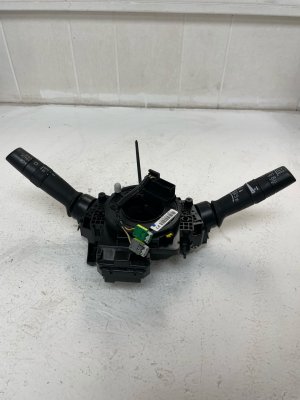
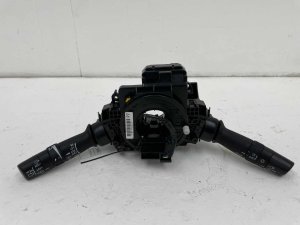
Est. part cost: $0 (if recall applies) - Failed Steering Angle Sensor / Clockspring Assembly ⚪ Low Probability The sensor can fail internally, but it's less common than calibration issues. On the 10th gen Civic, the sensor is integrated into the clockspring/combination switch assembly behind the steering wheel and is not sold as a separate component.
How to confirm: After ruling out calibration, alignment, and the gearbox recall, the sensor assembly is the likely culprit. A scan tool may show specific internal failure codes like C0051-96 or communication loss codes like U0126.
Typical fix: Replace the entire combination switch/clockspring assembly. This requires removing the steering wheel and airbag, and must be followed by SAS calibration.
Est. part cost: $150-$300 (for the assembly)
Rare But Worth Checking
- CAN Bus Communication Error: A wiring issue or problem with another module on the Controller Area Network (CAN) bus could interrupt the signal from the SAS, setting this code. A known issue on this platform is rodent damage to the soy-based wiring insulation, particularly on the EPS sub-harness, which can cause this failure. This would likely be accompanied by other communication codes (U-codes).
Diagnosis Steps
- Check for Recalls: If you have a 2017-2018 Civic, immediately check your VIN for NHTSA recall #18V663 (Honda campaign C2N, P2O) related to the steering gearbox.
- Scan for All Codes: Use a high-quality scanner that can read ABS/VSA system codes. Record all codes present, especially any U-codes or C0051-96.
- Check Live Data: View the live data stream for the Steering Angle Sensor. With the engine running and wheels pointed straight ahead, the angle should be within +/- 5 degrees of zero.
- Assess Recent History: Note if the code appeared immediately after a battery change, wheel alignment, or any front-end work. An owner on Reddit reported this exact issue after disconnecting the battery for an injector replacement. If so, a calibration is the most likely fix.
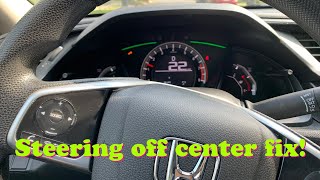
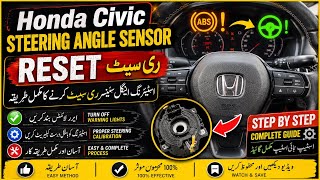
- Perform SAS Calibration: Using a bidirectional scan tool (like the Honda HDS, Autel, or Launch), perform the 'VSA Sensor Neutral Position Memorization' or 'All Sensor' calibration procedure and follow the on-screen instructions. Some sources suggest a manual reset by turning the wheel lock-to-lock may work, but a scan tool is more reliable. 🎬 Watch: How to reset the Honda Civic steering angle sensor
- Inspect Physical Alignment: If calibration fails or the live data is far off (e.g., 360 degrees), have the vehicle's wheel alignment checked by a professional. A rotational misalignment of the steering shaft is a known cause.
- Inspect Wiring: Check the wiring and connectors leading to the steering column and steering rack for any visible damage, paying attention to the EPS harness for signs of rodent damage.
- Component Replacement: If all else fails, the fault lies with the integrated sensor/clockspring assembly or the steering gearbox. Consult a professional shop for replacement, as it's a complex and potentially very expensive job.
Parts You'll Likely Need
- Combination Switch / Clockspring Assembly
(OEM #77900-TBA-A12)— Required if the steering angle sensor itself has failed internally. On the 10th gen Civic, the sensor is integrated into this assembly and not sold separately. This part number supersedes 77900-TBA-A11.
Trusted brands: Honda (Genuine)
OEM price range: $150-$300
Aftermarket price range: $80-$150 - Steering Gearbox Assembly — Required if the vehicle falls under the 2017-2018 recall (NHTSA #18V663), or if the internal torque sensor has failed. Multiple part numbers exist depending on trim level (e.g., Si, LX, EX).
Trusted brands: Honda (Genuine)
OEM price range: $2000-$3000+
Aftermarket price range: N/A
Related Codes That Often Appear With This One
- C0051-96 — This is a Honda-specific code indicating an internal failure of the steering angle sensor, confirming the sensor itself is bad.
- U0126-00 — Indicates a loss of communication with the steering angle sensor module, pointing towards a wiring, connection, or severe sensor module failure.
- C0051-54 — This code for 'Steering Angle Neutral Position Learning Incomplete' often accompanies C1219 when the root cause is a lost calibration.
Technical Service Bulletins (TSBs) & Recalls
- 18-102 - Safety Recall: 2017-18 Civic: Steering Gearbox. This document details the background (dislodged torque sensor magnet) and corrective action (replace steering gearbox, perform alignment, and run SAS neutral position learning) for NHTSA recall 18V663.
Platform-Specific Known Issues
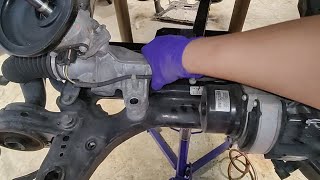
- Safety Recall 18V663 (Honda C2N/P2O): Affects some 2017-2018 Civics for a defective steering gearbox torque sensor magnet. The official remedy is to replace the entire steering gearbox assembly.
- Sticky Steering Issue (2019+): Some owners of later model year 10th-gen Civics report a 'sticky' or notchy steering feel at highway speeds, which has led to steering rack replacements outside of the original recall scope. This is sometimes caused by a lack of grease on the worm gear inside the steering rack assembly.
Mechanic-Grade Diagnostic Values
- Live Data: Steering Angle Sensor Position (Wheels Straight) — expected: +/- 5 degrees from zero. Failure: A value significantly outside this range (e.g., +/- 15 degrees or more, or a large value like 360) indicates a calibration or mechanical alignment issue.
- Sensor Power Supply Voltage — expected: Above 11.0 volts. Failure: Voltage below 11.0 volts indicates high resistance in the power supply circuit to the sensor.
- Sensor Ground Circuit Resistance — expected: Below 5.0 ohms. Failure: Resistance above 5.0 ohms indicates a poor ground connection.
Scan Tool Commands That Help
- Honda HDS (i-HDS): VSA Sensor Neutral Position Memorization — This is the official Honda procedure to calibrate the steering angle sensor, yaw rate sensor, and lateral G sensor after component replacement, alignment, or battery disconnect. It is found under the ABS/VSA menu.
- Autel, Launch, etc.: Steering Angle Sensor (SAS) Calibration / All Sensor Reset — This function on professional aftermarket scanners performs the same neutral position learning procedure. It's used to clear C1219 and related codes after ensuring the mechanical alignment is correct.
Wiring & Ground Locations
- VSA Modulator Fuses — Fuse #34 (10A) in the driver's side under-dash fuse box, and fuses #4 and #5 within the multi-fuse block #3 in the main under-hood fuse box.. A blown fuse for the VSA control unit will cause it to lose power, setting communication and performance codes for all its inputs, including the steering angle sensor.
- EPS Control Unit Connector — On the electronic power steering rack itself, under the vehicle.. This connector and its associated harness are a known area for rodent damage. A chewed wire here can interrupt the CAN bus signal from the steering angle sensor, causing C1219 and other communication faults.
Real Owner Repair Stories
- YouTube channel 'aricwithautoreplay' (2008 Dodge Nitro (platform shares similar logic)) — ESP/BAS light on, ABS code C1219 'Steering wheel erratic'.
❌ Tried (didn't work) Clearing codes (returned immediately)
✅ What actually fixed it The steering wheel was rotationally misaligned by a full 360 degrees after a steering rack replacement. Live data showed -360 degrees when straight. The fix was to disconnect the steering shaft from the column, physically rotate the steering wheel one full turn to the left while watching live data to get it near zero, and then reconnect the shaft.
OEM Part Supersession History
77900-TBA-A11→77900-TBA-A12— Standard part revision by the manufacturer.
Heads up: The parts are interchangeable. 77900-TBA-A12 is the correct service replacement for the entire 2016-2021 Civic range.
Model Year Variations Within This Range
- 2017-2018: These model years are subject to NHTSA recall #18V663 for a potentially defective steering gearbox, which is a primary cause of C1219 in affected vehicles.
- 2019-2021: While not covered by the earlier recall, these models are known to exhibit a 'sticky steering' phenomenon, which can also be caused by a fault within the steering rack. This may or may not be accompanied by a C1219 code but points to ongoing issues with the EPS rack design.
Diagnostic Flowchart
Other Known Issues on This Vehicle
Issues unrelated to this code that are worth knowing about as an owner of this generation:
- 1.5L Turbo Engine Oil Dilution 🔴 High — Common on 2016-2018 models, especially in cold climates with frequent short trips. Can cause premature engine wear if unaddressed. (Ref: Honda TSB A19-033; Warranty Extension for 6 years/unlimited miles was issued to cover software updates and potential parts replacement.)
- A/C Condenser Leaks 🔴 High — Very common across all model years (2016-2021). Causes A/C to blow warm air due to refrigerant loss. (Ref: Honda TSB 19-091; Warranty on the A/C condenser was extended to 10 years with unlimited mileage.)
- Sticky or Stiff Steering 🟠 Medium — Reported on this generation, though a larger recall (24V-744) focuses on 2022+ models. Owners report a 'notchy' or momentary increase in steering effort at highway speeds. (Ref: Honda TSB 23-037 was issued for earlier models, instructing dealers to replace the EPS gearbox for this symptom.)
Used vs. New Parts: Buying Guide for This Vehicle
When a used part is the smart pick: A used steering gearbox from a low-mileage, non-recalled donor vehicle could be a cost-effective alternative to a new OEM unit if the vehicle is out of warranty and not eligible for the recall. However, this is a high-risk purchase.
Donor-vehicle mileage cap: roughly under 50000 miles for the part to have meaningful remaining life.
What to inspect on the donor part:
- Verify the donor vehicle's VIN is not part of the 2017-2018 steering gearbox recall.
- Inspect the electrical connectors on the steering rack for any corrosion or damage.
- Ensure the donor vehicle was not in a major front-end collision that could have damaged the rack.
- If possible, get history on the donor car to see if it had any steering-related complaints.
OEM-only on this vehicle (don't cheap out):
- Steering Gearbox Assembly: Due to the safety-critical nature and the known manufacturing defects (recall and sticky steering issues), using a new Genuine Honda part is strongly recommended to ensure the latest revisions are included.
- Clockspring / Combination Switch: While aftermarket options exist, this part is critical for airbag function. An OEM part is the safest choice to guarantee compatibility and reliability of the SRS system.
Brands owners have reported issues with on this vehicle:
- Unbranded, no-name clockspring assemblies from online marketplaces are a significant risk. Failure can lead to non-functional steering wheel controls and, more importantly, a disabled airbag.
Real Owner Stories
Aggregated from forums and TSBs cited above. Mileages and costs reflect what owners reported in those sources.
2019 Honda Civic Si
Symptoms: A cascade of warning lights appeared immediately after having the battery disconnected for an unrelated fuel injector repair.
What fixed it: A mechanic confirmed the sensor is part of the clockspring assembly and required a recalibration/neutral position memorization using a scan tool.
Source hint: Reddit r/AskMechanics thread titled 'honda_civic_steering_angle_sensor'
2017-2018 Honda Civic
Symptoms: Erratic steering assist and faults caused by a dislodged magnet in the torque sensor inside the steering gearbox.
What fixed it: Replacement of the entire steering gearbox assembly, followed by a wheel alignment and SAS calibration.
Cost: $0-$0
Source hint: Honda Service Bulletin 18-102 / NHTSA recall #18V663
Related OBD-II Codes
Frequently Asked Questions
My 2017 Civic has a C1219 code and steering issues; is there a recall for this?
I just replaced my battery and now my VSA, ABS, and EPS lights are all on. What happened?
Can I just replace the Steering Angle Sensor by itself if it's defective?
My steering feels 'sticky' at highway speeds but I don't have a recall notice. Is there a fix?
Will a wheel alignment fix my C1219 code?
Helpful Videos
Used OEM Parts in Stock
New Aftermarket Parts Available


The information in this article is provided for general reference and educational purposes only. Vehicle specifications, procedures, and part compatibility can vary by production date, trim level, and region. Always consult your vehicle's factory service manual and verify part numbers before purchasing or performing repairs. Safety-critical components such as airbags, seat belts, and braking systems should be installed by a qualified professional.
- Honda Civic:
- 🎬 Helpful Videos
- 🛍️ Shop This Part
- What's Unique About the 2016-2021 Honda Civic
- Symptoms You May Notice
- Most Likely Causes
- Rare But Worth Checking
- Diagnosis Steps
- Parts You'll Likely Need
- Related Codes That Often Appear With This One
- Technical Service Bulletins (TSBs) & Recalls
- Platform-Specific Known Issues
- Mechanic-Grade Diagnostic Values
- Scan Tool Commands That Help
- Wiring & Ground Locations
- Real Owner Repair Stories
- OEM Part Supersession History
- Model Year Variations Within This Range
- Diagnostic Flowchart
- Other Known Issues on This Vehicle
- Used vs. New Parts: Buying Guide for This Vehicle
- Real Owner Stories
- 2019 Honda Civic Si
- 2017-2018 Honda Civic
- Related OBD-II Codes
- Frequently Asked Questions
- 🎟️ Get 5% Off