

C1110 on 2013-2024 Ford Transit: ABS Controller Failure Causes and Fixes
Code C1110 on a Ford Transit almost always means the ABS control module has failed internally. This is a well-documented, common failure for this platform, particularly from 2012-2019. The most common fix is to replace the entire ABS pump and module assembly or send the original unit for a rebuild. A rebuild costs around $300-$400 and avoids the need for dealer reprogramming, while a new OEM part can exceed $1,000 plus labor and mandatory programming.
- C1110 on a Ford Transit means the ABS control module has most likely failed.
- This is a known weak point on this vehicle, especially 2013-2019 models.
- While the module is the likely cause, always check wiring, connectors, and ABS tone rings first to avoid a costly misdiagnosis.
- Replacement is not a simple DIY job; it requires specialized brake bleeding and electronic reprogramming.
- Sending your original module for a rebuild is often a more cost-effective solution than buying a new one and avoids the need for reprogramming.
What's Unique About the 2013-2024 Ford Transit

The Ford Transit, particularly models from 2012-2019, is known for experiencing a high rate of ABS pump and module failures. While a C1110 code is generic for controller failure, on this specific van, it strongly points to a well-documented pattern of the entire ABS unit failing. This can manifest as the module losing communication entirely, developing internal hydraulic faults that cause brakes to bind, or flagging internal pressure sensor faults (C1A99). Unlike other vehicles where wiring or sensors are equally likely culprits, on the Transit, the module itself is the primary suspect. Many owners and independent shops recommend rebuilding the original unit to avoid costly dealer reprogramming.
Generation note: The specified year range covers the first generation of the full-size Ford Transit in North America (2013-present), also known as the V363 platform. While the issue of ABS module failure is most widely documented on 2013-2019 models, the same fundamental systems are used in later years, making them susceptible to similar problems.
Symptoms You May Notice
- ABS warning light is on
- Traction Control (ESC/ESP) warning light is on
- Hill Start Assist Not Available message on the dashboard
- Wheels may lock up and skid during hard braking
- One or more brakes may feel like they are binding, sticking, or not releasing properly
- Cruise control is disabled
- Inability to communicate with the ABS module using a standard OBD-II scanner
- Brake pedal feels unusual, sometimes biting then sinking further
- Replacing a wheel speed sensor without checking its wiring or the tone ring. The fault is often in the harness leading to the sensor or a cracked tone ring, not the sensor itself. A specific code (like C0037) usually points to a sensor circuit, while C1110 points to the module itself.
Most Likely Causes

- Internal ABS Module Failure 🔴 High Probability Specialist repair shops cite a high failure rate for the Bosch ABS pump and module assembly used in 2012-2019 Transits, often due to internal electronic or hydraulic faults. The failure can be within the electronic controller or the hydraulic unit's internal pressure sensor.
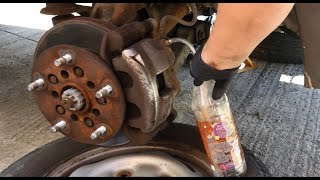
How to confirm: After confirming good power and ground to the module and ruling out external wiring/sensor faults, the diagnosis is made by exclusion. If a professional scan tool (like FORScan) cannot communicate with the ABS module or retrieves internal fault codes like C1110 or C1A99, the module is condemned. A common symptom pattern is the front-right and left-rear wheels sticking, which points directly to a diagonal circuit failure inside the module. 🎬 See how a faulty pump causes sticking brake calipers
Typical fix: The ABS pump and module assembly must be replaced with a new or used unit, or the original unit can be sent to a specialist for rebuilding. Rebuilding is often preferred as it costs less and doesn't require reprogramming. Companies like Circuit Board Medics and Module Repair Pros are frequently mentioned by owners.
Est. part cost: $800-$1500 (New), $300-$600 (Rebuild Service) - Damaged Wiring or Corroded Connectors 🟡 Medium Probability The wiring harness for wheel speed sensors runs in exposed areas and can be damaged by road debris or corrosion, leading to an open or short circuit. Coolant leaks from the expansion tank or thermostat housing have also been known to drip directly onto the main ABS module connector, causing corrosion and communication failures. A separate recall (17S34-S1) was issued for water intrusion into the trailer tow module, highlighting the platform's susceptibility to wiring corrosion issues.
How to confirm: Visually inspect the wiring harness leading to all four wheel speed sensors and the main connector at the ABS module. Check for chafing, breaks, or green/white corrosion, especially at the block connector itself. Test for continuity and verify power and ground at the ABS module connector using a multimeter and a wiring diagram.
Typical fix: Repair the broken or corroded section of the wire. If a pin in the connector is damaged, it may need to be de-pinned and replaced. If corrosion is from a coolant leak, the source of the leak must also be fixed.
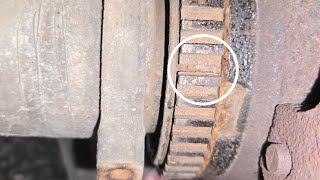
Est. part cost: $10-$100 - Cracked or Damaged ABS Tone Ring ⚪ Low Probability Rust and scale can build up on the wheel hub behind the tone ring (also called a reluctor ring), eventually putting enough pressure on the ring to crack it. This is a very common failure on Ford Transits and often triggers wheel speed sensor specific codes, but can sometimes lead to general ABS faults.
How to confirm: Remove the wheel and the corresponding wheel speed sensor. Visually inspect the toothed ring on the hub or axle for cracks or damage. A cracked ring will provide an erratic or missing signal to the sensor, which can be viewed as live data on a capable scan tool.
Typical fix: Official repair requires replacing the entire wheel hub/bearing assembly. However, a widely practiced and effective field repair is to clean the rust from the hub, clamp the cracked ring shut, and tack-weld it back together and to the hub in a few spots. This is considered a permanent fix by many technicians and avoids the high cost of hub replacement.
Est. part cost: $150-$300 (Hub Assembly), <$10 (DIY weld repair) - Low Battery Voltage or Charging System Fault ⚪ Low Probability
How to confirm: Test the battery voltage with the engine off (should be >12.4V) and while running (should be 13.5V-14.5V). A weak battery or failing alternator can cause numerous, seemingly unrelated electronic module errors on modern vehicles.
Typical fix: Charge or replace the battery. If the charging voltage is low, diagnose the alternator and charging system.
Est. part cost: $150-$400 (Battery/Alternator)
Diagnosis Steps

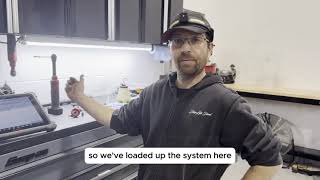
- Read Fault Codes: Use a high-quality scanner capable of reading Ford-specific Chassis (C) codes 🎬 Watch: How to perform a professional ABS brake bleed (e.g., FORScan) to confirm C1110 and any other related codes like C1A99, C1095, or U-codes.
- Check Battery and Fuses: Ensure the battery voltage is stable and above 12.4V. Check all fuses related to the ABS system in both the engine bay and interior fuse panels.
- Inspect for Leaks: Check for signs of coolant leaks from the expansion tank or nearby hoses that could be dripping onto the ABS module's electrical connector.
- Inspect Wiring: Visually inspect the wiring harnesses going to all four wheels for chafing, breaks, or corrosion. Pay close attention to the main harness connector at the ABS module itself for any signs of moisture or corrosion.
- Check Power and Ground at the ABS Module: Disconnect the main connector at the ABS module. Using a multimeter and a wiring diagram, verify that the module is receiving proper battery voltage and has a solid ground connection. A faulty ground is a common point of failure.
- Inspect ABS Tone Rings: Even without a specific wheel speed sensor code, it is worth a quick visual inspection of the rear ABS tone rings for cracks, as this is a very common Transit issue.
- Diagnose by Exclusion: If all external wiring, fuses, power/ground connections, and tone rings are good, the C1110 code indicates an internal, non-serviceable failure of the ABS module. The unit must be replaced or rebuilt.
Parts You'll Likely Need

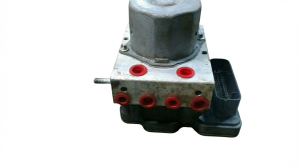
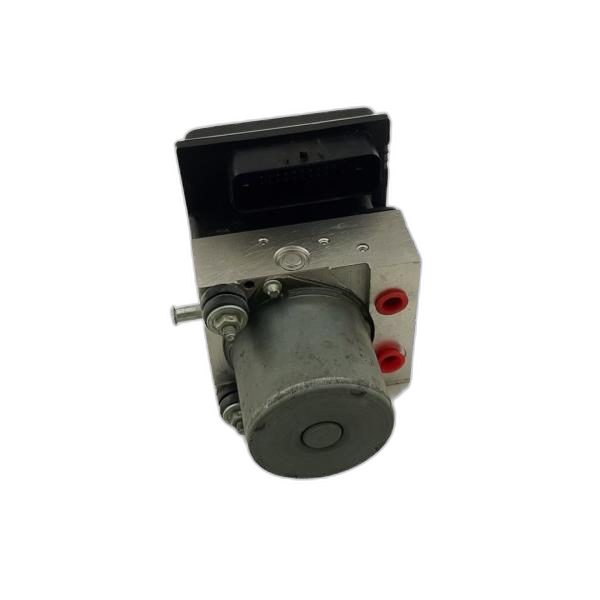
- ABS Pump and Control Module Assembly
(OEM #Varies by year/model. Examples: BK21-2C405-AG, CK41-2C405-AB)— This is the most common cause of code C1110 on the Ford Transit, due to a well-documented history of internal electronic and hydraulic failures on the platform.
Related Codes That Often Appear With This One
- C1A99 — This code indicates 'ABS Pressure Sensor' fault. This sensor is internal to the ABS Hydraulic Control Unit (HCU). Its presence alongside C1110 strongly confirms the entire ABS assembly has failed and requires replacement or rebuild.
- U0121 — This is a generic communication code meaning 'Lost Communication With ABS Control Module'. It often appears when the ABS module fails electronically and goes offline, preventing scanners from communicating with it.
- C1095 — This code points to a failure in the ABS hydraulic pump motor circuit. Since the motor is an integral part of the ABS assembly, this code, especially with C1110, confirms a comprehensive failure of the unit.
- U0415 — This code means 'Invalid Data Received From Anti-Lock Brake System Control Module'. It indicates other modules on the vehicle network are receiving nonsensical data from the ABS module, pointing to an internal failure of the ABS controller.
Technical Service Bulletins (TSBs) & Recalls
- While no TSB is directly for C1110, TSB 17-0031 addresses issues with programming a new ABS module on other Ford platforms, highlighting the complexity of replacement.
- Recall 17S34-S1 was issued for 2015-2017 Transits due to water intrusion into the trailer tow module causing wiring corrosion, indicating a general vulnerability to electrical issues from moisture.
Platform-Specific Known Issues
- A high rate of ABS module/pump failure is documented for 2012-2019 models, often causing binding brakes and multiple warning lights. Rebuilding the original unit is a popular, cost-effective solution that avoids reprogramming.
- The wiring harness for the wheel speed sensors is susceptible to damage and corrosion, which can mimic sensor or module faults.
- Cracked rear ABS tone rings due to rust buildup on the hub are extremely common and can be repaired by welding.
- Coolant leaks from the thermostat housing or expansion tank can drip onto the ABS module connector, causing corrosion and electrical faults.
Mechanic-Grade Diagnostic Values
- CAN Bus Network Resistance — expected: Approximately 60 Ω. Failure: A reading of 120 Ω indicates an open circuit in the CAN harness or a missing terminating resistor (module). A reading near 0 Ω indicates a short between the CAN High and CAN Low wires.
- CAN Bus Voltage (Recessive State) — expected: CAN High to Ground: ~2.5-3.0V DC. CAN Low to Ground: ~2.5-2.0V DC.. Failure: Voltages outside these ranges indicate a potential short to power, short to ground, or a faulty module/transceiver on the network.
- ABS Module Fuses — expected: Continuity on all related fuses.. Failure: An open fuse will cut power to the module. On the related Transit Connect, there are at least three fuses, including a small 5-amp fuse (F19) that can be easily overlooked.
Hidden / Shadow Codes Worth Checking
- C1A99-28: The '-28' is a Failure Type Code (FTC) providing more detail on the primary DTC. While the specific meaning of each FTC requires dealer-level documentation, its presence indicates a more detailed fault record is stored. This confirms the 'ABS Pressure Sensor' fault is related to a signal calibration failure. (see via Advanced scan tools like Ford's IDS or FORScan can display these two-digit suffixes that are hidden from generic OBD-II readers.)
Scan Tool Commands That Help
- Ford IDS / FORScan: Programmable Module Installation (PMI) — This is mandatory when installing a new or used ABS module. The function copies the vehicle-specific configuration data (As-Built data) from the old module (or downloads it from Ford's servers) and writes it to the replacement unit. Without this, the module will not work.
- Ford IDS / FORScan: ABS Service Bleed — After the hydraulic unit has been replaced and the brake lines reconnected, this function must be run. It cycles the internal solenoids and pump motor to purge any trapped air from the hydraulic control unit, which cannot be removed by manual bleeding alone.
- Ford IDS / FORScan: Calibrate Lateral Acceleration and Yaw Rate Sensors / Calibrate Pressure Sensor — After a new module is installed and programmed, the internal sensors that support the stability control system must be calibrated to establish a zero point. This is typically the final electronic step.
Wiring & Ground Locations

- ABS Module Assembly — Deep in the engine bay, located behind the battery and the vehicle's main airbox. Both the battery and airbox must be removed to gain access to the module's connectors and mounting bolts.. This difficult-to-access location increases labor time for diagnosis and replacement. It also makes visual inspection of the main electrical connector for corrosion or damage a time-consuming first step.
- Main ABS Module Connector — Attached to the electronic portion of the ABS module assembly, behind the battery.. This is the primary point for testing power, ground, and CAN bus signals going into the module. Verifying correct voltage and resistance here is the final step before condemning the module itself.
Real Owner Repair Stories
- EOC Performance Parts LTD YouTube Channel (2019 Ford Transit) — Braking issues, specifically the left-rear and right-front tires were sticking or binding.
❌ Tried (didn't work) The shop mentioned that in their experience, sending the modules out for a rebuild was not a reliable fix, as they had seen the same problems return months later.
✅ What actually fixed it Replacing the entire ABS pump and module assembly with a new OEM Ford part. The fix required programming the new module, pressure bleeding the system, and performing a specific procedure of cycling the parking brake five times to properly bleed the rear calipers. - Ford Transit Forum user 'Random18543' (2013 Ford Tourneo Custom) — ABS light on, diagnosed by Ford dealer as a faulty module.
❌ Tried (didn't work) The dealer installed a new replacement module, but could not get it to communicate with the vehicle for eight weeks.
✅ What actually fixed it After three additional months of the vehicle being at the dealer, Ford Technical support guided the technicians through the correct programming process for the new module. The ultimate fix was not the part, but the successful execution of the mandatory programming procedure.
When the Usual Fixes Don't Work
- While many owners and independent shops prefer rebuilding the original ABS module to avoid reprogramming, at least one professional shop strongly advises against it. They report having multiple rebuilt units fail again within months and now exclusively use new OEM Ford modules for this repair to ensure reliability.
OEM Part Supersession History
CK4Z-2C405-A, EK4Z-2C405-A→FK4Z-2C405-C— Part revision and update by the manufacturer.
Heads up: Using a module from a different year range may lead to programming and compatibility issues, even if it physically fits. Always match part numbers or use the latest superseded version specified for the vehicle's VIN.NK4Z-2C219-D→NK4Z-2C219-E, then NK4Z-2C219-F— Part revision and update by the manufacturer.
Heads up: This shows the part continues to be revised for the newest models, highlighting the importance of sourcing the correct part for the specific model year.
Model Year Variations Within This Range
- 2015-2019 vs 2020-2021 vs 2023-2025: The OEM part numbers for the ABS module assembly are different across these year groups, indicating internal hardware or software changes. For example, 2015-2019 models use parts like FK4Z-2C405-C, while 2023-2025 models use parts like NK4Z-2C219-F. A shop also noted a part number difference between pre-2018 and 2018+ models.
- 2020 models: Ford issued recall 20E03 for an 'Anti-lock brake module reprogram,' which was a software update. This indicates that some issues on later models may be software-related and could potentially be fixed with a dealer reflash instead of a hardware replacement.
Diagnostic Flowchart
Other Known Issues on This Vehicle
Issues unrelated to this code that are worth knowing about as an owner of this generation:
- Driveshaft Flexible Coupling (Guibo) Failure 🔴 High — Common on 2015-2017 models, leading to a major recall. Failure can occur under 40,000 miles. (Ref: Recall 19S38 (supersedes 17S15). The fix involves replacing the flexible coupling with a mechanical U-joint.)
- Turbocharger Failure (EcoBoost & EcoBlue) 🔴 High — Common across both petrol (EcoBoost) and diesel (EcoBlue) engines. Often caused by oil contamination from degraded wet timing belts or lack of servicing.
- Cracked Rear ABS Tone Ring 🟠 Medium — Extremely common across all model years. Rust builds up under the ring on the rear hub, forcing it to crack.
- Driveline Boom/Hum at Highway Speeds 🟡 Low — Affects 2015-2023 RWD single-rear-wheel models at specific highway speeds depending on axle ratio. (Ref: TSB 22-2444 (supersedes 22-2271) advises installing a driveshaft torsional damper.)
- Oil Leaks and Corrosion 🟠 Medium — Owners report premature oil leaks from valve covers and significant underbody/engine bay corrosion even on relatively low-mileage vans.
- Water Intrusion and Wiring Corrosion 🟠 Medium — Affects 2015-2017 models, where water can enter modules (like the trailer tow module) or connectors, causing corrosion and widespread electrical faults. (Ref: Recall 17S34-S1)
Used vs. New Parts: Buying Guide for This Vehicle
When a used part is the smart pick: A used ABS module from a salvage yard can be a significant cost savings ($100-$200 vs $1200+ for new OEM). This is a viable option ONLY if you have access to a Ford IDS or FORScan scan tool and are capable of performing the mandatory 'Programmable Module Installation' (PMI) to configure the used module to your van's VIN and features.
Donor-vehicle mileage cap: roughly under 150000 miles for the part to have meaningful remaining life.
What to inspect on the donor part:
- **Exact Part Number Match:** The single most critical factor. The part number on the donor module MUST exactly match the number on your original module. Even a one-letter difference can indicate an incompatible hardware or software version.
- **No Physical Damage:** Inspect the connector pins for any signs of corrosion, bending, or damage. Check the hydraulic block for any cracks or signs of leaking brake fluid.
- **Donor Vehicle History (If Possible):** Avoid modules from vehicles with flood damage or major electrical fires, as this can compromise the electronics.
OEM-only on this vehicle (don't cheap out):
- While not strictly 'OEM-only', one professional repair shop with experience on Transits advises only using new OEM ABS modules, citing repeated failures of rebuilt units. This suggests that for maximum long-term reliability, a new part from Ford may be the safest, albeit most expensive, choice.
Aftermarket brands forum-validated for this vehicle:
- **Rebuild Services (Not Parts):** Companies that rebuild your original module are a popular choice. This is often the best of both worlds: cheaper than a new part and requires no programming since it's your original unit. Services like ECU Testing are well-regarded.
Brands owners have reported issues with on this vehicle:
- There are no specific aftermarket 'brands' to avoid, but be cautious with generic, unbranded modules from online marketplaces. The primary risk comes from rebuilt units that have not been properly repaired and tested. One shop's negative experience with multiple failed rebuilds suggests quality can vary widely between rebuilders.
Real Owner Stories
Aggregated from forums and TSBs cited above. Mileages and costs reflect what owners reported in those sources.
2012-2019 Ford Transit
Symptoms: Binding brakes, ABS warning light, and Traction Control (ESC/ESP) warning light were on.
What fixed it: The owner had the original ABS module and pump assembly rebuilt by a specialist service, which is a popular solution that avoids the need for reprogramming the unit.
Cost: $300-$600
Source hint: Vehicle-specific issues section of article context
Ford Transit (year not specified)
Symptoms: The owner experienced an odd brake pedal feel, where it would sometimes bite and then sink further down.
What fixed it: The owner discussed the need for a specialized ABS bleed procedure using software like FORScan as part of the diagnostic and repair process for the ABS system fault.
Source hint: Ford Transit Forum - "Possible faulty ABS module"
Ford Transit (year not specified)
Symptoms: After performing a traditional brake bleed, the owner received a C1109 code (related to C1110) and multiple communication faults.
What fixed it: A Ford dealer diagnosed the issue as a failed ABS module, which required replacement.
Source hint: Ford Transit Forum - "ABS Module failure - cause?"
Related OBD-II Codes
Frequently Asked Questions
My brakes are sticking on my Transit and the ABS and Traction Control lights are on. Is this the common ABS module failure?
I was told I need a new ABS module for my 2017 Transit. Do I have to buy an expensive new one from Ford and get it programmed?
I found a coolant leak near my engine's expansion tank. Could this be related to my C1110 ABS code?
My mechanic said my rear ABS tone ring is cracked. Do I have to replace the entire wheel hub assembly?
Is there a recall for the ABS module failure on the Ford Transit?
My scanner can't communicate with the ABS module at all. Does this automatically mean the module is bad?
Helpful Videos

We Have This Part in Stock



The information in this article is provided for general reference and educational purposes only. Vehicle specifications, procedures, and part compatibility can vary by production date, trim level, and region. Always consult your vehicle's factory service manual and verify part numbers before purchasing or performing repairs. Safety-critical components such as airbags, seat belts, and braking systems should be installed by a qualified professional.
- Ford Transit:
- 🎬 Helpful Videos
- 🛍️ Shop This Part
- What's Unique About the 2013-2024 Ford Transit
- Symptoms You May Notice
- Most Likely Causes
- Diagnosis Steps
- Parts You'll Likely Need
- Related Codes That Often Appear With This One
- Technical Service Bulletins (TSBs) & Recalls
- Platform-Specific Known Issues
- Mechanic-Grade Diagnostic Values
- Hidden / Shadow Codes Worth Checking
- Scan Tool Commands That Help
- Wiring & Ground Locations
- Real Owner Repair Stories
- When the Usual Fixes Don't Work
- OEM Part Supersession History
- Model Year Variations Within This Range
- Diagnostic Flowchart
- Other Known Issues on This Vehicle
- Used vs. New Parts: Buying Guide for This Vehicle
- Real Owner Stories
- 2012-2019 Ford Transit
- Ford Transit (year not specified)
- Ford Transit (year not specified)
- Related OBD-II Codes
- Frequently Asked Questions
- 🎟️ Get 5% Off