

C1100 on 2013-2024 Ford Transit: ABS Pump Switch Circuit Failure Causes and Fixes
Code C1100 on a Ford Transit indicates an ABS Pump Switch Circuit Failure. This is most often caused by an internal failure of the ABS control module, a known issue on this platform that can cause the pump to run continuously or brakes to lock up. The typical fix is to replace the ABS module or have it rebuilt by a specialist, which can save on cost and avoid the need for reprogramming.
- C1100 on a Ford Transit almost always points to a problem with the ABS pump and module assembly.
- Symptoms include ABS/traction control lights and, more seriously, the possibility of brakes binding or locking up.
- The most common and cost-effective solution is to have your original ABS module rebuilt by a specialist service, which avoids the high cost and programming requirements of a new unit.
- This is not a DIY-friendly repair. It involves the brake hydraulic system and requires special tools for bleeding and programming.
- Do not immediately replace calipers or wheel speed sensors for this code without first properly diagnosing the ABS module and its circuit.
What's Unique About the 2013-2024 Ford Transit

The Ford Transit, particularly models from 2012-2019, is known for experiencing failures of the ABS pump and module assembly. While C1100 points to a circuit failure, on this van it is frequently an *internal* circuit failure within the ABS module itself, which is located on the driver's side frame rail. This can be caused by issues like water intrusion leading to corrosion or internal component breakdown. As a result, diagnosis often leads directly to the ABS module rather than external wiring or sensors.
Generation note: The specified year range covers the first generation of the full-size Ford Transit in North America (V363, sold from 2015-present) and may also include the smaller Transit Connect. The ABS module failure is a well-documented issue on the full-size Transit, especially models from 2012-2019. While the code applies to the whole range, the prevalence of module failure is highest in these earlier models.
Symptoms You May Notice

- ABS warning light illuminated on the dashboard.
- Traction control or stability control (ESC) warning light on.
- Cruise control may be disabled.
- Brakes may feel unusual, or one or more wheels may lock up and skid during hard braking.
- In some cases, brakes may bind or fail to release properly after being applied, often on diagonally opposite wheels (e.g., front-right and left-rear).
- Buzzing or humming noise from the ABS pump, which may run continuously even with the key off.
- Battery drain overnight due to the ABS pump running continuously.
- Replacing a wheel speed sensor. A faulty wheel speed sensor will usually generate a specific code that points to that sensor's circuit (e.g., C0031 for Left Front). C1100 points to the pump circuit, which is more often an internal module fault.
- Replacing a brake caliper. If a brake is binding, it can be mistaken for a seized caliper. However, on the Transit, this is a common symptom of a failed ABS module not releasing hydraulic pressure. The bleed screw test is key to differentiating this. 🎬 Watch: How a failed ABS module causes sticking brake calipers.
Most Likely Causes

- Internal ABS Pump/Module Failure 🔴 High Probability This is a widely documented failure point on the Ford Transit platform, often due to internal electronic or hydraulic component breakdown. The failure can manifest as a continuous running pump or an inability to release hydraulic pressure, causing brakes to lock on.
How to confirm: A professional scan tool may show the C1100 code or a 'no communication' error with the ABS module. If a brake caliper is stuck, opening the bleed nipple can confirm a hydraulic pressure issue; if the brake releases, it points to the ABS module, not a seized caliper.
Typical fix: Replace the entire ABS pump and module assembly with a new unit, or remove the original module and send it to a specialist for rebuilding. Rebuilding is often more cost-effective and avoids the need for reprogramming. Reputable rebuilders include ECU Testing and VCUS.
Est. part cost: $800-$1400 for a new OEM module, $250-$600 for a professional rebuild service. 🎬 See how to fix common ABS failures with basic tools.
- Damaged Wiring or Corroded Connectors 🟡 Medium Probability Water intrusion from the cowl area can lead to corrosion on various electrical connectors, including the main harness for the ABS module. The wiring harness can also chafe against the frame or other components over time.
How to confirm: Visually inspect the wiring harness and connectors going to the ABS module for any signs of corrosion, chafing, or physical damage. Perform a continuity test on the pump switch circuit wires between the connector and the module.
Typical fix: Repair or replace the damaged section of the wiring harness and clean or replace the corroded connector.
Est. part cost: $20-$200
Rare But Worth Checking
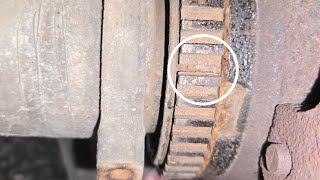
- Cracked or Corroded ABS Tone Ring: While this typically sets a wheel speed sensor code, a severely damaged tone ring can sometimes cause erratic ABS behavior and trigger other system faults. It's a known issue on Transits where rust scaling on the hub pushes the ring out until it cracks.
- Power Supply or Ground Issue to ABS Module: A blown fuse or a faulty ground connection for the ABS module can prevent it from operating correctly, potentially triggering circuit fault codes. One owner on a forum chased a similar issue down to a power supply problem.
Diagnosis Steps

- Scan for Codes: Use a professional-grade OBD-II scanner capable of reading Chassis (C-codes) to confirm C1100 and any other related codes in the ABS, powertrain, and body control modules.
- Check for Communication: Attempt to communicate directly with the ABS module. If the scan tool cannot establish communication, it strongly suggests a failed module or a power/ground issue to the module.
- Listen for Continuous Pump Operation: Listen for a humming or buzzing from the ABS pump (located on the driver's side frame rail) with the key on or even off. If it runs constantly, this is a classic sign of internal module failure.
- Visual Inspection: Inspect the ABS module, its electrical connector, and the nearby wiring harness for any signs of corrosion, water damage, or physical damage. Check for chafing against the frame.
- Check Power and Ground: Using a multimeter and wiring diagram, verify that the ABS module is receiving proper battery voltage on its power pins and has a solid ground connection. Check the main ABS fuses in the underhood fuse box.
- Diagnose Binding Brakes (if applicable): If a wheel is locked, safely raise the vehicle and confirm the wheel cannot be spun by hand. Carefully open that caliper's bleed screw. If brake fluid squirts out and the wheel becomes free, the fault is trapped hydraulic pressure from the ABS unit, not a mechanical caliper seizure.
- Conclude Diagnosis: If power, ground, and wiring are good, and especially if there is no communication with the module or symptoms of hydraulic binding or a continuously running pump, the ABS module itself is the most likely failed component.
Parts You'll Likely Need

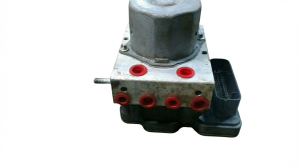
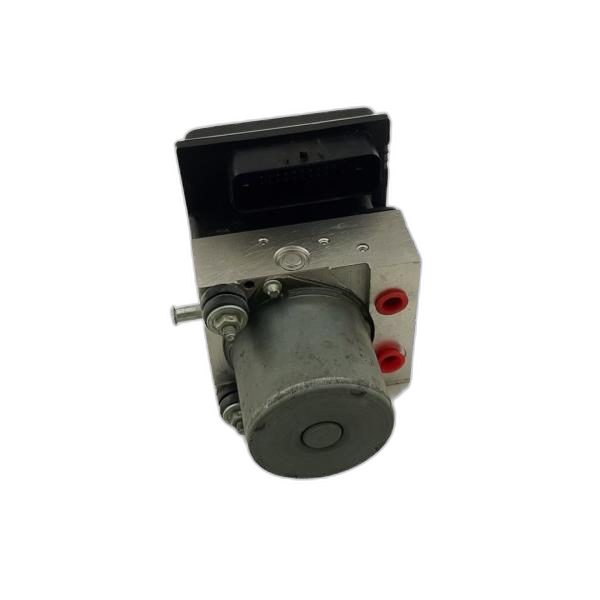
- ABS Pump and Control Module Assembly
(OEM #Part numbers vary significantly by year, drivetrain (FWD/RWD/AWD), and options. Examples include FK4Z-2C405-C, GK41-2C405-AC, LK4Z-2B373-A. Always verify with VIN.)— This is the most common failure point for code C1100 and related ABS faults on the Ford Transit. The entire unit, containing the electronic module and hydraulic pump, is typically replaced or rebuilt.
Trusted brands: Motorcraft (OEM), Bosch (Original Manufacturer), ECU Testing (Rebuild Service), Module Master (Rebuild Service), XeMODeX (Rebuild Service)
OEM price range: $800-$1400
Aftermarket price range: N/A (Rebuild services are the primary alternative, ~$250-$600)
Related Codes That Often Appear With This One
- C1095 — This code for 'ABS Hydraulic Pump Motor Circuit Failure' is very similar and often appears alongside C1100, pointing to the same root cause: a failed ABS module assembly.
- U3000 — 'Control Module' code, often with a sub-code like :49 for 'Internal Electronic Failure'. This code can appear when the ABS module fails internally and can no longer communicate properly.
- U0415 — 'Invalid Data Received From Anti-Lock Brake System Control Module'. This code is set by other modules on the CAN bus when the ABS module is malfunctioning and sending faulty data or no data at all.
Technical Service Bulletins (TSBs) & Recalls
- TSB 18-2321: Addresses water leaking from the cowl area into the engine compartment, which can affect various components. While not specific to the ABS module, it highlights a systemic issue with water management that could be a contributing factor to connector corrosion.
- Recall 17S34: Pertains to water intrusion into the trailer tow module located in the driver's step-well, showing a pattern of issues with water damaging electronics in the Transit.
Platform-Specific Known Issues
- The ABS module on 2012-2019 Ford Transit models is known to be prone to internal failure, which can cause brakes to lock on or the pump to run continuously, draining the battery.
- Water can drain from the windshield cowl area onto electrical components, potentially causing corrosion on the ABS module connector over time. TSB 18-2321 addresses a related water intrusion issue.
- While C1100 is often an internal module fault on Ford platforms, cross-manufacturer records such as NHTSA ODI #10534614 for Mercedes-Benz vehicles indicate that C1100 can specifically refer to a front speed sensor circuit failure on other makes.
Mechanic-Grade Diagnostic Values
- ABS Pump Motor Fuse Resistance — expected: 0 ohms. Failure: An open circuit (infinite resistance) indicates a blown fuse.
- Voltage at ABS Pump Motor Fuse — expected: ~13V (battery voltage). Failure: Low or no voltage points to a problem in the power supply circuit before the fuse.
- Voltage Drop at ABS Supply Terminals (during pump activation) — expected: Voltage should remain close to battery voltage.. Failure: An excessive voltage drop indicates high resistance in the power supply wiring harness.
- ABS Module Ground Circuit Resistance — expected: Less than 5 ohms, ideally less than 0.1 ohms.. Failure: High resistance indicates a poor ground connection, which can cause intermittent or permanent faults.
- Power and Ground at Module Connector (example from similar Ford platform) — expected: Key-On Power (12V+) at pins 1, 8, and 32. Ground at pin 16.. Failure: Absence of power or ground at these specific pins points to a wiring issue leading to the module.
Hidden / Shadow Codes Worth Checking
- C1097 / C1098: These are more specific versions of pump circuit failures. C1097 indicates 'ABS Hydraulic Pump Motor Circuit Short To Ground', and C1098 indicates 'ABS Hydraulic Pump Motor Circuit Short To Battery'. (see via A professional-grade scanner capable of reading Ford-specific chassis codes.)
- C1A99-28: This is an example of a Ford code with a two-digit suffix (-28) that provides more granular detail about the nature of the fault. The suffix is critical for advanced diagnosis but may only be visible on dealer-level or advanced aftermarket scanners. (see via Ford IDS/FDRS or advanced aftermarket scan tools like some Autel or Snap-on models.)
Scan Tool Commands That Help

- Ford IDS / FORScan / High-End Aftermarket: ABS Service Bleed — This is a mandatory procedure after replacing the ABS hydraulic unit or opening any brake lines connected to it. The command activates the pump and solenoids to purge trapped air that cannot be removed with a manual or pressure bleed.
- Ford IDS / FDRS / High-End Aftermarket: Programmable Module Installation (PMI) — This is required when installing a new or used ABS control module. The function copies the vehicle-specific 'As-Built' configuration data from the old module (or retrieves it from Ford's servers) and writes it to the replacement module. Failure to perform PMI will result in a non-functional ABS system and persistent warning lights.
- Ford IDS / FDRS / High-End Aftermarket: Pump Motor Functional Test / Actuation Command — Used during diagnosis to command the ABS pump motor to run. If the motor receives correct power and ground but does not activate when commanded by the scan tool, it confirms a failure within the ABS module or motor assembly itself.
Wiring & Ground Locations

- ABS Module Assembly — In the engine bay, on the driver's side frame rail, located behind the battery and air cleaner assembly. Access is difficult and requires removing the battery and its tray.. This is the primary component for this code. Its location makes inspection of the main electrical connector for corrosion or damage a labor-intensive first step.
- Main ABS Module Ground — Often located on the chassis frame rail near the ABS module itself. Look for a small (e.g., 16-gauge) wire bolted directly to the frame.. A high-resistance ground connection at this point is a known, but often missed, cause of pump circuit codes. It can pass a simple continuity test but fail to carry the high current the pump motor requires.
- Rear Ground Points — On panel van configurations, common ground points are located behind the rear light clusters on each side.. While not the primary ground for the ABS module, these points are relevant if chasing wiring issues for rear wheel speed sensors that may be flagged alongside the C1100 code.
Real Owner Repair Stories
- YouTube channel 'G Auto Repair' (2014 Ford Transit Connect) — ABS, Traction Control, and Brake lights on. Codes C0001, C0010, C0020, U3000, U3003.
❌ Tried (didn't work) Initial diagnosis confirmed power and ground to the module were good, and all fuses were intact.
✅ What actually fixed it The combination of codes, especially U3000 (Control Module), pointed to an internal failure. Replacing the entire ABS module assembly resolved all the codes and warning lights. - YouTube channel 'Watch Wes Work' (2009 Ford Fusion (similar ABS system)) — ABS light on with code C1095 (Pump Motor Circuit Fault). Pump was unresponsive to scan tool commands.
❌ Tried (didn't work) N/A, diagnosis went straight to the module after confirming powers and grounds were good.
✅ What actually fixed it The technician separated the electronic control module from the hydraulic pump body on both the original and a used replacement unit. He installed the used hydraulic body with the *original* electronic module. This fixed the pump motor fault without requiring any reprogramming (PMI), as the vehicle's original, VIN-matched module was retained. - YouTube channel 'EOC Performance Parts LTD' (2019 Ford Transit) — Sticking calipers on diagonally opposite wheels (left-rear and right-front), a classic symptom of a failed ABS hydraulic unit.
❌ Tried (didn't work) The narrator specifically advises against using rebuilt ABS modules, stating they have seen them fail again months later.
✅ What actually fixed it Replaced the entire ABS module assembly with a new OEM unit from Ford. This required removal of the battery and airbox for access, followed by a multi-step bleeding procedure and scan tool calibration.
"I Checked Everything" — The Actual Cause
- A technician on a Ford forum shared a story of a vehicle that had three new ABS Hydraulic Control Units (HCUs) installed under warranty, as the standard pinpoint tests repeatedly indicated HCU failure. The actual root cause, found after extensive diagnosis, was a single 16-gauge ground wire to the HCU that had 5 ohms of resistance. This was enough to pass a basic continuity check but too high to properly ground the module under load, causing the pump circuit fault.
Documented NHTSA Reports
- NHTSA ODI #10604385 describes a situation where a check engine light appeared with codes C1100 and P00008 shortly after a steering gear issue was identified, highlighting how this code can appear alongside unrelated mechanical repairs.
- NHTSA ODI #10534614 notes that on some vehicle platforms, code C1100-001 specifically identifies a fault with the L6/1 (Left Front Speed Sensor), which may differ from the pump-related definition used by Ford.
OEM Part Supersession History
Varies by year (e.g., FK4Z-2C405-C)→Varies by year (e.g., GK41-2C405-AC, LK4Z-2B373-A)— Revisions to address internal component failures or changes for vehicle updates.
Heads up: Part numbers are generally not cross-compatible between major revisions. Using a module from a different year range or drivetrain, even if it physically fits, will likely fail programming. Always verify the correct part number with the vehicle's VIN.
Model Year Variations Within This Range
- 2019-Present: Ford began transitioning its dealer diagnostic software from IDS (Integrated Diagnostic System) to FDRS (Ford Diagnostic & Repair System) for newer models. While functions are similar, the interface and connection process differ, which is relevant for technicians performing the mandatory PMI procedure.
- c. 2020-Present: The part numbers for the ABS module assembly are different for the facelifted Transit models (approx. 2020+). For example, a 2020 module may be part number LK41-2B373-AH, which is different from earlier models.
- MK8 Transit / Custom: On some later models, the Yaw Rate Sensor, which is critical for the stability control system, is integrated into the Airbag Control Module located under the driver's seat, not the ABS module. A failure here can illuminate the ABS/Traction lights with codes like U3000-49 and C0063-29, potentially misdirecting diagnosis towards the ABS module.
Diagnostic Flowchart
Other Known Issues on This Vehicle
Issues unrelated to this code that are worth knowing about as an owner of this generation:
- Driveshaft Flexible Coupling (Guibo) Failure 🔴 High — Very common on 2015-2017 RWD models, typically noticeable after 40,000 miles. Leads to vibration, noise, and can result in driveshaft separation. (Ref: Recall 19S38 (supersedes 17S15). The final repair involves replacing the flexible coupling with a more durable universal joint (U-joint).)
- Sliding Door Wiring Harness Failure 🟠 Medium — Common across all years. The wiring harness that powers the sliding door's lock and sensors can chafe and break inside the flexible track, causing intermittent or total failure of door functions. (Ref: Multiple TSBs exist for adjustment and intermittent operation, such as SSM 50699.)
- Water Intrusion from Cowl/Windshield Area 🟠 Medium — Reported on various model years, especially 2015-2019. Poor sealing can allow water to drip onto the engine, air filter, and various electrical components, leading to misfires or corrosion. (Ref: TSB 18-2321 addresses this by providing a procedure to reseal the cowl area and install a water deflector.)
- 2.0L EcoBlue Diesel 'Wet Belt' Degradation 🔴 High — Affects 2018-2023 models with the 2.0L EcoBlue diesel. The timing belt runs in oil and is sensitive to oil quality and fuel dilution, potentially leading to premature failure and catastrophic engine damage if not replaced on schedule. (Ref: Strict adherence to the 144,000-mile or 10-year replacement interval with specified oil is critical.)
- Trailer Tow Module Water Intrusion 🔴 High — Affects 2015-2017 models equipped with the tow module. Water can enter the module in the driver's side step-well, causing corrosion, electrical shorts, and a risk of fire even when parked. (Ref: Recall 17S34 was issued to drill a drainage hole and add a fuse to the wiring harness.)
Used vs. New Parts: Buying Guide for This Vehicle
When a used part is the smart pick: A used part can be a cost-effective option if you are prepared for the mandatory programming. A particularly savvy, advanced repair involves transplanting a used hydraulic unit onto your original electronic module, which can fix a hydraulic/motor fault without needing any programming. However, this carries risk and requires careful work.
Donor-vehicle mileage cap: roughly under 80000 miles for the part to have meaningful remaining life.
What to inspect on the donor part:
- Match the OEM part number EXACTLY. Do not rely on visual similarity.
- Inspect the electrical connector pins for any signs of corrosion, bending, or damage.
- Check the aluminum hydraulic block for any signs of severe corrosion or physical damage from an accident.
- Ensure all brake line ports are capped and clean to prevent internal contamination.
OEM-only on this vehicle (don't cheap out):
- ABS Pump and Module Assembly: While rebuild services exist, at least one professional source strongly recommends using only new OEM parts due to seeing repeat failures of rebuilt units. This suggests that for maximum long-term reliability, a new part is the safest bet.
Aftermarket brands forum-validated for this vehicle:
- ECU Testing (Rebuild Service)
- VCUS (Rebuild Service)
- Module Master (Rebuild Service)
Brands owners have reported issues with on this vehicle:
- Some professional mechanics express caution or outright avoidance of rebuilt units in general for this specific application, citing high rates of repeat failure.
Real Owner Stories
Aggregated from forums and TSBs cited above. Mileages and costs reflect what owners reported in those sources.
2015-2019 Ford Transit
Symptoms: The ABS pump was constantly running, even with the key off, which was draining the battery overnight.
What fixed it: The consensus from other owners was that the ABS module had failed and required a professional rebuild service.
Source hint: fordtransitusaforum.com thread titled 'ABS pump constantly running, draining battery'
Related OBD-II Codes
Frequently Asked Questions
My Ford Transit's ABS pump is running constantly and draining the battery. Is this a common issue?
One of my brakes is locked up. How can I tell if it's a seized caliper or the ABS module causing the problem?
I've heard water leaks from the cowl are a problem on the Transit. Could this be related to my C1100 ABS code?
Do I have to buy an expensive new ABS module from Ford to fix this?
My scan tool says it can't communicate with the ABS module. What does that mean?
Besides the ABS light, what other warning lights are common with a C1100 code on a Transit?
Helpful Videos

We Have This Part in Stock



The information in this article is provided for general reference and educational purposes only. Vehicle specifications, procedures, and part compatibility can vary by production date, trim level, and region. Always consult your vehicle's factory service manual and verify part numbers before purchasing or performing repairs. Safety-critical components such as airbags, seat belts, and braking systems should be installed by a qualified professional.
- Ford Transit:
- 🎬 Helpful Videos
- 🛍️ Shop This Part
- What's Unique About the 2013-2024 Ford Transit
- Symptoms You May Notice
- Most Likely Causes
- Rare But Worth Checking
- Diagnosis Steps
- Parts You'll Likely Need
- Related Codes That Often Appear With This One
- Technical Service Bulletins (TSBs) & Recalls
- Platform-Specific Known Issues
- Mechanic-Grade Diagnostic Values
- Hidden / Shadow Codes Worth Checking
- Scan Tool Commands That Help
- Wiring & Ground Locations
- Real Owner Repair Stories
- "I Checked Everything" — The Actual Cause
- Documented NHTSA Reports
- OEM Part Supersession History
- Model Year Variations Within This Range
- Diagnostic Flowchart
- Other Known Issues on This Vehicle
- Used vs. New Parts: Buying Guide for This Vehicle
- Real Owner Stories
- 2015-2019 Ford Transit
- Related OBD-II Codes
- Frequently Asked Questions
- 🎟️ Get 5% Off