

C1100 on 2003-2024 Chevrolet Express: ABS Pump & Module Fault Guide
On a Chevy Express, code C1100 almost always indicates a failure of the ABS pump motor or the electronic ABS control module (EBCM) itself. This requires replacing the faulty component, which is located under the driver's side of the van. A common contributing factor is a corroded EBCM ground wire on the frame rail under the driver's door. Expect repair costs to range from $250 for a used part to over $1350 for a new, programmed module at a shop.
- C1100 on a Chevy Express means there's a problem with the ABS pump motor circuit, which disables your ABS and stability control.
- The most likely cause is a failed Electronic Brake Control Module (EBCM) or a failed ABS pump motor.
- The ABS assembly is located under the van on the driver's side frame rail.
- Diagnosis involves checking fuses, wiring, and then testing the pump motor directly before condemning the expensive control module.
- This is a safety-critical repair; if you are not comfortable working on brake systems, professional service is highly recommended.
What's Unique About the 2003-2024 Chevrolet Express

The Chevrolet Express (and its twin, the GMC Savana) is known for issues with its Electronic Brake Control Module (EBCM). The entire ABS pump and module assembly is mounted on the driver's side frame rail, under the van. This location exposes it to road salt, moisture, and debris, which leads to two primary failure modes: external corrosion of the main EBCM ground connection point on the frame, and internal electronic failure of the module itself from vibration and thermal stress. While some vehicles have separate sensors that can fail, on the Express, the C1100 code very frequently points directly to a failure within this combined ABS unit or its dedicated ground circuit.
Generation note: The 2003-present Chevrolet Express is technically a single generation (GMT610), but there have been numerous updates. While the location and general function of the ABS module are consistent, the specific part numbers for the EBCM and pump have changed over the years. It is crucial to get the correct part for your specific model year and VIN, as they are not always interchangeable. For example, modules for vans with StabiliTrak are different from those without.
Symptoms You May Notice

- ABS warning light illuminated on the dashboard
- Traction Control or StabiliTrak warning light on
- "Service Brake System" message may appear
- No ABS pulsation in the pedal during hard braking on slippery surfaces
- ABS pump may run continuously or not at all
- Replacing wheel speed sensors. While faulty wheel speed sensors are a common cause for ABS lights in general, they typically set their own specific codes (e.g., C0035, C0040). C1100 specifically points to the pump motor circuit, not the wheel sensors.
- Replacing the ABS module without first checking the ground. Many owners and shops have replaced expensive EBCMs only to find the root cause was a simple, corroded ground connection on the frame that cost nothing to fix.
Most Likely Causes

- Failed ABS Control Module (EBCM) 🔴 High Probability The EBCM on these vans is a common failure point, often due to internal electronic faults or failed solder joints from vibration and thermal cycles. The module's location under the vehicle makes it susceptible to the elements, which can compromise internal components over time.
How to confirm: After confirming power and the dedicated EBCM ground are good, a diagnostic scan tool with bi-directional control can attempt to command the ABS pump motor. If the command is sent but the motor doesn't run and the wiring/motor are intact, the module is likely bad. Often, this is a diagnosis by elimination after checking the pump motor and ground wire.
Typical fix: Replace the Electronic Brake Control Module. This can sometimes be unbolted from the hydraulic pump block (a dry job). The new module may require programming to the vehicle's VIN. Remanufacturing services are also a popular option.
Est. part cost: $200-$700 - Corroded EBCM Ground Connection 🔴 High Probability GM has noted that a poor connection at the EBCM ground is a very common cause of ABS faults on these trucks. The main ground for the EBCM is a heavy-gauge wire bolted directly to the frame, located under the driver's side door, near the ABS module itself. Its exposed location makes it highly susceptible to rust and corrosion, creating high resistance and causing the module to report faults like C1100.
How to confirm: Locate the ground wire on the frame rail under the driver's door. It is typically a heavier 12-gauge wire. Remove the bolt, and thoroughly clean the terminal, the frame surface, and the bolt itself with a wire brush or grinder until shiny metal is exposed on all contact surfaces. Re-secure the connection tightly.
Typical fix: Clean or repair the ground connection. This is often the first and cheapest step to attempt. If the wire or terminal is too corroded, a new terminal end or section of wire may need to be spliced in.
Est. part cost: $0-$25 - Failed ABS Pump Motor 🟡 Medium Probability The electric motor that drives the hydraulic pump can fail. This can be due to an internal open circuit in the motor windings, seizure from corrosion, or brushes wearing out.
How to confirm: Test the motor directly. Disconnect the motor from the EBCM and check for resistance across its two terminals. It should be a few ohms; an open circuit (infinite resistance) indicates a bad motor. You can also carefully apply 12V power to the motor terminals to see if it runs. If it has continuity but doesn't run with direct power, the motor is bad.
Typical fix: Replace the ABS pump/modulator assembly. The motor is integral to the hydraulic unit (modulator valve) and is replaced with it. This requires opening hydraulic brake lines and subsequent bleeding.
Est. part cost: $250-$900 - Wiring or Connector Issues ⚪ Low Probability The wiring harness to the ABS module is located under the vehicle and can be damaged by road debris, corrosion, or improper jacking. The main connector can also get filled with dirt and moisture.
How to confirm: Visually inspect the entire harness leading to the EBCM. Check the main connector for corrosion, pushed-out pins, or moisture. Use a multimeter to check for continuity and proper voltage/ground at the EBCM connector according to a wiring diagram.
Typical fix: Repair the damaged section of wiring or replace the connector pigtail.
Est. part cost: $20-$100
Diagnosis Steps

- Read the fault codes with a scanner capable of accessing the ABS module. Confirm C1100 is present.
- Check the fuses related to the ABS system in the under-hood fuse block. Fuse #48 is often cited.
- Locate the ABS module assembly under the driver's side of the van, mounted to the frame rail.
- CRITICAL STEP: Locate the main EBCM ground wire on the frame, typically just under the driver's door. Disassemble, thoroughly clean the wire terminal and frame contact point to bare metal, apply dielectric grease, and re-tighten. Clear codes and re-test. Many issues are solved at this step.
- If the code returns, inspect the main electrical connector and wiring harness for any obvious damage, corrosion, or loose connections.
- Using a multimeter and a wiring diagram, verify that the EBCM is receiving proper power at its main connector.
- If power and ground are good, test the ABS pump motor. Disconnect the harness and measure the resistance between the two motor terminals. It should be very low (a few ohms). An open circuit indicates a failed motor. You can also briefly apply 12V to the motor terminals to see if it spins.
- If the ground is clean, wiring is good, and the motor tests good, the fault is most likely internal to the Electronic Brake Control Module (EBCM).
- If available, use a bi-directional scan tool to command the ABS pump on. If the command is sent but the pump doesn't run, and the motor/wiring/ground are known to be good, this confirms a failed EBCM.
Parts You'll Likely Need

- ABS Control Module (EBCM)
(OEM #Varies by year/VIN. Examples: 19331445, 25989531, 20896915)— This is the most frequent point of failure for the C1100 code on the Express van. Internal electronics fail, causing the module to lose its ability to control the pump motor.
Trusted brands: ACDelco (OEM), Dorman (offers remanufactured units, e.g., 599-770, 599-775), Cardone
OEM price range: $500-$900
Aftermarket price range: $200-$500 - ABS Pump and Modulator Assembly
(OEM #Varies by year/VIN. Often includes module.)— If the pump motor itself has failed, it is typically replaced as a complete assembly with the hydraulic modulator. Sometimes the EBCM is included.
Trusted brands: ACDelco (OEM), Dorman (e.g., 499-770)
OEM price range: $600-$1200
Aftermarket price range: $400-$800
Related Codes That Often Appear With This One
- C0110 — This is a very similar GM code, often with a sub-code like C0110-04, that also points to an open or fault in the pump motor circuit. They are diagnosed in the same way and often appear together or interchangeably for the same fault.
- C0265 — This code points to a fault in the EBCM relay circuit, which is internal to the module. It's another strong indicator that the EBCM itself has failed electronically.
Technical Service Bulletins (TSBs) & Recalls
- While no specific TSB for C1100 on the Express was found, GM has internal service information pointing technicians to check the EBCM ground connection on the frame under the driver's door as a primary cause for ABS communication issues and codes.
Platform-Specific Known Issues
- A common symptom of a failing EBCM on these vans is an intermittent ABS light that eventually stays on permanently.
- The bolts holding the EBCM to the hydraulic block are often Torx screws (T20 or T25) and can be difficult to access and remove, especially the ones on the back side. They can easily strip if not cleaned out properly before attempting removal.
- Owner Experience: A common repair story involves chasing the C1100 code by replacing the EBCM, only for the light to return. The actual fix turned out to be cleaning the main EBCM ground point on the frame under the driver's door, which had become corroded.
Mechanic-Grade Diagnostic Values
- ABS Pump Motor Winding Resistance — expected: Very low, typically 0.1 to 5.0 Ohms.. Failure: An open circuit (infinite resistance) or a reading significantly outside the expected low range indicates a failed motor.
- EBCM Main Connector - Battery Positive Voltage — expected: ~12V at all times.. Failure: Low or no voltage indicates a problem with the power feed wiring or the main ABS fuse.
- EBCM Main Connector - Ground Circuit Resistance — expected: Less than 5 Ohms to a known good chassis ground.. Failure: High resistance indicates a corroded or loose ground connection at G300.
Hidden / Shadow Codes Worth Checking
- C1100 00: On some GM platforms, a sub-code of '00' may be present, indicating a generic 'Base Brake System Pressure Circuit' fault with no more specific subtype information. Diagnosis remains the same, focusing on the pump motor, its circuit, and the EBCM. (see via GM-specific scan tools like GDS2 or Tech2Win.)
Scan Tool Commands That Help

- GDS2 / Tech2 or equivalent (Foxwell, Autel): ABS Pump Motor Test / Automated Test — This is a critical bidirectional test to isolate the fault. After verifying power and ground to the EBCM, this command tells the module to activate the pump. If the scan tool shows the command was sent (e.g., 'ABS Pump Motor Voltage' shows 12V) but the motor does not run, it confirms the fault is either the motor itself or the EBCM's internal driver.
- GDS2 / Tech2 or equivalent: Automated Bleed / Brake Bleed Procedure — This function is required after replacing the ABS hydraulic unit (modulator). It cycles the pump and internal valves to purge trapped air from the hydraulic block, which cannot be done with a manual bleed alone.
Wiring & Ground Locations

- G300 — On the left frame rail, near the EBCM, under the driver's side of the vehicle.. This is the primary ground point for the Electronic Brake Control Module (EBCM). Due to its exposed location, it is highly prone to corrosion, which creates high resistance and is a very common cause of C1100 and other ABS faults on the Express/Savana platform.
- EBCM Main Connector (38-pin) — The large electrical connector plugging into the EBCM itself, under the driver's side frame rail.. This is where all power, ground, and signal tests are performed. Key pins to check are Pin G (BLK/WHT) for ground and Pin A (RED) for battery positive voltage.
Real Owner Repair Stories
- YouTube comment on a diagnostic video (2017 Chevrolet Silverado 2500HD (similar ABS system)) — ABS light and error message for 'Pump Motor Circuit - Stuck' (related to C0110/C1100).
❌ Tried (didn't work) Preparing for complex diagnosis of removing connector or unit.
✅ What actually fixed it The owner used a ratchet extension to physically tap all around the ABS pump motor. This freed the stuck motor, and the ABS lights and error messages went away. This suggests the motor was seized or had a bad spot on the commutator, and the vibration was enough to restore function, at least temporarily.
Model Year Variations Within This Range
- 2007-onward (approx.): The introduction of StabiliTrak (GM RPO code JL4) as an option and later as a standard feature changed the EBCM and its programming. Modules for vans with StabiliTrak are not interchangeable with those without it. StabiliTrak uses additional sensors like a steering angle sensor and yaw rate sensor, which are also integrated into the EBCM. When ordering a replacement module, it is critical to match it based on VIN to ensure it is correct for the vehicle's specific options.
Diagnostic Flowchart
Other Known Issues on This Vehicle
Issues unrelated to this code that are worth knowing about as an owner of this generation:
- Faulty Fuel Level Sensor 🟠 Medium — Very common across all years. The fuel gauge will read empty or inaccurately, often when below 1/4 tank. (Ref: GM TSB #04-08-49-018E addresses this issue, blaming contamination on the fuel sending card.)
- Transmission Problems (4L80-E / 6L90-E) 🔴 High — Common in high-mileage or heavy-use vans. Issues include harsh shifting, slipping, torque converter shudder, or failure to shift.
- Peeling White Paint 🟡 Low — Widespread cosmetic issue, particularly on white-painted vans from the 2000s and 2010s. Large sheets of paint delaminate from the primer on the hood and roof. (Ref: No official recall, but it is a well-documented factory paint issue.)
- Intake Manifold Gasket Leaks 🟠 Medium — Common on the V8 engines, leading to external oil or coolant leaks, and potentially internal leaks causing coolant/oil mixing.
- Engine Misfires 🟠 Medium — Frequently caused by failing spark plugs, ignition coils, or fuel injectors, leading to rough idle and poor performance.
Used vs. New Parts: Buying Guide for This Vehicle
When a used part is the smart pick: A used ABS pump/modulator assembly from a junkyard can be a cost-effective option, especially if the failure is confirmed to be the mechanical pump motor and not the electronic module. Many owners successfully swap the entire unit.
Donor-vehicle mileage cap: roughly under 80000 miles for the part to have meaningful remaining life.
What to inspect on the donor part:
- Look for a donor vehicle from a dry, non-salt-belt region to minimize corrosion risk.
- Inspect the ground wire bolt and frame area on the donor vehicle; if it's heavily rusted, avoid the part.
- Check the electrical connector pins for any signs of corrosion, moisture, or damage.
- Ensure the part number on the used module matches your original part number exactly.
Aftermarket brands forum-validated for this vehicle:
- Dorman (e.g., 599-770, 599-775) is a widely used aftermarket supplier for remanufactured EBCMs. Some of their units are advertised as 'plug-and-play' and may not require programming, but this should be verified for the specific part number.
Brands owners have reported issues with on this vehicle:
- No specific brands are consistently cited as problematic, but be wary of no-name units from online marketplaces without warranties or clear return policies.
Real Owner Stories
Aggregated from forums and TSBs cited above. Mileages and costs reflect what owners reported in those sources.
2017 Chevrolet Express
Symptoms: ABS light on with code C0110-04.
What fixed it: Used a multimeter and scan tool to differentiate between the pump motor and the EBCM to prevent unnecessary parts replacement.
Source hint: YouTube - '2017 Chevrolet Express Van C0110-04 ABS Code Solved' by Super K
Chevrolet Express
Symptoms: Chased the C1100 code by replacing the EBCM, only for the light to return.
What fixed it: Cleaning the main EBCM ground point on the frame under the driver's door, which had become corroded.
Source hint: vehicle_specific_issues - Owner Experience
Chevrolet Express
Symptoms: ABS Light on; difficulty removing the module due to stuck bolts.
What fixed it: Replacement of the ABS Control Module; highlighted the importance of cleaning the rear Torx bolts before removal to prevent stripping.
Source hint: YouTube - 'Chevy Express van, ABS Control Module Replacement, ABS Light on, Fixed!' by YouFixNSave
Chevrolet Express
Symptoms: ABS ground issues causing persistent codes.
What fixed it: Cleaning the ground located near the driver's side front body mount.
Source hint: ChevroletForum.com - 'ABS Ground is Driving me nuts'
GM Full-Size Truck (Platform Mate)
Symptoms: Unnecessary module replacements due to poor EBCM ground connection.
What fixed it: Removed the ground on the frame under the driver's door, cleaned all contact surfaces to bare metal, and reinstalled.
Source hint: GM-Trucks.com - 'Abs Light' thread
Related OBD-II Codes
Frequently Asked Questions
Where is the main ABS ground located on my Chevrolet Express?
Is there a TSB for the C1100 code on the Express van?
Can I replace just the Electronic Brake Control Module (EBCM) without opening the brake lines?
Does the new ABS module require programming for my 2003-2024 Express?
Why does my ABS pump run continuously even when the van is off?
Will cleaning the ground really fix a C1100 code?
Helpful Videos

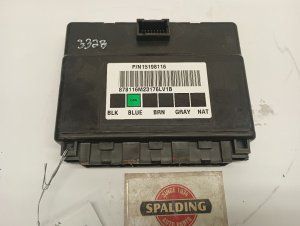
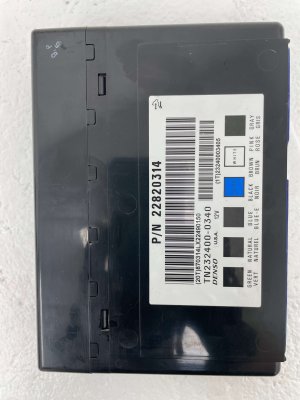
We Have This Part in Stock




The information in this article is provided for general reference and educational purposes only. Vehicle specifications, procedures, and part compatibility can vary by production date, trim level, and region. Always consult your vehicle's factory service manual and verify part numbers before purchasing or performing repairs. Safety-critical components such as airbags, seat belts, and braking systems should be installed by a qualified professional.
- Chevrolet Express:
- 🎬 Helpful Videos
- 🛍️ Shop This Part
- What's Unique About the 2003-2024 Chevrolet Express
- Symptoms You May Notice
- Most Likely Causes
- Diagnosis Steps
- Parts You'll Likely Need
- Related Codes That Often Appear With This One
- Technical Service Bulletins (TSBs) & Recalls
- Platform-Specific Known Issues
- Mechanic-Grade Diagnostic Values
- Hidden / Shadow Codes Worth Checking
- Scan Tool Commands That Help
- Wiring & Ground Locations
- Real Owner Repair Stories
- Model Year Variations Within This Range
- Diagnostic Flowchart
- Other Known Issues on This Vehicle
- Used vs. New Parts: Buying Guide for This Vehicle
- Real Owner Stories
- 2017 Chevrolet Express
- Chevrolet Express
- Chevrolet Express
- Chevrolet Express
- GM Full-Size Truck (Platform Mate)
- Related OBD-II Codes
- Frequently Asked Questions
- 🎟️ Get 5% Off