

C0050 on 2007-2010 Saturn Aura: Right Rear Wheel Speed Sensor Fault, Causes, and Fixes
On a 2007-2010 Saturn Aura, code C0050 almost always means there's a problem with the right rear wheel speed sensor circuit. The most common cause is metallic debris on the magnetic ring of the wheel hub, a known issue on this GM platform detailed in TSB PIC5428G. This can often be fixed by cleaning. If not, replacing the sensor or the entire wheel hub assembly is the next step.
- Code C0050 on a Saturn Aura means the ABS and StabiliTrak systems are disabled due to a fault with the right rear wheel speed signal.
- Before buying any parts, the first and most important step is to remove the right rear brake rotor and clean the magnetic ring on the wheel hub assembly.
- If cleaning doesn't solve the issue, the wheel speed sensor itself is the next most likely part to have failed.
- Driving is possible, but your vehicle's key safety systems for preventing skids are offline, so repair should be a priority.
- If the magnetic ring on the hub is physically cracked, the entire wheel hub assembly must be replaced.
What's Unique About the 2007-2010 Saturn Aura
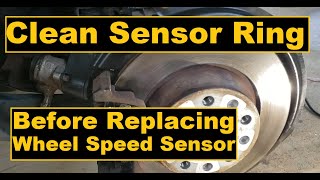
The Saturn Aura is built on the GM Epsilon platform, which it shares with cars like the Chevrolet Malibu and Pontiac G6. On this platform, the wheel speed sensor system has a known weakness. The magnetic encoder ring, which the sensor reads, is integrated into the wheel hub assembly and is highly susceptible to collecting ferrous metallic debris from brake wear and road grime. This contamination is a very frequent cause of erratic signals that trigger the C0050 code, often leading to a misdiagnosis of a bad sensor when only a cleaning is needed. 🎬 Watch: How to clean the magnetic ring before replacing parts. This exact issue is documented extensively in GM Technical Service Bulletin PIC5428G and its successors, like 17-NA-047.
Symptoms You May Notice
- ABS warning light is on
- Traction Control (TC) or StabiliTrak/ESC warning light is on
- "Service StabiliTrak", "Service Traction Control", or "Service Brake Assist" message on the driver information center
- ABS may activate incorrectly at low speeds, causing a grinding noise or pedal pulsation
- Cruise control may be disabled
- Heavier steering feel at low speeds if equipped with electric power steering, as the system may default to a safe mode.
- Replacing the wheel speed sensor without first inspecting and cleaning the magnetic encoder ring on the hub. Many sensors are replaced unnecessarily when the only problem was debris.
- Replacing the entire wheel hub assembly when only the separate, bolt-on wheel speed sensor has failed.
- Assuming the hub is bad when the actual problem is a broken wire or corroded connector a few inches up the harness.
Most Likely Causes
- Debris on Wheel Hub Magnetic Encoder Ring 🔴 High Probability The design of the hub assembly on this GM Epsilon platform leaves the magnetic ring exposed to brake dust and metallic road debris, which sticks to the ring and disrupts the sensor's reading. This is a widely documented issue covered by GM TSB PIC5428G.
How to confirm: Remove the right rear wheel and brake rotor. Visually inspect the magnetic ring on the face of the wheel hub assembly for a build-up of metallic 'fuzz' or debris. The ring should be smooth and clean.
Typical fix: Thoroughly clean all debris from the magnetic encoder ring with brake cleaner and a soft brush or rag. Ensure the ring is completely clean and dry before reassembly. Re-evaluate if the code returns.
Est. part cost: $0-$15 - Failed Right Rear Wheel Speed Sensor 🟡 Medium Probability Wheel speed sensors are exposed to harsh conditions like water, salt, and vibrations, which can cause them to fail over time. Corrosion can also cause the sensor to seize within the wheel hub, making removal difficult.
How to confirm: If the magnetic ring is clean and the code persists, test the sensor. Use a scan tool to monitor the sensor's live data while spinning the wheel. A reading of zero or an erratic signal compared to the other wheels indicates a bad sensor. Alternatively, use a multimeter to check for voltage. With the key on, you should see battery voltage (around 12V) at the harness connector. When spinning the wheel, this voltage should fluctuate slightly, indicating the sensor is generating a signal.
Typical fix: Replace the right rear wheel speed sensor. It is typically held in by a single T30 Torx bolt. Be prepared for the sensor to be seized in the hub, potentially requiring it to be drilled out.
Est. part cost: $25-$75 - Damaged Wiring or Connector ⚪ Low Probability The wiring harness runs near the moving suspension and wheel, making it vulnerable to damage from road debris, improper jacking, or corrosion over time. Wires can break inside the insulation near the connector.
How to confirm: Visually inspect the wiring harness from the sensor up into the wheel well for any signs of fraying, breaks, or corrosion. Check the connector pins for corrosion or a loose fit. Wiggle the harness while monitoring live data on a scan tool or a multimeter's voltage reading to see if the signal drops out.
Typical fix: Repair the damaged section of wire. If the connector is the issue, a replacement pigtail connector (like ACDelco PT2623) can be spliced in.
Est. part cost: $15-$40 - Cracked/Damaged Wheel Hub Assembly ⚪ Low Probability The integrated magnetic encoder ring can become brittle and crack or have sections break off due to rust jacking or impact, leading to a complete or erratic loss of signal.
How to confirm: During the visual inspection of the magnetic ring, check for any visible cracks, chips, or missing sections. The ring should be a perfect, unbroken circle. Also, check for any play or noise from the wheel bearing itself, as this indicates hub failure.
Typical fix: The entire wheel hub and bearing assembly must be replaced, as the magnetic ring is not serviced separately.
Est. part cost: $100-$250
Rare But Worth Checking
- Failed Electronic Brake Control Module (EBCM): This is very rare. Before condemning the expensive EBCM, all other possibilities (sensor, hub, and wiring) must be exhaustively ruled out. An EBCM failure often triggers multiple wheel speed sensor codes or internal failure codes, not just one.
Diagnosis Steps
- Connect a scan tool capable of reading ABS/Chassis codes to confirm C0050 is the active code. Check for any symptom bytes (e.g., 0F, 18, 5A) for more specific clues. 🎬 Watch: Diagnosing erratic speed sensor signals with a scan tool.
- Safely raise and support the rear of the vehicle on jack stands.
- Remove the right rear wheel.
- Remove the brake caliper and rotor to gain access to the wheel hub assembly.
- Visually inspect the magnetic encoder ring on the face of the hub. Look for a build-up of dark, fuzzy metallic debris. Also check for any cracks or physical damage to the ring.
- If debris is present, clean the ring thoroughly with brake cleaner and a soft cloth. Reassemble and clear the codes. Test drive to see if the code returns.
- If the ring was clean or cleaning did not fix it, inspect the wheel speed sensor wiring and connector for any visible damage, corrosion, or looseness. Pay close attention to the area where the harness flexes.
- If wiring looks good, use a scan tool to monitor the live data for the Right Rear Wheel Speed Sensor while spinning the wheel. Compare its reading to the other sensors. If it reads 0, is erratic, or doesn't match the others, the sensor, its wiring, or the hub ring is the likely culprit.
- If a scan tool is unavailable, you can test the sensor and harness. Disconnect the sensor, turn the key to the ON position, and use a multimeter to check for DC voltage at the harness connector. You should see a voltage near battery voltage (e.g., 11-12V). If voltage is present, the sensor is the likely fault. If no voltage is present, the issue is in the wiring or EBCM.
- If the sensor and wiring test good, but the hub's magnetic ring was cracked or damaged, the hub assembly needs replacement.
- If all other components test good, the fault may lie within the EBCM, which requires advanced diagnostics.
Parts You'll Likely Need
- Rear Wheel Speed Sensor
(OEM #ACDelco 25832043)— This is the second most likely component to fail after the hub ring becomes contaminated. It is a direct replacement part if it tests faulty.
Trusted brands: ACDelco, Standard Motor Products (ALS483), Delphi, Dorman
OEM price range: $50-$90
Aftermarket price range: $25-$60 - Rear Wheel Hub and Bearing Assembly
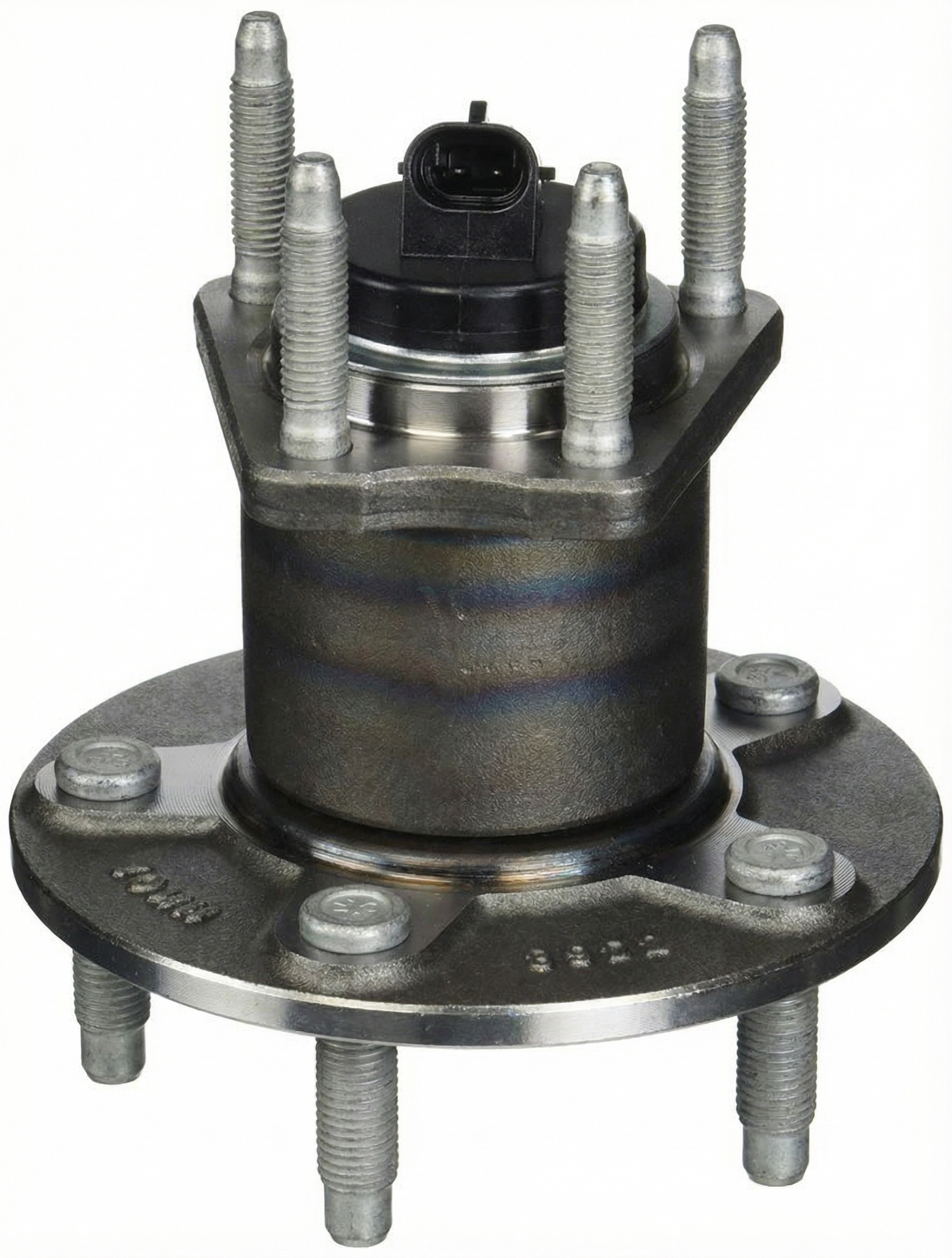
(OEM #ACDelco 512344 / GM 13256613)— This is required if the magnetic encoder ring is cracked or damaged, or if the wheel bearing itself is failing (making noise). It includes a new bearing and a new, clean magnetic ring.
Trusted brands: ACDelco, Timken (512344), MOOG (512344), SKF (BR930436)
OEM price range: $200-$300
Aftermarket price range: $100-$180 - Rear Wheel Speed Sensor Connector Pigtail
(OEM #ACDelco PT2623)— Needed if the connector itself is corroded or damaged, preventing a good connection with the sensor. The wires often break internally near the connector.
Trusted brands: ACDelco, Standard Motor Products (S-1074), Dorman (645-134)
OEM price range: $25-$50
Aftermarket price range: $15-$30
Related Codes That Often Appear With This One
- C0045 — This is the code for the Left Rear Wheel Speed Sensor Circuit. Seeing both C0045 and C0050 could indicate a shared wiring problem or similar wear/debris issues on both rear hubs.
- U0415 — Invalid Data Received From Electronic Brake Control Module. This code can be set by other modules (like power steering) when the EBCM stops broadcasting wheel speed data due to an internal fault like C0050.
Technical Service Bulletins (TSBs) & Recalls
- PIC5428G: EBCM Wheel Speed Sensor Diagnostic Aid for ABS Message. This is the primary TSB identifying metallic debris on the hub's magnetic encoder as the root cause for C0035-C0050 codes with specific symptom bytes.
- 17-NA-047: A later bulletin that supersedes PIC5428G, carrying forward the same diagnostic information for a wider range of model years.
Platform-Specific Known Issues
- A GM Technical Service Bulletin (TSB PIC5428G and its successors like 17-NA-047) addresses this exact issue across many GM platforms. It specifically calls out ferrous debris accumulating on the magnetic encoder ring as the primary cause for intermittent ABS/StabiliTrak lights and codes C0035-C0050 with symptom bytes 0F, 18, or 5A.
- Owner forums like SaturnFans.com have numerous threads where owners of Auras, Malibus, and G6s describe successfully fixing the C0050 code by simply cleaning the hub's magnetic ring, confirming the TSB's guidance.
- A YouTube video from 'New Level Auto' on a similar GM vehicle with code C0050 demonstrated that wiggling the harness near the sensor caused the speed reading to jump erratically on the scan tool, proving a wiring fault was the cause, not the sensor itself.
Mechanic-Grade Diagnostic Values
- Wheel Speed Sensor Harness Voltage (Key On, Sensor Unplugged) — expected: ~11-12 Volts DC. Failure: 0 volts indicates a problem with the wiring harness or the EBCM. The EBCM supplies power to the sensor.
- Rear Wheel Hub Assembly Mounting Nut Torque — expected: 63 N.m (47 lb ft). Failure: Improper torque can lead to premature bearing failure or improper sensor alignment.
- Rear Caliper Bracket Bolt Torque — expected: 96 ft-lbs. Failure: Incorrect torque can lead to braking issues or noise.
- Rear Caliper Guide Pin Bolt Torque — expected: 26 ft-lbs. Failure: Incorrect torque can cause caliper binding or rattling.
Hidden / Shadow Codes Worth Checking
- C0050 0F: Signal Erratic. The EBCM detected a very rapid, illogical, or intermittent signal. This often points to a wiring issue, a loose connection, or heavy debris on the magnetic ring. (see via GM-specific scan tool (Tech2, GDS2) or high-end professional scanner.)
- C0050 18: Low Signal Amplitude. The signal from the sensor is weak. This is commonly caused by an excessive air gap (due to rust or improper installation), metallic debris on the encoder ring, or a failing sensor. (see via GM-specific scan tool (Tech2, GDS2) or high-end professional scanner.)
- C0050 5A: Signal Plausibility Failure. The signal is present but doesn't make sense compared to other wheel speed sensors. This often indicates a cracked or damaged magnetic encoder ring on the hub. (see via GM-specific scan tool (Tech2, GDS2) or high-end professional scanner.)
Scan Tool Commands That Help
- Tech2 / GDS2 / Professional Scan Tool: Live Data - Wheel Speed Sensors — This is the primary diagnostic step. Monitor all four wheel speeds while driving. The right rear sensor reading should be compared to the others. A reading of zero, or one that is erratic or significantly different from the others, confirms the fault is isolated to the right rear circuit.
- Tech2 / GDS2 / Professional Scan Tool: Clear DTCs / Clear All Codes — After performing a repair (like cleaning the hub or replacing a part), the codes must be cleared from the EBCM's memory. The warning lights will not turn off until the codes are cleared and the system passes a self-test on the subsequent drive cycle.
Wiring & Ground Locations
- G401 — In the rear luggage compartment, below the taillight assembly.. This is a major rear body ground point. While not directly for the wheel speed sensor itself (which grounds through the EBCM), a poor connection at this ground could potentially introduce electrical noise or affect other modules that share data with the EBCM, though it is an unlikely cause for an isolated C0050.
- EBCM Ground — The Electronic Brake Control Module (EBCM) is grounded at a location in the engine compartment, typically G104 (left side of engine compartment, on the core support) or G105/G106 depending on the engine.. A poor ground at the EBCM itself is a rare but possible cause for erratic sensor readings or multiple sensor codes. If the harness and sensor test good, verifying the EBCM's own power and ground connections is a valid next step.
- Right Rear WSS Harness Connector — In the right rear wheel well, where the sensor pigtail connects to the main body harness.. This connector is a primary failure point due to exposure to water, salt, and debris. The terminals can corrode, and wires can break internally right at the connector from suspension movement and vibration.
Real Owner Repair Stories
- GR8-G8.net forum user (2009 Pontiac G8 GT (similar GM platform)) — ABS and Traction Control lights on, code C0050.
❌ Tried (didn't work) Initial diagnosis pointed towards sensor or hub.
✅ What actually fixed it The user found a broken wire right at the 4-pin connector for the wheel speed sensor. The wire was broken too close to the connector to easily solder. Another user confirmed they fixed a similar issue by soldering the wire back together as it had broken about 1/4 inch from the plug. The ultimate fix is to either carefully repair the wire or replace the rear harness section. - GM-Trucks.com forum user (2009 GMC Sierra (different platform, but same GM diagnostic challenge)) — Intermittent "Service Stabilitrak" and "Service Traction Control" messages with code C0050 confirmed by OnStar. The lights would clear on restart.
❌ Tried (didn't work) Multiple dealer visits where the problem could not be duplicated., Dealers were unwilling to replace parts without duplicating the fault, even with the stored code history.
✅ What actually fixed it The thread highlights the difficulty in diagnosing intermittent faults. The final fix is not posted, but the user's experience is a valuable lesson: intermittent C0050 codes are often caused by a wiring issue that only manifests under specific conditions (vibration, temperature, moisture) and can be very difficult for shops to replicate.
OEM Part Supersession History
PIC5428 (A, B, C, D, E, F)→PIC5428G, then 17-NA-047— Updates to model list, model years, and clarification of diagnostic procedures.
Heads up: These are Technical Service Bulletins, not parts. All versions describe the same fundamental issue of debris on the magnetic encoder ring causing wheel speed sensor faults. The latest version should always be referenced but the core diagnosis remains unchanged.
Diagnostic Flowchart
Other Known Issues on This Vehicle
Issues unrelated to this code that are worth knowing about as an owner of this generation:
- Transmission Failure (4-Speed and 6-Speed) 🔴 High — Common, especially the 6-speed's 3-5-R wave plate failure and the 4-speed's shift cable fracture. Can occur from 70,000 miles onward. (Ref: NHTSA Recalls: 12V460000, 14V252000 (Shift Cable))
- Sudden Loss of Electric Power Steering 🔴 High — Widespread enough to trigger a major safety recall. Can happen at any mileage. (Ref: NHTSA Recall: 14V153000)
- Stretched Timing Chains (3.6L V6 LY7 Engine) 🔴 High — A very common and expensive issue on the 3.6L V6, often appearing between 70,000-120,000 miles. Caused by a combination of chain design and long oil change intervals. (Ref: Special Coverage Adjustment 11340C (expired))
- Warped Brake Rotors 🟡 Low — Frequently reported by owners, leading to premature brake jobs.
- Blown Cooling Fan Fuse 🟠 Medium — A known issue where the 30-amp fuse for the high-speed cooling fan blows, potentially leading to overheating.
Used vs. New Parts: Buying Guide for This Vehicle
When a used part is the smart pick: For this repair, using used parts is generally not recommended for the electronic sensor or the wear-item hub assembly. However, sourcing a used wiring harness connector pigtail from a junkyard can be a cost-effective solution if the original connector is damaged and a new pigtail is unavailable or expensive.
Donor-vehicle mileage cap: roughly under 80000 miles for the part to have meaningful remaining life.
What to inspect on the donor part:
- For a wiring pigtail, inspect for at least 6-8 inches of clean, flexible wire beyond the connector.
- Check that the connector's locking tabs are intact and not brittle.
- Look inside the connector for any signs of green or white corrosion on the pins.
- Avoid parts from vehicles in heavy salt-belt regions if possible, as corrosion will be more prevalent.
Aftermarket brands forum-validated for this vehicle:
- For the wheel hub assembly, brands like Timken, MOOG, and SKF are highly regarded and often considered equivalent or superior to OEM quality.
- For the wheel speed sensor, ACDelco (OEM), Standard Motor Products (SMP), and Delphi are reliable choices.
Brands owners have reported issues with on this vehicle:
- Avoid unbranded, 'white-box' wheel hub assemblies and sensors from online marketplaces. These often use lower-quality bearings and sensor electronics that can fail prematurely or provide erratic readings out of the box.
Real Owner Stories
Aggregated from forums and TSBs cited above. Mileages and costs reflect what owners reported in those sources.
2007-2010 Saturn Aura
Symptoms: ABS, Traction Control, and Stabilitrak lights came on. The driver information center displayed 'Service Traction Control' and 'Service Brake Assist'.
What fixed it: Cleaning the hub's magnetic encoder ring of metallic debris, as suggested by other owners and GM technical guidance.
Source hint: SaturnFans.com thread titled 'ABS/Traction Control/Stabilitrak Lights On' discussing C0045/C0050 codes
2008-2012 Chevrolet Malibu
Symptoms: ABS and traction control lights illuminated on the dashboard.
What fixed it: The issue was resolved by either cleaning the magnetic debris from the hub or replacing the hub assembly entirely when the ring was damaged.
Source hint: chevymalibuforum.com thread 'abs-and-traction-control-lights-on.9959'
2007-2010 Saturn Aura
Symptoms: The wheel speed reading on the scan tool jumped erratically when the wiring harness was moved.
What fixed it: Repairing the wiring fault near the sensor rather than replacing the sensor itself.
Source hint: YouTube video from 'New Level Auto' regarding GM vehicle code C0050
Related OBD-II Codes
Frequently Asked Questions
Does GM TSB PIC5428G apply to my Saturn Aura if I have an intermittent ABS light?
Why does my Saturn Aura's steering feel heavier at low speeds when the C0050 code is active?
Can I fix the C0050 code on my Aura without buying new parts?
I see symptom bytes 0F, 18, or 5A on my scan tool along with C0050. What does this mean for my Saturn?
Is there a specific replacement connector if the wiring to my right rear sensor is damaged?
Why is my Saturn Aura making a grinding noise or pulsing the brake pedal at low speeds?
Helpful Videos
We Have This Part in Stock

The information in this article is provided for general reference and educational purposes only. Vehicle specifications, procedures, and part compatibility can vary by production date, trim level, and region. Always consult your vehicle's factory service manual and verify part numbers before purchasing or performing repairs. Safety-critical components such as airbags, seat belts, and braking systems should be installed by a qualified professional.
- Saturn Aura:
- 🎬 Helpful Videos
- 🛍️ Shop This Part
- What's Unique About the 2007-2010 Saturn Aura
- Symptoms You May Notice
- Most Likely Causes
- Rare But Worth Checking
- Diagnosis Steps
- Parts You'll Likely Need
- Related Codes That Often Appear With This One
- Technical Service Bulletins (TSBs) & Recalls
- Platform-Specific Known Issues
- Mechanic-Grade Diagnostic Values
- Hidden / Shadow Codes Worth Checking
- Scan Tool Commands That Help
- Wiring & Ground Locations
- Real Owner Repair Stories
- OEM Part Supersession History
- Diagnostic Flowchart
- Other Known Issues on This Vehicle
- Used vs. New Parts: Buying Guide for This Vehicle
- Real Owner Stories
- 2007-2010 Saturn Aura
- 2008-2012 Chevrolet Malibu
- 2007-2010 Saturn Aura
- Related OBD-II Codes
- Frequently Asked Questions
- 🎟️ Get 5% Off