

C0050 on 2012-2018 Ford Focus: Right Rear Wheel Speed Sensor Fault Causes and Fixes
On a 2012-2018 Ford Focus, code C0050 almost always means the right rear ABS wheel speed sensor has failed or its wiring is damaged. This will disable the ABS and traction control. The most common fix is replacing the sensor, which is a simple, low-cost part (around $40) and a manageable DIY job. The sensor is held by a single T25 Torx bolt.
- C0050 on a 2012-2018 Focus means there is a problem with the right rear wheel speed sensor circuit, which will disable your ABS and traction control.
- The most likely culprit is a failed sensor, which is an affordable part and a relatively easy DIY replacement with basic tools.
- Before buying parts, use a scan tool to check live data to confirm the right rear sensor is the one failing.
- Always inspect the wiring and connector for damage or corrosion, as this is the second most likely cause.
- Do not drive aggressively or in poor weather conditions until this is fixed, as critical safety systems are offline.
What's Unique About the 2012-2018 Ford Focus

For the third-generation Ford Focus (Mk3), the C0050 code is a very common and straightforward fault. Unlike some other vehicles where this code can point to a failed wheel hub assembly, on the Focus the issue is most frequently the sensor itself. The sensor is a separate, externally mounted component that is relatively easy to access and replace without needing to press bearings or replace the entire hub.
Symptoms You May Notice
- ABS warning light is on
- Traction control/stability control (ESC) warning light is on
- Brake warning light may be on
- A 'City Stop Not Available' message may appear on models with that feature
- ABS system will not activate during hard braking (wheels may lock and skid)
- Traction control will not activate during acceleration on slippery surfaces
- Replacing the wheel hub bearing when only the sensor is bad. Unlike some other Ford vehicles, the sensor is the most common failure point on the Focus, not the entire hub.
Most Likely Causes

- Failed Right Rear Wheel Speed Sensor 🔴 High Probability The sensor is located behind the wheel, where it is constantly exposed to water, road salt, dirt, and vibration, leading to internal electronic failure over time.
How to confirm: Use an ABS-capable scan tool to monitor live data from all four wheel speed sensors while driving. If the right rear sensor reads 0 MPH or an erratic speed while the others show a consistent speed, the sensor has failed. A professional test involves back-probing the sensor connector to confirm power and ground are present, then using an oscilloscope to verify the sensor is producing a clean square-wave signal as the wheel turns.
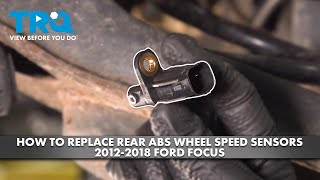
Typical fix: Replace the right rear wheel speed sensor. It is held in by a single T25 Torx bolt. The bolt should be torqued to 42 in-lbs (4.7 Nm) upon installation.
Est. part cost: $30-$60 - Damaged Wiring or Connector 🟡 Medium Probability The wiring harness runs along the suspension and is vulnerable to damage from road debris, improper jack placement, or corrosion building up inside the connector pins. Wires can break inside the insulation near the connector.
How to confirm: Visually inspect the wiring harness from the sensor back for any signs of chafing, breaks, or melting. Unplug the connector and check for green or white corrosion on the pins. Perform a 'wiggle test' on the harness while watching live sensor data to see if the signal drops out.
Typical fix: If the wiring is broken, splice in a new section with solder and heat-shrink tubing. If the connector is corroded or damaged, replace it with a new pigtail connector, such as Motorcraft part BRAB-468.
Est. part cost: $20-$40 for a pigtail - Debris on Magnetic Encoder Ring ⚪ Low Probability The wheel bearing has an integrated magnetic ring that the sensor reads. Over time, metallic brake dust and road grime can accumulate on this ring, disrupting the sensor's signal.
How to confirm: Remove the wheel speed sensor from the hub. Shine a light into the hole and slowly rotate the wheel hub, looking for a buildup of metallic paste or debris on the ring. Do not use a magnet to clean the area as it can damage the encoder.
Typical fix: Carefully clean the debris from the magnetic encoder ring using brake cleaner and a soft, non-magnetic brush or rag. Reinstall the sensor and test.
Est. part cost: $0-$15
Rare But Worth Checking
- Failed Wheel Hub Bearing Assembly: While less common on the Focus than the sensor itself, a worn or failing wheel bearing can cause excessive play, which damages the integrated magnetic encoder ring or alters the air gap, triggering the C0050 code.
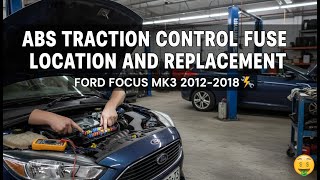
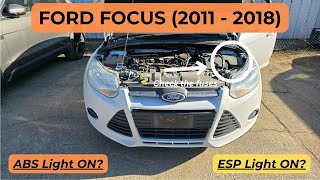
- Low Battery Voltage: A weak or failing 12V battery can cause a variety of seemingly unrelated electronic faults in modern vehicles. The ABS module may set fault codes if its operating voltage is too low. TSB 13-9-19 notes that ABS lamp illumination can be caused by a low state of charge. 🎬 Watch: How to find and check your ABS and traction control fuses.
- Failed ABS Control Module: This is extremely rare. The ABS module would typically have multiple other fault codes present if it were failing. This should only be considered after all other possibilities have been exhaustively ruled out.
Diagnosis Steps

- Connect an ABS-capable OBD-II scanner to the vehicle.
- Read the fault codes from the ABS module and confirm C0050 is present.
- Access the live data stream for all four wheel speed sensors.
- Safely test drive the vehicle above 10 MPH and observe the speeds. Confirm that the Right Rear (RR) wheel speed sensor reads 0 MPH or has an erratic/inconsistent reading compared to the other three sensors.
- Safely raise and support the rear of the vehicle on jack stands.
- Visually inspect the right rear wheel speed sensor and its wiring harness for obvious damage, chafing, or loose connections.
- Disconnect the sensor's electrical connector and inspect the pins for corrosion or damage.
- If no visual issues are found, remove the single T25 Torx bolt and pull the sensor out of the wheel hub.
- Inspect the sensor tip and the hole it came from for heavy rust or metallic debris. Clean as necessary, avoiding magnets.
- If the cause is still not apparent, use a multimeter to test the wiring harness for proper voltage and ground from the ABS module. A wiring diagram is required for this step.
- After repair, clear the codes with the scan tool and perform a test drive to ensure the warning lights stay off and the code does not return. On some models, the light may go off on its own after a short drive once the fault is corrected.
Parts You'll Likely Need
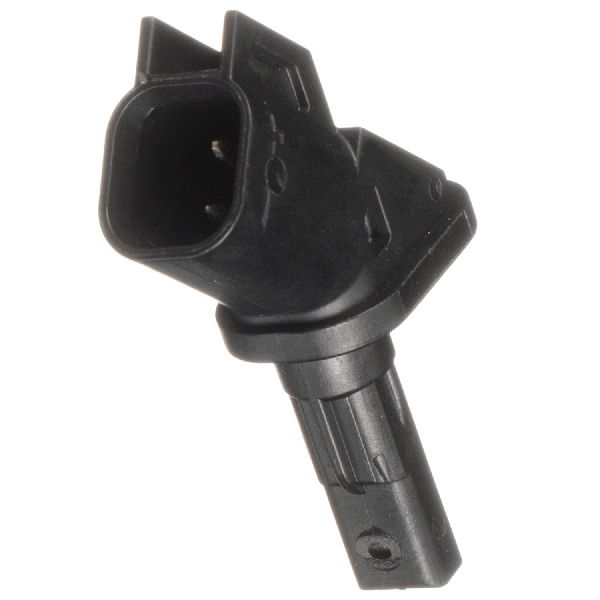
- Rear ABS Wheel Speed Sensor
(OEM #LV6Z-2C190-A)— This is the most frequent failure point for code C0050 on this vehicle. The original part number BV6Z-2C190-A has been superseded by LV6Z-2C190-A. The same sensor is used for both left and right rear wheels.
Trusted brands: Motorcraft (OEM), Bosch, Delphi, Standard Motor Products (SMP), NTK
OEM price range: $50-$70
Aftermarket price range: $30-$50 - ABS Wheel Speed Sensor Wiring Harness Pigtail
(OEM #BRAB-468)— Needed if the electrical connector or the wiring immediately attached to it is corroded or damaged.
Trusted brands: Motorcraft (OEM), Dorman
OEM price range: $30-$45
Aftermarket price range: $15-$30
Related Codes That Often Appear With This One
- C0037 — This is the code for the Left Rear Wheel Speed Sensor. If both appear, it could point to a common wiring or connector issue shared by the rear axle, or simply that both sensors are of a similar age and failed around the same time. 🎬 See this video for diagnosing the related C0037 fault code.
- U0415 — This code means 'Invalid Data Received From Anti-Lock Brake System Control Module'. It is often a secondary code triggered by the C0050 fault. The loss of a wheel speed sensor signal is critical data, so other modules on the CAN bus flag it as invalid. Fix the C0050 code first, and this code will usually resolve itself.
- C0050:18 — This is a sub-code for 'Signal Amplitude Less Than Minimum'. It specifically points to a weak or missing signal, strongly suggesting a failed sensor, large air gap, or a break in the wiring.
Technical Service Bulletins (TSBs) & Recalls
- TSB 13-9-19: While not specific to C0050, this TSB notes that some vehicles may experience ABS warning lamp illumination along with other warnings due to a low state of charge of the 12-volt battery, making battery health an important preliminary check.
Mechanic-Grade Diagnostic Values
- Sensor Signal Type — expected: Digital Square Wave (Current Switching). Failure: The sensor is an active Hall-effect type. It does not generate AC voltage and cannot be accurately tested for resistance. It functions by switching its current draw between ~7mA and ~14mA.
- Harness Voltage at Sensor Connector — expected: One pin should have reference voltage (~5V or ~12V, depending on system variant) with key-on, engine-off. The other pin should have a good ground (near 0V).. Failure: No voltage or a bad ground points to a problem in the wiring harness or the ABS module itself, not the sensor.
- Sensor Function Test (without oscilloscope) — expected: With the sensor removed but plugged in, waving a magnet back and forth in front of the sensor tip should cause the wheel speed to register on a live data scan tool.. Failure: If no speed registers on the scan tool despite having good power and ground, the sensor is faulty.
Hidden / Shadow Codes Worth Checking
- C0050:0F: Signal Erratic. This points to an inconsistent signal, often caused by debris on the magnetic encoder ring, a cracked ring, or an intermittent wiring connection. (see via Ford IDS, FORScan, or other professional scan tool capable of reading Ford-specific symptom bytes.)
- C0050:18: Signal Amplitude Less Than Minimum. This indicates a weak or missing signal, often caused by a large air gap (due to rust buildup or improper sensor seating), a severely damaged encoder ring, or an internal sensor failure. (see via Ford IDS, FORScan, or other professional scan tool capable of reading Ford-specific symptom bytes.)
- C0050:5A: Signal Plausibility Failure. The signal is present but doesn't make sense compared to other vehicle sensors (e.g., reading 5 mph while others read 50 mph). This often points to a damaged/cracked encoder ring or an intermittent wiring fault. (see via Ford IDS, FORScan, or other professional scan tool capable of reading Ford-specific symptom bytes.)
Scan Tool Commands That Help
- FORScan / Ford IDS: ABS Module Self-Test — Use this command after confirming the sensor and wiring are good. A failure of the self-test can point towards an internal fault in the ABS control module.
- FORScan / Ford IDS: ABS Module Reset — After replacing a component or if the module is behaving erratically, this service function can be used to reset the module's internal logic.
- FORScan / Ford IDS: Module Configuration (As-Built Data) — This is required when replacing the ABS module with a used unit. The As-Built data from the original module (or downloaded from Ford's database using the VIN) must be written to the replacement module to ensure it has the correct VIN and vehicle configuration.
Wiring & Ground Locations

- ABS Control Module — Located in the engine bay, underneath the main fuse box (Battery Junction Box), which is behind the battery tray.. This is the computer that receives the signal from the wheel speed sensor. All wiring for the sensor ultimately terminates here.
- ABS Fuses — Located in the under-hood fuse box. There are typically three fuses under a secondary plastic cover: a 40A, a 30A, and a 5A fuse.. A blown fuse will disable the entire ABS module, causing this and other codes. This is a critical preliminary check.
- G104 — A primary chassis ground point located on the left side of the engine compartment.. This is a likely grounding point for the ABS module. A corroded or loose ground here can cause a host of intermittent and difficult-to-diagnose electronic issues, including ABS faults.
- Right Rear WSS Circuit at ABS Module — At the main connector for the ABS module. The wires are designated 'RR sensor hi' and 'RR sensor lo'.. These are the final test points for checking continuity of the sensor wiring. If there is no continuity between these pins and the pins at the sensor connector, there is a break in the harness.
Real Owner Repair Stories
- YouTube channel 'Ford focus ABS light after bad wheel bearing' (2010 Ford Focus (Mk2, but principle applies directly to Mk3)) — ABS light came on after a rear wheel bearing failure and subsequent replacement of parts.
❌ Tried (didn't work) Replacing the wheel bearing and ABS sensor.
✅ What actually fixed it The sensor was not reading because heavy rust buildup inside the sensor mounting hole in the knuckle was preventing the new sensor from seating deep enough to get a signal from the magnetic ring. The final fix was using a rotary tool (Dremel) with a grinding stone to meticulously clean out the bore until the sensor could be fully and properly seated. - Reddit user in r/FordFocus (2012 Ford Focus Hatch Titanium) — Persistent C0050 code with ABS, traction control, and hill assist warning lights.
❌ Tried (didn't work) Replacing the right rear ABS sensor with an aftermarket part., Replacing the aftermarket sensor with an OEM Motorcraft sensor., Replacing the ABS sensor connector pigtail with an OEM part., Checking all related ABS fuses.
✅ What actually fixed it The user's problem remained unresolved after trying all the common fixes, with the next logical step being the replacement of the entire wheel hub/bearing assembly on the suspicion that the integrated magnetic encoder ring had failed. This story highlights a scenario where the fault is not the sensor or its immediate wiring.
Documented NHTSA Reports
- An owner reported in NHTSA ODI #11228687 that the C0050 code appeared alongside several other communication and sensor codes (C0035, C0040, U0415, etc.) on a different manufacturer's vehicle, illustrating how this fault often clusters with other ABS and network errors.
- In NHTSA ODI #10763888, a report for a different make noted that the C0050 code was used to identify a fault in the power steering control module (PSCM), requiring replacement of the steering column; this serves as a reminder that while C0050 is a wheel speed sensor code on the Focus, diagnostic definitions can vary across manufacturers.
- NHTSA ODI #11649367 describes a situation where C0050 was set after brake service, where a technician noted the vehicle disables ABS and supporting systems, potentially due to the extra brake fluid required to return caliper piston contact to the brake pad.
- A report in NHTSA ODI #11693418 noted that the C0050-00 code was present when a vehicle required the replacement of rear brake pads, rear rotors, and an adapter plate.
OEM Part Supersession History
BV6Z-2C190-A→LV6Z-2C190-A— Standard part revision and consolidation by Ford.
Heads up: LV6Z-2C190-A is the correct and current direct replacement for the earlier part number and is fully compatible. It also replaces numerous other part numbers like CV6Z-2C190-B, CV6Z-2C190-D, and JV6Z-2C190-A, as it is used on many Ford platforms.
Model Year Variations Within This Range
- 2012-2018: While a significant facelift occurred for the 2015 model year, the rear suspension, wheel bearing, and ABS sensor design relevant to a C0050 fault remained consistent across the entire 2012-2018 generation.
Diagnostic Flowchart
Other Known Issues on This Vehicle
Issues unrelated to this code that are worth knowing about as an owner of this generation:
- DPS6 PowerShift Automatic Transmission Failure 🔴 High — Extremely common on automatic models. Issues include shuddering, hesitation, delayed engagement, and complete failure. Problems can start early in the vehicle's life. (Ref: Multiple TSBs (e.g., 16-0109, 13-4-5) and warranty extensions (e.g., 14M01, 14M02) were issued, but no full recall for the transmission itself.)
- Electric Power Steering (EPAS) Failure 🔴 High — Common failure, often sudden and without warning, resulting in a 'Steering Assist Fault' message and extremely heavy steering. Can occur at any mileage. (Ref: No recall, but it is a widely documented issue. Repair typically requires replacing the entire steering rack assembly.)
- Faulty EVAP Purge Valve 🟠 Medium — A very common issue causing rough idle, stalling after refueling, and difficulty starting. Can lead to fuel tank deformation if not addressed. (Ref: Ford issued recall 18S32 (NHTSA 18V-735) for this issue, which involves reprogramming the PCM and replacing the valve if necessary.)
- Engine Mount Failure 🟠 Medium — The passenger-side hydraulic engine mount is prone to leaking and collapsing, causing excessive engine vibration to be felt in the cabin, especially at idle.
- Cracked Coolant Expansion Tank 🟡 Low — The plastic coolant reservoir is known to develop hairline cracks, particularly on the bottom, leading to slow coolant leaks.
Used vs. New Parts: Buying Guide for This Vehicle
When a used part is the smart pick: For this repair, buying a used part is generally not recommended. The primary failure part, the ABS sensor, is an inexpensive electronic component that degrades with exposure to heat and elements. The cost savings of a used sensor (typically $10-$20) are minimal compared to the risk of receiving a part that is near the end of its service life. A used wiring pigtail is a viable option if it is in excellent condition with no corrosion.
Donor-vehicle mileage cap: roughly under 50000 miles for the part to have meaningful remaining life.
What to inspect on the donor part:
- For a wiring pigtail: Inspect for any signs of green or white corrosion on the connector pins.
- Check that the locking tab on the connector is intact and not brittle.
- Ensure the wires are flexible and the insulation is not cracked or frayed, especially within the first few inches of the connector.
OEM-only on this vehicle (don't cheap out):
- While not strictly 'OEM-only', using a Motorcraft (OEM) or a reputable OEM-supplier brand (Bosch, Delphi) for the ABS sensor is highly recommended. Ultra-cheap, no-name online sensors are known to have a high failure rate, sometimes being dead-on-arrival or failing within a few months.
Aftermarket brands forum-validated for this vehicle:
- Bosch
- Delphi
- Standard Motor Products (SMP)
- NTK
Brands owners have reported issues with on this vehicle:
- Unbranded, generic sensors from online marketplaces often have poor quality control and are a common source of repeat repairs.
Real Owner Stories
Aggregated from forums and TSBs cited above. Mileages and costs reflect what owners reported in those sources.
2012 Ford Focus
Symptoms: ABS, Traction Control, and Hill Start Assist lights on.
What fixed it: Diagnosed code C0050 using a scan tool and replaced the right rear sensor (part #BV6Z-2C190-A).
Source hint: FocusFanatics.com - 'ABS/Traction Control/Hill Start Assist lights on'
2012-2018 Ford Focus (Mk3)
Symptoms: ABS Fault message and warning lights on dashboard.
What fixed it: Replaced the rear wheel speed sensor; the warning lights went out after a short drive.
Source hint: YouTube - Ford Focus ABS Fault how to replace rear wheel speed sensor yourself
Related OBD-II Codes
Frequently Asked Questions
My 2012 Ford Focus has the ABS and Traction Control lights on; could this be related to the battery?
What specific part number do I need to fix a C0050 code on my 2012-2018 Focus?
Is there a specific tool required to remove the right rear sensor on a Mk3 Focus?
If my wiring connector is corroded, do I have to replace the whole harness?
Will the ABS warning light on my Focus turn off automatically after I replace the sensor?
Can I use a magnet to clean the area around the sensor if I see debris?
Helpful Videos
We Have This Part in Stock


The information in this article is provided for general reference and educational purposes only. Vehicle specifications, procedures, and part compatibility can vary by production date, trim level, and region. Always consult your vehicle's factory service manual and verify part numbers before purchasing or performing repairs. Safety-critical components such as airbags, seat belts, and braking systems should be installed by a qualified professional.
- Ford Focus:
- 🎬 Helpful Videos
- 🛍️ Shop This Part
- What's Unique About the 2012-2018 Ford Focus
- Symptoms You May Notice
- Most Likely Causes
- Rare But Worth Checking
- Diagnosis Steps
- Parts You'll Likely Need
- Related Codes That Often Appear With This One
- Technical Service Bulletins (TSBs) & Recalls
- Mechanic-Grade Diagnostic Values
- Hidden / Shadow Codes Worth Checking
- Scan Tool Commands That Help
- Wiring & Ground Locations
- Real Owner Repair Stories
- Documented NHTSA Reports
- OEM Part Supersession History
- Model Year Variations Within This Range
- Diagnostic Flowchart
- Other Known Issues on This Vehicle
- Used vs. New Parts: Buying Guide for This Vehicle
- Real Owner Stories
- 2012 Ford Focus
- 2012-2018 Ford Focus (Mk3)
- Related OBD-II Codes
- Frequently Asked Questions
- 🎟️ Get 5% Off