

C0050 on 2006-2011 Chevrolet HHR: Right Rear Wheel Speed Sensor Fault Causes and Fixes
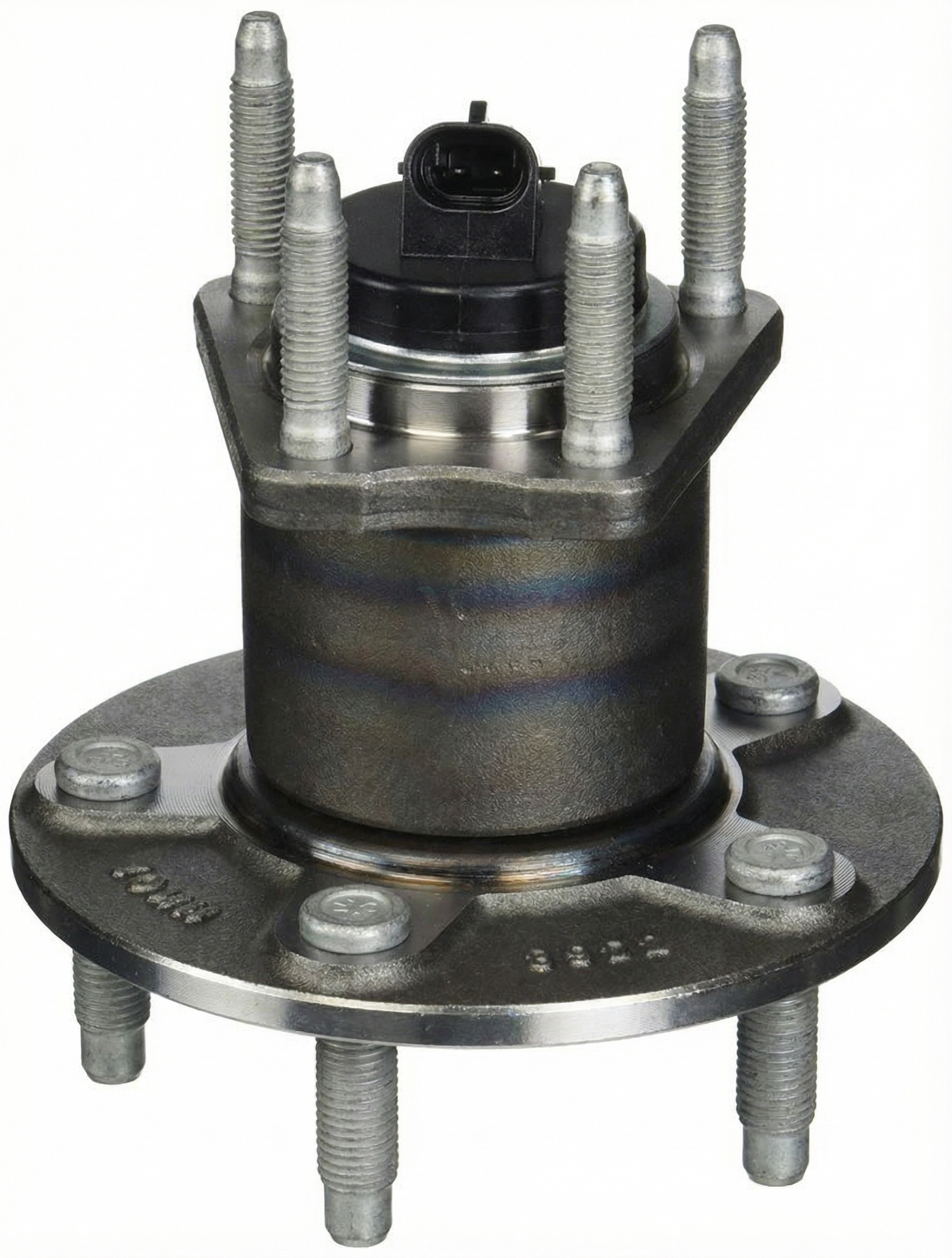
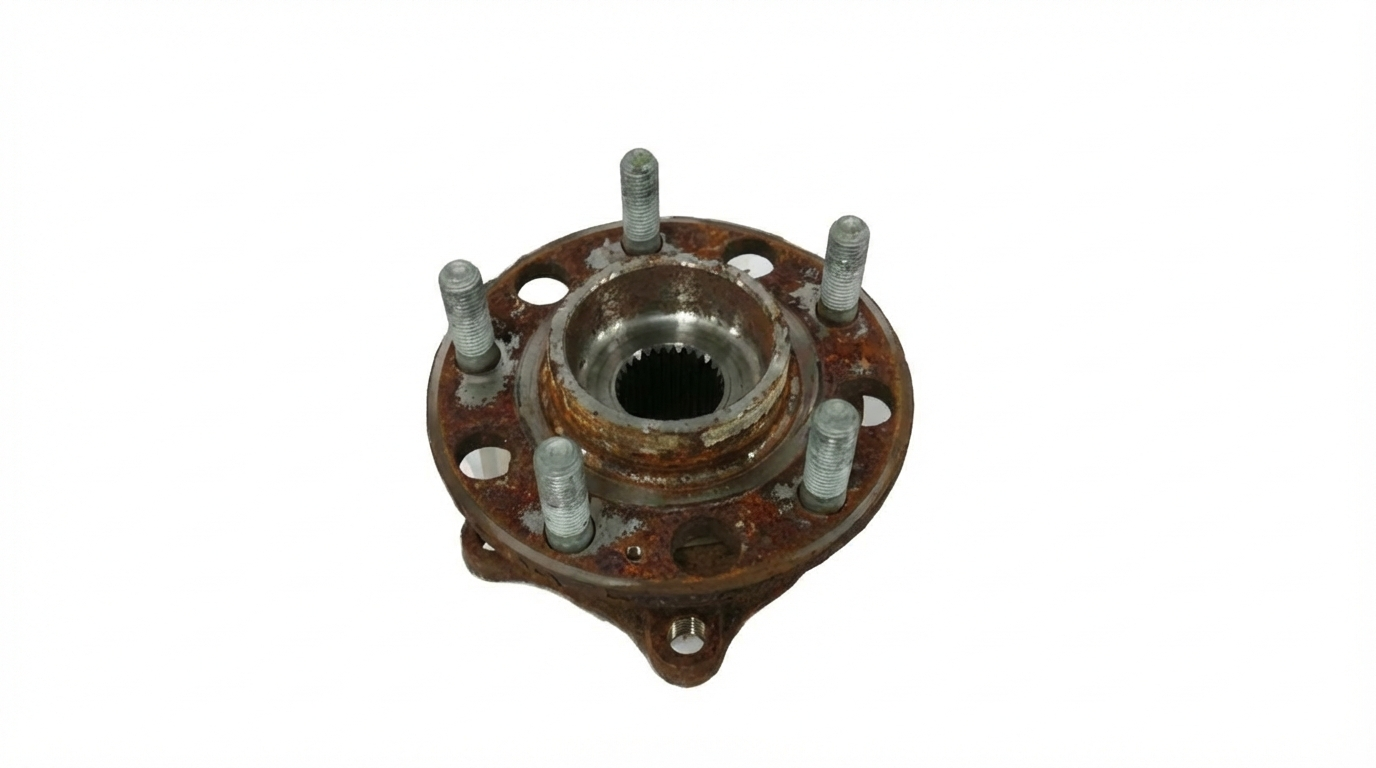
On a 2006-2011 Chevy HHR, code C0050 almost always means the right rear wheel hub assembly has failed. The speed sensor is integrated into the hub. Before replacing it, check for damaged wiring and clean any metal debris off the magnetic encoder ring on the back of the hub. A new hub assembly costs between $80 and $200 and is the definitive fix for this code in most cases.
- C0050 means your ABS and traction control are off-line due to a fault with the right rear wheel speed signal.
- The most common fix is replacing the entire right rear wheel hub assembly, as the sensor is built-in.
- Before replacing the hub, inspect the wiring for damage and clean any metallic debris from the magnetic ring on the back of the hub.
- Use an ABS-capable scan tool to confirm the RR wheel is the problem before buying parts.
- Driving is possible, but exercise extreme caution as your primary electronic braking safety aids are disabled.
What's Unique About the 2006-2011 Chevrolet HHR
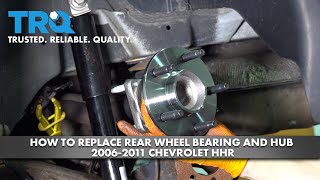
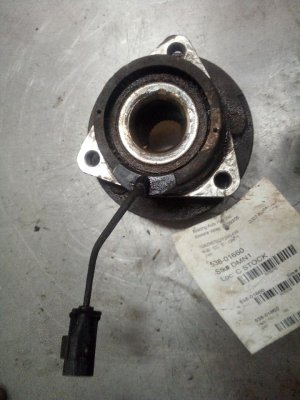
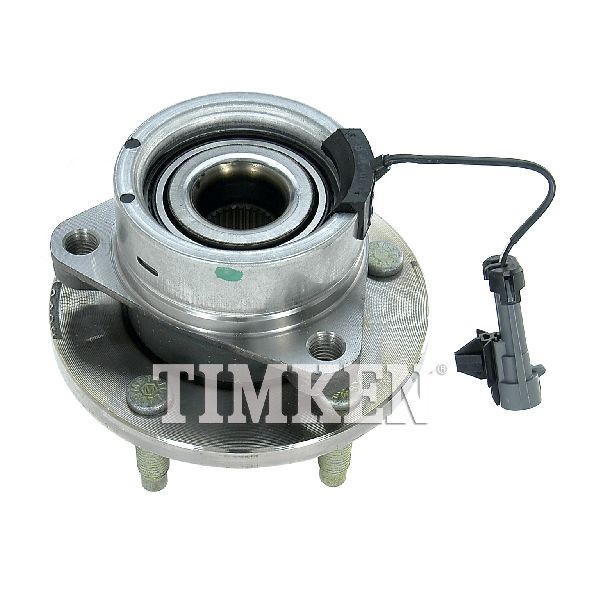
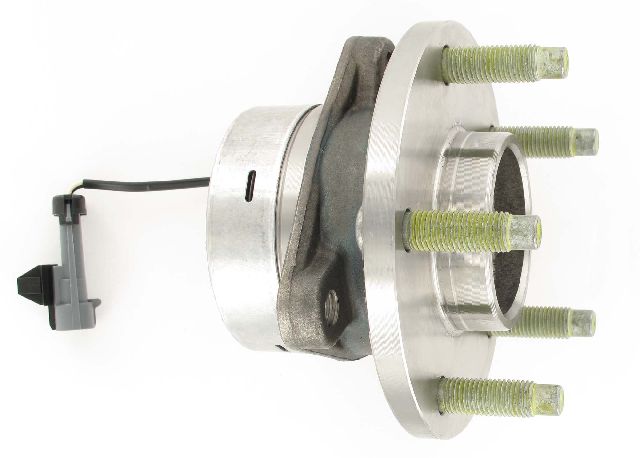
For the Chevrolet HHR and its GM Delta platform mates (Cobalt, G5, Ion), the wheel speed sensor is not a separate, small component that can be unbolted individually. Instead, it is integrated directly into the sealed wheel hub and bearing assembly. This design means that if the sensor itself or its magnetic encoder ring fails, the entire hub assembly must be replaced. This is a common point of failure and the most frequent fix for a C0050 code on this vehicle.
Symptoms You May Notice
- ABS warning light is illuminated on the dashboard.
- Traction Control (TC) or StabiliTrak warning light is on.
- A "Service ESC" or similar message appears on the Driver Information Center (DIC).
- In some cases, the vehicle may enter a reduced power "limp mode" if the EBCM signal is critical to other modules.
- Replacing the wrong wheel hub. It is critical to use a scan tool that can read live ABS data to confirm the fault is with the Right Rear (RR) wheel before buying parts.
- Assuming the problem is the EBCM before thoroughly checking the hub, magnetic ring, and wiring harness.
Most Likely Causes
- Failed Right Rear Wheel Hub & Bearing Assembly 🔴 High Probability The wheel speed sensor is integrated into the hub assembly. Internal failure of the sensor's electronics or physical damage/wear to the magnetic encoder ring due to corrosion, heat, or age is extremely common on this platform.
How to confirm: After confirming with a scan tool that the right rear sensor has no signal, and verifying the wiring is intact, the hub is the presumed failure point. A user on Chevy HHR Network confirmed replacing the hub fixed the issue. Visually inspecting the magnetic ring on the back of the hub for cracks or missing chunks also confirms failure.
Typical fix: Replace the entire right rear wheel hub and bearing assembly. This is a bolt-on part held by four bolts.
Est. part cost: $80-$200 - Damaged or Corroded Wiring/Connector 🟡 Medium Probability The wiring harness is exposed to the elements near the wheel, making it susceptible to damage from road debris, moisture, and corrosion over time. Chafing or broken wires near the connector are common culprits.
How to confirm: Visually inspect the wiring harness from the hub connector up into the wheel well for any breaks, chafing, or green/white corrosion on the connector pins. If a new hub does not fix the code, the wiring is the next logical culprit, as documented by a user on the Chevy HHR Network forum.
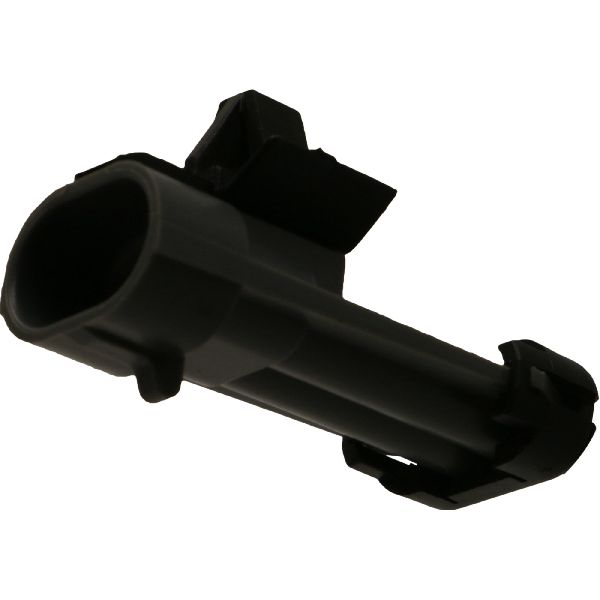
Typical fix: Repair the damaged section of wire or replace the pigtail connector. The connector is available as a separate part, like ACDelco PT1718.
Est. part cost: $15-$40 - Metallic Debris on Magnetic Encoder Ring ⚪ Low Probability The magnetic encoder ring on the inboard side of the hub can attract metallic dust and debris from brakes and road grime. This debris can interfere with the sensor's ability to get a clean reading, effectively blocking the signal.
How to confirm: Remove the wheel and visually inspect the back of the hub assembly. Look for a build-up of dark, metallic paste or filings on the magnetic ring. GM has a Technical Service Bulletin (PIC5428G) for this issue on many models which share a similar design.
Typical fix: Clean the debris off the magnetic encoder ring using a rag or soft brush and brake cleaner. In some cases, the hub may need to be removed for thorough cleaning.
Est. part cost: $0
Rare But Worth Checking
- Failed Electronic Brake Control Module (EBCM): This is the computer that controls the ABS system. It is an expensive part and rarely the cause of a single wheel speed sensor code. This should only be considered after all other possibilities (hub, wiring) have been exhaustively ruled out by a professional. A user on a forum was advised to check EBCM wiring after a hub replacement didn't solve the issue.
Diagnosis Steps
- Connect an ABS-capable scan tool to the OBD-II port.
- Confirm that C0050 is the active code. Note any additional symptom bytes like '00' (circuit malfunction), '0F' (erratic signal), or '18' (low signal amplitude), as they can help pinpoint the issue.
- Use the scan tool's live data function to monitor the speed of all four wheels while driving slowly (above 5-10 mph) in a straight line.
- Verify that the Right Rear (RR) wheel speed sensor reads 0 MPH or shows an erratic/jumping signal compared to the other three wheels.
- Raise and safely support the rear of the vehicle. Remove the right rear wheel.
- Visually inspect the wiring harness leading to the wheel hub. Check for chafed wires, loose connections, or corrosion at the connector. Follow the harness as far back as possible.
- Disconnect the sensor and check for voltage from the EBCM at the harness-side connector. Check for a brief 12V pulse from the EBCM on key-on to confirm the module and wiring are likely good.
- Inspect the magnetic encoder ring on the inboard side of the hub assembly for any caked-on metallic debris or physical damage like cracks.
- If debris is found, clean it off thoroughly with a rag and brake cleaner, then re-test the vehicle.
- If the wiring and encoder ring look good, the wheel hub assembly is the most likely cause and should be replaced.
Parts You'll Likely Need
- Rear Wheel Hub and Bearing Assembly (with ABS)
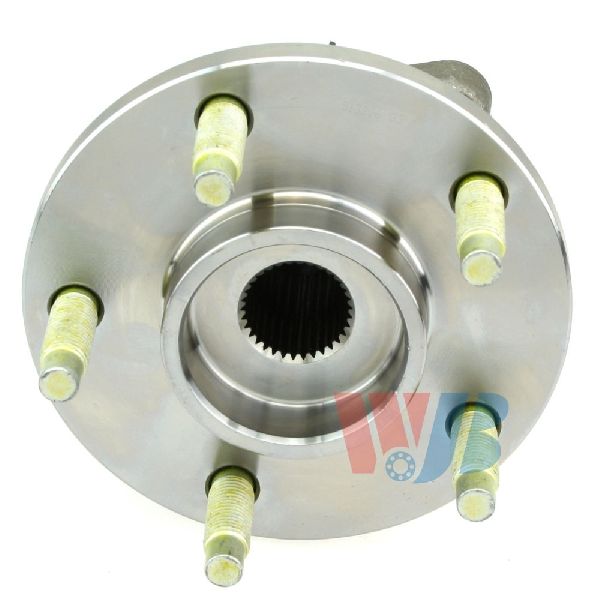
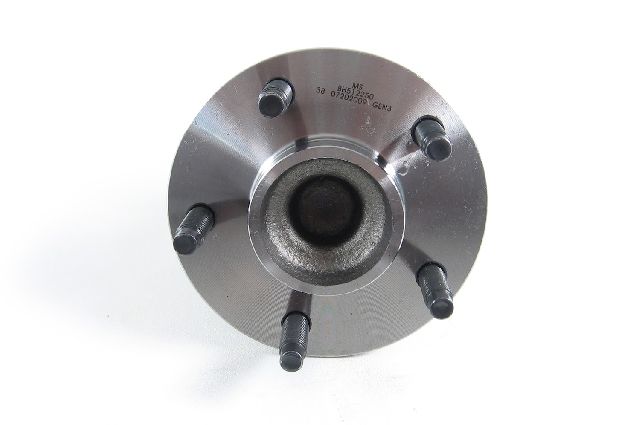
(OEM #GM 15782652 (Superseded by multiple numbers))— This is the most common failure. The wheel speed sensor is integrated into this assembly for the HHR, so a failed sensor requires replacing the entire hub.
Trusted brands: ACDelco, Moog, SKF, Duralast, Timken
OEM price range: $160-$280
Aftermarket price range: $80-$200 - ABS Wheel Speed Sensor Connector (Pigtail)
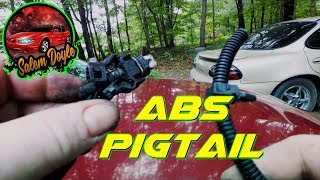
(OEM #ACDelco PT1718)— If the wiring is found to be corroded or damaged at the connector, replacing the pigtail is the proper repair. 🎬 Watch a pro demonstrate how to properly replace a sensor pigtail.
Trusted brands: ACDelco, Dorman, Standard Motor Products
OEM price range: $25-$40
Aftermarket price range: $15-$30
Related Codes That Often Appear With This One
- C0045 — This is the code for the Left Rear Wheel Speed Sensor. Seeing both codes together could point to a wiring issue common to the rear axle or that both rear hubs are failing around the same time due to age and mileage.
- U0415 — On some GM vehicles, a loss of a wheel speed sensor signal can cause the Power Steering Control Module to set this code, resulting in a heavier steering feel at low speeds. This is a secondary effect of the C0050 code.
Technical Service Bulletins (TSBs) & Recalls
- PIC5428G: While not explicitly listing the HHR in the available copies, this GM TSB addresses codes C0035-C0050 caused by metallic debris on the wheel bearing magnetic encoder ring, a design shared with the HHR. It advises cleaning the ring before replacing parts. This TSB was later superseded by 17-NA-047.
Platform-Specific Known Issues
- Real Owner Experience: A user on ChevyHHR.net with a 2010 HHR LT reported having code C0050 with ABS and TC lights on. After trying to erase the code and checking the battery with no success, forum members advised that the sensor is integral to the hub and the entire assembly needs replacement.
- Post-Repair Troubleshooting: Another user on the same forum replaced the right rear hub for a C0050 code, but the lights remained on. A senior forum member advised that the issue could then be a bad pin or wire at the EBCM connector and that the code would not clear from history for 100 drive cycles, though the light should go out if the fault is fixed.
Mechanic-Grade Diagnostic Values
- EBCM Key-On Voltage Pulse — expected: A brief pulse of ~12V across the two pins of the harness-side connector for the wheel speed sensor immediately after turning the ignition key to the ON position.. Failure: No voltage pulse suggests a problem with the EBCM or the wiring between the module and the connector, rather than the hub/sensor assembly itself.
- Sensor Bias Voltage (Key On, Sensor Connected) — expected: With the sensor connected and key on, back-probing the two wires at the connector should show a bias voltage, typically around 2.5V on one wire and a slightly different voltage on the other.. Failure: A voltage reading of 0V or a full 5V/12V on the signal wire, or a voltage that drops to 0V when wiggling the harness, indicates a short to ground or an open circuit in the wiring.
Hidden / Shadow Codes Worth Checking
- C0050 00: Indicates a general circuit malfunction, such as an open wire, short to ground, or high resistance. If this code appears after replacing the hub, the fault is almost certainly in the wiring harness or EBCM connector. (see via Requires an ABS-capable scan tool that can read GM-specific symptom bytes (e.g., Tech2, GDS2, or high-end aftermarket scanners).)
- C0050 0F: Indicates the signal from the sensor is erratic or intermittent. This often points to a failing sensor, debris on the magnetic ring, or a loose/corroded connection. (see via Requires an ABS-capable scan tool that can read GM-specific symptom bytes.)
- C0050 18: Indicates the signal amplitude is too low. This is commonly caused by an excessive air gap between the sensor and ring, or significant metallic debris buildup on the magnetic encoder. (see via Requires an ABS-capable scan tool that can read GM-specific symptom bytes.)
- C0050 5A: Indicates the signal is not plausible when compared to other vehicle sensors (like other wheel speeds). This often points to a physically damaged or cracked magnetic encoder ring on the hub. (see via Requires an ABS-capable scan tool that can read GM-specific symptom bytes.)
Scan Tool Commands That Help
- Oscilloscope or Graphing Multimeter: Key-On Voltage Pulse Test — Use this test at the disconnected sensor harness connector to quickly determine if the EBCM and wiring are functional. A successful pulse test proves the fault is isolated to the wheel hub assembly, saving significant diagnostic time.
Wiring & Ground Locations
- EBCM (Electronic Brake Control Module) — Located in the left (driver's) side of the engine compartment, positioned in front of the underhood fuse block.. This module receives the signal from the right rear wheel speed sensor. A C0050 00 code after a hub replacement points to a wiring or pin connection issue at this module.
- EBCM Connector Pins 3 & 4 — At the main harness connector for the EBCM.. These are the specific pins for the right rear wheel speed sensor circuit. A continuity test can be performed between these pins and the pins at the wheel hub connector to verify the integrity of the wiring harness.
- G402 — Under the right tail/stop & turn signal light assembly in the rear corner of the vehicle.. This is a major chassis ground point in the vicinity of the right rear wheel. While the sensor circuit is grounded through the EBCM, poor chassis grounds in the area can sometimes introduce electrical noise that may affect sensitive modules.
- G103 / G109 — G103 is at the left front corner of the engine compartment; G109 is on the left front shock tower.. These are primary grounds for the engine compartment, where the EBCM is located. A fault with these grounds could potentially affect the EBCM's operation, though it would likely cause multiple system codes, not just C0050.
Real Owner Repair Stories
- Chevy HHR Network Forum (Chevrolet HHR (year not specified)) — ABS, ESC, and Traction Control lights on. Scan tool showed code C0050 00.
❌ Tried (didn't work) Replacing the right rear wheel hub assembly.
✅ What actually fixed it The problem was not resolved in the thread, but the confirmed diagnosis after the hub replacement failed was a fault in the wiring circuit between the hub and the EBCM, or a bad pin at the EBCM connector itself. This highlights that a C0050 00 code strongly points to a wiring issue, not the component. - YouTube video (similar GM truck) (2017 GM Truck) — ABS and TCS lights on, code C0050.
❌ Tried (didn't work) Visual inspection of the harness showed no obvious damage., Replacing the right rear wheel speed sensor.
✅ What actually fixed it Using a graphing multimeter on the sensor connector, the technician found an intermittent open in the yellow wire caused by internal corrosion right at the connector. Splicing and repairing that section of wire restored the correct resistance reading and cleared the code.
OEM Part Supersession History
GM 15782652→Multiple numbers, including 12413197, 12413217, 12413218, 22715554.— Standard part evolution and supplier changes.N/A→ACDelco PT1718— This is the established OEM service part number for the rear wheel speed sensor pigtail connector.
Diagnostic Flowchart
Other Known Issues on This Vehicle
Issues unrelated to this code that are worth knowing about as an owner of this generation:
- Faulty Ignition Switch 🔴 High — Extremely widespread, affecting all model years. The switch can move out of the 'Run' position if bumped or with a heavy keychain, disabling the engine, power steering, and airbags. (Ref: NHTSA Recalls: 14V047000, 14V171000.)
- Electric Power Steering (EPS) Motor Failure 🔴 High — Very common across multiple model years, leading to a sudden loss of power steering assist. Can be intermittent at first. (Ref: Special Coverage/Extended Warranty program (not a formal recall for all years), e.g., GM Bulletin 14119.)
- Front Lower Control Arm Bushing Failure 🟠 Medium — Commonly occurs between 60,000 and 100,000 miles. The rear bushing on the front control arm wears out, causing clunking noises, vibration during braking, and poor alignment.
- Evaporative Emissions (EVAP) System Faults / Loose Gas Cap 🟡 Low — Frequent cause of a Check Engine Light. Often caused by a faulty gas cap that no longer seals properly, but can also be due to vent or purge solenoid failure.
- Variable Valve Timing (VVT) Solenoid Failure 🟠 Medium — Common issue causing a rough idle, stalling, and a Check Engine Light. Often linked to infrequent oil changes or low oil levels.
Used vs. New Parts: Buying Guide for This Vehicle
When a used part is the smart pick: For this repair, obtaining a used part is strongly discouraged for the wheel hub assembly itself. As a critical wear item (bearing), its remaining lifespan is unknown and the labor to replace it again outweighs any initial savings. A used pigtail connector from a low-mileage, non-corroded donor vehicle is a viable option if a new one is unavailable.
Donor-vehicle mileage cap: roughly under 50000 miles for the part to have meaningful remaining life.
What to inspect on the donor part:
- For a pigtail connector: Check for zero green or white corrosion on pins.
- Ensure the wiring insulation is still flexible and not brittle or cracked.
- Verify the plastic connector housing and locking tab are not broken.
OEM-only on this vehicle (don't cheap out):
- No parts are strictly OEM-only, but the quality of aftermarket hub assemblies varies significantly.
Aftermarket brands forum-validated for this vehicle:
- Moog
- Timken
- SKF
Brands owners have reported issues with on this vehicle:
- Unbranded, 'white box' parts from online marketplaces are a significant gamble and may fail prematurely.
Real Owner Stories
Aggregated from forums and TSBs cited above. Mileages and costs reflect what owners reported in those sources.
2010 Chevrolet HHR LT
Symptoms: ABS and Traction Control (TC) warning lights illuminated on the dashboard. The owner attempted to erase the code and check the battery, but the lights persisted.
What fixed it: Replacement of the entire right rear wheel hub assembly, as the sensor is integral to the unit.
Source hint: ChevyHHR.net thread titled '2010 HHR LT - C0050 RR Wheel Speed Sensor Circuit - How to...'
2006-2011 Chevrolet HHR (General)
Symptoms: The owner replaced the right rear hub to address a C0050 code, but the warning lights remained active.
What fixed it: The issue was identified as a potential bad pin or wire at the EBCM connector, requiring a wiring repair rather than just a hub replacement.
Source hint: ChevyHHR.net thread titled 'DTC code c0050 Rear Hub Replaced code on'
Related OBD-II Codes
Frequently Asked Questions
Can I just replace the wheel speed sensor on my HHR's right rear wheel?
Does GM Technical Service Bulletin PIC5428G apply to the C0050 code on my HHR?
I replaced the RR hub but the ABS and TC lights are still on. Is there a specific part for the wiring?
Will the C0050 code clear itself immediately after I fix the sensor?
Is there a way to confirm if the EBCM is sending power to the rear sensor before I buy a new hub?
Helpful Videos
Used OEM Parts in Stock


New Aftermarket Parts Available


The information in this article is provided for general reference and educational purposes only. Vehicle specifications, procedures, and part compatibility can vary by production date, trim level, and region. Always consult your vehicle's factory service manual and verify part numbers before purchasing or performing repairs. Safety-critical components such as airbags, seat belts, and braking systems should be installed by a qualified professional.
- Chevrolet HHR:
- 🎬 Helpful Videos
- 🛍️ Shop This Part
- What's Unique About the 2006-2011 Chevrolet HHR
- Symptoms You May Notice
- Most Likely Causes
- Rare But Worth Checking
- Diagnosis Steps
- Parts You'll Likely Need
- Related Codes That Often Appear With This One
- Technical Service Bulletins (TSBs) & Recalls
- Platform-Specific Known Issues
- Mechanic-Grade Diagnostic Values
- Hidden / Shadow Codes Worth Checking
- Scan Tool Commands That Help
- Wiring & Ground Locations
- Real Owner Repair Stories
- OEM Part Supersession History
- Diagnostic Flowchart
- Other Known Issues on This Vehicle
- Used vs. New Parts: Buying Guide for This Vehicle
- Real Owner Stories
- 2010 Chevrolet HHR LT
- 2006-2011 Chevrolet HHR (General)
- Related OBD-II Codes
- Frequently Asked Questions
- 🎟️ Get 5% Off