

C0040 on 2010-2017 GMC Terrain: Right Front Wheel Speed Sensor Fault Causes and Fixes
Code C0040 on a 2010-2017 GMC Terrain almost always points to a problem with the right front wheel speed sensor circuit. The most common cause is the failure of the magnetic reluctor ring, which is integrated into the wheel hub assembly. This requires replacing the entire hub. Other causes include wiring damage or, less commonly, a faulty sensor. Expect to pay $150-$300 for the part and 1-2 hours of labor.
- C0040 on your Terrain means the right front wheel's speed signal is lost or incorrect, disabling your ABS and Stabilitrak.
- The most likely cause is NOT the sensor, but the magnetic ring on the wheel hub assembly which has corroded and failed.
- Diagnosis involves checking the live sensor data with a scan tool and visually inspecting the magnetic ring.
- The correct repair is usually to replace the entire right front wheel bearing and hub assembly.
- Due to the loss of major safety features, this issue should be addressed promptly.
What's Unique About the 2010-2017 GMC Terrain
The first-generation GMC Terrain and its sibling, the Chevrolet Equinox, are exceptionally prone to this failure. The root cause is rarely the sensor itself but rather the magnetic reluctor ring that the sensor reads. This ring is built into the seal of the wheel bearing/hub assembly. Over time, exposure to moisture, road salt, and temperature changes causes the ring to corrode, crack, and delaminate. A piece of the magnetic ring can break off, sending a faulty signal to the sensor and triggering the C0040 code. This is a well-documented failure pattern, confirmed by technicians in numerous repair videos and forum discussions, and is the subject of GM Technical Service Bulletin #PIT5190.
Symptoms You May Notice
- ABS warning light is on
- "Service Stabilitrak" or "Service Stability" message on the driver information center
- Traction Control System (TCS) warning light is on
- AWD OFF message may appear on all-wheel-drive models
- ABS system does not activate during hard braking (wheels may lock up)
- Traction control does not function on slippery surfaces
- In some cases, the ABS may activate inappropriately at low speeds just after startup
- Replacing only the wheel speed sensor without thoroughly inspecting the magnetic reluctor ring on the hub assembly. The code often returns because the damaged ring was the true root cause.
- Assuming the wheel bearing is good because it doesn't make noise. The bearing can be mechanically sound (no noise or play) while the integrated reluctor ring has failed.
Most Likely Causes
- Failed/Corroded Magnetic Reluctor Ring on Wheel Hub Assembly 🔴 High Probability The design integrates the magnetic encoder ring into the wheel bearing's inboard seal, where it is highly exposed to road salt and moisture. This leads to corrosion, which causes the ring to swell, crack, and delaminate. This is the most widely documented failure for C0040 on this platform.
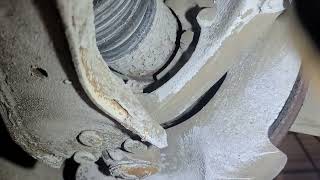
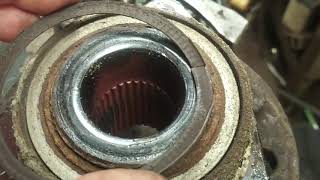
How to confirm: After removing the wheel speed sensor, visually inspect the magnetic ring on the back of the hub. Use a light and spin the hub slowly. Look for visible cracks, rust jacking, or sections where the dark magnetic material has flaked off. In a YouTube repair video on a 2011 Terrain 🎬 Watch this video showing the missing reluctor ring piece, a technician clearly shows a piece of the reluctor ring missing, which is the definitive cause.
Typical fix: Replace the entire front wheel bearing and hub assembly. The reluctor ring is not sold as a separate part.
Est. part cost: $80-$250 - Damaged Wheel Speed Sensor Wiring or Connector 🟡 Medium Probability The wiring harness runs down the suspension and is subject to constant movement, debris, and weather. This can cause wires to chafe or break, or for corrosion to form in the connector pins. This is a common issue on many GM vehicles of this era.
How to confirm: Visually inspect the wiring pigtail from the sensor to the main harness connection in the fender well. Check for green corrosion inside the connector. Use a multimeter to perform a continuity test on the wires and check for shorts to ground or between wires.
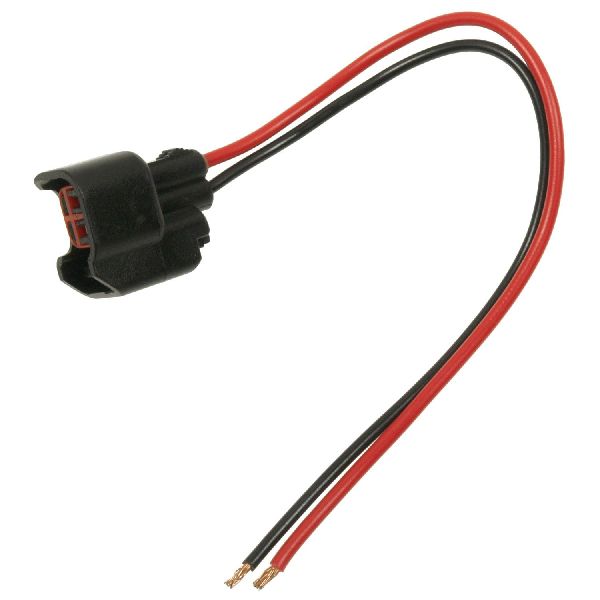
Typical fix: Repair the damaged section of wire or replace the pigtail connector harness.
Est. part cost: $15-$50 - Faulty Right Front Wheel Speed Sensor ⚪ Low Probability While the sensor can fail, it is far less common than the reluctor ring or wiring issues. Many owners and technicians report replacing the sensor first, only to find the C0040 code returns because the hub was the actual problem. A Reddit user with a 2013 Terrain confirmed the final fix was a new hub assembly after a sensor replacement didn't solve the issue.
How to confirm: Use a scan tool to monitor live data from all four wheel speed sensors while driving. If the signal from the right front is erratic, drops to zero, or doesn't match the other wheels, and the wiring and reluctor ring are confirmed to be in good condition, the sensor is likely faulty.
Typical fix: Replace the wheel speed sensor. It is held in by a single 10mm bolt. 🎬 Watch how to replace a failed wheel speed sensor
Est. part cost: $25-$90
Rare But Worth Checking
- Faulty Electronic Brake Control Module (EBCM): This is very rare and should only be considered after all other possibilities have been ruled out. An EBCM failure will typically set multiple other codes, including communication codes like U0121. TSB #PIT5499B notes that water intrusion into the EBCM connector can cause a variety of wheel speed sensor codes.
- Excessive Play in Wheel Bearing: A severely worn-out wheel bearing can develop excessive play (wobble). This changes the air gap between the sensor and the reluctor ring, leading to an erratic signal. This would be accompanied by a loud humming or grinding noise from the wheel that changes with speed and while turning.
Diagnosis Steps
- Confirm the presence of code C0040 using an ABS-capable OBD-II scanner. Note any symptom bytes (e.g., 0F, 5A, 18) as they provide more specific diagnostic information.
- Using the scan tool, view the live data graph for all four wheel speed sensors. Drive the vehicle slowly (under 10 mph) and observe the right front sensor's reading. A signal that is jagged, drops to zero, or doesn't mirror the other sensors confirms the fault location.
- Raise and secure the vehicle on jack stands. Visually inspect the wiring harness leading to the right front wheel speed sensor. Check for chafing, breaks, or corrosion at the connector.
- Remove the single 10mm bolt holding the wheel speed sensor and carefully pull the sensor out of the steering knuckle.
- Thoroughly inspect the magnetic reluctor ring on the wheel hub assembly through the sensor mounting hole. Use a bright light and a small mirror. Slowly rotate the hub and look for any signs of rust jacking, cracks, or missing chunks of the dark magnetic ring. This is the most critical inspection step.
- If the reluctor ring is visibly damaged, the entire wheel hub assembly must be replaced.
- If the ring appears perfect, test the circuit. Disconnect the sensor and the EBCM connector. Use a multimeter to check for continuity on both wires from end to end. Also check for any shorts to ground or to each other.
- If the reluator ring and wiring are confirmed to be good, the wheel speed sensor itself is the likely culprit.
Parts You'll Likely Need
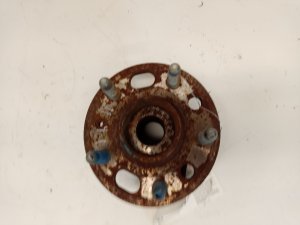
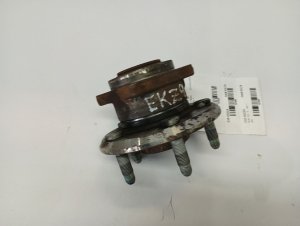
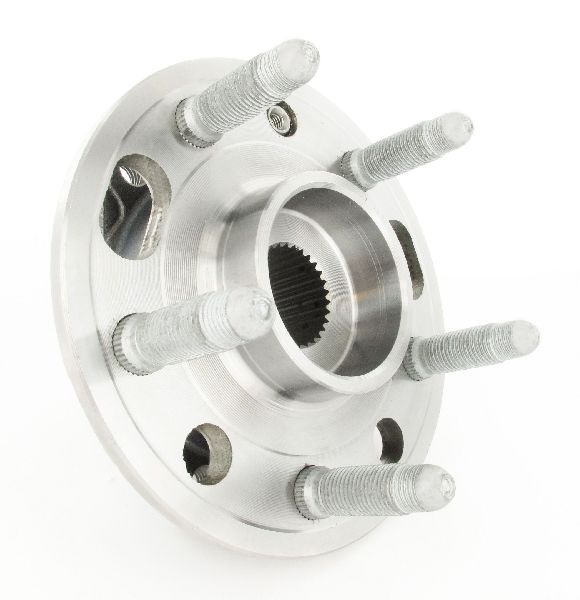
- Front Wheel Bearing and Hub Assembly
(OEM #13589507 (ACDelco #FW420))— This is the most common and definitive fix because the integrated magnetic reluctor ring fails due to corrosion, and it is not serviceable separately from the hub assembly.
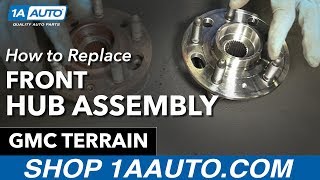
Trusted brands: ACDelco (OEM), Timken (HA590369), MOOG (513288), SKF 🎬 Watch this step-by-step GMC Terrain front hub replacement video
OEM price range: $150-$250
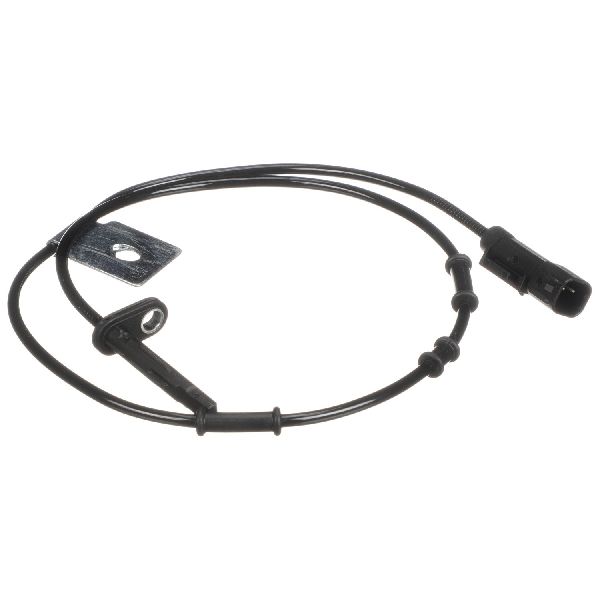
Aftermarket price range: $80-$180 - Front Wheel Speed Sensor
(OEM #22817333 (Supersedes 20811372))— Replaced if the sensor itself is confirmed faulty, or if it is seized in the knuckle and damaged during hub replacement. It is often misdiagnosed as the primary failure point.
Trusted brands: ACDelco (OEM), Delphi, Dorman, Standard Motor Products (ALS2053)
OEM price range: $40-$80
Aftermarket price range: $25-$50
Related Codes That Often Appear With This One
- C0035 — This is the code for the Left Front Wheel Speed Sensor Circuit. It's very common for both front wheel bearings to wear and corrode at a similar rate. Seeing both C0035 and C0040 together strongly suggests both front hub assemblies need replacement.
- U0121 — This code indicates a loss of communication with the ABS control module (EBCM). It could appear alongside C0040 if there's a major wiring issue affecting the module or if the EBCM itself has failed, as mentioned in TSB #PIT5499B.
- C0040-0F or C0040-5A — These are symptom bytes that provide more detail. C0040-0F indicates an erratic signal, while C0040-5A indicates the signal is not plausible. Both point strongly to a failing reluctor ring or wiring issue.
- C0040 symptom 18 — Mentioned in TSB #PIT5190, this symptom byte points to an issue with the wheel speed sensor signal that warrants inspection of the sensor and the reluctor ring on the hub.
Technical Service Bulletins (TSBs) & Recalls
- PIT5190: Mentions that a "Service Stability" message accompanied by C0040 symptom 18 should prompt an inspection of the wheel speed sensor and its corresponding components.
- PIT5499B: Notes that water intrusion into the Electronic Brake Control Module (EBCM) connector can cause C0040 among other wheel speed sensor codes.
Platform-Specific Known Issues
- TSB #PIT5190: Specifically addresses the "Service Stability" message with DTC C0040 or C0035. It instructs technicians to inspect the wheel speed sensor mounting area, which directly leads to discovering the common reluctor ring failure on the hub.
- Real-world repair videos consistently show the magnetic reluctor ring on the original hub being cracked or delaminated. A video by 'Phillip Bailey' on YouTube for a 2011 Terrain shows a clear break in the ring.
Mechanic-Grade Diagnostic Values
- Wheel Speed Sensor Signal Voltage (Active Sensor) — expected: A square wave that toggles between approximately 4V and 12V when the wheel is spun. This requires an oscilloscope or a scan tool with graphing capabilities to view properly.. Failure: A flat line, a signal that does not switch, or a voltage level that is significantly low (e.g., below 4V) indicates a problem with the sensor, wiring, or EBCM power feed.
- Wheel Speed Sensor Resistance (Passive Sensor - less common on this model) — expected: Generally between 800 and 1300 ohms, though some sources cite up to 2700 ohms. This test is less reliable for modern magneto-resistive sensors.. Failure: An open circuit (infinite resistance) or a short circuit (zero resistance). However, a sensor can have correct resistance and still be faulty.
Scan Tool Commands That Help
- GDS2/Tech2 or equivalent professional scan tool: Live Data > EBCM > Wheel Speed Sensors — This is the primary diagnostic step. Graphing the output of all four sensors while driving allows for direct comparison. A faulty right front sensor signal will be erratic, drop out, or fail to increase with speed compared to the other three.
- GDS2/Tech2 or equivalent professional scan tool: Clear DTCs — After the repair is complete. On some GM vehicles, simply disconnecting the battery is not enough to clear ABS codes and turn off the warning lights; a scan tool command is required.
Wiring & Ground Locations
- EBCM Ground — The main chassis ground for the EBCM is typically located on the frame rail under the driver's side, near the body mount. GM trucks of this era are known for having corrosion issues at this grounding point.. A poor ground for the EBCM can cause a host of erratic issues, including false wheel speed sensor codes. While less common than a hub or wiring failure, checking that this ground is clean and tight is a valid diagnostic step if other tests are inconclusive.
- Right Front WSS Connector — The wheel speed sensor harness connects to the main body harness in the right front fender well, typically behind the plastic liner.. This connector is a common point for corrosion or damage. Inspecting the pins for green crust or damage is a key step when diagnosing a circuit fault.
Real Owner Repair Stories
- Reddit user in r/gmc (2013 GMC Terrain 2.4L) — Initially had "All wheel drive disabled", "service stabilitrak", and "service traction control" messages. After replacing only the sensor, the vehicle was sluggish and would not exceed 20 mph unless traction control was manually turned off.
❌ Tried (didn't work) Replacing only the left front wheel speed sensor (for the equivalent C0035 code).
✅ What actually fixed it Replacing the entire front hub assembly resolved all symptoms. The user noted it took 3 hours due to rust in the salt-belt environment. - YouTube channel 'Phillip Bailey' (2011 GMC Terrain, 160,000 km) — "Service Stabilitrak" and ABS light on.
✅ What actually fixed it Visual inspection through the sensor hole revealed a broken piece on the magnetic reluctor ring. Replacing the entire front wheel bearing assembly fixed the issue. The video notes the bearing itself had no noise or play, highlighting a common misdiagnosis pitfall.
OEM Part Supersession History
13589507→13564982— Standard part evolution/update by the manufacturer.
Heads up: The new part number (13564982) is the current OEM replacement for the front hub assembly and is fully compatible.
Diagnostic Flowchart
Other Known Issues on This Vehicle
Issues unrelated to this code that are worth knowing about as an owner of this generation:
- Excessive Oil Consumption (2.4L Ecotec) 🔴 High — Very common, especially on 2010-2013 models. Caused by premature piston ring wear. GM's definition of excessive is consuming over 1 quart per 2,000 miles. (Ref: Multiple Special Coverage Adjustments (e.g., #15285C, #16118, N192291100) were issued, extending the warranty for this specific issue and covering piston/ring replacement for affected vehicles.)
- Timing Chain Stretch / Failure (2.4L Ecotec) 🔴 High — Common, often occurs between 70,000 and 120,000 miles. Symptoms include a startup rattle, engine noise, and timing-related fault codes (e.g., P0016, P0017). Failure can cause catastrophic engine damage. (Ref: Multiple TSBs exist addressing diagnosis and repair, such as updated chain guides and tensioners.)
- Frozen PCV Orifice Causing Rear Main Seal Failure (2.4L Ecotec) 🟠 Medium — Occurs primarily in cold climates (below 0°F / -18°C). Moisture in the PCV system freezes, blocking the orifice in the intake manifold, causing crankcase over-pressurization that blows out the rear main seal, resulting in a massive oil leak. (Ref: TSB #PIP5093B describes this exact condition and the diagnostic procedure.)
- High-Pressure Fuel Pump (HPFP) Failure (2.4L Ecotec) 🟠 Medium — A known failure point on this direct-injection engine. Can cause rough idle, stalling, and loss of power. A severe failure can leak fuel into the crankcase, diluting the engine oil.
- Windshield Wiper Failure 🟠 Medium — Common enough to warrant a recall. The ball joints in the wiper module corrode, causing one or both wipers to become inoperative. (Ref: Recall #N192283180 / NHTSA 20V201000)
Used vs. New Parts: Buying Guide for This Vehicle
When a used part is the smart pick: For this specific repair, a used wheel hub assembly is STRONGLY DISCOURAGED. The primary failure mode is corrosion and wear of the integrated magnetic ring, which is impossible to assess visually and is dependent on age and exposure. A used part is highly likely to have the same defect or fail shortly after installation.
What to inspect on the donor part:
- Not applicable, avoid used hub assemblies for this repair.
Aftermarket brands forum-validated for this vehicle:
- Timken
- MOOG
- SKF
- ACDelco (Professional or OEM line)
Brands owners have reported issues with on this vehicle:
- No-name, unbranded, or 'white box' parts from online marketplaces should be avoided. While cheaper, they have a high rate of premature failure, either in the bearing itself or the integrated sensor ring, leading to the code returning.
Real Owner Stories
Aggregated from forums and TSBs cited above. Mileages and costs reflect what owners reported in those sources.
2011 GMC Terrain
Symptoms: The ABS system was throwing a C0040 code. Upon inspection, a piece of the magnetic reluctor ring was clearly missing from the hub.
What fixed it: Replacement of the wheel hub assembly.
Source hint: YouTube repair video by 'Phillip Bailey'
2013 GMC Terrain
Symptoms: C0040 code persisted even after the owner attempted to fix it by replacing the wheel speed sensor first.
What fixed it: Installation of a new wheel hub assembly.
Source hint: Reddit user report cited in 'Faulty Right Front Wheel Speed Sensor' section
2015 Chevrolet Equinox
Symptoms: Inappropriate ABS activation and codes C0040-0F and C0040-5A. Replacing the sensor did not resolve the problem.
What fixed it: Replacement of the wheel hub/bearing assembly.
Source hint: Reddit r/Chevy - '2015 Equinox- Speed Sensor code C0040'
Related OBD-II Codes
Frequently Asked Questions
My 2011 GMC Terrain is showing a 'Service Stability' message and code C0040. Does TSB #PIT5190 apply to this?
Can water getting into the computer cause the C0040 code on my Terrain?
I replaced the right front sensor on my 2013 Terrain but the C0040 code came back. What else could it be?
Is the magnetic reluctor ring a separate part I can buy for my GMC Terrain?
Why does my Terrain's ABS activate inappropriately at low speeds right after I start driving?
Does the Chevrolet Equinox have the same C0040 issues as the GMC Terrain?
Helpful Videos
Used OEM Parts in Stock
New Aftermarket Parts Available


The information in this article is provided for general reference and educational purposes only. Vehicle specifications, procedures, and part compatibility can vary by production date, trim level, and region. Always consult your vehicle's factory service manual and verify part numbers before purchasing or performing repairs. Safety-critical components such as airbags, seat belts, and braking systems should be installed by a qualified professional.
- GMC Terrain:
- 🎬 Helpful Videos
- 🛍️ Shop This Part
- What's Unique About the 2010-2017 GMC Terrain
- Symptoms You May Notice
- Most Likely Causes
- Rare But Worth Checking
- Diagnosis Steps
- Parts You'll Likely Need
- Related Codes That Often Appear With This One
- Technical Service Bulletins (TSBs) & Recalls
- Platform-Specific Known Issues
- Mechanic-Grade Diagnostic Values
- Scan Tool Commands That Help
- Wiring & Ground Locations
- Real Owner Repair Stories
- OEM Part Supersession History
- Diagnostic Flowchart
- Other Known Issues on This Vehicle
- Used vs. New Parts: Buying Guide for This Vehicle
- Real Owner Stories
- 2011 GMC Terrain
- 2013 GMC Terrain
- 2015 Chevrolet Equinox
- Related OBD-II Codes
- Frequently Asked Questions
- 🎟️ Get 5% Off