

C0040 on 2009-2017 Chevrolet Traverse: Right Front Wheel Speed Sensor Fault Causes and Fixes
On a 2009-2017 Traverse, code C0040 almost always points to a failed right front wheel hub and bearing assembly, which contains the wheel speed sensor. Expect to pay $100-$250 for a quality replacement hub. Always inspect the wiring harness for damage before replacing the hub.
- Code C0040 on a 2009-2017 Traverse means there's a fault with the right front wheel speed sensor circuit, which disables your ABS and StabiliTrak safety systems.
- The most common cause by far is a failed wheel hub and bearing assembly, which contains the sensor. A humming noise or play in the wheel are key symptoms.
- Always visually inspect the wiring harness for damage before ordering parts, as this is the second most likely cause.
- Use a scan tool that can read ABS live data to confirm the right front wheel is the one with the problem before starting repairs.
- Due to the safety-critical nature of the ABS, professional repair is recommended if you are not experienced with brake and hub work.
What's Unique About the 2009-2017 Chevrolet Traverse
The 2009-2017 Chevrolet Traverse and its GM Lambda platform siblings (GMC Acadia, Buick Enclave, Saturn Outlook) are known for this issue. The wheel speed sensor is integrated into the wheel hub and bearing assembly. These hubs are a common failure point; the internal bearing wears out, creating excessive play or 'wobble'. This wobble can damage the delicate magnetic encoder ring inside the hub that the sensor reads, or the sensor itself, triggering the C0040 code. While a wiring issue is possible, a worn-out hub is the most frequent root cause on this specific vehicle platform.
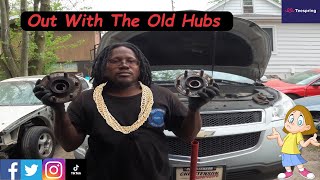
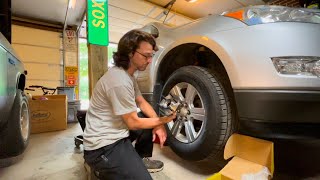
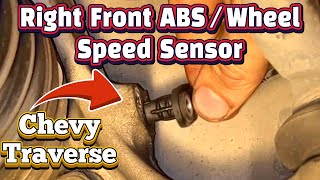
Symptoms You May Notice 🎬 Watch this quick overview of C0040 causes and fixes
- ABS warning light is on
- StabiliTrak or Traction Control (TC) warning light is on
- "Service StabiliTrak" or "Service Traction Control" message on the driver information center
- Cruise control is disabled
- A grinding or humming noise from the front of the vehicle that changes with speed (indicates a bad wheel bearing)
- ABS may activate unnecessarily at low speeds
- Replacing only the wheel speed sensor when it is sold separately from the hub. On the Traverse, the sensor is integrated, and the root cause is almost always the bearing/hub unit itself.
- Assuming the hub is good because there is no audible noise or wheel play. The sensor or internal encoder ring can fail electronically even if the bearing feels solid.
Most Likely Causes
- Failed Right Front Wheel Hub & Bearing Assembly 🔴 High Probability The wheel speed sensor is integrated into the hub assembly. These assemblies are a known wear item on the Traverse, and when the bearing fails, it often destroys the sensor's ability to get a clean reading from the internal magnetic encoder ring.
How to confirm: With the vehicle safely raised, grasp the right front wheel at the 12 and 6 o'clock positions and attempt to rock it. Any noticeable play or looseness indicates a worn wheel bearing. A humming or grinding noise from that corner while driving is also a strong indicator. A scan tool will show the RF wheel speed reading as 0 or erratic compared to the other three wheels.
Typical fix: Replace the entire right front wheel hub and bearing assembly.
Est. part cost: $100-$250 - Damaged Wheel Speed Sensor Wiring Harness 🟡 Medium Probability The wiring harness is located in a vulnerable area near the suspension and spinning axle, where it is exposed to debris, moisture, and constant movement. Wires can break internally, chafe, or corrode over time, especially at the connector.
How to confirm: Visually inspect the entire length of the wiring from the wheel hub connector up into the engine bay for any signs of breaks, chafing, melting, or corrosion. Pay close attention to the connector itself. TSB PIC-5992-A specifically calls out inspecting this harness for damage. Wiggle the harness while monitoring the live wheel speed data on a scan tool to see if the signal cuts in and out.
Typical fix: Repair the broken section of wire or replace the short pigtail harness. Common pigtail part numbers include ACDelco PT2232 or Standard Motor Products S-824.
Est. part cost: $20-$60 - Debris on the Magnetic Encoder Ring ⚪ Low Probability Rust scale or metallic debris from brake jobs can sometimes accumulate on the magnetic face of the hub that the sensor reads, interfering with the signal. GM TSB PIC5428F addresses this issue directly, noting it can cause C0040 with specific symptom bytes.
How to confirm: This is typically found during a hub replacement. When the old hub is removed, the magnetic ring on the inboard side will be visibly contaminated with metallic 'fuzz'. Sometimes the sensor can be removed and the ring inspected with a borescope.
Typical fix: Cleaning the ring is a temporary fix at best; the correct repair is to replace the wheel hub assembly as the seal that protects the encoder has likely failed.
Est. part cost: $100-$250
Rare But Worth Checking
- Faulty Electronic Brake Control Module (EBCM): This is an uncommon cause. Before suspecting the EBCM, all other possibilities (hub, wiring) should be exhaustively ruled out. An EBCM failure will often set multiple wheel speed sensor codes, not just C0040. TSB PIT5499B notes that water intrusion at the EBCM connector can also cause this code.
Diagnosis Steps
- Confirm the C0040 code is present using an OBD-II scanner capable of reading ABS codes.
- Use the scanner's live data function to monitor all four wheel speeds while driving. Confirm that the Right Front (RF) wheel speed sensor reads 0 mph or shows an erratic signal compared to the other three.
- Safely raise and support the front of the vehicle. Check the right front wheel for any play by rocking it from top to bottom. Significant play indicates a bad wheel bearing.
- Spin the right front wheel by hand while listening for grinding or humming noises.
- Thoroughly inspect the wheel speed sensor wiring harness from the hub connector up to the main chassis plug. Look for any chafed, broken, or corroded wires. Wiggle the connector and harness to see if the signal changes.
- If no wiring damage is found and the wheel bearing has play or is noisy, the wheel hub assembly is faulty and needs replacement.
- If the bearing feels tight and the wiring looks good, you can use a multimeter to check the sensor circuit. Unplug the sensor and measure the resistance between the two pins; compare the reading to the left front sensor. A significant difference or an open circuit indicates a bad sensor within the hub.
- After repair, clear the codes with a scanner and perform a test drive to ensure the warning lights do not return.
Parts You'll Likely Need
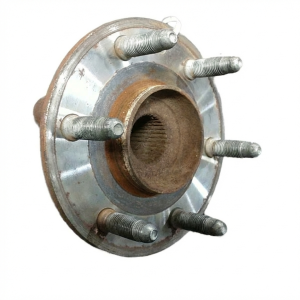
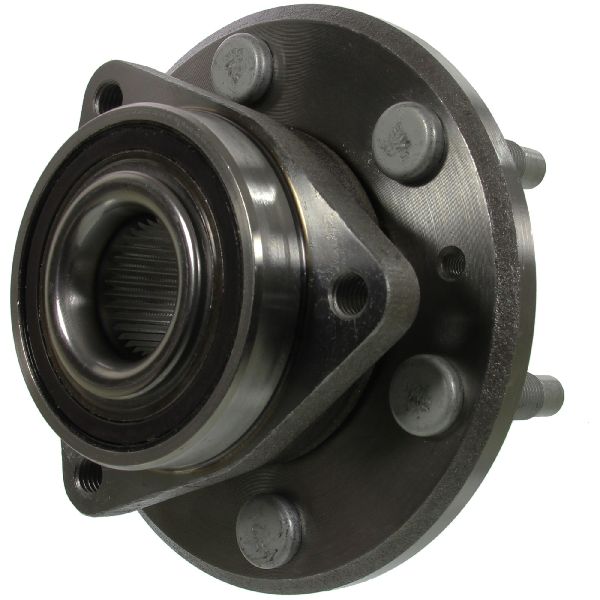
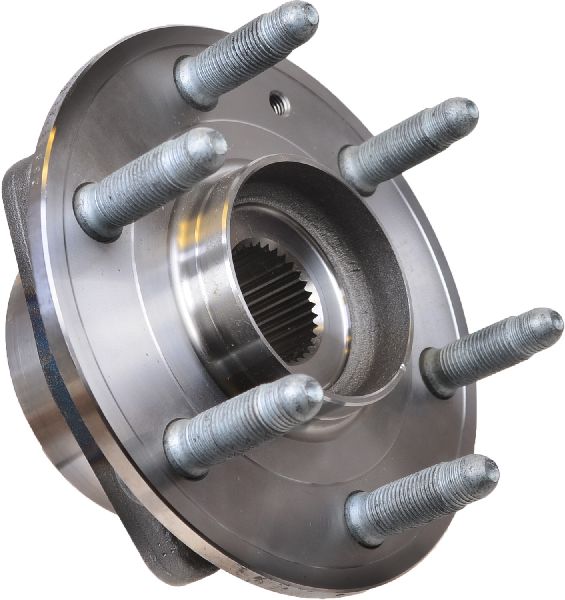
- Right Front Wheel Hub and Bearing Assembly
(OEM #513277)— This is the most common cause of a C0040 code on the 2009-2017 Traverse, as the wheel speed sensor is integrated into this assembly.
Trusted brands: ACDelco (OEM), Timken, MOOG, SKF, MasterPro, Duralast
OEM price range: $180-$250
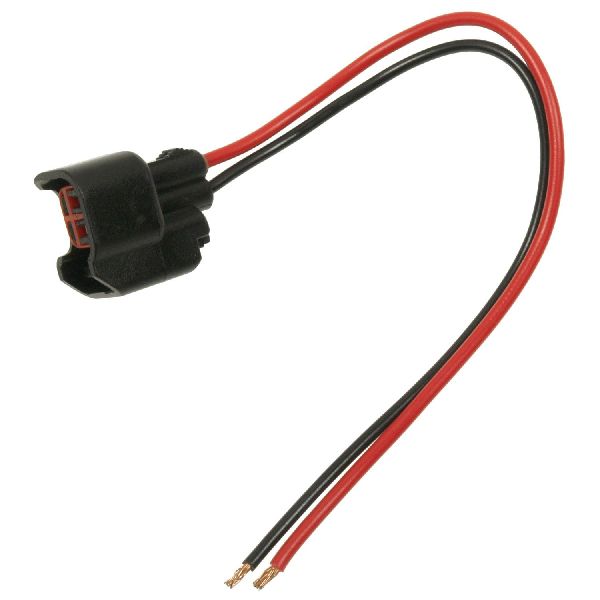
Aftermarket price range: $100-$180 - Front Wheel Speed Sensor Harness Pigtail
(OEM #ACDelco PT2232 / GM 20856306)— If the wiring harness connector or the wires near it are damaged, this pigtail allows for a splice-in repair without replacing the entire engine harness.
Trusted brands: ACDelco, Standard Motor Products (S-824), Dorman
OEM price range: $25-$40
Aftermarket price range: $15-$30
Related Codes That Often Appear With This One
- C0035 — This is the code for the Left Front Wheel Speed Sensor. If you see both codes, it could point to a systemic issue like a problem with the EBCM, its power/ground, or a wiring harness common to both front sensors.
Technical Service Bulletins (TSBs) & Recalls
- PIC5428F: Addresses C0040 caused by metallic debris accumulation on the wheel bearing's magnetic encoder ring.
- PIT5499B: Links C0040 to potential water intrusion at the Electronic Brake Control Module (EBCM) connector.
- PIC-5992-A: Advises technicians to inspect the wheel speed sensor harness for damage when diagnosing C0040.
- PIE0533A: Mentions C0040 in relation to inoperative wheel speed sensors.
Platform-Specific Known Issues
- Owner complaint NHTSA ODI #10629708 (on a similar GM vehicle) reported a C0040 code at only 16,000 miles, which was resolved by replacing the front wheel hub.
- TSB PIC-5992-A (on a similar GM vehicle) highlights that the wheel speed sensor harness can be damaged, causing this code, and should be inspected before part replacement.
- TSB PIC5428F directly addresses C0035-C0050 codes caused by metallic debris on the magnetic encoder ring of the wheel bearing on Traverse and other GM models.
Mechanic-Grade Diagnostic Values
- Sensor Power Supply Voltage — expected: Battery Voltage (approx. 12V) with key on. Failure: No voltage indicates a problem with the wiring or EBCM power feed.
- Sensor Signal Waveform — expected: A clean square wave pattern when viewing the signal wire on an oscilloscope while spinning the wheel.. Failure: A missing, flat-lined, or erratic waveform indicates a faulty sensor/hub assembly.
- Sensor Current Switching (Specialized Tool) — expected: A specialized tester should show the sensor toggling between 7mA and 14mA states as the wheel is slowly rotated.. Failure: If the current state does not toggle, the sensor inside the hub is faulty.
Hidden / Shadow Codes Worth Checking
- C0040 0F: Erratic Wheel Speed Sensor Signal. This often points to debris on the magnetic encoder ring, a damaged ring, or an intermittent wiring connection. (see via Professional scan tool like a GM Tech 2 or GDS2 that can read symptom bytes.)
- C0040 18: Missing Wheel Speed Sensor Signal / Signal Amplitude Below Minimum. This suggests a complete loss of signal, often due to a broken wire, a fully failed sensor, or a disconnected plug. (see via Professional scan tool like a GM Tech 2 or GDS2 that can read symptom bytes.)
- C0040 5A: Implausible Signal. The EBCM is receiving a signal, but it doesn't make sense compared to the other wheel speed sensors (e.g., reading 50 mph while others read 10 mph). (see via Professional scan tool like a GM Tech 2 or GDS2 that can read symptom bytes.)
- C0040 02: Short to Ground in the sensor circuit. (see via Professional scan tool that can read symptom bytes.)
- C0040 05: Short to Power or an Open Circuit. (see via Professional scan tool that can read symptom bytes.)
Scan Tool Commands That Help
- GDS2 / Tech2 or equivalent: Live Data > ABS > Wheel Speed Sensors — This is the first and most critical diagnostic step. It allows you to view the speed readings from all four wheels simultaneously while driving. A faulty RF sensor will read 0, be erratic, or lag significantly behind the others.
- GDS2 / Tech2 or equivalent: Read DTCs with Symptom Bytes — After confirming the code, reading the symptom byte (e.g., 0F, 18, 5A) provides crucial direction for diagnosis. An '18' (missing signal) points more toward a broken wire, while an '0F' (erratic signal) points more toward a damaged encoder ring or debris.
Wiring & Ground Locations
- Right Front WSS Connector (X215) — In the right front wheel well, where the short pigtail from the hub connects to the main chassis harness.. This is the primary point of failure for wiring issues due to exposure and movement. The pins are: Dark Green (12V Power from EBCM) and Tan (Signal wire to EBCM). Testing for power and signal at this connector is a key diagnostic step.
- EBCM Chassis Ground — Typically located on the frame rail below or near the Electronic Brake Control Module itself. For a 2009 model, a major ground point (G103) is located on the frame above the right front wheel well, near the underhood fuse block.. A poor ground for the EBCM can cause a host of bizarre issues, including phantom wheel speed sensor codes. While less common than a hub or pigtail failure, it should be checked if multiple, seemingly unrelated ABS codes are present.
Real Owner Repair Stories
- YouTube channel 'Cars and Service' (2012 Chevrolet Impala (similar GM platform)) — ABS light on with code C0040.
❌ Tried (didn't work) The previous owner had already replaced the entire right front wheel hub and bearing assembly, but the code remained.
✅ What actually fixed it The wiring pigtail between the hub and the main harness had an internal wire break that was not visible. The mechanic diagnosed it by feeling the wire stretch like a rubber band. He cut out the bad section of wire and spliced in a new piece, which permanently fixed the problem. - YouTube channel 'The Auto-Medic' (2010 Chevrolet Traverse) — Service StabiliTrak and ABS lights on, code C0035 (left front, but same principle as C0040).
❌ Tried (didn't work) Replacing the wheel speed sensor harness/pigtail.
✅ What actually fixed it The repair failed immediately upon driving. The mechanic recalled seeing rust and damage on the magnetic encoder ring on the back of the wheel hub assembly during the initial repair. The final fix was to replace the entire wheel hub assembly, which resolved the code.
When the Usual Fixes Don't Work
- While a faulty wheel hub is the most common cause, do not assume it is the problem without diagnosis. A real-world repair on a similar GM vehicle showed that even after a new hub was installed, the C0040 code persisted. The ultimate cause was an internal break in the wiring pigtail that was not visually apparent, found only by physically stretching the wires and feeling the break. This confirms that skipping the wiring inspection and going straight to hub replacement can lead to a failed repair.
OEM Part Supersession History
25784448→22756832, which is now commonly serviced by aftermarket P/N 513277— Standard part evolution and consolidation.
Model Year Variations Within This Range
- 2013-2017: The Traverse received a cosmetic facelift in 2013, updating the exterior styling and interior materials/technology. However, the underlying Lambda platform, 3.6L V6 engine, and the ABS/hub components related to code C0040 remained unchanged throughout the 2009-2017 model years.
Diagnostic Flowchart
Other Known Issues on This Vehicle
Issues unrelated to this code that are worth knowing about as an owner of this generation:
- Premature Timing Chain Stretch (3.6L V6) 🔴 High — Very common, especially on 2009-2012 models. Often occurs between 70,000 and 120,000 miles. Triggers codes like P0008, P0016, P0017. (Ref: Special Coverage Adjustment #11340C extended warranty to 10 years/120,000 miles (now expired). TSB 12-06-01-009D also applies.)
- Cracked 3-5-R Wave Plate in Transmission (6T70/6T75) 🔴 High — Common in earlier models (especially 2009). Leads to sudden loss of 3rd, 5th, and Reverse gears, requiring a transmission rebuild. (Ref: Special Coverage Adjustment #14404B extended warranty to 10 years/120,000 miles for this failure (now expired).)
- Power Steering Pump/Rack Failure 🟠 Medium — Widespread on 2009-2011 models, causing whining noises, fluid leaks, and intermittent or total loss of power steering assist. (Ref: Special Coverage Adjustment #14329 provided an extended warranty of 10 years/150,000 miles for the pump and gear housing (now expired).)
- Leaking Water Pump 🟠 Medium — A common failure item that can lead to coolant loss and overheating. It is a labor-intensive repair due to poor access.
- Failed EVAP Purge Valve 🟡 Low — A frequent issue causing code P0496, difficulty starting after refueling, and a rough idle. Relatively inexpensive and easy to replace.
Used vs. New Parts: Buying Guide for This Vehicle
When a used part is the smart pick: For this repair, using a used part is strongly discouraged. The wheel hub/bearing is a primary wear item with a finite lifespan. A used hub from a salvage yard has unknown mileage and wear, and could fail soon after installation, forcing you to do the job twice. The only scenario where a used part might be considered is for sourcing the plastic connector pigtail if a new one is not available.
What to inspect on the donor part:
- Not applicable, as used hubs are not recommended for this repair.
OEM-only on this vehicle (don't cheap out):
- While not strictly 'OEM-only', caution is advised with non-OEM wheel speed sensor pigtails. At least one owner reported an aftermarket sensor that would not work, with the issue being resolved only by installing a genuine GM part, suggesting potential compatibility issues with budget brands.
Aftermarket brands forum-validated for this vehicle:
- For the complete wheel hub assembly, ACDelco (OEM), Timken, MOOG, and SKF are widely regarded by professionals and DIYers as high-quality, reliable brands.
Brands owners have reported issues with on this vehicle:
- Budget-friendly brands like Detroit Axle may offer attractive pricing and warranties, but some user reviews indicate a higher likelihood of premature failure or quality control issues compared to premium brands.
Real Owner Stories
Aggregated from forums and TSBs cited above. Mileages and costs reflect what owners reported in those sources.
2014 Chevrolet Traverse — 16000 miles
Symptoms: The owner reported a C0040 code appearing at very low mileage.
What fixed it: Replacement of the front wheel hub assembly.
Source hint: NHTSA ODI #10629708
2009 Chevrolet Traverse
Symptoms: ABS, Stabilitrak, and Traction Control lights came on. Discussion involved whether to use OEM ACDelco hubs or aftermarket options like Timken or MOOG.
What fixed it: Replacing the right front wheel hub assembly.
Source hint: Traverse Forum thread titled 'ABS/Stabilitrak/Traction Control Lights On'
2012 Chevrolet Traverse — ~95000 miles
Symptoms: The vehicle threw three codes simultaneously: C0035, C0040, and C0245.
What fixed it: The diagnostic path highlighted a potential EBCM or main harness ground issue due to multiple sensor codes appearing at once.
Source hint: GM-Trucks.com thread titled '3 codes simultaneously (C0035,C0040,C0245)'
Related OBD-II Codes
Frequently Asked Questions
My Traverse is showing a C0040 code; does TSB PIC5428F apply to my vehicle?
I have a C0040 code and my cruise control stopped working. Is this normal for a 2009-2017 Traverse?
Can I just replace the sensor, or do I need the whole hub assembly (Part #513277)?
Is there a specific wiring issue I should check for on my Traverse before buying a new hub?
My Traverse is making a humming noise that changes with speed along with the C0040 code. What does this mean?
Helpful Videos

Used OEM Parts in Stock
New Aftermarket Parts Available


The information in this article is provided for general reference and educational purposes only. Vehicle specifications, procedures, and part compatibility can vary by production date, trim level, and region. Always consult your vehicle's factory service manual and verify part numbers before purchasing or performing repairs. Safety-critical components such as airbags, seat belts, and braking systems should be installed by a qualified professional.
- Chevrolet Traverse:
- 🎬 Helpful Videos
- 🛍️ Shop This Part
- What's Unique About the 2009-2017 Chevrolet Traverse
- Symptoms You May Notice
- Most Likely Causes
- Rare But Worth Checking
- Diagnosis Steps
- Parts You'll Likely Need
- Related Codes That Often Appear With This One
- Technical Service Bulletins (TSBs) & Recalls
- Platform-Specific Known Issues
- Mechanic-Grade Diagnostic Values
- Hidden / Shadow Codes Worth Checking
- Scan Tool Commands That Help
- Wiring & Ground Locations
- Real Owner Repair Stories
- When the Usual Fixes Don't Work
- OEM Part Supersession History
- Model Year Variations Within This Range
- Diagnostic Flowchart
- Other Known Issues on This Vehicle
- Used vs. New Parts: Buying Guide for This Vehicle
- Real Owner Stories
- 2014 Chevrolet Traverse — 16000 miles
- 2009 Chevrolet Traverse
- 2012 Chevrolet Traverse — ~95000 miles
- Related OBD-II Codes
- Frequently Asked Questions
- 🎟️ Get 5% Off