

C0040 on 2011-2016 Chevrolet Cruze: Right Front Wheel Speed Sensor Causes and Fixes
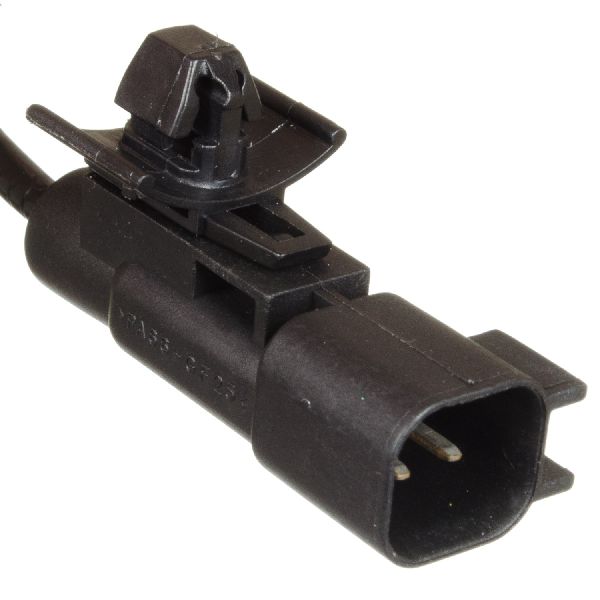
On a 2011-2016 Chevy Cruze, code C0040 almost always points to a problem with the right front wheel speed sensor circuit. The most common fixes are replacing the short wiring harness that connects to the sensor or replacing the entire wheel hub assembly, which includes a new sensor. The wiring harness is a known weak point and often fails internally. Expect to pay $20-$40 for a harness and $80-$150 for an aftermarket hub.
- Code C0040 on a Chevy Cruze means a fault with the right front wheel speed sensor circuit, which will disable your ABS and traction control.
- Before buying an expensive wheel hub, ALWAYS inspect the short wiring harness pigtail first. It is a very common failure point and a much cheaper fix.
- A scan tool that can read ABS live data is essential for an accurate diagnosis to see if the sensor signal is actually dropping out.
- In some cases, the issue can be resolved for free by simply cleaning metallic debris off the magnetic encoder ring on the wheel hub.
- Driving with this code is possible, but your vehicle's safety in emergency situations is compromised. The repair should be a priority.
What's Unique About the 2011-2016 Chevrolet Cruze
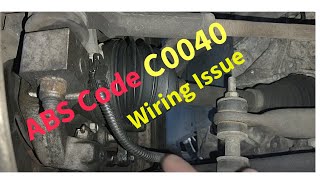
The first-generation Chevrolet Cruze is known for issues with the wheel speed sensor wiring. The short pigtail harness that connects the sensor to the main vehicle harness is a frequent failure point. The wires inside can break or corrode from constant movement and exposure to the elements, even when the exterior sheathing looks intact. Many owners and technicians report that replacing this harness is often the fix, rather than the more expensive wheel hub assembly. This is a common issue across many GM vehicles from this era.
Generation note: The 2011-2016 year range primarily covers the first-generation Cruze (J300). In 2016, Chevrolet sold the first-gen model as the 'Cruze Limited' alongside the new second-generation sedan. The causes and fixes described are most applicable to the first generation, which is the vast majority of vehicles in this range.
Symptoms You May Notice
- ABS light is on
- Traction Control (TC) or StabiliTrak service light is on
- ABS system does not activate during hard braking (wheels may lock up)
- Traction control does not activate on slippery surfaces
- Brake light may be illuminated on the dash
- Replacing the wheel hub assembly when only the inexpensive wiring pigtail was faulty. Always inspect and test the wiring first, as it is a very common failure point on this vehicle.
Most Likely Causes
- Damaged Wheel Speed Sensor Wiring Harness/Pigtail 🔴 High Probability The wiring harness is subject to stress from steering and suspension movement, as well as exposure to water and road salt, leading to internal wire breaks or corrosion at the connector. This is a widely reported issue on GM vehicles of this era, including the Cruze.
How to confirm: With a multimeter, backprobe the sensor connector and check for proper voltage from the EBCM. Wiggle the harness while watching the voltage; any drops or fluctuations indicate a wiring fault. A visual inspection may reveal chafing, but often the break is internal. You can also test for continuity on each wire of the harness; an open circuit confirms it's bad.
Typical fix: Replace the short pigtail harness that connects the wheel speed sensor to the main harness in the fender well.
Est. part cost: $20-$40 - Failed Wheel Speed Sensor / Wheel Hub Assembly 🔴 High Probability On the Cruze, the wheel speed sensor is integrated into the wheel hub bearing assembly. These assemblies are a wear item and can fail from mileage, impact, or water intrusion, taking the sensor with them.
How to confirm: If the wiring harness is confirmed to be good, the sensor itself is the next likely culprit. Use a scan tool that can display live data to monitor the signal from the right front wheel speed sensor while driving. If the signal is erratic, noisy, or drops to zero while the other wheels show speed, the sensor/hub is bad.
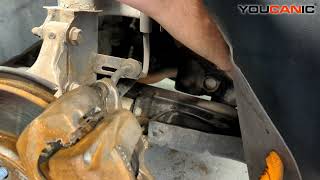
Typical fix: Replace the entire front wheel hub assembly. This involves removing the wheel, brake caliper, rotor, and axle nut.
Est. part cost: $80-$180 - Debris on Magnetic Encoder Ring 🟡 Medium Probability The sensor reads a magnetic encoder ring (reluctor ring) on the inboard side of the hub. Ferrous metallic debris (from brake wear or road grime) can stick to this ring and disrupt the sensor's reading, causing an erratic signal. GM issued a bulletin (PI0953) for this exact issue on the Cruze.
How to confirm: Remove the wheel speed sensor from the knuckle (one T30 Torx bolt). Use a light and mirror or a borescope to inspect the magnetic ring on the hub for any attached metal shavings or debris.
Typical fix: Carefully clean the debris from the magnetic encoder ring using a soft brush, magnet, or compressed air. Reinstall the sensor and clear the codes.
Est. part cost: $0
Rare But Worth Checking
- Failed Electronic Brake Control Module (EBCM): This is rare. Before condemning the EBCM, all other possibilities (wiring, sensor, debris) must be exhaustively ruled out. An EBCM failure will often, but not always, be accompanied by other trouble codes or communication codes like U0121.
- Worn or Loose Wheel Bearing: Excessive play in the wheel bearing can cause the distance between the sensor and the magnetic ring to fluctuate, leading to an erratic signal. This would typically be accompanied by a humming or grinding noise that changes with vehicle speed and when turning. You can check for play by grabbing the tire at the 12 and 6 o'clock positions and trying to rock it.
Diagnosis Steps
- Confirm the code is C0040 using an OBD-II scanner capable of reading ABS codes.
- Use the scanner's live data function to monitor all four wheel speed sensors while driving slowly. Confirm that the Right Front (RF) sensor reads 0 mph or has an erratic signal compared to the others.
- Raise and secure the front of the vehicle. Remove the right front wheel.
- Visually inspect the wiring harness from the wheel hub up into the fender well. Look for any obvious signs of damage, chafing, or corrosion at the connectors.
- Gently tug on the wire; if it feels 'stretchy', the copper inside is likely broken. Wiggle the harness while monitoring live data or a multimeter to see if the signal cuts in and out.
- If the wiring looks okay, disconnect the sensor and inspect the magnetic encoder ring on the hub for any metal debris. Clean as necessary.
- If no debris is found and the wiring appears intact, test the harness. Disconnect the pigtail from the main harness and test for continuity on both wires using a multimeter. If there is an open circuit, the pigtail is bad.
- If the wiring and encoder ring are good, the wheel hub/sensor assembly is the most likely cause of the problem.
- Replace the faulty part, clear the codes, and perform a test drive to ensure the ABS light does not return.
Parts You'll Likely Need
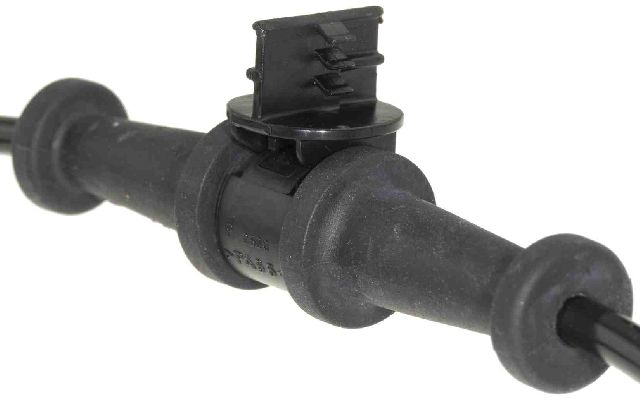
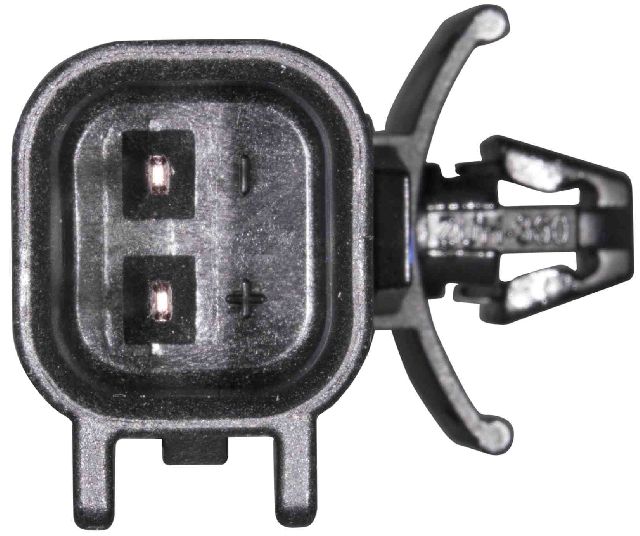
- Front Wheel Speed Sensor Harness Pigtail
(OEM #13589371)— This is the most common point of failure due to wire fatigue from suspension and steering movement.
Trusted brands: ACDelco (GM Genuine), Dorman, TRQ
OEM price range: $30-$50
Aftermarket price range: $15-$30 - Front Wheel Bearing and Hub Assembly
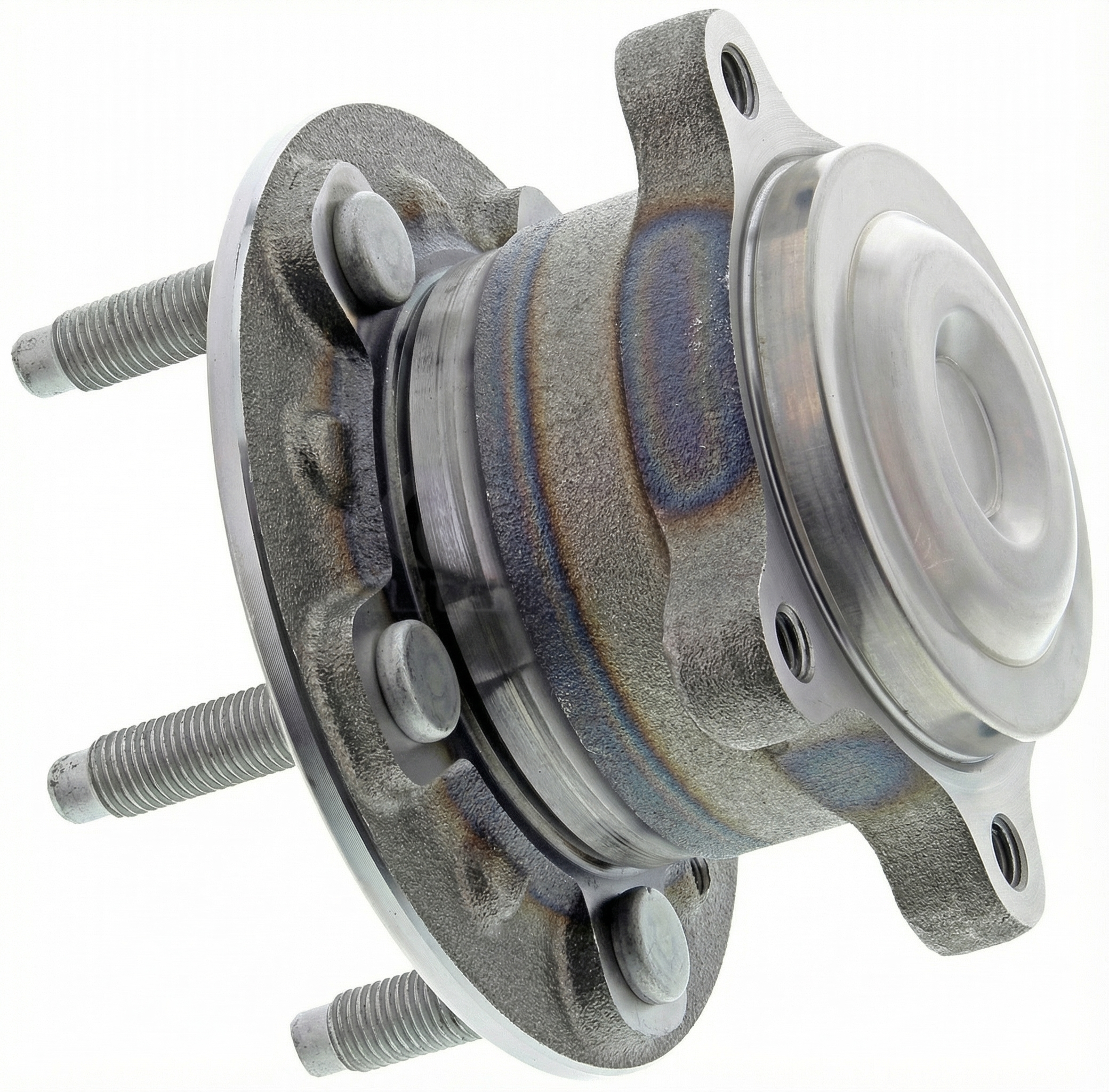
(OEM #13505707 (ACDelco FW409 is a common OEM equivalent))— The sensor is integrated into the hub. If the sensor itself fails, the entire hub assembly must be replaced.
Trusted brands: ACDelco, Timken, MOOG, SKF, TRQ
OEM price range: $180-$250
Aftermarket price range: $80-$150
Related Codes That Often Appear With This One
- C0035 — This is the equivalent code for the Left Front Wheel Speed Sensor Circuit. Seeing both C0035 and C0040 could point to a wiring harness issue common to both sides or a problem with the EBCM.
- U0121 — Lost Communication With Anti-Lock Brake System (ABS) Control Module. This may appear if the EBCM is failing or has a major power/ground issue, which could also trigger the C0040 code.
Technical Service Bulletins (TSBs) & Recalls
- PI0953: Addresses intermittent ABS activation or DTCs C0035-C0050 due to debris on the magnetic encoder ring, applicable to the 2011-2014 Cruze.
- PIC-5992-A: While for the Impala, it highlights a common GM issue where the wheel speed sensor harness is inspected for damage when C0040 is present.
- PIT5499B: Though for a Colorado, it shows that water intrusion at the EBCM connector can trigger a host of ABS codes, including C0040, making it a rare but possible cause to consider after checking the wheel-end components.
Platform-Specific Known Issues
- A GM Preliminary Information bulletin (PI0953) was issued for multiple vehicles, including the 2011-2014 Cruze, for codes C0035-C0050. It identifies metallic debris on the magnetic encoder ring as a potential cause that can be fixed by cleaning, often without replacing the hub.
- Owner complaints and technician reports frequently cite the short wiring pigtail as the true culprit for C0040, even when the hub has been replaced without success.
Mechanic-Grade Diagnostic Values
- Wheel Speed Sensor Supply Voltage (Magnetoresistive Type) — expected: On a known-good sensor, one wire should show a reference voltage (e.g., ~11-12V) and the other a signal voltage (e.g., ~4-7V) when backprobed at the connector with key-on, engine-off. These values are supplied by the EBCM.. Failure: A significantly lower voltage on the signal wire (e.g., ~1.5V) or no voltage can indicate a faulty sensor or a wiring issue.
- Wiring Harness 'Wiggle Test' — expected: When backprobing the connector for voltage, the reading should remain stable while physically wiggling the harness from the sensor to the chassis connector.. Failure: Any significant fluctuation, drop-out, or change in the voltage reading during the wiggle test points to an internal break in the wiring harness.
Hidden / Shadow Codes Worth Checking
- C0040 0F: Erratic Signal. This symptom byte often points to a damaged or debris-contaminated tone ring on the wheel hub, or a loose wheel bearing causing an inconsistent air gap. (see via Professional grade scan tools like the GM GDS2/Tech2 or high-end aftermarket scanners that can read manufacturer-specific codes and symptom bytes.)
- C0040 18: Signal Amplitude Low. This suggests a weak signal from the sensor, which could be caused by an excessive air gap between the sensor and the tone ring, or internal sensor failure. (see via Professional grade scan tools like the GM GDS2/Tech2 or high-end aftermarket scanners.)
- C0040 5A: Implausible Signal. The EBCM sees a signal from the sensor, but it doesn't make sense compared to other inputs like the other wheel speeds or the steering angle sensor. This can point to a cracked tone ring or a wiring issue causing corrupted data. (see via Professional grade scan tools like the GM GDS2/Tech2 or high-end aftermarket scanners.)
Wiring & Ground Locations
- EBCM Connector — The Electronic Brake Control Module (EBCM) is located on the ABS hydraulic unit, near the brake master cylinder. On the Cruze, it is typically found under the coolant expansion tank, which may need to be unclipped and moved aside for access.. This is the central connection point for the right front wheel speed sensor. Corrosion, moisture, or pushed-back pins in this main connector can cause a C0040 code and mimic a failed sensor or harness.
- G120 — Located on the left side of the engine compartment, on the left shock tower.. This is a primary ground point for the Electronic Brake Control Module (EBCM). A poor connection here can cause erratic EBCM behavior and trigger various ABS codes, including C0040.
- Engine Block Ground (1.4L Turbo) — A ground wire runs from the main engine harness (near the coil pack) to a bolt on the engine block.. A poor connection at this specific ground point is known to cause numerous, seemingly unrelated electrical issues on the 1.4L Cruze, including 'Service StabiliTrak' messages and other ABS-related faults. Cleaning this ground should be a preliminary step if multiple electrical codes are present.
Real Owner Repair Stories
- YouTube video by 'Chevy Cruze Problems' (2012 Chevrolet Cruze 1.4L Turbo) — Service StabiliTrak message, traction control light on, multiple random trouble codes for components that had already been replaced.
❌ Tried (didn't work) Replacing coil pack, Replacing spark plugs, Replacing boost sensors, Replacing negative battery cable
✅ What actually fixed it The problem was a poor connection at a specific ground wire that runs from the engine harness (near the coil pack) to the engine block. The final fix was cleaning the contact point and securing the ground wire properly. This resolved the stability control warnings and phantom codes. - ScannerDanner Forum user advice (2011 Chevrolet Cruze w/1.8L engine) — Multiple codes including C0050 5A (implausible signal for rear sensor, but same logic applies to C0040 5A).
❌ Tried (didn't work) Initial diagnosis was inconclusive.
✅ What actually fixed it Expert advice pointed to two highly probable causes for the '5A' symptom code: a cracked ABS tone ring on the hub, or an internal wire break in the harness causing a corrupted signal. The recommended diagnostic step was to perform a 'wiggle test' on the harness while monitoring voltage to see if the signal dropped out, confirming a broken wire.
Model Year Variations Within This Range
- 2016: In 2016, Chevrolet sold two distinct versions of the Cruze. The 'Cruze Limited' is a continuation of the first generation (2011-2015) and uses the same parts and procedures described here. The 'All-New 2016 Cruze' is the second generation with a different chassis, engine, and electronics. Parts are not interchangeable between the two. When sourcing parts for a 2016, it is critical to confirm if it is a 'Limited' model or not.
Diagnostic Flowchart
Other Known Issues on This Vehicle
Issues unrelated to this code that are worth knowing about as an owner of this generation:
- PCV System Failure (1.4L Turbo) 🔴 High — Extremely common. A check valve in the intake manifold fails, causing boost pressure to rupture a diaphragm in the valve cover, leading to major vacuum leaks, oil consumption, and codes like P0171, P1101, and P0299.
- Coolant Leaks (Water Pump & Thermostat Housing) 🔴 High — Very common across all engines. The plastic thermostat/water outlet housing cracks, and the water pump is prone to leaking from its seal or housing. (Ref: Special Coverage 14371A / TSB #18-NA-335 (Extends warranty on water pump to 10 years/150,000 miles for some models).)
- Negative Battery Cable Failure 🟠 Medium — Common. A poor crimp on the negative battery terminal causes high resistance, leading to a wide range of bizarre electrical issues, including flickering displays, loss of power steering, and no-start conditions. (Ref: Special Coverage 14311B (Extends warranty to 10 years/120,000 miles).)
- Transmission Failure/Shifting Issues 🔴 High — Reported with moderate frequency, especially on earlier models. Can range from harsh shifting to complete failure.
- Oil Leaks from Crankshaft Seals / Oil Cooler Lines 🟠 Medium — Commonly reported. PCV system failures can pressurize the crankcase and force oil out of seals, particularly the front crankshaft seal. Oil cooler lines are also a frequent source of leaks.
Used vs. New Parts: Buying Guide for This Vehicle
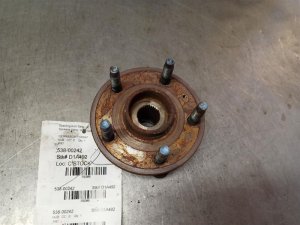
When a used part is the smart pick: A used wiring harness pigtail from a junkyard can be a cost-effective option, provided it is thoroughly inspected. Buying a used wheel hub assembly is generally not recommended as it is a primary wear item and the condition of the internal bearing and sensor is unknown.
Donor-vehicle mileage cap: roughly under 60000 miles for the part to have meaningful remaining life.
What to inspect on the donor part:
- For a wiring harness, ensure the sheathing is not brittle or cracked.
- Gently pull on the wires; they should not feel 'stretchy', which indicates internal breaks.
- Check that the connector pins are clean, straight, and free of corrosion.
- If possible, test the harness for continuity on both wires with a multimeter before purchasing.
Aftermarket brands forum-validated for this vehicle:
- Hub Assemblies: Timken, MOOG, SKF, ACDelco
- Wiring Harnesses: Dorman, TRQ, ACDelco
Real Owner Stories
Aggregated from forums and TSBs cited above. Mileages and costs reflect what owners reported in those sources.
2011-2014 Chevrolet Cruze
Symptoms: Intermittent ABS activation or DTCs C0035-C0050.
What fixed it: Cleaning metallic debris from the magnetic encoder ring using a soft brush, magnet, or compressed air as per PI0953.
Source hint: PI0953: Addresses intermittent ABS activation or DTCs C0035-C0050 due to debris on the magnetic encoder ring, applicable to the 2011-2014 Cruze.
Chevrolet Cruze
Symptoms: ABS light on with code C0040; visual inspection of the harness showed no obvious breaks.
What fixed it: Replacing the front wheel wiring harnesses with aftermarket pigtails (Dorman).
Source hint: Chevrolet Forum - ABS Codes C0040, C0041
GM Delta II Platform Vehicle
Symptoms: C0040 code; wiring harness issues were suspected over the sensor itself.
What fixed it: Checking resistance and replacing the wiring harness pigtail after confirming a fault with a scan tool.
Source hint: Car Talk Community - C0040 code
Related OBD-II Codes
Frequently Asked Questions
Is there a technical service bulletin for the ABS light and C0040 on my 2011-2014 Cruze?
I replaced the wheel hub but the C0040 code came back. What else should I check on my Cruze?
Can I just replace the sensor on the 2011-2016 Cruze, or do I need the whole hub?
Why does my StabiliTrak service light come on with the ABS light?
Is the water pump failure on my Cruze related to the ABS code?
Could a bad battery cable cause my ABS codes?
Helpful Videos

Used OEM Parts in Stock
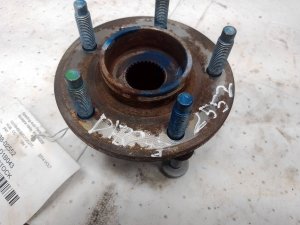
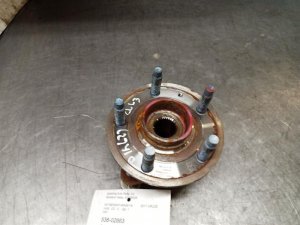
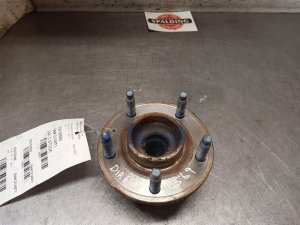

New Aftermarket Parts Available


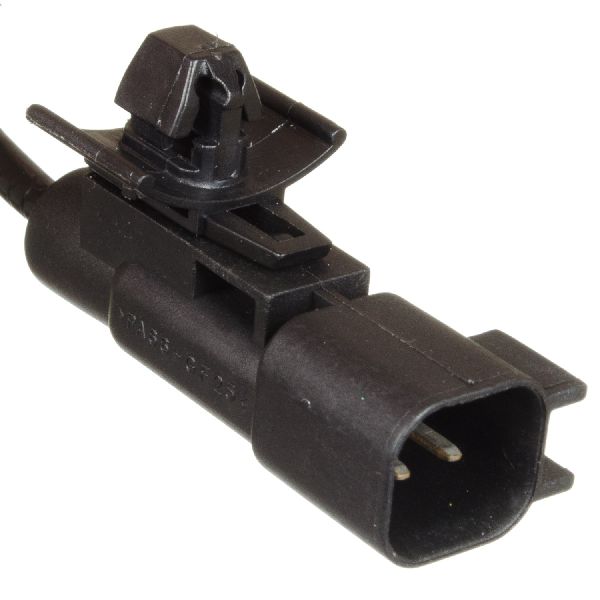

The information in this article is provided for general reference and educational purposes only. Vehicle specifications, procedures, and part compatibility can vary by production date, trim level, and region. Always consult your vehicle's factory service manual and verify part numbers before purchasing or performing repairs. Safety-critical components such as airbags, seat belts, and braking systems should be installed by a qualified professional.
- Chevrolet Cruze:
- 🎬 Helpful Videos
- 🛍️ Shop This Part
- What's Unique About the 2011-2016 Chevrolet Cruze
- Symptoms You May Notice
- Most Likely Causes
- Rare But Worth Checking
- Diagnosis Steps
- Parts You'll Likely Need
- Related Codes That Often Appear With This One
- Technical Service Bulletins (TSBs) & Recalls
- Platform-Specific Known Issues
- Mechanic-Grade Diagnostic Values
- Hidden / Shadow Codes Worth Checking
- Wiring & Ground Locations
- Real Owner Repair Stories
- Model Year Variations Within This Range
- Diagnostic Flowchart
- Other Known Issues on This Vehicle
- Used vs. New Parts: Buying Guide for This Vehicle
- Real Owner Stories
- 2011-2014 Chevrolet Cruze
- Chevrolet Cruze
- GM Delta II Platform Vehicle
- Related OBD-II Codes
- Frequently Asked Questions
- 🎟️ Get 5% Off