

C0040 on 2004-2012 Chevrolet Colorado: Right Front Wheel Speed Sensor Causes and Fixes
On a 2004-2012 Chevy Colorado, code C0040 almost always means the right front wheel hub assembly has failed. The ABS sensor is integrated into the hub, so the entire unit must be replaced. This is a common failure point. Expect to pay $120-$250 for a quality aftermarket part (like Timken or ACDelco) and either tackle it as a DIY project or pay a shop for a total cost of $505-$715.
- Code C0040 on a 2004-2012 Colorado points to a fault in the right front wheel speed sensor circuit.
- The most common cause is a failed wheel hub assembly, which contains the non-serviceable ABS sensor.
- Before replacing the hub, always perform a visual inspection of the wiring and connector for any obvious damage.
- This fault disables your ABS, so it is a safety-critical repair that should be addressed promptly.
- A scan tool with live data is the most effective tool for confirming which wheel sensor is failing.
What's Unique About the 2004-2012 Chevrolet Colorado
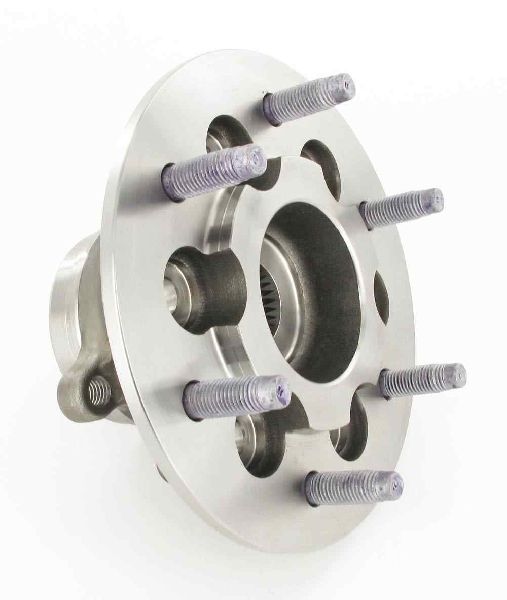
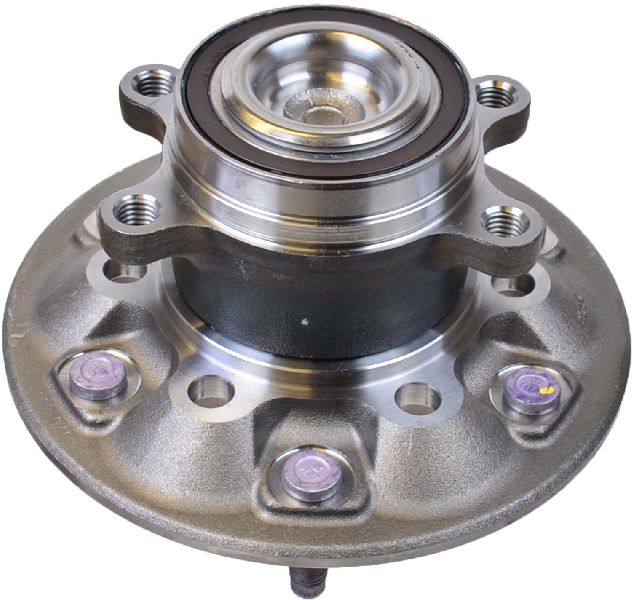
For the first-generation Chevrolet Colorado (and its platform mates, the GMC Canyon and Hummer H3), the front ABS wheel speed sensor is not a separate, individually replaceable part. Instead, it is integrated directly into the sealed wheel hub and bearing assembly. This design means that if the sensor fails—or more commonly, the bearing wears and introduces wobble that damages the sensor—the entire wheel hub assembly must be replaced. This makes the repair more involved and expensive than on vehicles where the sensor can be swapped out independently. While some aftermarket standalone sensors exist, owners and mechanics report they are often unsuccessful because the root cause is bearing wear or reluctor ring failure inside the hub.
Symptoms You May Notice
- ABS warning light is illuminated on the dashboard
- Traction control or stability control warning light may be on
- "Service Brake System" message may appear on the Driver Information Center (DIC)
- ABS system is inactive (wheels may lock up during hard braking)
- Brake pedal may feel different or pulsate incorrectly at low speeds until the ABS light comes on, as the system falsely detects wheel slip.
- Replacing only the ABS sensor. On this vehicle, the sensor is not sold separately from the hub by the OEM. While some aftermarket solutions exist to replace just the sensor, they are often unsuccessful as the underlying issue is frequently wear in the bearing or damage to the internal reluctor ring, not just the sensor electronics.
- Performing only a resistance (ohms) test. The sensor is a digital magneto-resistive type, not a simple analog VR sensor. A resistance test can be misleading. The correct test involves checking for a reference voltage and a digital square wave signal with a multimeter or oscilloscope.
Most Likely Causes
- Failed Front Wheel Hub and Bearing Assembly 🔴 High Probability The ABS sensor is integrated into the hub assembly. These hubs are a known failure point due to wear, moisture, and corrosion, which damages either the internal bearing or the non-serviceable sensor and its magnetic reluctor ring. As the bearing wears, it allows for excessive play, which alters the gap between the sensor and the reluctor ring, causing a faulty signal. As noted in NHTSA complaint #10150643, a dealer identified an intermittent open circuit within the hub and sensor assembly, requiring replacement.
How to confirm: Use a scan tool with live data to monitor all four wheel speeds while driving. If the right front sensor reads 0 mph or a value that is erratic compared to the other three, the hub assembly is the likely cause. You can also raise the vehicle and check for play by grabbing the tire at the 12 and 6 o'clock positions and trying to rock it; any noticeable wobble confirms a bad bearing.
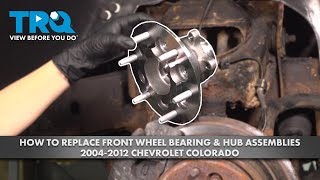
Typical fix: Replace the entire right front wheel hub and bearing assembly. This is a well-documented DIY job in owner forums. 🎬 Watch this step-by-step Chevrolet Colorado front wheel hub replacement guide
Est. part cost: $120-$250 - Damaged Wiring or Connector 🟡 Medium Probability The wiring harness leading from the hub to the frame is exposed to the elements, road debris, and constant suspension movement. Wires can become frayed or break internally near the connector, which may not be visually obvious. This constant movement can cause the copper wire inside the insulation to fatigue and break, leading to an intermittent open circuit that causes the code, especially when turning the steering wheel.
How to confirm: Visually inspect the wiring harness from the back of the wheel hub up into the engine bay. Check for any cuts, abrasions, or green corrosion in the connector pins. A common failure is an internal wire break; gently pull on each wire at the connector—if it stretches like a rubber band, the wire is broken inside the insulation. While monitoring live data, wiggle the harness to check for intermittent connections.
Typical fix: Repair the damaged section of wire or replace the short pigtail harness if available. In one documented case, a dealer charged $374 to replace the harness, with the part itself costing around $90.
Est. part cost: $20-$90 - Faulty Electronic Brake Control Module (EBCM) or Ground ⚪ Low Probability While not common for just a single wheel code, the EBCM itself can fail. More frequently, a poor ground connection for the EBCM can cause erratic behavior and multiple ABS codes. The main EBCM ground, G105, is located on the frame rail under the driver's side of the vehicle near the EBCM and is susceptible to corrosion. GM issued TSB #PIT3460N for this code family, which can be related to EBCM ground issues or internal faults, especially when seen with codes like C0220.
How to confirm: This is a last-resort diagnosis. All other possibilities (hub, wiring) must be definitively ruled out. A high-end scan tool may be needed to check for internal EBCM faults. The module's ground connection (G105) on the frame should be removed, cleaned to bare metal, and re-secured. Power and ground at the EBCM connector can also be verified.
Typical fix: Clean and secure the EBCM ground connection. If the module is confirmed faulty, it must be replaced and may require programming.
Est. part cost: $300-$600
Diagnosis Steps
- Connect an OBD-II scanner capable of reading ABS codes to confirm C0040 is present.
- Use the scanner's live data feature to view the wheel speed from all four sensors while driving slowly (or spinning the wheel by hand). Confirm that the Right Front sensor reads differently (usually 0 mph or an erratic value) than the other three.
- If live data confirms a bad signal, raise and secure the front of the vehicle. Perform a physical check of the wheel bearing by grabbing the tire at 12 and 6 o'clock and attempting to rock it. Any play or wobble strongly indicates a worn wheel bearing, confirming the need to replace the hub assembly.
- Visually inspect the wiring harness running from the right front wheel hub to the chassis. Look for obvious damage. Gently stretch each wire near the connector; if a wire feels elastic, it is broken internally.
- Test the sensor circuit. This is a digital sensor. With the key on, disconnect the sensor and check the harness-side connector. One pin should have a reference voltage (e.g., ~1.8V) and the other is the signal wire. An oscilloscope is the best tool to view the square wave signal 🎬 Watch a overview of C0040 code causes and fixes from the sensor while spinning the wheel.
- A 'bypass test' can confirm wiring integrity. With the sensor unplugged and key on, rapidly tap a test light connected to battery positive to the signal wire pin on the harness connector. This should generate a speed reading on the scan tool, confirming the wiring and EBCM are good.
- If the bearing is tight, the wiring is good, and the sensor signal is absent or incorrect, the fault is internal to the hub assembly's integrated sensor, requiring hub replacement.
- As a final, less common check, locate and inspect the EBCM ground G105 on the driver's side frame rail for corrosion or looseness.
- After replacing the hub or repairing wiring, clear the codes with the scan tool and perform a test drive to ensure the ABS light does not return.
Parts You'll Likely Need
- Front Wheel Hub and Bearing Assembly
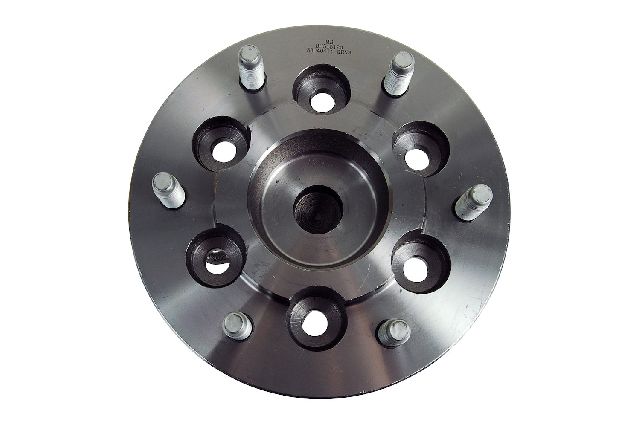
(OEM #15112401 (4WD/AWD), 15782686 (RWD))— This is the most common failure. The ABS wheel speed sensor is integrated into this assembly and is not sold separately for the 2004-2012 Colorado. Failure of the bearing or the sensor requires replacing the entire unit.
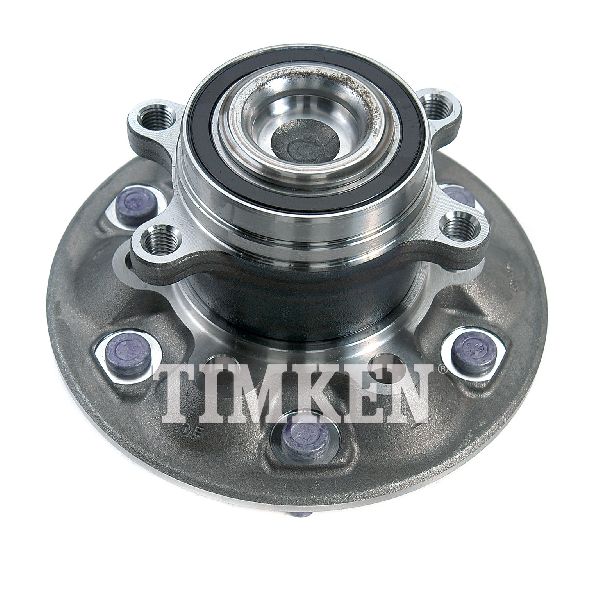
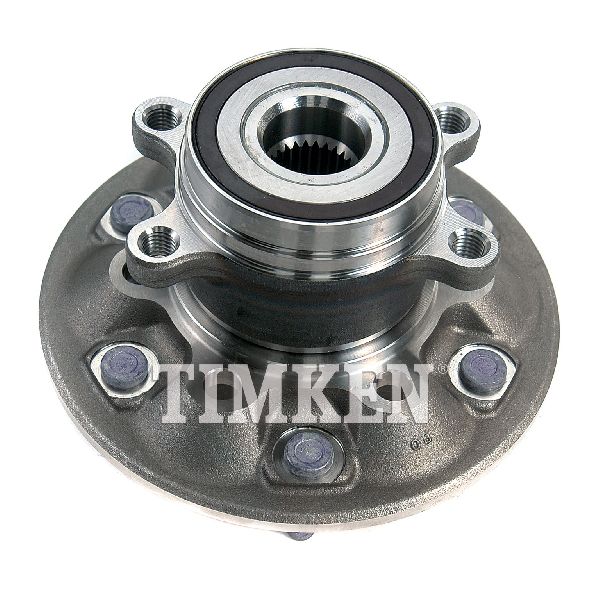
Trusted brands: ACDelco (Often a re-boxed Timken), Timken (Considered OEM quality), MOOG, DuraGo, Detroit Axle
OEM price range: $220-$320
Aftermarket price range: $120-$250
Related Codes That Often Appear With This One
- C0035 — This is the code for the Left Front Wheel Speed Sensor. It's common for both front hubs to wear out around the same time, so seeing both codes together is not unusual. NHTSA complaint #10287028 mentions both codes appearing.
- C0220 — This code can relate to EBCM internal or communication issues. Its presence alongside C0040 might point towards a more complex electrical problem or a failing EBCM, as referenced in TSB #PIT3460N and NHTSA complaint #10273914.
Technical Service Bulletins (TSBs) & Recalls
- PIT3460N - Addresses ABS light illumination with EBCM DTCs C0035, C0040, C0220, and/or C0221. This suggests a known pattern of failure that can involve one or both wheel sensors and potential EBCM communication or ground issues.
Platform-Specific Known Issues
- NHTSA Owner Complaint #10150643 for a 2004 Colorado confirms a diagnosis of an 'intermittent open circuit' in the right front hub and sensor, which was fixed by replacing the hub and speed sensor assembly.
- NHTSA Owner Complaint #10287028 for a 2005 Colorado also points to a bad wheel hub as the cause for C0040, though the owner had lingering issues, highlighting the need for accurate diagnosis.
- Technical Service Bulletin #PIT3460N was issued for conditions where the ABS light illuminates with DTCs C0035, C0040, C0220, and/or C0221, indicating this is a recognized issue by the manufacturer.
Mechanic-Grade Diagnostic Values
- Wheel Speed Sensor Signal (Oscilloscope) — expected: A clean digital square wave that switches between a low voltage (e.g., ~0.7V) and a high voltage (e.g., ~1.8V) as the wheel is spun. The frequency of the wave should increase with wheel speed.. Failure: A flat line, a noisy signal, or a wave that does not switch cleanly indicates a bad sensor or reluctor ring.
- WSS Harness Connector Voltage (Key On, Sensor Unplugged) — expected: One pin should show a reference voltage (e.g., ~1.8V) supplied from the EBCM. The other pin is the signal return.. Failure: No voltage on either pin indicates a wiring problem or a faulty EBCM.
- EBCM Power and Ground at Connector — expected: Constant power at pins 1 and 32, ground at pin 16, and key-on power at pin 8.. Failure: Missing power or ground at these pins points to a wiring or fuse issue before the EBCM.
Hidden / Shadow Codes Worth Checking
- C0040 06: This sub-code specifies 'Circuit Low Voltage / Open'. It more directly points to an open circuit, such as a broken wire or a failed sensor, rather than an erratic signal from a worn bearing. (see via A more advanced scanner, like the dealer Tech2 or equivalent, that can read manufacturer-specific code suffixes. Found on a 2nd Gen Colorado but format is relevant.)
Scan Tool Commands That Help
- GM Tech2: Chassis -> (Year/Model) -> ABS -> DTC Information -> Read/Clear DTCs — This is the standard path to read the specific ABS code and to clear it after the repair is complete to turn off the warning light.
- GM Tech2 / Advanced Scan Tool: Chassis -> ABS -> Data Display -> Wheel Speed Sensors — Used to view live data from all four wheel speed sensors simultaneously while driving to confirm the right front sensor is the one providing an erratic or zero-speed signal.
Wiring & Ground Locations
- G105 — On the left side of the engine compartment, on the frame rail near the Electronic Brake Control Module (EBCM).. This is a primary ground point for the EBCM. Corrosion or a loose connection here can cause erratic ABS behavior and multiple codes, including C0040.
- EBCM Connector — In the engine compartment, typically below and behind the battery.. This is the main connection point for all ABS sensors. Testing for power (Pins 1, 8, 32) and ground (Pin 16) here can rule out a module power supply issue. The two wires from the right front WSS terminate here, allowing for continuity checks of the harness.
- WSS Pigtail Harness — Runs from the back of the wheel hub assembly, up the steering knuckle, and connects to the main chassis harness in the wheel well.. This section of wiring is the most common point of failure due to constant movement and exposure. Internal breaks in the wire, often right at the connector, are frequent.
Real Owner Repair Stories
- YouTube channel 'donyboy73' (General Motors vehicle (similar platform)) — ABS light was on, code C0040 for right front wheel speed sensor circuit.
❌ Tried (didn't work) The previous owner had already replaced the entire wheel hub and bearing assembly, but the code and problem remained.
✅ What actually fixed it The wiring harness pigtail was faulty. The wires were broken internally inside the insulation, which was only discovered by pulling on the wires and noticing they stretched. Splicing in a new connector/pigtail resolved the issue. - NHTSA ODI #10150643 (2004 Chevrolet Colorado) — ABS warning light on.
✅ What actually fixed it Dealer scanned the computer and found code C0040. They ran a flowchart diagnosis and found the 'right front hub and sensor had intermittent open circuit.' Replacing the right front hub and speed sensor assembly fixed the problem.
When the Usual Fixes Don't Work
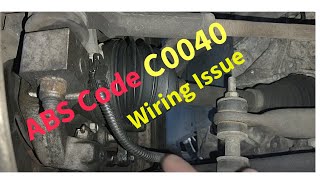
- While the most common fix is replacing the wheel hub assembly, a significant number of cases are resolved by repairing the wiring harness pigtail. Multiple owner reports and videos show that even after a new hub is installed, the C0040 code persists because the actual fault was an internal break in the wire leading to the hub. Always inspect the wiring harness by gently pulling on the wires near the connector before spending money on a new hub.
OEM Part Supersession History
15112401 (4WD/AWD), 15782686 (RWD)→Not clearly documented in public sources. These numbers are often referenced for replacement.— N/A
Heads up: The key incompatibility is between 4WD and RWD hubs; they are physically different and cannot be interchanged. Ensure you order the correct part for your drivetrain.
Model Year Variations Within This Range
- 2004-2012: The primary variation is the part number for the wheel hub assembly between Rear-Wheel Drive (RWD) and Four-Wheel Drive (4WD) models. The diagnostic principles and common failure modes (integrated sensor, wiring) are consistent across the entire generation.
Diagnostic Flowchart
Other Known Issues on This Vehicle
Issues unrelated to this code that are worth knowing about as an owner of this generation:
- Atlas I4 & I5 Engine Valve Seat Failure 🔴 High — Common on 2004-2007 models. Can cause rough idle, misfires (P0300), and eventually requires cylinder head replacement. (Ref: GM extended the warranty for this issue on some vehicles.)
- PassLock Anti-Theft System Failure 🟠 Medium — A very common issue where the PassLock sensor in the ignition lock housing fails, causing a no-start condition with a flashing security light.
- Blower Motor Resistor Failure 🟡 Low — Extremely common failure causing the HVAC fan to only work on the highest setting or not at all. Often caused by an aging blower motor drawing excess current.
- EVAP Vent Valve Solenoid Failure 🟡 Low — Commonly fails due to dirt/dust ingress, causing a check engine light with EVAP codes (e.g., P0449). Located above the spare tire.
- Faulty Fuel Level Sensor 🟡 Low — The sensor in the fuel tank fails, causing an inaccurate fuel gauge reading, often showing more fuel than is present.
- Fan Clutch Wiring Harness Damage 🟠 Medium — The wiring for the electric fan clutch can become brittle or get damaged by the serpentine belt, causing overheating issues.
Used vs. New Parts: Buying Guide for This Vehicle
When a used part is the smart pick: For this specific repair, buying a used wheel hub assembly from a junkyard is NOT recommended. The part is a wear item (bearing) combined with a sensitive electronic sensor. The remaining lifespan of a used bearing is unknown, and you risk having the same failure occur shortly after installation.
What to inspect on the donor part:
- Not applicable. Avoid used hub assemblies for this repair.
OEM-only on this vehicle (don't cheap out):
- While not strictly OEM-only, using a reputable brand is critical. Avoid cheap, unbranded 'white box' parts.
Aftermarket brands forum-validated for this vehicle:
- Timken (often considered OEM equivalent)
- MOOG
- ACDelco Professional
- DuraGo
Brands owners have reported issues with on this vehicle:
- Cheap, no-name brands from online marketplaces are frequently reported to fail prematurely, either due to poor bearing quality or inaccurate sensor readings.
Real Owner Stories
Aggregated from forums and TSBs cited above. Mileages and costs reflect what owners reported in those sources.
2004 Chevrolet Colorado
Symptoms: The owner experienced an intermittent open circuit related to the right front wheel speed sensor.
What fixed it: Replacement of the right front wheel hub and speed sensor assembly.
Source hint: NHTSA Owner Complaint #10150643
2005 Chevrolet Colorado
Symptoms: ABS warning light and C0040 code triggered by a faulty wheel hub.
What fixed it: Replacement of the wheel hub assembly.
Source hint: NHTSA Owner Complaint #10287028
2004-2012 Chevrolet Colorado
Symptoms: Low-speed ABS activation (pedal pulsation) which eventually developed into a full ABS light with codes C0035 and C0040.
What fixed it: Diagnosis and repair of the wheel speed sensor circuit issues.
Source hint: gmtnation.com thread titled 'ABS issue development - C0035/C0040'
2004-2012 Chevrolet Colorado
Symptoms: Intermittent ABS codes and electrical gremlins caused by poor grounding.
What fixed it: Cleaning and securing the 'splice pack' and frame ground connections (G105).
Source hint: 355nation.net thread titled 'The ground problem and 355 splice packs'
Related OBD-II Codes
Frequently Asked Questions
Does TSB #PIT3460N apply to my Chevrolet Colorado if I have the C0040 code?
Can I just replace the ABS sensor on my 2004-2012 Colorado's front wheel?
Why does my brake pedal pulsate at low speeds before the ABS light even comes on?
Is there a specific ground point I should check for ABS issues on the Colorado?
What is the 'rubber band' test for the Colorado's ABS wiring?
Are there other vehicles that share this same ABS hub issue?
Helpful Videos

Used OEM Parts in Stock


New Aftermarket Parts Available


The information in this article is provided for general reference and educational purposes only. Vehicle specifications, procedures, and part compatibility can vary by production date, trim level, and region. Always consult your vehicle's factory service manual and verify part numbers before purchasing or performing repairs. Safety-critical components such as airbags, seat belts, and braking systems should be installed by a qualified professional.
- Chevrolet Colorado:
- 🎬 Helpful Videos
- 🛍️ Shop This Part
- What's Unique About the 2004-2012 Chevrolet Colorado
- Symptoms You May Notice
- Most Likely Causes
- Diagnosis Steps
- Parts You'll Likely Need
- Related Codes That Often Appear With This One
- Technical Service Bulletins (TSBs) & Recalls
- Platform-Specific Known Issues
- Mechanic-Grade Diagnostic Values
- Hidden / Shadow Codes Worth Checking
- Scan Tool Commands That Help
- Wiring & Ground Locations
- Real Owner Repair Stories
- When the Usual Fixes Don't Work
- OEM Part Supersession History
- Model Year Variations Within This Range
- Diagnostic Flowchart
- Other Known Issues on This Vehicle
- Used vs. New Parts: Buying Guide for This Vehicle
- Real Owner Stories
- 2004 Chevrolet Colorado
- 2005 Chevrolet Colorado
- 2004-2012 Chevrolet Colorado
- 2004-2012 Chevrolet Colorado
- Related OBD-II Codes
- Frequently Asked Questions
- 🎟️ Get 5% Off