

OBD-II Code C0221: Right Front Wheel Speed Sensor Circuit
What C0221 means, why it triggers, and how to fix it
- Code C0221 indicates an electrical open or short in the right front wheel speed sensor circuit, instantly disabling your ABS and traction control.
- A damaged wiring harness or a failed sensor causes over 80% of C0221 codes, though corroded connectors and failing wheel bearings are also common culprits.
- Driving with C0221 is unsafe because your wheels will lock up during hard braking, eliminating your ability to steer and increasing stopping distances on wet roads.
- Diagnose the issue by testing the sensor's resistance with a multimeter; a reading of 'OL' (Open Loop) or zero ohms confirms a dead sensor requiring replacement.
- Always inspect the wiring harness for chafing and compare multimeter readings with the left front sensor before spending $150+ on replacement parts.
What Does C0221 Mean?

Code C0221 means the Electronic Brake Control Module (EBCM) or Powertrain Control Module (PCM) detected an electrical fault in the right front wheel speed sensor circuit. This sensor generates an AC or DC signal communicating the wheel's rotational speed to the computer. When the module detects an open circuit, short to ground, or short to voltage in the wiring for a set duration (e.g., 500 milliseconds), it logs C0221 and illuminates the ABS and Traction Control warning lights.
Technical definition: The official SAE/OBD-II definition is "Right Front Wheel Speed Sensor Circuit Open." This indicates the Electronic Brake Control Module (EBCM) detected an open or shorted condition in the right front wheel speed sensor circuit. This is a hard electrical fault detected by the module's internal self-tests as soon as the ignition turns on, before the vehicle moves.
🎬 Watch: Understanding the C0221 code and how to diagnose it.Can I Drive With C0221?
Yes, But With Caution. Yes, but drive with extreme caution and only to a repair shop. Your Anti-lock Braking System (ABS) and Traction/Stability Control are disabled, significantly increasing the risk of losing control in a panic stop or on slippery surfaces. Without ABS, your wheels lock up, causing a skid and eliminating your ability to steer while braking hard. Some vehicles enter a 'limp mode,' limiting speed to 30-40 mph.
Common Causes

- Damaged or Broken Wiring Harness (Very Common) — The sensor's wiring is vulnerable to constant movement from steering and suspension. Wires break internally from flexing, chafe against components if improperly secured, or sustain damage from road debris, causing an open or short circuit.
- Failed Right Front Wheel Speed Sensor (Very Common) — The sensor fails internally due to age, heat cycles, moisture intrusion, or physical damage. Mounted on the wheel hub, it operates in a harsh environment exposed to water, dirt, and road salt.
- Contaminated or Corroded Connector (Common) — Moisture penetrating the electrical connector corrodes the pins (appearing green or white). This corrosion introduces high resistance or a complete open circuit, triggering the code.
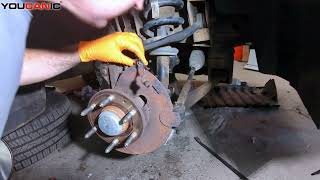
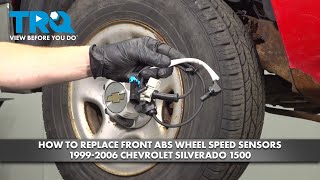
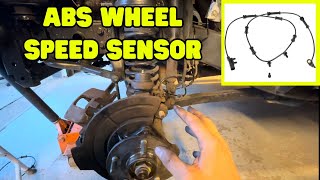
- Failing Wheel Hub Bearing Assembly (Less Common) — A worn wheel hub bearing develops excessive play or 'wobble.' This movement alters the critical air gap between the sensor and the tone ring, leading to signal loss. On modern vehicles, the sensor is integrated into the hub, requiring complete assembly replacement. 🎬 Watch this step-by-step guide to replacing a front wheel sensor.
- Damaged or Contaminated ABS Tone Ring (Less Common) — The sensor reads a toothed or magnetic reluctor ring to gauge speed. If this ring cracks, loses teeth, or accumulates rust and metallic debris, the sensor cannot produce a valid signal.
- Low Battery Voltage (Rare) — A weak battery causes low voltage across electrical systems. The EBCM is sensitive to voltage drops and sets erroneous fault codes when underpowered.
- Faulty ABS Control Module (EBCM) (Very Rare) — It is highly uncommon for the ABS module itself to fail. Exhaustively rule out wiring and sensor issues before condemning the module. Suspect module failure only if multiple, unrelated sensor codes are present.
Symptoms

- ABS Warning Light is On — The ABS light remains illuminated on the dashboard as long as the fault is active.
- Traction/Stability Control Light is On — These systems rely on wheel speed data. Missing data disables them, illuminating their respective warning lights.
- ABS System is Inoperative — During hard braking, the wheels lock up and skid, particularly on wet or loose surfaces, because anti-lock functionality is disabled.
- Unwanted ABS Activation at Low Speeds — Before complete circuit failure, a poor connection sends an erratic signal, causing the ABS to activate unnecessarily at low speeds (e.g., parking). This feels like a grinding noise or pulsing brake pedal.
- Cruise Control is Disabled — Vehicles use wheel speed data to regulate cruise control. A sensor fault disables this function as a safety precaution.
Diagnostic Flowchart
Tap your situation to follow the diagnostic path that matches what you're seeing on this code.
Common Fixes & Costs
- Replace Right Front Wheel Speed Sensor — Parts: $40-$250, Labor: $100-$200, ~1.2 hr book time (DIY)
- Repair or Replace Wiring Harness Pigtail — Parts: $25-$75, Labor: $100-$200, ~1 hr book time (Intermediate)
- Replace Right Front Wheel Hub Assembly — Parts: $150-$450, Labor: $150-$400, ~2 hr book time (Intermediate)
- Clean Tone Ring and Sensor Mounting Surface — Parts: $5-$15, Labor: $50-$100, ~0.5 hr book time (DIY)
Used vs. New Parts: Buying Guide
When a used part is worth it: For a simple bolt-on wheel speed sensor, buying used is never recommended. The part is an exposed electronic component with a high failure rate and a low new cost. For a complete wheel hub assembly, a used part from a low-mileage, non-accident donor vehicle is a cost-effective option if the budget is extremely tight.
Donor-vehicle mileage cap: roughly under 50000 miles for the part to have meaningful remaining life.
Donor quality checklist:
- Verify the donor vehicle's mileage; lower is always better for a wear item like a bearing.
- Avoid parts from rust-belt regions, as corrosion seizes the bearing and damages the sensor.
- Match the part number exactly. Different model years or drivetrain options (2WD vs 4WD) use different hubs and sensors.
Decision logic:
- If The part is a standalone wheel speed sensor → Always buy new. The savings from a used sensor are negligible compared to the risk of premature failure and repeat labor costs.
- If The part is a complete wheel hub assembly and the vehicle is over 150K miles → A new aftermarket hub with a warranty is the best value. A used hub is a gamble, as the bearing's remaining life is unknown.
- If The labor for replacement is high (e.g., press-in bearing) → Favor a new part with a long warranty to avoid paying for the labor twice.
Warranty tradeoff: Used parts typically have a 30-90 day warranty at best, which does not cover labor. New aftermarket parts come with a 1-year to limited lifetime warranty. New OEM parts offer a factory warranty.
Worst-case if a used part fails: $300-$850 if a used hub assembly fails prematurely, requiring a second replacement part and repeat labor charges.
What Happens If You Wait — Timeline
- Immediate: Code C0221 sets, and the ABS and Traction Control warning lights illuminate. The ABS and stability control systems are immediately disabled. The vehicle's base brakes still function normally. (MPG impact: 0%% · Added cost: $0 (Safety risk is the primary cost))
- 0-2 months: Continued driving without ABS/stability control normalizes a significant safety risk. If the fault is intermittent (e.g., a loose connection), it causes unwanted ABS activation at low speeds, which feels like a grinding or pulsing pedal. (MPG impact: 0%% · Added cost: $0 - $150 (Potential for uneven brake pad wear if unwanted activation occurs frequently))
- 2-6 months: The primary consequence remains the elevated safety risk. There is no direct mechanical damage to other systems. A panic stop on a wet or loose surface is significantly more likely to result in a loss of control and a collision. (MPG impact: 0%% · Added cost: Variable (Increased probability of an at-fault accident))
- 6+ months: The risk of an accident remains the single greatest cost. The main benefit of ABS is allowing the driver to maintain steering control while braking hard. The financial cost of not fixing a $150 sensor issue becomes the cost of an insurance deductible or a total loss of the vehicle. (MPG impact: 0%% · Added cost: $500 - $25,000+ (Cost of an insurance deductible or a serious at-fault accident))
Cost of Not Fixing It
- Immediate: Loss of Anti-lock Braking System (ABS) and Electronic Stability/Traction Control. This significantly increases the risk of losing vehicle control and crashing during a panic stop or on slippery surfaces. (Added cost: N/A (Safety Risk))
- 0-3 months: Continued driving without ABS functionality normalizes a high-risk situation. An erratic signal (before total failure) causes unwanted ABS activation, leading to premature or uneven brake pad wear. (Added cost: $0 - $150 (Potential for uneven brake wear))
- 3+ months: The primary cost remains the elevated safety risk. The greatest potential cost is an at-fault accident that could have been avoided if ABS was functional. (Added cost: Variable (Cost of an accident))
Diagnosis Steps

- Confirm Code with ABS-Capable Scanner
Use an OBD-II scanner that reads Chassis (C-prefix) codes to verify C0221 is active. Note any other codes present, as they provide additional diagnostic clues.
Tools: ABS-capable OBD-II Scanner (Beginner) - Thorough Visual Inspection
Safely raise and support the vehicle and remove the right front wheel. Meticulously inspect the entire length of the wiring harness from the sensor to its connection point in the wheel well. Look for chafing, melting, breaks, or loose mounting clips. Unplug the connector and check both sides for green or white corrosion.
Tools: Jack, Jack Stands, Lug Wrench, Flashlight (Beginner) - Test Sensor Resistance with a Multimeter
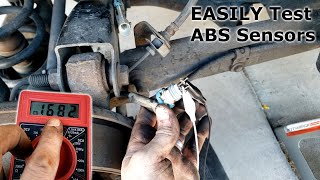
Disconnect the sensor and set a multimeter to Ohms (Ω). Probe the two pins on the sensor itself. A good passive sensor typically reads between 800-1,400 ohms for many Ford and GM vehicles, but ranges up to 2,000 ohms. A reading of 'OL' (Open Loop) or zero ohms indicates a failed sensor. Compare the reading to the left front sensor for a reliable baseline.
Tools: Multimeter (Intermediate) - Check for Wheel Bearing Play
With the wheel off the ground, grip the hub/brake rotor at the 12 and 6 o'clock positions. Attempt to rock it back and forth. Any perceptible play or clicking sound confirms a worn wheel bearing, which causes the tone ring to move out of alignment with the sensor.
Tools: Jack, Jack Stands (Beginner) - Test for AC Voltage Generation (Passive Sensors)
Switch your multimeter to the AC Volts (mV AC) setting. Reconnect the probes to the sensor's pins and spin the wheel hub by hand at a steady pace (about one revolution per second). A healthy passive sensor generates a small AC voltage, typically between 0.5V and 1.0V (500mV-1000mV), that increases with speed. No voltage produced indicates a dead sensor.
Tools: Multimeter, Jack, Jack Stands (Intermediate) - Inspect and Clean the Tone Ring
Visually inspect the tone ring on the axle or hub assembly. Look for cracks, missing teeth, or an accumulation of rust and metallic debris. Clean the ring and the sensor's magnetic tip with brake cleaner and a soft brush. Ensure the sensor's mounting surface on the knuckle is clean and free of rust buildup.
Tools: Brake Cleaner, Wire Brush (Intermediate) - Test for DC Bias Voltage (Active Sensors)
Some two-wire sensors are 'active' and receive a DC bias voltage from the ABS module. To test, disconnect the sensor and probe the harness-side connector (not the sensor itself). With the ignition on, you should see a DC voltage between 1.5 and 5 volts. Absence of this voltage points to a wiring or module problem, not a sensor failure.
Tools: Multimeter (Advanced) - Analyze Live Data with a Scan Tool
With an advanced scan tool, view the live data stream for all four wheel speed sensors. While driving slowly (above 5 mph), all sensors should report nearly identical speeds. If the right front sensor reads 0 MPH/KPH while the others show speed, it confirms a lack of signal from that corner, pointing to a bad sensor or open circuit.
Tools: Advanced Scan Tool with Live Data (Advanced)
When This Code Triggers (Freeze-Frame Conditions)
- Vehicle Speed: 0 mph (The fault is detected during the ignition-on self-test before the vehicle moves.)
- Brake Pedal Status: Off (The code sets without any brake application when the module detects the open circuit.)
- System Voltage: 11.5-12.5V (Normal battery voltage during key-on, engine-off state.)
- Time Since Ignition On: < 1 second (The circuit check is nearly instantaneous, logging the code immediately.)
Related Codes
- C0222 — Stands for "Right Front Wheel Speed Signal Missing." C0221 is an electrical circuit fault detected with the key on. C0222 sets when the vehicle is moving, and the EBCM sees valid signals from other wheels but gets no signal from the right front.
- C0223 — Means "Right Front Wheel Speed Signal Erratic." This code indicates the module receives a signal, but it's illogical compared to the other wheels. This strongly suggests a mechanical issue like a cracked tone ring or a wobbling wheel bearing.
- C0225 — This is the identical fault ("Left Front Wheel Speed Sensor Circuit") but for the opposite side of the vehicle. Seeing C0221 and C0225 together points towards a larger systemic problem, such as a faulty EBCM or a shared wiring harness issue.
- U0121 — Indicates "Lost Communication With Anti-Lock Brake System (ABS) Control Module." If you see this code along with C0221, it suggests a problem with the ABS module itself or the network wiring that prevents it from communicating.
Climate & Environmental Factors
- Cold Weather: In very cold temperatures, wiring insulation becomes brittle and more susceptible to cracking and breaking from the stress of suspension and steering movement, causing an open circuit.
- High Humidity / Road Salt: Common in 'Rust Belt' regions and coastal areas. Moisture and salt accelerate corrosion at the electrical connector pins and seep into the sensor housing, causing internal failure.
How to Talk to a Mechanic About This Code
Say this: "My ABS light is on, and I have a C0221 code. I'd like to schedule a diagnostic to confirm the cause. Please start by visually inspecting the right front wheel speed sensor wiring harness for damage and testing the sensor's resistance before recommending part replacement."
This signals to the shop that you expect a proper diagnosis, not just throwing parts at the problem. It directs them to check the most common and cheapest failures (wiring) before quoting a more expensive sensor or hub replacement, preventing a common upsell.
Avoid saying:
- 'My ABS light is on, can you just fix it?'
- 'Just replace the right front wheel speed sensor.'
- 'Do whatever you think is necessary.'
Questions to ask before authorizing the repair:
- What were the results of the wiring harness inspection and the sensor resistance test?
- Is the sensor a separate part, or is it integrated into the wheel hub assembly on my vehicle?
- Can you show me the damaged wire or the failed test reading?
- What is the warranty on the recommended part and the labor for this repair?
Where to Take It: Dealer vs Independent vs Chain
- Dealer:
A safe but expensive choice. Recommended if your car is new, under warranty, or has known manufacturer quirks.
Best for: Vehicles still under warranty., Complex, newer, or European vehicles where manufacturer-specific tools and knowledge are beneficial., When a known Technical Service Bulletin (TSB) applies to the issue.
Downsides: Highest labor rates, often 1.5-2x more than independent shops., Defaults to replacing a full assembly (e.g., wheel hub) when a smaller component could be repaired. (Typical cost: +50% vs. baseline) - Independent Shop:
Best fit for most drivers. A competent independent mechanic easily diagnoses and repairs a C0221 fault, often at a significantly lower cost than the dealer.
Best for: Out-of-warranty vehicles where cost is a major factor., Common repairs like C0221 on popular domestic or Asian vehicles.
Downsides: Quality and diagnostic skill vary widely. Vet shops by looking for ASE certifications and positive online reviews for electrical or diagnostic work. (Typical cost: +0% vs. baseline) - Chain Shop:
High risk. While they might replace a sensor, they are less likely to perform the proper diagnostic steps first. Avoid for anything beyond a simple, visually confirmed problem.
Best for: Simple, high-volume jobs like oil changes, tires, and brake pad replacement.
Downsides: Technician skill varies dramatically., High pressure to upsell services; recommends replacing a whole hub assembly without proper diagnosis of the sensor or wiring., Lacks the advanced diagnostic tools or experience for tricky electrical faults. (Typical cost: -10% vs. baseline)
When to Walk Away From the Repair
If the estimated repair cost exceeds 50% of the car's private-party market value, seriously consider selling or trading it in instead of repairing.
- Car worth $4000, fix is $350: Fix it. This is a routine repair well below the threshold.
- Car worth $4000, fix is $800: Borderline. This assumes the fix requires a full hub assembly. Get a second opinion to confirm a cheaper wiring/sensor repair isn't possible before proceeding.
- Car worth $2500, fix is $800: Walk away. The repair is nearly a third of the car's value. Unless the car is otherwise in perfect condition, it is not a sound investment.
What Scan Tool You Need for This Code

Minimum: An OBD-II scanner that reads and clears Anti-lock Braking System (ABS) codes. A basic engine-only code reader will not see 'C' codes like C0221.
A standard $20 engine code reader cannot communicate with the ABS module. You need a tool that explicitly lists ABS/SRS capabilities to see the C0221 code. For effective diagnosis, you need a scanner that displays live data to view the wheel speed from all four sensors simultaneously.
Budget: BlueDriver Pro (~$100) — Connects to your smartphone via Bluetooth. It reads and clears ABS codes, and crucially, displays live data from all wheel speed sensors so you can see the right front wheel is not reporting speed while driving.
Mid-range: Foxwell NT510 Elite (~$180) — A powerful handheld unit offering OE-level diagnostics for a specific car brand. It provides robust live data graphing for wheel speeds and includes bi-directional controls to test the ABS module and solenoids after a repair.
Professional: Autel MaxiCOM MK808 / MP900-TS (~$500-900) — A professional-level tablet scanner. It offers comprehensive live data, bi-directional control, and detailed diagnostic information. It quickly auto-scans all vehicle modules and graphs wheel speed sensor data to easily spot the dropout from the faulty sensor.
Rent vs buy: Many AutoZone and O'Reilly Auto Parts stores offer a free loaner tool program. You pay a deposit, which is fully refunded upon return. Ask for the scanner that reads ABS codes, not just the basic check engine light tool. This is the most cost-effective option for a one-time diagnosis.
How to Clear the Code After You Fix It
- Use an OBD-II scan tool to clear the C-prefix fault code from the ABS module.
- Turn the ignition off and then on again; the ABS light performs a self-check and turns off.
- Perform a short test drive, exceeding 12 mph, to allow the EBCM to verify the new sensor signal.
Drive cycle (~15 minutes): A specific 'drive cycle' is not required for an ABS fault. A short drive of 5-15 minutes including speeds above 12 mph is sufficient for the ABS module to confirm the repair and keep the warning light off.
Readiness monitors affected: No emissions-related readiness monitors are directly affected by a C0221 code.
Watch out for:
- Disconnecting the battery does not reliably clear a chassis code like C0221 from the ABS module's memory.
- The ABS light extinguishes on its own after repair, but the fault code remains stored in history until cleared with a proper scan tool.
- If the root cause (like a chafed wire or bad hub) is not fixed, the code returns immediately on the next drive.
Will This Fail Emissions / State Inspection?
No — by itself this code doesn't fail OBD inspection (but it can keep readiness monitors from setting, which causes a separate fail).
- California: An ABS light does NOT cause a failure of the emissions (smog) test itself. The smog check is only concerned with emissions-related 'P' codes and readiness monitors.
- New York: An illuminated ABS warning light is NOT grounds for failing the NYS safety inspection. The inspection is an advisement only for this item.
- Texas: An illuminated ABS warning light is NOT cause for rejection during the safety inspection. However, a lit red 'Brake' warning light is a failure. Mandatory safety inspections are eliminated for most vehicles in 2025.
Most Commonly Affected Vehicles
- Chevrolet Silverado 1500 / S-10 / Blazer (1998-2007) — Extremely common for the wiring harness to break internally or chafe against the frame or suspension components.
- GMC Sierra / Sonoma / Jimmy (1998-2007) — These models share the same platform and wiring vulnerabilities as their Chevrolet counterparts, making wiring failure the primary suspect for code C0221.
- Ford F-150 / Expedition (1997-2008) — Sensor failure is common. On 2004-2008 models, the ABS sensor harness is a frequent point of failure.
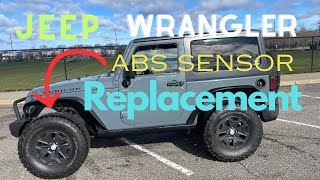
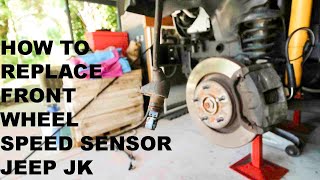
- Jeep Wrangler (JK) (2007-2018) — Off-road use accelerates wear on the sensor wiring. A failing unit bearing (wheel hub) is a very common cause of erratic or missing speed signals, requiring replacement of the entire hub assembly.
- Nissan Titan (2004-2015) — First-generation Titans are known for wheel speed sensor issues that trigger ABS and related lights.
- Hyundai Tucson / Sonata (2015-2020) — On some 2015 Tucson models, the wheel speed sensor is integrated into the hub assembly, requiring a full hub replacement to fix the issue.
- Volkswagen Jetta / Passat (2010-2019) — A known issue on these models. On some 2010 Jettas, a P0221 code refers to a pedal position sensor, not the wheel speed sensor, so verifying the code's source module is critical.
- Honda Accord (1997-2007) — Older Accords are prone to wheel speed sensor circuit faults due to age and wire fatigue.
Manufacturer-Specific Notes
- General Motors (Chevrolet/GMC): The wiring harness is the primary weak point. The harness routing makes it prone to chafing on the frame and suspension. Always inspect the wiring loom for rub-through spots before replacing the sensor itself.
- Jeep: On Wranglers (especially JK models), a noisy or wobbly wheel bearing is often the root cause. The excessive play damages the integrated sensor or disrupts its reading. It's common to replace the entire hub assembly to resolve the code.
- Ford: On many F-150s and Expeditions (1994-2002), a leaking cruise control deactivation switch shorts and damages the ABS module. While it won't directly cause C0221, it's a known safety issue affecting the overall ABS system health.
- Subaru: On certain models like the Outback (circa 2010-2014), codes in the C02xx range relate to the Electronic Parking Brake (EPB) system. C0221 on these vehicles indicates a 'Parking Position Switch' fault. Use a scanner that specifies which module stored the code.
Real Owner Stories
1998 Chevrolet Blazer with C0221
ABS light was on and the ABS pulsed undesirably at low speeds. The code present was C0221 for an open circuit.
Outcome: The symptoms pointed to a recurring issue with the new sensor's wiring or rust buildup under the sensor mounting point, a common issue on these trucks.
Lesson: If the code returns after replacing a part, re-inspect the wiring and mounting surfaces. Rust jacking under the sensor or a chafed wire are extremely common and must be addressed for a lasting repair.
2004 Chevrolet Silverado with C0221 & C0222
ABS light illuminated after parking in a gravel driveway. Codes C0221 (Right Front Circuit Open) and C0222 (Right Front Signal Missing) were present.
Outcome: The recommended diagnostic path was using a multimeter to test the sensor's resistance and AC voltage output when spinning the wheel to confirm if the sensor was dead.
Lesson: A simple multimeter test definitively diagnoses a bad sensor versus a wiring issue, saving you from buying an unnecessary wheel hub assembly.
General Motors Truck - Easy Fix
ABS light was on with code C0221. The owner had previously replaced the sensor for the same issue two years prior.
Outcome: A wire going to the sensor broke right at a clip securing it to the vehicle's frame. The owner stripped and spliced the broken wire back together, which immediately turned the ABS light off.
Lesson: Always perform a thorough visual inspection of the entire wiring harness. The harness frequently chafes on the frame or breaks at flex points, and a simple wire repair fixes the code without needing a new sensor.
How to Prevent This Code From Triggering
- Apply Dielectric Grease to Connectors (During any brake or suspension work, or every 2-3 years) — Applying a thin layer of dielectric grease inside the wheel speed sensor connector creates a barrier that repels moisture and road salt, preventing the pins from corroding and causing high resistance or an open circuit.
- Inspect and Secure Wiring Harnesses (During every oil change or tire rotation) — Regularly check that the sensor's wiring harness is securely fastened in its factory clips and not rubbing against suspension components or the tire. Adding a zip tie or flexible conduit prevents chafing that leads to broken wires.
- Clean Sensor Mounting Surface During Brake Jobs (Whenever brake pads or rotors are replaced) — Rust and debris build up on the wheel hub where the sensor mounts. This 'rust jacking' pushes the sensor away from the tone ring, altering the air gap and leading to erratic signals. Cleaning this surface prevents this.
- Periodically Wash Wheel Wells and Undercarriage (Monthly, especially in winter (Rust Belt) or coastal areas) — Washing away road salt, grime, and mud from the suspension and hub area reduces the corrosive environment. This slows down connector corrosion and wire insulation degradation.
Frequently Asked Questions
What's the biggest mistake when diagnosing C0221?
The biggest mistake is replacing the sensor without testing the wiring harness, which is a frequent culprit on GM trucks. Always clean the sensor's mounting surface on the hub, as rust buildup changes the air gap and causes new sensors to fail. To confirm a bad sensor, swap the right and left front sensors; if the code changes to C0225, the sensor is defective.
Can I just clean the ABS sensor to fix C0221?
If the sensor tip is covered in metallic debris, cleaning it helps, but it is unlikely to fix a C0221 code. This code specifically indicates an electrical circuit fault (an open or short), which cleaning cannot repair. Cleaning is more effective for an erratic signal code like C0223.
Will the C0221 code clear itself after repair?
Yes, the ABS light usually turns off automatically after driving above 12 mph, allowing the module to verify the new signal. However, the code remains stored in the module's history. Always use an OBD-II scanner to clear the code completely after a repair.
Is it better to replace the sensor or the whole wheel hub assembly?
This depends entirely on the vehicle's design. If the sensor is a separate, bolt-in component, only replace the sensor. If the sensor is integrated into the wheel hub assembly, or if the bearing has failed (has play), you must replace the entire hub assembly.
Can a bad wheel alignment cause a C0221 code?
It is not a direct cause, but it is possible. A severe misalignment issue, often caused by worn suspension components, stresses and damages the wheel speed sensor wiring. More commonly, an alignment shop inadvertently damages the sensor or wiring during the alignment process.
How long can I safely drive with a bad wheel speed sensor?
While the vehicle is technically drivable, it is not safe to do so for an extended period. The ABS and stability control systems are disabled, which significantly compromises your ability to control the car in an emergency. The only driving you should do is to a repair shop to get it fixed promptly.
Does C0221 cause the car to go into 'limp mode'?
In some vehicles, yes. Some manufacturers put the vehicle into a 'limp mode' with reduced power and speed as a safety precaution when critical safety systems like the ABS are disabled.
Key Takeaways
- Code C0221 indicates an electrical open or short in the right front wheel speed sensor circuit, instantly disabling your ABS and traction control.
- A damaged wiring harness or a failed sensor causes over 80% of C0221 codes, though corroded connectors and failing wheel bearings are also common culprits.
- Driving with C0221 is unsafe because your wheels will lock up during hard braking, eliminating your ability to steer and increasing stopping distances on wet roads.
- Diagnose the issue by testing the sensor's resistance with a multimeter; a reading of 'OL' (Open Loop) or zero ohms confirms a dead sensor requiring replacement.
- Always inspect the wiring harness for chafing and compare multimeter readings with the left front sensor before spending $150+ on replacement parts.
Helpful Videos

The information in this article is provided for general reference and educational purposes only. Vehicle specifications, procedures, and part compatibility can vary by production date, trim level, and region. Always consult your vehicle's factory service manual and verify part numbers before purchasing or performing repairs. Safety-critical components such as airbags, seat belts, and braking systems should be installed by a qualified professional.
- 🎬 Helpful Videos
- What Does C0221 Mean?
- Can I Drive With C0221?
- Common Causes
- Symptoms
- Diagnostic Flowchart
- Common Fixes & Costs
- Used vs. New Parts: Buying Guide
- What Happens If You Wait — Timeline
- Cost of Not Fixing It
- Diagnosis Steps
- When This Code Triggers (Freeze-Frame Conditions)
- Related Codes
- Climate & Environmental Factors
- How to Talk to a Mechanic About This Code
- Where to Take It: Dealer vs Independent vs Chain
- When to Walk Away From the Repair
- What Scan Tool You Need for This Code
- How to Clear the Code After You Fix It
- Will This Fail Emissions / State Inspection?
- Most Commonly Affected Vehicles
- Manufacturer-Specific Notes
- Real Owner Stories
- 1998 Chevrolet Blazer with C0221
- 2004 Chevrolet Silverado with C0221 & C0222
- General Motors Truck - Easy Fix
- How to Prevent This Code From Triggering
- Frequently Asked Questions
- What's the biggest mistake when diagnosing C0221?
- Can I just clean the ABS sensor to fix C0221?
- Will the C0221 code clear itself after repair?
- Is it better to replace the sensor or the whole wheel hub assembly?
- Can a bad wheel alignment cause a C0221 code?
- How long can I safely drive with a bad wheel speed sensor?
- Does C0221 cause the car to go into 'limp mode'?
- Key Takeaways
- 🎟️ Get 5% Off