

C0035 on 1999-2007 Chevrolet Silverado: ABS Light Causes and Fixes
On a 1999-2007 (GMT800) Silverado, code C0035 points to a fault in the Left Front Wheel Speed Sensor circuit. The most common fix is replacing the front wheel hub assembly, which includes the sensor, due to corrosion or sensor failure. A damaged wiring pigtail is the second most likely cause. Before replacing parts, check the main EBCM ground on the frame rail under the driver's door for corrosion, as it's a simple, common, and often overlooked fix.
- C0035 on a 1999-2007 Silverado means there's a problem with the driver's side front wheel speed sensor circuit.
- Do not drive with this code if you can avoid it; your ABS will not function in an emergency.
- The most likely cause is a bad wheel hub assembly, followed by damaged wiring. Check the wiring carefully before buying an expensive hub.
- A DIY hub replacement is possible but requires proper tools and mechanical experience. It is a 3 out of 5 on the difficulty scale.
- Always check the EBCM ground on the frame rail for corrosion, as it's a simple check that can save you from a misdiagnosis.
What's Unique About the 1999-2007 Chevrolet Silverado

The 1999-2007 Silverado (GMT800 platform) is known for having issues with the front wheel speed sensor wiring and the sensors themselves, which are integrated into the wheel hub assembly. Due to the truck's design and exposure to the elements, the wiring harness is susceptible to damage, and the magnetic reluctor ring on the hub can suffer from corrosion ('rust jacking'), which pushes the sensor away and creates an incorrect air gap, leading to a poor signal. This makes wiring and hub issues more common on these trucks than on many other vehicles. Furthermore, the EBCM ground point on the frame is notoriously prone to corrosion, a problem addressed by a specific GM Technical Service Bulletin.
Generation note: The 1999-2007 year range covers the GMT800 platform. The 2007 model year was a transition, with both the GMT800 (sold as 'Classic') and the new GMT900 platform available. This guide specifically applies to the GMT800 models.
Symptoms You May Notice
- ABS warning light is on
- Traction Control or Stabilitrak warning light is on (if equipped)
- "Service Brake System" message on the Driver Information Center (DIC)
- ABS system may activate incorrectly at low speeds (under 5 mph), causing a grinding or pulsating feeling in the brake pedal. 🎬 Watch: How to fix ABS low speed activation issues.
- ABS system is disabled
- Replacing only the wheel speed sensor when the issue is the integrated hub or wiring.
- Replacing the EBCM before thoroughly testing the wiring and sensor signal all the way to the module connector.
- Overlooking the corroded EBCM ground on the frame, leading to unnecessary parts replacement.
Most Likely Causes

- Failed Front Wheel Hub Assembly 🔴 High Probability The wheel speed sensor is integrated into the hub assembly. Corrosion builds up between the sensor and the hub's magnetic tone ring ('rust jacking'), creating an air gap that weakens the signal, especially at low speeds. The bearing assembly itself can also wear out, causing excessive play that damages the sensor or creates an inconsistent signal.
How to confirm: With a scan tool, monitor live data for the left front wheel speed while driving. If the signal is erratic, drops out, or reads 0 mph while the other wheels show speed, the hub is likely faulty. A visual inspection may reveal rust buildup around the sensor or play in the wheel bearing. Often, the sensor breaks upon removal due to rust, forcing a hub replacement.
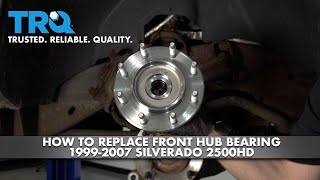
Typical fix: Replace the entire front wheel hub assembly. 🎬 Watch: Step-by-step walkthrough for replacing the front hub bearing.
Est. part cost: $100-$250 - Damaged Wheel Speed Sensor Wiring or Connector 🟡 Medium Probability The wiring harness runs down the suspension and is exposed to road debris, moisture, and constant movement from steering and suspension travel. Wires often break internally (without visible damage to the insulation) at flex points, particularly near the plastic clips that secure the harness to the frame or control arm.
How to confirm: Visually inspect the wiring harness from the sensor connector up into the engine bay for any signs of physical damage, chafing, or corrosion. Perform a 'pull test' by gently tugging on the wires near the connector; a broken internal wire will stretch. Use a multimeter to perform a continuity and voltage drop test on the wires between the EBCM and the sensor connector.
Typical fix: Repair the damaged section of wire or replace the sensor pigtail connector. Solder and heat-shrink are recommended for a durable repair.
Est. part cost: $20-$50 - Faulty Electronic Brake Control Module (EBCM) ⚪ Low Probability On GMT800 trucks, the EBCM is mounted on the frame rail under the driver's side, where it is exposed to moisture and corrosion, which can lead to internal circuit board failures, particularly cold solder joints. Manufacturer Bulletin #PIT5499B notes that technicians should specifically inspect the EBCM connector for water intrusion when C0035 is present.
How to confirm: This should be the last step after confirming the sensor, hub, and wiring are all good. A professional-level scan tool is needed to test the EBCM's inputs and outputs. If a known-good sensor signal is present at the EBCM connector but the code persists, the module is likely the culprit. This is an advanced diagnosis.
Typical fix: Replace the EBCM or send it to a specialized repair service (e.g., ModuleMaster, Circuit Board Medics) for rebuilding, which is often more cost-effective. Replacement may require programming to the vehicle's VIN.
Est. part cost: $150-$500 (rebuild vs. new)
Rare But Worth Checking
- Poor Ground Connection for EBCM (Ground G110): The main EBCM ground (G110) is located on the frame rail directly under the driver's door. Corrosion at this point is extremely common and can cause a host of bizarre ABS issues, including speed sensor codes. GM issued TSB #04-05-25-002E to address this exact problem, instructing technicians to remove, clean, and protect the ground connection 🎬 See this video for locating and cleaning the EBCM ground. before replacing any parts. This should be one of the first and easiest checks.
Diagnosis Steps
- Connect an ABS-capable OBD-II scanner and confirm the presence of the C0035 code. Note any other ABS or communication codes (like C0265 or U1041).
- Use the scanner's live data function to monitor the wheel speed of all four wheels while driving slowly (5-15 mph). Observe if the Left Front wheel speed signal is erratic, reads zero, or differs significantly from the others.
- Locate the EBCM ground (G110) on the outside of the frame rail, below the driver's door. Disconnect, thoroughly clean the terminal and frame surface with a wire brush or Scotch-Brite pad, re-attach securely, and apply a protective coating. Clear codes and re-test.
- Raise and secure the front of the vehicle. Visually inspect the wheel speed sensor wiring harness for any obvious damage, chafing against suspension components, or corrosion at the connector. Gently pull on the wires to check for internal breaks.
- Grasp the driver's side front wheel at 12 and 6 o'clock and try to rock it. Any significant play indicates a worn wheel bearing, which necessitates replacing the hub assembly.
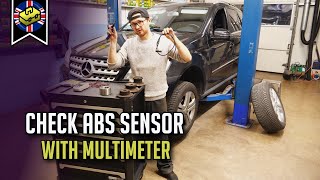
- Disconnect the sensor. With the key on, check for reference voltage at the harness connector. Set a multimeter to AC Volts, connect it to the sensor's two pins, and spin the wheel by hand. You should see a small, rising AC voltage (e.g., >100mV) that increases with speed. No voltage indicates a bad sensor.
- If the sensor and ground are good, perform continuity and voltage drop tests on the wiring between the sensor connector and the EBCM connector to rule out a wiring fault.
- If the signal is confirmed to be good all the way to the EBCM connector, yet the code persists, the EBCM itself is the likely point of failure.
Parts You'll Likely Need
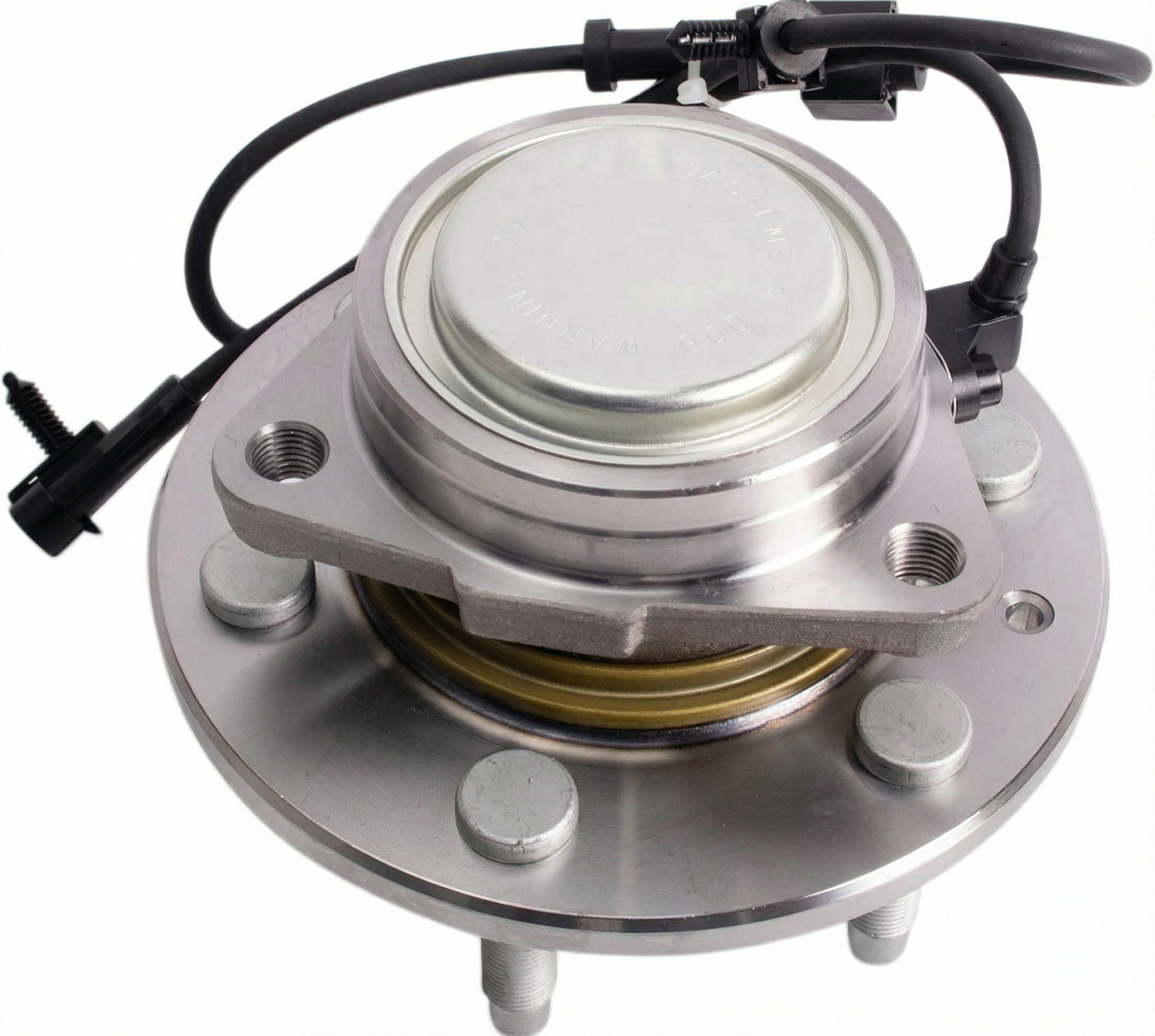
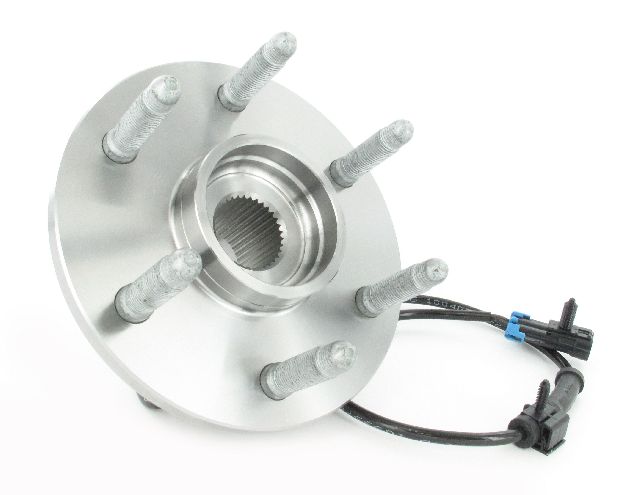
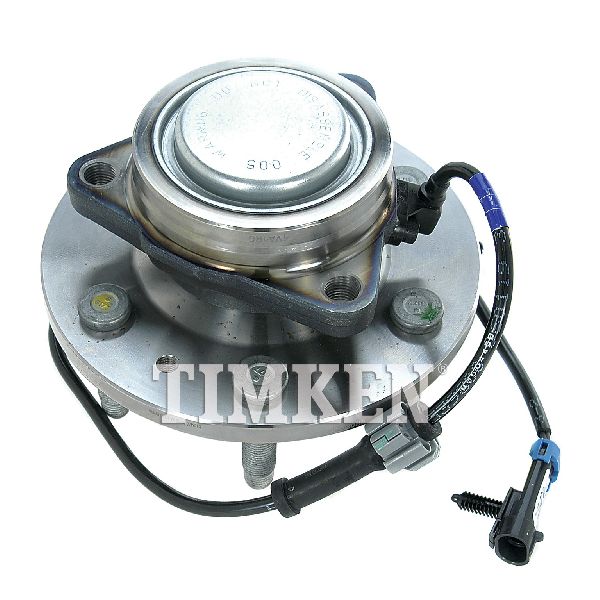
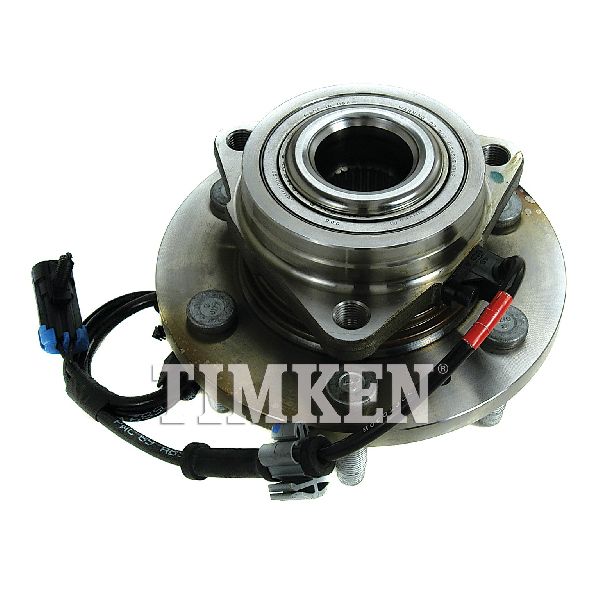
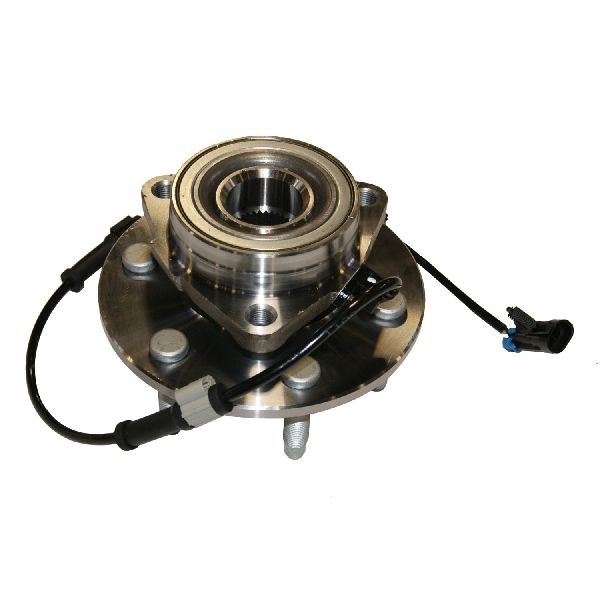
- Front Wheel Hub and Bearing Assembly
(OEM #15946732 (ACDelco FW338 is the service part))— This is the most common failure. The wheel speed sensor is integrated into this assembly, and corrosion or bearing wear is a frequent cause of code C0035.
Trusted brands: ACDelco (Professional/Gold), Timken, Moog, SKF
OEM price range: $200-$300
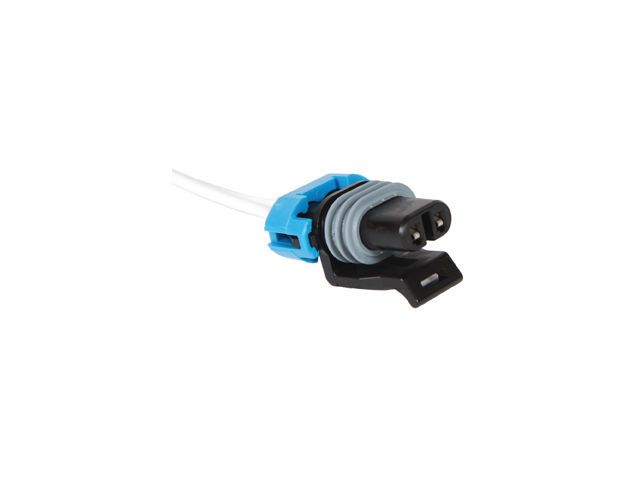
Aftermarket price range: $100-$180 - Front Wheel Speed Sensor Harness Pigtail
(OEM #15997579 (Varies by specific year/model, verify first))— If the wiring is damaged near the sensor connector, replacing this pigtail is often easier than repairing the individual wires. Internal wire breaks from flexing are common.
Trusted brands: ACDelco, Dorman
OEM price range: $40-$60
Aftermarket price range: $20-$40
Related Codes That Often Appear With This One
- C0040 — This code is for the Right Front Wheel Speed Sensor. If both front hubs are wearing out at a similar rate or there is a systemic wiring or ground issue, you may see both codes together.
- C0265 — This code indicates a fault in the EBCM relay circuit. It can appear alongside C0035 if the root cause is a poor EBCM power or ground connection, as described in TSB 04-05-25-002E.
- U1041 — This indicates a loss of communication with the EBCM. It is another code frequently associated with the poor G110 ground connection, as a bad ground can cause the entire module to lose power intermittently.
Technical Service Bulletins (TSBs) & Recalls
- TSB #04-05-25-002E: This bulletin specifically addresses ABS lights and communication issues caused by a poor EBCM ground (G110) on the frame. It instructs technicians to clean and secure this ground before replacing the EBCM for codes like C0265 or U1041, which often accompany sensor codes.
- Bulletin #22-NA-089: This manufacturer bulletin notes that ABS, Traction Control, and Stabilitrak lamps may illuminate intermittently and deactivate for the ignition cycle when DTC C0035 is set.
- Bulletin #PIC5428G: This bulletin indicates that the EBCM may set C0035 with symptom bytes 18, 5A, or 0F, and technicians should gain access to the wheel bearing corresponding to the code.
Platform-Specific Known Issues
- A known issue on GMT800 trucks is 'rust jacking,' where corrosion builds up under the wheel speed sensor mounting point on the hub, increasing the air gap to the tone ring and causing a weak or lost signal, particularly at low speeds.
- The EBCM ground G110 on the frame rail below the driver's door is highly susceptible to corrosion. This poor ground can cause intermittent ABS faults, communication codes (U1041), and sensor codes (C0035/C0040). This is documented in GM TSB #04-05-25-002E.
Mechanic-Grade Diagnostic Values
- Wheel Speed Sensor Resistance — expected: 1000-2000 Ohms. Failure: A reading outside this range, or an open/infinite reading, indicates a faulty sensor.
- Wheel Speed Sensor AC Voltage Output — expected: >100mV AC while spinning the wheel by hand. Failure: No voltage or an erratic, inconsistent voltage reading while the wheel is spinning indicates a failed sensor or a problem with the tone ring.
- EBCM Ground (G110) Tightening Torque — expected: 9 N·m (79 lb in). Failure: A loose ground bolt can cause intermittent issues. This specific torque is recommended after cleaning.
Hidden / Shadow Codes Worth Checking
- C0035 0F: Signal Erratic: This sub-code indicates the EBCM is receiving a signal, but it's unstable or jumping inconsistently. This is a classic symptom of a cracked tone ring, debris on the sensor, or internal wiring breaks in the harness. (see via A professional GM-capable scan tool (e.g., Tech2, GDS2) that can read ABS module symptom bytes/sub-codes.)
- C0035 18: Low Signal Amplitude: This indicates the signal from the sensor is present but too weak. This is typically caused by an excessive air gap from 'rust jacking' or metallic debris stuck to the magnetic sensor head. (see via A professional GM-capable scan tool (e.g., Tech2, GDS2) that can read ABS module symptom bytes/sub-codes.)
- C0035 5A: Signal Not Plausible: This means the sensor's reading doesn't make sense when compared to other vehicle data, like the other three wheel speeds. It often points to a severely damaged tone ring or an incorrect/incompatible aftermarket hub assembly. (see via A professional GM-capable scan tool (e.g., Tech2, GDS2) that can read ABS module symptom bytes/sub-codes.)
Scan Tool Commands That Help
- Tech2 / GDS2: Live Data - Wheel Speed Sensors — This is the primary diagnostic step. Graphing all four wheel speed sensors while driving allows a technician to visually confirm if the left front sensor signal drops out, is erratic, or reads zero compared to the others, confirming the fault is active.
- Tech2 / GDS2: Automated Test / Actuator Test — This function allows the technician to cycle the ABS pump and solenoids. While not a direct test for C0035, if this test fails or shows errors, it can point towards a faulty EBCM or a systemic power/ground issue (like G110) affecting the entire module, rather than just the sensor circuit.
Wiring & Ground Locations

- G110 — On the outside of the driver-side frame rail, directly below the driver's door.. This is the primary ground for the EBCM. It is notoriously prone to corrosion. A poor connection here can cause the EBCM to lose power or have a floating ground, leading to false sensor codes (C0035), communication loss (U1041), and internal fault codes (C0265). It is a heavy 12-gauge wire.
- EBCM Connector (Left Front WSS Pins) — At the Electronic Brake Control Module, mounted to the frame rail under the driver's side of the vehicle.. To perform a definitive wiring test, you must check continuity and for shorts between the wheel-end harness connector and the EBCM connector itself. For a typical Kelsey-Hayes EBCM, the Left Front WSS signal wires are a Light Blue wire and a Yellow wire. This allows a technician to confirm if the wiring harness is intact from end to end.
- Wheel Speed Sensor Connector — At the wheel hub, connecting the sensor pigtail to the main chassis harness.. This 2-pin connector is a common point of failure due to exposure to water, salt, and debris. Corrosion on the terminals or internal wire breaks from suspension flex can interrupt the signal and cause code C0035.
Real Owner Repair Stories
- GM-Trucks.com forum user (2007 Silverado Classic) — ABS light on, code C0035. At low speeds, the brake pedal would pulsate and make a cracking noise as if ABS was activating.
❌ Tried (didn't work) Initial diagnosis pointed to the sensor.
✅ What actually fixed it The user replaced the entire left front wheel hub assembly. The problem was resolved immediately, but the code C0035 returned shortly after. The final resolution was likely a faulty replacement part or a separate wiring issue that was disturbed during the repair, though the initial hub replacement did fix the mechanical symptoms. - Reddit user in r/chevycolorado (similar GM platform) (Chevy Colorado (year not specified)) — ABS activating at low speeds, code C0035.
✅ What actually fixed it The user identified that the reluctor rings on the hubs were rusted out. Replacing the entire wheel hub assembly, which includes the sensor and ring, resolved the issue. The user noted the repair was straightforward for a DIYer.
Documented NHTSA Reports
- An owner reported in NHTSA ODI #11228687 that multiple indicators were illuminated on their vehicle, and an independent mechanic found codes including C0035, C0040, and U0126.
- NHTSA ODI #10440851 describes a situation where both the ABS and Brake lights were on, with diagnostic codes C0035 and C0040 indicating wheel speed sensor circuit malfunctions.
OEM Part Supersession History
15946732→ACDelco FW338 (Service Part Number)— This is the standard GM/ACDelco service part number that corresponds to the original equipment hub assembly.
Heads up: While many aftermarket hubs fit, some low-quality units may use sensors with slightly different electrical characteristics or have tone rings that are not machined to precise OE spec, which can cause the C0035 code to persist or return.
Model Year Variations Within This Range
- 1999-2002: Early GMT800 trucks most commonly used a Kelsey-Hayes EBCM. These modules have a specific failure pattern and are well-known in the repair community.
- 2003-2007: Later GMT800 trucks often switched to a Bosch EBCM. While the function is the same, the internal architecture and pinouts can differ slightly from the earlier Kelsey-Hayes units. When diagnosing wiring or considering an EBCM replacement, it is critical to identify which type is on the vehicle.
Diagnostic Flowchart
Used vs. New Parts: Buying Guide for This Vehicle
When a used part is the smart pick: A used EBCM from a junkyard can be a cost-effective option, especially if you can find a donor vehicle from a dry climate with low mileage. Ensure the part numbers match exactly. Used wiring harness pigtails are also a viable option if the connectors and a sufficient length of wire are in good condition.
Donor-vehicle mileage cap: roughly under 80000 miles for the part to have meaningful remaining life.
What to inspect on the donor part:
- For an EBCM: Check for any signs of external corrosion or damage to the case and connectors. Avoid units from vehicles with obvious flood or collision damage.
- For a wiring pigtail: Inspect for brittle insulation, corrosion inside the connector pins, and any previous, poorly-done repairs (e.g., electrical tape, crimp connectors).
- Check the donor vehicle's history for location; parts from salt-belt states are far more likely to have corrosion issues.
Aftermarket brands forum-validated for this vehicle:
- For Wheel Hub Assembly: Timken, SKF, Moog, and ACDelco (Professional/Gold series) are consistently recommended on forums for their quality bearings and reliable sensor output.
Brands owners have reported issues with on this vehicle:
- Unnamed or 'white box' ultra-low-cost hub assemblies found on auction sites. Owners frequently report premature bearing failure or persistent ABS codes due to out-of-spec sensors or tone rings.
Real Owner Stories
Aggregated from forums and TSBs cited above. Mileages and costs reflect what owners reported in those sources.
2000-2006 Chevrolet Tahoe
Symptoms: Owner received code C0035.
What fixed it: The fix was replacing the standalone wheel speed sensor after cleaning the reluctor ring inside the hub, confirming the hub bearing was still good.
Source hint: TahoeYukonForum.com - 'C0035 - Diagnosed and Fixed'
1999-2007 Chevrolet Silverado
Symptoms: Owners reported getting the C0035 code.
What fixed it: Multiple owners confirmed that a complete hub assembly replacement solved the problem.
Source hint: GM-Trucks.com - 'C0035 Fix?'
2002 Chevrolet Silverado 1500 LS 4.8L
Symptoms: Owner was experiencing ABS module issues and ABS warning lights.
What fixed it: The solution, as emphasized by TSB 04-05-25-002D discussed in the thread, was to thoroughly clean the EBCM ground (G110) on the frame before considering module replacement.
Source hint: GMT800.com - '2002 Chevy 1500 LS 4.8L ABS module help'
Related OBD-II Codes
Frequently Asked Questions
My ABS light is on and the brake pedal grinds at low speeds on my Silverado. Is this the wheel hub?
Does TSB #04-05-25-002E apply to my truck's C0035 code?
My mechanic wants to replace the EBCM for a C0035 code. Is this the right first step?
Is the C0035 problem common on other GM SUVs like the Tahoe or Escalade?
Where does the wheel speed sensor wiring typically fail on these 1999-2007 trucks?
Can I just replace the sensor, or do I need the whole hub assembly?
Helpful Videos
Used OEM Parts in Stock


New Aftermarket Parts Available


The information in this article is provided for general reference and educational purposes only. Vehicle specifications, procedures, and part compatibility can vary by production date, trim level, and region. Always consult your vehicle's factory service manual and verify part numbers before purchasing or performing repairs. Safety-critical components such as airbags, seat belts, and braking systems should be installed by a qualified professional.
- Chevrolet Silverado:
- 🎬 Helpful Videos
- 🛍️ Shop This Part
- What's Unique About the 1999-2007 Chevrolet Silverado
- Symptoms You May Notice
- Most Likely Causes
- Rare But Worth Checking
- Diagnosis Steps
- Parts You'll Likely Need
- Related Codes That Often Appear With This One
- Technical Service Bulletins (TSBs) & Recalls
- Platform-Specific Known Issues
- Mechanic-Grade Diagnostic Values
- Hidden / Shadow Codes Worth Checking
- Scan Tool Commands That Help
- Wiring & Ground Locations
- Real Owner Repair Stories
- Documented NHTSA Reports
- OEM Part Supersession History
- Model Year Variations Within This Range
- Diagnostic Flowchart
- Used vs. New Parts: Buying Guide for This Vehicle
- Real Owner Stories
- 2000-2006 Chevrolet Tahoe
- 1999-2007 Chevrolet Silverado
- 2002 Chevrolet Silverado 1500 LS 4.8L
- Related OBD-II Codes
- Frequently Asked Questions
- 🎟️ Get 5% Off