

B1000 on 2006-2011 Honda Civic: Communication Error Causes and Fixes
On a 2006-2011 Honda Civic, code B1000 almost always means the Multiplex Integrated Control Unit (MICU) has failed. This unit is part of the under-dash fuse box and causes strange electrical issues like no A/C, no intermittent wipers, and a parasitic battery drain. The fix is to replace the entire under-dash fuse box assembly. A used part costs around $100-$200, and it is a moderately difficult DIY job that does not typically require dealer reprogramming.
- B1000 on a 2006-2011 Civic is a network communication code, not a generic ECU failure.
- A specific cluster of symptoms—no A/C, no intermittent wipers, no dome light—is a strong indicator that the under-dash fuse box (MICU) has failed.
- Before replacing the MICU, always check the battery's health and relevant fuses, as low voltage can also cause communication errors.
- The most common repair is to replace the entire under-dash fuse box with a used or new unit. This is a moderately difficult DIY job that can save significant labor costs.
What's Unique About the 2006-2011 Honda Civic

Unlike many other manufacturers where B1000 can point to a generic ECU or airbag module failure, on the 8th generation Honda Civic it specifically indicates a B-CAN network failure. 🎬 Watch: A short explanation of the Honda B1000 code. This platform is well-known for the Multiplex Integrated Control Unit (MICU), which is built into the under-dash fuse box, being the primary point of failure. Owners often experience a distinct and unusual set of electrical gremlins all at once—such as the A/C, intermittent wipers, and dome lights failing simultaneously—which is a tell-tale sign of MICU failure on this vehicle.
Symptoms You May Notice

- Air conditioning (A/C) does not work or the compressor clutch doesn't engage
- Intermittent windshield wiper setting is inoperative (low and high speed may still work)
- Dome light does not turn on when doors are opened
- Key-in-ignition chime does not sound
- Parasitic battery drain, causing a dead battery after sitting for a day or two. 🎬 See how to diagnose a Civic battery that dies overnight.
- Power door locks may behave erratically or only the driver's door works with the remote.
- The remote key fob may stop working
- Parking brake light may stay on even when the brake is released.
- Replacing the A/C compressor or controls when the A/C fails due to the MICU.
- Replacing the wiper motor or switch when the intermittent function fails.
- Chasing down individual wiring issues for door locks or lights instead of identifying the central MICU failure.
- Replacing the battery multiple times without diagnosing the underlying parasitic draw caused by the MICU.
Most Likely Causes

- Failed Multiplex Integrated Control Unit (MICU) 🔴 High Probability The MICU is integrated into the main under-dash fuse box and is a widely documented failure point on this Civic generation, leading to a host of electrical issues and the B1000 code. The internal logic fails, causing it to stop communicating on the B-CAN network and often failing to enter 'sleep mode', which results in a parasitic battery drain.
How to confirm: After ruling out wiring and battery issues, if multiple classic symptoms (no A/C, no dome light, no intermittent wipers) are present with a B1000 code, the MICU is the confirmed culprit. A technician can also perform a self-diagnostic test using a service connector to check MICU inputs and outputs. If multiple outputs fail the test, the MICU is condemned.
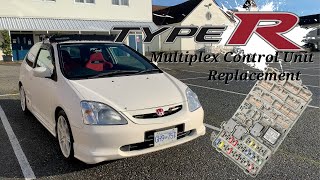
Typical fix: Replace the entire under-dash fuse/relay box assembly. It is typically replaced as a complete unit. 🎬 Watch: Step-by-step guide to replacing the MICU yourself. On this specific Civic generation, reprogramming is generally not required when swapping with a used unit of the same part number.
Est. part cost: $75-$200 (Used/Salvage), $350-$750+ (New OEM) - Poor Battery Voltage or Failing Charging System 🟡 Medium Probability
How to confirm: Test the battery voltage with a multimeter; it should be above 12.4V with the engine off. With the engine running, check the alternator output, which should be between 13.5V and 14.5V. Low or unstable voltage can disrupt module communication and set false codes.
Typical fix: Charge or replace the battery. If the charging system is faulty, diagnose and replace the alternator.
Est. part cost: $100-$250 - Damaged or Shorted B-CAN Wiring ⚪ Low Probability
How to confirm: Visually inspect wiring harnesses for damage, especially around the under-dash area near the fuse box. Use a multimeter to perform a continuity check on the B-CAN wire (typically a Pink wire in connector Q, pin 6 at the MICU) and check for shorts to ground or power. This is an advanced step best left to professionals.
Typical fix: Repair the damaged section of the wiring harness.
Est. part cost: $5-$50 (for repair materials) - Stuck A/C Compressor Clutch Relay ⚪ Low Probability While the MICU is the most common cause of the B1000 and its associated symptoms, a stuck A/C relay can cause a significant parasitic draw that kills the battery, a symptom often linked to a bad MICU. This can sometimes cause general electrical instability.
How to confirm: Perform a parasitic draw test. If a significant draw is found, pull the A/C compressor clutch relay from the under-hood fuse box. If the draw disappears, the relay is stuck 'on' and is the culprit.
Typical fix: Replace the A/C compressor clutch relay.
Est. part cost: $10-$30
Diagnosis Steps
- Connect a professional scan tool capable of reading Honda-specific body codes (like a Honda HDS). Confirm the presence of B1000 and any other B-CAN codes like B1008 or B1011.
- Check Battery and Charging System Health: Ensure the battery has a static charge above 12.4V and that the alternator charges between 13.5V and 14.5V when the engine is running. A weak power supply is a common cause of communication faults.
- Verify Symptoms: Check for the classic signs of MICU failure: non-functional A/C, no intermittent wipers, no door-activated dome light, and no key chime. If these symptoms are present together, the MICU is highly suspect.
- Perform a Parasitic Draw Test: If the battery dies overnight, perform a parasitic draw test with a multimeter set to measure amps. A draw over 50mA after the car has gone to sleep (approx. 15-30 mins) is excessive. A faulty MICU can cause a draw as high as 700mA. Pull fuses one by one to isolate the circuit. The draw is often traced back to the MICU via the backup fuse.
- Inspect Fuses: Check the No. 23 (10A) fuse in the under-hood fuse box and the No. 10 (7.5A) fuse in the under-dash fuse box, which are related to the MICU.
- Inspect Wiring and Connectors: Visually inspect the connectors at the under-dash fuse box (MICU) for looseness, corrosion, or damage. Pay close attention to the 16-pin 'Q' connector.
- Isolate the Fault (Advanced): A Honda diagnostic flowchart for B1000 involves systematically disconnecting other control modules on the B-CAN line (e.g., gauge cluster, climate control unit) one by one to see if communication is restored. If the B1000 code persists with all other modules disconnected, the MICU itself is confirmed as faulty.
- Condemn the MICU: If all previous steps do not reveal another cause, and especially if the classic symptoms and a parasitic draw are present, the MICU (under-dash fuse box) is the defective part and should be replaced.
Parts You'll Likely Need

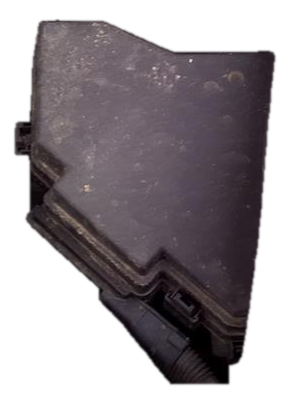
- Under-Dash Fuse/Relay Box (MICU)
(OEM #38200-SNA-A34 (Sedan, Auto Trans, EX/LX), 38200-SNA-A24 (Sedan, Manual Trans), 38200-SNA-A32)— This entire assembly contains the MICU, which is the most common point of failure for the B1000 code on this vehicle. It is replaced as a single unit. Part numbers vary by trim, transmission, and body style, so it's critical to match the part number from the original unit.
Trusted brands: Honda (OEM)
OEM price range: $350-$770 (New)
Aftermarket price range: $75-$200 (Used/Salvage)
Related Codes That Often Appear With This One
- B1008, B1011, B1032 — These are other Honda-specific B-CAN communication error codes that are often triggered simultaneously with B1000 when there is a network-wide failure originating from the MICU. For example, B1008 indicates a lost communication with the gauge control module.
Technical Service Bulletins (TSBs) & Recalls
- While no TSB directly addresses the B1000 code for MICU failure, Honda Service Bulletin 16-056 discusses the need for a PCM software update to allow immobilizer functions (like MICU replacement) to be performed with the dealer diagnostic tool on some Honda models, indicating the complexity of the system.
Platform-Specific Known Issues
- A parasitic battery drain of several hundred milliamps is a common issue directly caused by a faulty MICU in this generation of Civic, leading to a dead battery if the car sits for a day or two.
- Unlike many newer vehicles, replacing the MICU/fuse box on an 8th gen Civic with a used part of the exact same part number typically does NOT require immobilizer reprogramming by a dealer.
Documented NHTSA Reports
While the B1000 code on the Honda Civic is primarily associated with the MICU, it is important to note how other manufacturers define this code to avoid confusion during cross-platform research. For instance, NHTSA ODI #11471720 describes B1000 as an "Igniter for Driver's Air Bag, Resistance Too Large" on a different make, while NHTSA ODI #11105156 identifies it as an "ECU Malfunction" related to the Passenger Presence System. Furthermore, an owner reported in NHTSA ODI #11660121 that a B1000-00 code was listed as an "Electronic Control Unit" fault where the ECU required replacement or reprogramming. In some truck platforms, B1000 has been cited alongside communication losses (NHTSA ODI #11687675) or airbag service lights (NHTSA ODI #11307397), reinforcing that while the code is generic for "Internal Control Module Malfunction," its specific target on your Civic remains the B-CAN network and MICU.
Mechanic-Grade Diagnostic Values
- B-CAN Bus Line Voltage — expected: Fluctuating between 0V and 12V during normal communication.. Failure: A constant voltage, such as being stuck at 12V, indicates the bus is off and there is a short to power.
- B-CAN Bus Line to Ground Continuity — expected: No continuity to ground.. Failure: Continuity to ground indicates a short in the B-CAN wire.
- Parasitic Draw from MICU — expected: Less than 50mA after the vehicle enters sleep mode (approx. 15-30 minutes).. Failure: A draw significantly higher than 50mA, with reports of 700mA being common for a failed MICU.
Hidden / Shadow Codes Worth Checking
- Error 2: B-CAN communication line error. This is not a standard OBD-II code but an error message displayed on the odometer/trip display when using the gauge control module's self-diagnostic function. (see via Enter the gauge control module self-diagnostic function. This typically involves a sequence of pressing the SEL/RESET button while turning the headlights and ignition on and off in a specific pattern.)
Scan Tool Commands That Help
- Honda HDS (Honda Diagnostic System): B-CAN System Diagnosis Test — This is the primary function used to check the communication status of all modules on the B-CAN network. It can confirm which modules are not communicating and is the first step in the official diagnostic procedure for B1000.
- Honda HDS (Honda Diagnostic System): MICU Input Test — After confirming a B-CAN failure, this function allows the technician to test the individual inputs to the MICU from various switches (door locks, wipers, lights) to determine if the MICU is receiving signals correctly.
- MPCS Short Connector (Manual Method): MICU Self-Diagnostic Test Mode 1 & 2 — When an HDS is not available, a technician can use a special short connector to put the MICU into a diagnostic mode. Test Mode 1 reads out DTCs by flashing the ceiling light. Test Mode 2 allows for live input testing, where operating a switch (like the wiper switch) should cause the ceiling light to blink once, confirming the MICU sees the input.
Wiring & Ground Locations
- Under-Dash Fuse/Relay Box (MICU) — Underneath the dashboard on the driver's side, to the left of the steering column.. This is the physical location of the MICU, the primary cause of code B1000. All related connectors and grounds are in this vicinity.
- Connector Q (16-Pin) — A 16-pin connector at the under-dash fuse/relay box (MICU).. Pin 6 of this connector carries the B-CAN communication signal (typically a Pink wire). It is a key point for testing voltage and continuity of the B-CAN line.
- G401 — A primary ground point located behind the driver's side kick panel, near the A-pillar.. This ground serves multiple components in the dash area, including potentially the MICU or related systems. A poor connection at G401 can cause various electrical issues.
- G501 — A body ground located below the steering hanger beam, in the driver's side footwell area.. This is another critical ground point for dashboard-area components. Ensuring it is clean and tight is a necessary step when diagnosing any complex electrical fault in this area.
Real Owner Repair Stories
- Reddit user in r/MechanicAdvice (2008 Honda Civic Coupe 1.8L at 230,000 km) — Parasitic battery drain that killed the battery over several months.
❌ Tried (didn't work) The user did not list prior attempted fixes, but took it to a mechanic for diagnosis.
✅ What actually fixed it A mechanic diagnosed a 700mA parasitic draw and determined the MICU/fuse box was faulty. The final fix was to source and install a replacement (used) MICU assembly. - 8thcivic.com forum user (2008 Honda Civic) — Upper display cluster (speedometer, fuel, temp gauges) went blank. Fuel gauge flashed empty.
❌ Tried (didn't work) Replacing the upper display cluster with a used part did not initially solve the problem.
✅ What actually fixed it The user entered the gauge self-diagnostic mode and received 'Error 3' (UART communication error). The final fix was to thoroughly clean the electrical contacts on the replacement (used) gauge cluster with acetone and ensure the connector was securely plugged in. This restored function, indicating a poor connection at the cluster was the root cause, not the cluster itself.
OEM Part Supersession History
38200-SNA-A33→38200-SNA-A34— Standard part revision by the manufacturer.
Heads up: These parts are generally interchangeable for the specified application (Sedan, Auto Trans, EX/LX for 2007-2008). Always verify by VIN, but the superseded part number confirms they are linked.
Model Year Variations Within This Range
- 2006-2011: MICU/fuse box part numbers are highly specific to the vehicle's trim level (DX, LX, EX), body style (Coupe vs. Sedan), and transmission type (Manual vs. Automatic). For example, an EX sedan with an automatic transmission uses a different part than a DX coupe with a manual transmission. It is critical to match the part number exactly when sourcing a replacement.
- 2009-2011 (Facelift): While the fundamental B-CAN system and MICU failure pattern remained the same after the 2009 facelift, some wiring and minor electronic components may have changed. However, the diagnostic approach for B1000 is consistent across the entire 2006-2011 generation.
Diagnostic Flowchart
Used vs. New Parts: Buying Guide for This Vehicle
When a used part is the smart pick: A used MICU/fuse box from a salvage yard or online seller is a very smart and common choice for this repair. The cost savings are significant (often $100-$200 used vs. $700+ new), and since this generation of Civic typically does not require immobilizer reprogramming for the swap, it is a straightforward DIY or independent shop job.
Donor-vehicle mileage cap: roughly under 150000 miles for the part to have meaningful remaining life.
What to inspect on the donor part:
- Match the OEM part number EXACTLY. Do not rely on year/model alone. The number is printed on a white sticker on the side of the fuse box.
- Inspect the unit for any signs of water damage, corrosion on the pins, or physical damage to the casing.
- If possible, buy from a reputable salvage yard that offers a short warranty (e.g., 30-90 days) to protect against a dead-on-arrival part.
- Check the service history of the donor vehicle if available to ensure it wasn't in a flood or had major electrical issues.
OEM-only on this vehicle (don't cheap out):
- For this specific repair, there are no widely available or trusted aftermarket MICU units. The choice is between a new OEM part or a used OEM part.
Brands owners have reported issues with on this vehicle:
- No-name or unbranded electronic modules sold on marketplaces should be avoided due to a high risk of being defective or incompatible.
Real Owner Stories
Aggregated from forums and TSBs cited above. Mileages and costs reflect what owners reported in those sources.
2007 Honda Civic
Symptoms: The battery was flat every 24 hours and the power door locks were behaving erratically.
What fixed it: The issue was traced to the MICU, requiring a fuse box replacement.
Source hint: civicforums.com thread titled '2007 Civic - flat battery every 24 hours - MICU/fuse fox replacement? help'
2006-2011 Honda Civic
Symptoms: The A/C stopped working, the intermittent wipers failed, and the dome light would not turn on when the doors were opened.
What fixed it: The common failure of the MICU was diagnosed, and replacing the under-dash fuse box assembly resolved the issues.
Source hint: 8thcivic.com / civicforums.com owner posts
2006-2011 Honda Civic
Symptoms: The low-beam headlights stopped working, which was an unusual symptom.
What fixed it: After extensive diagnosis, the problem was traced back to a specific lighting circuit failure within the MICU, which was then replaced.
Source hint: hondacivicforum.com thread titled 'MICU replacement question'
Related OBD-II Codes
Frequently Asked Questions
If I replace the fuse box (MICU) on my 2008 Civic, do I need to get it reprogrammed by the dealer?
My Civic's battery keeps dying overnight. Is it definitely the MICU causing the B1000 code?
What are the classic symptoms of a failing MICU on this generation of Civic?
Is it a good idea to buy a used MICU from a junkyard for my 2007 Civic?
What's the most important thing to check when buying a used MICU for my Civic?
My Acura CSX has the same electrical problems. Does it use the same faulty part as the Civic?
Helpful Videos
Used OEM Parts in Stock



New Aftermarket Parts Available


The information in this article is provided for general reference and educational purposes only. Vehicle specifications, procedures, and part compatibility can vary by production date, trim level, and region. Always consult your vehicle's factory service manual and verify part numbers before purchasing or performing repairs. Safety-critical components such as airbags, seat belts, and braking systems should be installed by a qualified professional.
- Honda Civic:
- 🎬 Helpful Videos
- 🛍️ Shop This Part
- What's Unique About the 2006-2011 Honda Civic
- Symptoms You May Notice
- Most Likely Causes
- Diagnosis Steps
- Parts You'll Likely Need
- Related Codes That Often Appear With This One
- Technical Service Bulletins (TSBs) & Recalls
- Platform-Specific Known Issues
- Documented NHTSA Reports
- Mechanic-Grade Diagnostic Values
- Hidden / Shadow Codes Worth Checking
- Scan Tool Commands That Help
- Wiring & Ground Locations
- Real Owner Repair Stories
- OEM Part Supersession History
- Model Year Variations Within This Range
- Diagnostic Flowchart
- Used vs. New Parts: Buying Guide for This Vehicle
- Real Owner Stories
- 2007 Honda Civic
- 2006-2011 Honda Civic
- 2006-2011 Honda Civic
- Related OBD-II Codes
- Frequently Asked Questions
- 🎟️ Get 5% Off