

2015-2018 Ford Edge 2.7L EcoBoost: 6F55 Transmission Problems, Identification, and Used Replacement
Identifying the F2GP-7000-YC AWD transmission, common torque converter and PTU failures, and when to swap in a used OEM unit.
- You must verify the transmission ID tag is F2GP-7000-YC to ensure compatibility with the 2.7L AWD Ford Edge.
- A replacement transmission requires mandatory PCM programming with its unique 13-digit Solenoid Strategy code to prevent immediate failure.
- Always install a new torque converter and thoroughly flush the external cooler and lines when replacing the transmission.
- The Power Transfer Unit (PTU) is a common failure point due to fluid breakdown; service it with 75W-140 synthetic oil every 30,000 miles.
- Check for the outstanding NHTSA Recall 22V-413 concerning a shifter cable bushing that can cause a dangerous rollaway risk.
Identifying the Correct 6F55 Transmission for Your 2.7L Edge

The 2015-2018 Ford Edge equipped with the 2.7L EcoBoost V6 engine uses a specific variant of the 6F55 six-speed automatic transmission designed for a Transverse, All-Wheel Drive (AWD) configuration. This unit is engineered to handle the higher torque of the turbocharged, direct-injection engine. Sourcing a correct used replacement requires careful identification, as other Ford models using the 6F55 family are not interchangeable.
How to Confirm Your Vehicle's Transmission
Before purchasing a replacement, verify the following on your own vehicle to ensure you get the correct part:
| Verification Method | Details |
|---|---|
| Check the VIN | Confirm the 8th digit of your Vehicle Identification Number (VIN) is '8' (or sometimes 'P') to verify the 2.7L EcoBoost V6 engine. |
| Verify Drivetrain | Ensure your vehicle is All-Wheel Drive (AWD). |
| Check the Door Sticker | On the driver's side door jamb, the Vehicle Certification Label has a code under 'TR'. For this transmission, the code is 'C'. |
| Match the ID Tag | The most crucial step is to match the identification tag on the transmission itself. The code for this specific unit is F2GP-7000-YC (or F2GP-YC). |
Pro Tip: The transmission ID tag is a paper/plastic barcode label located on top of the main transaxle case, or stamped on a flat surface on the side pan rail of the transmission case. It can be difficult to see while the transmission is in the vehicle. It may be necessary to use an inspection mirror or a borescope camera to read it. Document this code before removing the old unit.
Warning: Do not order a transmission based only on the vehicle year and engine. Other Ford and Lincoln vehicles like the Explorer Sport, Taurus SHO, Flex, or Lincoln MKT also use 6F55 transmissions, but they will not fit or function correctly in the 2.7L Edge. These other units have different mounting configurations, bellhousing bolt patterns, final drive gear ratios, and internal solenoid strategy calibrations that make them incompatible.
Common Failure Symptoms

A failing 6F55 transmission can exhibit several distinct symptoms. If you experience any of the following, it may indicate an internal transmission problem requiring inspection or replacement:
- Harsh or delayed shifting between gears.
- A noticeable slip or "flare" where the engine RPMs increase but the vehicle doesn't accelerate accordingly.
- Sluggish acceleration from a stop, sometimes followed by a harsh "bump" or engagement.
- Complete loss of Reverse, 3rd, and 5th gears. 🎬 Watch: Diagnosing loss of reverse, 3rd, and 5th gears
- A "No Start" condition or the gear selector indicator (PRNDL) on the dash not matching the shifter position.
- Illuminated Malfunction Indicator Lamp (MIL) or wrench light on the dashboard.
Diagnostic Flowchart
Known Problems, Recalls, and Technical Service Bulletins (TSBs)

Several documented issues affect this transmission and related components. Always check with a Ford dealer using your VIN to see if any recalls are outstanding on your vehicle.
| Identifier | Issue & Impact | Details |
|---|---|---|
| NHTSA Recall 22V-413 | Transmission Rollaway Risk (Severe) | The shifter cable bushing can detach, causing the vehicle to remain in gear even when the shifter is in 'Park'. The fix is a new bushing and protective cap. |
| SSM 50861 / 46069 | Loss of Reverse, 3rd, and 5th Gears (Severe) | Affects some 2015-2016 models. A direct clutch snap ring fails, requiring a complete teardown to replace multiple internal components. |
| TSB 11-12-10 | Sluggish Acceleration, Harsh Bump (Moderate) | Addressed by reprogramming the PCM or replacing the valve body separator plate and transmission range sensor. |
| Common Wear | Torque Converter Clutch Wear (Moderate) | Sheds material, causing shudder and contaminating fluid, which can clog solenoids and lead to erratic shifting. |
| Program 14M01 | Leaking Input Shaft Seals (Minor) | A customer satisfaction program to inspect and replace leaking input shaft seals on 2015-2018 models. |
What Fails at Every Mileage Band
Pro Tip: The mileage bands below describe used replacement units of that mileage. The checklists provided are things to do WHILE INSTALLING the purchased transmission, not maintenance for your current unit.
Under 60,000 Miles
Even at lower mileages, the 6F55 can experience issues. Torque converter problems, including shuddering or complete failure of weld studs on some 2017 models, can occur. The direct clutch hub, which affects 3rd and 5th gears, can crack. Early signs of transmission problems like jerking, hesitation, and harsh shifting can manifest, sometimes leading to a full replacement recommendation from dealers. Some owners report transmission fluid turning black and burnt by 61,000 miles, indicating severe internal issues. Problems with VCT solenoids can also cause transmission-related diagnostic trouble codes.
- ✓Do during install (required): Mandatory replacement of the torque converter. Perform all recall-related services, especially replacing the shift cable bushing and adding the protective cap per NHTSA Recall 22V-413.
- ✓Do during install (recommended): Service the Power Transfer Unit (PTU) fluid. Many owners recommend a 30k mile interval, as the fluid can break down quickly due to heat from the nearby exhaust. Service the rear differential fluid.
- ✓Cheap insurance while the engine is out: Even on a low-mileage unit, performing a drain and fill of the transmission fluid with Motorcraft MERCON LV is cheap insurance.
60,000 - 100,000 Miles
Torque converter shudder or failure is a very common complaint in this range. Transmission failure due to internal issues becomes more common, with some owners facing replacement costs over $9,000. The Power Transfer Unit (PTU) is a significant weak point, with failures reported because the original fluid can become sludged and ineffective due to high heat. Harsh shifting, jerking, and hesitation during acceleration are frequently reported symptoms preceding major failure. A cracked direct clutch hub leading to loss of 3rd and 5th gears is a documented failure pattern.
- ✓Do during install (required): Mandatory replacement of the torque converter is critical.
- ✓Do during install (recommended): Replace the valve body assembly and solenoids as a preventative measure. Forum members and even Sonnax dealers suggest that replacing with new Ford units is better than using drop-in kits on a higher-mileage valve body. Aggressively service the PTU and rear differential with fresh, high-quality synthetic gear oil (e.g., 75W-140 for the PTU). Replace all external seals, including input/output seals and the dipstick tube seal.
- ✓Cheap insurance while the engine is out: Consider installing an additional in-line magnetic transmission filter on the cooler return line to catch debris not stopped by the non-serviceable internal filter.
100,000 - 150,000 Miles
Complete transmission failure is a significant risk in this mileage band. Torque converter clutch failure is a common cause for replacement, with one owner reporting failure right at 150,000 miles. Rear differential failure can also occur, with one owner reporting a $3,000 out-of-pocket repair. Shuddering, slipping, and delayed engagement that may have been minor at lower mileage can escalate to complete failure.
- ✓Do during install (required): At this mileage, installing a used unit without significant reconditioning is a major gamble. If installing a used unit, assume a full refresh is needed: mandatory new torque converter, new valve body/solenoid assembly, all seals, and a thorough PTU/rear differential service.
- ✓Do during install (recommended): Strongly consider replacing wear items like clutch packs and bushings if the case is opened.
- ✓Cheap insurance while the engine is out: Replace transmission mounts, and inspect driveshaft components (U-joints, carrier bearings) for wear.
Over 150,000 Miles
While many vehicles are taken off the road by transmission or PTU failure before this point, some do last. General wear and tear leading to shifting issues or eventual breakdown is expected. One owner of a 2015 SHO at 119,000 miles noted delayed shifts, which is often a precursor to more significant problems. Failures are often the culmination of issues that began earlier, such as fluid breakdown, torque converter wear, and solenoid malfunction.
- ✓Do during install (required): If a high-mileage unit must be used, a complete teardown and rebuild with upgraded components (clutches, bushings, new valve body, new torque converter) is the only viable path.
- ✓Do during install (recommended): Installing a used transmission with over 150,000 miles is not recommended. The cost of labor for installation justifies using a low-mileage or fully remanufactured unit.
- ✓Cheap insurance while the engine is out: Replace all external seals and mounts to prevent future leaks and vibrations.
Real Owner Experiences
The service life of the 6F55 in the 2015-2018 Edge is highly variable and heavily dependent on maintenance. Many owners experience significant, costly failures between 60,000 and 100,000 miles. However, with proactive and frequent fluid changes, some owners have successfully driven their vehicles to 200,000 miles and beyond. Here is what real owners have reported:
| Source | Mileage | What Happened | Cost |
|---|---|---|---|
| 52,652 | A 2019 model required a complete transmission replacement due to unspecified issues, which was covered under warranty. | Warranty | |
| approx. 60,000 | A 2019 SEL required a torque converter replacement, which was covered by the powertrain warranty. | Warranty | |
| 61,000 | A 2019 Titanium AWD experienced jerking and stuttering. A transmission shop diagnosed black, burnt fluid and a dealership recommended full replacement. | N/A | |
| Ford Edge Forum | 68,000 | A 2007 model failed to shift, with the dealer diagnosing failure of 2nd, 3rd, and 4th gear clutches. The replacement cost was quoted at $6,400. | $6,400 (New), $5,200 (Rebuild) |
| 67,000 | A 2020 model showed slight shuttering at low speeds. A Ford dealer diagnosed a bad torque converter but said it was 'fine to drive'. | Quoted $3,500 | |
| 72,000 | A 2019 model had immediate transmission problems (shudder). A dealer quoted $3,500 for a torque converter replacement. | Quoted $3,500 | |
| 80,000 | Total transmission replacement quoted by a repair shop for a 2016 model. | Quoted $7,000 | |
| 85,000 | A 2015 model required a complete transmission replacement, in addition to other electrical issues, costing over $5,000 for recent repairs. | Part of $5,000+ in recent repairs | |
| 90,000 | Replaced transmission on a 2019 model. | $8,000 | |
| 125,000-130,000 | A 2019 model experienced shuddering, which was resolved by replacing the torque converter. | N/A (DIY) | |
| Kelley Blue Book Review | 150,000 | A 2016 model required rear differential replacement. | $3,000 |
| BobIsTheOilGuy Forum | 150,000 | A 2010 Flex with the 6F55 experienced a torque converter clutch failure, necessitating a transmission replacement. | N/A |
| 194,000 | A 2015 Sport with the 2.7L engine is still running, but has had issues with oil pan leaks and cam sensors. The owner notes the 2.7L engine itself is 'amazing,' implying the powertrain issues lie elsewhere. | Ongoing maintenance | |
| YouTube Commenter | Over 150,000 | Multiple owners of 2015-2018 Edges reported exceeding 150,000 miles, with some noting they are still running strong. | N/A |
| Just over warranty | Replaced transmission and torque converter on a 2020 model. Involved Ford Customer Care to negotiate the price down. | Quoted $9,000+, Paid ~$3,000 | |
| N/A | Replaced only the torque converter on a 2015 model. | $1,200 |
Repair or Replace?

When facing 6F55 transmission issues, deciding whether to repair your current unit or replace it entirely depends on the failure mode and the economics of the job.
When Repair Makes Sense
| Issue | Typical Cost | Notes |
|---|---|---|
| Torque Converter Clutch Wear/Failure | $1,800 - $3,500 | Makes sense for lower mileage vehicles. Labor is the main cost as the transmission must be removed. |
| Shift Cable Bushing (Recall 22V-413) | $0 | This is a safety recall and should be performed by a dealer at no cost. |
| Leaking Input Shaft Seals (Program 14M01) | $500 - $900 | A viable repair if it's the only issue. Often done with a torque converter replacement. |
When Replacement is Smarter
Replacement with a quality used or remanufactured unit is smarter when there is major internal damage, such as the loss of Reverse, 3rd, and 5th gears (SSM 50861), which requires a complete teardown. It is also the preferred path if metal debris from a failed torque converter has circulated through the transmission, as this can lead to future valve body and solenoid failures. Given that a rebuild can cost $2,500 to $4,000, a low-mileage used unit or a warrantied remanufactured assembly often provides better value and peace of mind.
Replacement Cost Estimates
The cost of replacing a 6F55 transmission varies significantly based on the type of part used. These estimates do not include fluids, shop supplies, or taxes.
| Part Type | Estimated Cost (Part Only) | Notes |
|---|---|---|
| New OEM | $6,000+ | Highest cost, ordered directly from Ford. May have limited availability. |
| Remanufactured OEM | $2,500 - $4,100 | Rebuilt by a specialized facility with updates to address common failures. Often includes a warranty. |
| Used OEM | $1,800 - $2,800 | A direct pull from a donor vehicle. Price varies with mileage and condition. |
Labor Costs: Professional installation is estimated to take between 8 and 11.5 hours. Depending on regional labor rates, expect to pay $1,200 to $2,000+ for labor.
Questions to Ask Your Installer
- Have you confirmed the transmission ID tag is F2GP-7000-YC?
- Will you be programming the PCM with the 13-digit Solenoid Strategy and 7-digit ID codes from the replacement unit's tag BEFORE installation?
- Is the price quoted inclusive of a NEW torque converter? Reusing the old one is not an option.
- Does your process include a full, high-pressure flush of the external transmission cooler and lines before connecting the new unit?
- What brand and specification of transmission fluid will you be using? (Should be Motorcraft MERCON LV).
- Does the warranty on this replacement unit cover both parts and labor? For how long?
- Will you be servicing the PTU (Power Transfer Unit) and inspecting/greasing the splines during this job?
- Can you document the condition of the old fluid and show me any metal in the pan to confirm the failure diagnosis?
Critical Installation and Programming Steps
Proper installation is essential for the longevity of a replacement transmission. This is an "Expert" level DIY difficulty job. Several steps are mandatory and, if skipped, will lead to immediate failure.
Required Programming: The Solenoid Strategy
Warning: This transmission cannot be simply swapped. The Powertrain Control Module (PCM) must be programmed with the unique 13-digit Solenoid Strategy code and 7-digit Solenoid Body ID found on a tag on the replacement transmission. Failure to perform this programming will result in incorrect fluid pressures, severe shifting problems, slipping, and rapid destruction of the clutch packs. This procedure requires an OBD2 scan tool with Ford-specific programming capabilities, like Ford IDS or FORScan with an OBDLink EX adapter.
Installation Best Practices (Gotchas to Avoid)
To prevent common buyer mistakes and ensure a successful installation:
- Document the Codes: Write down or photograph the 13-digit Solenoid Strategy and 7-digit ID codes from the tag on top of the case before it is installed. The tag is completely hidden once installed.
- Replace the Torque Converter: Never reuse the old torque converter. It traps metal shavings and debris from the previous failure, which will immediately contaminate the replacement unit.
- Flush the Cooler: The external transmission fluid cooler and lines must be thoroughly flushed with a high-pressure solvent (e.g., Lubegard Kooler Kleen) to remove trapped debris. Failing to do this back-flushes old debris into the highly sensitive replacement valve body.
- Seat the Converter: Ensure the new torque converter is fully seated into the transmission's front pump gears. You should feel it drop into place in three distinct clicks/drops. If not fully seated, it will crack the oil pump gear upon bolting to the engine.
- Grease the PTU Splines: Thoroughly clean and grease the PTU splines with high-temperature, water-resistant spline grease (Motorcraft XL-2) to prevent rust and stripping.
- Level the Fluid Correctly: Follow the exact temperature-based fluid leveling procedure (180°F to 200°F) with the vehicle level and engine running, using the short dipstick on the vent cap or the side leveling plug. Incorrect fluid leveling is common due to the lack of a traditional under-hood dipstick.
- Check Alignment Pins: Ensure the alignment dowel pins between the engine and transmission are clean and in place.
Required Tools and Consumables
This job requires special equipment and specific fluids:
- Specialty Tools: Engine support bar, heavy-duty transmission jack, subframe alignment pins, fluid pump, and a scan tool capable of Ford-specific programming.
- Required Consumables: Motorcraft MERCON LV Automatic Transmission Fluid (Specification WSS-M2C938-A), a new Torque Converter Seal (front pump/input shaft seal), Transmission Filter & Pan Gasket, high-pressure cooler flush solvent, and Motorcraft SAE 75W-140 Synthetic Rear Axle Lubricant (for PTU service, ~18 fl oz).
Freight & Delivery Reality

If you are ordering a used 6F55 transmission online, it will not arrive in a standard cardboard box via regular mail. This is a heavy, bulky industrial component.
| Aspect | Details |
|---|---|
| Weight and Dimensions | Approximately 246 lbs. Raw dimensions are roughly 33" x 28" x 25". |
| Shipping Method | Ships as LTL (Less-Than-Truckload) freight on a wooden pallet. It is not a parcel. |
| Delivery Requirements | Requires a commercial loading dock with a forklift or a truck with a liftgate. |
| Inspect Before Signing | Check for damage (cracked housing, broken connectors) while the driver is present to preserve your ability to file a freight claim. |
| Pre-Purchase Verification | A reputable seller will ask for your VIN and confirm the transmission ID tag matches F2GP-7000-YC. |
Frequently Asked Questions (FAQ)
Do I have to replace the torque converter?
Yes. The old torque converter contains contaminated fluid and debris from the original transmission's failure. Reusing it will immediately damage your replacement unit and void most warranties. It is a mandatory replacement item.
Can I skip the computer programming?
No. The Solenoid Body Strategy programming is absolutely required. Each solenoid body has a unique characterization profile that the vehicle's main computer must learn. Skipping this step will cause severe, harsh shifting and will quickly burn up the clutches in the new transmission.
What fluid does the 2015-2018 Edge 2.7L transmission use?
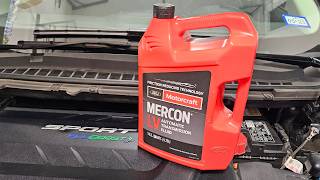
It requires Motorcraft MERCON LV Automatic Transmission Fluid, specification WSS-M2C938-A. Do not use multi-vehicle fluids or other Mercon types.
Can I change the filter during a fluid service?
No. The main fluid filter in the 6F55 is an internal component. It cannot be accessed or replaced without completely splitting the transmission case open. This makes flushing the cooler and using clean fluid during installation even more critical.
Why is servicing the PTU so important?
The Power Transfer Unit (PTU) sits very close to the hot exhaust system. This extreme heat causes the factory PTU fluid to break down and turn into sludge rapidly. Neglecting to change the PTU fluid (recommended every 30,000 miles with 75W-140 synthetic gear oil) is a leading cause of catastrophic driveline failure in AWD Edge models.
What parts are included with a used transmission assembly?
A standard used assembly typically includes the transmission case, extension/tail housing, all internally lubricated parts (gears, clutch packs, shafts, bands), transmission oil pan, torque converter, and valve body. It usually does NOT include external sensors, the external wiring harness, the Transmission Control Module (TCM), shifter linkage, or the engine flexplate.
Helpful Videos

![How to Program Ford Escape 6F35 Transmission Solenoid Strategy [Required if Replaced Transmission!]](https://img.youtube.com/vi/gKPTkzr1Hd0/mqdefault.jpg)
Technical Specifications
OEM Part Numbers: F2GP-7000-YC F2GP-YC
Type: 6F55 Six-Speed Automatic; Drivetrain Configuration: Transverse, All-Wheel Drive (AWD); Engine Application: 2.7L EcoBoost V6; Door Jamb Code (TR): C; VIN Engine Code (8th digit): 8 or P; Fluid Specification: Motorcraft MERCON LV (WSS-M2C938-A); Weight: ~246 lbs; Dimensions: ~33" x 28" x 25"
We Have This Part in Stock


The information in this article is provided for general reference and educational purposes only. Vehicle specifications, procedures, and part compatibility can vary by production date, trim level, and region. Always consult your vehicle's factory service manual and verify part numbers before purchasing or performing repairs. Safety-critical components such as airbags, seat belts, and braking systems should be installed by a qualified professional.
- Ford Edge:
- 🎬 Helpful Videos
- 🛍️ Shop This Part
- Identifying the Correct 6F55 Transmission for Your 2.7L Edge
- How to Confirm Your Vehicle's Transmission
- Common Failure Symptoms
- Diagnostic Flowchart
- Known Problems, Recalls, and Technical Service Bulletins (TSBs)
- What Fails at Every Mileage Band
- Under 60,000 Miles
- 60,000 - 100,000 Miles
- 100,000 - 150,000 Miles
- Over 150,000 Miles
- Real Owner Experiences
- Repair or Replace?
- When Repair Makes Sense
- When Replacement is Smarter
- Replacement Cost Estimates
- Questions to Ask Your Installer
- Critical Installation and Programming Steps
- Required Programming: The Solenoid Strategy
- Installation Best Practices (Gotchas to Avoid)
- Required Tools and Consumables
- Freight & Delivery Reality
- Frequently Asked Questions (FAQ)
- 🎟️ Get 5% Off