

2011-2013 Ford Edge 6F50 Transmission: Problems, Identification, and Used Replacement
Identify common failures, decode your VIN and transmission tags, and learn what to expect when replacing your failing AWD 6F50 with a used OEM assembly.
- Verify you are purchasing the correct 3.16 final drive ratio unit for the 3.5L AWD Edge, as transmissions from FWD models or other vehicles like the Explorer are not compatible.
- A replacement transmission requires mandatory programming of its 13-digit solenoid strategy code and an adaptive relearn procedure using a dealer-level scan tool.
- Before installing a used unit, you must flush the transmission cooler and lines with a heated, pressurized machine and replace the TSS and OSS sensors to prevent immediate failure.
- Check for open safety recall 14V393000, which can cause a sudden loss of power due to halfshaft disengagement, and verify if TSBs for shifting issues have been performed.
- Regular fluid changes every 30,000 to 50,000 miles using only Motorcraft MERCON LV fluid are critical for extending the life of the 6F50 transmission beyond 150,000 miles.
Identifying the Correct 6F50 Transmission for Your Ford Edge


This article covers the specific 6F50 automatic transmission assembly used in the 2011, 2012, and 2013 Ford Edge equipped with the 3.5L V6 engine and All-Wheel Drive (AWD). This six-speed automatic transaxle is a specific variant, and units from other Ford models or different Edge configurations will not interchange correctly.
Before purchasing a replacement, verify that your vehicle is an exact match by checking the following:
| Identifier | Required Spec |
|---|---|
| Vehicle Identification Number (VIN) | The 8th digit of your VIN must be 'C'. This confirms the vehicle has the naturally aspirated 3.5L V6 engine. |
| Drivetrain | Your vehicle must be All-Wheel Drive (AWD). Transmissions from Front-Wheel Drive (FWD) models have a different design and will not fit. |
| Transmission ID Tag | The sticker on top of the transmission case should list one of these part numbers: BA8P-7000-GA, BA8P-7000-GB, BA8P-7000-GC, DA8P-7000-GA, or DA8P-7000-RA. |
| Door Jamb Sticker | The code under 'TR' on the Federal Certification Label should be 'J'. |
Warning: The 6F50 transmission family was used in other vehicles like the Ford Explorer, Flex, and Lincoln MKX. However, those versions have different mounting points, final drive ratios, and internal programming. They are not direct replacements for this specific Edge unit, which requires a 3.16 final drive ratio.
Common Failure Symptoms
A failing 6F50 transmission in a 2011-2013 Edge often displays clear symptoms. You may need a replacement if you experience:
- Harsh or Delayed Shifting: The vehicle may bang into gear, hesitate, or have a noticeable lag between shifts.
- Sluggish Acceleration: The engine RPMs may rise, but the vehicle doesn't speed up accordingly, a condition often called slipping.
- Sudden Loss of Drive: The transmission may suddenly stop sending power to the wheels, which could be related to a serious internal failure or a known recall issue.
- Getting Stuck in Gear: The transmission may refuse to upshift, commonly getting stuck in first gear, which requires a software update to fix.
- Jerking or Banging Noises: Owners report sudden jerks that can feel like being hit from behind, often accompanied by a loud bang from the drivetrain. 🎬 Watch: Ford Edge hard shift and banging problems explained
Diagnostic Flowchart
Known Issues, Recalls, and Technical Service Bulletins (TSBs)

Several documented issues affect this transmission. Always check with a Ford dealer to see if these repairs have been performed on your vehicle.
NHTSA Recall 14V393000 / Ford 14S10: Halfshaft Disengagement
Warning: This is a severe safety recall affecting 2012-2014 Ford Edge models. The right-hand halfshaft may not have been fully seated during manufacturing. This can cause it to disengage, resulting in a complete loss of motive power and potentially allowing the vehicle to roll away when in Park if the parking brake is not applied. The fix involves inspecting the halfshaft retention circlip and splines during installation to ensure proper engagement.
TSB 11-12-10: Harsh/Delayed Shifts
This bulletin applies to 2011 Ford Edge vehicles and addresses complaints of sluggish acceleration followed by a harsh bump. The fix requires reprogramming the Powertrain Control Module (PCM) and Transmission Control Module (TCM) to the latest software calibration.
TSB 13-04-16: Intermittent No Upshift / Stuck in 1st Gear
Affecting 2011-2013 Ford Edge models built on or before September 22, 2012, this issue is caused by a software glitch. The remedy is to update the PCM software calibration.
TSB 11-5-3: Sluggish Acceleration and Harsh Shifting
Applying to 2011 Ford Edge models built on or before April 15, 2011, this issue causes poor acceleration and rough shifts. The fix is to update the Powertrain Control Module (PCM) calibration.
TSB 11-9-11: Mercon LV Separator Plate and Checkball Update
Affecting 2009-2011 Ford Edge models, this bulletin addresses internal fluid routing issues. The remedy is to update the separator plate and checkballs within the main control valve body.
TSS/OSS Sensor Failures
A common failure point on the 6F50 are the Turbine Speed Sensor (TSS) and Output Speed Sensor (OSS). Failure of these sensors can cause erratic shifting, loss of the speedometer, and force the transmission into a limp mode. It is highly recommended to replace both sensors with new OEM parts while the transmission is on the bench before installation.
Replacement Cost Estimates
The cost to replace a 6F50 transmission varies based on the type of replacement unit you choose. The labor for this job typically ranges from 8.0 to 11.0 hours.
| Part or Service | Estimated Cost (USD) |
|---|---|
| New OEM | $6,800 - $7,400+ (Kelley Blue Book suggests dealer replacement can be $6,873 - $7,395 for a 2013 model) |
| Remanufactured | $2,495 - $3,700 (part only) |
| Used OEM | $400 - $1,300 (part only) |
| Installation Labor | $1,000 - $1,800 |
What's Included in a Used Assembly?
When buying a used transmission from a recycler, it's important to know what parts are included. Based on common industry standards, here is what you should expect:
- What's Usually Included: The transmission case, all internally lubricated parts, the extension/tail housing, transmission pan, and the torque converter.
- What's Not Included: External sensors (like the TSS/OSS), external wiring harnesses, shifter linkage/cables, the flexplate/flywheel, and transmission cooler lines. These parts should be transferred from your original transmission or replaced new.
Critical Installation and Programming Steps

Programming and Calibration are Required
You cannot simply install this transmission and drive. The vehicle's computer must be programmed to accept the replacement unit.
- Solenoid Body Strategy Programming: The transmission's valve body has a unique 13-digit code (Solenoid Strategy) and a 7-digit Solenoid Body ID. If you use the solenoid body that comes with the used unit, a dealer-level scan tool (like Ford IDS or FORScan with an OBDLink adapter) must be used to program these numbers into the PCM.
- Alternative Option: To avoid reprogramming the solenoid strategy, you can carefully swap the entire solenoid body and lead frame assembly from your original transmission into the replacement unit.
- Adaptive Relearn: Regardless of which solenoid body you use, the transmission's adaptive learning tables must be cleared with a scan tool. Afterward, a specific drive cycle must be performed to allow the TCM to learn the new transmission's shift characteristics.
Required Tools and Consumables
This is an Advanced/Expert level DIY job. You will need specific tools, including an engine support bar, a transmission jack, subframe alignment pins, a torque wrench, and a bi-directional scan tool.
Required consumables include:
- Motorcraft MERCON LV Automatic Transmission Fluid
- Front pump/torque converter seal (Ford Part # 7T4Z-7A248-A or equivalent)
- Left-hand and right-hand axle shaft seals
- Transmission cooler-line hot flush fluid
- Solenoid filter plate / main control cover gasket (if the side pan is removed)
Installation "Gotchas" and Pro Tips
Pro Tip: Always replace the Turbine Speed Sensor (TSS) and Output Speed Sensor (OSS) with new OEM parts while the transmission is out of the vehicle. It is cheap insurance against future failures.
Warning: You must flush the transmission cooler and lines using a heated, pressurized flushing machine before installing the replacement unit. Failure to do so will contaminate the new transmission with metal debris from the old one, leading to immediate failure.
- Torque Converter Seating: Make sure the torque converter is fully seated into the transmission's front pump. You should feel it drop into place three distinct times. If it is not fully seated, you will crack the pump when bolting the engine and transmission together.
- Fluid Type: This transmission requires Motorcraft MERCON LV automatic transmission fluid. Using any other type, including Mercon V or a generic multi-vehicle fluid, will cause damage.
- Chipped Connector: The main 20-pin electrical plug on the case is often chipped or damaged. Inspect it carefully and plan to either secure it with a heavy-duty zip tie or swap the solenoid body/lead frame from your original unit.
- PTU (Power Transfer Unit) Alignment: Inspect the PTU splines, replace the PTU input shaft seal, and replace the PTU fluid with 75W-140 synthetic gear oil.
- Subframe Alignment: Mark the subframe alignment or use alignment pins during removal, and perform a 4-wheel alignment after installation is complete.
What Fails at Every Mileage Band
Pro Tip: The mileage bands below describe what to expect from used replacement units with that amount of wear. The checklists provided are critical steps to perform WHILE INSTALLING the purchased unit, not maintenance advice for your current broken transmission.
Under 60K Miles
While less common, some owners report transmission issues even at low mileage. Problems can include jerking, stuttering during shifts, and torque converter replacement under 60,000 miles. More frequently reported in this mileage range are Power Transfer Unit (PTU) seal leaks and failures, which can occur as early as 36,000 miles. These PTU issues can sometimes be misdiagnosed as transmission problems due to their location and the similar nature of fluid leaks.
- ✓Do during install (required): Replace TSS and OSS sensors. Perform a complete hot flush of the transmission cooler and lines. Update the Powertrain Control Module (PCM) and Transmission Control Module (TCM) to the latest software calibration.
- ✓Do during install (recommended): Inspect and replace axle seals if there is any sign of leakage.
- ✓Cheap insurance while the engine is out: Inspect the PTU for leaks and consider replacing the PTU input shaft seal as a preventative measure.
60K-100K Miles
This range sees an increase in reported transmission problems, including hard or delayed shifts and outright failure. Issues with the solenoid body become more common, leading to very harsh shifts. Turbine Shaft Speed (TSS) and Output Shaft Speed (OSS) sensor failures are also noted, which can cause a variety of symptoms including hard shifts, hunting for gears, and eventually a loss of overdrive and limp mode. PTU failures continue to be a concern in this mileage band.
- ✓Do during install (required): Mandatory replacement of TSS and OSS sensors with OEM parts. Mandatory replacement of front pump/torque converter seal and both axle shaft seals. Perform a complete hot flush of the transmission cooler and lines.
- ✓Do during install (recommended): Replace the transmission filter if the pan is dropped for any other service.
- ✓Cheap insurance while the engine is out: Thoroughly inspect the PTU for leaks; service the fluid (75W-140 synthetic) and replace the input shaft seal.
100K-150K Miles
Total transmission failure becomes more likely in this mileage range, often preceded by slipping, hard shifting, or major fluid leaks. Internal failures requiring a complete rebuild or replacement are reported, sometimes with little warning. Leaks from transmission cooler lines or axle seals can lead to low fluid levels, causing slipping and other shifting problems if not addressed.
- ✓Do during install (required): Assume this unit requires a full reseal. Replace all external seals, including the torque converter seal, axle seals, and any other accessible gaskets or O-rings. Mandatory replacement of TSS and OSS sensors with OEM parts. Perform a complete hot flush of the transmission cooler and lines.
- ✓Do during install (recommended): Replace the PTU fluid and inspect all associated seals.
- ✓Cheap insurance while the engine is out: Strongly consider replacing the entire solenoid body assembly to prevent future electronic issues.
Over 150K Miles
While many units fail before this point, some can last well over 150,000 miles, especially with diligent maintenance. However, failures can still occur. At this mileage, any component that has not been replaced is a potential failure point, including the torque converter, internal clutches, and the valve body.
- ✓Do during install (required): At this mileage, a used transmission should be considered a core for rebuilding or installed with the expectation of a limited lifespan. All required steps from the 100-150K mile band apply.
- ✓Do during install (recommended): Replace all external seals and sensors (TSS/OSS).
- ✓Cheap insurance while the engine is out: Consider replacing the solenoid body and torque converter while the unit is out of the vehicle.
Real Owner Experiences
| Source | Mileage | What Happened | Cost |
|---|---|---|---|
| ford-edge-forum.com | 36,000 | A thick black oil leak was diagnosed as a failed Power Transfer Unit (PTU). The seals fail, leak oil onto the exhaust causing a burning smell, and the unit needs to be replaced. The vehicle was just one month past its 5-year powertrain warranty. | Not specified, but would have been covered under warranty a month earlier. |
| Reddit r/FordEdge | 47,000-61,000 | Vehicle began jerking and stuttering between gears. A transmission shop diagnosed the issue, noting the transmission fluid was black. A dealership recommended a full transmission replacement. | Not specified. |
| ford-edge-forum.com | 59,000 | Power Transfer Unit (PTU) failed and was replaced under warranty. | Covered by warranty. |
| ford-edge-forum.com | 100,000 | After a history of a reverse clunk and a previous OSS sensor failure, the transmission began exhibiting firmer shifts. The owner suspected a failing solenoid valve body. Another owner with an '08 model confirmed their solenoid body was replaced for intermittent, very hard shifts, which was a known problem. | Not specified. |
| ford-edge-forum.com | 98,000 | Vehicle struggles to engage higher gears when accelerating onto the freeway. | Not specified. |
| ford-edge-forum.com | 100,000 | While driving, a loud noise occurred and the car dropped out of gear, decelerating to 5 mph. After a tow to the dealer, they found grey, metallic fluid and quoted for a full transmission rebuild, despite no diagnostic codes being present. The PTU was also noted to be leaking. | $10,000 quote for a rebuild. |
| Reddit r/FordEdge | 104,000 | A major transmission fluid leak, suspected to be from the cooler flex hoses, caused the transmission to be nearly empty. This resulted in slipping between gears, which was resolved temporarily by adding fluid. | Not specified, pending diagnosis of the leak source. |
| Reddit r/FordEdge | Unknown, but high | An owner reported that their transmission went out and they were forced to get a replacement from a Ford dealership for a recall-related repair, costing significantly more than an independent shop. | $9,300. |
| Reddit r/FordEdge | 257,000 | The Power Transfer Unit (PTU) began to fail ('venting'). | $1,900 quote for repair. |
| ford-edge-forum.com | 358,000 | Owner reported original engine and 6F50 transmission still running well, attributing longevity to changing the transmission fluid every 30,000 miles. | N/A (preventative maintenance). |
| YouTube | 168,000 | TSS/OSS sensors failed, causing the dash to light up with warnings, a loss of overdrive, and the inability to re-engage a gear after stopping. | DIY repair, cost of sensors only. |
| Reddit r/FordEdge | 160,000 | One user had a friend replace the sensors for the cost of the part ($100). Another user with a 2013 model had a valve body and speed sensors replaced at Ford. | $2,000 (for valve body, sensors, fluid, and seals at dealer). |
| Reddit r/FordEdge | N/A | Replaced transmission and half-shafts due to slipping and slamming into gear. | $8,200. |
Repair or Replace?
Deciding whether to repair your current transmission or replace it entirely depends on the specific failure mode and the overall condition of the unit.
When Repair Makes Sense
- TSS/OSS Sensor Failure: If the vehicle is experiencing erratic shifting, or the wrench light is on, and diagnostics confirm a sensor fault, repair is the best route. Typical repair costs range from $400 to $900. The parts themselves are relatively inexpensive, often under $100.
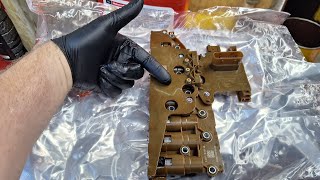
- Solenoid Body / Valve Body Failure: If the vehicle has harsh/delayed shifts or gear ratio error codes, and a technician diagnoses the valve body or a specific solenoid, repair is viable. A remanufactured valve body with solenoids can be found for around $110 to $180, though labor is significant. Total repair costs typically range from $1,000 to $2,500.
- Transmission Fluid Leak: A fluid leak should be addressed immediately. Inspection costs are usually $61 to $90. If caught early, replacing a pan gasket or axle seal prevents catastrophic failure from fluid starvation.
When Replacement is Smarter
Replacement is the better option when there is evidence of major internal mechanical damage, such as metal shavings in the transmission pan, multiple gear failures, or a cracked transmission case. If the cost of diagnosing and repairing multiple issues (e.g., valve body, torque converter, and clutches) approaches or exceeds the cost of a used or remanufactured unit, replacement offers more long-term reliability. Given the relatively low cost of used units (often $400 to $1,300), replacement can be much more economical than a full rebuild, which can cost between $1,000 and $3,500.
Freight & Delivery Reality: Receiving Your Used Transmission

A replacement 6F50 transmission is a massive, heavy piece of machinery. It does not ship in a cardboard box via standard parcel delivery.
- Weight and Dimensions: Verified shipping data shows this assembly weighs approximately 218 lbs and measures roughly 36" x 28" x 25" before crating.
- LTL Freight: It ships as Less-Than-Truckload (LTL) freight strapped to a wooden pallet.
- Delivery Requirements: You will need a delivery location equipped with a loading dock or a forklift. If delivering to a residential address or a standard shop, you must request a truck with a liftgate.
- Inspect Before Signing: When the pallet arrives, inspect the transmission case, the oil pan, and the electrical connectors (especially the main 20-pin plug) for shipping damage before signing the driver's delivery receipt.
- Pre-Purchase Verification: Reputable suppliers will conduct a pre-purchase verification interview to confirm your VIN (8th digit 'C'), drivetrain (AWD), and transmission tag ID to ensure you receive the exact 3.16 final drive unit.
Frequently Asked Questions (FAQ)
Can I use a transmission from a Ford Explorer or FWD Edge?
No. Transmissions from other models or from a Front-Wheel Drive (FWD) Edge are not compatible. They have different internal gear ratios, case mounting points, and programming that will not work with the AWD 3.5L Edge.
Do I have to reprogram the computer after installation?
Yes. At a minimum, you must clear the adaptive tables and perform a relearn drive cycle. If you use the solenoid body that comes with the replacement transmission, you must also program its unique 13-digit strategy code and 7-digit ID into the vehicle's computer using a compatible scan tool.
Is this a difficult DIY job?
Yes, this is an advanced or expert-level job. It requires removing the subframe and involves heavy components. Special tools like an engine support bar, a transmission jack, and a bi-directional scan tool for programming are required.
What questions should I ask my installer before the job begins?
You should ask if they have confirmed the unit is the correct AWD 3.16 final drive ratio. Ask if they will flush the transmission cooler lines with a heated, pressurized flusher. Confirm they will inspect the main electrical plug, replace the TSS/OSS sensors, replace the axle and torque converter seals, and inspect the PTU splines and fluid. Finally, ensure they have the proper scan tool to program the 13-digit solenoid strategy and perform the adaptive relearn.
How often should I change the fluid in this transmission?
The single most critical factor for extending the life of the 6F50 transmission is regular fluid and filter changes. While Ford often cites a "lifetime" fluid recommendation, experts and experienced owners recommend fluid services every 30,000 to 50,000 miles to ensure longevity. With regular fluid changes, a lifespan of over 150,000 miles is achievable.
Helpful Videos

Technical Specifications
OEM Part Numbers: BA8P-7000-GA BA8P-7000-GB BA8P-7000-GC DA8P-7000-GA DA8P-7000-RA
Model: 6F50; Years: 2011, 2012, 2013; Engine: 3.5L V6 (VIN 8th digit 'C'); Drivetrain: All-Wheel Drive (AWD); Final Drive Ratio: 3.16; Fluid Type: Motorcraft MERCON LV; Door Jamb Code (TR): J
We Have This Part in Stock


The information in this article is provided for general reference and educational purposes only. Vehicle specifications, procedures, and part compatibility can vary by production date, trim level, and region. Always consult your vehicle's factory service manual and verify part numbers before purchasing or performing repairs. Safety-critical components such as airbags, seat belts, and braking systems should be installed by a qualified professional.
- Ford Edge:
- 🎬 Helpful Videos
- 🛍️ Shop This Part
- Identifying the Correct 6F50 Transmission for Your Ford Edge
- Common Failure Symptoms
- Diagnostic Flowchart
- Known Issues, Recalls, and Technical Service Bulletins (TSBs)
- NHTSA Recall 14V393000 / Ford 14S10: Halfshaft Disengagement
- TSB 11-12-10: Harsh/Delayed Shifts
- TSB 13-04-16: Intermittent No Upshift / Stuck in 1st Gear
- TSB 11-5-3: Sluggish Acceleration and Harsh Shifting
- TSB 11-9-11: Mercon LV Separator Plate and Checkball Update
- TSS/OSS Sensor Failures
- Replacement Cost Estimates
- What's Included in a Used Assembly?
- Critical Installation and Programming Steps
- Programming and Calibration are Required
- Required Tools and Consumables
- Installation "Gotchas" and Pro Tips
- What Fails at Every Mileage Band
- Under 60K Miles
- 60K-100K Miles
- 100K-150K Miles
- Over 150K Miles
- Real Owner Experiences
- Repair or Replace?
- When Repair Makes Sense
- When Replacement is Smarter
- Freight & Delivery Reality: Receiving Your Used Transmission
- Frequently Asked Questions (FAQ)
- 🎟️ Get 5% Off