

2013-2020 Ford F-150 Engine Oil Pan: The Truth About Leaks and Plastic Pans
A detailed guide to the common leaking composite oil pan issue on 2.7L, 3.5L, and 5.0L F-150s, and how to fix it for good.
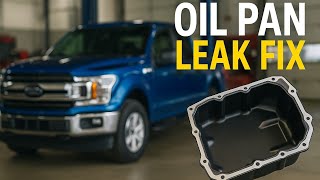
- The composite (plastic) oil pan on 2013-2020 F-150s with 2.7L, 3.5L, and 5.0L engines is a very common failure point, known for warping and leaking.
- Replacement on 4x4 models is a major job that costs significantly more in labor ($700-$1200+) because the front differential must be removed for access.
- Ford has issued multiple Technical Service Bulletins (TSBs) with updated parts and procedures; some years require an updated pan with a press-in gasket instead of RTV sealant.
- For a permanent solution, consider upgrading to a cast aluminum aftermarket oil pan, which will not warp like the original plastic part.
Known Issues: The Leaking Composite Oil Pan

A significant number of 2013-2020 Ford F-150 trucks, specifically those with the 2.7L EcoBoost, 3.5L EcoBoost, and 5.0L V8 engines, are known to develop oil leaks from the factory-installed composite plastic oil pan. This is not a rare occurrence; it is a widely documented issue discussed by owners and mechanics alike.
The primary causes of the leak are:
- Material Warping: The composite pan can warp or change shape over many heat cycles. This prevents the pan from maintaining a flat, even seal against the engine block.
- Sealant Failure: These pans do not use a traditional pre-formed gasket. Instead, they rely on a bead of Room Temperature Vulcanizing (RTV) silicone sealant applied at the factory. Over time, this sealant can degrade, break down, or lose its bond due to the pan flexing, leading to slow seeps that eventually become drips.
This leak is so common that Ford has issued multiple Technical Service Bulletins (TSBs) to guide technicians on the proper repair procedure.
Official Ford Service Bulletins (TSBs)
Ford has released several TSBs to address this problem. These are not recalls, but official repair instructions for dealerships. Key TSBs include:
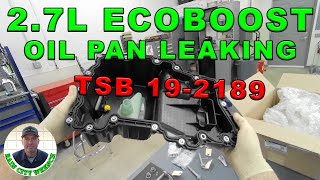
- TSB 19-2189: For 2018-2019 F-150s with the 2.7L EcoBoost engine, this TSB advises replacing the original RTV-sealed pan with an updated oil pan that uses a more reliable press-in-place gasket. This applies to trucks built on or before May 21, 2019. 🎬 Watch: A breakdown of the TSB 19-2189 repair process.
- TSB 23-2083: This bulletin supersedes an earlier TSB (19-2205) for 2015-2017 F-150s with the 2.7L EcoBoost. It details a procedure to replace the original pan with a later style, which may also require replacing the valve covers due to changes in the engine's crankcase ventilation (PCV) system.
- TSB 19-2358: While this TSB can be related to other noises, it is often referenced in discussions about 5.0L engine issues, which include oil consumption and leaks.
Knowing about these TSBs is crucial if you take your truck to a dealer or independent shop, as it ensures they follow the latest, most effective repair method.
Symptoms of a Failing Oil Pan

The symptoms of a leaking oil pan are usually straightforward:
- Visible Oil Drips: This is the most obvious sign. You'll find spots or puddles of fresh engine oil on the ground where you park.
- Wetness on the Pan: The bottom of the oil pan, the transmission housing, and the nearby crossmember will appear wet or coated in a layer of oily grime.
- Low Engine Oil Light: If the leak is severe enough to cause the oil level to drop significantly, the low oil pressure or low oil level warning light may illuminate on your dashboard.
- Smell of Burning Oil: If leaking oil drips onto the hot exhaust system, you will smell it burning, especially when the vehicle is stopped.
Replacement Difficulty & Labor Costs
Replacing the oil pan on a 2013-2020 F-150 has a dramatically different level of difficulty depending on the drivetrain.
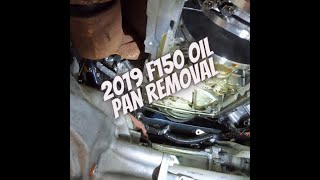
- Rear-Wheel Drive (RWD): On a RWD truck, the job is relatively straightforward. Access to the pan is clear, and a competent DIY mechanic can often 🎬 Watch: Step-by-step removal of a 2019 F-150 oil pan. complete the job in 2-4 hours. The TSB for the 2.7L RWD model estimates 2.5-3.2 hours.
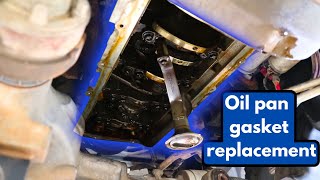
- Four-Wheel Drive (4x4): This is a much more complex and labor-intensive job. To access all the oil pan bolts, the front differential must be unbolted and lowered out of the way. This turns a simple reseal into a major repair. Shop labor time can be anywhere from 3.5 to over 8 hours, depending on the specific year and engine.
Warning: Do not attempt the 4x4 oil pan replacement unless you are an experienced mechanic with the proper tools and a vehicle lift. Dropping the front differential is a difficult and potentially dangerous task.
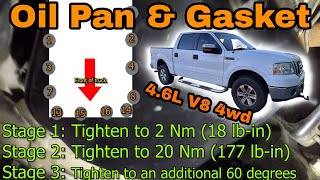
🎬 See this walkthrough for replacing a 5.0L 4x4 oil pan.Buying a Used OEM Oil Pan: What to Check

While a used oil pan can be a cost-effective option, careful inspection is critical, especially with these composite pans.
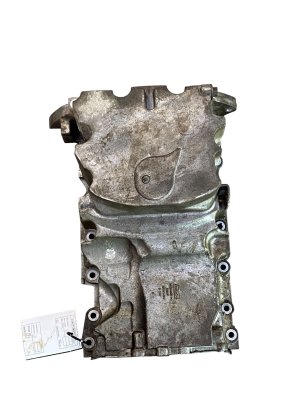
- Check for Flatness: This is the most important check. Lay a metal straightedge across the pan's sealing surface in several directions. There should be no visible gaps. Any warping means the pan is likely to leak again, even with new sealant.
- Inspect for Cracks: Carefully examine the entire pan, especially around the mounting bolt holes and the drain plug area, for any hairline cracks. A small crack can quickly grow under engine vibration and heat.
- Verify Drain Plug Threads: Ensure the drain plug threads are clean and not stripped. A damaged thread will prevent the drain plug from sealing properly, creating a new leak.
- Consider the Source: Since the original design is prone to failure, a used OEM pan carries some risk. An alternative is a new, updated OEM pan or a cast aluminum aftermarket pan, which eliminates the warping issue entirely.
Pro Tip: Many owners and shops recommend upgrading to a cast aluminum aftermarket oil pan from a reputable brand like Dorman. While more expensive than a used part, it provides a permanent solution to the warping and leaking problem inherent in the plastic design.
Cost Comparison
Prices can vary significantly based on your truck's configuration (RWD vs. 4x4) and your location. The biggest variable is labor.
| Part/Service | Estimated Cost | Notes |
|---|---|---|
| New OEM Plastic Pan | $170 - $260 | This is for the part only. Part number may be superseded. |
| New Aftermarket (Plastic) | $90 - $160 | Prices from retailers like Advance Auto Parts and AutoZone. |
| New Aftermarket (Aluminum) | $150 - $300 | A popular upgrade to prevent future leaks. |
| Used OEM Pan | $75 - $150 | Price from online marketplaces like eBay. Carries risk of being warped. |
| Shop Labor (RWD) | $300 - $500 | Typically 2.5-4 hours of labor. |
| Shop Labor (4x4) | $700 - $1,200+ | A much longer job (4-8+ hours) due to removing the front differential. |
Frequently Asked Questions (FAQ)
Is there a recall for the leaking F-150 oil pan?
No, there is no safety recall for this issue. Ford has addressed it with Technical Service Bulletins (TSBs), which are repair guidelines for dealers. Repairs are typically only covered if the vehicle is under its powertrain warranty.
Can I just re-tighten the oil pan bolts to stop the leak?
No, this will not work and may damage the pan. The leak is caused by a failed sealant and/or a warped pan, not loose bolts. Over-tightening the bolts can crack the composite plastic pan, making the problem worse.
Should I replace my plastic pan with a metal one?
For a permanent fix, a cast aluminum aftermarket pan is an excellent choice. It is not susceptible to the warping that plagues the plastic pans. While the initial cost is higher than a used part, it can save you from having to do the repair a second time.
What kind of sealant should be used for the replacement?
It is critical to use the specific RTV sealant recommended by Ford in the TSB, which is typically Motorcraft High Performance Engine RTV Silicone (part number TA-357). Proper surface preparation and allowing the sealant to cure as instructed are essential to prevent future leaks.
Helpful Videos
Technical Specifications
OEM Part Numbers: BL3Z6675A JL3E6675FA JL3E6675FB JL3E6675FC JL3E6675FD JL3Z6675A JL3Z6675B JL3Z6675D JL3Z6675E JL3Z6675F JR3Z-6675-E JT4Z-6675-B
Material: Composite Plastic (OEM), with optional aftermarket upgrades to Cast Aluminum. Sealant: Motorcraft High Performance Engine RTV Silicone (TA-357).
We Have This Part in Stock




The information in this article is provided for general reference and educational purposes only. Vehicle specifications, procedures, and part compatibility can vary by production date, trim level, and region. Always consult your vehicle's factory service manual and verify part numbers before purchasing or performing repairs. Safety-critical components such as airbags, seat belts, and braking systems should be installed by a qualified professional.
- Ford F-150: