

2012-2017 Toyota Camry 2.5L 2AR-FE Engine: Problems, Identification, and Used Replacement
Identify common 2AR-FE failures, learn what to check before buying, and discover when a used replacement engine is your smartest financial move.
- Verify the engine is a non-hybrid 2AR-FE with the correct emissions type (Federal vs. California PZEV) by checking the VIN and VECI label to avoid a persistent P0017 code.
- When installing a used engine, always replace the water pump, thermostat, and all relevant seals (front/rear main) to prevent common leaks and future labor costs.
- Excessive oil consumption is a major concern linked to 10,000-mile oil change intervals; adhere to a 5,000-mile schedule with 0W-20 synthetic oil to maximize engine life.
- A shudder felt between 25-50 mph is almost always a transmission torque converter issue (TSB T-SB-0312-17), not an engine failure, and requires separate diagnosis.
- Replacement with a low-mileage used engine is more cost-effective than rebuilding when faced with critical internal failures like rod knock or severe oil consumption damage.
Engine Identification: Is This Your Engine?


The 2012–2017 Toyota Camry uses a 2.5-liter inline four-cylinder engine known as the 2AR-FE. This engine is part of Toyota's reliable AR family. It features a dual overhead cam (DOHC) design with 16 valves and dual Variable Valve Timing with intelligence (VVT-i), a system that adjusts camshaft timing to improve performance and efficiency.
Before purchasing a replacement, you must confirm you have the correct engine. Here are three critical checks:
- Check Your VIN: The 5th character of your Vehicle Identification Number (VIN) must be an 'F'. This identifies the vehicle as having the 2.5L 2AR-FE gasoline engine.
- Confirm It's Not a Hybrid: The Camry Hybrid uses a different engine called the 2AR-FXE. These engines are not interchangeable.
- Check the Emissions Label: Under the hood, a Vehicle Emission Control Information (VECI) label specifies if your car meets Federal (EPA/ULEV) or California (PZEV/CARB) emissions standards. This is crucial for parts compatibility.
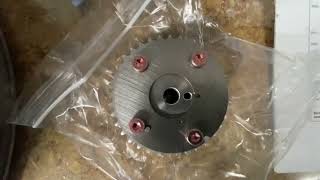
Warning: Not all 2AR-FE engines are the same. Engines from other Toyota models like the RAV4, Highlander, Venza, Scion tC, or ES250 will not fit due to different mounting points, oil pans, and wiring. Additionally, Federal and California emissions models use different exhaust camshaft gears. The Federal gear is part number 13070-0V013, while the California gear is 13070-0V020. Installing the wrong one will cause a persistent P0017 trouble code that cannot be cleared without swapping the part.
Common Failure Symptoms

While generally very reliable and capable of lasting 200,000 to 300,000 miles with strict 5,000-mile oil changes, the 2AR-FE can experience issues that may require a replacement. Watch for these signs:
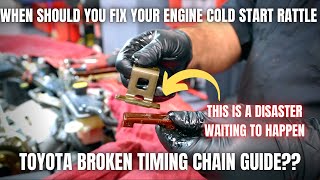
- Loud Rattle on Cold Start: A brief, loud rattle for a second or two when starting the engine cold is a classic sign of a failing VVT-i gear. 🎬 Watch: Hear the classic cold-start rattle in action If the noise lasts longer, it's a more urgent problem.
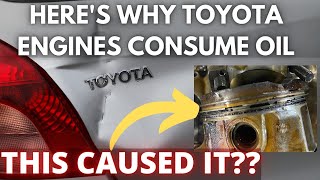
- Excessive Oil Consumption: Some engines, particularly earlier models or those with higher mileage, may begin to burn oil. This is often due to carbon buildup on the piston rings caused by extending oil changes to 10,000 miles. 🎬 See this teardown explaining why these engines consume oil Severe oil loss can lead to engine seizure.
- Coolant Leaks: A failing water pump can cause coolant to leak, leading to overheating. Look for pink crust around the pump or puddles of coolant under the car. 🎬 Watch: Step-by-step water pump replacement walkthrough
- Knocking or Ticking Noises: Persistent knocking that changes with engine speed can indicate serious internal wear on bearings, a sign of advanced failure often caused by running low on oil.
- Shuddering While Driving: A shudder or vibration felt between 25 and 50 mph is often mistaken for an engine problem but is typically related to the torque converter in the U760E automatic transmission.
Diagnostic Flowchart
Known Issues, TSBs, and Recalls
Several Technical Service Bulletins (TSBs) have been issued for this engine and related components. TSBs are repair instructions for technicians, not recalls.
Cold-Start Rattle (VVT-i Camshaft Gear)
Some engines may produce a loud rattle for about one second immediately after a cold start. This is caused by wear in the intake camshaft timing gear assembly. While a brief noise is not immediately critical, a gear that fails completely can cause the engine to stop running.
- Affected Years: 2010–2013 Camry models are explicitly covered.
- Official Documents: TSB T-SB-0041-13 (which supersedes T-SB-0146-10).
- Remedy: The fix involves replacing the intake camshaft timing gear assembly (VVT-i phaser).
Torque Converter Shudder
Drivers may feel a shudder or vibration when accelerating lightly at speeds between 25-50 mph. This feels like driving over rumble strips and is a transmission issue, not an engine failure. It's caused by the lock-up clutch inside the torque converter.
- Affected Years: 2012–2014 Toyota Camry.
- Official Documents: TSB T-SB-0312-17 (which supersedes T-SB-0034-14). Toyota also had a Warranty Enhancement Program (ZE5) for this issue.
- Remedy: The procedure involves a software update for the transmission's control module (ECU) and, in persistent cases, replacing the torque converter.
Water Pump Leaks
The water pump is a known wear item that can fail and leak coolant. Failure typically occurs between 60,000 and 100,000 miles. Since a failed pump can lead to severe overheating, it is highly recommended to replace the water pump whenever an engine is swapped.
Pro Tip: There are no major engine-related safety recalls for the 2012-2017 Camry with the 2.5L engine. Most known issues are covered by Technical Service Bulletins.
Replacement Cost Comparison
Engine replacement costs vary based on the type of engine and local labor rates. Here are typical estimates based on aggregated market data:
| Part / Service | Estimated Cost (USD) |
|---|---|
| Used OEM Engine | $1,200 - $2,500 |
| Remanufactured Engine | $2,200 - $5,600 |
| New OEM Crate Engine | $9,500 - $12,500 |
| Shop Labor (8-15 hours) | $1,200 - $2,200 |
What's Included in a Used Assembly?
A used engine is typically sold as a "long block" assembly. This helps ensure you get a properly matched set of core components. Based on industry standards, here is what you should expect:
- What's Usually Included: Cylinder block, cylinder head, valve cover, oil pan, intake manifold, timing cover, fuel injectors, fuel rail, throttle body, and harmonic balancer.
- What's Usually NOT Included: A/C compressor, starter motor, alternator, power steering pump, exhaust manifold, and catalytic converter. You will need to transfer these parts from your old engine.
Pro Tip: Always plan to reuse your vehicle's original wiring harness. This guarantees perfect electrical compatibility with your car's specific trim and emissions packages.
Installation Complexity & Tools

Swapping the 2AR-FE is an Advanced to Expert level job. Shop labor is estimated at 8 to 15 hours. If you are tackling this yourself, you will need specific equipment:
- Engine hoist/crane with a load leveler.
- Engine support bar or subframe jack.
- 5-point Torx/Pentagram bit.
- Camshaft holding tool.
Installation Gotchas:
- VVT-i Gear Locking Procedure: The gear must be in the 'unlocked' position when torquing, and manually 'locked' before timing chain alignment.
- Oil Pump O-Rings: There are three specific O-rings on the timing cover that must not have RTV or gasket maker applied near them.
- Timing Chain Tensioner: This must be properly retracted and locked with a pin before installation, then released.
- Hardware: Never reuse torque-to-yield flexplate or torque converter bolts without applying thread locker.
- Priming: Always prime the oil system before the first start to prevent dry-running damage.
What Fails at Every Mileage Band
Pro Tip: The mileage bands below describe used replacement units of that mileage. The checklists are things to do WHILE INSTALLING the purchased engine, not maintenance for your current engine.
Under 60,000 Miles
Engines in this range are generally in excellent condition. Cold-start rattle from the VVT-i gear is possible but less common. Early water pump leaks can occur but are considered rare, though some owner reports cite failures under 60,000 miles.
- ✓Do during install (required): Standard 'best practice' replacements: 4.6 - 4.7 quarts of new 0W-20 full synthetic engine oil and filter, new Toyota Super Long Life Coolant (SLLC) pink coolant, and all relevant gaskets (intake manifold, exhaust manifold, thermostat).
- ✓Do during install (recommended): Thoroughly inspect the included water pump for any signs of weeping (pink crusty residue). Given the low cost of the part versus labor, replacing it is cheap insurance, even at low mileage.
- ✓Cheap insurance while the engine is out: Inspect the serpentine belt for any contamination from potential leaks and replace if necessary.
60,000 - 100,000 Miles
Water pump leaks become much more common in this range, as original factory pumps often last between 90,000 and 120,000 miles. Oil consumption may begin to appear if the engine had inconsistent oil change intervals, often due to oil control rings getting clogged.
- ✓Do during install (required): Replace the water pump and thermostat. It is highly advised not to reuse a pump with this mileage. Perform all fluid and gasket replacements from the previous band.
- ✓Do during install (recommended): Replace spark plugs with Iridium type (Denso or NGK). Replace the serpentine belt and tensioner.
- ✓Cheap insurance while the engine is out: Clean the small VVT-i oil filter screen located in the cylinder head to prevent oil starvation issues.
100,000 - 150,000 Miles
Oil consumption is the most significant concern in this mileage bracket, especially on engines that followed a 10,000-mile oil change interval. Water pump failure is highly likely if it's the original unit. Cold-start VVT-i gear rattle may become more pronounced.
- ✓Do during install (required): Replace front and rear crankshaft main seals. These seals are much easier to replace when the engine is out. Replace the water pump, thermostat, serpentine belt, and tensioner.
- ✓Do during install (recommended): Perform all replacements from the previous mileage bands.
- ✓Cheap insurance while the engine is out: If the donor engine has a known history of oil consumption or shows signs of sludge, consider replacing the VVT-i cam gears, especially the intake side, to prevent future rattle issues.
Over 150,000 Miles
Significant oil consumption is a strong possibility if maintenance was not meticulous. Wear on the cylinder walls can become a factor if the engine was run with clogged rings. The timing chain tensioner may experience wear, and ancillary component failures are more likely.
- ✓Do during install (required): Assume all rubber seals and gaskets are at the end of their service life. Replace all, including front/rear main seals, valve cover gasket, and oil pan gasket. Replace the water pump, thermostat, belt, and tensioner without question.
- ✓Do during install (recommended): Strongly consider replacing the timing chain and tensioner as a preventative measure. Inspect and clean the intake manifold; significant oil pooling can be a sign of excessive blow-by.
- ✓Cheap insurance while the engine is out: Replace VVT-i cam gears if any cold-start rattle was noted on the donor unit.
Real Owner Experiences
Here is a look at what real owners have experienced with the 2AR-FE engine, including failures and repair costs:
| Source | Mileage | What Happened | Cost |
|---|---|---|---|
| CarComplaints.com | ~41,000-57,000 miles | Water pump failed, leading to leaks. One report mentioned the failure caused the engine to overheat and seize. | $543 dealer quote for pump. |
| Starts as low as 60k miles | Reports of oil burning, ranging from 1 to 3 quarts every 5,000 miles, highly dependent on prior maintenance. | Varies from the cost of adding oil to a full engine teardown. | |
| 122,000 miles | Considering an engine swap for a used unit with 50k miles and a 1-year warranty after blowing the original engine. | $2,800 (quoted total). | |
| 140,000 miles | Owner reported severe oil consumption of one quart every ~250 miles. | Requires constant oil top-offs or a major engine repair/rebuild. | |
| 150,000 miles | Replaced with a used engine after being quoted $4,500 for a used swap and $10,500 for a rebuild. | $5,100 (Included a 69k-mile engine, complete reseal, and 2-year unlimited mileage warranty). | |
| YouTube (The Car Care Nut) | Over 150,000 miles | A 2011 RAV4 with a 2AR-FE engine developed severe oil consumption (2.5-3 quarts per 1,000 miles) due to seized piston rings, which in turn damaged the cylinder walls. | A full repair including a new short block cost over $6,800 at a dealership. |
| Kelley Blue Book Review | 196,000 miles | A 2012 Camry purchased with 192,000 miles experienced complete engine failure 4,000 miles later, attributed to the known oil burning issue. | Required a complete engine replacement. |
| 262,000 miles | Owner replaced the short block due to oil burning and wear spots on cylinder walls, which started after purchasing the car at 200k miles with a poor oil change history. | Owner performed a major overhaul including short block, water pump, and timing components. |
Repair or Replace?
Deciding whether to fix your current engine or buy a used replacement depends heavily on the specific failure.
- Water Pump Coolant Leaks: Typical repair costs range from $550 to $820. This is a routine maintenance item. Unless the engine severely overheated and caused internal damage, repairing the water pump is always the correct choice.
- Cold-Start Rattle (VVT-i Gear Wear): Typical repair costs range from $1,500 to $2,500. The OEM intake gear costs around $315, but the labor is intensive as it requires accessing the timing chain. If your vehicle has lower mileage and is in excellent condition, repairing it makes sense. However, if the engine has high mileage or burns oil, the repair cost approaches the price of a lower-mileage used engine, making a swap a smarter long-term proposition.
- Torque Converter Shudder: Typical repair costs range from $200 to $4,000+. For 2012-2014 models, an ECU software update may fix it for as little as $200. If the torque converter itself has failed, it is a major transmission repair. It is critical to diagnose this correctly before condemning the engine.
When Replacement is Smarter: Replacement with a quality used engine is the smartest financial decision when facing internal engine failure such as rod knock, loss of compression due to piston ring failure (indicative of severe oil consumption), or a cracked block. The cost to disassemble and rebuild the engine for these issues is often quoted between $5,000 and $10,500, which far exceeds the installed cost of a low-mileage used unit.
Questions to Ask Your Installer:
- Have you verified my vehicle's emissions type (Federal vs. California PZEV) and sourced a matching engine?
- Does the quoted price include a complete reseal of the replacement engine (crankshaft seals, timing cover, oil pan) before installation?
- What new consumable parts are included in your quote? (e.g., water pump, thermostat, spark plugs, belts, fluids)
- What is the mileage on the donor engine and what is the source?
- What is the warranty on the engine itself and on your labor, and what does it cover?
- Will you be performing a crankshaft position (CKP) sensor relearn or any other calibration after installation?
- Can you confirm you will reuse my original engine wiring harness to avoid electrical issues?
Freight & Delivery Reality

Buying a used engine is not like ordering a standard auto part. A complete 2AR-FE assembly weighs approximately 324 lbs and measures roughly 36" x 36" x 36" before crating. Because of this size and weight, it ships as LTL (Less Than Truckload) freight on a wooden pallet—never as a standard parcel.
When arranging delivery, you must ensure the destination has a loading dock or a forklift. If delivering to a residential address or a small shop without equipment, you must request liftgate service so the driver can lower the pallet to the ground. Always inspect the engine thoroughly for transit damage before signing the delivery receipt. Finally, expect a pre-purchase verification interview from reputable suppliers; this is an industry best practice to ensure you are getting the exact VIN F, non-hybrid, correct-emissions engine for your Camry.
Arrival Inspection: Compression and Leak-Down Testing
Before installing your used 2AR-FE engine, test its internal health while it is still on the shipping pallet. This saves time and money if the engine has hidden damage.
- Compression Test: Use a starter tool to spin the engine. A healthy 2AR-FE should produce compression readings between 145 psi and 180 psi. The exact number matters less than the balance between cylinders. The difference between your highest and lowest reading must not exceed 14 psi.
- Leak-Down Test: This test pumps compressed air into each cylinder to measure how much air escapes. A quality used engine should show less than 15 percent air loss. Listen closely while testing. Air hissing from the exhaust or intake ports means the valves are leaking. Air escaping from the oil cap area points to worn piston rings.
Frequently Asked Questions (FAQ)
Do I need to reprogram the car's computer (ECU) after an engine swap?
Maybe. For a like-for-like swap, reprogramming is often not required. However, some procedures may be needed, like a crankshaft position (CKP) sensor relearn and VVT-i system calibration, to prevent timing-related trouble codes (P0016/P0017). It is best to use a bi-directional scan tool to perform any necessary calibrations after installation.
Can I use a 2.5L engine from a Toyota RAV4 or Venza?
No. While the core engine is the same (2AR-FE), the mounting brackets, wiring harness connections, oil pan, and computer programming are different. You must use an engine from a 2012-2017 Camry to ensure proper fitment.
What parts should I always replace during an engine swap?
To ensure reliability, you should always install new consumables. This includes a new water pump, thermostat and gasket, serpentine belt, spark plugs, front and rear main seals, and all necessary fluids like 0W-20 synthetic oil and Toyota Super Long Life Coolant (pink).
What is the most common mistake when buying this used engine?
Ignoring the emissions specification. There is a physical difference in the exhaust camshaft gear between Federal (EPA) and California (PZEV) emissions models. Installing the wrong one will cause a permanent P0017 check engine light. Verify the emissions sticker under your hood and buy the matching engine.
How much oil does the 2AR-FE engine take?
The 2.5L 2AR-FE engine requires 4.6 to 4.7 quarts of 0W-20 full synthetic engine oil when replacing the oil and filter. Always check the dipstick after filling and running the engine briefly to ensure the proper level.
What is the expected service life of the 2AR-FE engine?
The 2AR-FE is widely regarded as highly durable. With meticulous maintenance—specifically, performing regular oil changes at 5,000-mile or 6-month intervals—it is capable of lasting well over 200,000 miles, with many owners exceeding 300,000 miles. Extending oil changes to 10,000 miles is directly linked to premature piston ring failure and oil consumption.
Helpful Videos
Technical Specifications
OEM Part Numbers: 13070-0V013 13070-0V020
Engine Code: 2AR-FE; Displacement: 2.5 Liters; Configuration: Inline 4-Cylinder; Valvetrain: DOHC, 16-Valve; Technology: Dual VVT-i; Oil Type: 0W-20 Full Synthetic; Oil Capacity: 4.6 - 4.7 quarts; Weight: ~324 lbs
We Have This Part in Stock


The information in this article is provided for general reference and educational purposes only. Vehicle specifications, procedures, and part compatibility can vary by production date, trim level, and region. Always consult your vehicle's factory service manual and verify part numbers before purchasing or performing repairs. Safety-critical components such as airbags, seat belts, and braking systems should be installed by a qualified professional.
- Toyota Camry:
- 🎬 Helpful Videos
- 🛍️ Shop This Part
- Engine Identification: Is This Your Engine?
- Common Failure Symptoms
- Diagnostic Flowchart
- Known Issues, TSBs, and Recalls
- Cold-Start Rattle (VVT-i Camshaft Gear)
- Torque Converter Shudder
- Water Pump Leaks
- Replacement Cost Comparison
- What's Included in a Used Assembly?
- Installation Complexity & Tools
- What Fails at Every Mileage Band
- Under 60,000 Miles
- 60,000 - 100,000 Miles
- 100,000 - 150,000 Miles
- Over 150,000 Miles
- Real Owner Experiences
- Repair or Replace?
- Freight & Delivery Reality
- Arrival Inspection: Compression and Leak-Down Testing
- Frequently Asked Questions (FAQ)
- 🎟️ Get 5% Off