

2023-2025 Legacy & Outback 2.5L FB25D Engine: Problems, Identification, and Used Replacement
Identify the 2.5L FB25D engine, understand its common failures like the Thermo Control Valve, and learn when to swap it with a reliable used OEM assembly.
- Before buying, verify your engine is the FB25D by checking the 6th VIN digit ('A' or 'D') and ensure the replacement is from the exact same model (Legacy or Outback) to avoid interchange issues.
- It is mandatory to replace the Thermo Control Valve (TCV) with the updated part (#21319AA012) on any used engine before installation to prevent catastrophic overheating, a common failure point.
- To ensure electronic compatibility and avoid fitment problems, transfer the complete intake manifold and main engine wiring harness from your original engine to the replacement unit.
- During installation, the torque converter must be fully seated into the transmission's oil pump; failure to do so will destroy the transmission when the engine is bolted on.
- After installation, critical electronic relearn procedures for the VVT and crankshaft position sensor must be performed with a professional bi-directional scan tool.
Will This Engine Fit Your Vehicle?


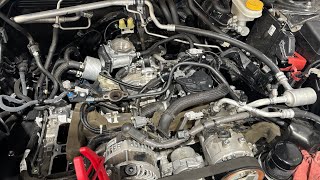
This article covers the 2.5-liter, naturally aspirated (non-turbo) FB25D engine assembly found in the 2023-2025 Subaru Legacy and 2023-2025 Subaru Outback. This engine is part of the FB engine family and features direct injection. The key to a successful replacement is ensuring the used assembly is a perfect match for your vehicle.
How to Confirm Your Engine Code
Before purchasing, you must verify that your car is equipped with this specific engine. You can do this in two ways:
- Check the VIN Plate: Look for the Vehicle Identification Number (VIN) plate at the base of the driver's side windshield or on the sticker in the driver's side doorjamb. The 6th digit of the VIN should be 'A' or 'D'.
- Check the Vehicle ID Plate: This plate is also typically located in the driver's side doorjamb. It will list the engine model code. Confirm that it reads "FB25D" or a variation like "FB25DXZHMA".
Important Interchange Notes
While the Legacy and Outback use the same base FB25D engine, a used engine assembly from one model is not always a direct drop-in for the other. The same is true for other Subarus like the Forester and Crosstrek, which also use versions of the FB25D.
Key differences can include:
| Oil pan design |
| Mounting brackets for accessories |
| Wiring harness routing and connectors |
| ECU (Engine Control Unit) calibration |
Pro Tip: To avoid electronic and fitment problems, the standard and highly recommended practice is to transfer the complete intake manifold and the main engine wiring harness from your original engine onto the replacement unit. This ensures compatibility with your car's computer and chassis wiring.
Warning: This 2.5L naturally aspirated engine will NOT work in Legacy Sport, Legacy Touring XT, or Outback XT/Wilderness models. Those trims use a different 2.4L turbocharged engine (the FA24F).
Is Your Engine Failing? Common Symptoms
Engine failure can manifest in several ways. While some issues can be fixed with bolt-on parts, certain symptoms often point to a problem deep inside the engine assembly, making a full replacement the most practical solution.
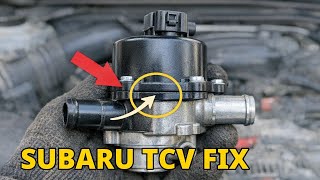
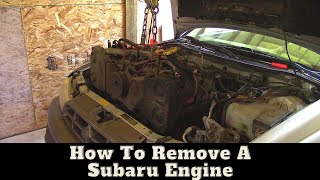
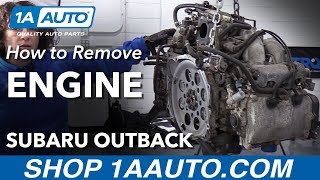
🎬 Watch: Step-by-step Subaru engine removal guide- Catastrophic Overheating: A sudden and severe overheating event, often linked to the failure of the Thermo Control Valve, 🎬 Watch: How to replace the Thermo Control Valve can cause internal warping and damage that is not easily repaired.
- Deep Knocking or Banging Noises: A rhythmic, deep knock from the engine that increases with RPM is a classic sign of a failed connecting rod bearing ("rod knock"). This requires a complete rebuild or replacement.
- Excessive Oil Consumption: While some oil use can be normal, a sudden increase or consumption requiring you to add oil between changes can indicate worn piston rings or cylinder walls.
- Metal Shavings in Oil: Finding significant metallic glitter in your engine oil and filter during an oil change is a clear sign of severe internal wear. This indicates metal-on-metal contact from failing bearings or other components.
- Loss of Compression or Misfires: A persistent misfire (e.g., codes P0301-P0304) combined with a compression test that shows one or more cylinders are low can indicate a blown head gasket, cracked piston, or valve damage.
Diagnostic Flowchart
Known Issues, Recalls, and TSBs

The FB25D engine and the vehicles it's in have several documented issues. Always check your vehicle's VIN for open recalls with a dealer or on the NHTSA website.
Thermo Control Valve (TCV) Failure
| Documents | TSB 09-119-24 / TSB 09-80-21R |
| Affected Years | 2020-2022 Legacy/Outback, 2019-2021 Forester, 2021 Crosstrek |
| Issue | The original electronic valve that regulates engine temperature can fail, causing overheating or error codes (P26A3, P26A5, P2682). The original design could allow coolant to seep into the sensor or the internal shaft could break. |
| Remedy | Subaru introduced a redesigned valve with a stronger stainless steel shaft and better waterproofing (Part #21319AA012). Subaru also extended the warranty for this part to 15 years / 150,000 miles for affected models. It is critical to replace the TCV on a used engine before installation. |
Carbon Buildup on Intake Valves
| Document | TSB 02-193-24 |
| Affected Years | All FB25D direct injection models. |
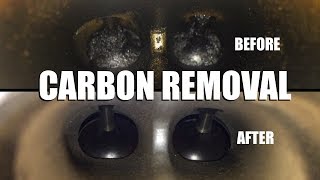
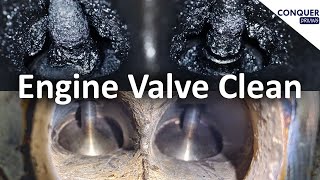
| Issue | Direct injection engines spray fuel directly into the cylinder, so gasoline detergents don't wash over the intake valves. Over time, oil vapor from the crankcase ventilation system can bake onto the valves, causing carbon buildup. This can lead to a rough idle, misfires, and a loss of power. |
| Remedy | The TSB outlines a procedure to clean the valves using walnut-shell blasting. This service is best performed when the engine is out of the vehicle and the intake manifold is removed. |
Recall: Inhibitor Switch Failure
| Documents | NHTSA Recall 23V-755 / Subaru WRQ-23 |
| Affected Years | 2021-2023 Legacy and Outback |
| Issue | An insufficient weld on the inhibitor switch (also called a neutral safety switch) can let water inside, causing it to fail. This can prevent the backup lights and rearview camera from working, stop the gear indicator from displaying, or even prevent the engine from starting. |
| Remedy | Dealers will replace the inhibitor switch with an improved part, free of charge. |
Recall: Driveshaft Center Support Bolts
| Document | NHTSA Recall 23V483000 / Subaru WRN-23 |
| Affected Years | 2023 Legacy and Outback |
| Issue | The bolts holding the driveshaft's center support brace can loosen. If they come out, the front of the driveshaft can detach, increasing the risk of a crash. |
| Remedy | Dealers will clean the mounting surfaces and install new bolts free of charge. |
Recall: Low-Pressure Fuel Pump Failure
| Document | NHTSA Recall 19V856000 |
| Affected Years | 2019-2020 Legacy |
| Issue | The low-pressure fuel pump inside the fuel tank can fail, causing the engine to stall while driving. |
| Remedy | Dealer replacement of the low-pressure fuel pump inside the fuel tank. |
Pre-Purchase Verification & Shipping Reality

Buying a complete engine assembly is a major freight transaction. These units do not ship in standard cardboard boxes via regular parcel services.
| Weight and Dimensions | A complete FB25D engine assembly weighs approximately 425 lbs. Before crating, it measures roughly 40" x 36" x 30". |
| Freight Delivery | This engine ships as LTL (Less Than Truckload) freight on a wooden pallet. You must have a commercial address with a forklift or loading dock, or request a liftgate service for residential delivery. |
Warning: When the freight carrier arrives, inspect the engine thoroughly before signing the delivery receipt. Look for broken sensors, cracked plastic components (like the intake manifold or timing covers), or damage to the oil pan. If you sign for it as "undamaged" and find shipping damage later, filing a claim is nearly impossible.
What Fails at Every Mileage Band
Pro Tip: The mileage bands below describe used replacement units of that mileage. The checklists provided are things to do WHILE INSTALLING the purchased engine, not maintenance for your current engine.
Under 60,000 Miles
Engines in this range are generally very healthy, but early models (2019-2021) are highly susceptible to Thermo Control Valve (TCV) failure. The original polycarbonate plastic valve cracks or fails electronically, causing coolant to leak into the circuitry. This triggers warning lights (Check Engine, EyeSight disabled) and code P26A3. If it fails closed, the engine will overheat rapidly.
- ✓Do during install (required): Inspect the Thermo Control Valve (TCV). If the donor engine is from 2019-2021 or has the older black plastic part, replace it with the updated part (#21319AA012) while the intake is off. This is non-negotiable preventative maintenance.
- ✓Do during install (required): Check the VIN for open recalls, specifically the inhibitor switch and driveshaft bolts, and ensure they have been addressed.
- ✓Do during install (recommended): Perform initial intake valve cleaning (walnut blasting) as carbon deposits begin to form early.
- ✓Cheap insurance while the engine is out: Use this opportunity to replace spark plugs, as the 60,000-mile interval is approaching.
60,000 - 100,000 Miles
As a direct-injection engine, carbon accumulation on the intake valves becomes pronounced in this range, causing rough idle and misfires. Oil leaks from the cam carrier seals, timing chain cover, and valve covers also become common. Repairing a cam carrier leak with the engine in the car is labor-intensive and can cost between $1,000 and $3,000.
- ✓Do during install (required): Perform a thorough intake valve cleaning (walnut blasting) to remove carbon deposits. This is the perfect time to do it while the engine is accessible.
- ✓Do during install (recommended): Replace all major seals and gaskets as a preventative measure: cam carrier seals (using ThreeBond 1217H), timing chain cover, valve cover gaskets, and associated seals.
- ✓Cheap insurance while the engine is out: Replace spark plugs if not already done.
- ✓Cheap insurance while the engine is out: Inspect and likely replace the serpentine belt and idler pulleys.
- ✓Cheap insurance while the engine is out: Change front and rear differential fluids and perform a CVT drain and fill.
100,000 - 150,000 Miles
If not cleaned previously, carbon buildup will cause significant performance issues. The likelihood of major oil leaks increases. Because the FB25D does not have hydraulic lifters, valve clearances need to be checked and adjusted (a service recommended every 60,000 miles but often ignored). Issues with plastic timing chain guides or tensioners can also arise.
- ✓Do during install (required): Assume all recommendations from the 60-100k band are mandatory: full intake valve cleaning, replacement of all major engine seals (cam carriers, timing cover, valve covers), spark plugs, and serpentine belt.
- ✓Do during install (recommended): Inspect timing chain, guides, and tensioner for wear. While it's a 'lifetime' part, replacement is much cheaper while the engine is out.
- ✓Do during install (recommended): Check and adjust valve clearances.
- ✓Cheap insurance while the engine is out: Replace the PCV valve; a clogged valve can contribute to oil consumption.
Over 150,000 Miles
At this mileage, the engine is approaching the latter half of its expected service life (150,000 to 200,000 miles). Failures are more likely to be from cumulative wear on internal components like bearings, piston rings, and the timing chain system. Piston ring wear can lead to significant oil consumption.
- ✓Do during install (required): This engine should be considered a full rebuild candidate or a core. At minimum, perform all services listed for the 100-150k band.
- ✓Do during install (recommended): Strongly consider a more in-depth rebuild: replace timing chain, tensioners, and guides. Inspect and potentially replace piston rings to address oil consumption. Inspect rod and main bearings.
- ✓Cheap insurance while the engine is out: Replace all wear items attached to the engine: water pump, oil pump, all hoses, and sensors.
Real Owner Experiences
| Source | Mileage | What Happened | Cost |
|---|---|---|---|
| YouTube | N/A (Affects 2019-2021 models) | Owner's dashboard lit up, and EyeSight and X-Mode were disabled. The cause was a failed Thermo Control Valve (TCV) leaking coolant internally, which is a known issue covered by a warranty extension. | Covered under Subaru's extended warranty (WMM-23). |
| Lemberg Law | Under 2,000 miles | A 2023 Outback owner reported the windshield needed replacement from a rock chip that should not have caused that level of damage, citing it as a known fragility issue. | Not specified, but likely cost of windshield replacement. |
| 87,000 miles | Owner of a 2019 Outback Premium reported needing to replace CV boots and having a large hole in the exhaust Y-pipe, causing fumes to enter the cabin. | Not specified. | |
| 97,000 miles | Owner of a 2020 Outback with the 2.5L engine reported no oil burning issues. | $0 | |
| YouTube | 105,000 miles | Owner of a 2015 Outback (earlier FB25, but relevant) noted minor oil burning (requiring top-offs every 4,000 miles) and a cracked center console armrest. The transmission and core engine were holding up well. | Cost of supplemental oil. |
| ~170,000 miles | Owner of a 2015 Outback reported that the low engine oil light would come on about 4,000 miles after an oil change, indicating increased oil consumption at higher mileage. | Cost of supplemental oil. | |
| YouTube | 311,000 miles | A commenter on a review video for a 2015 Outback reported their own vehicle had reached 311,000 miles since being purchased with 1,800 miles, suggesting high longevity is possible. | N/A |
| 198,000 miles | Owner of a 2014 Outback needed to replace solenoids in the transmission valve body but reported the engine itself was still driving great. | Not specified, but relates to transmission, not engine block. | |
| N/A (2020 Forester) | Initially quoted for repair at an independent shop, but sought dealer assistance due to a known warranty extension for the TCV. | $0 | |
| 206,000 miles | Owner was quoted $6-7k to replace a blown head gasket engine with a used unit with 136k miles. | N/A | |
| 99,000 miles | Owner was quoted $10,000 for a new engine, not including labor, after a complete engine failure. | N/A | |
| 66,000 miles | Owner was quoted $1600 for TCV replacement. After contacting Subaru of America, they were able to get the full cost covered. | $0 |
Repair or Replace?
Deciding whether to repair your current engine or replace it with a used assembly comes down to the severity of the failure and the cost of parts and labor.
| Thermo Control Valve (TCV) Failure | A typical repair costs $1,600 to $2,400 out of pocket. However, Subaru has extended the warranty to 15 years/150,000 miles for this part on many affected models. This should be a no-cost repair at a dealership. Do not pay an independent shop before checking with a dealer. |
| Carbon Buildup on Intake Valves | This is a maintenance item, not a failure requiring engine replacement. A dealer typically charges $600 to $900 for a walnut-shell blasting service. |
| Inhibitor Switch Failure | This is a recall item (NHTSA 23V-755) and is repaired by the dealer at no cost. |
When Replacement is Smarter: Replacement becomes the smarter option when the engine suffers from catastrophic internal failure, such as a thrown rod, severe oil consumption leading to bearing damage, or a blown head gasket combined with high mileage. If the cost of individual repairs (e.g., head gaskets plus timing components plus addressing oil leaks) approaches or exceeds 50-60% of the cost of a lower-mileage used engine, replacement is the more economical and reliable long-term solution. Used units typically run $1,500 to $3,400, while remanufactured units cost $4,200 to $7,200, and brand new OEM engines range from $8,000 to $11,000.
Engine Replacement Cost Comparison
| Part Type | Estimated Cost (USD) | Notes |
|---|---|---|
| New (OEM) | $8,000 - $11,000 | Brand new from a Subaru dealer. Highest cost but comes with a factory warranty. A new short block alone can cost over $2,000. |
| Remanufactured | $4,200 - $7,200 | Professionally rebuilt to meet or exceed original specifications. Often includes a third-party warranty. |
| Used (OEM Recycled) | $1,500 - $3,400 | A tested, running engine pulled from a salvage vehicle. Mileage and condition vary. This is often the most cost-effective option. |
| Installation Labor | $1,200 - $2,500 | Professional installation at a dealership or independent shop. Labor rates and time estimates (10-14 hours) vary. |
Key Installation & Post-Install Steps

Proper installation is just as important as the quality of the engine itself. Several "gotchas" are specific to Subaru boxer engines that must be handled correctly to avoid immediate and expensive damage.
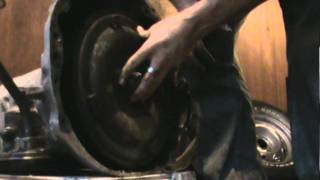
Warning: The torque converter MUST be fully seated into the automatic transmission's oil pump. When removing the old engine, the converter can slide forward. If it's not carefully pushed back and rotated until it engages completely (it will click into place multiple times), bolting the new engine to the transmission will break the pump, destroying the transmission.
After installation, the engine's computer needs to be calibrated to the new sensors. This is not a full ECU re-marriage, as you will reuse your car's original computer. However, a professional bi-directional scan tool (like the Subaru Select Monitor SSM4) is required to perform critical relearn procedures for the variable valve timing (VVT) system and crankshaft position sensor. Failing to do this can result in poor performance and check engine lights.
Questions to Ask Your Installer
- Have you confirmed the torque converter is fully seated in the CVT before mating the engine and transmission?
- Will you be installing the updated Thermo Control Valve (Part #21319AA012 or newer) while the engine is out?
- Do you recommend transferring the intake manifold and wiring harness from my original engine to the donor unit to ensure compatibility?
- What is your process for cleaning the mating surfaces before applying new liquid gasket for the cam carriers and valve covers?
- Will you perform the crankshaft position sensor and VVT relearn procedures with a bi-directional scan tool after installation?
- Does your quote include all necessary consumables like 0W-20 synthetic oil, Subaru Super Coolant (blue), new gaskets, and spark plugs?
- What is the mileage and warranty on the used engine you are sourcing?
- Will you inspect and clean the intake valves for carbon buildup before installing the engine?
Before the First Start: Priming and Fluids
When installing a used engine, all internal parts are dry from sitting. You must prime the oil system (pump oil through the engine before it runs) to prevent instant damage.
Required Fluids and Filters
- Engine Oil: Fill the engine with fresh 0W-16 full synthetic oil. This is the exact weight required for the 2023-2025 FB25D engine.
- Oil Filter: Install a brand-new, high-quality oil filter.
- Engine Coolant: Use only Subaru Super Coolant (the blue fluid) or an equivalent Phosphated Non-Amine (P-OAT) coolant. Do not mix different coolant colors.
How to Prime the Oil System
- Stop the engine from starting: Remove the fuel pump fuse from the fuse box. This stops fuel from reaching the engine.
- Crank the engine: Turn the key or press the start button to crank the engine for 10 to 15 seconds. The engine will spin but will not start.
- Let the starter rest: Wait one full minute so the starter motor does not overheat.
- Repeat: Crank the engine again for 10 to 15 seconds. Watch the dashboard. Stop when the red low oil pressure warning light turns off. This means oil has reached the top of the engine.
- Finish and start: Put the fuel pump fuse back in place. Start the engine normally and check for any leaks.
Frequently Asked Questions
What kind of engine oil does the FB25D use?
The FB25D engine requires 0W-20 full synthetic engine oil. The approximate capacity with a filter change is 4.4 quarts. It is highly recommended to use a high-quality OEM Subaru oil filter (black, Part #15208AA15A or #15208AA160).
Do I need to get the car's computer reprogrammed?
No, you should not swap the Engine Control Unit (ECU) from the donor vehicle. You must reuse your car's original ECU. However, after the new engine is installed, it is mandatory to perform several electronic "relearn" procedures with a professional scan tool so the computer can adapt to the new engine's sensors.
Can I use an engine from a Forester in my Legacy?
No, this is not recommended. While the base engine is the same, an assembly from a Forester will have different mounting brackets, oil pan, and wiring that make it incompatible without significant parts swapping. It is best to source an engine from the exact same model (Legacy or Outback) as your vehicle.
What is the expected service life of the FB25D engine?
The general consensus for the FB25D engine is a service life of approximately 150,000 to 200,000 miles (about 250,000-320,000 km). The single most critical factor for longevity is strict adherence to oil changes with high-quality 0W-20 synthetic oil and frequent oil level checks.
What parts are included with a used FB25D engine assembly?
A standard used assembly typically includes the cylinder block, cylinder heads, all internally lubricated parts, oil pan, valve covers, intake manifold, timing covers, fuel injectors, fuel rails, throttle body, harmonic balancer, and engine wiring harness. It generally excludes the A/C compressor, starter motor, power steering pump, alternator, exhaust manifolds, and catalytic converters.
Do I need special tools to install this engine?
Yes. Beyond standard mechanic tools, you will need an engine hoist and load leveler, a Subaru engine stand adapter, low-torque wrenches (1/4" and 3/8" drive) for the aluminum block fasteners, ThreeBond 1217H liquid gasket, a Subaru-specific flywheel locking tool, and a professional bi-directional scan tool (like SSM4) for the post-install electronic relearn procedures.
Helpful Videos
Technical Specifications
OEM Part Numbers: 21319AA012 15208AA15A 15208AA160
Engine Code: FB25D; Displacement: 2.5 Liters; Aspiration: Naturally Aspirated; Induction: Direct Injection; Oil Type: 0W-20 Full Synthetic; Oil Capacity: 4.4 quarts (with filter); Weight: ~425 lbs; Dimensions: ~40" x 36" x 30" (uncrated); Expected Lifespan: 150,000 - 200,000 miles
We Have This Part in Stock


The information in this article is provided for general reference and educational purposes only. Vehicle specifications, procedures, and part compatibility can vary by production date, trim level, and region. Always consult your vehicle's factory service manual and verify part numbers before purchasing or performing repairs. Safety-critical components such as airbags, seat belts, and braking systems should be installed by a qualified professional.
- Subaru Legacy:
- Subaru Outback:
- 🎬 Helpful Videos
- 🛍️ Shop This Part
- Will This Engine Fit Your Vehicle?
- How to Confirm Your Engine Code
- Important Interchange Notes
- Is Your Engine Failing? Common Symptoms
- Diagnostic Flowchart
- Known Issues, Recalls, and TSBs
- Thermo Control Valve (TCV) Failure
- Carbon Buildup on Intake Valves
- Recall: Inhibitor Switch Failure
- Recall: Driveshaft Center Support Bolts
- Recall: Low-Pressure Fuel Pump Failure
- Pre-Purchase Verification & Shipping Reality
- What Fails at Every Mileage Band
- Under 60,000 Miles
- 60,000 - 100,000 Miles
- 100,000 - 150,000 Miles
- Over 150,000 Miles
- Real Owner Experiences
- Repair or Replace?
- Engine Replacement Cost Comparison
- Key Installation & Post-Install Steps
- Questions to Ask Your Installer
- Before the First Start: Priming and Fluids
- Required Fluids and Filters
- How to Prime the Oil System
- Frequently Asked Questions
- 🎟️ Get 5% Off