

2018-2024 Ram 1500 3.6L Pentastar V6: Problems, Identification, and Used Replacement
Identify the exact 3.6L ERB engine for your Ram 1500 Classic, learn what causes the Pentastar Tick, and know what to replace when installing a used OEM unit.
- After installing a replacement engine, a Cam/Crank Variation Relearn procedure is mandatory using a bidirectional scan tool to prevent timing codes and limp mode.
- Proactively replace the failure-prone plastic oil filter housing with an upgraded aluminum unit during the swap to prevent major future leaks.
- Verify the engine is correct for your truck by confirming the 8th VIN digit is 'G', the wheels are 5-lug, and it does not have the eTorque system.
- If installing a used engine into a 4WD truck, you must transfer the oil pan and oil pickup tube from your original engine to ensure proper fitment with the front differential.
Vehicle Fitment and Identification

This article covers the specific 3.6L Pentastar V6 engine, engine code ERB, used in the 2018 Ram 1500 and the 2019–2024 Ram 1500 Classic. This engine is a 60° V6 with Dual Overhead Cams (DOHC) and 24 valves. It is naturally aspirated, meaning it does not have a turbocharger or supercharger. These trucks were available in both Rear-Wheel Drive (RWD) and 4-Wheel Drive (4WD) configurations.
How to Confirm This Engine Fits Your Truck
Before purchasing a replacement engine, verify it is correct for your specific truck by checking the following:
- Check the VIN: The 8th digit of your truck's Vehicle Identification Number (VIN) must be a 'G'. You can find the VIN on the driver-side dashboard (visible through the windshield) or on the sticker in the driver's door jamb.
- Count the Lug Nuts: Your truck must have 5-lug wheels. This identifies it as the 'DS' body style, sold as the Ram 1500 Classic from 2019 onwards.
- Check for eTorque: This engine does NOT fit trucks equipped with the eTorque mild-hybrid system. An eTorque engine has a large motor-generator unit on top instead of a traditional alternator and is typically found on the 'DT' new-body-style Ram with 6-lug wheels.
Warning: Do not confuse the 2019+ Ram 1500 Classic (DS body style, 5-lug wheels) with the 2019+ Ram 1500 (DT body style, 6-lug wheels). This engine will not fit the new DT body style trucks, especially those with the eTorque system.
RWD vs. 4WD Models
Warning: Used engines are often sourced from RWD (2-wheel drive) vehicles. If you are installing this engine into a 4WD (4x4) truck, you must transfer the oil pan and oil pickup tube from your original engine onto the replacement unit. Failure to do so will result in fitment issues with the front differential.
🎬 Watch: Complete 3.6L Pentastar engine replacement guideCommon Failure Symptoms

An engine may need to be replaced if it shows signs of severe internal damage. While some issues can be repaired, replacement is often more practical if you experience:
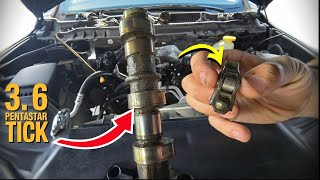
- Loud Ticking or Tapping Noise: A rhythmic ticking that increases with engine speed, often called the "Pentastar Tick," points to a failure in the valvetrain, specifically the rocker arms and camshafts. 🎬 Watch: How to diagnose and fix the Pentastar ticking noise
- Deep Knocking or Banging: A heavy knock from deep inside the engine is a classic sign of bad rod bearings, which is considered a catastrophic failure.
- Major Oil or Coolant Leaks: While some leaks are simple to fix, a cracked block or a severely leaking oil filter housing can justify an engine swap.
- Engine Seizure or Stalling: Complete engine failure can result from oil contamination caused by internal part breakdown.
- Loss of Power and Misfires: Severe internal wear can lead to loss of compression, hesitation, and persistent misfire codes (like P0300) that new spark plugs and coils cannot fix.
Diagnostic Flowchart
Known Problems, Recalls, and Technical Service Bulletins (TSBs)

The 3.6L Pentastar is a widely used engine with several well-documented issues. When buying a used unit, be aware of these potential problems.
Rocker Arm Failure ("Pentastar Tick")
A class-action lawsuit was filed concerning a defect in the valvetrain of 2014–2020 model year vehicles with this engine. The needle bearings in the rocker arms (roller lifters) can fail, causing the arm to scrape against the camshaft. This generates metal debris that contaminates the engine oil, leading to a ticking sound, engine misfires, and eventually catastrophic engine failure.
Pro Tip: Before installing a used engine, have a mechanic remove the valve covers to inspect the camshaft lobes and rocker arms for any visible scoring or excessive wear. Replacing worn rocker arms at this stage is far easier than when the engine is in the truck.
Oil Filter & Cooler Assembly Leaks
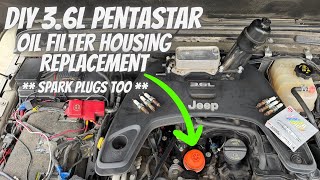
The original oil filter and cooler housing is made of plastic and is prone to cracking from heat and over-tightening the filter cap. This can cause a major oil or coolant leak into the valley of the engine, which can be mistaken for a rear main seal leak as it drips down the back of the bellhousing. Chrysler issued TSB S1809000007 and TSB 09-005-22 to address diagnosis of this leak. Another TSB, 9100279, notes that the oil cooler seal is a serviceable part.
Pro Tip: It is highly recommended to replace the original plastic housing with an upgraded aftermarket aluminum unit during the engine swap. This is a permanent solution to a very common failure point.
Water Pump Coolant Leaks
Coolant leaks from the water pump shaft seal are common. TSB #9100212 (NHTSA ID #10244344) was released for 2016-2024 models with the 3.6L Pentastar, providing inspection instructions for suspected water pump leaks. It is wise to install a new water pump and thermostat on a used engine before installation.
Throttle Blade Icing / PCV Freezing
In extreme cold weather, moisture can freeze in the PCV system or on the throttle blade, causing rough running or stalling. TSB 14-001-23 and TSB 09-002-23 were issued to address this freezing issue across all years.
What Fails at Every Mileage Band
Pro Tip: The mileage bands below describe what to expect from a USED replacement engine with these miles on it. The checklists provided are things you should do WHILE INSTALLING the purchased engine on the stand, not maintenance for your current broken engine.
Under 60,000 Miles
While less common at this mileage, premature failures of the plastic oil filter housing and cooler assembly can occur, sometimes made worse by extreme cold weather. Early signs of the "Pentastar Tick" due to rocker arm bearing failure can appear, though it is more characteristic of higher mileage. Water pump failure is possible but not common; quality OEM pumps are designed to last at least 100,000 miles.
- ✓Do during install (required): Upgrade the OEM plastic oil filter/cooler housing to a quality aftermarket aluminum unit. This is the single most important preventative measure.
- ✓Do during install (required): Replace spark plugs (pre-gapped to 0.043 inches), intake manifold gaskets, and the PCV valve.
- ✓Do during install (required): Use high-quality, full-synthetic 5W-20 oil and an OEM-spec filter.
- ✓Cheap insurance while the engine is out: Even at low mileage, consider replacing the water pump and thermostat since the cooling system is already drained.
60,000 to 100,000 Miles
This is the most common mileage range for the plastic oil filter housing to crack or for its seals to degrade, causing significant oil and/or coolant leaks into the engine valley. The ticking noise caused by failing needle bearings in the rocker arms is a well-documented issue in this range. If not addressed, it can lead to camshaft damage. Water pumps may begin to leak from the shaft seal or bearing, and thermostats can also fail.
- ✓Do during install (required): If not already done, upgrade the oil filter housing to an aluminum unit.
- ✓Do during install (required): Replace spark plugs, ignition coils, PCV valve, and all intake gaskets.
- ✓Do during install (recommended): Inspect all rocker arms and camshaft lobes for wear. Replace any suspect rocker arms to prevent future failure.
- ✓Do during install (recommended): Replace the water pump, thermostat, and serpentine belt.
100,000 to 150,000 Miles
The risk of rocker arm failure leading to damaged camshafts is highest in this range if they haven't been addressed previously. This is often an expensive, labor-intensive repair. If the original plastic oil filter housing has survived this long, failure is highly probable. This is also a common mileage for water pumps to fail if they are original. While the timing chains are designed for the life of the engine, high-mileage examples, especially from fleet use, have shown stretched chains.
- ✓Do during install (required): Perform a thorough inspection of the entire valvetrain, including all rocker arms and camshafts, replacing parts as needed.
- ✓Do during install (required): Replace the oil filter housing with an aluminum unit, water pump, thermostat, spark plugs, coils, and all related gaskets (intake, valve cover, etc.).
- ✓Do during install (recommended): Replace all accessible sensors, like camshaft and crankshaft position sensors, as a preventative measure.
- ✓Cheap insurance while the engine is out: Consider replacing the timing chain and tensioners, especially if there is any audible rattle on startup or evidence of poor maintenance.
150,000+ Miles
At this mileage, any of the previously mentioned issues can occur. The likelihood of major component failure (camshafts, timing components) increases, often dictated by the engine's maintenance history. Some engines may begin to consume more oil due to natural wear on piston rings and valve seals. With proper and proactive maintenance, the 3.6L Pentastar engine is widely regarded as reliable and capable of lasting between 250,000 and 300,000 miles. The single most critical factor for longevity is proactive maintenance, such as using high-quality full synthetic oil and changing it every 3,000 to 5,000 miles.
- ✓Do during install (required): Assume a full refresh is needed. Treat the replacement engine as a long block and proactively replace all common failure items before installation. Replace oil filter housing (aluminum), water pump, thermostat, all gaskets, spark plugs, coils, PCV valve, and serpentine belt.
- ✓Do during install (recommended): Replace the timing chain, guides, and tensioners.
- ✓Do during install (recommended): Replace all rocker arms as a set.
Real Owner Experiences
| Source | Mileage | What Happened | Cost |
|---|---|---|---|
| RamForum.com | 43,000 | Owner purchased a used truck and discovered the common oil filter housing/cooler was leaking. | N/A (DIY with aftermarket part) |
| RamForum.com | 52,000 | An oil leak developed, suspected to be the oil filter housing, which seemed to appear only in extreme cold temperatures. | N/A (Covered by extended warranty) |
| 62,000 | Misfire on the highway just outside of the 60k powertrain warranty led to a diagnosis of rocker arm/cam failure, requiring a 'cam kit'. The dealer found metal flakes in the oil filter. | $2,300 (for cam kit) | |
| RamForum.com | 80,000 | Oil filter housing began leaking suddenly. | N/A (DIY) |
| RamForum.com | 85,000 | Engine developed a ticking noise, and metal shavings were found in the oil filter, indicating rocker arm/camshaft issues. | N/A (DIY repair) |
| RamForum.com | 93,000 | Water pump began leaking coolant from the bearing. | $450 (at independent mechanic) |
| RamForum.com | 105,000 | The 'dreadful day' of oil filter housing failure occurred. The owner decided to replace spark plugs, coils, and valve cover gaskets at the same time. | N/A (DIY) |
| RamForum.com | 107,000 | Water pump required replacement shortly after purchasing the truck. | N/A |
| 114,000 | A blown head gasket was discovered along with worn cam lobes causing a misfire, leading to a recommendation for a full engine replacement. | $9,800 (Quote for engine replacement) | |
| reddit.com | 126,000 | Quoted for 'Pentastar Tick' repair on a 2014 Jeep Grand Cherokee. | $2,300.00 |
| RamForum.com | 160,000 | Truck running well, only non-engine maintenance reported was front wheel bearings and an evaporative emissions system pump. | $22 (for emissions part) |
| RamForum.com | 200,000 | Received a quote from Jasper for a remanufactured engine (part only) for a 2014 model. | $6,617.61 (Quote) |
| 206,000 | Owner experienced an oil cooler failure and later a cam/lifter tick issue. Switched to more frequent oil changes (every 2-3k miles) afterward. | N/A | |
| RamForum.com | 626,000 | A Ram ProMaster (fleet vehicle) with a 3.6L Pentastar experienced timing chain stretch and tensioner failure, necessitating an engine replacement. Teardown of the old engine showed its high-mileage condition. | N/A (Engine replaced) |
| RamForum.com | 98,000 | Replaced engine with a low-mileage used unit on a 2018 Express 4x4. | $7,500.00 |
| RamForum.com | Not Stated | Quoted for a rebuilt engine replacement by a dealership for a 2014 Ram 1500. | $9,400.00 |
| bobistheoilguy.com | Not Stated | Had leaking oil filter/cooler housing replaced by a non-dealer shop on a 2014 Ram 1500. | $1,100.00 |
Repair or Replace?

Deciding whether to repair your current engine or replace it with a used unit comes down to the severity of the failure and the overall cost.
When Repair Makes Sense
- Rocker Arm Failure / 'Pentastar Tick': If the ticking noise is the only symptom and there are no signs of catastrophic failure like metal shavings in the oil or flashing check engine lights, repair is much cheaper than replacement. A typical repair costs between $1,500 and $2,500.
- Oil Filter Housing & Cooler Assembly Leaks: This is a common and relatively straightforward repair that almost never justifies engine replacement on its own. A typical repair costs between $650 and $1,100. It is highly recommended to upgrade to an aftermarket aluminum housing during the repair.
When Replacement is Smarter
Replacement is the better option when catastrophic failure has occurred, such as a shattered camshaft, a dropped valve, or significant metal contamination throughout the oiling system. Also, if multiple major issues exist simultaneously (for example, severe rocker arm failure combined with head gasket issues), the cumulative repair cost can approach or exceed the cost of a lower-mileage used engine. Used replacement engines typically range from $1,800 to $3,400, while remanufactured units range from $3,900 to $6,300 (often requiring a $600+ core deposit). One owner reported a total replacement cost of $7,500 for a used engine and labor after a head gasket failure at 98,000 miles.
Questions to Ask Your Installer
- Have you performed the Cam/Crank Variation Relearn procedure on a Pentastar engine before?
- Will you be installing an upgraded aluminum oil filter housing or reusing the plastic one?
- Will you be replacing the spark plugs, PCV valve, and all necessary gaskets during the installation?
- What brand and type of coolant and oil will you be using?
- If my truck is 4WD, are you aware that you need to transfer my original oil pan and pickup tube?
- What is your warranty on parts and labor?
Installation Essentials and Gotchas
Replacing this engine requires Advanced to Expert DIY skills. Shop labor for installation typically takes 12 to 20 hours, costing between $1,800 and $3,500. You will need special tools, including a heavy-duty engine hoist, a load leveler, fuel line disconnect tools, and a professional-grade bidirectional scan tool.
What's Included in a Used Assembly
A used engine assembly from a recycler typically includes the core engine but not the accessories. Expect it to come with:
- Engine block and cylinder heads
- All internally lubricated parts (crank, pistons, cams, etc.)
- Oil pan, valve covers, and timing covers
- Intake manifolds (upper and lower)
- Fuel injectors and fuel rail
- Throttle body and harmonic balancer
You must reuse the following from your old engine:
- Alternator, A/C compressor, and starter motor
- Power steering pump
- Exhaust manifolds
- All engine wiring harnesses and engine mounts
Required Parts and Fluids
Always use new gaskets and fluids during an engine swap to prevent leaks and ensure longevity.
- Engine Oil: Approximately 6.0 quarts of API-certified SAE 5W-20 synthetic-blend or full-synthetic oil meeting FCA specification MS-6395.
- Oil Filter: OEM-spec cartridge oil filter.
- Coolant: Mopar-approved OAT (Organic Additive Technology) 10-Year/150,000-Mile purple coolant (MS-12106). Do not mix with generic green or HOAT orange/yellow coolants, as this causes gelling and clogging.
- Gaskets: New upper and lower intake manifold plenum gaskets and exhaust manifold gaskets are essential.
- Tune-Up Parts: Install 6 new spark plugs (pre-gapped to 0.043 inches), a PCV valve, a thermostat, and a water pump (highly recommended).
Critical: Cam/Crank Relearn Procedure Required! After installation, a Cam/Crank Variation Relearn (CKP Relearn) and Throttle Body relearn procedure must be performed using a dealer-level scan tool or high-end bi-directional OBD2 diagnostic tool. Skipping this step will trigger immediate timing correlation codes (P0016, P0017, P0018, P0019, P0300), cause rough idling, and can force the transmission into limp-home mode. Many people mistakenly assume the replacement engine is faulty when this mandatory step is missed.
Common Mistakes and Gotchas to Avoid
- Over-tightening the Oil Filter Cap: The plastic oil filter housing cap must be torqued strictly to 18 lb-ft (25 N·m). Over-tightening will crack the plastic housing body below.
- Intake Manifold Torque: Plastic upper and lower intake manifolds must be torqued in sequence to 7–9 lb-ft (10 N·m) to prevent vacuum leaks.
- Reusing Old Gaskets: Reusing flattened upper and lower intake manifold gaskets causes vacuum leaks and lean codes.
- Forgetting the PCV Valve: The PCV valve is located at the back of the passenger-side valve cover and is extremely difficult to reach once the engine is installed. Swap it while the engine is on the stand.
- Using an Impact Gun: Fragile aluminum block threads strip easily. Use a torque wrench and hand tools, not an impact gun.
- Torque Converter Bolts: There are 6 torque converter bolts accessed through the starter pocket. Mark the crankshaft pulley every 120 degrees to locate them.
- Reluctor Wheels: Ensure reluctor wheels on the back of the camshafts are perfectly aligned to avoid permanent timing codes.
- Wiring Harness: You must reuse your original engine wiring harness. Do not attempt to use a harness from a different model year or vehicle platform.
Freight & Delivery Reality

When ordering a used 3.6L Pentastar engine, understand that it will not arrive in a cardboard box via standard parcel delivery. This engine assembly weighs approximately 530 lbs and measures roughly 48" x 40" x 38" before crating. It ships as LTL (Less-Than-Truckload) freight on a wooden pallet.
Because of its size and weight, delivery requires a freight truck equipped with a liftgate if you are delivering to a residential address or a shop without a loading dock. Always inspect the engine thoroughly while it is still on the pallet and before signing the delivery receipt. Check for any damage to the plastic intake manifolds, valve covers, or aluminum block that may have occurred during transit. A proper pre-purchase verification interview with the seller is an industry best practice to ensure you are getting the correct VIN G, 5-lug, non-eTorque engine for your truck.
Before the First Start: Fluids and Priming
When installing a used engine, you must use fresh fluids and build oil pressure before letting the engine run. This prevents a dry start, which is when metal parts rub together without oil and instantly ruin the engine bearings.
1. Add Fresh Oil and Coolant
Never reuse old fluids. Fill the engine with the correct, factory-specified oil and coolant:
- Engine Oil: Use 6 quarts of 0W-20 engine oil that meets Chrysler material standard MS-6395. Always install a brand-new oil filter cartridge.
- Engine Coolant: Use Mopar 10-Year/150,000 Mile OAT (Organic Additive Technology) coolant. This meets standard MS-12106 and is purple.
2. Prime the Oil System (Pre-Lube)
A used engine has been sitting dry. You must pump oil through the engine before it actually fires up and runs. Follow these steps:
- Disable the fuel system: Open the fuse box under the hood and remove the fuel pump fuse or relay. This stops fuel from entering the engine.
- Crank the engine: Turn the key and let the starter spin the engine for 10 to 15 seconds. Because there is no fuel, the engine will not start. This spinning action allows the oil pump to push fresh oil to the top of the engine.
- Rest the starter: Wait one full minute so the starter motor does not overheat.
- Repeat: Crank the engine for another 10 to 15 seconds. Watch the dashboard oil pressure gauge or warning light. Stop when you see oil pressure register on the dash.
- Start the truck: Reinstall the fuel pump fuse or relay. Start the engine normally and let it idle. Listen for any strange noises and check underneath for fluid leaks.
Frequently Asked Questions (FAQ)
Will this engine fit my 2020 Ram 1500 with 6-lug wheels?
No. A truck with 6-lug wheels is the newer 'DT' body style. This engine is only for the 'DS' body style, sold as the Ram 1500 Classic from 2019-2024, which has 5-lug wheels and does not use the eTorque system.
My mechanic installed the engine and now I have a P0016 code. Is the engine bad?
Not necessarily. A P0016 code (Crankshaft/Camshaft Position Correlation) is a very common result of failing to perform the mandatory Cam/Crank Variation Relearn procedure after installation. Ensure this procedure is done with a compatible bidirectional scan tool before condemning the engine.
Do I need to reprogram my truck's computer (ECU/PCM)?
No, a full reprogram or "flash" is not required if you are using the exact same engine type. However, the specific Cam/Crank Variation Relearn and throttle body relearn procedures are mandatory for the Powertrain Control Module (PCM) to recognize the new engine's sensor tolerances.
Can I use this engine in a Jeep Wrangler or Dodge Charger?
Only as a "long block." While the core internal components are the same, swapping into non-Ram vehicles requires stripping down to the long block and transferring your original oil pan, pickup tube, timing cover, engine mounts, accessory brackets, wiring harness, and intake manifolds. This is an advanced-level swap.
What type of coolant should I use in this engine?
You must use Mopar-approved OAT (Organic Additive Technology) 10-Year/150,000-Mile purple coolant (MS-12106). Mixing this with generic green or HOAT orange/yellow coolant will cause the fluids to gel and clog the cooling system.
Why does my engine stall or run rough in extreme cold weather?
This can be caused by moisture freezing on the throttle blade or within the PCV system. Chrysler issued TSB 14-001-23 and TSB 09-002-23 to address this specific throttle blade icing and PCV freezing issue.
Helpful Videos

Technical Specifications
Engine Code: ERB; Displacement: 3.6L; Configuration: 60° V6; Valvetrain: DOHC, 24 valves; Aspiration: Naturally Aspirated; VIN Digit: G (8th); Wheel Lugs: 5-lug wheels; Oil Type: SAE 5W-20 Full-Synthetic (MS-6395); Oil Capacity: 6.0 quarts; Coolant Type: OAT (MS-12106) Purple; Spark Plug Gap: 0.043 inches; Oil Filter Cap Torque: 18 lb-ft (25 N·m); Intake Manifold Torque: 7–9 lb-ft (10 N·m)
We Have This Part in Stock


The information in this article is provided for general reference and educational purposes only. Vehicle specifications, procedures, and part compatibility can vary by production date, trim level, and region. Always consult your vehicle's factory service manual and verify part numbers before purchasing or performing repairs. Safety-critical components such as airbags, seat belts, and braking systems should be installed by a qualified professional.
- Ram 1500:
- Ram 1500 Classic:
- 🎬 Helpful Videos
- 🛍️ Shop This Part
- Vehicle Fitment and Identification
- How to Confirm This Engine Fits Your Truck
- RWD vs. 4WD Models
- Common Failure Symptoms
- Diagnostic Flowchart
- Known Problems, Recalls, and Technical Service Bulletins (TSBs)
- Rocker Arm Failure ("Pentastar Tick")
- Oil Filter & Cooler Assembly Leaks
- Water Pump Coolant Leaks
- Throttle Blade Icing / PCV Freezing
- What Fails at Every Mileage Band
- Under 60,000 Miles
- 60,000 to 100,000 Miles
- 100,000 to 150,000 Miles
- 150,000+ Miles
- Real Owner Experiences
- Repair or Replace?
- When Repair Makes Sense
- When Replacement is Smarter
- Questions to Ask Your Installer
- Installation Essentials and Gotchas
- What's Included in a Used Assembly
- Required Parts and Fluids
- Common Mistakes and Gotchas to Avoid
- Freight & Delivery Reality
- Before the First Start: Fluids and Priming
- 1. Add Fresh Oil and Coolant
- 2. Prime the Oil System (Pre-Lube)
- Frequently Asked Questions (FAQ)
- 🎟️ Get 5% Off