

2020-2023 Ram 1500 3.0L EcoDiesel: Problems, Identification, and Used Replacement
Identify the Gen 3 VM Motori L630, understand its critical failure points, and learn exactly what it takes to successfully swap in a used OEM engine.
- If replacing an engine due to High-Pressure Fuel Pump (HPFP) failure, you MUST replace the entire fuel system to prevent immediate damage to the new engine.
- Confirm you have the Gen 3 engine by checking for an 'M' in the 8th VIN position and 6-lug wheels; it is not interchangeable with Jeep or Ram Classic EcoDiesel engines.
- Engine replacement is an expert-level job requiring a cab-off procedure and specialized tools like the FCA wiTECH 2.0 for mandatory programming of injector codes and sensor relearns.
- Use only 5W-40 full synthetic oil meeting FCA spec MS-12991 and Mopar OAT coolant (MS-12106) to prevent lubrication and emissions system damage.
Identifying the 3rd Generation 3.0L EcoDiesel Engine

The engine used in 2020-2023 Ram 1500 diesel trucks is the 3rd Generation 3.0L EcoDiesel, also known by its manufacturer family name, the VM Motori L630. This 60-degree V6 engine features dual overhead camshafts (DOHC), 24 valves, and is turbocharged with common-rail direct injection. It was a significant redesign from the previous generation, aimed at improving performance and efficiency.
VIN and Engine Codes
The easiest way to confirm your truck has this specific engine is by checking the Vehicle Identification Number (VIN). The 8th character of the VIN will be an 'M'. This code positively identifies the vehicle as being equipped with the Gen 3 3.0L EcoDiesel. The engine is also identified by the sales code 'EXH'. It is available in both 4x4 and 4x2 drivetrain configurations.
Key Visual Checks
This engine is exclusive to the 'DT' body style Ram 1500, which is the "new style" platform introduced in 2019. A key external identifier for this platform is its 6-lug wheel bolt pattern. If your Ram 1500 has 5-lug wheels, it is likely a Ram Classic ('DS' body), which uses a different engine.
What It Does NOT Fit
It is critical to understand that this engine assembly is not a direct replacement for other vehicles that use a 3.0L EcoDiesel. It will not fit:
- Ram 1500 Classic (DS Body): The older 'Classic' body style continued to be sold alongside the new DT platform and uses the 2nd generation EcoDiesel.
- Jeep Wrangler (JL) or Gladiator (JT): While these Jeeps use a version of the Gen 3 EcoDiesel, their engine assemblies are different. Key distinctions include the oil pan design, engine mounting points, accessory drive configuration (how the alternator, A/C compressor, etc., are mounted), and wiring harnesses.
Attempting to install a Ram-specific engine into a Jeep (or vice-versa) will result in significant fitment issues.
Common Failure Symptoms

A failing 3.0L EcoDiesel can present several distinct symptoms. If you experience any of the following, it may indicate a severe internal problem requiring engine replacement.
🎬 See how mechanics diagnose a blown EcoDiesel engine.- Sudden Engine Stall: The engine may shut off without warning while driving, sometimes preceded by a "Service Electronic Throttle Control" message on the dash. This is a classic symptom of a failed high-pressure fuel pump.
- Loud Knocking or Ticking Noises: A rhythmic clanking or heavy ticking sound from the engine bay can point to catastrophic internal failures like connecting rod bearing failure or camshaft and lifter damage. 🎬 Watch a teardown of a catastrophic EcoDiesel engine failure.
- Low Oil Pressure Warning: A low oil pressure light followed by engine noises often means a severe loss of lubrication, which can quickly destroy bearings and other internal components.
- Metal Shavings in Fuel Filter: Discovering metallic debris during a routine fuel filter change is a definitive sign 🎬 Watch this step-by-step fuel filter replacement guide. that the high-pressure fuel pump is disintegrating and has contaminated the entire fuel system.
- No-Start Condition: After a sudden stall, the engine may refuse to restart.
Diagnostic Flowchart
Known Problems, Recalls, and Technical Service Bulletins (TSBs)

The Gen 3 EcoDiesel has several well-documented issues that potential buyers and owners should be aware of. Many are addressed by official recalls or manufacturer service bulletins.
| Problem | Affected Years | Details | Official Action |
|---|---|---|---|
| High-Pressure Fuel Pump (HPFP) Failure | 2020–2022 | The Bosch CP4.2 high-pressure fuel pump is known to fail prematurely. When it fails, it sheds metal debris throughout the entire fuel system, including the fuel lines, rails, and injectors. This not only starves the engine of fuel, causing it to stall, but also contaminates all downstream components. | Recall: NHTSA Campaign ID 22V-767000 (FCA/Stellantis recall Z96). Dealers will replace the HPFP with an updated part (Mopar Kit CSSMZ461AA). If contamination is found, the repair may also include replacing additional fuel system components. |
| Incorrect Fuel Mixture / Engine Stall | 2021 | A software defect in the Powertrain Control Module (PCM) can create an overly rich fuel mixture, leading to an unexpected engine stall. | Recall: Addressed by NHTSA Campaign ID 23V-265 (FCA recall 37A). Dealers will update the PCM software free of charge to prevent engine stalls. |
| EGR Cooler Bypass Valve Malfunction | 2020 | The Exhaust Gas Recirculation (EGR) system's cooler bypass valve can get stuck, which may trigger a Malfunction Indicator Lamp (MIL). This TSB addresses numerous potential Diagnostic Trouble Codes (DTCs), including P26FB-00 for the EGR cooler bypass. | TSB: This issue is detailed in Technical Service Bulletin 18-008-21. The solution is to reprogram the Powertrain Control Module (PCM) with the latest software available from the dealer. |
| Camshaft and Lifter Failures | 2020–2023 | These engines can suffer from premature wear of the camshaft lobes and lifter rollers. This typically results in a distinct ticking noise, misfires, and an eventual loss of power. The issue may be worsened by extended periods of high idle time and heavy towing. | Remedy: This is a mechanical failure requiring the physical replacement of the damaged camshaft(s) and lifters. To help prevent this, owners should use the specified engine oil and minimize high-idle scenarios. |
| Turbocharger Boost Control Module Performance | 2020-2023 | A malfunctioning boost control actuator can cause the Malfunction Indicator Lamp to illuminate and may set DTCs like P00AF or P226C. | TSB: This is referenced in TSB S2018000009. Depending on the diagnosis, the fix may involve a simple actuator calibration or a complete replacement of the actuator and/or the entire turbocharger assembly. |
| Loose Ground Bolt | 2020 | A loose ground bolt can cause electrical anomalies. | Recall/TSB: Addressed under Customer Satisfaction Notification W14. Inspect and secure the ground bolt. |
Warning: If you are replacing an engine due to HPFP failure, you MUST replace the entire fuel system. This includes the fuel injectors, fuel rails, all high and low-pressure fuel lines, and the fuel tank must be dropped and cleaned. Failure to do so will cause metal debris to immediately destroy the fuel system on the replacement engine.
What Fails at Every Mileage Band
Pro Tip: The mileage bands below describe the typical condition and known failure points of USED REPLACEMENT engines at these mileages. The checklists provided are critical steps to perform WHILE INSTALLING the purchased used engine, not general maintenance advice for your current truck.
Under 60,000 Miles
Even low-mileage Gen 3 EcoDiesels are not immune to catastrophic issues. The Bosch CP4.2 High-Pressure Fuel Pump (HPFP) is a notorious weak point, with failures reported at very low mileages, sometimes under 30,000 miles. When it fails, it sends metal debris throughout the entire fuel system. Some engines have also experienced catastrophic connecting rod or main bearing failures before 20,000 miles, often attributed to manufacturing defects or oil starvation. EGR cooler issues, including clogging, have been reported as early as 26,000 miles. Oil cooler failures and sensor issues (like coolant temperature sensors) also occur in this band.
- ✓Do during install (required): Verify HPFP Recall Status. Absolutely confirm the NHTSA Z96 recall for the HPFP has been performed. If not, this should be the top priority. Use all new, correct specification fluids and filters, including 5W-40 synthetic oil meeting MS-12991 and Mopar OAT coolant (MS-12106).
- ✓Do during install (recommended): Thoroughly inspect the EGR cooler for any signs of leaks or soot buildup.
- ✓Cheap insurance while the engine is out: Replace the oil cooler and all associated gaskets as a preventative measure while access is easy.
60,000 - 100,000 Miles
This is a common mileage range for EGR coolers and valves to fail or become severely clogged, leading to performance issues, check engine lights, and potential coolant loss. Oil leaks from the oil pan or valve covers may begin to appear. Issues with various engine sensors become more common. If the original HPFP is still in place, the risk of failure continues to be a major concern.
- ✓Do during install (required): Perform a complete service including engine oil, coolant, and fuel filters.
- ✓Do during install (recommended): Strongly consider replacing the EGR cooler, not just cleaning it. Aftermarket solutions are available that claim improved reliability. This is a high-labor job once the engine is in the truck. Replace the serpentine belt and inspect the tensioner for wear.
- ✓Cheap insurance while the engine is out: Proactively replace the valve cover gaskets, oil pan gasket, and turbocharger oil/coolant line O-rings to prevent future leaks.
100,000 - 150,000 Miles
Catastrophic engine failure due to spun bearings can still occur in this higher mileage range, especially if maintenance has been deferred. The turbocharger can fail due to wear and tear or oil supply issues, often throwing a P00AF code. While designed to last the life of the engine, timing chains can stretch or wear, especially with extended oil change intervals. Problems with the Diesel Particulate Filter (DPF) and other emissions components become more prevalent.
- ✓Do during install (required): Thoroughly inspect the turbo for shaft play and signs of oil leaks.
- ✓Do during install (recommended): Replace the water pump and thermostat as preventative maintenance. The reluctor ring for the crankshaft position sensor is a known failure point; replacing the sensor and inspecting the ring is recommended.
- ✓Cheap insurance while the engine is out: Given the labor involved, it is highly advisable to replace the timing chain, guides, and tensioners while the engine is out.
Over 150,000 Miles
At this mileage, any of the previously mentioned issues can occur. The primary driver of failure is the cumulative effect of wear on major components like the timing system, turbocharger, and internal engine bearings. The probability of a major failure increases significantly. Many mechanics consider 150,000 to 200,000 miles to be the expected design life of the engine before major components require replacement.
- ✓Do during install (required): Treat the engine as a core that needs significant preventative work. The mandatory replacement list includes the timing chain set, oil pump, water pump, thermostat, all gaskets and seals, EGR cooler, and turbocharger.
- ✓Do during install (recommended): Remove the oil pan and inspect a main and rod bearing for signs of excessive wear before installing the engine.
- ✓Cheap insurance while the engine is out: A complete overhaul of external accessories and sensors should be considered.
Real Owner Experiences
The following table details actual owner experiences with the Gen 3 3.0L EcoDiesel, highlighting the mileage at failure, the specific issue, and the associated costs.
| Source | Mileage | What Happened | Cost |
|---|---|---|---|
| 28,550 | High-pressure fuel pump (HPFP) exploded, causing a total loss of power. The failure occurred just 40 days after the manufacturer's warranty expired. | Not specified, but a full fuel system replacement can cost over $12,000. | |
| RamForum.com | 58,000 | The engine was shaking with a noticeable loss of power. After being cleared by a dealer, it failed completely two weeks later and required a full replacement. | Quoted at $16,581.63 by the dealership. |
| 37,000 | Spun a bottom-end bearing, requiring a complete engine replacement on a 2021 model. | Covered under warranty. | |
| EcoDieselRam.com | 9,400 | HPFP failed on a 2019 Classic model, requiring replacement of the pump, fuel rails, and injectors. | N/A |
| 99,000 | After experiencing a butterfly valve issue at 63,000 miles and a coolant temp sensor failure, the truck required a new EGR intake manifold and more sensors. | Out of pocket. | |
| YouTube Comment | 85,000 | High-pressure fuel pump failed on a 2018 model. | Covered under warranty, but was quoted at $14,000 for an out-of-pocket repair. |
| RamForum.com | 45,000 (73,000 km) | Engine blew up, dealer offered very little for the truck. | N/A |
| 136,000 | Engine threw a rod bearing and grenaded, despite oil changes every 3,000 miles. The owner suspected recurring EGR and emissions issues contributed to the failure. | Complete engine failure. | |
| EcoDieselRam.com | 150,000 | Engine failed while driving. The owner's extended warranty had expired at 135,000 miles. | Estimated $7,500 to $10,000 for a replacement engine. |
| YouTube Teardown | 124,000 (200,000 km) | Spun a connecting rod bearing due to suspected oil starvation. The engine was from a 2020 Ram 1500. | Owner paid over $12,000 to replace the engine. |
| 198,000 | Owner proactively deciding to replace the timing chain for the first time. | Preventative maintenance. | |
| RamForum.com | 150,000+ | A forum member is noted to be approaching 300,000 miles on a Gen 3 engine, indicating that high mileage is possible with proper care. | N/A |
| EcoDieselRam.com | 110,000 | Replaced engine. | $14,000 |
| RamForum.com | 90,000 | Seeking advice, did not state final action. | Quoted $19,000 |
| RamForum.com | 108,000 | Replaced engine. | $12,000 (Quoted $16,000) |
| RamForum.com | 68,000 (110,000 km) | Replaced engine. | $15,000 |
| EcoDieselRam.com | 130,000 | Dealer quoted for replacement ($11k engine, $6k labor). | Quoted $17,000 |
| YouTube | 124,000 (200,000 km) | Replaced engine due to spun connecting rod bearing. | $12,000 |
| 62,000 (99,500 km) | Engine failed due to a stuck injector shortly after a dealer service. | Quoted $55,000 |
Repair or Replace?
Deciding whether to repair your existing engine or replace it entirely depends heavily on the type of failure.
When Repair Makes Sense
- High-Pressure Fuel Pump (HPFP) Pre-Contamination: If you are replacing the Bosch CP4.2 pump before it fails and sends metal debris through the fuel system, this is a preventative repair. A shop may charge around $800 for labor, plus the cost of a revised pump, totaling roughly $1,500 to $2,500.
- EGR Cooler Bypass Valve / Software Issues: When the issue is limited to a faulty valve or can be fixed with a PCM software update (as per TSBs), repairs typically range from $200 to $1,000.
- Camshaft and Lifter Failure (Minor): If the damage is caught early and is limited to only the camshaft lobes and lifters without further metal contamination throughout the engine, a repair is viable. This intensive repair usually costs between $2,500 and $5,000.
When Replacement is Smarter
Replacement is the recommended path when a catastrophic internal failure occurs. This includes spun rod bearings (bottom-end failure), crankshaft damage, or significant metal contamination in the oil or fuel system from an HPFP failure. Attempting a full rebuild is complex, and finding a specialist can be difficult; one rebuilder quotes around $7,000 to $8,000 just for the rebuild if the crank is salvageable. Given the high cost of failure, a tested used engine is often the most economical choice over a dealership's new crate engine.
Questions to Ask Your Installer
Before handing over your truck, ask your mechanic these specific questions to ensure they are qualified for this complex job:
- What is your experience with the Gen 3 EcoDiesel, and do you recommend a cab-on or cab-off installation method?
- How do you prime the oil and high-pressure fuel systems on the new engine before the first start-up to prevent damage?
- Do you have the FCA wiTECH 2.0 scan tool (or equivalent) required for programming?
- Will you be programming the unique IMA codes from the replacement injectors into my vehicle's PCM?
- Will a crankshaft position (CKP) sensor relearn procedure be performed?
- Can you verify if the NHTSA Z96 (HPFP) recall has been performed on this replacement engine before you install it?
- What specific brand and type of 5W-40 synthetic oil (meeting FCA MS-12991) and OAT coolant (MS-12106) will you be using?
- Will you be transferring my original engine wiring harness to the donor engine to ensure compatibility?
Replacement Cost Estimates
When an engine fails, the replacement cost can vary significantly based on the type of engine you choose. Labor for this job is substantial due to its complexity.
| Item | Estimated Cost (USD) | Notes |
|---|---|---|
| New (OEM Crate Engine) | $14,000 - $20,000+ | Brand new from the manufacturer, often includes a warranty. Prices can be very high and may not include all components. |
| Remanufactured (OEM) | $8,000 - $12,000 | Rebuilt to factory specifications, often with updates to correct original flaws. A good balance of cost and reliability. |
| Used (OEM Recycled) | $7,500 - $10,000 | A tested, running engine pulled from a wrecked vehicle. Price depends heavily on mileage and included components. |
| Labor to Install | $2,250 - $6,000 | Based on an estimated 15-25 shop hours. This is a complex job that requires special tools and procedures. |
Installation and Programming: Key Considerations

Replacing this engine is a job for an experienced professional, not a casual DIYer. The process involves several critical steps that, if missed, can lead to immediate damage to the replacement engine.
Labor and Special Tools
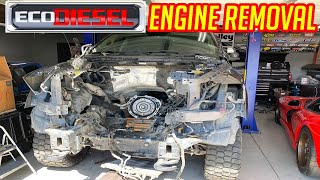
This is an expert-level installation. The most efficient and widely recommended method for swapping this engine is to lift the truck's cab off the frame. Attempting to do it with the cab on is extremely difficult and risks damaging wiring, sensors, and firewall-mounted components.
Warning: The cab-off method is highly recommended. It requires a two-post vehicle lift and specialized cab-lifting brackets to perform safely and efficiently.
Special tools are required, including:
- FCA wiTECH 2.0 diagnostic scan tool for programming and system priming.
- Fuel system pressure testing adapters.
- Engine and cab lifting equipment.
Required Programming
After the mechanical installation, several electronic programming steps are mandatory. A dealer or a well-equipped independent shop with the proper scan tool must perform these procedures.
- Fuel Injector Flow Coding: Each injector has a unique 20-digit IMA code printed on it. This code must be programmed into the PCM. It tells the computer the precise flow rate of that specific injector, allowing for balanced and efficient combustion. Skipping this step will cause a rough idle, engine knock, and poor performance.
- Crankshaft Position (CKP) Sensor Relearn: This procedure calibrates the PCM to the minor variations of the new engine's crankshaft position sensor, ensuring accurate ignition and fuel timing.
- PCM VIN Programming: The PCM must be programmed to the vehicle's VIN to ensure all modules communicate correctly.
Essential Replacement Parts and Fluids
Always use new gaskets, seals, and fluids during an engine swap to prevent leaks and ensure longevity. The following parts and fluids are required:
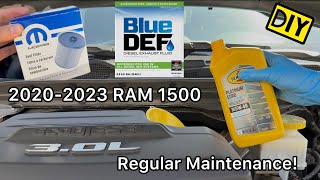
- Engine Oil: 5W-40 full synthetic diesel oil meeting FCA Material Standard MS-12991 (e.g., Pennzoil Platinum Euro 5W-40). Using the wrong oil (like the MS-10902 spec for the Gen 2 engine) can cause lubrication and emissions system damage.
- Coolant: Mopar OAT Coolant meeting specification MS-12106.
- Filters: New Mopar oil filter (Part #68507598AA) and fuel filter element.
- Gaskets and Seals: Intake and exhaust manifold gaskets, turbocharger oil/coolant line O-rings.
- Hardware: Torque-to-yield (TTY) bolts for the flexplate/flywheel and harmonic balancer must be replaced, as they are single-use only.
- Serpentine Belt: It is always best practice to install a new belt.
Pro Tip: Before starting the new engine for the first time, the oil and fuel systems must be primed. The fuel lift pump should be activated with a scan tool to bleed air and prevent the HPFP from running dry. The oil system should be primed by cranking the engine with the fuel system disabled to build oil pressure and lubricate the turbocharger and bearings.
Freight, Delivery, and Pre-Purchase Verification

Buying a used engine assembly is a major freight transaction. These units do not ship as standard parcels.
- Shipping Reality: A complete 3.0L EcoDiesel assembly weighs approximately 650 lbs and measures roughly 40" x 36" x 42" before crating. It will ship as LTL (Less-Than-Truckload) freight on a pallet.
- Delivery: You will need a commercial address with a forklift or a loading dock, or you must request liftgate service for residential or standard shop delivery.
- Inspection: Always inspect the engine for transit damage before signing the delivery receipt. Once you sign, you are accepting the condition of the freight.
Before purchasing, verify your exact vehicle specifications. Check the VIN plate on the dashboard or driver's door jamb to confirm the 8th character is an 'M'. Confirm your truck has 6-lug wheels, and identify if it is 4WD or 2WD to prepare for any necessary oil pan or bracket transfers.
Frequently Asked Questions (FAQ)
Can I use an engine from a Jeep Gladiator or Wrangler EcoDiesel?
No. While they are part of the same engine family, the assemblies are not interchangeable. The Jeep versions have different oil pans, engine mounts, wiring, and accessory drive systems that make them incompatible with the Ram 1500.
Does the used engine come with the turbocharger?
It depends on the seller. A standard "long block" assembly typically includes the block, heads, and internal components but may not include the turbocharger, intake manifold, or fuel system. Always confirm with the seller exactly which components are included with the used engine before purchasing.
What should I do if my original engine failed from the HPFP recall issue?
You must replace the entire fuel system along with the engine. This includes the fuel tank (or have it professionally cleaned), fuel lines, fuel rails, and all injectors. Metal debris from the old pump will be present in all these components and will immediately destroy the fuel system on your replacement engine if not completely removed.
Is it okay to use oil from the older Gen 2 EcoDiesel?
No. The Gen 3 engine requires a specific 5W-40 full synthetic oil that meets FCA specification MS-12991. Using older, incorrect oil can lead to premature wear, oil starvation, and damage to the sensitive emissions components.
How long is this engine expected to last?
While some owners report reaching 200,000 to 300,000 miles, many mechanics consider the design life to be around 150,000 to 200,000 miles before major repairs are needed. Strict adherence to maintenance, including 6,500-7,500 mile oil changes and frequent fuel filter replacements (every 10,000-20,000 miles), is critical for longevity.
Do I need to transfer my old wiring harness?
Yes. It is highly recommended to transfer and reuse your original vehicle engine wiring harness to ensure full compatibility with your specific vehicle options and PCM pinouts.
Helpful Videos
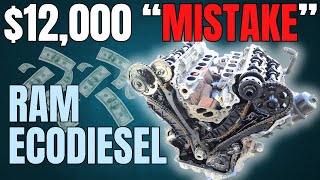
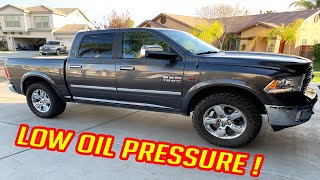
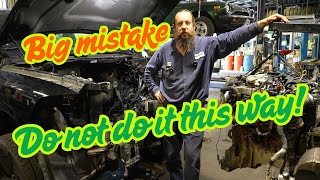
Technical Specifications
Family Name: VM Motori L630; Configuration: 60-degree V6; Valvetrain: Dual Overhead Camshafts (DOHC), 24 valves; Induction: Turbocharged; Fuel System: Common-rail direct injection; VIN Code (8th digit): M; Sales Code: EXH; Body Style: DT (6-lug wheels); Drivetrain: 4x4 and 4x2; Required Oil: 5W-40 Synthetic (MS-12991); Required Coolant: Mopar OAT (MS-12106)
We Have This Part in Stock


The information in this article is provided for general reference and educational purposes only. Vehicle specifications, procedures, and part compatibility can vary by production date, trim level, and region. Always consult your vehicle's factory service manual and verify part numbers before purchasing or performing repairs. Safety-critical components such as airbags, seat belts, and braking systems should be installed by a qualified professional.
- Ram 1500:
- 🎬 Helpful Videos
- 🛍️ Shop This Part
- Identifying the 3rd Generation 3.0L EcoDiesel Engine
- VIN and Engine Codes
- Key Visual Checks
- What It Does NOT Fit
- Common Failure Symptoms
- Diagnostic Flowchart
- Known Problems, Recalls, and Technical Service Bulletins (TSBs)
- What Fails at Every Mileage Band
- Under 60,000 Miles
- 60,000 - 100,000 Miles
- 100,000 - 150,000 Miles
- Over 150,000 Miles
- Real Owner Experiences
- Repair or Replace?
- When Repair Makes Sense
- When Replacement is Smarter
- Questions to Ask Your Installer
- Replacement Cost Estimates
- Installation and Programming: Key Considerations
- Labor and Special Tools
- Required Programming
- Essential Replacement Parts and Fluids
- Freight, Delivery, and Pre-Purchase Verification
- Frequently Asked Questions (FAQ)
- 🎟️ Get 5% Off