

2015-2018 Porsche Cayenne 3.6L Twin-Turbo V6: Problems, Identification, and Used Replacement
Identify the CURA/MCX.ZA twin-turbo V6, learn what causes timing cover leaks and bore scoring, and know exactly what to look for when swapping in a used OEM engine.
- Before purchase, verify you have the correct engine by checking for engine codes CURA, MCU.RA, or MCX.ZA and ensuring the 5th VIN digit is 'B' to avoid incompatible base, Macan, or Panamera engines.
- The single most critical preventative repair is to replace the factory aluminum timing cover bolts with upgraded steel bolts (Porsche Part #999-073-913-31) on the replacement engine before it is installed.
- Proactively address other known issues on the used engine prior to installation, including walnut blasting the intake valves to remove carbon buildup and replacing the PCV valve assembly.
- If experiencing shuddering or jerking on acceleration, have the transfer case diagnosed first, as it is a common failure on these Cayennes and a much cheaper repair than engine replacement.
- Do not reuse single-use, torque-to-yield fasteners, especially high-pressure fuel lines and timing cover bolts, to prevent catastrophic oil leaks, fuel leaks, and potential engine fires.
Identification: Is This the Right Engine for Your Cayenne?


The 2015–2018 Porsche Cayenne S and GTS models use a sophisticated 3.6L twin-turbocharged V6 engine. This direct-injection, 90-degree V6 is part of an engine family known by codes such as CURA, MCU.RA, and MCX.ZA. It was designed to provide strong performance for these all-wheel-drive (AWD) SUVs. When looking for a used replacement, it is critical to verify you are getting the correct engine, as several similar-looking but incompatible engines exist.
Key Vehicle Fitment
| Model Years | 2015, 2016, 2017, 2018 |
| Models | Porsche Cayenne S, Porsche Cayenne GTS |
| Engine | 3.6L Twin-Turbocharged V6 (Gasoline) |
How to Confirm Your Engine Code
Before purchasing a replacement, you must confirm that your vehicle is equipped with this specific engine. There are two primary ways to do this:
- Check the VIN: The 5th digit of your vehicle's 17-digit Vehicle Identification Number (VIN) must be a 'B'. The VIN is located on the driver's side of the dashboard (visible through the windshield) and on the driver's side door jamb sticker. [30, 31]
- Find the Engine Code: Look for a sticker on the engine's timing cover or a stamping on the engine block itself. You should see one of the identifying codes: CURA, MCU.RA, or MCX.ZA.
Warning: The base model Cayenne from the same years uses a completely different 3.6L engine. It is a naturally aspirated (non-turbo) VR6 engine (Engine Code M55.01) sourced from Volkswagen. This engine is not interchangeable with the twin-turbo V6. [36]
Critical Interchange Mismatches (What Will NOT Fit)
It is a common and costly mistake to purchase an incorrect engine. Be aware of these key differences:
- Base Model Cayenne VR6: As mentioned, this is a Volkswagen-based engine and is entirely different. Listings for a "3.6L Cayenne engine" can be misleading, so verifying the turbochargers and VIN digit is essential. [16, 36]
- Porsche Macan & Panamera Engines: While some Macan and Panamera models use 3.0L and 3.6L twin-turbo V6 engines from the same family, they are not direct replacements. These versions have different engine mounts, oil pans, wiring harnesses, and accessories that make them incompatible with the Cayenne. [24]
Common Failure Symptoms & Diagnosis

Several symptoms can indicate a severe engine problem. If you experience any of the following, a thorough diagnosis is required.
- Significant Oil Leaks: Puddles of oil under the vehicle or a burning oil smell from the engine bay often point to failing seals, with the timing cover being a primary suspect. [17]
- Blue or White Exhaust Smoke: Excessive smoke, especially on startup, can indicate internal oil consumption from a failed PCV system or other internal issues. [34]
- Engine Knocking or Ticking Noises: Sharp, metallic sounds that increase with engine speed can signal catastrophic internal wear, such as from bore scoring or timing system failure.
- Loss of Power and Rough Idle: These symptoms can be caused by many issues, including carbon buildup on intake valves, a common problem for direct-injection engines. [37]
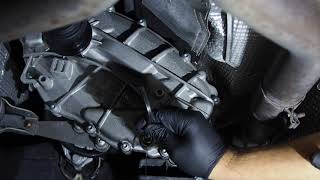
Pro Tip: Before condemning the engine, have the transfer case checked. A failing transfer case is a well-documented issue on 958-generation Cayennes and can cause shuddering, jerking, or hesitation during acceleration that can be mistaken for an engine problem. 🎬 Watch: How to identify Cayenne transfer case symptoms [2, 4, 10] This is a much less expensive repair, so proper diagnosis is key. [7]
Diagnostic Flowchart
Major Known Issues, Recalls, and Technical Service Bulletins (TSBs)
This engine has several well-documented weak points. If you are replacing your engine, it is crucial to address these issues on the replacement unit *before* it is installed in the vehicle.
Severe: Timing Chain Cover Oil Leak (TSB #1533)
Warning: The factory-installed aluminum bolts holding the timing chain cover are known to stretch and shear over time, causing significant oil leaks. [9, 24] This is arguably the most common major issue with this engine family.
- Affected Years: 2015–2018
- Symptoms: Oil leaking from the front of the engine.
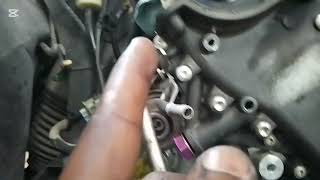
- The Fix: Before installing a used engine, replace the original aluminum bolts with upgraded steel or titanium bolts (Porsche Part #999-073-913-31 or equivalent kit). [28, 32] This is a Porsche-approved repair procedure and is far easier to do when the engine is on a stand rather than in the car. [9, 29]
- Source: TSB #1533 / NHTSA ID #10166908, #10190762 [9]
Severe: High-Pressure Fuel Pump (HPFP) Fastener Leak (Recall #25V634000)
- Affected Years: 2015–2018 (Inspect models during 2024-2026 recall window)
- Symptoms: Fuel smell, visible fuel leaks near the high-pressure pump, potential fire hazard.
- The Fix: Thoroughly inspect the HPFP area for leaks during installation. High-pressure fuel lines are torque-to-yield and must not be reused to prevent fuel leaks and engine fires.
- Source: Recall #25V634000
Moderate: PCV Valve Diaphragm Failure
- Affected Years: 2015–2018
- Symptoms: Increased oil consumption, blue or white smoke from the exhaust, rough idle, and sometimes a whistling noise from the engine. [34]
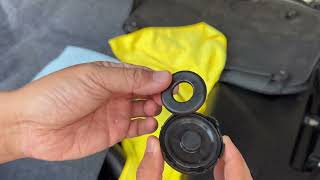
- The Fix: The Positive Crankcase Ventilation (PCV) valve diaphragm is integrated into the plastic valve cover. The entire valve cover assembly must be replaced. It is wise to replace this on a used engine as a preventative measure.
Moderate: Carbon Build-up on Intake Valves
- Affected Years: 2015–2018
- Symptoms: Gradual loss of power, hesitation, rough idle, and potential misfires.
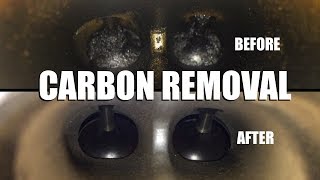
- The Fix: Because this is a direct-injection engine, fuel does not spray over the intake valves to keep them clean. Over time, oil vapor and combustion byproducts bake onto the valves. The only effective way to clean them is by media blasting (often called walnut blasting) while the intake manifold is off. This should be done before installing the replacement engine. [37]
Severe: Bore Scoring
- Affected Years: 2015–2018
- Symptoms: Engine knocking or ticking sound, increased oil consumption, and eventually catastrophic failure.
- The Fix: There is no simple fix for bore scoring; it requires a complete engine rebuild or replacement. The risk can be minimized with frequent oil changes using high-quality, Porsche-approved synthetic oil. When buying a used engine, a borescope inspection is highly recommended.
Moderate: Coolant Pipe Leaks
- Affected Years: 2015–2018
- Symptoms: Low coolant warning, visible pink/violet coolant pooling in the engine valley.
- The Fix: Proactively replace the plastic coolant vent lines/Y-pipe located in the 'V' of the engine during the swap. These become extremely brittle from heat cycles and are prone to breaking during handling.
What Fails at Every Mileage Band
Pro Tip: The mileage bands below describe what to expect from USED REPLACEMENT UNITS of that mileage. The checklists provided are things to do WHILE INSTALLING the purchased engine on the stand, not maintenance for your current broken engine.
Under 60,000 Miles
Engines in this range are generally in excellent condition, but early signs of the notorious timing cover oil leak can begin to appear. High-pressure fuel pump (HPFP) failures can also occur, leading to difficulty starting or reduced acceleration. While not an engine failure, some owners of 2015-2016 models reported issues with sensitive NOx sensors causing a check engine light. The most significant non-engine issue is transfer case failure, which can occur at very low mileages (sometimes before 20,000 miles), causing lurching or shuddering during acceleration.
- ✓Do during install (required): Replace the factory aluminum timing cover bolts with the upgraded steel versions. This is the single most critical preventative measure while the engine is out.
- ✓Do during install (required): Replace all single-use items like high-pressure fuel lines, gaskets for manifolds, and turbo mounting hardware.
- ✓Do during install (recommended): Replace the plastic coolant vent pipes/Y-pipe in the 'V' of the engine, as they are extremely brittle and prone to breaking during a swap.
- ✓Cheap insurance while the engine is out: Perform a walnut blast or manual carbon cleaning of the intake valves. While carbon buildup is more of a mid-mileage issue, it's significantly easier and cheaper to do with the engine on a stand. Inspect and consider replacing the PCV valve (integrated into the valve cover) if there is any sign of oil seepage.
60,000 - 100,000 Miles
Timing chain cover oil leaks become much more prevalent and noticeable in this range. Water pump and thermostat failures are common, leading to coolant leaks and potential overheating, with symptoms often appearing between 80,000 and 100,000 miles. PCV valve/oil separator failure becomes more common, which can cause vacuum leaks, high crankcase pressure, and lead to other oil leaks like the rear main seal. Carbon buildup on direct-injection intake valves can become significant enough to cause rough idling and reduced performance. Oil leaks from valve cover gaskets, the oil filter housing, and oil cooler seals are frequently reported as seals harden with age and heat cycles.
- ✓Do during install (required): Replace aluminum timing cover bolts with steel versions if not already done.
- ✓Do during install (required): Perform a thorough carbon cleaning (walnut blasting) of the intake valves.
- ✓Do during install (recommended): Replace the water pump, thermostat, and all brittle plastic coolant pipes in the engine 'V'.
- ✓Do during install (recommended): Replace the entire valve cover assembly which includes the integrated PCV valve/oil separator.
- ✓Cheap insurance while the engine is out: Replace the front and rear main crankshaft seals, spark plugs, ignition coils, and all accessible rubber vacuum lines. Inspect turbocharger oil feed and return lines for leaks and replace O-rings.
100,000 - 150,000 Miles
This is the mileage where more significant wear items require attention. If not already addressed, failures of the water pump, thermostat, and various oil seals (valve covers, timing cover, main seals) are highly likely. Ignition coils and spark plugs are well past their service life if not replaced, leading to misfires. While the 3.6L twin-turbo is not the V8 known for bore scoring, it is a potential issue on high-mileage or neglected engines. Diligent oil changes are key. Transmission issues may become more apparent if fluid has not been serviced regularly, and air suspension components may begin to fail.
- ✓Do during install (required): Replace the water pump, thermostat, all plastic coolant lines, valve covers (with integrated PCV), all major engine seals (front/rear main), spark plugs, and ignition coils.
- ✓Do during install (recommended): Replace the high-pressure fuel pump (HPFP) as a preventative measure, as failures become more common at this mileage.
- ✓Do during install (recommended): Replace all accessible vacuum lines and rubber hoses.
- ✓Cheap insurance while the engine is out: Thoroughly inspect turbochargers for shaft play and oil leaks. Replace all associated gaskets, O-rings, and single-use lines.
Over 150,000 Miles
At this mileage, the overall condition is entirely dependent on prior maintenance history. Neglected engines are at high risk of major failure. Catastrophic failure is possible, though not guaranteed. All previously mentioned issues (oil leaks, cooling system, timing components) are critical and will have likely been replaced at least once. If not, failure is imminent. The automatic transmission should be watched closely if it hasn't been serviced regularly.
- ✓Do during install (required): A complete engine reseal is mandatory. This includes all gaskets and seals from the oil pan to the valve covers and timing covers.
- ✓Do during install (required): Replace all core service items mentioned in the 100-150k band: water pump, thermostat, coolant pipes, PCV/valve covers, HPFP, spark plugs, and ignition coils.
- ✓Do during install (recommended): Strongly consider replacing the timing chains, tensioners, and guides. While not as common a failure point as on other engines, at this mileage the components are under considerable stress.
- ✓Cheap insurance while the engine is out: A comprehensive inspection and likely replacement of all vacuum lines, rubber hoses, and plastic fittings is essential. The turbochargers should be considered a wear item at this point. A full inspection for shaft play, oil leaks, and wastegate function is critical; replacement is a wise investment.
Real Owner Experiences
| Source | Mileage | What Happened | Cost |
|---|---|---|---|
| Rennlist Forums | 32,000 | Owner suspected transfer case failure due to thumping and a slipping sensation on acceleration. Dealer confirmed and replaced it under the extended warranty. | $0 (Warranty) |
| FerrariChat Forums | ~15,000 | Owner of a 2017 Cayenne S experienced transfer case failure that began around 12,000 miles and was replaced under warranty. | $0 (Warranty) |
| 20,000 and 56,000 | A 2016 base Cayenne had its transfer case replaced at 20k miles, with symptoms of a second failure appearing at 56k miles. The owner noted that short drives may contribute to moisture buildup and premature failure. | First replacement under warranty; second quoted at $5,500+ if not covered by Porsche. | |
| Rennlist Forums | 80,000 to 100,000+ | An owner purchased an '09 GTS (different engine, but relevant chassis components) at 80k miles and noted that with good maintenance, another 100k miles is easily achievable. They emphasize that labor is the main cost driver for repairs. | Varies; DIY saves significantly. |
| YouTube Mechanic Review | General, ~70,000+ | A review noted that transmission and transfer case issues (juddering, clunks) can begin to appear after 70,000 miles. | Fluid service: ~$380 (£300), Major repairs: $2,500+ (£2,000+) |
| 6SpeedOnline Forums | Approaching 150,000 | A prospective buyer of a 2014 GTS with 150k miles was advised that while the car is not 'dead,' it will likely need suspension work and that repair costs do not depreciate with the vehicle's value. | Budget for high maintenance costs (e.g., $2,000 for brakes, $2,000 for tires). |
| Rennlist Forums | 94,000 to 153,000 | An owner of an '09 GTS reported driving from 94k to 153k miles, reinforcing that well-maintained examples can be reliable at high mileage. | Ongoing maintenance. |
| 175,000+ | An owner of two Cayennes, a 2008 with 175k miles and a 2016 with 125k miles, reported no major issues with either, suggesting longevity is possible with care. | Ongoing maintenance. | |
| Rennlist Forums | 200,000+ | Forum discussions indicate that many Cayennes surpass 200,000 miles, with some reaching 250,000, provided they have been well-maintained. | Consistent and often expensive maintenance. |
| Rennlist Forums | Not specified | Seeking opinions on repair for a timing cover leak on a 2014 Cayenne S Hybrid (relevant discussion). | Quoted $2,500-$3,000 for timing cover leak if no other issues found; up to $6,000 if tensioners/rails/chain need replacement. |
| Rennlist Forums | Not specified | Dealer performed an alternative fix by replacing only the 3 broken aluminum bolts without engine removal, but offered no warranty on the repair. | Quoted over $5,000 for full engine-out timing cover repair. Paid $485 to correct a subsequent issue caused by an oil change elsewhere. |
| BMWSportTouring Forums | Not specified | Friend was quoted $11k to repair an internal seal/gasket that required engine removal on a 2018 Cayenne. | Quoted $11,000. |
| YouTube - Samcrac | Not specified | Replaced a destroyed V8 engine (older 955 model, but relevant labor data). | Paid $1,690 for labor to swap the engine. |
Repair or Replace?

Deciding whether to repair your existing 3.6L twin-turbo V6 or replace it with a used OEM unit comes down to the severity of the failure and the cost of labor. Dropping the front subframe to access the engine is highly labor-intensive, taking 15 to 25 hours of shop time.
When Repair Makes Sense
- Timing Chain Cover Oil Leak: Repair makes sense if it's the only issue. A full, engine-out reseal is the factory-recommended permanent fix and can cost $7,000-$15,000. Some shops offer a quicker, cheaper fix by replacing only the accessible sheared bolts for a few hundred dollars, but this is not a permanent solution. A mid-range repair costing $2,500-$3,800 may involve replacing the front cover gasket.
- PCV Valve Diaphragm Failure: This is a common maintenance item. The valve is integrated into the valve cover, so the entire cover must be replaced. While parts are relatively cheap, owner forums suggest a cost of $600 to over $2,200+ for a shop to perform the work due to the labor involved. This repair is always more economical than engine replacement.
- Carbon Build-up on Intake Valves: This is a routine maintenance procedure for direct-injection engines. Walnut blasting is the recommended cleaning method. Costs vary based on labor to access the intake valves, typically ranging from $450 to $1,500+. This should be done preventatively and does not warrant engine replacement.
When Replacement is Smarter
Engine replacement is the smarter choice when multiple major internal failures have occurred, such as severe bore scoring combined with timing system damage, or if the block or heads are cracked. Repairing a scored block is a major engine rebuild involving disassembling the engine, sending the block to a machine shop for sleeving or Nikasil plating, and reassembling with new pistons and gaskets. This can cost $15,000 to $25,000+. If the estimated cost of repairing multiple significant issues exceeds the price of a quality used engine with good compression and a warranty, replacement is the more economically sound decision.
Questions to Ask Your Installer
- Have you worked on this specific Porsche 3.6L twin-turbo (M46/CURA) engine before?
- Will you be replacing the aluminum timing cover bolts with the updated steel bolts as a preventative measure?
- What is your process for walnut blasting the intake valves, and is the cost included in the quote?
- How do you handle the one-time-use high-pressure fuel lines and other torque-to-yield fasteners?
- Does your labor estimate include swapping all my accessories, wiring harness, and turbos from the old engine to the replacement unit?
- What diagnostic tool (e.g., PIWIS) will you use for the ECU/immobilizer re-marriage and sensor adaptations after installation?
- Can you provide a compression or leak-down test report for the used engine before it is installed?
- What warranty do you offer on your labor, and what warranty comes with the supplied used engine?
Replacement Cost Expectations
Replacing the 3.6L twin-turbo V6 is a complex and expensive job. Labor involves dropping the front subframe and requires between 15 and 25 hours of shop time. Always get a detailed quote from a qualified independent Porsche specialist or dealer.
| Part or Service | Estimated Cost (USD) |
|---|---|
| Used OEM Engine Assembly | $3,800 - $15,000+ |
| Remanufactured OEM Engine | $6,500 - $15,000+ |
| New OEM Crate Engine | $20,000 - $35,000+ |
| Shop Labor for Installation | $2,500 - $5,000+ |
Freight & Delivery Reality

Shipping a complete 3.6L twin-turbo V6 engine is a major logistical process. Based on verified shipping data, this engine assembly weighs approximately 550 lbs and measures roughly 48" x 40" x 36" before crating. Because of its size and weight, it ships as LTL (Less-Than-Truckload) freight on a pallet—NOT as a standard parcel.
When ordering a used engine, ensure your delivery location can accommodate a freight truck. If you are shipping to a residential address or a shop without a loading dock or forklift, you must request a liftgate service to safely lower the pallet to the ground. Always perform a pre-purchase verification interview with the seller to confirm the engine code (CURA, MCU.RA, or MCX.ZA) and VIN digit (B). Upon delivery, thoroughly inspect the engine for any shipping damage before signing the driver's bill of lading.
Before the First Start: Priming and Fluids
When installing a used engine, you must protect the internal parts from starting dry. A dry start can ruin the engine bearings and turbochargers instantly. Follow these steps before turning the key to start the engine.
Mandatory Fresh Fluids
Never reuse old fluids in a replacement engine. You must install:
- Engine Oil and Filter: Use a brand new, high-quality oil filter. Fill the engine with fully synthetic oil that meets the Porsche A40 specification (usually 0W-40 or 5W-40).
- Engine Coolant: Flush the cooling system and fill it with fresh coolant. Use only G40 spec coolant (pink/purple color) mixed 50/50 with distilled water to prevent corrosion and overheating.
Oil Priming Procedure (Pre-Lube)
You must build oil pressure before allowing the engine to actually run. This pushes fresh oil into the turbochargers and engine bearings.
- Disable the fuel and ignition systems. Remove the fuel pump fuses or disconnect the ignition coils so the engine cannot start.
- Crank the engine. Turn the key and let the starter motor spin the engine for 10 to 15 seconds.
- Wait and repeat. Let the starter cool down for one minute. Repeat the 10 to 15-second cranking process until the oil pressure warning light turns off on the dashboard, or the oil pressure gauge shows pressure.
- Reconnect and start. Once you confirm oil pressure, reinstall the fuses or plug the ignition coils back in. Start the engine and let it idle. Do not rev the engine until it reaches normal operating temperature.
Frequently Asked Questions (FAQ)
Do used engines come with the turbochargers?
Typically, no. A standard used engine assembly includes the engine block, cylinder heads, all internally lubricated parts, oil pan, valve covers, intake manifold, timing covers, fuel injectors, high-pressure fuel pump (HPFP), throttle body, and harmonic balancer. It usually excludes the turbochargers, A/C compressor, starter motor, alternator, power steering pump, exhaust manifolds, and ECU. You will need to transfer these components from your old engine, so ensure they are in good condition.
Does the replacement engine need to be programmed?
Yes. The engine control unit (ECU) and immobilizer systems must be synchronized with the replacement engine. This process, often called "re-marriage," requires a dealer-level diagnostic tool like the Porsche PIWIS Tester, Launch X431, or Autel MaxiSYS. Without proper programming, the vehicle will not start. Sensor adaptations for the throttle body and injector coding are also required.
Can I reuse my old engine bolts?
No. Critical bolts on this engine are single-use and must be replaced. This includes the aluminum timing cover bolts (which should be upgraded to steel, Porsche Part #999-073-913-31) and the high-pressure fuel line fittings. Reusing these torque-to-yield fasteners can lead to catastrophic oil or fuel leaks and potential engine fires.
What special tools are required for this engine swap?
This is an expert-level DIY job that requires specialized equipment. You will need an engine hoist or under-car engine lift table, a Porsche-specific camshaft alignment/timing tool kit, a triple-square (XZN) socket set, a torque angle gauge, high-quality torque wrenches, a bolt extraction kit, and a Porsche-compatible diagnostic tool (PIWIS, Launch X431, or Autel MaxiSYS).
What consumables should I buy for the installation?
You will need engine oil meeting the Porsche A40 specification (typically 0W-40 or 5W-40 synthetic oil), a new OE-specification oil filter, Porsche-approved pink/violet coolant (G12++ or G13 spec) mixed 50/50 with distilled water, valve cover gaskets, intake and exhaust manifold gaskets, turbocharger mounting gaskets/O-rings, front and rear main crankshaft seals, a fresh set of OEM Bosch or NGK spark plugs, new ignition coils, one-time use high-pressure fuel lines, and the upgraded steel/titanium timing cover bolt kit.
How much does this engine weigh for shipping?
A used 3.6L twin-turbo V6 assembly weighs approximately 550 lbs and measures about 48" x 40" x 36" before being crated. It must be shipped on a pallet via LTL (Less-Than-Truckload) freight, not by a standard parcel service.
Helpful Videos
Technical Specifications
OEM Part Numbers: CURA MCU.RA MCX.ZA 999-073-913-31
Engine Type: 3.6L Twin-Turbocharged V6; Configuration: 90-degree V6; Induction: Twin-Turbocharged; Fuel System: Direct Injection; Engine Codes: CURA, MCU.RA, MCX.ZA; Vehicle Models: Porsche Cayenne S, Porsche Cayenne GTS; Model Years: 2015, 2016, 2017, 2018; Drivetrain: All-Wheel-Drive (AWD); VIN Identifier: 5th digit must be 'B'
We Have This Part in Stock


The information in this article is provided for general reference and educational purposes only. Vehicle specifications, procedures, and part compatibility can vary by production date, trim level, and region. Always consult your vehicle's factory service manual and verify part numbers before purchasing or performing repairs. Safety-critical components such as airbags, seat belts, and braking systems should be installed by a qualified professional.
- Porsche Cayenne:
- 🎬 Helpful Videos
- 🛍️ Shop This Part
- Identification: Is This the Right Engine for Your Cayenne?
- Key Vehicle Fitment
- How to Confirm Your Engine Code
- Critical Interchange Mismatches (What Will NOT Fit)
- Common Failure Symptoms & Diagnosis
- Diagnostic Flowchart
- Major Known Issues, Recalls, and Technical Service Bulletins (TSBs)
- Severe: Timing Chain Cover Oil Leak (TSB #1533)
- Severe: High-Pressure Fuel Pump (HPFP) Fastener Leak (Recall #25V634000)
- Moderate: PCV Valve Diaphragm Failure
- Moderate: Carbon Build-up on Intake Valves
- Severe: Bore Scoring
- Moderate: Coolant Pipe Leaks
- What Fails at Every Mileage Band
- Under 60,000 Miles
- 60,000 - 100,000 Miles
- 100,000 - 150,000 Miles
- Over 150,000 Miles
- Real Owner Experiences
- Repair or Replace?
- When Repair Makes Sense
- When Replacement is Smarter
- Questions to Ask Your Installer
- Replacement Cost Expectations
- Freight & Delivery Reality
- Before the First Start: Priming and Fluids
- Mandatory Fresh Fluids
- Oil Priming Procedure (Pre-Lube)
- Frequently Asked Questions (FAQ)
- 🎟️ Get 5% Off