

2016 Nissan Rogue 2.5L QR25DE: Problems, Identification, and Used Replacement
Identify the Korea-built QR25DE, understand common failures like timing chain rattle, and learn when to swap in a used OEM engine.
- Before purchasing, verify the vehicle's VIN starts with 'K' to ensure it is a Korea-built Rogue, as engines from US ('5') or Japan ('J') built models are not compatible.
- After installation, the vehicle will not start until the immobilizer (NATS) is reprogrammed and idle relearn procedures are performed using a professional-grade scan tool.
- When replacing the engine, it is critical to also replace consumable parts like gaskets, seals, spark plugs, fluids, and one-time-use Torque-to-Yield (TTY) bolts to ensure reliability.
- Be aware of the serious safety recall (NHTSA 22V-024) for under-dash harness corrosion, which can cause a fire, and ensure it has been addressed on the vehicle.
Identifying the Correct 2016 Rogue Engine


The 2016 Nissan Rogue uses a 2.5-liter inline four-cylinder engine known as the QR25DE. However, not all QR25DE engines are the same. For the 2016 model year, fitment depends entirely on where the vehicle was manufactured. This specific engine assembly is for Rogues built in Korea.
VIN Check: The Korea-Built Rule
The most critical step before purchasing a used engine is to check your vehicle's VIN (Vehicle Identification Number). The first digit of the VIN indicates the country of origin.
- If the 1st digit of your VIN is 'K', your Rogue was built in Korea and requires this specific engine.
- If the 1st digit is '5' (USA) or 'J' (Japan), this engine will NOT fit without significant modifications.
Additionally, the 4th digit of the VIN should be 'A', which designates the 2.5L QR25DE engine.
Pro Tip: The VIN is located on a metal tag on the driver's side of the dashboard, visible through the windshield, and on a sticker in the driver's side door jamb.
Engine Code Location
The engine code "QR25DE" is physically stamped on the engine block. You can find it on the front-right side of the block, near where the engine and transmission meet. Verifying this code ensures you are dealing with the correct engine family.
What Does NOT Interchange?
It is a common and costly mistake to assume all QR25DE engines are interchangeable. An engine from another Nissan model or a Rogue from a different assembly plant will not work as a direct replacement.
Warning: Do NOT use a QR25DE engine from an Altima, Sentra, Frontier, or a US/Japan-built Rogue. These versions have different oil pans, engine mounts, 🎬 See this DIY oil pan replacement walkthrough wiring harnesses, and computer (ECU) calibrations that make them incompatible.
What is Included (and Excluded) with a Used Engine
When buying a used OEM engine from a professional auto recycler, it typically comes as a "long block" assembly. Based on standard Automotive Recyclers Association (ARA) guidelines, here is what you can expect.
| Usually Included | Usually Excluded (Transfer from your old engine) |
|---|---|
| Engine block, cylinder head, crankshaft, pistons, rods, bearings, camshafts, valves, lifters, oil pan, valve covers, intake manifold, timing covers, fuel injectors, fuel rail, throttle body, and harmonic balancer. | 🎬 Watch: How to perform the Nissan throttle body re-learn procedureA/C compressor, starter motor, power steering pump, alternator, exhaust manifold, ignition coil packs, and the Engine Control Unit (ECU). |
Freight & Delivery Reality

A used 2.5L QR25DE engine is a heavy piece of industrial equipment. It weighs approximately 350 lbs and measures roughly 48" x 40" x 36" before crating. Because of this size and weight, it ships as LTL (Less-Than-Truckload) freight on a wooden pallet—never as a standard parcel.
- Delivery Requirements: Freight carriers require a loading dock, a forklift, or a truck equipped with a liftgate to lower the pallet to the ground. Delivering to a residential address or a shop without a forklift usually incurs an extra liftgate fee.
- Inspect Before Signing: When the engine arrives, inspect the pallet and the engine for any visible damage (like cracked sensors or a dented oil pan) before signing the driver's delivery receipt.
- Pre-Purchase Verification: A reputable seller will conduct a pre-purchase interview to verify your VIN (specifically looking for that 'K' and 'A') and your drivetrain (FWD vs. AWD) to ensure they are shipping the exact right part.
Common Failure Symptoms

An engine may need to be replaced for several reasons. Here are common symptoms that point toward major engine failure:
- Engine Knocking: A deep, rhythmic knocking sound from inside the engine often indicates worn-out bearings, a severe and terminal problem.
- Excessive Oil Consumption: While some oil use can be normal, consuming more than a quart every 1,000-1,500 miles may signal failing piston rings or worn cylinder walls.
- Timing Chain Rattle: A brief rattle on a cold start is common, but if the noise lasts more than a few seconds or occurs when the engine is warm, the timing chain or its tensioner may be failing. If the chain breaks or skips a tooth, it can cause catastrophic engine damage.
- Coolant in Oil (or vice-versa): A milky, frothy appearance on the oil dipstick or under the oil cap suggests a blown head gasket or a cracked cylinder head, which allows coolant and oil to mix.
- Loss of Compression: Symptoms like rough idling, misfires, and a significant loss of power can be caused by internal damage to pistons, rings, or valves. A mechanic can confirm this with a compression test.
Diagnostic Flowchart
Known Problems, Recalls, and Technical Service Bulletins (TSBs)
The 2016 Rogue's QR25DE engine is generally considered reliable, often outlasting the CVT transmission it is paired with. With proper maintenance (5,000 to 7,500-mile oil changes using 0W-20 or 5W-30), many reach 200,000 to 300,000 miles. However, it is subject to several known issues and service campaigns.
NHTSA Recall 22V-024: Under-Dash Harness Corrosion
This is a serious safety recall for 2014-2016 Rogues. Water and salt can get into the driver's footwell and travel up the wiring harness tape, causing corrosion in a key electrical connector. This can lead to power window/seat failure, battery drain, and in a worst-case scenario, a fire. Before working on the engine, ensure this recall has been performed by a Nissan dealer.
Voluntary Service Campaigns & TSBs
| TSB / Campaign ID | Affected Vehicles | Description / Fix |
|---|---|---|
| TSB NTB18-050 / Campaign P8325 | 2016-2017 Korea-built Rogues | An Engine Control Module (ECM) reprogram is available to improve performance in hot weather conditions. |
| TSB NTB16-121 / Campaign PC490 | 2014-2016 Rogues | This campaign involves reprogramming the Transmission Control Module (TCM) to correct a hydraulic pressure issue that could cause the CVT belt to slip. |
| TSB NTB13-054a | 2014-2016 models | Addresses engine hesitation in hot weather through an ECM reprogram. |
| TSB NTB15-013d | 2014-2016 models | This TSB addresses a whining noise from the Continuously Variable Transmission (CVT) at highway speeds. The fix involves a transmission fluid service and a TCM reprogram. |
What Fails at Every Mileage Band
Pro Tip: The mileage bands below describe used replacement units of that mileage. The checklists are things to do WHILE INSTALLING the purchased engine, not maintenance for your current engine.
Under 60,000 Miles
While major mechanical failures are uncommon at this mileage, some issues can surface. Oil consumption can begin to appear, potentially due to piston ring or valve seal issues. Some owner complaints filed with NHTSA mention stalling, hesitation, and violent shaking at very low mileages (around 19,000 miles). Also, be aware of the NHTSA 22V-024 recall involving potential corrosion in an under-dash electrical connector.
- ✓Do during install (required): New 0W-20 synthetic oil and filter, coolant, spark plugs, and all relevant gaskets (intake, exhaust, valve cover). Perform all required ECU/immobilizer relearn procedures after installation. Check the vehicle's service history to ensure the under-dash harness recall (NHTSA 22V-024) has been performed.
- ✓Do during install (recommended): Inspect and strongly consider replacing the serpentine belt.
60,000 - 100,000 Miles
The characteristic "cold-start rattle" from the timing chain often begins in this mileage range (60-80k miles) due to the hydraulic tensioner bleeding down. Oil consumption may become more noticeable. Camshaft and crankshaft position sensors can fail, though they are relatively inexpensive and easy to replace. Valve adjustments may be required if the engine is vibrating or showing reduced performance, as the QR25DE does not have hydraulic lifters. While primarily a transmission issue, some owners report engine-related symptoms like stalling or hesitation that are ultimately tied to the CVT.
- ✓Do during install (required): All items from the 'Under 60K' list. Replace the PCV valve; a stuck valve can contribute to oil consumption.
- ✓Do during install (recommended): Strongly consider replacing the timing chain tensioner as a preventative measure, especially if any startup rattle was noted on the donor engine. Inspect and consider replacing engine mounts.
- ✓Cheap insurance while the engine is out: Replace front and rear crankshaft main seals.
100,000 - 150,000 Miles
Timing chain stretch and tensioner failure become more probable. A rattling noise that persists for more than a few seconds on startup or is present when warm indicates an urgent need for replacement. Failure of the CVT transmission is a significant risk in this mileage range and can be mistaken for engine failure. A stuck PCV valve was reported by one owner at 120k miles, leading to a costly repair.
- ✓Do during install (required): All items from the previous bands. Replace the water pump and thermostat. Thoroughly clean the intake manifold and throttle body.
- ✓Do during install (recommended): It is highly recommended to replace the entire timing chain kit (chain, guides, tensioner, and potentially cam phasers/sprockets) during the swap.
- ✓Cheap insurance while the engine is out: Replace camshaft and crankshaft position sensors as a preventative measure.
Over 150,000 Miles
At this mileage, the engine itself is generally considered robust, but wear-and-tear items are critical. The primary risk is often the failure of the associated CVT transmission. General structural and component failures like strut bushings and door harnesses are more likely than catastrophic engine failure.
- ✓Do during install (required): Assume all recommendations from the 100-150k mile band are mandatory. A thorough inspection of the cylinder head and block is warranted. If possible, a compression or leak-down test on the used engine before purchase is ideal.
- ✓Do during install (recommended): Replace all accessible seals, gaskets, and hoses.
- ✓Cheap insurance while the engine is out: Consider replacing the oil pump or at least the oil pump housing and seals for maximum longevity.
Real Owner Experiences
| Source | Mileage | What Happened | Cost |
|---|---|---|---|
| NHTSA Complaint | approx. 19,200 | Vehicle shook violently with a loud throbbing from the engine. The next day, a ruptured fuel line was discovered leaking gasoline. | Not specified. |
| Reddit Forum User | 28,000 | Owner was quoted for a full engine replacement by a Nissan dealership due to catastrophic overheating. The CPO warranty claim was denied. The owner planned to junk the car. | $17,500 |
| Reddit Forum User | <50,000 | After the car wouldn't start and was towed to a dealer, they diagnosed a knocking engine that needed replacement. The quote was more than the car's value. The issue may have stemmed from a lack of oil. | $16,500 |
| NHTSA Complaint | 90,000 | Vehicle would not accelerate properly after stopping, then would rev up and accelerate quickly. This was described as an engine problem but has symptoms of a CVT issue. | Not specified. |
| Reddit Forum User | approx. 90,000 | An intake camshaft solenoid became gummed up, requiring attention. | Not specified. |
| NICOclub Forums | 90,000 | This report is for a CVT transmission failure, not the engine. The owner was quoted $7,000 CAD for a rebuild and found a used transmission for $3,300 CAD. This is relevant as CVT failure is a common high-cost repair for this vehicle. | $7,000 CAD (rebuild) |
| NHTSA Complaint | 100,000 | Vehicle stalled while making a turn, leading to a collision. The owner had previously reported stalling issues that a dealer could not find. | Vehicle was potentially totaled. |
| Reddit Forum User | 120,000 | A PCV valve became stuck open, requiring a repair that cost approximately $2,000. | $2,000 |
| Reddit Forum User | 156,000 | The owner reported no major engine or transmission problems, but did have a PCV valve issue at 120k miles and an A/C hose replacement. | Not specified for engine, but previous PCV repair was ~$2,000. |
Repair or Replace?
When Repair Makes Sense
Deciding whether to fix your current engine or swap in a used replacement comes down to the severity of the failure and the cost of labor.
| Problem | Typical Repair Cost | Notes / When to Repair |
|---|---|---|
| Timing Chain Rattle on Cold Start | $1,200 - $2,000 | Repair is critical if the rattle lasts more than 5 seconds or occurs when the engine is warm. At this stage, the chain has likely stretched, and replacing the timing components can prevent catastrophic engine failure. |
| Excessive Oil Consumption | $95 (inspection/PCV) to $2,500+ | Repair makes sense if caused by a faulty PCV system or leaking gaskets. If it's due to worn piston rings, the repair is very expensive and replacement is often a better option. |
| Leaking Front Timing Cover Gasket | $2,127 - $3,028 | This is a very labor-intensive repair. It only makes sense to perform this on an otherwise healthy, lower-mileage engine. |
When Replacement is Smarter
Replacement is the smarter option when the engine has suffered catastrophic failure from overheating, oil starvation (spun bearings, knocking), or a skipped timing chain that caused valve damage. If the estimated cost of multiple repairs (e.g., timing chain AND oil consumption from worn rings) exceeds the all-in cost of a quality used engine ($2,500 - $4,000 installed), replacement is the more financially sound decision. In cases of worn rings, replacing the engine with a lower-mileage used unit is often more economical than rebuilding the original.
Replacement Cost Comparison
The cost of replacing a 2016 Rogue engine varies widely based on the type of replacement unit and labor rates.
| Part Type | Estimated Cost (Part Only) |
|---|---|
| New OEM | $8,000 - $16,000+ (New crate engines are rare and often quoted by dealers as part of a total repair cost that can reach $10,000+) |
| Remanufactured OEM | $2,800 - $4,500 |
| Used OEM | $960 - $1,150 |
| Installation Labor | $1,200 - $2,500 |
Installation: Key Considerations

Labor and Difficulty
Replacing this engine is a job for advanced DIYers or professional mechanics. The estimated shop labor time is between 8 and 15 hours. Special tools like an engine hoist, a heavy-duty load leveler, floor jack and high-capacity jack stands, a torque wrench, and a professional-grade scan tool (Nissan CONSULT-III Plus or equivalent) are required.
Required Programming and Calibration
Warning: The vehicle will NOT start until the computer systems are properly programmed. This is not an optional step. A Nissan CONSULT scan tool or a high-end professional equivalent is required.
- Immobilizer (NATS): The Nissan Anti-Theft System (NATS) must be initialized by re-registering the vehicle's keys to the replacement engine's ECU (or the original, swapped-over ECU).
- Electronic Relearns: After installation, several procedures must be performed, including Idle Air Volume Learning (IAVL), Throttle Valve Closed Position Learning, and Accelerator Pedal Released Position Learning. Skipping these will result in a high or erratic idle.
Common Buyer Mistakes & Install Gotchas
- Harness and Origin Mismatch: Attempting to install a Korea-built engine into a US-built or Japan-built Rogue without swapping the wiring harness and sensors. You must use the wiring harness that matches your vehicle's assembly origin. Reusing your original harness is highly recommended.
- AWD vs. FWD Oil Pan & Transfer Case Transfer: If swapping between AWD and FWD configurations, you must transfer the original upper (aluminum) and lower (steel) oil pans and the right-side drive axle bearing bracket. AWD models bolt the transfer case directly to the aluminum upper oil pan.
- CVT Alignment: Ensure the torque converter is fully seated in the transmission pump before tightening bellhousing bolts. Failing to seat the torque converter properly leads to immediate transmission pump failure.
- Reusing the Old Oil Cooler: Reusing a contaminated oil cooler after an engine failure washes metal shavings back into the replacement engine.
- Fragile Sensors & O-Rings: Crankshaft Position (CKP) and Camshaft Position (CMP) sensors are easily cracked. Unplug and remove them before mating the engine to the transmission. Also, replace the fragile O-rings on the VVT solenoid cover carefully to prevent major oil pressure leaks.
- Torque-to-Yield (TTY) Bolts: Flywheel/flexplate bolts and harmonic balancer bolts are one-time use and must be replaced.
- Exhaust Manifold Studs: Notorious for breaking due to rust and heat cycles; have new studs and nuts on hand.
Critical Parts to Replace During Installation
To ensure a reliable installation, always replace the following consumable parts:
- Motor oil (5.125 quarts / 4.8 liters of API-certified 0W-20 or 5W-30) and new OEM-spec oil filter
- Fresh Nissan Blue Long Life Antifreeze/Coolant (50/50 pre-diluted)
- 4 new double-fine-tipped platinum or iridium spark plugs (NGK DILKAR6A11)
- Intake manifold gasket set and exhaust manifold gasket
- Thermostat and water outlet gaskets
- High-temp RTV silicone sealant (e.g., Permatex Ultra Grey)
- Serpentine belt (inspect and replace)
Pro Tip: It is highly recommended to also replace the front and rear crankshaft main seals while the engine is out of the vehicle. This is inexpensive insurance against future oil leaks.
Questions to Ask Your Installer
- Have you worked on this specific QR25DE from a Korea-built Rogue before?
- Can you confirm the VIN of the donor vehicle to ensure it's a 'K' build?
- What is your process for the Idle Air Volume Learning (IAVL) and immobilizer (NATS) reprogramming?
- Will you be swapping my original oil pan and drive axle bearing bracket if the donor is a different drivetrain (AWD/FWD)?
- Does your quote include replacing one-time-use Torque-to-Yield (TTY) bolts for the flexplate and harmonic balancer?
- What is the warranty on the used engine and your labor?
- Does the quote include all necessary fluids, new gaskets (intake, exhaust), and seals (crankshaft)?
Before the First Start: Priming and Fluids
A used engine has likely been sitting on a warehouse shelf without fluids. Starting it dry will cause instant metal-to-metal damage. You must add the correct new fluids and "prime" the engine. Priming means pumping oil through the engine parts before the engine actually runs.
Mandatory Fluids
Never reuse old fluids from your broken engine. Before turning the key, fill the replacement engine with the exact factory-specified liquids:
- Engine Oil: Use fresh 0W-20 Full Synthetic motor oil. You must also install a brand-new oil filter.
- Engine Coolant: Use Nissan Blue Long Life Antifreeze/Coolant (or an exact aftermarket equivalent). Make sure the cooling system is fully "bled" (air bubbles removed) to prevent overheating.
The Pre-Lube Priming Procedure
Follow these steps to safely build oil pressure before the engine fires up:
- Disable the fuel system: Open the fuse box and remove the fuel pump fuse. This stops gas from entering the engine so it cannot start.
- Crank the engine: Turn the key (or press the start button) to crank the engine for 10 to 15 seconds.
- Let the starter rest: Wait 30 seconds so the starter motor does not overheat and burn out.
- Repeat: Crank the engine again for 10 to 15 seconds. Watch the dashboard. Stop when the red low oil pressure light turns off. This tells you oil has successfully reached the top parts of the engine.
- Start the engine: Put the fuel pump fuse back in its place. Start the engine normally and let it idle. Listen for any unusual noises and check underneath the vehicle for fluid leaks.
Frequently Asked Questions (FAQ)
Can I use an engine from a 2016 US-built Rogue in my Korea-built Rogue?
No. While they are both QR25DE engines, the wiring harnesses, oil pans, and mounting points are different. You must use an engine from another Korea-built (VIN starting with 'K') Rogue for a direct fit.
Do I have to reprogram the computer after installing a used engine?
Yes. At a minimum, the vehicle's anti-theft system (NATS) must be initialized to allow the engine to start. Additionally, idle and throttle learning procedures must be performed to ensure the engine runs smoothly.
Is the QR25DE a reliable engine?
Generally, yes. The QR25DE has been in production for many years and is considered a durable design. Its most common issues are manageable with regular maintenance, such as monitoring oil levels and listening for timing chain noise. Many owners report service life well beyond 200,000 miles.
What is the difference between an AWD and FWD engine?
The core long block is the same, but the oil pans are different. The All-Wheel Drive (AWD) model has a specific upper oil pan that the transfer case bolts to. If you are installing an engine from a FWD vehicle into an AWD vehicle (or vice-versa), you must swap your original oil pans onto the replacement engine.
Why is my Rogue idling high after the engine swap?
A high or rough idle after an engine replacement usually means the Idle Air Volume Learning (IAVL) procedure was skipped. This is a common mistake. The computer needs to be recalibrated to understand the position of the throttle body on the new engine.
Can I use a QR25DE from a Nissan Altima or Sentra?
No. Even though the Altima, Sentra, and Frontier use a 2.5L engine with the QR25DE code, they have different mounting points, oil pans, wiring harnesses, and ECU calibrations. You must source an engine specifically from a 2014-2020 Rogue (and specifically a Korea-built one for this application).
Helpful Videos

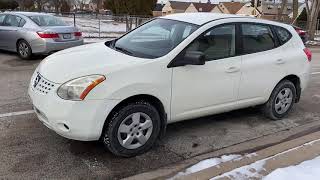
Technical Specifications
Engine Name: QR25DE; Displacement: 2.5-liter; Cylinders: Inline four-cylinder; VIN 1st Digit (Fitment): K (Korea); VIN 4th Digit (Engine): A; Approximate Weight: 350 lbs; Approximate Crated Dimensions: 48" x 40" x 36"; Recommended Oil: 0W-20 or 5W-30 Synthetic; Oil Capacity: 5.125 quarts / 4.8 liters; Spark Plugs: NGK DILKAR6A11; Coolant: Nissan Blue Long Life Antifreeze/Coolant; Recall: NHTSA 22V-024; TSBs: NTB18-050, NTB16-121, NTB13-054a, NTB15-013d
We Have This Part in Stock


The information in this article is provided for general reference and educational purposes only. Vehicle specifications, procedures, and part compatibility can vary by production date, trim level, and region. Always consult your vehicle's factory service manual and verify part numbers before purchasing or performing repairs. Safety-critical components such as airbags, seat belts, and braking systems should be installed by a qualified professional.
- Nissan Rogue:
- 🎬 Helpful Videos
- 🛍️ Shop This Part
- Identifying the Correct 2016 Rogue Engine
- VIN Check: The Korea-Built Rule
- Engine Code Location
- What Does NOT Interchange?
- What is Included (and Excluded) with a Used Engine
- Freight & Delivery Reality
- Common Failure Symptoms
- Diagnostic Flowchart
- Known Problems, Recalls, and Technical Service Bulletins (TSBs)
- Voluntary Service Campaigns & TSBs
- What Fails at Every Mileage Band
- Under 60,000 Miles
- 60,000 - 100,000 Miles
- 100,000 - 150,000 Miles
- Over 150,000 Miles
- Real Owner Experiences
- Repair or Replace?
- When Repair Makes Sense
- When Replacement is Smarter
- Replacement Cost Comparison
- Installation: Key Considerations
- Labor and Difficulty
- Required Programming and Calibration
- Common Buyer Mistakes & Install Gotchas
- Critical Parts to Replace During Installation
- Questions to Ask Your Installer
- Before the First Start: Priming and Fluids
- Mandatory Fluids
- The Pre-Lube Priming Procedure
- Frequently Asked Questions (FAQ)
- 🎟️ Get 5% Off