

2015-2019 Lincoln MKC 2.3L EcoBoost: Problems, Identification, and Used Replacement
Identify the AWD-exclusive 2.3L EcoBoost, understand the catastrophic coolant intrusion defect that kills it, and learn when to replace it with a verified used OEM engine.
- The most critical and common failure is internal coolant intrusion due to a block design flaw; monitor coolant levels closely and never ignore overheating.
- Verify the 8th digit of the VIN is 'H' and the vehicle is All-Wheel Drive (AWD) to ensure you are sourcing the correct engine for a 2015-2019 Lincoln MKC.
- This specific MKC engine is NOT interchangeable with 2.3L EcoBoost engines from other models like the Ford Mustang, Explorer, or Focus RS.
- Replacement is an expert-level job requiring special timing tools and mandatory computer programming (crankshaft relearn), making professional installation essential.
- When installing a replacement, it is mandatory to use new Torque-to-Yield (TTY) bolts and diamond-coated friction washers for the keyless crankshaft pulley to prevent catastrophic failure.
Identifying the Correct 2.3L EcoBoost Engine

Vehicle and VIN Confirmation
The 2.3L Turbocharged EcoBoost engine is an optional power plant for the 2015-2019 Lincoln MKC. The easiest way to confirm if your vehicle is equipped with this specific engine is to check the 17-digit Vehicle Identification Number (VIN). The 8th digit of the VIN must be 'H'. The VIN plate can be found on the driver's side of the dashboard (visible through the windshield) or on the driver's side door jamb.
Crucially, in the Lincoln MKC, this 2.3L engine was exclusively paired with an All-Wheel Drive (AWD) drivetrain. If your MKC is Front-Wheel Drive (FWD), it will have the 2.0L engine, and this 2.3L unit will not fit.
What It Does NOT Fit
Warning: This engine is NOT a direct replacement for other 2.3L EcoBoost applications. Attempting to install it in a Mustang, Explorer, or other vehicle will lead to significant fitment and compatibility issues.
Although Ford used the 2.3L EcoBoost engine family in several popular vehicles, the version found in the Lincoln MKC is specific due to its mounting, oiling system, and electronics. It is NOT a direct replacement for the 2.3L engine in the following vehicles:
- Ford Mustang
- Ford Explorer
- Ford Focus RS
- Ford Ranger
- Lincoln Corsair
These other applications use different engine block castings, oil pans, accessory drive configurations, and internal components like pistons, which result in different compression ratios. Attempting to install an MKC engine into one of these vehicles (or vice-versa) will lead to significant fitment and compatibility issues.
What is Included in a Used Assembly
When purchasing a verified used OEM engine assembly from a professional auto recycler, it typically ships as a "long block" plus specific accessories. Per ARA standards, you can expect the following to be included:
- Engine block and cylinder head
- All internally lubricated parts (pistons, crankshaft, camshafts, valves)
- Oil pan and valve covers
- Intake manifold and throttle body
- Timing covers and harmonic balancer
- Fuel injection system (including fuel injectors and the high-pressure fuel pump)
What is Excluded: You will need to reuse or replace your original A/C compressor, starter motor, alternator, power steering pump, exhaust manifold, external sensors, and the main engine wiring harness.
Is Your Engine Failing? Common Symptoms

A failing 2.3L EcoBoost engine can present several warning signs. If you notice any of the following, it may be time for a detailed inspection or replacement:
- Unexplained Coolant Loss: Constantly needing to top off the coolant reservoir with no visible external leaks is a classic sign of internal coolant intrusion.
- White Exhaust Smoke: Sweet-smelling white smoke from the exhaust, especially on startup, indicates coolant is being burned in the combustion chambers.
- Engine Overheating: If the temperature gauge frequently climbs into the red, it could be due to a lack of coolant from an internal leak.
- Heavy Blue Smoke After Idling: If you see a puff of blue smoke after the vehicle has been idling for 10 minutes or more, it could point to a faulty crankcase vent oil separator.
- Lack of Power or "Underboost": A noticeable loss of acceleration, sometimes accompanied by a check engine light with code P0299, can be caused by a turbocharger wastegate issue.
- Rich Fuel Condition: A check engine light with code P0172 can indicate a failing high-pressure fuel pump (HPFP).
- Rough Idle: A persistent vibration or rough running, particularly when the transmission is in Drive or Reverse, can be a symptom of a few different issues, including a failing torque converter related to engine performance.
- Engine Misfires or Shaking: Coolant leaking into the cylinders can foul spark plugs and cause a rough, shaking engine and a flashing check engine light.
Warning: The most severe issue with this engine is internal coolant leakage, which can lead to catastrophic engine failure. Do not ignore symptoms of coolant loss or overheating.
Diagnostic Flowchart
Major Known Issues, Recalls, and Technical Service Bulletins (TSBs)

This engine generation has several well-documented issues that owners and technicians should be aware of.
| Issue | Severity | Affected Years / Details |
|---|---|---|
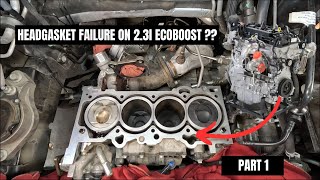
| Coolant Intrusion / Cracked Block | Severe | Years: 2015-2019 Symptoms: Coolant loss, misfires, engine failure. Details: A design flaw in the open-deck engine block can allow coolant to leak between cylinders. This is the subject of a class-action lawsuit (Nelson v. Ford Motor Company). There is no official recall, and the common repair is a complete engine replacement. |
| Engine Block Heater Fire Risk | Severe | Years: 2015-2016 (with factory block heater) Document: NHTSA Recall 16S14 / 16V136000 / 16V-183. Details: The factory-installed block heater element can overheat when plugged in, creating a fire risk. The recall involves replacing the element and inspecting the cord. |
| Rough Idle / Vibration in Drive or Reverse | Moderate | Years: 2015-2019 Document: TSB 20-2271 Details: A vibration or rough idle in gear, along with a lack of acceleration or a shudder, was often caused by an overheating torque converter. The fix involves replacing the torque converter. |
| Heavy Blue Smoke / Oil Consumption | Moderate | Years: 2015-2016 (built on or before Feb 23, 2016) Document: TSB 16-0110 Details: Continuous blue smoke after extended idling is typically caused by a faulty crankcase vent oil separator. |
| Underboost (Code P0299) / Lack of Power | Moderate | Years: 2015-2016 Document: TSB 16-0123 Details: Lack of power with code P0299 is often due to the turbocharger's wastegate actuator rod becoming disconnected. The TSB provides a procedure to re-secure it. |
What Fails at Every Mileage Band
Pro Tip: The mileage bands below describe the typical condition and known failure points of USED replacement engines at these mileages. The checklists provided are critical steps to perform WHILE INSTALLING your purchased used engine, not general maintenance for your current vehicle.
Under 60,000 Miles
Even at low mileages, the most significant failure is catastrophic engine failure due to coolant intrusion into the cylinders. This is caused by a design flaw in the open-deck engine block. Reports show this can happen at very low mileages, sometimes as low as 25,000 to 37,000 miles. Additionally, TSB 16-0110 addresses issues of heavy blue smoke and oil consumption for models built before February 23, 2016, caused by a faulty crankcase vent oil separator. TSB 16-0123 covers a lack of power and underboost code P0299 on 2015-2016 models, often due to a failing turbocharger wastegate actuator.
- ✓Do during install (required): Use a borescope to inspect cylinder walls for any signs of coolant intrusion (vertical scoring, unusually clean piston tops) before installation.
- ✓Do during install (required): Install a new Motorcraft FL-910S oil filter and fill with 5.7 quarts of 5W-30 full synthetic oil meeting Ford WSS-M2C946-A specification.
- ✓Do during install (required): Replace all required Torque-to-Yield (TTY) bolts and diamond-coated friction washers if the crankshaft pulley was removed.
- ✓Do during install (recommended): Replace spark plugs (Motorcraft SP-550-X) and ignition coils.
- ✓Do during install (recommended): Replace the crankcase vent oil separator (PCV separator) to prevent future oil consumption issues, especially on 2015-2016 models.
60,000 - 100,000 Miles
The risk of coolant intrusion and subsequent engine failure remains the primary concern in this mileage range. Failures have been frequently reported around 60,000 and 100,000 miles. Carbon build-up on intake valves, a common issue for all direct-injection engines, can become noticeable, causing rough idling and reduced performance. TSB 20-2271 addresses rough idle and vibrations that often surface here. Some owners also report check engine lights and power loss due to failing ignition coils and spark plugs.
- ✓Do during install (required): Inspect the turbocharger for wastegate actuator arm play and signs of oil or coolant leaks. Consider replacing if any wear is evident.
- ✓Do during install (required): Flush and replace the engine coolant with Ford-approved Motorcraft Orange or Yellow coolant.
- ✓Do during install (recommended): Perform a preventative intake valve cleaning (walnut blasting) to remove carbon deposits.
- ✓Cheap insurance while the engine is out: Replace the serpentine belt and tensioner.
100,000 - 150,000 Miles
The likelihood of the inherent coolant intrusion defect causing failure increases significantly. Many experts suggest that engines are on "borrowed time" past 100,000 miles due to this issue. Turbocharger failure becomes more common, either from heat stress, oil line carbonization, or wastegate failure. Timing chain stretch can occur at higher mileages, and high-pressure fuel pump (HPFP) failures can also surface.
- ✓Do during install (required): Assume the turbocharger has significant wear. A full professional inspection is mandatory; replacement is highly recommended to avoid transferring a failing part.
- ✓Do during install (recommended): Replace the entire timing chain assembly, including the chain, guides, and tensioners.
- ✓Cheap insurance while the engine is out: Replace the water pump and thermostat while access is easy.
- ✓Cheap insurance while the engine is out: Replace all accessible seals and gaskets, including the valve cover gasket, intake and exhaust manifold gaskets, and high-pressure fuel pump O-ring.
Real Owner Experiences
| Source | Mileage | What Happened | Cost |
|---|---|---|---|
| 25,000 | 2019 model developed coolant intrusion in cylinder 2 just after the warranty expired. | Not specified | |
| Vroom Fume | 28,000 | 2017 Ford Escape (same engine family) experienced coolant intrusion leading to engine failure. | Not specified |
| Vroom Fume | 37,500 | 2018 Lincoln MKC blew a head gasket. The owner had noticed the coolant level slowly decreasing prior to the failure. | $0 (covered by extended warranty, would have been $7,300+) |
| Reddit r/personalfinance | 44,000 | 2017 Lincoln MKC. Dealer quoted $11,500 for a new engine. Independent mechanic quoted $4,500 for a head gasket fix. | N/A |
| CarComplaints.com | 54,000 | 2018 Lincoln MKC experienced a misfire in cylinder 4. Diagnosis revealed coolant leaking into the cylinder due to a faulty head gasket. | Not specified |
| CarComplaints.com | 64,000 | 2017 Lincoln MKC. Replaced the engine with a 2019 unit at a Lincoln dealership. | ~$8,300 |
| 65,000 | Lincoln MKC diagnosed with coolant intrusion after a P0302 misfire code. Ford quoted $8,000 for a new long block. | $8,000 | |
| Cars.com Forum | 71,000 | Owner of a 2019 MKC describes the car as reliable with no major issues. | Standard Maintenance |
| Kelley Blue Book | 93,000 | 2017 MKC owner reported having no mechanical issues, with expenses limited to oil changes, tires, and rear brake pads at 91,000 miles. | Standard Maintenance |
| ~100,000 | Owner experienced a misfire issue. Dealer diagnosed coolant intrusion, third-party warranty company denied the claim, calling it a known manufacturer defect. | Not specified (denied by warranty) | |
| CarComplaints.com | 112,700 | 2018 Lincoln MKC began hesitating and shuddering. Dealership found low coolant and confirmed coolant intrusion in cylinder 1, recommending a long block replacement. | Quoted over $10,000 |
| Reddit r/Mustang | N/A | 2017 2.3L. Dealer quoted $8,200+ for long block replacement. Independent shop quoted $3,000 for head gasket replacement. | N/A |
| Reddit r/ecoboostmustang | N/A | 2015 2.3L. Dealer quoted ~$9,000 for a full engine block replacement. Reputable local mechanic quoted ~$3,000 to replace the head gasket/cylinder head. | N/A |
Repair or Replace?
When facing a major engine issue, deciding whether to repair your current engine or replace it entirely comes down to the specific failure mode and the condition of the engine block.
- Head Gasket Failure / Coolant Intrusion ($3,000 - $5,000): Repair may be considered if a thorough inspection by a trusted mechanic confirms the engine block and cylinder head are not cracked, warped, or pitted. The repair should use an upgraded multi-layer steel (MLS) head gasket and new torque-to-yield head bolts to mitigate the risk of recurrence.
- Turbocharger Wastegate Actuator or Bypass Valve ($500 - $1,200): This is a common bolt-on repair to address a specific lack of power issue detailed in TSB 16-0123 and does not require engine replacement.
- Crankcase Vent Oil Separator ($200 - $400): This is a minor, routine repair to address a specific oil consumption issue detailed in TSB 16-0110 and does not warrant engine replacement.
When Replacement is Smarter: Replacement is the only viable option when the engine block is cracked or the cylinder walls are scored or pitted due to coolant intrusion, which is a common failure mode for this engine. It is also the smarter choice when the cost of a proper head gasket repair (including parts, labor, and potential cylinder head machining) approaches or exceeds the price of a low-mileage used engine that includes a parts and labor warranty. Given the engine's known design flaw, many owners opt to replace the engine with a verified unit or sell the vehicle rather than invest in a costly repair with a risk of recurrence.
Questions to Ask Your Installer
- Have you worked on this specific 2.3L EcoBoost coolant intrusion issue before?
- Before I commit to a replacement, can you perform a borescope inspection and cooling system pressure test to confirm coolant is leaking into the cylinders?
- If we attempt a head gasket repair, will you send the cylinder head to a machine shop to check for warpage or cracks?
- What is your source for the replacement engine (used vs. remanufactured)? What is the mileage and what warranty is included?
- Does the warranty for the replacement engine cover both parts and labor, and for how long?
- Will you be replacing all torque-to-yield (TTY) bolts, including the critical crankshaft pulley bolt and head bolts?
- Will you be replacing the diamond-coated friction washers for the crankshaft pulley?
- Will you be transferring my original, inspected turbocharger or does the replacement unit include one?
- Do you have the necessary Ford-specific scan tool (like Ford IDS/FDRS) to perform the mandatory 'Misfire Monitor Neutral Profile Correction' (crankshaft relearn) and the PATS immobilizer parameter reset after installation?
- Can you provide a detailed, itemized quote that lists all parts (gaskets, seals, fluids, bolts) and labor operations you will perform?
Replacement Cost Comparison
Engine replacement costs vary based on the type of engine and local labor rates. Labor for this job typically ranges from 12 to 20 hours, costing roughly $1,800 to $4,000 depending on the shop's hourly rate.
| Engine Type | Estimated Part Cost (USD) | Notes |
|---|---|---|
| New OEM | $7,000 - $9,000+ | A brand new engine from Ford. This is the most expensive option but comes with a factory warranty. |
| Remanufactured OEM | $2,900 - $4,600 | An engine rebuilt to OEM specifications, often with updates to fix original flaws. Typically includes a multi-year warranty. |
| Used OEM | $2,500 - $3,800 | A salvaged engine from a donor vehicle. Price depends heavily on mileage and condition. Often comes with a limited warranty. |
| Installation Labor | $1,800 - $4,000 | Varies by shop rate and complexity. Does not include fluids or other required parts. |
Installation: Key Considerations and Common Mistakes

Professional Installation Recommended
Replacing this engine is a complex job rated for expert-level technicians. It requires numerous special tools and procedures that are not typical for general auto repair.
Pro Tip: Due to the complexity and the need for computer programming, this is not a recommended DIY project. Use a qualified shop with experience in modern Ford/Lincoln engines.
Special Tools Required
Your installer must have access to the following specialized equipment:
- Ford EcoBoost 2.0L/2.3L Engine Timing Tool Kit (OE 303-1521, 303-1565, 303-507)
- Harmonic Balancer Puller/Installer
- Torque Angle Gauge
- Engine hoist and Engine stand
- Metric socket/wrench set and Torque wrench
- Dealer-level scan tool (Ford IDS/FDRS or high-end professional aftermarket tool)
Critical Installation Steps & "Gotchas"
Warning: The crankshaft pulley is keyless and held by friction. Failure to use new TTY bolts, new diamond-coated friction washers, and proper timing tools will result in catastrophic engine failure.
- Torque-to-Yield (TTY) Bolts: This engine uses single-use TTY bolts for critical components like the crankshaft pulley, flywheel, and cylinder head. These bolts are designed to stretch and MUST be replaced. Reusing them can lead to catastrophic failure.
- Keyless Crankshaft Pulley: The crankshaft pulley and timing sprocket are not held by a keyway. They are held in place purely by the clamping force of the main crank bolt and special diamond-coated friction washers. The engine timing tools MUST be installed before loosening this bolt.
- Friction Washers: You must replace the thin diamond-coated friction washers (Ford Part # 1S7Z-6378-AA) behind the crankshaft sprocket and harmonic balancer if removed.
- AWD PTU / Transfer Case Alignment: You must carefully align and bolt the Power Transfer Unit (PTU) to the transmission and engine block, and grease the intermediate shaft splines.
- Fragile Covers: The plastic engine appearance cover, valve cover, and intake manifold can be easily damaged during removal (noted in SSM 46281).
- Computer Programming: After installation, the vehicle's Powertrain Control Module (PCM) requires two procedures. The first is a "Misfire Monitor Neutral Profile Correction" (crankshaft position sensor relearn) to ensure the engine runs smoothly. The second is a PATS (Passive Anti-Theft System) parameter reset, which is required to prevent a no-start condition. These procedures require a dealer-level scan tool.
- Turbocharger Transfer: The used engine assembly does not typically include the turbocharger. You must carefully transfer the turbo and its associated oil and coolant lines from the old engine. Inspect the turbo for wear or damage before transferring it.
Required Parts and Fluids for Installation
Always use new gaskets, seals, and fluids during an engine swap to ensure a reliable repair. Plan to purchase the following:
- Motor Oil: 5.7 quarts of full synthetic 5W-30 oil meeting Ford spec WSS-M2C946-A.
- Oil Filter: New Motorcraft FL-910S or equivalent.
- Coolant: Ford-approved Orange or Yellow coolant (Motorcraft VC-13-G or VC-13DL-G) mixed 50/50 with distilled water.
- Spark Plugs: 4 new Motorcraft SP-550-X plugs (gapped to 0.028-0.031 inches).
- Gaskets and Seals: New intake and exhaust manifold gaskets, valve cover gasket, and high-pressure fuel pump O-ring.
- TTY Bolts & Washers: New Crankshaft Pulley Bolt (Ford Part # P2GZ-6A340-A), new flywheel/flexplate bolts, new cylinder head bolts, new camshaft gear bolts, and new diamond-coated friction washers (Ford Part # 1S7Z-6378-AA).
Freight & Delivery Reality

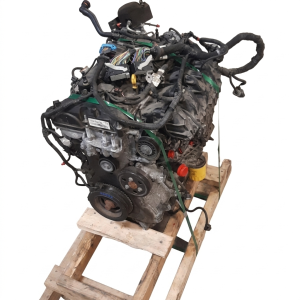
When ordering a used 2.3L EcoBoost engine, it is important to understand how it will arrive. This assembly weighs approximately 568 pounds and measures roughly 36" x 54" x 36" before crating. Because of its size and weight, it ships as Less-Than-Truckload (LTL) freight on a wooden pallet. It is NOT a standard parcel delivery.
Freight delivery requires a loading dock or a truck equipped with a liftgate to lower the pallet to the ground. It is an industry best practice to have a pre-purchase verification interview with the supplier to confirm your VIN, drivetrain (AWD), and delivery requirements. When the engine arrives, you or your mechanic must thoroughly inspect the unit for any shipping damage before signing the delivery receipt.
Arrival Inspection: Testing Your Used Engine
When your used 2.3L EcoBoost engine arrives, inspect it closely before installation. Doing these checks while the engine is on a stand or pallet is much easier than after it is in the vehicle.
- Compression and Leak-Down Tests: A healthy used engine should have even compression across all four cylinders. Readings should be within 10 to 15 percent of each other. A leak-down test (pumping compressed air into the cylinder to see how much escapes) will confirm the piston rings and valves seal tightly.
- Turbocharger Shaft Play: Because this is a turbocharged engine, check the turbo assembly. Reach into the turbocharger and gently wiggle the center shaft. A very small amount of up-and-down movement is normal when there is no oil pressure. However, the wheel must not scrape the metal housing. There should be zero in-and-out (front-to-back) movement. If the shaft slides in and out, the turbo needs to be replaced.
Before the First Start: Fluids and Priming
Used engines sit on shelves without fluids. You must properly prepare and lubricate the engine before letting it run for the first time. Failing to do this can cause instant, permanent damage to the bearings and turbocharger.
Required Fluids
Always install a brand-new oil filter and fill the engine with fresh fluids that meet Ford's exact factory rules (specifications):
- Engine Oil: Use 5W-30 motor oil that meets Ford specification WSS-M2C946-B1 (or newer). Full synthetic oil is highly recommended for the EcoBoost to protect the turbocharger from extreme heat.
- Engine Coolant: Use Motorcraft Yellow antifreeze (specification WSS-M97B57-A1). Ford updated their coolant rules, and Yellow replaces the older Motorcraft Orange coolant used in early MKC models. Do not mix different coolant colors.
The Oil Priming Procedure
You must pump oil through the engine and turbocharger before the engine actually fires up. This is called priming. Ford vehicles have a built-in feature called "Clear Flood Mode" that makes this easy.
- Fill the engine with the correct amount of fresh 5W-30 oil.
- Press the gas pedal completely to the floor and hold it there. This tells the car's computer to turn off the fuel injectors.
- While holding the gas pedal down, press the start button to crank the engine.
- Let the engine crank for 10 to 15 seconds. Because the fuel is off, it will not start.
- Stop cranking and wait 30 seconds to let the starter motor cool down.
- Repeat this process two or three times. This pumps fresh oil into the engine bearings, timing chain, and turbocharger.
- Take your foot off the gas pedal. You can now start the engine normally.
Frequently Asked Questions (FAQ)
Will this engine fit my Front-Wheel Drive (FWD) Lincoln MKC?
No. The 2.3L EcoBoost in the 2015-2019 MKC was only available with All-Wheel Drive (AWD). The oil pan and mounting points are different from the FWD model's 2.0L engine.
Do I need to program the computer after installing a used engine?
Yes. At a minimum, a Crankshaft Position Sensor Relearn procedure must be performed with a professional scan tool to prevent rough running and misfires. A PATS immobilizer parameter reset is also required to prevent a no-start condition.
Can I reuse the turbocharger from my old engine?
Yes, but it is critical to have it professionally inspected first. If the original engine failed due to oil contamination or debris, the turbo may have been damaged. Transferring a failing turbo to a new engine can cause immediate damage.
What is the most common reason these engines fail?
The most widely reported major failure is internal coolant intrusion, where coolant leaks into the cylinders due to a flaw in the open-deck engine block design, leading to overheating and eventual engine seizure.
Why do I need to replace the crankshaft pulley bolt?
The crankshaft pulley bolt is a Torque-to-Yield (TTY) bolt, meaning it is designed to stretch permanently when tightened to factory specifications. Reusing a stretched bolt will not provide the necessary clamping force, which is especially critical on this engine because the crankshaft pulley is keyless and relies entirely on that clamping force and friction washers to maintain engine timing.
How can I prevent carbon build-up on the intake valves?
Because this is a Direct Injection (GDI) engine, fuel does not wash over the intake valves to clean them. Performing a professional intake valve cleaning (such as walnut blasting) every 60,000 to 80,000 miles is the most effective way to prevent power loss and rough idling associated with carbon build-up.
Helpful Videos
Technical Specifications
Engine: 2.3L Turbocharged EcoBoost; VIN Digit 8: H; Drivetrain: All-Wheel Drive (AWD) only; Oil Type: 5W-30 Full Synthetic (Ford WSS-M2C946-A); Oil Capacity: 5.7 quarts; Spark Plug Gap: 0.028-0.031 inches; Weight: ~568 pounds
We Have This Part in Stock

The information in this article is provided for general reference and educational purposes only. Vehicle specifications, procedures, and part compatibility can vary by production date, trim level, and region. Always consult your vehicle's factory service manual and verify part numbers before purchasing or performing repairs. Safety-critical components such as airbags, seat belts, and braking systems should be installed by a qualified professional.
- Lincoln MKC:
- 🎬 Helpful Videos
- 🛍️ Shop This Part
- Identifying the Correct 2.3L EcoBoost Engine
- Vehicle and VIN Confirmation
- What It Does NOT Fit
- What is Included in a Used Assembly
- Is Your Engine Failing? Common Symptoms
- Diagnostic Flowchart
- Major Known Issues, Recalls, and Technical Service Bulletins (TSBs)
- What Fails at Every Mileage Band
- Under 60,000 Miles
- 60,000 - 100,000 Miles
- 100,000 - 150,000 Miles
- Real Owner Experiences
- Repair or Replace?
- Questions to Ask Your Installer
- Replacement Cost Comparison
- Installation: Key Considerations and Common Mistakes
- Professional Installation Recommended
- Special Tools Required
- Critical Installation Steps & "Gotchas"
- Required Parts and Fluids for Installation
- Freight & Delivery Reality
- Arrival Inspection: Testing Your Used Engine
- Before the First Start: Fluids and Priming
- Required Fluids
- The Oil Priming Procedure
- Frequently Asked Questions (FAQ)
- 🎟️ Get 5% Off