

2017 Lincoln Continental 3.7L Cyclone V6: Problems, Identification, and Used Replacement
Identify the VIN K 3.7L engine, understand the catastrophic internal water pump failures, and learn when to swap in a used OEM replacement.
- The internal water pump is the engine's primary failure point; it must be proactively replaced on any used engine before installation, along with all timing components.
- Verify fitment before purchase: the 8th VIN digit must be 'K' and the vehicle's build date must be on or before August 23, 2016.
- A mandatory Crankshaft Position (CKP) Sensor Profile Relearn procedure using a dealer-level scan tool is required after installation to prevent severe running issues.
- Do not reuse torque-to-yield (TTY) bolts for the crankshaft pulley or camshaft phasers; they are single-use and must be replaced with new OEM parts.
- For AWD models, the original oil pan and Power Transfer Unit (PTU) mounting brackets must be transferred to the replacement engine.
Part Identification: Confirming the Correct 3.7L Engine

The 2017 Lincoln Continental was offered with a naturally aspirated 3.7L Cyclone V6 engine as its base powertrain. This engine is identified by the 8th digit of the Vehicle Identification Number (VIN), which must be a 'K'. You can find the VIN on the driver's side of the dashboard, visible through the windshield, or on the certification label in the driver's door jamb.
Warning: A strict build date cutoff applies to this engine. It only fits 2017 Lincoln Continental models built on or before August 23, 2016. Vehicles built after this date use a different version with incompatible sensors and wiring. Check the build date on your door jamb sticker before purchasing; a date of 07/16 or earlier is compatible.
This engine was available in both Front-Wheel Drive (FWD) and All-Wheel Drive (AWD) configurations. While the core engine (long block) is the same, several external parts must be transferred from your original engine if you are swapping it into an AWD model. These parts include the oil pan, the Power Transfer Unit (PTU) mounting brackets, and the intermediate shaft brackets.
Common Failure Points and Symptoms

The most significant and severe failure point for the transverse-mounted 3.7L Cyclone V6 is the internal water pump. Other issues are less common but can still cause problems.
Internal Water Pump Failure
The water pump is located inside the engine and is driven by the timing chain. When its internal seal fails, it can leak coolant in two destructive ways.
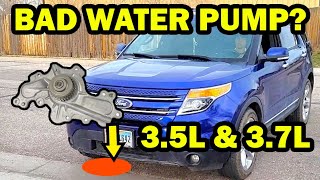
- External Leak: The pump is designed with a "weep hole" that allows coolant to drip out of the engine block, typically near the A/C compressor and crankshaft pulley on the passenger side of the engine bay. 🎬 Watch: How to spot this passenger-side coolant leak This is an early warning sign that the pump seal has failed.
- Internal Leak: In a more catastrophic failure, the seal can rupture and allow coolant to mix directly with the engine oil inside the timing cover and oil pan. This compromises the oil's ability to lubricate, leading to rapid and severe engine damage, often resulting in a seized engine.
Symptoms of a failing water pump include:
- A visible coolant leak (orange or yellow fluid) on the ground below the passenger side of the engine.
- A constantly low coolant level in the reservoir without any obvious external leaks.
- Engine overheating.
- Milky, frothy, or sludgy appearance of the engine oil on the dipstick or under the oil cap, indicating coolant contamination.
Pro Tip: Because replacing the internal water pump is a labor-intensive job that requires removing the timing cover, it is strongly recommended to proactively replace the water pump, timing chains, guides, and tensioners on any used engine 🎬 See: Timing chain replacement and alignment guide before installation. This prevents a future failure that would require removing the engine again.
What Fails at Every Mileage Band
Pro Tip: The following mileage bands describe used replacement units of that mileage. The checklists provided are things to do WHILE INSTALLING the purchased engine, not maintenance for your current engine.
Under 60,000 Miles
The primary failure at this mileage, as with all mileage bands for the transverse 3.7L, is the internal water pump. While not guaranteed to fail this early, reports exist of failures well before 100,000 miles. When the pump's bearing seal fails, it leaks coolant directly into the crankcase, contaminating the oil and leading to catastrophic engine damage if not caught immediately.
- ✓Do during install (required): Proactively replace the internal water pump, timing chains, tensioners, and guides. Even on a low-mileage engine, the risk and cost of failure are too high to ignore while the engine is out of the vehicle. Replace all single-use Torque-to-Yield (TTY) bolts, such as the crankshaft pulley bolt.
- ✓Do during install (recommended): Install new spark plugs and perform a full fluid service with OEM-spec oil and coolant.
- ✓Cheap insurance while the engine is out: Inspect and replace gaskets and seals like the front and rear main seals, valve cover gaskets, and intake plenum gaskets.
60,000 - 100,000 Miles
The risk of internal water pump failure significantly increases in this range. Many owners consider this a critical preventative maintenance window. Variable Camshaft Timing (VCT) phaser issues can also arise, though they are less common than the water pump failure.
🎬 Watch: Ford VCT system diagnosis overview- ✓Do during install (required): Replace the water pump, timing chains, primary and secondary tensioners, and all chain guides. At this mileage, these are considered wear items and are essential for long-term reliability. Replace all items from the 'Under 60K' list, including seals, gaskets, spark plugs, and TTY bolts. Thoroughly flush the vehicle's cooling system before installing the replacement engine, especially if the original engine failed due to water pump issues.
- ✓Do during install (recommended): Strongly consider cleaning or replacing the VCT solenoids to prevent oil-related codes post-install.
- ✓Cheap insurance while the engine is out: Replace the thermostat and all accessible coolant hoses.
100,000 - 150,000+ Miles
Water pump failure is the most cited issue in this mileage range. Some owners report pumps lasting well beyond this, but many fail, often catastrophically. While many owners of the RWD version (Mustang, F-150) report reaching 150,000+ miles with only routine maintenance, this does not reflect the risk for the transverse Continental due to the internal water pump.
- ✓Do during install (required): Assume all timing components and the water pump are at the end of their service life. A complete timing job is not optional. Perform all tasks from the lower mileage bands.
- ✓Do during install (recommended): Carefully inspect the engine block and heads for any signs of coolant contamination or sludge from a previous pump failure. For AWD models, replace the PTU fluid as a critical maintenance step.
- ✓Cheap insurance while the engine is out: Replace the thermostat and all accessible coolant hoses.
Real Owner Experiences
| Source | Mileage | What Happened | Cost |
|---|---|---|---|
| Cars.com | 31,000 | A coolant leak was discovered and repaired under warranty shortly after purchasing the vehicle off-lease. | Not specified (Warranty) |
| Mustang6G.com Forum | 18,000 | A user with a 3.7L Mustang (RWD version, external water pump) reported needing a passenger-side cylinder head replaced. | Not specified (Traded vehicle) |
| Reddit r/lincolnmotorco | 98,000 | Owner sought a preventative water pump and timing chain service. A reputable mechanic quoted $6,000-$7,500, stating the engine needed to be pulled. | $6,000 - $7,500 (Quote) |
| BobIsTheOilGuy Forums | ~62,000 | A replacement water pump on a Mazda CX-9 (transverse 3.7L) failed after only 62,000 miles. The original pump lasted 175,000 miles. | $3,000 |
| Reddit r/lincolnmotorco | ~140,000 | A user noted that water pump issues seem to become more common around 140,000 miles or higher. | Not specified |
| Reddit r/Ford | 150,000 | Owner of a 2011 Lincoln MKX (transverse 3.7L) experienced a leaking internal water pump, with oil found in the coolant reservoir. | $2,400 (Estimate for full timing job) |
| Ford F150 Forum | 152,000 | Owner of a 2011 F-150 (RWD 3.7L) reported excellent reliability with only regular maintenance and two spark plug changes. | Minimal (Routine Maintenance) |
| 150,000 | Considering options between selling the car, a partial repair, or a full repair for a water pump failure. | Quoted $1,800 for water pump only; $2,400 for water pump, timing chain, tensioners, and guides. | |
| 80,000-120,000 | Owner preemptively replaced the internal water pump, timing chain, and gaskets. | $2,000 - $2,500 | |
| BobIsTheOilGuy Forums | 237,000 | Replaced the water pump for a second time (175k on original, 62k on first replacement). | $3,000 (first replacement was $1,650) |
Diagnostic Flowchart
Known Issues, Recalls, and Technical Service Bulletins (TSBs)
Emissions Recall 25E08: PCM Reprogramming
Ford issued this recall for 2017–2020 Lincoln Continentals with the 3.7L engine built at the Flat Rock assembly plant between December 1, 2015, and November 4, 2020. The recall addresses an issue where the emissions control system may not work effectively over time. The fix involves a dealership reprogramming the Powertrain Control Module (PCM) to the latest software version, which is performed at no charge to the owner.
TSB SSM 49821: Variable Camshaft Timing (VCT) DTCs
This technical service bulletin applies to a wide range of Ford and Lincoln vehicles, including the 2017 Continental. It addresses a situation where the check engine light may illuminate with various VCT-related diagnostic trouble codes (such as P0011, P0012, P0021, P0022, etc.). The cause is often small debris causing a VCT solenoid to stick. The prescribed fix is to use a dealer-level scan tool to cycle the affected solenoid multiple times to clear the debris before replacing any parts. Using high-quality engine oil and filters helps prevent this issue.
Engine Replacement Cost Estimates
The total cost of replacing the 3.7L engine in a 2017 Lincoln Continental depends on the type of replacement engine and regional labor rates. The labor for this job is estimated to be between 12 and 24 hours.
| Part/Service | Estimated Cost (USD) | Notes |
|---|---|---|
| Used OEM Engine | $2,295 - $3,979 | Price varies significantly with mileage and seller. |
| Remanufactured Engine | $4,195 - $6,872 | Often comes with a warranty and has been rebuilt to meet or exceed OEM specs. |
| New OEM Engine (Dealer) | Not available | Typically only offered as remanufactured by dealers. |
| Shop Labor | $1,800 - $4,800 | Based on a shop rate of $150-$200/hour for a 12-24 hour job. |
Repair or Replace?
Deciding whether to repair your current 3.7L engine or replace it entirely depends on the extent of the damage caused by the water pump failure.
- When repair makes sense: If the internal water pump failure is caught early (e.g., leaking from the weep hole) before coolant has significantly contaminated the engine oil, a repair is viable. The typical repair cost ranges from $1,800 to $3,000+. Because the repair involves extensive labor to remove the timing cover, it is highly recommended to replace the timing chains, guides, and tensioners at the same time.
- When replace is smarter: If the original engine has suffered catastrophic failure due to a ruptured internal water pump mixing coolant and oil, leading to bearing damage, loss of compression, or a seized engine, replacement is necessary. Additionally, if the vehicle has very high mileage, replacing it with a lower-mileage used engine can be more economical than performing a costly water pump and timing job on an already tired motor.
Questions to ask your installer:
- Have you worked on a transverse-mounted Ford 3.7L Cyclone engine before?
- Will you be replacing the water pump, timing chains, guides, and tensioners on the used engine before installation?
- Are you comfortable performing the mandatory Crankshaft Position (CKP) Sensor Profile Relearn procedure?
- Will you be using new torque-to-yield (TTY) bolts for the crankshaft pulley and camshaft phasers?
- How will you flush the cooling system to ensure no contaminants from the old engine remain?
- If my vehicle is AWD, are you prepared to transfer the oil pan and PTU-related brackets?
- What is your warranty on parts and labor?
What's Included in a Used Engine Assembly?

When purchasing a used engine, it's important to know which parts are typically included. Based on standards from the Automotive Recyclers Association (ARA), a used engine assembly generally includes or excludes the following:
| Typically Included | Typically NOT Included |
|---|---|
|
|
Installation and Programming Essentials

Proper installation is critical for the longevity of a replacement engine. You must reuse your vehicle's original engine wiring harness to ensure all electrical connections match your car's specific options and build date. After the mechanical installation is complete, the vehicle requires specific electronic programming for the new engine to work correctly with the car's computers.
Warning: A Crankshaft Position (CKP) Sensor Profile Relearn procedure is mandatory. Skipping this step can lead to rough running, misfires, and a persistent check engine light. This procedure requires a dealer-level scan tool like the Ford IDS/FDRS.
Additionally, a PATS (Passive Anti-Theft System) key relearn may be necessary to allow the engine to start. This also typically requires a specialized scan tool.
Required Tools and Consumables
This engine swap requires specific tools and fluids to complete successfully. Ensure your shop has access to the following:
| Special Tools | Consumables |
|---|---|
|
|
Installation Gotchas
- Always replace torque-to-yield (TTY) bolts with new OEM fasteners; do not reuse them, as they lose clamping force and can cause catastrophic engine failure.
- The Variable Camshaft Timing (VCT) solenoids are extremely fragile and protrude through the valve covers; avoid snapping them during engine installation.
- For AWD models, transfer the PTU and its mounting brackets. Wrap the exhaust pipe below the PTU in aluminum foil during the fluid swap to prevent gear oil drips.
- Use specific threaded puller holes to remove the timing cover; prying on the aluminum cover will gouge the sealing surfaces and cause leaks.
Freight & Delivery Reality

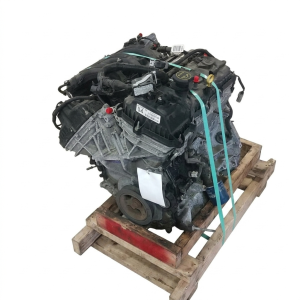
Shipping a complete 3.7L Cyclone V6 engine is a heavy-duty logistics process. This is not a standard parcel delivery. Based on verified shipping data, this engine assembly weighs approximately 409 lbs and measures roughly 36" x 36" x 36" before crating.
The engine will ship as Less-Than-Truckload (LTL) freight strapped to a wooden pallet. If the engine is being delivered to a residential address or a repair shop without a dedicated loading dock or forklift, a liftgate service is absolutely required to lower the pallet to the ground.
When the freight carrier arrives, you must inspect the engine thoroughly before signing the delivery receipt. Look for any damage that may have occurred during transit, paying special attention to fragile protruding components like the VCT solenoids, plastic intake manifolds, and sensor connectors. Reputable sellers will also conduct a pre-purchase verification interview to confirm your VIN (8th digit 'K') and build date (on or before August 23, 2016) to guarantee exact fitment before shipping.
Compression and Leak-Down Expectations
When your used engine arrives, test the cylinder health before installing it. A healthy 3.7L Cyclone V6 should show compression readings between 150 and 180 PSI (pounds per square inch) in all six cylinders. The most important rule is consistency. The highest and lowest readings should not have more than a 10 to 15 percent difference. You can also perform a cylinder leak-down test, which pumps compressed air into the cylinder to check for escaping air. A good used engine should have less than 15 percent air leakage per cylinder.
Before the First Start: Fluids and Priming
You must prepare the engine properly before turning the key for the first time. Starting a dry engine will cause immediate, permanent damage to the metal bearings inside.
Mandatory Fluids
Never reuse old fluids. You must install a brand-new oil filter and fill the engine with fresh oil. The 2017 3.7L V6 requires 5W-20 motor oil that meets Ford specification WSS-M2C945-A (or the newer WSS-M2C960-A1). You must also use the correct engine coolant. Ford used Motorcraft Orange (specification WSS-M97B44-D) for this year, which has since been updated to Motorcraft Yellow (specification WSS-M97B57-A1). Do not mix these with universal green coolants, or the internal water pump seal will fail.
Oil Priming Procedure
You must prime the oil system to push fresh oil to all moving parts before the engine actually fires up.
- Disable the fuel system. You can do this by removing the fuel pump fuse from the fuse box.
- Turn the key to crank the engine for 10 to 15 seconds. The engine will spin but will not start.
- Stop and wait one minute to let the starter motor cool down.
- Repeat this cranking process two or three times until the oil pressure warning light turns off on the dashboard.
- Reinstall the fuel pump fuse. The engine is now safe to start.
Frequently Asked Questions
How do I check my car's build date?
The build date is printed on the Safety Compliance Certification Label located on the driver's side door jamb. It will show the month and year of manufacture (e.g., "07/16"). For this engine, any date of July 2016 or earlier is compatible. If your date is 08/16, you must confirm the exact day of manufacture is on or before August 23, 2016.
Can I use a 3.7L engine from a Ford Mustang or F-150?
No. While those vehicles also use a 3.7L Cyclone V6, they are designed for a longitudinal (rear-wheel drive) layout. The Lincoln Continental uses a transverse (front-wheel drive based) layout. The engine block, mounting points, and accessories are completely different and will not interchange.
Is it really necessary to replace the water pump on the used engine?
Yes, absolutely. The internal water pump is the single biggest design flaw of this engine. The cost of replacing it before installation is a fraction of the cost of doing the job later, which often requires removing the engine from the car again. Failure to replace it risks catastrophic engine failure from coolant mixing with the oil.
What happens if I skip the computer relearn process?
If you do not perform the Crankshaft Position (CKP) Sensor Profile Relearn, the engine's computer will not have an accurate reference for the new engine's crankshaft. This will likely cause a no-start condition, rough idling, misfire codes, and an illuminated check engine light.
What fluids do I need for the installation?
You will need 6.0 quarts of 5W-20 engine oil meeting Ford specification WSS-M2C945-B1, 10.2 quarts of Motorcraft Orange or Yellow Prediluted Antifreeze/Coolant (WSS-M97B44-D2 or VC-13-G), and if your Continental is AWD, 15.2 fl oz of 75W-140 synthetic gear oil for the Power Transfer Unit (PTU).
What special tools are required for this engine swap?
You will need a Camshaft Holding Tool / Alignment Kit (Ford OEM 303-1530), a Crankshaft Vibration Damper Remover/Installer (Ford OEM 303-1521), a Quick-Disconnect Tool Set, an engine hoist, a subframe support fixture, and a torque-angle gauge for the torque-to-yield bolts.
Helpful Videos

Technical Specifications
Engine: 3.7L Cyclone V6; VIN Digit 8: K; Build Date Cutoff: On or before August 23, 2016; Drivetrain: FWD or AWD; Oil Type: 5W-20 Synthetic Blend or Full Synthetic; Oil Specification: Ford WSS-M2C945-B1; Oil Capacity: 6.0 quarts; Coolant Type: Motorcraft Orange or Yellow Prediluted; Coolant Specification: Ford WSS-M97B44-D2 or VC-13-G; Coolant Capacity: 10.2 quarts; Spark Plug Gap: 0.049–0.053 inches; PTU Gear Oil (AWD): 75W-140 Synthetic; PTU Fluid Capacity: 15.2 fl oz; Shipping Weight: Approx. 409 lbs; Camshaft Tool: Ford OEM 303-1530; Damper Tool: Ford OEM 303-1521
We Have This Part in Stock

The information in this article is provided for general reference and educational purposes only. Vehicle specifications, procedures, and part compatibility can vary by production date, trim level, and region. Always consult your vehicle's factory service manual and verify part numbers before purchasing or performing repairs. Safety-critical components such as airbags, seat belts, and braking systems should be installed by a qualified professional.
- Lincoln Continental:
- 🎬 Helpful Videos
- 🛍️ Shop This Part
- Part Identification: Confirming the Correct 3.7L Engine
- Common Failure Points and Symptoms
- Internal Water Pump Failure
- What Fails at Every Mileage Band
- Under 60,000 Miles
- 60,000 - 100,000 Miles
- 100,000 - 150,000+ Miles
- Real Owner Experiences
- Diagnostic Flowchart
- Known Issues, Recalls, and Technical Service Bulletins (TSBs)
- Emissions Recall 25E08: PCM Reprogramming
- TSB SSM 49821: Variable Camshaft Timing (VCT) DTCs
- Engine Replacement Cost Estimates
- Repair or Replace?
- What's Included in a Used Engine Assembly?
- Installation and Programming Essentials
- Required Tools and Consumables
- Installation Gotchas
- Freight & Delivery Reality
- Compression and Leak-Down Expectations
- Before the First Start: Fluids and Priming
- Mandatory Fluids
- Oil Priming Procedure
- Frequently Asked Questions
- 🎟️ Get 5% Off