

2024-2025 Jeep Wrangler 2.0L GME-T4 Turbo: Problems, Identification, and Used Replacement
Identify the exact Hurricane 4 engine variant, understand common failures, and learn when to replace it with a used OEM unit.
- Verify fitment using the 8th VIN digit ('N') to ensure you get the correct non-hybrid EC1 variant and avoid incompatible 4xe or transverse engines.
- During installation, proactively replace common failure points like the plastic coolant T-fitting (68280784AB), oil-air separator seal, and rear main seal to prevent future leaks.
- Replacement requires mandatory PCM programming, including a Crankshaft Position Sensor Relearn, using a dealer-level scan tool like wiTECH 2.0.
- Use only the specified 5W-30 Full Synthetic oil (MS-13340) and purple OAT coolant (MS-12106) to prevent engine damage and cooling system sludge.
Engine Identification: Is This Your Engine?

This article covers the 2.0L turbocharged inline 4-cylinder engine used in the 2024-2025 Jeep Wrangler. This power plant is part of the Stellantis Global Medium Engine (GME) family, often referred to by its internal code, GME-T4, or its marketing name, the "Hurricane 4." It is a modern engine featuring a dual overhead cam (DOHC) design, 16 valves, direct fuel injection, and a twin-scroll turbocharger.
How to Confirm Fitment
Before purchasing a replacement, you must verify that this is the correct engine for your vehicle. An incorrect engine can lead to significant installation issues and electronic incompatibilities. This specific unit is known internally as the EC1 variant.
- Check the VIN: The most reliable method is to check the 8th digit of your vehicle's Vehicle Identification Number (VIN). For this specific non-hybrid engine, the 8th digit must be 'N'.
- Engine Codes: You can also find identifying codes on the engine itself. Look for a barcode label on the timing cover or a code stamped on the engine block, typically near the oil filter housing, that reads 'GME-T4'.
- Visual Inspection: Ensure your vehicle is a conventional gasoline model. It should NOT have a charging port on the driver's side front fender, which would indicate it is a 4xe Plug-in Hybrid. This engine is paired exclusively with an 8-speed 850RE automatic transmission and 4WD.
Warning: Not all 2.0L Jeep engines are the same. This engine assembly is NOT a direct replacement for several other versions, including:
| Variant | Identifier | Reason for Incompatibility |
|---|---|---|
| 4xe Plug-In Hybrid (PHEV) | VIN 6 (8th digit) | Uses a different engine variant (ECX) with unique components and wiring for the hybrid system. |
| eTorque Mild-Hybrid | 'EC3' variant | Older models used a 48V mild-hybrid system that is not compatible. |
| Transverse Applications | From Jeep Cherokee, Dodge Hornet | Engines mounted sideways (transverse) will not fit the Wrangler's longitudinal (front-to-back) layout. |
| Alfa Romeo / Maserati Variants | From other Stellantis brands | Have different tuning, components, and electronics despite being in the same GME family. |
Common Problems and Failure Symptoms

While many 2.0L GME-T4 engines run reliably, certain issues are known to occur. Some may be fixable, while others can lead to complete engine failure requiring replacement. General symptoms of a failing engine include deep knocking sounds from the block, excessive oil consumption, loss of compression, or metal shavings found in the engine oil.
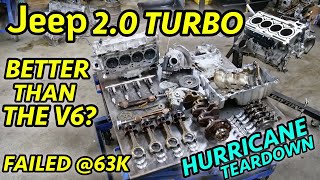
🎬 Watch: Complete teardown of a failed 2.0L engineKnown Issues, Recalls, and Technical Service Bulletins (TSBs)
Automakers issue Technical Service Bulletins (TSBs) to help dealership technicians diagnose and repair common problems. The following issues are documented for vehicles with this engine family.
- Oil Control Valve Sputtering (TSB 18-011-25): Some 2024 Wranglers built on or before January 30, 2024, may experience sputtering, engine hesitation, or enter a reduced-power "limp mode." This is often accompanied by a check engine light with diagnostic trouble codes (DTCs) P0017 or P000A. The fix involves replacing the VVT oil control valves, changing the engine oil and filter, and updating the Powertrain Control Module (PCM) software.
- Turbocharger Oil Return Line Leak (TSB / RSU 25-153): This applies to 2025 models built between November 20, 2024, and May 1, 2025. A leak from the turbocharger's oil return line is the primary symptom. The fix requires replacing the line with an updated part.
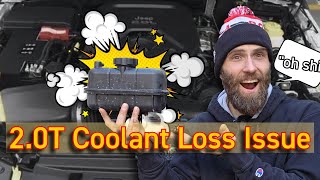
- Water Pump Inlet Tube Coolant Leak (TSB 07-001-22 Rev. B / CSN ZD8): This issue can affect GME-T4 engines across multiple model years, including 2018-2022 models, but persists on newer units. Owners may notice a low coolant level or a visible leak. The problem is often caused by fasteners on the water pump inlet tube backing out due to vibration. The repair involves inspecting the inlet tube and re-torquing these fasteners to factory specifications.
- Cracked Fuel Supply Line (Recall Y10 / NHTSA 21V665000): This safety recall applies to some 2020 Wrangler models with the 2.0L engine. A plastic connector on the fuel supply line could crack, leading to a fuel leak in the engine compartment and increasing the risk of a fire. The remedy is a dealer inspection and replacement of the fuel supply line.
- Malfunction Indicator Lamp (MIL) P0335 (TSB 18-114-22): Some 2019 models may trigger a check engine light for DTC P0335 (Crankshaft Position Sensor A Circuit). The remedy is to update the PCM software.
- Performance Limited Service Fuel System Message (TSB 18-153-22): Some 2022 models may display this warning message on the dashboard. The fix is a PCM software update.
- Timing System Wear: On higher-mileage units, a rattling noise on cold starts can indicate wear in the timing chain system. This requires monitoring and eventual replacement of the timing chain and related components to prevent catastrophic failure.
Diagnostic Flowchart
What Fails at Every Mileage Band
Pro Tip: The mileage bands below describe what typically fails on USED REPLACEMENT engines with these miles. The checklists provided are critical steps to perform WHILE INSTALLING the purchased engine, not just general maintenance for your current vehicle. Taking care of these items while the engine is on a stand will save you hours of labor later.
Under 60,000 Miles
Some of the most prevalent issues for low-mileage 2.0L turbo engines are related to coolant leaks. The plastic coolant T-fitting near the turbocharger can become brittle and crack from heat exposure. Additionally, TSB 07-001-22 Rev. B highlights water pump inlet tube bolts that can back out, causing leaks. In severe cases, this has led to total engine replacement due to overheating and warped cylinder heads. Rear main seal leaks have also been reported on vehicles with as few as 30,000 to 45,000 km (roughly 18,000 to 28,000 miles). For 2024 models built before January 30, 2024, TSB 18-011-25 addresses sputtering and limp mode caused by faulty VVT oil control valves.
- ✓Do during install (required): Inspect and re-torque the water pump inlet tube fasteners per TSB 07-001-22 Rev. B.
- ✓Do during install (required): Inspect the rear main seal for any signs of leakage and replace it if necessary using Oil Seal Installer 9506.
- ✓Do during install (recommended): Replace the spark plugs (NGK 90219 Laser Iridium / ILZKR7G7G), which are recommended every 30,000-60,000 miles.
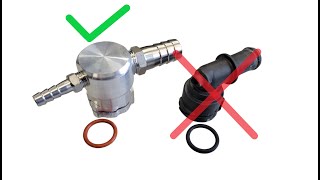
- ✓Cheap insurance while the engine is out: Proactively replace the plastic coolant T-fitting (part 68280784AB) with a more durable aftermarket billet aluminum version.
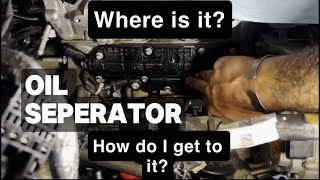
- ✓Cheap insurance while the engine is out: Replace the oil-air separator seal (Mopar 4893609AD) under the intake manifold.
60,000 - 100,000 Miles
This mileage range is where turbo-related issues can become more apparent. The turbocharger wastegate actuator may stick due to carbon buildup, causing rattling, fluctuating boost, and fault code P0243. Head gasket failure is a significant risk if the engine has ever overheated, which is often caused by the previously mentioned coolant system weaknesses. While many owners report no major issues in this band, it is a critical service interval.
- ✓Do during install (required): Perform all tasks from the 'Under 60k' band.
- ✓Do during install (required): Inspect the turbocharger for wastegate freedom of movement and any signs of oil leaks in the housing.
- ✓Do during install (recommended): Replace the engine air filter and inspect accessory drive belts for wear and tear.
- ✓Cheap insurance while the engine is out: Consider proactive replacement of all plastic coolant fittings and potentially the water pump.
100,000 - 150,000 Miles
At higher mileage, wear on the timing system can become an issue. While the engine block and internals are considered reasonably reliable, the supporting systems remain the weak point. Oil consumption may become more noticeable in higher mileage engines. With proper and diligent maintenance, the 2.0L GME-T4 engine is capable of lasting up to 150,000 to 200,000 miles without major internal failures.
- ✓Do during install (required): Perform all tasks from the previous bands.
- ✓Do during install (recommended): Replace all accessible seals and gaskets, including valve cover and oil pan gaskets, to prevent future leaks.
- ✓Cheap insurance while the engine is out: Strongly consider replacing the timing chain, guides, and tensioner as a preventative measure, as this is a known high-mileage failure point.
- ✓Cheap insurance while the engine is out: Replace the water pump and thermostat assembly.
- ✓Cheap insurance while the engine is out: Consider having the intake valves professionally cleaned to remove carbon buildup, which is common on direct-injection engines.
Real Owner Experiences
The following table highlights real-world experiences from Jeep Wrangler owners dealing with 2.0L engine issues, including the mileage at failure and the associated costs.
| Source | Mileage | What Happened | Cost |
|---|---|---|---|
| JLwranglerforums.com | 1,300 | Dealer initially misdiagnosed an oil leak, then determined the engine needed replacement. The owner waited 75 days for a new engine to be installed under warranty. | $0 (under warranty) |
| JLwranglerforums.com | 15,000 | A 2022 model required a total engine replacement after the water pump bolts came loose, causing a rapid overheat that warped the cylinder head. | N/A (Warranty) |
| Car Checker | 30,000-45,000 km (approx. 18k-28k miles) | Multiple forum reports document rear main seal leaks appearing, with oil visible at the bell housing. | N/A |
| 48,000 | An owner reported an oil leak from the air/oil separator located on the passenger side of the block. | N/A (Pending dealer visit) | |
| JLwranglerforums.com | 60,000 | Owner of a 2018 model reported the vehicle has been 'rock solid' with no issues other than a battery replacement at the 5-year mark. | N/A |
| 67,000 | A main bearing failed 7,000 miles out of warranty. The owner filed a claim with Jeep corporate, and due to a complete service history, Jeep agreed to replace the engine. | $1,400 (Goodwill) | |
| JLwranglerforums.com | 68,000 | The owner was quoted $14k-$18k for a full engine replacement. Instead of paying for the repair, they traded the vehicle in, receiving $7,500 for it, and purchased a new Grand Cherokee 4xe. | N/A (Traded In) |
| 87,000 | A 2018 JLU experienced a blown head gasket. | N/A | |
| JLwranglerforums.com | 100,000+ | A user reported their 2.0T passed 100,000 miles with no oil burning or major deposits on the intake valves. | N/A |
| 130,000 | Owner of a 2018 Wrangler reported the engine is still going with no issues, having only performed normal maintenance. | N/A | |
| Not Stated | Owner was quoted $2,900 for a timing chain tensioner replacement. They discovered the vehicle was still under a powertrain warranty, so the repair was covered. | $0 (under warranty) |
Repair or Replace?
When facing a major engine issue, deciding whether to repair your current engine or replace it entirely comes down to the extent of the damage and the economics of the repair.
When Repair Makes Sense
Repair is a viable option for issues that are external to the engine's core rotating assembly and have not caused collateral damage like overheating or oil contamination.
| Repair Scenario | Estimated Cost | Notes |
|---|---|---|
| Timing System Wear / Cold Start Rattle | $1,569 - $2,900 | Viable if diagnosed early before the chain fails and causes internal damage. Parts are $225-$621. |
| External Oil Leaks | $1,300 - $1,400 | Applies to leaks like the oil-air separator. Diagnosis is typically around $95. |
| Cracked Head Gasket | $2,000 - $4,000+ | Only makes sense if the engine has not severely overheated and the head/block are not warped. |
| Failed Turbocharger | $2,000 - $3,000 | A good option if failure is contained and has not sent metal debris into the oil system. |
When Replacement is Smarter
Replacement is the recommended path when there is catastrophic internal damage, such as a failed main bearing, piston damage, or a cracked block. It is also the safer option if a turbocharger failure has contaminated the entire oiling system with metal debris. Given that dealership quotes for a brand new replacement can range from $14,000 to $18,000, sourcing a low-mileage used OEM engine (which typically runs $5,490 to $7,700) and having an independent shop perform the labor is often a much more economical choice.
Questions to Ask Your Installer
- Have you worked on the GME-T4 engine before, and are you familiar with its specific issues?
- Will you be using the wiTECH 2.0 scan tool for the required PCM programming and relearn procedures?
- What is your strategy for verifying all active oil and coolant leaks before starting the job?
- While the engine is out, do you recommend proactively replacing the plastic coolant T-fitting, oil-air separator seal, and rear main seal?
- How will you ensure the engine wiring harness is handled carefully and the PCM ground strap is reinstalled correctly to avoid electrical problems?
- What specific brand and type of oil (5W-30 Full Synthetic MS-13340) and coolant (OAT MS-12106) will you be using for the installation?
- Does your quote include the cost of all required consumables like gaskets, seals, and torque-to-yield bolts?
- Can you provide a detailed breakdown of the parts and labor costs in your estimate?
Replacement Overview

If your engine has failed, a used OEM (Original Equipment Manufacturer) assembly is often the most cost-effective solution. These are engines taken from donor vehicles, such as a low-mileage 2024 Wrangler.
What's Included in a Used Engine Assembly?
A standard used engine assembly typically includes the core components, but not the accessories that bolt onto it.
- Usually Included: Engine block, cylinder head, oil pan, valve cover, intake manifold, throttle body, fuel injectors, high-pressure fuel pump, timing cover, harmonic balancer, and all internally lubricated parts.
- Not Included (Reuse from your old engine): Alternator, starter motor, A/C compressor, power steering pump, exhaust manifold, engine wiring harness, and the engine computer (ECU/PCM).
Pro Tip: The turbocharger's inclusion is not always guaranteed. Always confirm with the seller whether the turbocharger is attached and if it is covered by the warranty.
Replacement Cost Comparison
Prices can vary based on supplier, mileage, and warranty. The following are aggregated estimates to help budget for a replacement.
| Part Type | Estimated Cost (USD) | Notes |
|---|---|---|
| New OEM / Crate Engine | $6,500+ | Brand new from a Jeep dealer. May be a crate long block or a complete assembly. Dealership quotes for the full job can reach $14,000-$18,000. |
| Used OEM | $5,490 - $7,700 | Varies widely with mileage. A low-mileage unit from a 2024-2025 donor can be a great value. |
| Installation Labor | $1,440 - $3,000 | Based on an estimated 10 to 20 hours of shop time at typical labor rates ($144 to $150/hr). |
Installation and Programming

Installation Complexity & Special Tools
Replacing this engine is a job for an expert-level DIYer or a professional technician. It requires a significant amount of time (10 to 20 shop hours) and specialized equipment.
- Engine hoist and stand
- wiTECH 2.0 Diagnostic Scan Tool (or equivalent dealer-level tool)
- Engine Timing Tool Kit for Jeep 2.0T
- Oil Seal Installer 9506
- High-Pressure Fuel Line Disconnect Tool
- Precision Torque Wrench
Warning: Programming Required! You cannot simply swap this engine and drive away. The vehicle's Powertrain Control Module (PCM) must be electronically synchronized with the replacement engine. This process, known as "re-marrying," requires a dealer-level scan tool like the wiTECH 2.0. Procedures include a Crankshaft Position (CKP) Sensor Relearn and a Throttle Body Relearn to ensure the engine runs correctly and communicates with the rest of the vehicle's systems. You must reuse your vehicle's original engine wiring harness to ensure proper pinouts and CAN bus module communication.
Pro Tip: Critical Installation "Gotchas"
To ensure a successful and long-lasting repair, address these common weak points during the installation while the engine is out of the vehicle and easily accessible.
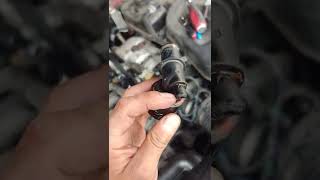
- Coolant Fittings: A plastic T-fitting (Part 68280784AB) in the coolant lines near the turbocharger is known to become brittle and fail. Proactively replace it with a more durable billet aluminum aftermarket version.
- Oil-Air Separator: This component (Mopar 4893609AD) is buried under the intake manifold and is difficult to access. Replace its seals and re-torque the bolts while the engine is out.
- Rear Main Seal: These seals are a common source of oil leaks. It is best practice to install a new one using specialized tool 9506 before mating the engine to the transmission.
- Water Pump Fasteners: Water pump inlet tube fasteners are known to back out from vibration and should be checked and re-torqued.
- Ground Straps: Pay close attention to the ground strap on the PCM mounting bolts. An improper connection can cause a host of hard-to-diagnose electrical problems.
Warning: Common Buyer and Installer Mistakes
- Coolant Mixing: Mixing OAT (purple) coolant with HOAT (orange/pink) or generic green coolant creates a clogging gel sludge that will ruin the cooling system.
- Stripped Oil Pan: Stripping the aluminum oil pan drain plug by exceeding the strict 20 ft-lbs torque specification.
- Wrong Oil: Using incorrect 0W-20 oil viscosity instead of the required 5W-30.
- Reusing Fasteners: Reusing stretched Torque-to-Yield (TTY) fasteners on the exhaust manifold, turbocharger, or engine mounts.
- Wrong Engine Variant: Ignoring the 8th VIN digit (N) and accidentally ordering a 4xe hybrid (ECX) or other incompatible variant.
- Ignoring Programming: Underestimating the PCM lock and failing to arrange for necessary programming and relearns post-install.
Freight & Delivery Reality

When ordering a used engine assembly, it is important to understand how it will arrive. This is a large, heavy industrial component, not a standard parcel.
- Size and Weight: A complete 2.0L GME-T4 engine assembly weighs approximately 475 lbs and measures roughly 40" x 32" x 38" before crating.
- Shipping Method: It will ship as LTL (Less Than Truckload) freight on a wooden pallet. It cannot be shipped via standard UPS or FedEx ground services.
- Delivery Requirements: Delivery will require a loading dock, a forklift, or a truck equipped with a liftgate to lower the pallet to the ground. Residential deliveries often incur extra fees.
- Inspect Before Signing: Always inspect the engine for transit damage before signing the driver's delivery receipt. Once you sign, you are accepting the freight in its current condition.
- Pre-Purchase Verification: A reputable supplier will conduct a pre-purchase verification interview. They will ask you to confirm your 8th VIN digit is 'N', that your vehicle is a conventional gasoline model (not a 4xe), and that it has the 850RE automatic transmission.
Before the First Start: Priming and Fluids
Used engines often sit on shelves for months. During this time, the oil drains away from the moving parts. You must add fresh fluids and prime the oil system before starting the engine. Priming means pumping oil through the engine before it actually runs. This prevents dry metal parts from scraping together and causing instant damage.
Mandatory Fresh Fluids
Never reuse old fluids. You must install a new oil filter and fill the engine with the correct, factory-approved fluids:
- Engine Oil: Use 5W-30 full synthetic oil. It must meet the Chrysler MS-13340 standard (API SP rating). The 2.0L turbo engine runs very hot, and the wrong oil will damage the turbocharger.
- Engine Coolant: Use Mopar OAT (Organic Additive Technology) coolant meeting the MS-90032 standard. OAT is a specific type of long-life coolant. Do not mix it with older green or orange coolants. Mixing different coolant types will create a thick gel that blocks the cooling system.
Oil Priming Procedure
Follow these steps to safely build oil pressure before the engine fires up:
- Disable the fuel system: Open the under-hood fuse box. Find and remove the fuel pump fuse or relay. This stops the engine from getting gas, so it will not start while you turn it over.
- Crank the engine: Turn the key or press the start button to crank the engine for 10 to 15 seconds.
- Check for pressure: Watch the oil pressure gauge on the dashboard. If the gauge does not move, wait 30 seconds. This resting period lets the starter motor cool down so it does not burn out.
- Repeat if needed: Crank the engine again for 10 to 15 seconds until you see oil pressure register on the gauge.
- Start the engine: Once you have confirmed oil pressure, put the fuel pump fuse or relay back in place. Start the engine normally and let it idle while you check for leaks.
Frequently Asked Questions
What kind of oil does the 2024 Jeep Wrangler 2.0L Turbo take?
This engine requires SAE 5W-30 full synthetic engine oil that meets the FCA MS-13340 specification or API SP / GF-6A standards. Do not use 0W-20 oil, as this can cause severe engine damage.
What is the correct coolant for the GME-T4 engine?
Use only Mopar OAT (Organic Acid Technology) coolant that meets the FCA MS-12106 specification. This coolant is purple. Mixing it with other types like HOAT (orange/pink) or generic green coolant will cause it to gel and can clog the entire cooling system.
Can I reuse my engine computer (PCM)?
Yes, you must reuse your vehicle's original PCM. However, it will need to be reprogrammed by a qualified shop with a dealer-level scan tool (like the wiTECH 2.0) to recognize and work with the new engine's sensors. This includes a Crankshaft Position Sensor Relearn and a Throttle Body Relearn.
How much does this engine weigh for shipping?
A used engine assembly weighs approximately 475 lbs and measures around 40" x 32" x 38" before being crated. It must be shipped as LTL (Less Than Truckload) freight on a pallet.
Does a used engine come with the turbocharger?
The inclusion of the turbocharger is not guaranteed and varies by supplier. You must explicitly ask the seller if the turbocharger is included and if it is covered under their warranty.
What spark plugs does the 2.0L Hurricane engine use?
The recommended spark plugs are NGK 90219 Laser Iridium (part number ILZKR7G7G). They should be replaced every 30,000 to 60,000 miles.
Helpful Videos

Technical Specifications
OEM Part Numbers: 68280784AB 4893609AD 90219 ILZKR7G7G
Engine Family: Stellantis Global Medium Engine (GME); Internal Code: GME-T4; Marketing Name: Hurricane 4; Displacement: 2.0L; Configuration: Inline 4-Cylinder; Valvetrain: Dual Overhead Cam (DOHC), 16-valve; Aspiration: Twin-Scroll Turbocharger; Fuel System: Direct Injection; VIN (8th Digit): N; Internal Variant: EC1; Transmission Pairing: 8-speed 850RE Automatic; Drivetrain: 4WD; Required Oil: 5W-30 Full Synthetic MS-13340; Required Coolant: OAT MS-12106 (Purple); Shipping Weight: Approx. 475 lbs
We Have This Part in Stock


The information in this article is provided for general reference and educational purposes only. Vehicle specifications, procedures, and part compatibility can vary by production date, trim level, and region. Always consult your vehicle's factory service manual and verify part numbers before purchasing or performing repairs. Safety-critical components such as airbags, seat belts, and braking systems should be installed by a qualified professional.
- Jeep WRANGLER:
- 🎬 Helpful Videos
- 🛍️ Shop This Part
- Engine Identification: Is This Your Engine?
- How to Confirm Fitment
- Common Problems and Failure Symptoms
- Known Issues, Recalls, and Technical Service Bulletins (TSBs)
- Diagnostic Flowchart
- What Fails at Every Mileage Band
- Under 60,000 Miles
- 60,000 - 100,000 Miles
- 100,000 - 150,000 Miles
- Real Owner Experiences
- Repair or Replace?
- When Repair Makes Sense
- When Replacement is Smarter
- Questions to Ask Your Installer
- Replacement Overview
- What's Included in a Used Engine Assembly?
- Replacement Cost Comparison
- Installation and Programming
- Installation Complexity & Special Tools
- Freight & Delivery Reality
- Before the First Start: Priming and Fluids
- Mandatory Fresh Fluids
- Oil Priming Procedure
- Frequently Asked Questions
- 🎟️ Get 5% Off