

2017-2022 Honda CR-V 1.5L Turbo Engine: Problems, Identification, and Used Replacement
Identify the L15BE or L15B7 engine, understand what causes head gasket and oil dilution failures, and learn when to replace it with a used OEM unit.
- Before purchasing, verify the 6th digit of your VIN to confirm FWD ('1') or AWD ('2') compatibility and check that the engine code is L15B7 or L15BE.
- Be aware of two major inherent flaws: engine oil dilution (especially in 2017-2018 models) and premature head gasket failure across all 2017-2022 model years.
- After installation, a Crankshaft Position (CKP) sensor relearn procedure is mandatory and requires a professional scan tool to prevent misfires (P0300) and limp mode.
- The turbocharger is not included with used engine assemblies and must be carefully inspected and transferred from your old engine to prevent immediate failure of the replacement.
- Due to oil dilution risks, it is highly recommended to use 0W-20 full synthetic oil and change it every 5,000 miles, not the longer factory-suggested interval.
Identification: Is This the Right Engine for Your CR-V?


The 2017–2022 Honda CR-V (EX, EX-L, and Touring trims) uses a 1.5-liter turbocharged inline four-cylinder engine from Honda's L-series family (Earth Dreams VTC Turbo). This direct-injection engine is identified by the codes L15B7 or L15BE. To ensure you are purchasing the correct engine for your vehicle, you must verify a few key details.
| Verification Step | Details |
|---|---|
| Check the VIN | The 6th digit of your VIN is critical. A "1" indicates a Front-Wheel Drive (FWD) model, while a "2" indicates an All-Wheel Drive (AWD) model. AWD setups require transferring the oil pan, engine mount brackets, and intermediate shaft brackets for transfer case clearance. |
| Engine Code Location | The engine code (L15B7 or L15BE) is stamped on the front of the aluminum engine block, near where the engine and transmission bellhousing meet. |
Warning: The 1.5L turbo engines used in the Honda Civic and Accord are not direct replacements for the CR-V. While they belong to the same engine family, they have different cylinder heads, mounting points, wiring harnesses, and computer (ECU) calibrations. Attempting to install an engine from a Civic or Accord will lead to significant fitment and electronic issues.
Common Problems & Failure Symptoms

This engine is known for several significant issues that can lead to costly repairs or complete engine failure. Understanding the symptoms can help you diagnose a problem before it becomes catastrophic.
Engine Oil Dilution
This is the most widely reported problem, primarily affecting 2017–2018 models, especially in colder climates. During short trips, unburned gasoline can seep past the piston rings and mix with the engine oil in the crankcase. This lowers the oil's viscosity, increasing engine wear.
🎬 Watch: Understanding Honda oil dilution issues- Symptoms: A strong smell of gasoline on the oil dipstick, an oil level that rises over time, and potential engine misfires.
- The Fix: Honda issued technical service bulletins (TSB 18-114, TSB 18-124, and TSB 19-025) that involve a software update for the engine and transmission control units, and in some cases, a new A/C control unit to help the engine warm up faster. Honda also extended the powertrain warranty for certain components by one year with unlimited mileage to cover potential damage.
Premature Head Gasket Failure
A more severe issue affecting the entire 2017–2022 model range is the failure of the head gasket—the seal between the engine block and the cylinder head. This failure allows coolant to leak into the engine's combustion chambers, which can cause overheating and catastrophic engine damage.
- Symptoms: Unexplained coolant loss, engine overheating, rough running or misfiring (especially on a cold start), and white smoke from the exhaust.
- The Fix: The only remedy is to replace the head gasket, a labor-intensive repair that can cost thousands of dollars. This issue is the subject of several active class-action lawsuits in the U.S. and Canada. Some technicians suggest the factory head bolts provide insufficient clamping force and recommend upgrading to stronger aftermarket ARP head studs during the repair. 🎬 See: Diagnosing a rough-running CR-V head gasket failure
Other Known Issues
| Issue | Description |
|---|---|
| Direct Fuel Injector Failure | The fuel injectors can become clogged or fail electrically, leading to a rough idle, poor performance, and specific check engine light codes (DTC P0172, P219F, P219D). This can happen as early as 20,000 to 40,000 miles. |
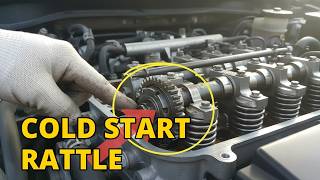
| VTC Actuator Rattle | A brief, rattling noise from the top of the engine during a cold start can indicate a problem with the Variable Timing Control (VTC) actuator. While often not immediately critical, it can worsen over time and lead to timing chain issues. |
Replacement Cost Comparison
When replacing a failed engine, you have several options with different price points. Labor for the replacement is a significant cost, typically estimated between 10 and 15 hours, adding $1,554 to $3,707 to the total bill.
| Engine Type | Estimated Part Cost (USD) | Notes |
|---|---|---|
| Used OEM | $2,950 - $3,400 | Price varies widely based on mileage and condition. A common choice for balancing cost and reliability. |
| Remanufactured OEM | $2,000 - $4,000 | Disassembled, cleaned, and rebuilt with new wear parts. Often comes with a limited warranty. |
| New OEM (Crate Engine) | $3,400 - $9,000+ | A brand new short block or complete engine from a dealer. The most expensive option, but offers the longest potential lifespan. |
What's Included in a Used Engine Assembly?
Understanding what parts come with a used engine is crucial for budgeting and planning the installation. Most recycled engines are sold as a "long block."
Pro Tip: The turbocharger is almost never included with a used engine assembly. You must inspect and transfer the turbo from your old engine or purchase a new or rebuilt one separately. Failure to inspect the old turbo for damage could cause immediate failure of the replacement engine.
| Component Status | Parts List |
|---|---|
| Typically Included | Engine block, cylinder head, oil pan, valve cover, intake manifold, timing cover, fuel injection system (injectors, fuel rail, high-pressure pump), throttle body, harmonic balancer, and internal sensors. |
| Typically Not Included | Turbocharger, starter, alternator, A/C compressor, power steering pump, and exhaust manifold. These parts must be transferred from your original engine. |
Installation & Programming Essentials

Installing this engine is a complex job rated for Advanced to Expert DIYers or professional technicians. Several steps are critical for a successful replacement.
Warning: After installation, the engine's computer requires a Crankshaft Position (CKP) Sensor Pattern Relearn procedure. Skipping this step will cause the engine to run poorly, set misfire codes (like P0300), and may engage limp mode. This procedure requires a dealer-level scan tool (Honda i-HDS) or a high-end professional bidirectional tool (Autel or Foxwell NT510 Elite).
- Programming: In addition to the CKP relearn, an Idle Relearn and Immobilizer Re-marriage procedure must be performed.
- Wiring Harness: You must reuse your vehicle's original engine wiring harness to ensure 100% electrical compatibility and prevent communication errors.
- Special Tools Required: You will need a Crankshaft pulley holder tool (Honda OEM 07MAB-PY3010A), a fuel injector puller/seal installer tool, a calibrated torque wrench for angle-torque measurements, an engine hoist and stand, and fuel line disconnect tools.
- Consumables: Always install new spark plugs (NGK Laser Iridium Part # DILKAR8P8SY or 12290-59B-A01), fresh 0W-20 Full Synthetic oil, a new oil filter (Genuine Honda Part # 15400-PLM-A02), and Honda Type 2 Blue Long Life Coolant. You must also use new gaskets for the intake manifold, exhaust manifold, turbocharger, thermostat, and valve cover, as well as a new rear main seal and single-use direct injector seals.
- Gotchas: Cylinder head bolts are Torque-to-Yield (TTY) and cannot be reused. If using replacement injectors, you must program their unique calibration codes into the ECU. Thoroughly flush all coolant and oil feed lines when transferring the turbo to prevent bearing failure. Inspect the turbo oil feed line, as it is prone to clogging with sludge. Handle brittle plastic intake manifolds and sensor connectors with care, and pay meticulous attention to all engine and transmission grounding points.
Diagnostic Flowchart
What Fails at Every Mileage Band
Pro Tip: The mileage bands below describe what to expect from used replacement units of that mileage. The checklists provided are things to do WHILE INSTALLING the purchased engine, not maintenance for your current engine.
Under 60,000 Miles
Engines in this band are generally fresh, but they are still susceptible to the factory design flaws. Engine oil dilution is the most prominent issue, especially in 2017-2018 models. Faulty or clogged direct injectors can cause misfires and trigger DTC P0172, with replacement costs sometimes exceeding $2,000. A brief VTC actuator rattle upon cold start is a common complaint. While more common at higher mileage, some owners have reported head gasket failures even under 60,000 miles.
- ✓Do during install (required): Verify the ECU has the latest Honda software updates (TSB 18-114, 18-124, 19-025) to mitigate oil dilution. Replace spark plugs with new NGK Laser Iridium plugs. Use fresh Honda Type 2 Blue Coolant and 0W-20 Full Synthetic oil.
- ✓Do during install (recommended): Always install a new valve cover gasket, intake and exhaust manifold gaskets, and thermostat gasket.
60,000 - 100,000 Miles
Head gasket failure becomes a significant concern in this mileage range, often costing $2,500 to $3,500 to repair. Problems with fuel injectors continue, leading to rough running and multiple warning lights. As a direct-injection engine, carbon can accumulate on the intake valves, potentially causing issues starting around 50,000 to 60,000 miles. Walnut blasting the valves every 100,000 to 130,000 miles is a recommended preventative measure. The cold-start VTC rattle can persist or begin in this range.
- ✓Do during install (required): All items from the Under 60K band.
- ✓Do during install (recommended): Carefully inspect the turbo for oil leaks, contamination, and shaft play. Check and clean the oil feed line. If not recently done, perform a drain and fill of the CVT fluid with Honda HCF-2.
- ✓Cheap insurance while the engine is out: Strongly consider replacing the water pump and thermostat as preventative maintenance. Replace the rear main seal, as it is much easier to do with the engine out.
100,000 - 150,000 Miles
The risk of head gasket failure continues to be a primary concern; one owner reported a complete engine failure at 106,000 miles due to a bad head gasket. While generally robust, some technicians note that turbochargers may start to go bad around the 150,000-mile mark. Hydraulic engine and transmission mounts can leak and collapse, causing significant cabin vibration at idle. Oil degradation from dilution can cause premature wear on the timing chain and VTC components.
- ✓Do during install (required): All items from previous bands. Perform a walnut blast cleaning of the intake valves to remove carbon buildup.
- ✓Do during install (recommended): Carefully inspect the timing chain for stretching and the tensioner for proper function, especially if there's a history of oil dilution or VTC rattle.
- ✓Cheap insurance while the engine is out: At this mileage, it is wise to replace all major external gaskets and seals, including the rear main seal, front crank seal, and oil pan gasket.
Over 150,000 Miles
Beyond 150,000 miles, failures are more likely related to general wear of components like the turbocharger, engine mounts, and various sensors. Some high-mileage engines may begin to consume oil, with reports of burning a quart of oil between changes after 160,000 miles.
- ✓Do during install (required): Mandatory intake valve cleaning (walnut blasting). Thoroughly inspect or replace the turbocharger, as the service life of the original turbo may be limited.
- ✓Do during install (recommended): Assume a full reseal is necessary. This includes all gaskets, seals, and O-rings.
- ✓Cheap insurance while the engine is out: Strongly consider replacing wear items like the water pump, thermostat, timing chain, tensioner, and guides regardless of their apparent condition.
Real Owner Experiences
The following table highlights real-world failures and repair costs reported by Honda CR-V owners.
| Source | Mileage | What Happened | Cost |
|---|---|---|---|
| Cars.com | 60,000 miles | Fuel injectors failed, causing the dashboard lights to flash. The repair cost was approximately $2,000. | $2,000 |
| Reddit r/crv | 64,000 miles | All dashboard warning lights came on. The dealer diagnosed faulty fuel injectors and replaced them under warranty. | $0 (Warranty) |
| YouTube Comment | 40,000-70,000 miles | A technician noted that head gasket failures are common in this mileage range. | Not Specified |
| Reddit r/crv | Less than 100,000 km (approx. 62,000 miles) | Owner experienced a head gasket failure. | $3,500 CAD |
| NHTSA Complaint | Not specified | A dealership mechanic determined a head gasket needed replacement after observing a coolant and oil leak during a separate recall repair. | Not Specified |
| YouTube | 106,000 miles | Complete engine failure attributed to a head gasket failure. | Not specified (led to vehicle being considered worthless) |
| Reddit r/crv | 114,000 miles | Car experienced poor acceleration and multiple warning lights. After initial attempts to replace a VCT solenoid and PCV hose failed, the shop diagnosed metal debris in the engine and recommended a full engine replacement. | $1,000-$3,000 (with extended warranty) |
| Reddit r/Honda | 147,000 miles | Owner reports VTC actuator has been rattling for 30,000 miles with no other issues. | $0 |
| Torque News | 170,000 miles | Owner reported trouble-free operation by driving conservatively and maintaining the vehicle well. | $0 |
| YouTube Comment | 123,000 miles (and counting) | Owner has had zero issues but performs meticulous preventative maintenance, including 3,500-mile oil changes, frequent fluid changes, and regular cleaning of sensors. | N/A (preventative maintenance) |
| Reddit r/crv | 73,000 | Contacted Honda corporate for repair assistance after dealer quoted for engine replacement due to sludge. | Pending ($17,000 quoted) |
| Reddit r/Honda | 134,000 | Found an independent mechanic to replace the head gasket after dealer quoted $7,500. | $2,000 |
| Reddit r/mechanic | 34,000 | Seeking options as the vehicle is just out of warranty and needs a new engine. | Pending (Almost $9,000 quoted) |
| Reddit r/askcarguys | ~114,000 | Presented with options by extended warranty: replace with a used engine (85k miles) or a new engine. | $1,000 (for used) or $3,000 (for new) |
| Torque News | 128,000 | Dealer quoted for engine replacement due to blown head gasket, but without checking the turbo. | Pending ($6,300 quoted) |
| Reddit PersonalFinanceCanada | N/A | In mediation with Honda Canada over warranty coverage for an engine problem. | Pending ($15,500 new or $8,000 used quoted) |
Repair or Replace?
Deciding whether to repair your current engine or replace it entirely depends on the severity of the failure and the quotes you receive.
- When Repair Makes Sense: If you experience fuel injector failure, the typical repair cost is $1,200 to $2,500. This is a direct parts replacement and does not require engine removal. For a head gasket failure, repair makes sense if the engine has not overheated to the point of warping the cylinder head or block. An independent shop typically charges $2,578 to $3,419 for a head gasket replacement. If caught early, replacing the head gasket (and potentially upgrading to ARP head studs) is more economical than a full engine replacement.
- When Replacement is Smarter: A full replacement is necessary if catastrophic failure has occurred, such as engine block damage from a blown head gasket, significant internal sludge leading to bearing failure, or if the cost of multiple repairs (e.g., head gasket plus a new turbo) approaches the cost of a used engine. If a dealership quotes an exorbitant amount for a head gasket repair (e.g., $4,500 to $7,500+), sourcing a low-mileage used engine for $2,950 to $3,400 plus 10 to 15 hours of labor can be a more financially sound decision.
Questions to Ask Your Installer
- Have you worked on this specific 1.5L turbo engine from Honda before?
- Are you comfortable performing the mandatory Crankshaft Position (CKP) sensor relearn procedure after installation?
- Will you be transferring my original wiring harness and external accessories?
- What is your opinion on replacing the head gasket with an upgraded ARP stud kit during the swap as a preventative measure?
- Can you inspect my original turbocharger for shaft play and oil/coolant contamination before transferring it?
- What warranty do you offer on your labor and on the supplied engine?
- Does your quote include all necessary new gaskets, seals, and fluids like 0W-20 synthetic oil and Honda Type 2 coolant?
Freight & Delivery Reality

If you are purchasing a used 1.5L turbo engine online, it will not arrive in a standard cardboard box. This engine assembly weighs approximately 360 lbs and measures roughly 36" x 34" x 34" before crating. It ships as Less-Than-Truckload (LTL) freight on a wooden pallet.
Because of its size and weight, the delivery truck will require a liftgate to lower the pallet to the ground if you are having it delivered to a residential address or a shop without a loading dock. Always inspect the engine thoroughly before signing the delivery receipt. Check for any physical damage to the block, oil pan, or plastic sensors that may have occurred during transit. Before purchasing, verify the 6th digit of your VIN and confirm the engine code stamped on the block reads L15BE or L15B7 to ensure you are receiving the correct unit.
Before the First Start: Priming and Fluids
Never start a used replacement engine right after installing it. You must add the correct fresh fluids and prime the oil system. Priming means pumping oil through the engine before it actually runs. This protects the metal parts from grinding together dry.
Mandatory Fluids
- Engine Oil: You must install a new oil filter and fill the engine with fresh 0W-20 viscosity motor oil. Look for oil that meets the API SP or ILSAC GF-6 standard on the bottle.
- Engine Coolant: Use only Honda Long Life Antifreeze/Coolant Type 2 (this fluid is blue). Do not mix it with green, orange, or other types of coolant, as this can clog the cooling system.
Oil Priming Procedure
Follow these steps to build oil pressure safely before the engine fires up:
- Disable the fuel system: Open the fuse box and remove the fuel pump fuse. This stops fuel from spraying into the cylinders so the engine will crank but will not start.
- Crank the engine: Turn the key or press the start button to crank the engine for 10 to 15 seconds.
- Let the starter rest: Wait 30 seconds so the electric starter motor does not overheat and burn out.
- Repeat: Crank the engine again for 10 to 15 seconds. Watch the dashboard. Stop when the red low oil pressure light turns off. This tells you that oil has successfully reached the top of the engine and the turbocharger.
- Start the engine: Put the fuel pump fuse back in its slot. Start the engine normally and let it idle. Check underneath the vehicle for any oil or coolant leaks.
Frequently Asked Questions
Can I use a 1.5L Turbo engine from a Honda Civic or Accord?
No. While the engines are fundamentally similar and belong to the same family, the CR-V version has different mounting points, cylinder head designs, wiring harnesses, and electronic calibrations. It is not a direct-fit replacement.
Does the used engine include the turbocharger?
Almost never. Used engines are typically sold as a long block assembly without external accessories like the turbo, starter, or alternator. You must transfer these parts from your old engine.
What happens if I skip the computer relearn procedures?
Failure to perform the Crankshaft Position (CKP) sensor relearn will lead to immediate running problems, including a flashing check engine light, misfire codes (like P0300), and reduced engine power (limp mode).
Is it true there was a recall for the oil dilution problem?
There was no formal recall in the U.S., but Honda issued multiple Technical Service Bulletins (TSB 18-114, 18-124, and 19-025) and a product update campaign to address the issue with software changes. They also extended the warranty on certain engine parts for affected model years.
How can I prevent carbon buildup on the intake valves?
Because this is a direct-injection engine, fuel does not wash over the intake valves to clean them. Using top-tier gasoline and a fuel system cleaner with Polyetheramine (PEA) can help keep the injectors clean, but performing a walnut blast cleaning of the intake valves every 100,000 to 130,000 miles is the best preventative measure.
What oil change interval should I use for this engine?
Due to the known oil dilution issues, mechanics strongly recommend changing the 0W-20 full synthetic oil every 5,000 miles, rather than waiting for the 7,500 to 10,000-mile interval suggested by the vehicle's maintenance minder. This is especially critical if you live in a cold climate or take frequent short trips.
Helpful Videos
Technical Specifications
OEM Part Numbers: 12290-59B-A01 (Spark Plug) 15400-PLM-A02 (Oil Filter) 07MAB-PY3010A (Tool)
Years: 2017-2022; Vehicle: Honda CR-V; Trims: EX, EX-L, Touring; Engine Type: 1.5L Turbocharged Inline 4-Cylinder; Engine Family: Honda L-series (Earth Dreams VTC Turbo); Engine Codes: L15B7, L15BE; Injection Type: Direct Injection; Required Oil: 0W-20 Full Synthetic; Required Coolant: Honda Type 2 Blue Long Life; Weight: Approx. 360 lbs
We Have This Part in Stock


The information in this article is provided for general reference and educational purposes only. Vehicle specifications, procedures, and part compatibility can vary by production date, trim level, and region. Always consult your vehicle's factory service manual and verify part numbers before purchasing or performing repairs. Safety-critical components such as airbags, seat belts, and braking systems should be installed by a qualified professional.
- Honda CR-V:
- 🎬 Helpful Videos
- 🛍️ Shop This Part
- Identification: Is This the Right Engine for Your CR-V?
- Common Problems & Failure Symptoms
- Engine Oil Dilution
- Premature Head Gasket Failure
- Other Known Issues
- Replacement Cost Comparison
- What's Included in a Used Engine Assembly?
- Installation & Programming Essentials
- Diagnostic Flowchart
- What Fails at Every Mileage Band
- Under 60,000 Miles
- 60,000 - 100,000 Miles
- 100,000 - 150,000 Miles
- Over 150,000 Miles
- Real Owner Experiences
- Repair or Replace?
- Questions to Ask Your Installer
- Freight & Delivery Reality
- Before the First Start: Priming and Fluids
- Mandatory Fluids
- Oil Priming Procedure
- Frequently Asked Questions
- 🎟️ Get 5% Off