

2023-2025 Honda Accord 1.5L Turbo L15BE: Problems, Identification, and Used Replacement
Identify what kills the L15BE engine, how to spot the right replacement, and when a used OEM unit makes financial sense.
- Always replace the one-time-use high-pressure fuel joint pipe during installation to prevent a dangerous, high-pressure fuel leak.
- Before purchasing, verify you need the L15BE engine by checking for a '1' in the 6th VIN position or finding the 'L15BE' stamp on the engine block.
- A Crankshaft Position (CKP) sensor relearn procedure using a Honda-specific scan tool is mandatory after installation for the engine to run correctly.
- To combat inherent oil dilution, use full synthetic 0W-20 oil and consider changing it every 5,000 miles instead of waiting for the maintenance minder.
- Head gasket failure is a common, expensive repair; on high-mileage engines, replacing the entire engine with a used unit is often more cost-effective.
Is This the Right Engine for Your Accord?


The 2023, 2024, and 2025 Honda Accord LX and EX trims use a specific 1.5-liter turbocharged inline 4-cylinder engine. This engine is part of the Honda L-Series family and is identified by the engine code L15BE. It is a direct-injection, turbocharged design paired with a Continuously Variable Transmission (CVT). A used engine assembly, often called a long block, typically weighs around 340 lbs and ships on a pallet measuring approximately 40" x 30" x 32".
How to Verify Your Vehicle's Engine
Before purchasing a replacement, it is critical to confirm that your Accord requires this specific engine. There are two primary ways to do this:
- Check the VIN: The Vehicle Identification Number (VIN) is located on a plate at the base of the windshield on the driver's side and on the driver's doorjamb sticker. For the 2023–2025 Accord, the 6th digit of the VIN must be a '1' to indicate the 1.5L Turbo engine. A '2' in this position signifies the 2.0L Hybrid powertrain, which is not interchangeable.
- Find the Engine Code: The code 'L15BE' is stamped on a flat, machined pad on the front of the engine block, near where the engine connects to the transmission. This is the most definitive way to identify the engine.
Critical Interchange Information
Only the L15BE engine from a 2023–2025 Honda Accord is a direct fit. While other Honda and Acura models use 1.5L turbo engines, they are not compatible.
Warning: Do not attempt to use a 1.5L turbo engine from a Honda Civic, CR-V, or Acura Integra. These versions (such as the L15B7 or L15CA) have significant differences in cylinder heads, exhaust manifolds, mounting points, wiring, and computer (ECU) calibrations that make them incompatible.
Common Failure Symptoms

While some issues can be fixed with simple repairs, certain symptoms often point to catastrophic engine failure requiring a full replacement. Look for these signs:
- Engine Overheating with Coolant Loss: This is a classic sign of a failed head gasket, where coolant leaks into the combustion chamber. You may need to frequently add coolant without finding an external leak.
- Milky or Frothy Engine Oil: If you check the oil dipstick or oil cap and find a milky, tan, or coffee-colored residue, it means coolant is mixing with the engine oil. This is a severe problem, often caused by a blown head gasket.
- Engine Knocking or Banging: Loud, deep knocking sounds from the engine, especially ones that increase with RPM, often indicate failed rod bearings or other severe internal damage.
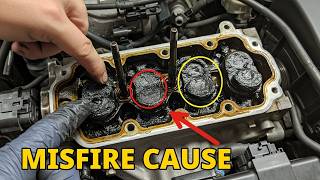
- Significant Loss of Power and Misfires: A major loss of compression in one or more cylinders can cause rough running, misfires, and a dramatic drop in power. This can result from a head gasket failure or piston/cylinder wall damage.
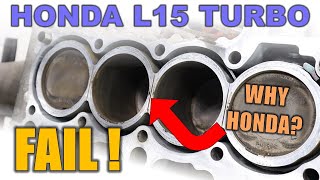
- Metal Shavings in Oil: Finding metallic particles or flakes in the engine oil during an oil change is a definitive sign of severe internal wear and impending failure. 🎬 See: Why the Honda L15 turbo engine fails
Diagnostic Flowchart
Known Problems, Recalls, and Technical Service Bulletins (TSBs)
The L15BE engine family has several documented issues. Always check with a dealer or use the NHTSA website to see if a specific vehicle is affected by a recall.
| Problem / TSB | Details | Remedy |
|---|---|---|
| High-Pressure Fuel Pump Recall | NHTSA Recall ID: 23V782000 Affected Years: 2023–2024 Accord. The high-pressure fuel pump can crack internally and leak fuel. A fuel leak in the presence of an ignition source significantly increases the risk of a fire. |
Dealers will inspect and replace the high-pressure fuel pump assembly free of charge. |
| Cylinder Head Gasket Failure | Affected Years: 2023–2025 Accord (and earlier models with the 1.5L Turbo). A severe and widely reported issue where the head gasket fails, allowing coolant to leak into the engine's combustion chambers or mix with oil. Symptoms include overheating, coolant loss, and misfires. Class-action lawsuits have been filed regarding this issue. |
The only fix is to replace the head gasket and potentially the cylinder head if it has warped. This is a labor-intensive and costly repair. |
| Oil Dilution | Affected Years: 2023–2025 Accord (inherent to the L-series direct-injection turbo family). Unburned gasoline gets past the piston rings and mixes with the engine oil, reducing its lubricating properties. This is more common in cold climates and with repeated short driving trips. |
Honda has issued software updates for previous models to help the engine warm up faster. Ensuring the vehicle is driven long enough for the engine to fully warm up can also help mitigate the issue. |
| Carbon Accumulation on Intake Valves | Affected Years: 2023–2025 Accord. As a direct-injection engine, fuel does not wash over the intake valves. Oil vapor from the crankcase ventilation system bakes onto the valves, forming hard carbon deposits that can restrict airflow and cause performance issues. |
The intake valves must be periodically cleaned, a service known as carbon cleaning or walnut blasting. This is considered a long-term maintenance item. |
What Fails at Every Mileage Band
Pro Tip: The mileage bands below describe the typical condition and known failures of used replacement units at that specific mileage. The checklists provided are critical steps and maintenance items you must perform WHILE INSTALLING the purchased engine, not general maintenance for your current vehicle.
Under 60,000 Miles
Engines in this band are generally healthy, but they are not immune to early failures. The High-Pressure Fuel Pump recall (NHTSA ID: 23V782000) affects 2023-2024 models, where internal cracking can lead to fuel leaks. Head gasket failures, while more common later, can occur early, and a class-action lawsuit mentions this across multiple years. Fuel injectors can also fail early, causing misfires and power loss. Oil dilution remains an inherent issue, especially in cold weather with short trips. Some 11th-generation Accords also experience noisy steering racks, though this does not affect the engine directly.
- ✓Do during install (required): Check for and perform all open recalls, especially the high-pressure fuel pump inspection and replacement.
- ✓Do during install (required): Use fresh, full synthetic 0W-20 oil and an OEM filter. Consider adopting a 5,000-mile change interval instead of the factory recommendation to combat oil dilution.
- ✓Do during install (recommended): Replace CVT fluid (Honda HCF-2). While the maintenance minder may suggest a longer interval, a 30,000-mile change is recommended for longevity.
- ✓Do during install (recommended): Replace engine and cabin air filters.
60,000 to 100,000 Miles
As the engine enters this phase, carbon buildup on the intake valves becomes significant, causing rough idle and hesitation. Professional cleaning is often required. Fuel injector failures continue to be a problem, potentially worsened by carbon buildup. The risk of head gasket failure increases noticeably in this mileage band. Additionally, CVT transmission issues can begin to surface between 60,000 and 80,000 miles.
- ✓Do during install (required): Perform an intake valve cleaning (walnut blasting) service to remove carbon deposits.
- ✓Do during install (required): Replace spark plugs.
- ✓Do during install (required): Replace the serpentine drive belt.
- ✓Do during install (required): Perform a valve clearance inspection and adjustment.
- ✓Do during install (recommended): Replace CVT fluid if not done recently.
- ✓Cheap insurance while the engine is out: Consider upgrading to ARP head studs if the cylinder head is removed for any reason, as a preventative measure against head gasket failure.
100,000 to 150,000 Miles
The average lifespan of a factory turbocharger is widely cited as 100,000 to 150,000 miles. Symptoms of a failing turbo include noise, smoke, and power loss. While the timing chain system is designed to last the life of the engine, the chain and tensioners can wear out, especially if oil changes were neglected. Water pumps and coolant hoses are also highly likely to develop leaks over time.
- ✓Do during install (required): Flush engine coolant with Honda Type 2 Blue coolant.
- ✓Do during install (required): Perform intake valve cleaning (walnut blasting) if not done previously.
- ✓Do during install (recommended): Replace spark plugs and ignition coils.
- ✓Do during install (recommended): Replace all cooling system hoses.
- ✓Cheap insurance while the engine is out: Replace the water pump and thermostat while the engine is out.
- ✓Cheap insurance while the engine is out: Inspect the timing chain, guides, and tensioner for wear and consider replacement as cheap insurance.
Over 150,000 Miles
With meticulous maintenance, the L15BE can surpass 150,000 to 200,000 miles. However, general wear and tear on internal components like piston rings and bearings becomes highly likely, especially if oil dilution was a persistent issue. There is a high likelihood of turbocharger failure if the original unit is still attached. The CVT may also require replacement if it was not meticulously maintained.
- ✓Do during install (required): Comprehensive replacement of all 'Do During Install' items from lower mileage bands is recommended.
- ✓Do during install (recommended): Assume the turbocharger has limited life remaining; inspect for shaft play and signs of oil leaks.
- ✓Do during install (recommended): Replace all seals, including front and rear main seals.
- ✓Cheap insurance while the engine is out: Strongly consider replacing the timing chain, tensioner, and guides.
Real Owner Experiences
The following table highlights real-world experiences from Honda Accord owners regarding the 1.5L Turbo engine, detailing what failed and the associated costs.
| Source | Mileage | What Happened | Cost |
|---|---|---|---|
| 30,000 | Owner of a 2023 Accord EX reported no issues after 30,000 miles with regular maintenance. | N/A | |
| N/A | A 2023 Accord EX owner reported multiple turbo problems requiring 6 dealership visits in 2 months despite timely maintenance. | Warranty | |
| YouTube (Honda Tech Perspective) | ~90,000 | A technician noted a head gasket failure on a related CR-V with the 1.5T engine around 90,000 miles, suggesting the issue may carry over to the 11th-gen Accord as it ages. | N/A |
| 83,000 | Owner of a 10th-gen Accord 1.5T reported no issues at this mileage. | N/A | |
| 104,000 | Owner of a 2022 Accord 1.5T (10th gen) reported no issues at this mileage since buying the car new. | N/A | |
| ~140,000 | Owner of a 10th-gen 1.5T reported the turbocharger failed and was replaced by Honda. | Free (Warranty/Goodwill) | |
| YouTube (Teardown) | 121,000 km (~75,000 miles) | A 2018 Accord L15BE engine teardown revealed seized piston rings and early signs of carbon buildup, leading to no compression in two cylinders. | Engine Replacement |
| Reddit r/accord | 61,000 | Repaired head gasket with goodwill assistance from Honda corporate and the dealership on a 2023 Hybrid. (Quoted $5,500) | $1,500 |
| Reddit r/accord | 160,000 | Owner was advised by their independent mechanic to replace the engine with a low-mileage used unit rather than repair the head gasket on a high-mileage engine. (Quoted $5,500) | Not specified |
| Reddit r/accord | 100,000 | Repaired head gasket at the dealer with goodwill assistance from Honda on a 2018 model. (Quoted $3,500) | $1,750 |
Repair or Replace?
Deciding whether to repair your current engine or replace it with a used OEM unit comes down to the specific failure and the overall mileage of your vehicle.
- High-Pressure Fuel Pump Failure: This is almost always a repair. If covered by NHTSA Recall 23V782000, the cost is $0. If not covered, a dealer repair typically costs $1,400 to $1,700+. This is far cheaper than an engine replacement.
- Fuel Injector Failure: Always repair. A genuine Honda injector kit with the mandatory fuel pipe costs around $600 in parts, with total repair costs ranging from $1,200 to $2,500. This is significant but well below the price of a replacement engine and labor.
- Oil Dilution: This is a maintenance and software issue, not a hard part failure. It costs $100 to $500 to address via software updates and revised maintenance schedules (or replacing a failed PCV valve). Only if ignored to the point of causing internal bearing or timing chain damage would engine replacement be considered.
- Cylinder Head Gasket Failure: This is the primary decision point. A dealership repair typically costs $2,800 to $4,200+. Repair makes sense on a lower-mileage engine where the bottom end is known to be healthy. However, if the repair cost approaches 60% to 70% of a low-mileage used engine plus labor, replacement becomes a much smarter financial decision.
Engine replacement is the recommended path for high-mileage vehicles (over 150,000 miles) facing a major failure, or in cases of catastrophic failure such as a thrown rod, severe bottom-end damage from oil dilution, or coolant contamination that has compromised the bearings.
Questions to Ask Your Installer
Before handing over your vehicle, interview your mechanic to ensure they are qualified for this specific swap:
- Do you have specific experience installing the L15BE in an 11th-generation (2023+) Accord?
- How will you perform the Crankshaft Position (CKP) sensor relearn procedure required after installation?
- Does your quote include a new, one-time-use high-pressure fuel joint pipe? Reusing the old one will cause a dangerous fuel leak.
- Will you be replacing all torque-to-yield (TTY) bolts, such as the harmonic balancer and engine mount bolts, with new OEM parts?
- Does your process include priming the turbocharger with fresh oil before the first startup to prevent bearing failure?
- Can you confirm you will use Honda Type 2 Blue Coolant and full synthetic 0W-20 oil as specified?
- What is your warranty on the labor, and what is the parts warranty on the used engine from the supplier?
- Have you inspected the wiring harness on the donor engine for damage, especially around the fragile cam sensor connectors?
Replacement Cost Comparison
Engine replacement costs vary based on the type of part, location, and shop labor rates. The labor for this job is estimated to be between 10 and 15 hours, with labor costs typically ranging from $1,200 to $3,100.
| Part Type | Estimated Cost (Part Only) |
|---|---|
| New OEM | $3,000 - $4,500+ |
| Remanufactured | $2,800 - $4,000 |
| Used OEM | $900 - $2,500+ |
Freight & Delivery Reality

Buying a used engine online means dealing with heavy freight. A used L15BE long block weighs approximately 340 lbs and measures roughly 40" x 30" x 32" before crating. Because of this size and weight, it ships as Less-Than-Truckload (LTL) freight on a wooden pallet—it is NOT a standard parcel delivery.
When arranging delivery, you must specify if the destination has a loading dock or a forklift. If delivering to a residential address or a small shop without a forklift, you must request a truck with a liftgate to safely lower the pallet to the ground. Industry best practice dictates a pre-purchase verification interview with the seller to confirm fitment. Finally, always inspect the engine thoroughly for transit damage before signing the driver's delivery receipt.
Installation Essentials: What to Know Before You Start

Proper installation is critical to the long-term reliability of a replacement engine. Cutting corners can lead to immediate failure or recurring problems.
Required Parts & Consumables
Always use new gaskets and fluids during an engine swap. Plan to purchase the following items:
- Fresh full synthetic 0W-20 motor oil (3.7 quarts with filter) and a new OEM Honda oil filter
- Fresh Honda Type 2 Blue Coolant
- New OEM-spec laser iridium spark plugs
- New gaskets for the intake manifold, exhaust manifold, and turbocharger mounting
- New front and rear crankshaft main seals
- New torque-to-yield (TTY) bolts for critical components like the harmonic balancer and engine mounts
Warning: The metal high-pressure fuel joint pipe is a one-time-use part. It is designed to crush and seal once. Reusing it will cause a dangerous, high-pressure fuel leak and is a common installer mistake.
Special Tools and Programming
This is an advanced to expert DIY job that requires specialized equipment.
- Special Tools: An engine hoist or crane with a load leveler, a Honda-specific crankshaft pulley holder tool, fuel line quick-disconnect tools, and a torque wrench are necessary.
- Programming Required: After installation, the vehicle will require a Crankshaft Position (CKP) Sensor Relearn procedure. This requires an OBD2 diagnostic scan tool with advanced, Honda bi-directional capabilities. Depending on the exact model and ECU retention, an immobilizer re-marriage may also be needed to pair the engine's computer with the vehicle's anti-theft system. Plan for this step before starting the vehicle.
Pro Tip: Pay close attention to all engine and transmission ground strap locations during removal and reinstallation. Poor grounding is a common source of frustrating electrical issues after an engine swap. Also, ensure the transferred turbocharger is primed with oil before the first startup to prevent bearing damage.
Frequently Asked Questions (FAQ)
Does a used L15BE engine come with the turbocharger?
No. According to standard auto recycling practices, the turbocharger assembly, A/C compressor, starter, and alternator are not included with the used engine. You must transfer these components from your original engine, using new gaskets for the turbo oil and coolant lines.
Can I reuse the bolts from my old engine?
No. Critical fasteners like cylinder head bolts, harmonic balancer bolts, and main bearing cap bolts are torque-to-yield (TTY). They are designed to permanently stretch when tightened and cannot be safely reused. Always replace them with new OEM bolts.
What happens if I skip the computer programming?
If you do not perform the CKP Sensor Relearn, the engine may not start, run poorly, or set a check engine light. The engine's computer will not have the correct baseline data for crankshaft position, which is essential for ignition and fuel timing.
Why is using Honda Type 2 Blue Coolant so important?
Honda Type 2 Blue Coolant is specifically formulated with non-silicate, non-borate corrosion inhibitors that are designed for the metals used in Honda cooling systems. Using generic green or orange coolants can lead to corrosion, water pump failure, and clogged radiator passages over time.
What is the high-pressure fuel joint pipe and why must I replace it?
The high-pressure fuel joint pipe connects the high-pressure fuel pump to the fuel rail. It is made of metal and features crush-style fittings designed to seal perfectly only once. Reusing this pipe is a common buyer mistake that will result in a highly dangerous, high-pressure gasoline leak over the hot engine.
How do I prevent oil dilution in my replacement engine?
Oil dilution is inherent to this direct-injection engine family. To mitigate it, ensure your vehicle has the latest software updates from Honda. More importantly, change your full synthetic 0W-20 oil every 5,000 to 7,000 miles instead of waiting for the maintenance minder, and ensure the engine reaches full operating temperature on most drives to help burn off fuel vapors in the crankcase.
Helpful Videos


Technical Specifications
Engine Code: L15BE; Family: Honda L-Series; Displacement: 1.5-liter; Configuration: Turbocharged inline 4-cylinder; Fuel System: Direct-injection; Transmission Pairing: Continuously Variable Transmission (CVT); Used Assembly Weight: ~340 lbs; Shipping Dimensions: ~40" x 30" x 32"; VIN Identifier (6th digit): 1; Oil Type: Full synthetic 0W-20; Oil Capacity: 3.7 quarts (with filter); Coolant Type: Honda Type 2 Blue; CVT Fluid: Honda HCF-2
We Have This Part in Stock



The information in this article is provided for general reference and educational purposes only. Vehicle specifications, procedures, and part compatibility can vary by production date, trim level, and region. Always consult your vehicle's factory service manual and verify part numbers before purchasing or performing repairs. Safety-critical components such as airbags, seat belts, and braking systems should be installed by a qualified professional.
- Honda Accord:
- 🎬 Helpful Videos
- 🛍️ Shop This Part
- Is This the Right Engine for Your Accord?
- How to Verify Your Vehicle's Engine
- Critical Interchange Information
- Common Failure Symptoms
- Diagnostic Flowchart
- Known Problems, Recalls, and Technical Service Bulletins (TSBs)
- What Fails at Every Mileage Band
- Under 60,000 Miles
- 60,000 to 100,000 Miles
- 100,000 to 150,000 Miles
- Over 150,000 Miles
- Real Owner Experiences
- Repair or Replace?
- Questions to Ask Your Installer
- Replacement Cost Comparison
- Freight & Delivery Reality
- Installation Essentials: What to Know Before You Start
- Required Parts & Consumables
- Special Tools and Programming
- Frequently Asked Questions (FAQ)
- 🎟️ Get 5% Off