

2021-2024 Bronco & 2024 Ranger 2.3L EcoBoost: Problems, Identification, and Used Replacement
Identify the 2.3L EcoBoost, understand what kills it, and learn when to replace it with a used OEM engine assembly.
- Verify engine compatibility using the 8th VIN digit ('H') and confirm it is for a longitudinal Bronco/Ranger, as transverse engines from a Mustang or Explorer will not fit.
- Installation requires Ford-specific timing tools (e.g., 303-507) because the crankshaft is not keyed; failure to use them will cause catastrophic valve and piston damage.
- Always replace single-use parts, including the high-pressure fuel line to prevent fire, the diamond friction washer to prevent timing slip, and all torque-to-yield bolts.
- After installation, the vehicle will not start until a technician performs mandatory computer reprogramming, including a PATS security relearn and a CKP sensor relearn.
- Before buying a used engine, check with a Ford dealer if your vehicle's VIN is covered by Customer Satisfaction Programs 23B08 (oil leak) or 23B42 (coolant leak), which provide a free engine replacement.
Engine Identification: Is This Your Engine?

This article covers the 2.3L EcoBoost Inline 4-cylinder (I4) engine used in the 2021-2024 Ford Bronco and 2024 Ford Ranger. This engine is a turbocharged, direct-injection design specifically for rear-wheel-drive-based (longitudinal) platforms.
To confirm this is the correct engine for your vehicle, check the 8th digit of your Vehicle Identification Number (VIN). It must be the letter H. This engine is only compatible with vehicles equipped with a 10-speed automatic transmission.
Warning: Not all 2.3L EcoBoost engines are the same. Engines from a Ford Mustang, Explorer, or Lincoln Corsair will not fit. Those vehicles use a transverse (front-wheel-drive-based) layout, which has different engine mounting points, oil pans, wiring, and accessories. Also, 2025 and newer models use a redesigned Modular Power Cylinder (MPC) engine with dual port/direct injection and are not compatible.
Common Failure Symptoms

An engine may need to be replaced if you observe catastrophic symptoms that point to severe internal damage. While some issues can be repaired, replacement is often necessary for the following:
- Significant loss of oil pressure: A flickering or constantly illuminated oil pressure light combined with engine noise often indicates fatal wear on internal bearings.
- Coolant mixed with oil: Often called the "milkshake," this appears as a milky, frothy substance on the oil dipstick or oil cap. It typically means a cracked cylinder head or a failed head gasket.
- Loud knocking or banging noises (rod knock): This is a heavy, rhythmic knocking sound from the lower part of the engine that increases with RPM. It signals a failure of the connecting rod bearings, which is a terminal condition.
- Excessive metal shavings in engine oil: Finding significant amounts of glitter-like metal particles in the oil and filter during an oil change points to severe internal component failure.
- Catastrophic oil or coolant leaks: A sudden, massive leak from the engine block itself, as seen in some specific production runs, can make repair impossible.
Diagnostic Flowchart
Known Problems, Recalls, and Technical Service Bulletins (TSBs)

Several known issues affect this engine family. Always check with a Ford dealer to see if your specific VIN is covered by any recall or customer satisfaction program.
Severe: Engine Replacement for Oil Leak (Customer Satisfaction Program 23B08)
Ford issued this program for a very specific batch of vehicles due to a manufacturing defect. A damaged tool at the factory created an improper seal for a main oil galley plug, which could lead to a major oil leak from the engine block and potential engine failure. The only remedy is a complete engine replacement, performed by a dealer.
- Affected Vehicles: 2023 Bronco (built Dec 3-5, 2022), 2023 Ranger (built Dec 8, 2022), and some 2023 Explorer models.
- Remedy: Complete engine assembly replacement.
Severe: Engine Replacement for Coolant Leak (Customer Satisfaction Program 23B42)
Similar to the oil leak issue, a damaged casting tool at the factory led to potential coolant leaks in another small production run of engines. This also requires a complete long block replacement.
- Affected Vehicles: 2023 Bronco, Ranger, and Explorer models built from April 3 to May 18, 2023.
- Remedy: Long block engine replacement.
Severe: Dislodged Camshaft Roller Finger Followers
Some early models experienced engine failure due to dislodged camshaft roller finger followers. This issue was subject to a factory recall and requires immediate attention if symptoms arise.
Moderate: Alternator Mud Accumulation (TSB 23-2238)
On Broncos used in muddy or off-road conditions, the alternator can accumulate debris, leading to premature failure. Ford released an updated shield to better protect it.
- Affected Vehicles: 2021–2022 Bronco.
- Remedy: Install an improved OEM generator shield (Ford Part No. MB3Z-10317-K).
Moderate: Harsh/Delayed Automatic Shifting (TSB 22-2428 / SSM 51531)
Some vehicles experience harsh or delayed shifting from the 10-speed automatic transmission. When replacing the engine, this issue must be addressed to ensure smooth operation.
- Affected Vehicles: 2021–2023 Bronco with 10-speed automatic.
- Remedy: Clear transmission adaptive tables and perform a TCM (Transmission Control Module) relearn after the engine swap.
Moderate: Pending Coolant Leak Litigation
A class-action lawsuit was filed in June 2025 alleging design issues with the engine block-to-cylinder head seal, potentially causing coolant leaks into the cylinders on 2021-2024 Bronco and other models. Symptoms include unexplained coolant loss, white smoke from the exhaust, and engine misfires. This issue is separate from the specific manufacturing defects covered by Program 23B42.
Minor: False Misfire Codes (TSB 24-2406)
Some vehicles may trigger a check engine light with various ignition system diagnostic trouble codes (DTCs) due to a software error that incorrectly maps the cylinder to the code.
- Affected Vehicles: 2021–2024 Bronco.
- Remedy: A simple PCM (Powertrain Control Module) software update at a dealership.
What Fails at Every Mileage Band
Pro Tip: The mileage bands below describe the condition and expected wear of USED REPLACEMENT engines you might purchase. The checklists provided are critical steps to perform WHILE INSTALLING the purchased engine, not maintenance for your current broken engine.
Under 60,000 Miles
Engines in this range are generally fresh, but specific production runs suffered from catastrophic manufacturing defects leading to oil or coolant leaks (Ford Customer Satisfaction Programs 23B08 and 23B42). Coolant intrusion into cylinders from head gasket or cylinder head casting flaws can appear as early as 5,000 miles. Other known issues include engine failure from dislodged camshaft roller finger followers and turbocharger wastegate failures.
- ✓Do during install (required): Inspect turbocharger oil and coolant lines for any signs of premature wear or damage before transferring.
- ✓Do during install (recommended): Install a PCV oil catch can system to mitigate carbon buildup on intake valves, a known long-term issue for direct-injection engines.
- ✓Cheap insurance while the engine is out: Commit to using only high-quality full synthetic 5W-30 oil and premium (91+ octane) fuel from the start.
60,000 - 100,000 Miles
At this mileage, noticeable carbon buildup on intake valves is common, leading to rough idle, hesitation, and reduced power. Turbocharger issues such as wastegate rattle or boost leaks may begin to surface. Ignition coil and spark plug failures become more frequent, causing misfires. Coolant leaks from hoses, seals, or the water pump due to heat cycles are also expected.
- ✓Do during install (required): Perform an intake valve cleaning service (walnut blasting). This is the most critical preventative service at this mileage to remove performance-robbing carbon deposits.
- ✓Do during install (recommended): Replace the water pump and thermostat. These are wear items and accessing them is significantly easier with the engine out.
- ✓Cheap insurance while the engine is out: Replace spark plugs. The recommended interval varies, but doing it now is cheap insurance against misfires. Replace the accessory drive belt if it shows any signs of cracking or wear. Thoroughly inspect all vacuum lines, especially those for the turbo wastegate, as they can become brittle and cause boost-related codes.
100,000 - 150,000+ Miles
With diligent maintenance, this engine can reliably exceed 200,000 miles. However, timing chain stretch or guide failure becomes a higher risk in this band. The chain is designed to last the engine's life but is a critical failure point. Turbocharger wear and potential failure should be considered a long-term maintenance item. Oil and coolant leaks from aging seals and gaskets are highly likely.
- ✓Do during install (required): Perform all services from the 60-100k mileage band if there is no proof they have been completed (intake valve cleaning, water pump, thermostat, spark plugs).
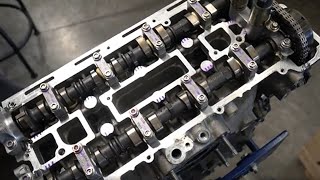
- ✓Do during install (recommended): Strongly consider replacing the timing chain, tensioner, and guides. This is a major job on an installed engine but is straightforward preventative maintenance with the engine out.
- ✓Cheap insurance while the engine is out: Replace the accessory drive belt(s) as recommended by the 150,000-mile service interval. If the budget allows, consider replacing the turbocharger oil feed and return lines as a precaution against blockages that can cause turbo failure.
Real Owner Experiences
| Source | Mileage | What Happened | Cost |
|---|---|---|---|
| Bronco6G Forum | 905 miles | A 2023 Bronco with a manual transmission displayed a low oil pressure warning; the dealer diagnosed it as part of a recall group requiring a complete engine replacement due to a manufacturing defect. | Warranty |
| TikTok / The Daily Dot | 17,000 miles | A mechanic showcased a late-model 2.3L Bronco with signs of engine seizing and knocking, attributed to the oil galley plug defect covered under Customer Satisfaction Program 23B08. | Warranty |
| Mustang6G.com Forum | 88,000 miles | Owner of a stock 2016 Mustang EcoBoost reported consistent 5,000-mile oil change intervals and had only one Check Engine Light issue at 54,000 miles. | Not specified |
| Bronco6G Forum | 75,000-100,000 miles | Forum members recommend proactively cleaning intake valves via media blasting in this mileage range to restore performance. | DIY ~$300, Shop ~$600+ |
| Mustang6G.com Forum | 110,000 miles | An owner who performed frequent oil changes with full synthetic oil disassembled the top end of their engine and found it to be exceptionally clean with no sludge or varnish. | N/A (Preventative Teardown) |
| Reddit r/FordBronco | Almost 100,000 miles | A Ford Ranger owner with the same 2.3L engine reported only performing regular maintenance with no issues and was happy the Bronco used the same powertrain. | N/A |
| Bronco6G Forum | 67,000 miles | Vehicle experienced sudden engine failure ('blew multiple holes out the side'). Dealer quoted for a full engine replacement out of pocket as the extended warranty had just expired. | $13,722.80 |
| Reddit r/FordBronco | 74,534 miles | Experienced low compression in one cylinder. Dealer recommended a new long block. The owner noted this was for a 2.7L, but the quote is relevant context for replacement costs at a dealership. | $12,117.00 |
| CarComplaints.com | 85,000 miles | Coolant leaked into cylinder 4, requiring engine replacement. While not a Bronco/Ranger, this report on the related 2.3L EcoBoost shows a dealer quote for replacement due to a common failure mode. | $8,389.00 |
| Reddit r/ecoboostmustang | Not Stated | Coolant leak into Cylinder 1. Ford dealership quoted $9,000 for a full engine replacement. Owner found an independent mechanic to potentially replace the head gasket or cylinder head for around $3,000. | $9,000.00 (quoted) / $3,000 (planned) |
Replacement Cost Estimates
The cost to replace a 2.3L EcoBoost engine varies based on the type of replacement unit and local labor rates. These estimates are for the North American market.
| Part / Service | Estimated Cost (USD) |
|---|---|
| New OEM Engine | $5,100 - $8,400+ |
| Remanufactured Engine | $1,959 - $5,658 |
| Used OEM Engine | $1,600 - $4,700 |
| Shop Labor to Install | $1,680 - $3,600 (approx. 14 to 20 hours) |
Repair or Replace?
Deciding whether to repair your current engine or replace it entirely depends on the severity of the failure and the overall cost.
- When Repair Makes Sense: Routine maintenance issues like carbon buildup on intake valves typically cost $500 to $1,000 to clean via walnut blasting. Preventative fixes, like installing the alternator mud shield (TSB 23-2238), cost $100 to $200. If caught early, a leaking head gasket or coolant intrusion might be repaired for $3,000 to $4,500, provided the engine has not overheated and the block/head surfaces are not warped.
- When Replacement is Smarter: Replacement is the best option for catastrophic internal failures, such as spun bearings, a cracked block, severe overheating causing warped components, or significant metal debris in the oil system. It is also the required remedy for specific factory defects covered under Ford's Customer Satisfaction Programs (23B08 for oil leaks, 23B42 for coolant leaks). As a general rule, if the cost of diagnosing and repairing multiple issues approaches or exceeds 60% to 70% of a quality used engine's installed cost, replacement is the more financially sound decision.
Installation Essentials: What to Know Before You Start

Replacing this engine is a complex job intended for experienced technicians. Several critical steps and parts are required to avoid immediate damage or safety hazards.
Special Tools & Programming
This is not a simple mechanical swap. The following are required:
Warning: Mandatory Reprogramming. After installation, the vehicle's computer must be reprogrammed to recognize the new engine. This requires a Ford FDRS Diagnostic Scan Tool (or FORScan with an OBDLink EX adapter). You must perform a Crankshaft Position (CKP) Sensor Relearn, a Transmission Control Module (TCM) Adaptive Reset, and a PATS (Passive Anti-Theft System) security relearn. The vehicle will not start without this step.
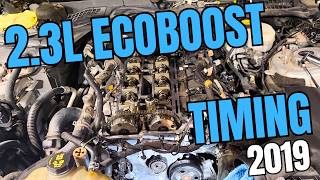
- Ford EcoBoost Timing Tool Kit: The crankshaft is not keyed, making these tools (OEM 303-507, 303-1521, 303-1565) essential to lock the engine timing.
- Engine Hoist and Stand: The engine assembly weighs approximately 311 lbs before crating and must be handled with proper lifting equipment.
- Torque Wrenches: Required for all critical fasteners.
Warning: The crankshaft pulley bolt must NOT be loosened without first installing the proper timing locking tools. The crankshaft, pulley, and timing gear are not physically keyed together. Loosening the bolt will allow the crankshaft to spin independently of the camshafts, causing the engine to jump time and resulting in catastrophic valve and piston damage.
Critical "Gotchas" & Common Mistakes
Warning: Fire Hazard from Reusing Parts. The high-pressure fuel line from the pump to the fuel rail is a one-time-use crush-flare design. Reusing it will cause a severe high-pressure fuel leak and create a serious fire hazard. Torque-to-yield (TTY) bolts for the flywheel/flexplate and crankshaft pulley must also be replaced.
- Forgetting the Diamond Friction Washer: A paper-thin, diamond-coated friction washer (Ford Part 1S7Z-6378-AA) sits behind the crankshaft pulley. It is critical for locking the timing in place. It must be replaced if the pulley is removed; reusing it or omitting it can cause the timing to slip under load.
- Ignoring Brittle Lines: The small vacuum lines connected to the turbocharger wastegate and bypass valve become brittle with heat and age. They can easily snap during the swap, leading to boost control problems and fault codes like P0299.
- Wiring Harness Compatibility: You must reuse your vehicle's original engine wiring harness. Wiring harnesses are highly trim-specific and contain minor pinout variations.
- Turbocharger Oil Lines: Pay close attention to the condition of the transferred turbocharger's oil feed and return lines. Debris or blockages will starve the turbo of oil and cause immediate failure.
Required Parts & Fluids at Install
Always use new gaskets and seals when transferring parts. Plan on purchasing the following for any installation:
- Oil and Filter: 6.0 to 6.2 quarts of SAE 5W-30 full synthetic oil meeting Ford's WSS-M2C961-A1 specification and a Motorcraft FL-910S filter.
- Coolant: Motorcraft Yellow Prediluted Antifreeze/Coolant (WSS-M97B57-A1/A2 / VC-13DL-G).
- Spark Plugs: Motorcraft SP-589 plugs, pre-gapped to 0.028–0.032 inches.
- Gaskets and Seals: New gaskets for the intake manifold, exhaust manifold, turbocharger mounting points, and turbo oil/coolant feed line seals are mandatory.
- Single-Use Hardware: New high-pressure fuel line, diamond friction washer, and all torque-to-yield bolts.
Questions to Ask Your Installer
Before handing over your vehicle, ensure your mechanic is prepared for this specific job:
- Have you worked on this specific longitudinal 2.3L EcoBoost from a Bronco or Ranger before?
- Do you own the required Ford-specific timing tool kit (303-507, 303-1521, 303-1565) to safely work on this non-keyed crankshaft?
- Will you be replacing the single-use, torque-to-yield (TTY) fasteners, including the crankshaft pulley bolt and flexplate bolts?
- Will you be replacing the one-time-use high-pressure fuel line and the diamond friction washer behind the crankshaft pulley?
- How will you handle the mandatory PATS security relearn and the Crankshaft Position (CKP) sensor relearn? Do you have a Ford FDRS or equivalent high-level scan tool?
- Does your quote include all necessary gaskets, seals, and fluids as specified for the installation?
- What is the warranty on the used engine and your labor?
- Will you inspect the turbocharger oil lines for blockages before transferring the turbo to the replacement engine?
Freight, Shipping, and Delivery Reality

A replacement 2.3L EcoBoost engine is a heavy industrial part. It ships as LTL (Less-Than-Truckload) freight on a wooden pallet, not as a standard parcel.
Pro Tip: Inspect Before You Sign. You must inspect the engine for transit damage before signing the delivery receipt. Once you sign, you accept the condition of the freight, making damage claims extremely difficult.
- Size and Weight: The bare engine assembly weighs approximately 311 lbs and measures roughly 25" x 26" x 34" before crating or palletizing.
- Delivery Requirements: Because of the weight, the delivery truck will require a liftgate to lower the pallet to the ground if you do not have a loading dock or forklift.
Arrival Inspection: Testing Your Used Engine
When your used engine arrives, check its health before installing it. Do a compression test or a leak-down test. A compression test measures the pressure inside each cylinder. A leak-down test pumps air into the cylinder to see if it holds pressure. For the 2.3L EcoBoost, healthy cylinders should have even compression numbers. A difference of more than 15 percent between the highest and lowest cylinders means the engine has internal wear.
Next, check the turbocharger. Since the 2.3L EcoBoost is a turbocharged engine, you must inspect the turbo shaft. Reach into the turbocharger and gently wiggle the spinning wheel (the impeller). A tiny amount of side-to-side movement is normal. However, if the wheel touches the metal housing, or if it moves in and out, the turbo is bad and needs to be replaced.
Before the First Start: Fluids and Priming
Never start a used engine dry. You must add fresh fluids and build oil pressure first. This protects the moving parts from damage.
Mandatory Fluids
Install a brand-new oil filter and fill the engine with fresh oil. The 2.3L EcoBoost requires 5W-30 motor oil that meets Ford specification WSS-M2C961-A1. Use a high-quality synthetic blend or full synthetic oil.
You must also use the correct engine coolant (antifreeze). Use Motorcraft Yellow coolant that meets Ford specification WSS-M97B57-A2. Do not mix different colors or types of coolant. Mixing coolants can cause a thick gel to form, which will block the cooling system and overheat the engine.
Oil Priming Procedure
Before you let the engine run, you must prime the oil system. Priming means pumping oil through the engine before it actually starts and runs. Follow these steps:
- Push the gas pedal all the way to the floor and hold it there. This puts the vehicle in Clear Flood Mode, which turns off the fuel injectors so the engine will not start.
- While holding the gas pedal down, press the start button or turn the key to crank the engine.
- Crank the engine for 10 to 15 seconds.
- Stop cranking and let the starter motor cool down for one minute.
- Repeat this process two or three times until the oil pressure gauge moves or the low oil pressure warning light turns off.
- Take your foot off the gas pedal. The engine is now safe to start normally.
Frequently Asked Questions (FAQ)
Will a 2.3L EcoBoost from a Mustang fit in my Bronco?
No. The Mustang uses a version of this engine for a rear-wheel-drive car, but the block castings, mounting points, oil pan, and accessory systems are different and not compatible with the truck-based Bronco and Ranger platform.
Do I have to reprogram the computer after installing a used engine?
Yes. Programming is mandatory. The vehicle's anti-theft system (PATS) must be synchronized with the replacement engine's components. Additionally, a Crankshaft Position (CKP) sensor relearn procedure and a Transmission Control Module (TCM) adaptive reset must be performed with a compatible scan tool for the engine to run correctly.
Is the turbocharger included with a used engine?
Typically, no. Standard auto recycling practice is to sell the engine assembly without the turbocharger, alternator, starter, power steering pump, or A/C compressor. You should plan to transfer these parts from your old engine. Always confirm what is included with the seller before purchasing.
What is the most common and costly installation mistake?
The most catastrophic mistake is loosening the crankshaft pulley bolt without using the proper timing locking tools. Because the crank is not keyed, this will instantly destroy the engine's timing, leading to bent valves and damaged pistons the moment the engine is turned over.
Can I use a 2025 engine in my 2021-2024 Bronco?
No. The 2025 and newer models use a completely redesigned Modular Power Cylinder (MPC) engine featuring dual port and direct injection. It is not compatible with the electronics or fuel systems of the 2021-2024 models.
What maintenance practice extends the life of this engine the most?
The single most impactful practice reported by high-mileage owners is performing frequent oil changes with high-quality full synthetic 5W-30 oil, typically every 5,000 miles, rather than following the maximum factory-recommended interval. Using premium (91+ octane) fuel and proactively cleaning intake valves every 75,000-100,000 miles also significantly improves longevity.
Helpful Videos
Technical Specifications
OEM Part Numbers: MB3Z-10317-K 1S7Z-6378-AA FL-910S VC-13DL-G SP-589
Engine: 2.3L EcoBoost Inline 4-cylinder (I4); Induction: Turbocharged; Fuel System: Direct Injection; Layout: Longitudinal (Rear-Wheel-Drive-Based); VIN Code (8th Digit): H; Transmission Compatibility: 10-speed automatic; Weight (approximate): 311 lbs; Oil Type: SAE 5W-30 Full Synthetic (WSS-M2C961-A1); Oil Capacity: 6.0 - 6.2 quarts; Coolant Type: Motorcraft Yellow (WSS-M97B57-A1/A2); Spark Plugs: Motorcraft SP-589; Spark Plug Gap: 0.028–0.032 inches
We Have This Part in Stock


The information in this article is provided for general reference and educational purposes only. Vehicle specifications, procedures, and part compatibility can vary by production date, trim level, and region. Always consult your vehicle's factory service manual and verify part numbers before purchasing or performing repairs. Safety-critical components such as airbags, seat belts, and braking systems should be installed by a qualified professional.
- Ford Ranger:
- Ford Bronco:
- 🎬 Helpful Videos
- 🛍️ Shop This Part
- Engine Identification: Is This Your Engine?
- Common Failure Symptoms
- Diagnostic Flowchart
- Known Problems, Recalls, and Technical Service Bulletins (TSBs)
- Severe: Engine Replacement for Oil Leak (Customer Satisfaction Program 23B08)
- Severe: Engine Replacement for Coolant Leak (Customer Satisfaction Program 23B42)
- Severe: Dislodged Camshaft Roller Finger Followers
- Moderate: Alternator Mud Accumulation (TSB 23-2238)
- Moderate: Harsh/Delayed Automatic Shifting (TSB 22-2428 / SSM 51531)
- Moderate: Pending Coolant Leak Litigation
- Minor: False Misfire Codes (TSB 24-2406)
- What Fails at Every Mileage Band
- Under 60,000 Miles
- 60,000 - 100,000 Miles
- 100,000 - 150,000+ Miles
- Real Owner Experiences
- Replacement Cost Estimates
- Repair or Replace?
- Installation Essentials: What to Know Before You Start
- Special Tools & Programming
- Critical "Gotchas" & Common Mistakes
- Required Parts & Fluids at Install
- Questions to Ask Your Installer
- Freight, Shipping, and Delivery Reality
- Arrival Inspection: Testing Your Used Engine
- Before the First Start: Fluids and Priming
- Mandatory Fluids
- Oil Priming Procedure
- Frequently Asked Questions (FAQ)
- 🎟️ Get 5% Off