

2019-2023 Ford Ranger 2.3L EcoBoost: Problems, Identification, and Used Replacement
Identify your exact VIN H engine, understand common failures like coolant intrusion or fuel dilution, and learn when to replace it with a used OEM unit.
- Verify the engine is correct for a Ranger by checking for the 8th VIN digit 'H'; engines from other Ford models like the Mustang or Bronco are not compatible.
- The unkeyed crankshaft pulley requires special timing tools (e.g., OTC 303-1600) and a new Torque-to-Yield bolt for removal and installation to prevent catastrophic engine damage.
- After installation, a mandatory Crankshaft Position (CKP) Sensor Profile Relearn procedure must be performed with a proper scan tool to prevent false P0300 misfire codes.
- When swapping an engine between a 2WD and 4WD Ranger, you must transfer the original oil pan and oil pickup tube to the replacement engine to ensure proper fitment.
- Always diagnose and fix the root cause of the original engine failure before installing a replacement to avoid damaging the new unit.
Is This the Right Engine for Your Ford Ranger?

The 2019-2023 Ford Ranger is equipped with a single engine option in North America: a turbocharged 2.3L EcoBoost inline four-cylinder. This engine is part of a larger family of 2.3L EcoBoost engines used in other Ford and Lincoln vehicles, but the version used in the Ranger is specific to this truck platform.
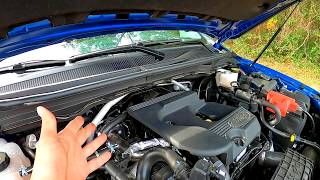
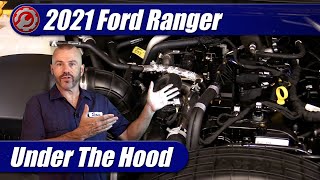
🎬 Watch: 2.3L EcoBoost engine design and components explainedConfirming Your Engine Code
The easiest way to verify that your Ranger has this engine is to check your vehicle's 17-digit Vehicle Identification Number (VIN). The VIN is located on a metal tag at the base of the driver's side of the windshield and on a sticker in the driver's side door jamb. The 8th digit of the VIN identifies the engine. For this specific 2.3L EcoBoost engine, the 8th digit must be 'H'.
When shopping for a replacement, you may also see identifying part numbers such as KB3Z-6007-B, KB3E-6007-BA, or KB3E-6007-EA.
Warning: While other Ford models like the Mustang, Bronco, Explorer, Focus RS, and Corsair also use a 2.3L EcoBoost engine, they are not direct replacements. These other versions have different engine block castings, oil pans, accessory mounting points, wiring harnesses, and computer calibrations that make them incompatible with the Ranger. Attempting to install a non-Ranger 2.3L EcoBoost will lead to significant fitment issues.
Drivetrain Differences
The 2.3L EcoBoost was used in both two-wheel drive (RWD) and four-wheel drive (4WD) Rangers. The core long block is the same, but the oil pan and oil pickup tube are different between the two configurations to accommodate the front differential on 4WD models. When purchasing a used engine, be prepared to swap your original oil pan and pickup tube onto the replacement unit if it comes from a truck with a different drivetrain layout.
Common Failure Symptoms
A failing engine can present a wide range of symptoms. If you experience any of the following, a thorough diagnosis is required to determine if engine replacement is necessary:
- Overheating or constant low coolant levels: This could point to a cracked cylinder head or a failing head gasket, which are severe issues.
- White smoke from the exhaust: This is a classic sign of coolant being burned in the combustion chambers.
- Misfires or rough running: While this can be caused by simple ignition issues, persistent misfires (especially with codes like P0300-P0304) can indicate internal engine problems.
- Knocking or tapping noises: These sounds often indicate serious internal damage to bearings or other rotating parts.
- Fuel smell in the engine oil: A strong gasoline odor in the oil, often accompanied by a rising oil level on the dipstick, points to fuel dilution.
- Low engine oil pressure: This is a critical warning that can lead to catastrophic failure if not addressed immediately.
Diagnostic Flowchart

Known Problems, Recalls, and Technical Service Bulletins (TSBs)

Ford has issued several documents addressing common issues with this engine and related systems. Always have a qualified technician diagnose the root cause of failure before replacing an engine.
| Severity | Problem / TSB | Description |
|---|---|---|
| Severe | Coolant Intrusion / Head Gasket Failure | A class-action lawsuit (Nelson v. Ford Motor Company) alleges a design defect can allow coolant into cylinders, leading to failure. The lawsuit covers 2019-2024 Rangers. While the Ranger block was reportedly revised with a cross-drilled deck to mitigate this, any coolant loss or white smoke should be investigated immediately. |
| Severe | Engine Block Heater Crack (Recall NHTSA 25SA4) | On certain 2019-2024 Rangers, the block heater can crack, leak coolant, and cause an electrical short, posing a fire risk. Owners are advised not to use the heater until the free recall repair is performed. |
| Moderate | Fuel Dilution / Rising Oil Level (TSB SSM 50736, 50597, 49959) | For 2019-2021 Rangers, excess fuel can enter the crankcase. The fix involves a PCM software update, regular oil changes, and ensuring the engine reaches full operating temperature during drives. |
| Moderate | Bucking or Surging Sensation | A bucking/surging feeling at steady speeds (30-50 mph) is often caused by a faulty EGR DPFE sensor or a clogged EGR inlet tube. Replacing the sensor and cleaning the tube usually resolves it. |
| Minor | Misfire Due to Moisture Intrusion (TSB SSM 51239, 51051) | For 2019-2022 Rangers, water can enter spark plug wells, causing corrosion and misfires. The fix involves drying the wells, replacing corroded parts, and installing an updated engine cover or sealing the cowl. |
| Minor | High Altitude P0068 Code (TSB 18-2370) | At altitudes above 3,500 feet, a Check Engine Light with DTC P0068 may appear. This is resolved with a simple PCM reprogram per the TSB. |
| Minor | Harsh or Delayed Shifting (TSB 23-2350, 21-2315, 23-2250) | The paired 10R80 transmission can cause driveability complaints. The remedy for 2019-2023 models can range from a software update to internal hardware repairs. |
| Minor | Engine Oil Leak Diagnostics (TSB SSM 52335) | This TSB for 2015-2024 models outlines procedures for identifying oil leaks, noting they are more common from turbo feed/drain lines than the turbo itself. |
What to Expect When Replacing the Engine
What's Included in a Used Engine Assembly?
A used engine assembly, often called a "long block," typically includes the core internal components. Based on ARA (Automotive Recyclers Association) standards, you should expect to receive:
- Engine block and cylinder head
- All internal components (crankshaft, pistons, camshafts, valvetrain)
- Oil pan and valve covers
- Timing covers and components
- Intake manifold with fuel rail and fuel injectors
- High-pressure fuel pump (HPFP)
- Throttle body
- Harmonic balancer
- Engine wiring harness
Items like the starter, alternator, power steering pump, A/C compressor, and exhaust manifold are generally not included and must be transferred from your original engine. The turbocharger inclusion is often "not stated" and varies by seller; always confirm with the seller before purchase.
Installation & Labor Estimates
Replacing this engine is an advanced job not recommended for DIY mechanics without significant experience and specialized tools. The labor time for a professional shop is estimated to be between 10 and 16 hours.
| Item | Estimated Cost (USD) | Notes |
|---|---|---|
| New OEM Engine | $7,000 - $12,000+ | Highest cost, but comes with a manufacturer warranty. |
| Remanufactured Engine | $3,000 - $5,000 | Rebuilt to factory specs, often includes a warranty. |
| Used OEM Engine | $1,300 - $3,500 | Most affordable option; price varies with mileage and condition. |
| Shop Labor | $1,200 - $3,000 | Varies by shop rate and location (10-16 hours). |
Critical Installation Steps & Common Mistakes

Proper installation is key to the longevity of a replacement engine. Failing to follow specific procedures can lead to immediate damage or a comeback repair.
Warning: The Unkeyed Crankshaft Pulley. The harmonic balancer (crankshaft pulley) is not held in place by a keyway. It is secured by a single-use Torque-to-Yield (TTY) bolt. If this bolt is loosened or removed without using the proper camshaft and crankshaft timing tools (such as OTC 303-1600 or 303-1521) to lock the engine, the engine's timing will instantly jump, causing catastrophic valve and piston damage. This bolt MUST be replaced with a new one and torqued exactly to specification using a high-quality torque wrench and angle gauge.
Required Computer Relearn
After the engine is installed, a Crankshaft Position (CKP) Sensor Profile Relearn procedure must be performed with a dealer-level scan tool or FORScan software. Skipping this step will cause the computer to detect false misfires and set a P0300 trouble code, leading many installers to mistakenly believe the replacement engine is faulty. The PCM's adaptive learning values for fuel and idle should also be reset.
Pro Tip: Before the first start-up, disable the fuel and ignition systems and crank the engine in short 10-15 second bursts. This allows oil to circulate and prime the turbocharger, preventing damage from a dry start.
Other Installation Gotchas
- High-Pressure Fuel System Safety: The direct-injection system operates at up to 2,900+ PSI. You must relieve the pressure before disconnecting lines. Always replace the high-pressure fuel line seals.
- The Fender Liner Oil Filter Door: The oil filter is blocked from above. Access it by turning the front wheels fully to the right and opening the plastic access flap in the driver's side front fender liner.
- Vacuum Line Routing: There is a complex web of vacuum lines and solenoids for turbocharger bypass and wastegate control. Take photos before dismantling to ensure proper routing during reassembly.
- Wiring Harness Compatibility: While the replacement engine may ship with an engine wiring harness, it is highly recommended to transfer your truck's original engine wiring harness to guarantee 100% pinout compatibility with your vehicle's firewall connectors.
Common Buyer & Installer Mistakes to Avoid
- Reusing TTY Bolts: The crankshaft pulley bolt and cylinder head bolts are designed to stretch and are for one-time use only. Reusing them will result in a loss of clamping force, leading to timing slip or head gasket failure.
- Ignoring the Original Failure: Always diagnose and correct the root cause of the original engine's failure. Installing a good engine into a vehicle with a leaking injector or a clogged radiator will only destroy the new engine.
- Forgetting to Swap the Oil Pan: When swapping an engine between a 2WD and 4WD truck, you must use the oil pan and pickup tube from the original engine to ensure proper fitment and oil supply.
- Failing to Check Spark Plug Gaps: Installing spark plugs straight out of the box without verifying the gap can lead to spark blowout under boost.
What Fails at Every Mileage Band
Pro Tip: The mileage bands below describe what typically fails on used replacement units at these mileages. The checklists provided are things you should do WHILE INSTALLING the purchased engine, not just maintenance advice for your current truck.
Under 60,000 Miles
Issues in this range are uncommon and often covered by the factory powertrain warranty. Some owners report issues with the turbocharger's wastegate actuator, which typically results in the replacement of the entire turbocharger assembly. The 10R80 transmission may exhibit harsh shifting or shuddering. Isolated catastrophic engine failures have been reported but are very rare.
- ✓Do during install (required): Replace engine oil with 6.2 quarts of full-synthetic 5W-30 (WSS-M2C961-A1), install a new oil filter (Motorcraft FL-910S), and replace engine coolant (Motorcraft Yellow).
- ✓Do during install (recommended): Install new Motorcraft SP-594 spark plugs and verify the gap is between 0.028-0.031 inches. Carefully inspect the turbocharger oil and coolant lines for any leaks or coking. Inspect all vacuum lines for brittleness or cracks.
- ✓Cheap insurance while the engine is out: Replace the rear main seal and front crankshaft seal.
60,000 - 100,000 Miles
Failure of the EGR Pressure Feedback (DPFE) sensor can occur, causing a bucking or surging sensation at steady speeds. Carbon buildup on the backside of the intake valves is a known characteristic of all direct-injection engines and can begin to cause rough idling or reduced performance in this range.
- ✓Do during install (required): All fluid and filter replacements from the lower mileage band.
- ✓Do during install (recommended): Strongly consider having the intake valves professionally cleaned (walnut blasting) to remove performance-robbing carbon deposits. Replace the small, thimble-sized filter screens in the turbocharger oil lines, or replace the lines entirely to prevent oil starvation. Replace spark plugs if their history is unknown.
- ✓Cheap insurance while the engine is out: Replace the water pump and thermostat while the engine is accessible.
100,000 - 150,000 Miles
Carbon buildup on intake valves is a significant factor by this mileage and will require cleaning if not previously done. The timing chain and related components (guides, tensioners) can wear, especially if oil change intervals were extended. The original turbocharger may be nearing the end of its service life due to oil coking in the feed lines.
- ✓Do during install (required): All fluid, filter, and spark plug replacements.
- ✓Do during install (recommended): It is highly recommended to replace the timing chain, guides, and tensioners as a preventative measure. Replace the turbocharger oil feed and return lines. Thoroughly inspect the turbo for shaft play, and signs of oil leaks or overheating.
- ✓Cheap insurance while the engine is out: A full engine gasket and seal replacement is prudent at this mileage. Consider replacing the high-pressure fuel pump as a preventative measure if budget allows.
Over 150,000 Miles
This mileage is approaching the expected end-of-life for major components that have not been replaced, such as the timing chain and turbocharger. Increased oil consumption due to wear on piston rings, valve seals, or PCV system components can occur. Head gasket failure becomes a higher risk, especially if the engine has experienced any overheating events.
- ✓Do during install (required): Assume a complete refresh is necessary. Replace the timing chain, guides, tensioner, water pump, thermostat, and oil pump.
- ✓Do during install (recommended): Plan to replace the turbocharger and its associated oil/coolant lines as a matter of course. Replace all engine gaskets and seals, including valve cover, oil pan, front/rear main seals, and intake/exhaust manifold gaskets.
- ✓Cheap insurance while the engine is out: Consider replacing critical sensors like crankshaft and camshaft position sensors.
Real Owner Experiences
| Source | Mileage | What Happened | Cost |
|---|---|---|---|
| bobistheoilguy.com | nearly 50,000 | An engine code appeared, and the dealer diagnosed a faulty turbo. The issue was suspected to be the wastegate actuator, but Ford replaced the entire turbocharger under warranty. | $0 (Warranty) |
| ranger5g.com | 50,000 | A rod bearing failed. The owner performed regular 5,000-mile full synthetic oil changes, suggesting an isolated component failure rather than a maintenance issue. | $0 (Warranty) |
| ranger5g.com | 55,000 | Owner reports the engine and transmission have been great with no issues. | $0 |
| cars.com | 56,000 | New owner purchased the truck at this mileage and reports it 'runs great' with no issues. | $0 |
| Reddit r/RangerNext | 70,000 | The EGR sensor failed, causing a bucking sensation at low speeds. Replacing the sensor fixed the issue. | ~$200 |
| Reddit r/fordranger | just shy of 80,000 | Owner reports 'zero issues' after extensive road trips and off-roading. | $0 |
| Kelley Blue Book | 80,000 | Owner of a 2021 Ranger reported the transmission failed. | Not specified |
| Reddit r/RangerNext | 94,000 | Owner reports no major issues beyond a faulty HVAC blend door actuator. | $0 (for engine) |
| Reddit r/whatcarshouldIbuy | ~87,000 miles (140,000 km) | Owner experienced an A/C failure and an issue with 'exhaust buildup in the engine'. Also experienced transmission issues. | $1700 CAD (A/C) + $500 CAD (exhaust issue) |
| Reddit r/RangerNext | 112,000 | Owner reports having the truck since new with no major issues mentioned. | $0 |
| YouTube Comment/Forum Post | 104,000 | An engine died due to what was described as 'terrible maintenance,' highlighting the importance of upkeep. | Engine Replacement |
| ranger5g.com | 175,000 | A report of a 2.3L EcoBoost in a Mustang (unmodified) reaching this mileage without the engine being 'touched,' suggesting longevity is possible with care. | $0 |
| The Ranger Station Forum | over 200,000 | A user posted a picture of a 2019+ Ranger with over 200,000 miles, indicating high mileage is achievable. | Not specified |
| Reddit - r/ecoboostmustang | 25,000 | Head gasket replacement on a 2018 Mustang 2.3L EcoBoost. | ~$2,000 |
| Reddit - r/fordranger | N/A | Quoted for remanufactured engine replacement ($3700 part, $1500 labor) on an older 2002 Ranger. | $5,200 |
| Reddit - r/MechanicAdvice | N/A | Quoted for a used engine replacement with 65k miles due to suspected cracked head gasket on a 2016 Explorer 2.3L EcoBoost. | $6,700 |
| The Ranger Station Forum | 147,740 | Quoted for cylinder head jobs on two cylinders to resolve misfire codes on an older 2004 Ranger. | $4,400 |
Repair or Replace?
Deciding whether to repair your current engine or replace it entirely depends on the severity of the failure and the economics of the repair.
- Fuel Dilution / Misfires / Minor Oil Leaks: These issues are almost always repairable. Fuel dilution and some misfires can often be solved with a PCM software update. Misfires from moisture intrusion require drying and new seals. Oil leaks from gaskets or seals are standard repairs. Typical repair costs range from $200 to $1,500.
- Engine Block Heater Crack: This is a specific component failure covered by recall NHTSA 25SA4. The repair involves replacing the block heater itself (typically a $300 - $800 job if out of pocket, but free under recall) and does not require major engine work.
- Coolant Intrusion / Head Gasket Failure: Repair may be an option if the failure is caught very early, before significant overheating or damage to the cylinder head or engine block occurs. A head gasket job typically costs $2,000 - $4,000+. However, given the known design flaws in earlier EcoBoost engines, many sources suggest a full long block replacement is the only permanent fix.
When Replacement is Smarter: Replacement is the smarter option when there is catastrophic internal damage, such as a spun bearing, bent valves from jumped timing (a major risk with the unkeyed crank pulley), a cracked engine block, or severe cylinder head warpage from overheating. If the cost of diagnosing and repairing multiple significant issues approaches or exceeds 50-60% of the cost of a quality used or remanufactured engine (used units typically run $1,300 - $3,500), replacement offers better long-term value and reliability. This is especially true if a blown head gasket has contaminated the bottom end with coolant.
Questions to Ask Your Installer
- Have you worked on this specific 2.3L EcoBoost engine from the Ranger before?
- Do you have the special timing tools (e.g., OTC 303-1600) required for the unkeyed crankshaft pulley?
- What is your process for the mandatory Crankshaft Position Sensor Profile Relearn after installation?
- Will you be swapping my original engine wiring harness onto the replacement engine to ensure compatibility?
- Does your quote include all necessary new TTY bolts, gaskets, seals, and fluids as specified?
- If the replacement engine is from a different drivetrain (2WD vs 4WD), are you prepared to swap my original oil pan and pickup tube?
- What warranty do you offer on your labor, and what is the warranty on the engine itself?
Freight & Delivery Reality

When ordering a used 2.3L EcoBoost engine assembly, it is crucial to understand how it will arrive. This is a heavy industrial part, not a standard parcel.
- Size and Weight: Based on verified recycler measurements, this engine assembly weighs approximately 431 lbs and measures roughly 44" x 44" x 44" before crating.
- Shipping Method: It will ship as LTL (Less Than Truckload) freight strapped to a wooden pallet. It will arrive on a large semi-truck.
- Delivery Requirements: If you are having it delivered to a residential address or a shop without a loading dock or forklift, you must request a truck with a liftgate to lower the pallet to the ground.
- Inspection: Always inspect the engine thoroughly before signing the driver's delivery receipt. Check for any physical damage to the oil pan, valve covers, or sensors that may have occurred during transit.
Frequently Asked Questions (FAQ)
Do I need to reprogram the truck's computer (ECU)?
While a full reprogram isn't always needed if you're reusing the original ECU, you absolutely MUST perform the Crankshaft Position (CKP) Sensor Profile Relearn procedure using a dealer-level scan tool or FORScan. This prevents false P0300 misfire codes. Resetting the engine's adaptive learning tables for fuel trims and idle parameters is also highly recommended.
What oil should I use in my replacement 2.3L EcoBoost?
Use 6.2 quarts of a premium full-synthetic 5W-30 engine oil that meets Ford's WSS-M2C961-A1 specification. Always use a new, high-quality oil filter, such as the Motorcraft FL-910S or an equivalent part.
Can I reuse my old turbocharger?
Yes, provided it is in good condition. Before reinstalling, carefully inspect the compressor wheel for any chips or bent fins, check for excessive side-to-side play in the shaft, and look for cracks in the exhaust housing. According to Ford's TSB SSM 52335, oil leaks are more commonly from the feed or drain lines rather than the turbocharger itself.
What spark plugs does this engine require?
You should install new Motorcraft SP-594 spark plugs. Before installation, verify that they are pre-gapped to between 0.028 and 0.031 inches to prevent spark blowout under heavy turbo boost.
What is the expected lifespan of the 2.3L EcoBoost in the Ranger?
With diligent maintenance, the general consensus is that this engine can last between 200,000 and 300,000 miles. However, this requires proactive care, including full synthetic oil changes every 5,000 to 7,500 miles, allowing the turbo to warm up and cool down properly, and performing intake valve carbon cleaning (walnut blasting) every 60,000-80,000 miles.
Helpful Videos

Technical Specifications
OEM Part Numbers: KB3Z-6007-B KB3E-6007-BA KB3E-6007-EA
Engine Type: Turbocharged 2.3L EcoBoost Inline Four-Cylinder; Vehicle Application: 2019-2023 Ford Ranger (North America); VIN Identifier (8th Digit): H; Drivetrain Compatibility: RWD / 4WD (Requires oil pan swap); Oil Type: Full-synthetic 5W-30 (WSS-M2C961-A1); Oil Capacity: 6.2 quarts; Oil Filter: Motorcraft FL-910S; Spark Plugs: Motorcraft SP-594; Spark Plug Gap: 0.028-0.031 inches; Coolant Type: Motorcraft Yellow; Fuel System: Direct Injection (up to 2,900+ PSI); Crankshaft Pulley: Unkeyed, Torque-to-Yield (TTY) bolt; Paired Transmission: 10R80 Automatic; Shipping Weight (approx): 431 lbs; Shipping Dimensions (approx): 44" x 44" x 44"
We Have This Part in Stock


The information in this article is provided for general reference and educational purposes only. Vehicle specifications, procedures, and part compatibility can vary by production date, trim level, and region. Always consult your vehicle's factory service manual and verify part numbers before purchasing or performing repairs. Safety-critical components such as airbags, seat belts, and braking systems should be installed by a qualified professional.
- Ford Ranger:
- 🎬 Helpful Videos
- 🛍️ Shop This Part
- Is This the Right Engine for Your Ford Ranger?
- Confirming Your Engine Code
- Drivetrain Differences
- Common Failure Symptoms
- Diagnostic Flowchart
- Known Problems, Recalls, and Technical Service Bulletins (TSBs)
- What to Expect When Replacing the Engine
- What's Included in a Used Engine Assembly?
- Installation & Labor Estimates
- Critical Installation Steps & Common Mistakes
- Required Computer Relearn
- Other Installation Gotchas
- Common Buyer & Installer Mistakes to Avoid
- What Fails at Every Mileage Band
- Under 60,000 Miles
- 60,000 - 100,000 Miles
- 100,000 - 150,000 Miles
- Over 150,000 Miles
- Real Owner Experiences
- Repair or Replace?
- Questions to Ask Your Installer
- Freight & Delivery Reality
- Frequently Asked Questions (FAQ)
- 🎟️ Get 5% Off