

2017 Ford F-150 3.5L EcoBoost: Problems, Identification, and Used Replacement
Identify the 375-hp Gen 2 V6, understand common cam phaser and turbo failures, and learn when to swap in a used OEM engine assembly.
- The most common failure is the cam phaser system, causing a cold start rattle; it is critical to replace the phasers, chains, guides, and tensioners with updated parts on any used engine before installation.
- Verify the engine is correct for a 2017 F-150 by checking for the 8th VIN digit 'G'; this engine is not compatible with Raptors, older F-150s, Expeditions, or other Ford models.
- After installation, mandatory computer relearn procedures (CKP, PATS, Injector Flow) are required using a dealer-level scan tool to prevent no-start conditions or severe running issues.
- If converting from a plastic oil pan to an aluminum one, you must also change the oil pump pickup tube (part LK4Z-6622-B) to prevent catastrophic oil starvation.
- Never reuse turbochargers from an engine that suffered an internal failure, as metal debris will contaminate and destroy the replacement engine.
Identifying the Correct 2017 3.5L EcoBoost Engine

The 2017 Ford F-150 was the first model year to feature the second-generation (Gen 2) 3.5L EcoBoost V6 engine. This updated motor produces 375 horsepower and 470 lb-ft of torque and is paired exclusively with the new 10-speed 10R80 automatic transmission. [5, 7] It features both port and direct fuel injection, a key difference from the direct-injection-only first-generation engine.
To confirm your F-150 has this specific engine, check the 17-character Vehicle Identification Number (VIN). The 8th digit must be 'G'. [13] This code signifies the 375-horsepower Gen 2 3.5L EcoBoost intended for the F-150 platform. You may also see the identifying code "D35" on some build tags.
Warning: Not all 3.5L EcoBoost engines are the same. This engine will NOT fit or function correctly in a 2017 F-150 Raptor, which uses a high-output version. It is also incompatible with 2011-2016 F-150s (Gen 1), 2017 Expeditions or Navigators (which still used the Gen 1 engine), Ford Transits (different accessory drive, oil pan, and plumbing), or transverse (front-wheel-drive based) applications like the Ford Explorer or Taurus SHO.
Common Failure Points and Symptoms

While a catastrophic failure like a thrown rod or spun bearing will cause obvious knocking noises and internal damage, the most common reason for replacing a Gen 2 3.5L EcoBoost is related to the timing system. The primary symptom is a distinct rattle or chattering noise from the front of the engine upon a cold start.
- Cold Start Rattle: A loud rattle lasting 2-5 seconds after the truck has been sitting for several hours is the classic sign of failing Variable Camshaft Timing (VCT) units, also known as cam phasers. [26] This noise occurs as the worn phasers cannot hold their position until oil pressure builds.
- Persistent Ticking or Knocking: A noise that continues after the initial cold start can indicate more severe wear on the timing chain, guides, and tensioners.
- Metal Shavings in Oil: During an oil change, glitter-like metal particles in the used oil or on the magnetic drain plug are a clear sign of internal engine damage, often from the timing components grinding against each other.
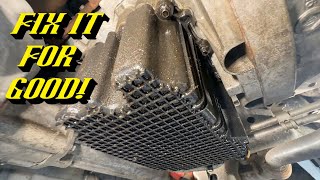
- Oil Leaks: Leaks from the plastic oil pan are a known issue 🎬 Watch: How to upgrade to a leak-free aluminum oil pan on early-production 2017 models. [3, 19] While not a cause for engine replacement on its own, it's a critical issue to address.
Diagnostic Flowchart

Known Issues, Recalls, and Technical Service Bulletins (TSBs)
This engine family has several well-documented issues that a buyer should be aware of. Addressing these on a used engine before installation can save thousands of dollars in future labor costs.
Cam Phaser Rattle (Cold Start)
The most significant issue is the cold start rattle caused by faulty VCT units (cam phasers). Ford has released multiple TSBs and customer satisfaction programs to address this. The definitive repair is to replace all four cam phasers, along with the timing chains, guides, and tensioners, with updated parts. [4, 26] Ford's latest TSB, 23-2143, supersedes older ones like 22-2200 and 21-2119. [20] Ford also issued Customer Satisfaction Programs 21B10 and 21N03, which involved a PCM software update and extended warranty coverage for the phasers for a limited time. [2, 8, 15] The latest redesigned phaser part numbers are ML3Z-6256-A (intake) and ML3Z-6C525-A (exhaust), which replace older numbers like HL3Z-6256-CD and HL3Z-6C525-CD. [29]
Pro Tip: It is strongly recommended to perform this entire timing job on a used engine while it is on an engine stand. The labor to do this job inside the truck can exceed 15-20 hours, making a pre-install repair far more cost-effective.
Plastic Oil Pan Leaks
Some 2017-2018 F-150s built before late February 2018 may experience oil leaks from the factory plastic oil pan. [3, 19] TSB 20-2051 and TSB 19-2219 outline the procedure for replacing the pan due to poor sealant adhesion. [3, 19] The common fix is to upgrade to the cast aluminum oil pan, but this requires a specific, different oil pump pickup tube (part number LK4Z-6622-B) to prevent oil starvation.
Turbocharger Issues
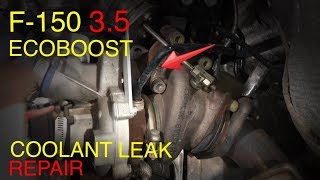
The turbocharger coolant lines at the back of the cylinder heads use quick-connect Jiffy-Tite style fittings and rubber seals that are prone to leaking. Additionally, some 2017 models experience excessive play in the turbocharger wastegate linkage, causing a rattle, which is addressed in TSB 18-2274.
Transmission and Brake Recalls
Certain 2015-2017 models experienced unexpected transmission downshifts due to a loss of signal between the transmission range sensor and the PCM, addressed by NHTSA Recall 26V-237 / Ford Recall 26S28. Furthermore, some 2014-2017 F-150s were subject to NHTSA Recall 20V-337 (Ford Recall 20S31) for a defect where brake fluid could leak from the master cylinder into the brake booster. [32]
What Fails at Every Mileage Band
Pro Tip: The mileage bands below describe the typical condition of USED REPLACEMENT UNITS at that mileage. The checklists provided are critical steps to perform WHILE INSTALLING the purchased engine on a stand, not general maintenance for your current running truck.
Under 60,000 Miles
Even at low mileage, the most prominent issue is the cam phaser rattle on cold starts. [10, 11, 28] The rattle occurs as oil drains from the early-style phasers when the engine is off. [8, 30] Leaks from the two-piece plastic oil pan are also common, and turbocharger coolant line fittings can begin to leak. [10, 14]
- ✓Do during install (required): Replace the original cam phasers with the updated Ford design, along with new timing chains, tensioners, and guides. This is the single most important preventative repair. [8, 14]
- ✓Do during install (required): Replace the fragile turbocharger coolant line fittings at the back of the cylinder heads. [33]
- ✓Do during install (recommended): If the engine has the original plastic oil pan, convert it to the one-piece aluminum pan and replace the required oil pump pickup tube. [8]
- ✓Cheap insurance while the engine is out: Replace spark plugs (Motorcraft SP-580 or SP-594), inspect ignition coils, and replace the external water pump and thermostat. [8, 15]
60,000 - 100,000 Miles
Cam phaser and timing chain issues remain the dominant problem, often becoming more pronounced and throwing codes. [11, 19, 32] Turbocharger failures can begin to appear due to oil coking from heat soak or contaminated oil restricting small passages, causing whining, smoke, or loss of boost. [21, 23] Water pump, thermostat housing, and valve cover gasket leaks are frequently reported. [8, 15]
- ✓Do during install (required): Perform a full timing system replacement, including updated cam phasers, chains, guides, and tensioners. [8, 14, 25]
- ✓Do during install (required): Replace all single-use Torque-to-Yield (TTY) bolts for components like the harmonic balancer.
- ✓Do during install (recommended): Replace the water pump, thermostat, and associated gaskets/hoses. [8, 15]
- ✓Do during install (recommended): Replace the turbocharger coolant and oil feed lines and fittings. [33]
- ✓Do during install (recommended): Convert to the aluminum oil pan if not already done. [8]
- ✓Cheap insurance while the engine is out: Replace spark plugs and all gaskets exposed during the swap (intake, exhaust, valve covers). [8]
100,000 - 150,000 Miles
If not already replaced, failure of the original timing components is highly probable. [22, 26] Turbocharger failure risk increases significantly due to oil starvation, bearing wear, and wastegate actuator issues. [21, 23] Coolant leaks from various sources are common, and catalytic converter failure can occur from misfires or oil burning. [15, 16]
- ✓Do during install (required): Assume a full timing job is non-negotiable. This includes updated phasers, chains, guides, tensioners, VCT solenoids, and water pump. [8, 25]
- ✓Do during install (recommended): Strongly consider replacing or rebuilding the turbochargers. Transferring worn original turbos risks immediate failure and contamination. [21, 23]
- ✓Do during install (recommended): Replace the oil pump and the oil pump pickup tube. [8]
- ✓Cheap insurance while the engine is out: Replace all accessible seals (front and rear main seals), coolant hoses, thermostat, spark plugs, and ignition coils. Perform a valve cleaning for carbon buildup. [2]
Over 150,000 Miles
Engines that reach this mileage without a timing system replacement are rare and at high risk of chain stretch or guide failure. [4, 17] Turbochargers are a significant point of failure due to accumulated wear. [6, 24] General wear items like coolant fittings, hoses, and gaskets are prone to leaking. [6]
- ✓Do during install (required): Complete timing system overhaul (phasers, chains, guides, tensioners, VCT solenoids). [8]
- ✓Do during install (required): Replace oil pump, water pump, and all seals/gaskets. [8]
- ✓Do during install (required): Replace or professionally rebuild the turbochargers and all associated oil/coolant lines. [23, 33]
- ✓Do during install (recommended): Treat as a core for rebuilding. The used unit should be treated as a long block, with all ancillary and wear components being replaced before installation.
- ✓Cheap insurance while the engine is out: Replace every external sensor, hose, and fitting to ensure reliability.
Real Owner Experiences
| Source | Mileage | What Happened | Cost |
|---|---|---|---|
| 58,000 | Diagnosed with cam phaser rattle. Due to backordered parts, the truck went out of the 60k powertrain warranty, and the owner had to purchase an extended warranty to cover the repair. [11] | $2,000 (with extended warranty) | |
| 60,000 | Owner bought a CPO 2017 F-150 and immediately discovered it had the cam phaser rattle and a leaking oil pan, both of which were corrected by the dealer. [10] | $0 (Dealer/CPO Warranty) | |
| Ford-Trucks.com Forum | 60,000 | A severe case of "cold start rattle" was fixed under warranty. [28] | $0 (Warranty) |
| Reddit r/f150 | 77,000 | 2020 model owner was quoted $13,800 by a Ford dealer for a new crate engine, and ~$10,000 by an independent shop for a rebuild plus labor. Negotiated the dealer down to $13,800. [25] | $13,800 |
| 85,000 - 96,000 | Multiple owners report cam phasers starting to rattle around 80-85k miles. [11, 32] One owner had them replaced at 96k miles. [32] | $4,000 - $5,000 (Dealer) | |
| 90,000 | After two previous cam phaser replacements under warranty, a full timing job (chain, sprockets, guides) was required. [19] | Not Stated | |
| YouTube | 65,000 - 95,000 | A mechanic notes seeing multiple 2017-2021 F-150s with turbo failures in this mileage range due to oil coking and bearing wear. [21] | $1,800 - $3,500 |
| Ford F150 Forum | 106,000 | Owner paid for a full timing job including phasers. [26] | $5,000 |
| Ford F150 Forum | 110,000 | An engine overheating event was caused by a split breather hose, a leaking water pump, and a leaking thermostat housing. [15] | Not Stated |
| 112,000 | Owner was quoted $4,000-$5,000 by a dealership for a cam phaser replacement. [22] | $4,000 - $5,000 | |
| Reddit r/f150 | 115,000 | 2014 model owner was quoted $9,500 for a used 90k mile engine installed, and $8,900 for a new engine. Opted for a Jasper remanufactured engine. [21] | $11,000 (Jasper reman) |
| YouTube | 132,000 | Owner experienced cam phaser rattle ($3-5k dealer quote), catalytic converter failure ($2-3k), and a thermostat failure after the phaser repair. [16] | $5,000+ |
| Ford F150 Forum | 150,000+ | 2018 model owner was quoted $20,000 by a local shop and $16,000 by a Ford dealer for engine replacement. Seeking advice on used engines. | Not specified |
| YouTube | 177,000 | 2013 model owner was quoted $16,614 for a full engine replacement by Ford for excessive oil consumption. An independent mechanic fixed it by replacing a PCV valve. [10] | $15 |
| Pickup Truck +SUV Talk Forums | 184,000 | A 2011 (Gen 1) model ran well to this mileage with only a minor coolant fitting leak near the end of its life. [6] | $350 |
| 220,000 | A 2015 (Gen 1.5) model is reported to be running strong with no major issues. [17] | N/A | |
| Ford F150 Forum | 250,000 | A 2011 (Gen 1) model reached this mileage with only an alternator replacement, following regular oil changes. [29] | N/A |
| Ford F150 Forum | Not specified | 2017 model owner had a cracked piston sleeve. The dealership worked with Ford Canada to get a whole new truck due to multiple issues. [18] | Not applicable |
Repair or Replace?
Deciding whether to repair your current 3.5L EcoBoost or replace the entire assembly depends heavily on the type of failure and the overall health of the engine block.
| Repair Scenario | Estimated Cost |
|---|---|
| Cam Phaser Rattle | $2,500 - $6,500 [1, 5] |
| Turbocharger Coolant Leak | $3,400 - $4,500 [26] |
| Plastic Oil Pan Leak | $500 - $1,000+ |
When Replacement is Smarter: Engine replacement becomes the smarter option when there is evidence of internal damage beyond the cam phasers, such as low oil pressure at warm idle, scored cylinders, or a cracked piston sleeve. [18, 25] If the cost of multiple individual repairs (e.g., cam phasers plus turbo replacement) approaches the cost of a used or remanufactured engine, replacement offers a better value. Used units typically run $3,600 to $6,000, while remanufactured units range from $4,500 to $8,000. When shop quotes for repairs hit $10,000 to $20,000 [11], swapping in a verified used assembly is the most economical path.
Replacement Cost Comparison
Engine replacement costs vary based on the type of engine and regional labor rates. The labor for a complete engine swap is estimated to be between 12 and 22 hours. [14, 18, 24]
| Part Type | Estimated Price (Part Only) | Notes |
|---|---|---|
| New OEM | $6,000 - $13,800+ | Brand new from a Ford dealer. Highest cost but includes the latest updates. |
| Remanufactured | $4,500 - $8,000 | Rebuilt by a third-party company to meet or exceed OEM specs, often with a multi-year warranty. [16, 21] |
| Used OEM | $3,600 - $6,000 | A salvaged engine from a donor vehicle. Price varies greatly with mileage and condition. [1, 10] |
| Installation Labor | $1,800 - $4,400 | Shop labor rates typically range from $125 to $200 per hour. |
What's Included in a Used Assembly?
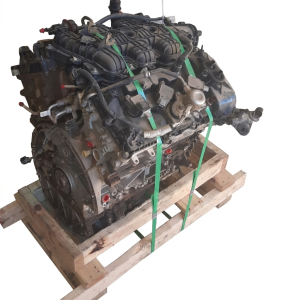
A used engine assembly is typically sold as a "long block." This includes the core internal components but excludes bolt-on accessories, which must be transferred from your original engine.
- What's Usually Included: Engine block, cylinder heads, crankshaft, pistons, camshafts, timing components, oil pan, valve covers, intake manifold, throttle body, fuel injectors, fuel rails, and harmonic balancer.
- What's Not Included: Turbochargers (unless explicitly stated), starter motor, alternator, A/C compressor, power steering pump, exhaust manifolds, and the engine wiring harness.
Warning: Never reuse turbochargers from a failed engine without having them professionally inspected and cleaned. Metal debris from the old engine can travel into the turbos and will be sent directly into your replacement engine upon startup, causing immediate failure.
Installation Essentials and Gotchas

Proper installation is critical for the longevity of a replacement engine. This is an expert-level DIY job or requires a professional shop. Several key steps and potential pitfalls are specific to the Gen 2 3.5L EcoBoost.
Required Tools and Consumables
- Specialty Tools: Camshaft Holding Tool / Timing Tool Kit (OTC 303-1655 / CTA 6680 / Lisle 37230 / Ford 303-1530), Quick-Disconnect Tool Set for fuel and turbo lines, Engine Hoist & Heavy-Duty Load Leveler, and a Ford-Compatible Scan Tool (Ford IDS/FDRS or FORScan with OBD Link EX).
- Fluids: 6.0 to 6.2 quarts of 5W-30 synthetic oil (Ford spec WSS-M2C946-B1 / WSS-M2C946-A), Motorcraft Yellow Prediluted Antifreeze/Coolant (WSS-M97B57-A1) or Motorcraft Orange (WSS-M97B44-D2), and fresh front differential gear oil (75W-85 or 75W-90) for 4WD models.
- Parts: Motorcraft FL-500S oil filter, 6 new Motorcraft SP-580 (or SP-594) spark plugs (gapped to 0.030", or 0.028" if tuned), upper/lower intake gaskets, exhaust gaskets, turbo mounting/oil/coolant gaskets, front/rear main seals, and Torque-to-Yield (TTY) bolts.
Critical "Gotchas"
Warning: After installation, the Powertrain Control Module (PCM) requires several programming procedures. A Crankshaft Position (CKP) sensor relearn is mandatory to prevent random misfire codes (P0300) and a flashing check engine light. A Passive Anti-Theft System (PATS) parameter reset is also required, or the truck's security system will prevent it from starting. Finally, Fuel Injector Flow Code Programming must be completed. These procedures require a dealer-level scan tool.
Warning: If you are converting from a plastic oil pan to an aluminum one, you MUST install the correct oil pump pickup tube (LK4Z-6622-B). Failure to do so will starve the engine of oil and cause catastrophic failure on the first start.
Warning: Critical fasteners like the crankshaft balancer bolt, camshaft phaser bolts, and cylinder head bolts are single-use only. They are designed to stretch when torqued and cannot be reused. Always install new Torque-to-Yield (TTY) bolts to ensure proper clamping force.
- Wiring Harness: You must reuse your vehicle's original engine wiring harness. Carefully inspect it for any damage that may have occurred during shipping or removal and ensure it is fully compatible with the 10R80 10-speed transmission.
- Dual Fuel System: The high-pressure direct injection lines require special care and precise torque to avoid dangerous fuel leaks.
Questions to Ask Your Installer
- Have you performed this specific cam phaser job or engine swap on a Gen 2 3.5L EcoBoost before?
- Will you be using the latest revised/updated Ford OEM cam phasers (part numbers ML3Z-6256-A and ML3Z-6C525-A)?
- Does your quote include replacing the timing chains, guides, and tensioners while you are in there?
- Does your labor estimate include the mandatory Crankshaft Position (CKP) sensor relearn, Injector Flow Code programming, and PATS security reset procedures?
- If my truck has the plastic oil pan, and the replacement engine has the aluminum one, are you aware that the oil pickup tube must be changed?
- Is the price for a long block only, and does it assume we are transferring my existing turbochargers? What if my turbos are contaminated from the previous engine failure?
Freight, Delivery, and Pre-Purchase Reality

When ordering a used 3.5L EcoBoost engine assembly, it is crucial to understand how it will arrive. This is a heavy industrial part, not a parcel.
- Weight and Dimensions: A verified 2017 3.5L EcoBoost assembly weighs approximately 373 lbs and measures roughly 36" x 36" x 36" before crating.
- Shipping Method: It ships as Less-Than-Truckload (LTL) freight on a wooden pallet. It will arrive via a large freight truck, and you will need a liftgate service if you do not have a loading dock or forklift at the delivery location.
- Inspection is Mandatory: Before signing the driver's delivery receipt, you must inspect the engine for shipping damage. Check the plastic valve covers, the fragile turbo coolant fittings at the back of the heads, and the oil pan. If you sign for it without noting damage, you lose your ability to file a freight claim.
- Pre-Purchase Verification: A reputable supplier will conduct a pre-purchase verification interview. They will ask you to confirm the 8th digit of your VIN is 'G', verify your transmission is the 10R80 10-speed, and ask about the condition of your existing turbochargers to ensure you aren't about to destroy the replacement engine with contaminated parts.
Arrival Inspection: Testing Your Used Engine
When your used 3.5L EcoBoost arrives, test it before dropping it into your truck. It is much easier to find problems while the engine is sitting on a pallet.
- Check the Compression: A compression test measures how well the engine cylinders hold pressure. A healthy Gen 2 3.5L EcoBoost should show between 140 and 170 PSI (pounds per square inch) on a gauge. The exact number matters less than the balance between cylinders. The lowest cylinder must be within 15% of the highest cylinder.
- Perform a Leak-Down Test: This test pumps compressed air into a cylinder to see how much escapes. A good used engine should have less than 15% air loss. If you hear air hissing from the oil cap, the piston rings are worn. If air hisses from the exhaust manifolds, the exhaust valves are leaking.
- Inspect Turbocharger Shaft Play: The 3.5L EcoBoost has two turbochargers. Remove the intake pipes to reach the small fan blades (compressor wheels) inside each turbo. Gently push and pull the center shaft in and out. There must be zero axial play (in-and-out movement). Next, wiggle the shaft up and down. A tiny amount of radial play (up-and-down movement) is normal because the internal bearings need room for oil. However, the fan blades must never scrape against the metal housing.
Frequently Asked Questions (FAQ)
How do I confirm this engine fits my truck?
Check the 8th digit of your 17-character VIN on the dashboard or door jamb sticker. If it is a 'G', and your truck is a 2017 Ford F-150 (non-Raptor model), this is the correct engine family. [13]
Do I have to replace the cam phasers on my used engine?
It is not mandatory, but it is highly recommended. The cost and labor to replace the phasers before the engine is installed are significantly lower than doing the job later with the engine in the truck. Given the high failure rate, it is a wise investment.
Will this engine work in my 2017 Ford Explorer or Expedition?
No. The 2017 Expedition still used the first-generation 3.5L EcoBoost. The Explorer uses a transverse (sideways) version of the engine with a completely different layout for the transmission, accessories, and oil pan.
What happens if I don't perform the computer relearn procedures?
If you skip the PATS reset, the engine will not start because the security system will block it. If you skip the CKP relearn, the engine will likely run poorly, set random misfire codes (like P0300), and have a constant flashing check engine light.
Can I reuse my old turbochargers?
Only if they are thoroughly inspected and proven to be free of damage and contamination. If your previous engine failed internally (e.g., spun bearing, metal shavings in oil), those metal particles likely traveled into the turbo bearings. Reusing contaminated turbos will send that metal straight into your new engine, destroying it immediately.
What coolant should I use in this engine?
You must use Ford Motorcraft Yellow Prediluted Antifreeze/Coolant (WSS-M97B57-A1) or Motorcraft Orange (WSS-M97B44-D2). Mixing generic green or older coolants with the Motorcraft fluid causes chemical gelling, which blocks passages and leads to severe overheating.
Helpful Videos
Technical Specifications
OEM Part Numbers: ML3Z-6256-A ML3Z-6C525-A HL3Z-6256-CD HL3Z-6C525-CD LK4Z-6622-B SP-580 SP-594 FL-500S
Engine Type: Second-Generation 3.5L EcoBoost V6; VIN Code (8th Digit): G; Build Tag Code: D35; Horsepower: 375 hp; Torque: 470 lb-ft; Fuel System: Port and Direct Injection; Transmission Pairing: 10-speed 10R80 Automatic; Oil Capacity: 6.0 - 6.2 quarts; Oil Type: 5W-30 Synthetic (WSS-M2C946-B1 / WSS-M2C946-A); Coolant Type: Motorcraft Yellow (WSS-M97B57-A1) or Motorcraft Orange (WSS-M97B44-D2); Spark Plug Gap: 0.030" (0.028" tuned); Weight: ~373 lbs
We Have This Part in Stock

The information in this article is provided for general reference and educational purposes only. Vehicle specifications, procedures, and part compatibility can vary by production date, trim level, and region. Always consult your vehicle's factory service manual and verify part numbers before purchasing or performing repairs. Safety-critical components such as airbags, seat belts, and braking systems should be installed by a qualified professional.
- Ford F-150:
- 🎬 Helpful Videos
- 🛍️ Shop This Part
- Identifying the Correct 2017 3.5L EcoBoost Engine
- Common Failure Points and Symptoms
- Diagnostic Flowchart
- Known Issues, Recalls, and Technical Service Bulletins (TSBs)
- Cam Phaser Rattle (Cold Start)
- Plastic Oil Pan Leaks
- Turbocharger Issues
- Transmission and Brake Recalls
- What Fails at Every Mileage Band
- Under 60,000 Miles
- 60,000 - 100,000 Miles
- 100,000 - 150,000 Miles
- Over 150,000 Miles
- Real Owner Experiences
- Repair or Replace?
- Replacement Cost Comparison
- What's Included in a Used Assembly?
- Installation Essentials and Gotchas
- Required Tools and Consumables
- Critical "Gotchas"
- Questions to Ask Your Installer
- Freight, Delivery, and Pre-Purchase Reality
- Arrival Inspection: Testing Your Used Engine
- Frequently Asked Questions (FAQ)
- 🎟️ Get 5% Off