

2023-2025 Ford Escape 1.5L EcoBoost: Problems, Identification, and Used Replacement
Identify the 3-cylinder 'Dragon' engine, understand its wet belt and injector failures, and learn when to swap it for a used OEM assembly.
- Before ordering, you must verify the 8th digit of your VIN is 'N' to ensure you get the correct 2023-2025 1.5L 3-cylinder engine.
- Strictly use Ford-specified engine oil (e.g., WSS-M2C960-A1) to prevent the internal 'wet' oil pump belt from degrading, which causes catastrophic oil starvation.
- After installation, a Ford-compatible scan tool is mandatory to perform computer relearns (CKP, PCM reset) to prevent a no-start condition.
- Be aware of the severe fire risk from cracked fuel injectors (Recall 24S16) and ensure the software and drain tube remedy has been applied.
- The cooling system must be refilled using a vacuum tool to prevent air pockets that can cause immediate overheating and warp the cylinder head.
Identifying the Correct 2023-2025 1.5L Engine Assembly

The engine used in 2023-2025 Ford Escape models with front-wheel drive (FWD) or all-wheel drive (AWD) is a 1.5L turbocharged 3-cylinder EcoBoost, part of a family often called the "Dragon" engine. This is a direct-injection engine, meaning fuel is sprayed directly into the combustion chamber for improved efficiency.
The Critical VIN Check
To ensure you are ordering the correct engine, you must verify the 8th digit of your vehicle's 17-character Vehicle Identification Number (VIN). For this specific engine, the 8th digit must be 'N'. [9, 12, 13, 14] An engine specified for a VIN 'N' vehicle will not work in earlier models. You can also identify this engine family by the codes Y1DA, YZJA, or YZDA stamped on the block.
Pro Tip: You can find the VIN on a metal plate at the base of the driver's side of the windshield or on a sticker inside the driver's door jamb. [29] It is also listed on your vehicle's registration and insurance documents. [29]
What Will Not Fit: Important Exclusions
Ordering the wrong engine is a common and costly mistake. This assembly is unique to the 2023-2025 model years and will not interchange with the following vehicles:
- 2020-2022 Ford Escape: These models use a different version of the 1.5L engine, identified by the 8th VIN digit '6'. [18] The 2023+ 'N' engine has significant structural, electrical, and sensor differences that make it incompatible.
- Ford Bronco Sport: Although the Bronco Sport uses a similar 1.5L engine, it has different mounting points and software that prevent a direct swap.
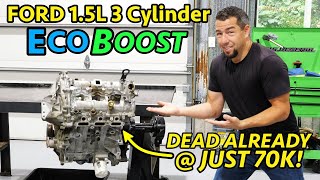
- Older Ford Escapes (pre-2020): These vehicles used entirely different engines, including 4-cylinder variants that share no compatibility. [17] 🎬 Watch: The fatal flaw in early 1.5L engines
Common Failure Symptoms

If you suspect your engine has failed, you may notice one or more of the following symptoms:
- Low Oil Pressure Warning: This is a critical warning. It is often caused by debris from a degrading internal "wet" oil pump belt clogging the oil pickup screen, starving the engine of oil. [35]
- Engine Knocking or Tapping: Deep, rhythmic knocking sounds from the engine often indicate severe internal damage, such as failed rod bearings from oil starvation.
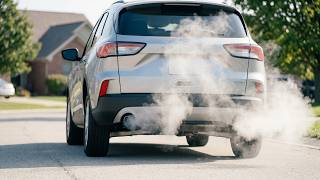
- Excessive Smoke from Exhaust: White smoke can indicate that coolant is leaking into the cylinders, a known issue with these engines. [28]
- Overheating: A sudden loss of coolant can cause the engine to overheat, potentially warping the cylinder head.
- Sudden Loss of Power with 'Seek Service' Message: This can be triggered by the engine's computer detecting a dangerous condition, such as a fuel pressure drop from a cracked injector. [6] 🎬 Watch: How cracked fuel injectors trigger this recall
Diagnostic Flowchart
Major Known Issues, Recalls, and Bulletins
This engine family has several well-documented issues. When buying a used engine, be aware that it may be subject to these problems.
Severe: Cracked Fuel Injector and Fire Risk
Warning: A cracked fuel injector can leak fuel into the engine bay, which may accumulate near hot surfaces and cause an under-hood fire. [10, 11]
Ford has issued multiple recalls to address this.
- Affected Vehicles: 2020-2024 Ford Escape and Bronco Sport models with the 1.5L engine. [11]
- Recall Numbers: NHTSA 24S16 / 22S73 / 23V-867. [2]
- The Fix: Dealers were instructed to update the engine control software to detect a fuel pressure drop and install a drain tube to route leaking fuel away from hot components. [6, 10] The recall remedy did not originally include replacing the injectors themselves, though this was later investigated by NHTSA. [6, 16]
Severe: Oil-Immersed ("Wet") Belt Degradation
This engine uses a timing chain, but the oil pump is driven by a separate rubber belt that runs inside the engine's oil pan (a "wet belt"). [32, 33]
Warning: Using engine oil that does not meet the exact Ford specification can cause the wet belt's rubber to break down. [35] This debris clogs the oil pump pickup tube, leading to catastrophic engine failure from oil starvation. [35] Strictly use the specified oil and follow recommended change intervals.
Moderate: Water Pump Leaks
Some vehicles may experience a loss of engine coolant due to a leaking water pump. [1, 3] Technical Service Bulletins (TSBs) suggest this may be caused by contamination within the cooling system, possibly from casting sand left over from the engine block's manufacturing process. [1, 38, 40]
- Affected Vehicles: 2021-2024 models with the 1.5L EcoBoost engine. [1, 3]
- TSB Numbers: 25-2581 and 25-2063. [1, 3]
- The Fix: The official procedure involves flushing the entire cooling system multiple times before installing a new water pump. [1, 3]
Minor: Oil Separator Housing Cracks
A March 2022 recall campaign addressed potential cracks in the oil separator housing on 2020-2022 models that could lead to oil leaks. While less common on the 2023+ models, it is worth inspecting on any replacement unit.
Replacement Cost Expectations
The cost to replace a 1.5L EcoBoost engine can vary significantly based on the type of replacement unit and local labor rates. The provided labor estimate is for swapping the engine assembly only.
| Part or Service | Estimated Cost (USD) | Notes |
|---|---|---|
| Used OEM Engine | $1,750 - $3,200 | Price depends on mileage and condition. Sourced from a recycled vehicle. [5, 12] |
| Remanufactured OEM Engine | $2,700 - $5,100+ | Disassembled, cleaned, and rebuilt with new internal components. [5, 26] |
| New OEM Engine | $5,500+ | Brand new "long block" from Ford (Part # PV4Z-6006-A). Price does not include core charge. [22] |
| Installation Labor | $1,500 - $3,000 | Estimated 12-20 shop hours. Does not include diagnostic time or programming. |
Installation: Critical Steps and Common Mistakes

What's Included in a Used Assembly?
A used engine is typically sold as a "long block." This includes the core internal components but requires you to transfer many parts from your old engine.
- Typically Included: Engine block, cylinder head, crankshaft, pistons, rods, camshafts, oil pan, valve cover, timing cover, timing chain system, intake manifold, throttle body, fuel injectors, fuel rail, and harmonic balancer. [14, 18]
- Typically NOT Included: A/C compressor, starter motor, alternator, power steering pump, exhaust manifold, engine wiring harness, and the ECU (Engine Control Unit). [18, 23]
Warning: The turbocharger is almost never included with a used engine assembly. You must transfer the turbo from your original engine or purchase a new one.
Required Procedures for a Successful Swap
Proper installation is critical to prevent immediate damage to the replacement engine. Failure to follow these steps can lead to a no-start condition or catastrophic failure. This is an expert-level DIY job.
- Perform Computer Relearns: After installation, a Ford-compatible scan tool (like Ford IDS, FDRS, or FORScan) is required to perform a Crankshaft Position (CKP) Sensor Relearn, Misfire Monitor Profile Correction, PCM Parameter Reset, and PATS Relearn. Skipping this step will result in a no-start condition or persistent misfire codes.
- Vacuum-Fill the Cooling System: This engine's design easily traps air. You must use a vacuum coolant refilling tool to prevent air pockets in the cylinder head, which cause localized hot spots and immediate head warping.
- Replace Single-Use Bolts: Critical fasteners like the crankshaft pulley bolt and camshaft phasers are Torque-to-Yield (TTY) and are designed to stretch. They are single-use only and must be replaced to prevent catastrophic timing failure.
- Transfer Oil Pan for AWD Models: If swapping an engine between an AWD and FWD vehicle, you must use the original oil pan and accessory brackets to ensure proper fitment with the Power Transfer Unit (PTU).
- Protect the Solenoid: Be extremely careful with the fragile cylinder deactivation solenoid located on the top-right side of the engine. It is easily crushed by hoist chains during installation.
Required Tools and Consumables
To complete this job correctly, your shop will need specific tools and fluids:
| Category | Items |
|---|---|
| Special Tools | Ford EcoBoost 1.5L 3-Cylinder Timing Tool Kit (including crankshaft TDC timing peg 303-507 and crankshaft position sensor alignment tool 303-1521), Vacuum Coolant Refilling Tool, Engine Hoist/Crane, Engine Stand, Torque Wrench, and a capable Scan Tool. |
| Fluids | Approx. 5.9 quarts of Engine Oil meeting Ford specification WSS-M2C960-A1, WSS-M2C947-B1, or WSS-M2C963-A1. Ford Yellow Pre-Mixed Coolant meeting specification WSS-M2C965-A1 (VC-13-G). |
| New Parts | OEM Motorcraft Oil Filter, Motorcraft Iridium Spark Plugs, Intake and Exhaust Manifold Gaskets, Thermostat Gasket, Fuel Injector O-rings, Rear Main Seal, TTY Crankshaft Pulley Bolt, and a new Timing Belt & Tensioner. |
What Fails at Every Mileage Band
Pro Tip: The mileage bands below describe the typical condition of USED REPLACEMENT UNITS at that mileage. The checklists provided are things to do WHILE INSTALLING the purchased engine, not general maintenance for your current engine.
Under 60,000 Miles
Even low-mileage engines can have issues. The most common problems in this band include cracked fuel injectors (posing a fire risk), water pump leaks leading to overheating, faulty cylinder heads caused by manufacturing debris blocking coolant sensors, and various electrical or software glitches.
- ✓Do during install (required): Install a new Motorcraft oil filter and use only the specified Ford engine oil. Replace all single-use Torque-to-Yield (TTY) bolts. Replace intake and exhaust manifold gaskets.
- ✓Do during install (recommended): Inspect and strongly consider replacing the water pump with the latest part number, regardless of mileage.
- ✓Cheap insurance while the engine is out: Replace the rear main seal.
60,000 to 100,000 Miles
In this mid-range, water pump failures remain common. More critically, the wet oil pump and timing belt begin to show degradation, especially if incorrect oil was used previously. Turbocharger failures and carbon buildup on the intake valves also start appearing.
- ✓Do during install (required): Mandatory replacement of the wet timing belt and oil pump belt and their tensioners. Replace all gaskets, seals, and single-use TTY bolts.
- ✓Do during install (recommended): Replace the water pump with a new OEM unit. Replace spark plugs.
- ✓Cheap insurance while the engine is out: Clean intake valves to remove carbon deposits.
100,000 to 150,000+ Miles
High-mileage engines are at severe risk of timing belt failure. While the official interval is 150,000 miles, many mechanics recommend replacement much earlier to prevent catastrophic engine failure. Clogged fuel injectors and general wear on thermostats and gaskets are also prevalent.
- ✓Do during install (required): Mandatory replacement of the timing belt, oil pump belt, and all related tensioners and hardware. Replace all seals, gaskets, and single-use bolts.
- ✓Do during install (recommended): Replace the water pump, thermostat, and all coolant hoses. Replace all fuel injector seals and consider having injectors professionally cleaned and tested.
- ✓Cheap insurance while the engine is out: Perform a walnut blast cleaning of the intake valves for carbon buildup.
Real Owner Experiences
The following table highlights real-world issues reported by owners of vehicles equipped with this 1.5L EcoBoost engine family.
| Source | Mileage | What Happened | Cost |
|---|---|---|---|
| CarComplaints.com | 1,500 miles | The engine overheated and went into limp mode. It was diagnosed as a faulty head with manufacturing debris blocking a coolant sensor. | Warranty |
| 3,000 miles | Dealer attempted to replace a check valve in the fuel pump and spark plugs for a persistent misfire code (P0300, P0316). Ford then halted the repair, citing a pending software/recall update. | $0 | |
| Torque News | 5,000 miles | A replacement water pump began leaking. | Warranty |
| Broncosportforum.com | 17,500 miles | A check engine light led to the discovery of a leaking water pump, which was replaced under warranty. | Warranty |
| Reddit r/BroncoSport | under 29,000 miles | The cylinder head went bad and the owner was on their third water pump. | Warranty |
| Reddit r/fordescape | 95,000 miles | Owner reported the only issue has been a water pump replacement at 60,000 miles. | Not specified |
| Broncosportforum.com | 60,000 to 80,000 miles | Some garages report seeing engines requiring complete replacement in this mileage range. | Not specified |
| YouTube / WCVB | 80,000 miles | Owner of a 2017 Escape with a similar EcoBoost engine failure (coolant intrusion) was quoted $9,400 by the dealer for a full engine replacement. They had the repair done at an independent mechanic for a lower cost. | >$7,000 |
| Reddit r/BroncoSport | 110,000 miles | Owner reports no engine issues yet, but notes it is time for a spark plug job. | Standard maintenance |
| 119,000 miles | Owner of a 2018 Escape was quoted $8,000 for an engine swap. | N/A | |
| Reddit r/fordfusion | 153,000 miles | Owner of a 1.5L (4-cylinder variant) notes that around the 150k mark, things are starting to go out, including thermostats (replaced 3 times), valve cover gasket, and a high-pressure fuel pump. They also suspect the timing belt is failing. | Varies per repair |
| Unknown | Experienced an engine misfire, noted it may be a known software issue. The check engine light resolved on its own after a few days. | $0 |
Repair or Replace?
Deciding whether to repair your current engine or replace it entirely depends on the severity of the failure.
- Cracked Fuel Injector: This is a mandatory recall (24S16). The remedy includes installing a drain tube and a PCM software update to detect fuel pressure drops. There is no cost to the owner, so repair is the obvious choice.
- Water Pump Leaks: If the engine has not overheated and there is no evidence of coolant mixing with oil, simply replacing the water pump is the correct repair. Typical repair costs range from $532 to $1,221.
- Wet Oil Pump / Timing Belt Degradation: If the belt degradation is caught during routine maintenance before it fails and clogs the oil pickup screen, replacement is a viable, albeit labor-intensive, repair. The labor can be 10-15 hours, costing $1,500 or more.
When Replacement is Smarter: Replacement is necessary if the engine has suffered catastrophic failure from oil starvation due to a degraded wet belt, or if it has been severely overheated from a water pump failure leading to a warped cylinder head or block. Given the high labor cost for internal repairs like the wet belt, if the engine has high mileage, swapping in a lower-mileage used unit (typically running $1,750 to $3,200) can be more cost-effective than performing major internal repairs.
With proper and stringent maintenance, the 1.5L EcoBoost engine can last from 150,000 to 200,000 miles. However, many owner reports and mechanic recommendations suggest a shorter practical lifespan closer to 100,000-120,000 miles before significant repairs are needed. The single most critical maintenance item for this engine is strict adherence to oil change intervals using only Ford-specified synthetic oil.
Freight & Delivery Reality

When ordering a used 1.5L EcoBoost engine assembly, it is crucial to understand how it will arrive. This is a heavy industrial part, not a standard parcel.
- Size and Weight: Verified shipping data shows this assembly weighs approximately 425 lbs and measures roughly 36" x 36" x 40" before crating.
- Shipping Method: It ships as Less-Than-Truckload (LTL) freight on a wooden pallet. It will arrive on a large commercial truck.
- Delivery Requirements: You must ensure the delivery location can accommodate a freight truck. If delivering to a residential address or a shop without a loading dock, you must request a liftgate service to lower the pallet to the ground.
- Inspect Before Signing: Never sign the delivery receipt until you have fully inspected the engine for transit damage. Once you sign, you accept the condition of the freight, making damage claims extremely difficult.
- Pre-Purchase Verification: Before ordering, verify your vehicle's 8th VIN digit is 'N', confirm it is a 3-cylinder variant, and identify if your vehicle is FWD or AWD to prepare for potential oil pan or PTU bracket transfers.
Questions to Ask Your Installer
Before handing over your vehicle, ask your mechanic these critical questions:
- Have you worked on this specific 1.5L 3-cylinder 'Dragon' engine before?
- Are you equipped with a scan tool (like Ford IDS/FDRS) to perform the mandatory crankshaft position sensor relearn and PCM parameter reset?
- Do you have a vacuum-lift tool to properly refill the cooling system and prevent air pockets?
- Will you be replacing all single-use Torque-to-Yield (TTY) bolts as required?
- If my vehicle is AWD, are you prepared to transfer the original oil pan and PTU-related brackets?
- Does your quote include all necessary new gaskets, seals, fluids (Ford-specific oil and coolant), and spark plugs?
- Can you verify the mileage and condition of the used engine I am sourcing?
Arrival Inspection: Testing Your Used Engine
When your used engine arrives, you must inspect it before installation. This saves time and money if the part was damaged in shipping or has internal issues.
- Compression and Leak-Down Tests: A compression test measures the pressure built up inside the cylinders. A leak-down test checks how well the cylinders hold that pressure. For this 3-cylinder engine, the pressure readings should be close to each other. A difference of more than 10 to 15 percent between any two cylinders points to bad piston rings or leaking valves.
- Turbocharger Shaft Play: Because the 1.5L EcoBoost is a turbocharged engine, you must check the turbo before putting the engine in the car. Reach into the turbocharger and gently wiggle the center shaft. A very small amount of side-to-side movement is normal when the engine has no oil pressure. However, there should be zero in-and-out movement. The metal fan blades must never touch the metal housing.
Before the First Start: Priming and Fluids
Installing a used engine requires fresh fluids and a strict start-up process. If you start a dry engine, the metal parts will grind together and destroy the engine in seconds.
- Fresh Oil and Filter: You must install a brand-new oil filter and fill the engine with fresh oil. Use a Ford-approved motor oil that matches the specification printed on your vehicle's oil cap. This is typically a 5W-20 oil meeting the WSS-M2C960-A1 specification, or a 0W-20 oil meeting WSS-M2C962-A1.
- Correct Coolant: Drain any old coolant and fill the system with Motorcraft Yellow antifreeze. This coolant must meet Ford's WSS-M97B57-A1 or WSS-M97B57-A2 specification. Mixing the wrong coolants will create a thick gel that clogs the engine.
Follow this oil priming procedure:
- Disable the fuel system so the engine cannot start. You can do this by removing the fuel pump fuse. Alternatively, you can press the gas pedal all the way to the floor and hold it there. This puts the car in "Clear Flood Mode," which turns off the fuel injectors.
- Turn the key or press the start button to crank the engine. Let it crank for 10 to 15 seconds.
- Stop and wait 30 seconds so the starter motor can cool down.
- Repeat this cranking process two or three times. This pumps fresh oil to the turbocharger, the bearings, and the top of the engine.
- Put the fuel pump fuse back in, or take your foot off the gas pedal.
- Start the engine normally and check for any oil or coolant leaks.
Frequently Asked Questions (FAQ)
Do I have to replace the belts on a used engine?
It is highly recommended. Given the known issues with the wet oil pump belt, replacing it along with the timing chain and tensioners during the swap is cheap insurance against future failure.
Can I reuse my old engine's bolts?
No. Critical bolts, especially the crankshaft pulley bolt and camshaft phasers, are Torque-to-Yield (TTY) and are designed for one-time use. Reusing them can lead to catastrophic engine failure.
Will the engine work if I skip the computer relearn process?
No. The vehicle's computer will not recognize the new engine's sensors, leading to a no-start condition, rough running, and multiple diagnostic trouble codes. A scan tool is mandatory for the Crankshaft Position Sensor Relearn and PCM Parameter Reset.
What is the difference between the FWD and AWD engine?
The core engine block and cylinder head are the same. However, if you are swapping an engine between an AWD and FWD platform, you must transfer your original engine's oil pan and accessory brackets to accommodate the Power Transfer Unit (PTU) found on AWD models.
Why do I need a special tool to add coolant?
This engine's cooling system design easily traps air. You must use a vacuum coolant refilling tool to pull a vacuum on the system before introducing coolant. Gravity-filling will trap air in the cylinder head, causing localized hot spots and immediate head warping.
Does a used engine come with the turbocharger?
Almost never. Used engines are typically sold as "long blocks." You will need to transfer the turbocharger, alternator, starter, A/C compressor, and engine wiring harness from your original engine.
Helpful Videos


Technical Specifications
OEM Part Numbers: PV4Z-6006-A
Engine Family: Dragon; Displacement: 1.5L; Cylinders: 3; Aspiration: Turbocharged; Fuel System: Direct Injection; VIN Identifier (8th Digit): N; Engine Codes: Y1DA, YZJA, YZDA; Oil Specification: WSS-M2C960-A1, WSS-M2C947-B1, or WSS-M2C963-A1; Coolant Specification: WSS-M2C965-A1 (VC-13-G); Oil Capacity: Approx. 5.9 quarts; Shipping Weight: Approx. 425 lbs
We Have This Part in Stock


The information in this article is provided for general reference and educational purposes only. Vehicle specifications, procedures, and part compatibility can vary by production date, trim level, and region. Always consult your vehicle's factory service manual and verify part numbers before purchasing or performing repairs. Safety-critical components such as airbags, seat belts, and braking systems should be installed by a qualified professional.
- Ford Escape:
- 🎬 Helpful Videos
- 🛍️ Shop This Part
- Identifying the Correct 2023-2025 1.5L Engine Assembly
- The Critical VIN Check
- What Will Not Fit: Important Exclusions
- Common Failure Symptoms
- Diagnostic Flowchart
- Major Known Issues, Recalls, and Bulletins
- Severe: Cracked Fuel Injector and Fire Risk
- Severe: Oil-Immersed ("Wet") Belt Degradation
- Moderate: Water Pump Leaks
- Minor: Oil Separator Housing Cracks
- Replacement Cost Expectations
- Installation: Critical Steps and Common Mistakes
- What's Included in a Used Assembly?
- Required Procedures for a Successful Swap
- Required Tools and Consumables
- What Fails at Every Mileage Band
- Under 60,000 Miles
- 60,000 to 100,000 Miles
- 100,000 to 150,000+ Miles
- Real Owner Experiences
- Repair or Replace?
- Freight & Delivery Reality
- Questions to Ask Your Installer
- Arrival Inspection: Testing Your Used Engine
- Before the First Start: Priming and Fluids
- Frequently Asked Questions (FAQ)
- 🎟️ Get 5% Off