

2019-2024 Edge & Nautilus 2.7L EcoBoost V6: Problems, Identification, and Used Replacement
Identify the correct Nano Gen 2 engine, understand common failures like intake valve fractures and oil pan leaks, and learn when to replace it with a used OEM unit.
- Before purchasing, verify the engine is for a transverse application (Edge/Nautilus) by checking the VIN's 8th digit ('P') and ensuring it's not from a longitudinal vehicle like an F-150 or Bronco.
- For AWD models, you must transfer the original oil pan, Power Transfer Unit (PTU) mounting brackets, and intermediate shaft support brackets to the replacement engine.
- After installation, a Crankshaft Position (CKP) Sensor Relearn and PATS security re-initialization are mandatory using a dealer-level scan tool to prevent check engine lights and no-start conditions.
- Always replace single-use Torque-to-Yield (TTY) bolts, especially the crankshaft pulley bolt (FT4Z-6A340-A), and torque the plastic oil pan bolts to exactly 89 INCH-pounds.
- Check if a 2021-2022 donor engine is affected by Recall 24S55 for intake valve fractures, and if a pre-mid-2019 engine has had its oil pan updated per TSB 23-2075.
Identifying the Correct 2.7L V6 Engine

The engine used in the 2019–2024 Ford Edge and 2019–2023 Lincoln Nautilus is the second-generation 2.7L EcoBoost V6, also known by its family name "Nano." This is a twin-turbocharged, 24-valve V6 with direct injection. It's crucial to ensure you are sourcing the correct version of this engine, as it was used in other Ford and Lincoln vehicles in different configurations.
Vehicle Fitment Check
This specific used engine assembly is a direct fit for the following vehicles equipped with the 2.7L twin-turbo V6:
- Ford Edge: 2019, 2020, 2021, 2022, 2023, 2024
- Lincoln Nautilus: 2019, 2020, 2021, 2022, 2023
VIN and Engine Code Verification
You can confirm that your vehicle is equipped with this engine using two key identifiers:
- Check the VIN: The 8th digit of your vehicle's Vehicle Identification Number (VIN) must be 'P'.
- Find the Engine Code: Look for a white barcoded sticker on the driver-side valve cover or the front timing cover. The engine code for this family typically begins with identifiers like KG502AA, KG502BA, or C27PD0X.
Pro Tip: The engine is mounted sideways (transversely) in the Edge and Nautilus. This is a quick visual check to distinguish it from other 2.7L applications.
Critical Interchange Mismatches
Warning: Not all 2.7L EcoBoost engines are the same. This engine assembly will NOT fit vehicles where the engine is mounted front-to-back (longitudinally), such as the Ford F-150, Ranger, or Bronco. Attempting to use an engine from one of those trucks will fail due to different mounting points, oil pans, and accessory layouts.
Additionally, these engines were built for both Front-Wheel Drive (FWD) and All-Wheel Drive (AWD) vehicles. The core long block is the same, but if you are installing a used engine into an AWD model, you must transfer the original AWD-specific oil pan, Power Transfer Unit (PTU) mounting brackets, and intermediate shaft support brackets from the old engine.
Common Failure Symptoms
While generally reliable, severe engine problems can occur. If you experience the following symptoms, a complete engine replacement may be necessary:
- Deep Engine Knocking: A loud, rhythmic knocking sound from the bottom of the engine, often indicating bearing failure.
- Excessive Smoke from Exhaust: Continuous blue smoke (burning oil) or thick white smoke (burning coolant) points to internal seal failures.
- Metal Shavings in Oil: Finding glitter-like metal particles in the engine oil during an oil change is a sign of catastrophic internal wear.
- Major Oil or Coolant Leaks: Puddles of fluid under the vehicle caused by a cracked block or failed major gasket.
- Loss of Compression: The engine turns over but won't start, or runs extremely rough, indicating internal damage to pistons, rings, or valves.
Diagnostic Flowchart
Known Issues, Recalls, and Technical Service Bulletins (TSBs)

Ford has issued several documents addressing known concerns with this engine family. A Technical Service Bulletin (TSB) is a guide for dealership technicians to diagnose and repair a known issue, while a recall is a mandated safety campaign.
Engine Intake Valve Fractures (Severe)
- Document: Recall 24S55 / NHTSA 24V635000
- Affected Years: 2021–2022 models built between May and October 2021.
- Issue: A manufacturing defect could make the engine's intake valves brittle, potentially causing them to fracture. This can lead to a sudden loss of power and catastrophic engine failure.
- Remedy: Dealers will inspect the engine and, if necessary, replace it free of charge. Note: A 2019 donor engine is not affected by this recall.
Engine Oil Pan Leaks (Moderate)
- Document: TSB 23-2075 (supersedes 19-2205 and 23-2338)
- Affected Years: 2018–2019 models built on or before August 1, 2019.
- Issue: The original engine oil pan used a liquid RTV (Room Temperature Vulcanizing) sealant that could fail and cause oil leaks.
- Remedy: The fix involves replacing the original plastic oil pan with an updated design that uses a more reliable press-in-place rubber gasket (Part KT4Z-6675-D or JT4Z-6675-B).
Cold Start Ticking or Rattle (Moderate)
- Document: TSB 23-2356
- Affected Years: 2019–2023 models.
- Issue: A ticking, tapping, or rattling noise may be heard from the front of the engine for 2-5 seconds on a cold start. This is often caused by sticking internal components in the Variable Cam Timing (VCT) phaser units.
- Remedy: The solution is to replace the affected VCT phaser units.
Crankshaft Rear Main Seal Leaks (Moderate)
- Document: TSB 24-2331
- Affected Years: 2018–2025 models.
- Issue: An oil leak may develop from the crankshaft's rear main seal, sometimes due to an incorrect factory installation procedure.
- Remedy: Technicians must follow an updated procedure using a special tool to install a new seal and retaining plate assembly to prevent the seal from rolling during installation.
VCT Solenoid Oil Weeping (Minor)
- Affected Years: 2019–2024 models.
- Issue: Minor oil weeping from the VCT solenoid seals at the front of the valve covers.
- Remedy: Monitor the leak or replace the seals. This is a minor issue and does not require engine replacement.
What Fails at Every Mileage Band
Pro Tip: The mileage bands below describe used replacement units of that mileage. The checklists are things to do WHILE INSTALLING the purchased engine, not maintenance for your current engine.
Under 60,000 Miles
Engines in this range are generally very healthy, but early production units may still have factory defects. Known failures include the RTV oil pan leaks (TSB 23-2075), intake valve fractures on 2021-2022 models (Recall 24S55), cold start VCT rattles (TSB 23-2356), and faulty EVAP/purge valves causing rough idles after refueling.
- ✓Do during install (required): Inspect the build date; if it's a pre-mid-2019 engine with the original RTV-sealed plastic oil pan, replace it with the updated pan featuring a press-in-place gasket (Part JT4Z-6675-B) to prevent future leaks.
- ✓Do during install (required): Check the donor VIN against Recall 24S55 (NHTSA 24V635000) if the engine is from a 2021-2022 vehicle to ensure it is not affected by the intake valve issue.
- ✓Do during install (recommended): Listen for any startup rattles that could indicate VCT phaser issues once the engine is running.
- ✓Cheap insurance while the engine is out: Replace spark plugs as a preventative measure.
60,000 - 100,000 Miles
At this mileage, wear items begin to show their age. Known failures include ignition coil and spark plug failure leading to misfires, carbon buildup on intake valves causing hesitation and power loss, and continued oil pan leak risks if not previously updated.
- ✓Do during install (required): Replace spark plugs and inspect ignition coils. Ford recommends replacement every 60k-100k miles.
- ✓Do during install (required): Replace all vital fluids, including engine oil and coolant.
- ✓Do during install (recommended): Perform a chemical or walnut-shell intake valve cleaning service to remove carbon deposits, especially if the engine will be used for short trips.
- ✓Cheap insurance while the engine is out: Inspect turbocharger coolant and oil lines for any signs of weeping or degradation.
100,000 - 150,000 Miles
Higher mileage units require more thorough preparation. Timing chain and phaser issues may become more pronounced. Wear on accessory components (water pumps, alternators) increases, plastic cooling system connectors become brittle, and turbocharger seals may begin to fail.
- ✓Do during install (required): Install a full set of new gaskets and seals (intake, exhaust, valve covers, front/rear main seals).
- ✓Do during install (required): Thoroughly clean or replace turbocharger oil feed line filters to prevent oil starvation.
- ✓Do during install (recommended): Replace the water pump, thermostat, and inspect all plastic cooling system components.
- ✓Cheap insurance while the engine is out: Strongly consider replacing the timing chain, tensioners, guides, and VCT phasers while the engine is easily accessible.
Over 150,000 Miles
Engines over 150k miles have general wear and tear on all components. Turbochargers are at a higher risk of failure, and there is an increased potential for oil consumption past piston rings or through turbo seals.
- ✓Do during install (required): Assume all required items from the 100-150k band are mandatory.
- ✓Do during install (required): Inspect cylinder compression and leak-down to verify the health of the engine's rotating assembly before installation.
- ✓Do during install (recommended): A complete engine reseal is highly recommended.
- ✓Cheap insurance while the engine is out: Strongly consider having the turbochargers professionally rebuilt or replaced.
Real Owner Experiences
| Source | Mileage | What Happened | Cost |
|---|---|---|---|
| Ford Edge Forum | 60,000 | Stumbling, rough idle that acts like a vacuum leak, but only occurs after putting gas in the car. | Not specified, likely requires purge valve replacement. |
| NHTSA Recall 24V635000 | Low (within warranty) | Intake valves manufactured with a material that becomes brittle could fracture, leading to catastrophic engine failure. | Engine replacement covered by recall. |
| Reddit r/f150ecoboost | 60,000 | Sudden acceleration stutter began, which was resolved by replacing the spark plugs. | DIY parts cost, or shop labor for spark plug replacement. |
| Kelley Blue Book Review | ~70,000 | Transmission started acting up on a 2019 Lincoln Nautilus, requiring replacement. | Covered by warranty in this case, but would be a multi-thousand dollar repair otherwise. |
| Ford Edge Forum | 75,000 | Leaky oil pan on a 2017 Sport with the 2.7L engine. | Not specified, but requires significant labor to fix. |
| Reddit r/f150 | 128,000 | A user considered buying their fleet-maintained 2016 2.7L work truck. It had no major issues, but preventative maintenance like fluid changes (diff, transfer case, transmission) and spark plugs were recommended. | N/A |
| Ford Edge Forum | 111,000 | Owner of a 2016 Edge with the 2.7L engine had to replace the PTU (Power Transfer Unit), an AWD-specific component. The engine itself was reported to be fine. | $850 for a used part plus 5 hours of labor. |
| YouTube (Ctech review) | 159,000 | A 2019 F-150 with the 2.7L was tested. The engine and transmission felt great, with no weird noises. The valve train was noted as being 'whisper quiet'. The truck had a new battery and possibly new ignition coils. | N/A |
| BobIsTheOilGuy Forum | 300,000 | A 2016 F-150 with a 2.7L engine reached 300,000 miles in three years with just normal maintenance (5W-30 synthetic blend oil and OEM filters). The usage was primarily long-distance highway miles, which is easier on an engine. | Normal maintenance costs. |
| Reddit r/f150 | 301,000 | A user reported their work truck, a 2.7L EcoBoost, reached 301k miles with no major issues. | N/A |
| Reddit - r/f150 | 90,000 | Shop quoted $9,500 for engine replacement. | N/A - exploring options |
| Reddit - r/f150 | 115,000 | Replaced with a Jasper remanufactured engine. | $11,000 |
| Reddit - r/FordEdge | 72,000 | Dealer quoted for a replacement engine due to a coolant intrusion issue that was previously improperly repaired. | $7,100 quote |
Repair or Replace?
Deciding whether to repair your current engine or replace it with a used unit comes down to the severity of the failure and the cost of labor. Used replacement units typically run between $1,250 and $2,500 depending on mileage. Remanufactured long blocks range from $3,000 to $6,500, while brand new OEM engines cost $4,000 to over $7,000. Labor for installation adds $1,800 to $4,800.
When Repair Makes Sense:
| Repairable Issue | Related Document | Typical Repair Cost | Notes |
|---|---|---|---|
| Engine Oil Pan Leak | TSB 23-2075 | $700 - $1,200 | A common repair involving replacing the RTV-sealed plastic pan with an updated gasket design. Makes sense unless the engine has other major issues. |
| Cold Start Rattle (VCT Phasers) | TSB 23-2356 | $1,500 - $4,000 | If the engine is otherwise healthy, replacing the VCT phasers, timing chains, and guides is the correct fix. |
| Crankshaft Rear Main Seal Leak | TSB 24-2331 | $800 - $1,500 | This requires transmission removal, but is a targeted repair that makes sense for an otherwise healthy engine. |
| VCT Solenoid Oil Weeping | N/A | $200 - $500 | This is a minor, inexpensive repair that does not justify engine replacement. |
When Replacement is Smarter:
Engine replacement becomes the smarter option when dealing with catastrophic internal failures such as spun rod bearings, cracked cylinder heads, severe oil consumption from worn piston rings, or significant metal debris in the oil. Specifically for 2021-2022 models, any engine with a confirmed intake valve fracture (Recall 24S55) is a candidate for replacement. If the cost of multiple individual repairs (e.g., VCT phasers plus an oil pan leak plus a rear main seal) approaches or exceeds the cost of a lower-mileage used engine plus installation, replacement offers better value.
Questions to Ask Your Installer
- Have you worked on this specific 2.7L EcoBoost engine in a transverse (Edge/Nautilus) application before?
- Will you be using a new Torque-to-Yield (TTY) crankshaft pulley bolt (Part FT4Z-6A340-A)?
- How will you torque the oil pan bolts? (The correct answer involves using an INCH-pound torque wrench to a low spec).
- Do you have a Ford IDS/FDRS or equivalent advanced scan tool (like Forscan) to perform the mandatory Crankshaft Position (CKP) Sensor Relearn?
- How will you handle the PATS security re-initialization to prevent a no-start condition?
- If my vehicle is AWD, are you aware that the oil pan and specific brackets must be transferred from my old engine?
- Will you be cleaning or replacing the turbocharger oil feed line filters?
- What specific brand and viscosity of oil and type of coolant will you be using for the initial fill?
- Does your quote include all necessary new gaskets, seals, and fluids?
Engine Replacement Cost Comparison
The cost to replace a 2.7L EcoBoost engine varies significantly based on the type of replacement unit you choose. Labor costs for this job are also substantial due to its complexity.
| Part Type | Estimated Cost (Part Only) | Notes |
|---|---|---|
| New OEM | $4,000 - $7,000+ | Brand new from a Ford or Lincoln dealer. Includes the latest updates but is the most expensive option. |
| Remanufactured | $3,000 - $6,500 | Rebuilt by a specialized facility with new internal wear components. Often comes with a warranty. Listings for remanufactured long blocks can be found for around $2,995. |
| Used OEM | $1,250 - $2,500 | A recycled engine from a donor vehicle. Price depends heavily on mileage and condition. Listings for used engines range from approximately $1,250 to over $2,500. |
Labor Cost: Expect to pay between $1,800 and $4,800 for professional installation. The job is estimated to take a repair shop between 15 and 24 labor hours.
Installation: Key Considerations & Common Mistakes

Installing this engine is an expert-level task. Several steps are critical for a successful and lasting repair.
Required Tools and Consumables
This job requires specialized tools, including a Crankshaft Pulley Holding Tool (OTC 4754), a Camshaft Timing Alignment Tool Kit (CTA 7641), a Ford-specific seal installer (303-1250), a Precision Torque Wrench (In-Lbs), and an A/C Evacuation & Recharge Station.
You will also need specific consumables:
- Engine Oil: 6.0 quarts of SAE 5W-30 full synthetic oil (Ford WSS-M2C946-B1 or WSS-M2C961-A1).
- Oil Filter: Motorcraft FL-2062-A or FL-910S.
- Coolant: Motorcraft Yellow (WSS-M97B57-A2) or Orange (WSS-M97B44-D2) Prediluted Antifreeze.
- Spark Plugs: Set of 6 OE-spec spark plugs (Motorcraft SP-578 or SP-594), pre-gapped to 0.030".
- Turbocharger installation kit (gaskets, O-rings, hardware).
- Upper and lower intake manifold gaskets, exhaust manifold gaskets.
- Oil pump tube seal (Part FT4Z-6626-A) if the oil pan is removed.
- Front and rear crankshaft main seals.
- Crankshaft Pulley Bolt (Part FT4Z-6A340-A) - Torque-to-Yield (TTY) single-use.
Required Programming & Calibration
After the physical installation, the vehicle's computer, known as the Powertrain Control Module (PCM), requires programming:
- Misfire Monitor Neutral Profile Correction: Also called a Crankshaft Position (CKP) Sensor Relearn, this procedure calibrates the PCM to the new engine's crankshaft sensor.
- PATS Security Re-initialization: The Passive Anti-Theft System (PATS) must be reset to recognize the new engine components and allow the vehicle to start.
Warning: Failure to perform the CKP Sensor Relearn will almost certainly trigger a check engine light with diagnostic trouble code P0315 (Crankshaft Position System Variation Not Learned) and cause false misfire detection. A dealer-level scan tool like Ford's IDS/FDRS or an advanced tool like Forscan is required for these procedures.
Common Buyer & Installer Mistakes to Avoid
- Reusing the Crankshaft Bolt: The crankshaft pulley bolt is a single-use, Torque-to-Yield (TTY) part. Reusing it can lead to it backing out, causing the pulley to slip and resulting in catastrophic engine damage. The 4-Stage Crankshaft Bolt Torque sequence must be strictly followed.
- Incorrect Oil Pan Torque: The plastic oil pan bolts must be torqued to exactly 89 INCH-pounds in a cross-pattern sequence, not foot-pounds. Over-torquing will crack the pan or strip the threads in the engine block. Let the crankcase drain overnight before applying RTV sealant to ensure the mating surface is completely dry.
- Ignoring Turbo Lines: The mesh filters in the turbocharger oil feed lines must be perfectly clean or replaced. Debris can starve the turbos of oil, destroying them quickly. Reusing old turbo gaskets, seals, and fasteners leads to boost, oil, or coolant leaks.
- AWD Alignment: AWD models require careful alignment and sealing when reconnecting the Power Transfer Unit (PTU) and intermediate shaft bracket. Not transferring AWD-specific oil pans and brackets before attempting to install the engine will halt the project.
- Skipping Security Relearn: Forgetting the PATS immobilizer relearn will result in a no-start condition after the engine is installed.
- Wiring Harness: The main engine harness is typically not included with a used engine. You must reuse your vehicle's original engine wiring harness to ensure proper connector alignment and module pinouts.
Freight Shipping & Delivery Reality

When ordering a complete 2.7L EcoBoost engine assembly, it will not arrive in a standard cardboard box. This is a heavy industrial part that ships as LTL (Less-Than-Truckload) freight.
- Weight and Dimensions: A fully dressed 2.7L V6 engine weighs approximately 440 lbs. Before crating or palletizing, the raw dimensions are roughly 26" x 32" x 33".
- Delivery Method: It will arrive on a wooden pallet via a large freight truck. If you are having it delivered to a residential address or a shop without a loading dock, you must request a liftgate service to lower the pallet to the ground.
- Inspect Before Signing: Always inspect the engine before signing the delivery driver's paperwork. Check for any damage to the plastic valve covers, oil pan, or sensors that may have occurred during transit.
- Pre-Purchase Verification: A reputable supplier will conduct a pre-purchase verification interview to confirm your VIN (8th digit 'P'), transverse mounting, and FWD/AWD status before shipping.
Before the First Start: Fluids and Priming
When installing a used engine, you must use brand new fluids and filters. Never reuse the old oil or engine coolant (antifreeze).
- Engine Oil: Fill the engine with fresh SAE 5W-30 motor oil that meets Ford specification WSS-M2C961-A1. Always install a brand new oil filter.
- Engine Coolant: Use fresh Motorcraft Yellow coolant (specification WSS-M97B57-A1). Do not mix this with older orange or green coolants.
A used engine has likely been sitting dry for weeks or months. You must prime the oil system (pump oil through the engine) before letting it actually start and run. If you skip this step, the dry metal parts will rub together and ruin the engine instantly.
- Disable the Fuel System: Remove the fuel pump fuse so the engine gets no gas. You can also use Ford's "Clear Flood Mode" by pressing the gas pedal all the way to the floor and holding it there.
- Crank the Engine: Turn the key or press the start button to crank the engine for 10 to 15 seconds. Do not let it start.
- Wait and Repeat: Let the starter motor cool down for one minute. Then, crank the engine again for another 10 to 15 seconds.
- Check Oil Pressure: Watch the dashboard for the oil pressure warning light to turn off. This tells you oil has reached the top of the engine.
- Start the Engine: Once you have oil pressure, put the fuel pump fuse back in (or release the gas pedal). You can now safely start the engine.
Frequently Asked Questions (FAQ)
Will this engine fit in a Ford F-150 or Bronco?
No. This engine is for transverse (sideways) applications like the Edge and Nautilus only. The F-150 and Bronco use a longitudinal (front-to-back) version of the 2.7L engine that does not interchange.
What is the difference between an AWD and FWD engine?
The core engine (long block) is identical. However, the All-Wheel Drive (AWD) version uses a different oil pan and has specific mounting brackets for the Power Transfer Unit (PTU). If you are installing an engine into an AWD vehicle, you must swap these parts from your original engine.
Does a used engine include the turbochargers?
This varies by seller. It is not guaranteed. A complete assembly should include them, but a "long block" typically does not. Regardless of whether turbos are included or transferred, you must always use a new turbocharger installation kit with fresh gaskets, seals, and O-rings to prevent leaks.
Do I have to reprogram the car's computer after installation?
Yes. A Crankshaft Position (CKP) Sensor Relearn and a Passive Anti-Theft System (PATS) re-initialization are mandatory. Skipping these steps will lead to a check engine light, misfire codes, and potentially a no-start condition.
What is the expected service life of the 2.7L EcoBoost?
With proper and consistent maintenance, many owners report these engines reaching 150,000 to 200,000 miles without major internal failures. There are documented cases of the 2.7L EcoBoost exceeding 300,000 miles. Frequent oil changes using high-quality full synthetic oil (every 5,000-7,500 miles) are critical for protecting turbocharger bearings and preventing sludge.
What parts are typically included with a used engine assembly?
A standard used engine assembly typically includes the engine block, cylinder heads, oil pan, valve covers, intake manifold, timing covers, fuel injection system (injectors and fuel rails), throttle body, and harmonic balancer. It usually does NOT include the A/C compressor, starter motor, alternator, power steering pump, exhaust manifolds, or the engine wiring harness.
Helpful Videos


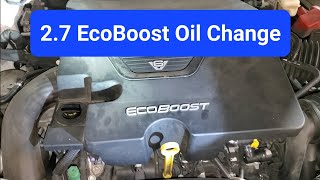
Technical Specifications
OEM Part Numbers: KT4Z-6675-D JT4Z-6675-B FT4Z-6A340-A FT4Z-6626-A FL-2062-A FL-910S SP-578 SP-594
Engine Family: Nano; Generation: Second; Configuration: 2.7L Twin-Turbocharged V6; Valvetrain: 24-Valve DOHC; Fuel System: Direct Injection; Orientation: Transverse; VIN Digit 8: P; Engine Codes: KG502AA, KG502BA, C27PD0X; Oil Capacity: 6.0 quarts; Oil Type: SAE 5W-30 Full Synthetic (WSS-M2C946-B1 or WSS-M2C961-A1); Spark Plug Gap: 0.030 inches
We Have This Part in Stock


The information in this article is provided for general reference and educational purposes only. Vehicle specifications, procedures, and part compatibility can vary by production date, trim level, and region. Always consult your vehicle's factory service manual and verify part numbers before purchasing or performing repairs. Safety-critical components such as airbags, seat belts, and braking systems should be installed by a qualified professional.
- Ford Edge:
- Lincoln Nautilus:
- 🎬 Helpful Videos
- 🛍️ Shop This Part
- Identifying the Correct 2.7L V6 Engine
- Vehicle Fitment Check
- VIN and Engine Code Verification
- Critical Interchange Mismatches
- Common Failure Symptoms
- Diagnostic Flowchart
- Known Issues, Recalls, and Technical Service Bulletins (TSBs)
- Engine Intake Valve Fractures (Severe)
- Engine Oil Pan Leaks (Moderate)
- Cold Start Ticking or Rattle (Moderate)
- Crankshaft Rear Main Seal Leaks (Moderate)
- VCT Solenoid Oil Weeping (Minor)
- What Fails at Every Mileage Band
- Under 60,000 Miles
- 60,000 - 100,000 Miles
- 100,000 - 150,000 Miles
- Over 150,000 Miles
- Real Owner Experiences
- Repair or Replace?
- Questions to Ask Your Installer
- Engine Replacement Cost Comparison
- Installation: Key Considerations & Common Mistakes
- Required Tools and Consumables
- Required Programming & Calibration
- Common Buyer & Installer Mistakes to Avoid
- Freight Shipping & Delivery Reality
- Before the First Start: Fluids and Priming
- Frequently Asked Questions (FAQ)
- 🎟️ Get 5% Off