

2023-2024 Ford Bronco Sport 1.5L EcoBoost I3: Problems, Identification, and Used Replacement
Identify the 1.5L Dragon engine, understand critical failures like coolant intrusion and cracked injectors, and learn when to replace it with a used OEM unit.
- Before purchasing, verify your vehicle is a 2023-2024 Bronco Sport with the 8th VIN digit '6', as this engine is not compatible with other years or models like the Ford Escape.
- The most severe known issue is coolant intrusion from a cracked engine block, which requires a full engine replacement and is indicated by coolant loss, white smoke, and misfires.
- Always address open recalls, especially 24S16 for cracked fuel injectors, and use new Teflon seals when transferring injectors to the replacement engine to prevent a fire risk.
- During installation, use only Ford-specified full synthetic oil (WSS-M2C960-A1) and Motorcraft Yellow coolant (VC-13-G) to protect the internal wet timing belt and cooling system.
- After installation, mandatory programming is required, including a Crankshaft Position (CKP) sensor relearn, to prevent running issues and false diagnostic codes.
Engine Identification: Confirming Fitment for Your 2023–2024 Bronco Sport

The engine used in the 2023–2024 Ford Bronco Sport is the 1.5L EcoBoost I3, part of the "Dragon" engine family. This is a turbocharged, direct-injection, inline 3-cylinder engine. The most critical step before purchasing a replacement is to confirm that your vehicle is a 2023 or 2024 model year Bronco Sport.
To verify the engine, check the 8th digit of your vehicle's Vehicle Identification Number (VIN); it must be the number '6'. The VIN is a unique 17-digit code found on your dashboard (visible through the driver's side windshield) and on the driver's door jamb sticker. You may also see identifying codes like "1.5L Ti-VCT GTDI I-3" or "Engine Code [6] 996".
Warning: This engine assembly is specific to the 2023–2024 Bronco Sport. It will NOT fit 2021–2022 models, 2025+ models, or any year of the Ford Escape, even if they also have a 1.5L engine. 🎬 See: 1.5L vs 2.0L Bronco Sport engine comparison These other vehicles use different engine revisions, oil pans, wiring harnesses, and mounting points.
Common Failure Symptoms

A complete engine failure is a major event, but several symptoms can warn you that the main assembly is the problem. If you experience these issues, a full engine replacement may be necessary.
- Unexplained Coolant Loss: The coolant level drops steadily with no visible external leaks. This could point to an internal crack in the engine block.
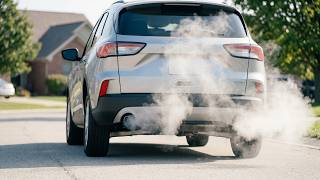
- White Smoke from Exhaust: Especially noticeable on a cold start, this indicates that coolant is burning inside the cylinders.
- Engine Overheating: The temperature gauge frequently enters the red zone, even after you've replaced other cooling system parts like the thermostat or water pump.
- Milky Oil or Coolant: Finding a thick, milky substance on your oil filler cap or in the coolant reservoir means oil and coolant are mixing internally, often due to a cracked block or a failed internal oil cooler.
- Severe Knocking or Tapping: Loud, rhythmic noises from deep within the engine often signal catastrophic failure of internal lubricated parts like bearings or rods.
- Misfire Codes with Coolant Loss: Diagnostic Trouble Codes (DTCs) like P0301, P0302, or P0303 that coincide with coolant loss are a strong indicator of coolant intrusion into the cylinders.
Diagnostic Flowchart
Known Issues, Recalls, and Technical Service Bulletins (TSBs)

This engine has several well-documented issues. Always check for recall completion by entering your vehicle's VIN on the NHTSA website or Ford's owner portal.
Major Recall: Cracked Fuel Injectors and Fire Risk
A critical safety recall, number 24S16 (also listed as NHTSA 24V228000, 24V-187, 22S73, and 25S76), affects some 2022-2023 Bronco Sport models. A fuel injector can crack, causing a high-pressure fuel leak into the engine bay. This fuel can accumulate near hot surfaces and ignite, leading to an underhood fire. Ford's remedy involves installing a drain tube to route leaking fuel away from hot components and updating the engine control software to detect a fuel pressure drop, which then alerts the driver and reduces engine power. The recall does not automatically replace the injectors but provides extended warranty coverage for them.
Pro Tip: When replacing the engine, you will likely transfer the fuel injectors from your old engine. It is crucial to use new Teflon seals and O-rings. Reusing old seals can cause dangerous high-pressure fuel leaks.
Severe Issue: Coolant Intrusion / Cracked Engine Block
A known problem with this engine family is coolant leaking into the cylinders, an issue often called "coolant intrusion." This happens because of a design weakness that can lead to a crack in the engine block between the cylinders. Symptoms include unexplained coolant loss, white exhaust smoke, and engine misfires. Unfortunately, the only permanent fix for a cracked block is to replace the engine short block or the entire engine assembly.
Recall: Loss of Drive Power (24S24 / 24V267000)
This recall applies to 2021-2024 Bronco Sport models. A software problem in the Body Control Module (BCM) and Powertrain Control Module (PCM) can prevent the system from detecting a dying 12-volt battery. This can cause the vehicle to stall while coming to a stop or fail to restart after an auto start/stop event, leading to a loss of power while driving. The fix is a software update performed by a dealer.
Moderate Issue: Internal Oil Cooler Leak (TSB 23-2274)
Some 2022-2023 Bronco Sports built between September 2022 and April 2023 may have a faulty internal engine oil cooler. This can cause oil to leak into the coolant, or coolant to leak into the oil. The primary symptom is a milky, contaminated appearance in the coolant tank or on the oil cap. The solution is to replace the oil cooler.
Other Noted Issues
| Issue (TSB/SSM) | Affected Models | Description & Fix |
|---|---|---|
| Water Pump Coolant Leak (SSM 52357) | 2021-2024 models | The water pump may leak due to contamination in the cooling system. The fix requires flushing the cooling system and replacing the water pump. |
| Vibration and Booming Noise (SSM 51799) | Some models | A lugging vibration or drone noise in gears 5-8 around 1,500 RPM under light load, which is considered a normal characteristic in some cases. |
| Rear Drivetrain Chatter/Shudder (TSB 23-2335) | 2021-2023 models (pre-late 2022 build) | A chattering noise from the rear may be caused by the rear drive unit (RDU) vent hose. Replacing the hose is the specified repair. |
What Fails at Every Mileage Band
Pro Tip: The mileage bands below describe used replacement units of that mileage. The checklists provided are things to do WHILE INSTALLING the purchased engine, not maintenance for your current engine.
Under 60,000 Miles
Even at low mileage, this engine can experience significant failures. The cracked fuel injector issue (NHTSA Recall 24V-187) is a major fire risk and can occur at extremely low mileage (e.g., 345 miles). Water pump failures are very common, with numerous reports of leaks well under 60,000 miles. Internal oil cooler leaks (TSB 23-2274) and coolant intrusion/head gasket failures also appear in this band. You may also notice the vibration and booming noise (SSM 51799).
- ✓Do during install (required): Perform all open recalls, especially the latest fuel injector recall (24V-187 / 24S16 / 25S76) which includes a software update and potentially a drain tube installation. Change oil and filter using only full synthetic oil meeting Ford specification WSS-M2C960-A1. Flush the cooling system completely and refill with new Motorcraft Yellow coolant (VC-13-G).
- ✓Do during install (recommended): Replace the water pump and thermostat with the latest part revisions as a preventative measure, as they are common failure points.
- ✓Cheap insurance while the engine is out: Install new spark plugs (Motorcraft CYFS-12Y-T6 / SP-597-X).
60,000 to 100,000 Miles
In this band, turbocharger failures begin to appear, which can send metal debris through the engine and require a complete replacement. Water pump failures continue to be an issue, sometimes failing just under the 60,000-mile powertrain warranty limit. Evaporative Emissions (EVAP) purge valves can fail, causing check engine lights, and the accessory drive (serpentine) belt will likely require replacement due to wear.
- ✓Do during install (required): Strongly consider replacing the wet timing belt and oil pump belt. While Ford's interval is 150,000 miles, specialists recommend replacement as early as 80,000-100,000 miles due to the catastrophic nature of a failure.
- ✓Do during install (recommended): Replace the accessory drive belt and tensioner. Flush the cooling system and replace the water pump and thermostat if they are original.
- ✓Cheap insurance while the engine is out: Replace spark plugs if not already done (the severe service interval is 60,000 miles). Perform a transmission fluid drain and fill; the severe duty schedule recommends this at 60,000 miles.
100,000 to 150,000 Miles
The primary concern in this mileage band is the wet timing belt. Ford's recommended replacement interval is 150,000 miles, and failures of related components (tensioners, etc.) can occur as it approaches its service life. Fuel pumps may fail (one owner reported a failure at 102,000 miles). As a direct-injection engine, carbon can build up on intake valves over time, potentially causing rough idle, misfires, or power loss, requiring a cleaning (walnut blasting) every 100,000-120,000 miles. Simple clogging of fuel injectors can also become an issue.
- ✓Do during install (required): Replace the wet timing belt, oil pump belt, and all related tensioners and seals. This is the most critical service for a high-mileage engine. Replace all fluids: engine oil, coolant, transmission fluid, and PTU/rear differential fluid.
- ✓Do during install (recommended): Clean intake valves (walnut blasting) to remove carbon deposits. Replace the valve cover gasket, as it can become a leak point at this mileage.
- ✓Cheap insurance while the engine is out: Inspect and likely replace the turbocharger oil and coolant lines.
Over 150,000 Miles
With diligent maintenance, the 1.5L EcoBoost Dragon engine can last well over 150,000 miles, with multiple real-world examples surpassing 200,000 miles. However, if the timing belt is not replaced at the recommended interval, it becomes the most likely point of catastrophic failure. The turbocharger is a wearable part and may be nearing the end of its service life, especially if oil changes were not frequent. General gasket and seal failures (valve cover gasket, thermostat housing) are more prone to leaking with age and mileage.
- ✓Do during install (required): Assume all items from the 100,000 to 150,000-mile band are mandatory if the service history is unknown.
- ✓Do during install (recommended): Replace all rubber vacuum lines and coolant hoses, as they are likely brittle and prone to failure. Replace all accessory belt tensioners and idler pulleys.
- ✓Cheap insurance while the engine is out: Carefully inspect the turbocharger for shaft play and signs of oil leaks; consider replacing it as a preventative measure.
Real Owner Experiences
The expected service life of this engine is highly dependent on proactive maintenance. The single most critical practice is performing frequent oil changes (every 5,000 to 7,500 miles) using ONLY the Ford-specified full synthetic oil (WSS-M2C960-A1). This protects the turbocharger bearings and prevents the degradation of the internal wet timing belt and wet oil pump belt. Regular coolant flushes (every 2-3 years) also help mitigate issues. Here is what real owners have experienced:
| Source | Mileage | What Happened | Cost |
|---|---|---|---|
| broncosportforum.com | 19,000 | Owner noticed the smell of coolant and found an empty reservoir. A dealership diagnosed a failed water pump, which was on backorder for an extended period. | Covered under warranty. |
| Reddit r/BroncoSport | 30,000 | Took the vehicle in for a rattling noise and the dealer discovered the water pump was failing and had soaked the serpentine belt in coolant. | $280 for the belt and labor; the water pump was covered under warranty. |
| Reddit r/BroncoSport | 35,000 | During a routine oil change, the dealership discovered coolant leaking into the oil lines, caused by a faulty internal oil cooler. The entire engine required replacement. | Covered under warranty. |
| Reddit r/BroncoSport | 42,000 | Owner of a 2021 model experienced numerous issues including a leaking water pump, leaking fuel injectors (both recall items), and an undiagnosed oil leak. | Not specified, but led to trading the vehicle in at a large loss. |
| broncosportforum.com | 16,000 | The first sign of a problem was cold air blowing from the heat. The coolant reservoir was empty. After refilling, the head gasket blew. The issue was diagnosed as an internal coolant leak requiring a new engine. | Covered under warranty. |
| broncosportforum.com | ~65,000-70,000 | The turbocharger failed, sending metal into the engine. The entire engine required replacement just outside of the powertrain warranty period. | Not specified, but implies significant out-of-pocket expense. |
| Reddit r/BroncoSport | 59,000 | The water pump failed just before the 60,000-mile powertrain warranty expired. Owner advises others to watch their coolant level. | Covered under powertrain warranty. |
| Reddit r/BroncoSport | 88,000 | Owner of a 2022 model reports no engine or transmission issues, only having addressed recalls. | $0 |
| Reddit r/BroncoSport | Almost 90,000 | Owner of a 2021 Big Bend reports no issues. Replaced the serpentine belt at ~80,000 miles as preventative maintenance. | Cost of a serpentine belt. |
| Reddit r/BroncoSport | 84,000 | Owner of a 2021 model reports no major issues. | $0 |
| Reddit r/BroncoSport | 110,000 | Owner of a 2021 model reports no engine issues, just recommends a spark plug job. | Cost of spark plugs. |
| Reddit r/BroncoSport | 119,000 | Owner of a 2021 model purchased with 9k miles reports no issues, only regular maintenance and recall service. | $0 |
| Reddit r/BroncoSport | 102,000 | Owner of a 2021 Base model needed to replace the fuel pump. | Not specified. |
| Reddit r/fordescape | 120,000 | Owner of a 2020 Escape with the 1.5L Dragon engine reported only a burnt cylinder head temp sensor and a purge valve replacement. | ~$70 in parts for the sensor, plus purge valve cost. |
| BobIsTheOilGuy.com Forums | 205,000 | A courier using a 2021 Ford Escape with the 1.5L 3-cylinder Dragon engine for highway work reported the engine was still 'purring right along' with oil changes every 5,000 miles. | Routine maintenance only. |
| Reddit r/fordescape | 174,000 | Owner of a 2021 Escape with the 1.5L engine states the engine is 'solid'. | Not specified, implies routine maintenance. |
| Reddit r/fordfusion | 153,000 | On an older 1.5L 4-cylinder, owner notes that 'things are definitely starting to go out' around the 150k mark, including needing multiple thermostats, a valve cover gasket, and believing the timing belt was failing. | High maintenance, multiple component replacements. |
| 66,000 | Dealer quoted full engine replacement for coolant intrusion issue on a 2018 Fusion (similar 1.5L EcoBoost). | Quoted $10,000. | |
| BobIsTheOilGuy Forum | 70,000 | Fleet company was invoiced for a short block replacement due to a cracked block causing coolant intrusion on a 2017 Escape (similar 1.5L EcoBoost). | $7,500 |
| YouTube Comment | Not specified | Owner sold the vehicle after experiencing multiple issues including a cracked cylinder head, leaking water pump, fuel injector issue, and a loss of power/dead battery issue related to the auto start/stop feature on a 2021 Bronco Sport. | Not specified. |
Repair or Replace?
When facing engine trouble, deciding whether to repair your current engine or replace it entirely depends on the specific failure mode.
When Repair Makes Sense
- Cracked Fuel Injectors (Recall 24S16): This is a known recall issue. If performed under the recall, the cost is $0. Out-of-warranty costs could be around $800 per vehicle. Ford's remedy includes a software update, potentially a drain tube installation, and a one-time replacement of cracked injectors covered under a related program.
- Internal Oil Cooler Leak (TSB 23-2274): Typical repair costs range from $661 to $791. This makes sense when diagnostics confirm the leak is isolated to the oil cooler and there is no evidence of coolant in the engine oil, which could indicate a more severe block issue.
- Water Pump Coolant Leak (SSM 52357): Typical repair costs range from $888 to $1,221. Repair is viable if the leak is confirmed to be from the external water pump and there are no other symptoms of engine failure like overheating or coolant/oil mixing.
When Replacement is Smarter
Warning: Replacement is the standard and recommended repair when the engine has suffered from coolant intrusion due to a cracked engine block. This is a well-documented, critical failure mode for this engine family. Repairing a cracked block is generally not considered a viable or lasting solution. Total replacement costs can range from $4,000 to over $10,000 depending on the route you take.
Questions to Ask Your Installer
- Have you confirmed the root cause of the failure and ruled out a cracked block before quoting a smaller repair like a head gasket?
- Will you be performing the latest software updates related to recalls 24S16 (fuel injectors) and 24S24 (power loss)?
- When you transfer the fuel injectors, will you be using new Teflon seals and O-rings to prevent leaks?
- What specific brand and specification of engine oil (must meet WSS-M2C960-A1) and coolant (Motorcraft Yellow) will you use?
- Will you perform the mandatory Crankshaft Position (CKP) sensor relearn and program the injector flow rate (IQA) codes after installation?
- What is the mileage and warranty on the replacement used engine?
- Does the quoted price include all necessary new gaskets, seals, TTY bolts, and fluids?
Replacement Cost Comparison
The cost of replacing a 1.5L EcoBoost engine can vary widely based on the type of replacement part and local labor rates. The labor for this job is significant, typically estimated between 12 and 20 hours.
| Part / Service | Estimated Cost (USD) | Notes |
|---|---|---|
| New (OEM) | $4,500 - $6,000+ | A brand new engine from Ford. Often sold as a long block (a related service part is JX6Z-6006-V). A new long block for a similar Escape 1.5L runs around $3,000. |
| Remanufactured | $2,900 - $4,500 | An engine that has been fully disassembled, cleaned, inspected, and rebuilt with new or re-machined components. |
| Used (OEM) | $1,400 - $2,200 | A tested, working engine pulled from a salvage vehicle. Prices vary greatly with mileage and condition. |
| Installation Labor | $1,800 - $3,500 | Shop labor costs for the removal of the old engine and installation of the replacement (12 to 20 hours). |
Installation, Programming, and Consumables

Installing this engine is an Advanced to Expert level DIY job, requiring specialized tools like a professional-grade diagnostic scan tool (Ford IDS/FDRS or FORScan), an engine hoist and load leveler, AWD drivetrain tools, and a precision torque wrench.
Required Consumables at Install
- Motorcraft SAE 5W-20 (or 0W-20) engine oil meeting Ford specification WSS-M2C960-A1
- Motorcraft FL-910S oil filter
- Motorcraft Yellow Concentrated Antifreeze/Coolant (Ford Spec WSS-M97B57-A1 / VC-13-G)
- Intake manifold gasket, exhaust manifold gasket, and thermostat housing gasket
- Fuel injector Teflon seals and rubber O-rings
- High-pressure fuel pump O-ring
- Front and rear crankshaft seals
- 3 new Motorcraft CYFS-12Y-T6 (or SP-597-X) spark plugs
- New torque-to-yield (TTY) bolts (crankshaft pulley bolt, flywheel/flexplate bolts, motor mount bolts)
- Accessory drive belts & tensioner
Installation Gotchas and Buyer Mistakes
- Fuel Injector Cylinder Matching: Keep track of which injector came from which cylinder and reinstall them in the exact same cylinder to avoid having to reprogram the IQA codes.
- Wet Oil Pump Belt: The engine uses a wet belt to drive the oil pump. Inspect this belt while the engine is out and replace if degraded. Always use the exact Ford-specified oil to prevent belt degradation.
- AWD Transfer Case / PTU Alignment: Carefully align and torque the Power Take-off Unit (PTU) to prevent severe driveline vibration or spline damage.
- Torque-to-Yield (TTY) Bolts: Critical fasteners like the crankshaft pulley bolt and flexplate bolts must be replaced to prevent slippage or loosening.
- Water Pump & Coolant Contamination: Thoroughly flush the entire cooling system to remove contamination before filling with fresh Motorcraft Yellow coolant.
- Ground Connections: Ensure all engine and chassis grounds are clean and tight to prevent strange electrical issues.
- Common Mistakes: Ordering for a 2021-2022 or 2025+ Bronco Sport, or a Ford Escape; reusing old fuel injector Teflon seals and rubber O-rings; using non-spec engine oil; skipping the Crankshaft Position (CKP) Sensor Relearn (leading to P0315 codes); forgetting to top off or replace the PTU / transfer case fluid; and ignoring the fuel injector recall (NHTSA 24V-187) during installation.
Freight & Delivery Reality

When ordering a used engine assembly, understand that it ships as LTL (Less Than Truckload) freight on a pallet—NOT as a standard parcel. Verified shipping data for this specific assembly shows it weighs approximately 285 lbs and measures roughly 36" x 34" x 38" before crating. Because of its size and weight, delivery requires a truck equipped with a liftgate if you are receiving it at a residential address or a shop without a loading dock. A reputable supplier will conduct a pre-purchase verification interview to confirm your VIN (8th digit '6'), ensure you have a 2023-2024 Bronco Sport, and verify you have working fuel injectors and a turbocharger to transfer from your old engine.
Pro Tip: Always inspect the engine thoroughly for transit damage before signing the delivery receipt. If you sign for a damaged shipment, you may not be able to file a claim later.
Before the First Start: Fluids and Priming
Before you start your used replacement engine, you must install a brand new oil filter and fill the engine with fresh fluids. Never reuse the oil or coolant from your old engine.
- Engine Oil: Use SAE 5W-20 full synthetic motor oil that meets Ford specification WSS-M2C960-A1.
- Engine Coolant: Use Motorcraft Yellow antifreeze/coolant that meets Ford specification WSS-M97B57-A1.
How to Prime the Oil System (Clear Flood Mode)
Ford vehicles have a built-in feature that lets you spin the engine without starting it. Follow these exact steps to build oil pressure safely:
- Sit in the driver's seat and push the gas pedal all the way down to the floor. Keep it pressed hard against the floorboard.
- While holding the gas pedal down, press the brake pedal and push the engine START button.
- The engine will crank (spin) but it will not start. Holding the gas pedal down tells the computer to turn off the fuel injectors.
- Let the engine crank for 10 to 15 seconds. This pumps fresh oil to the top of the engine.
- Stop cranking and wait 30 seconds to let the starter motor cool down.
- Repeat this cranking process two more times.
- Take your foot off the gas pedal. You can now start the engine normally.
Frequently Asked Questions (FAQ)
What parts are included with a used engine?
A standard used engine assembly includes the engine block, cylinder head, oil pan, valve cover, intake manifold, timing cover, harmonic balancer, throttle body, and all internally lubricated parts. Bolt-on accessories like the turbocharger, alternator, A/C compressor, power steering pump, starter, exhaust manifold, and fuel injectors are typically not included and must be transferred from your original engine.
Do I need to program the vehicle after installing this engine?
Yes. After installation, several programming procedures are required. This includes a Crankshaft Position (CKP) Sensor Relearn to prevent false misfire codes, programming the fuel injector flow rate codes (IQA codes) if injectors are changed, and updating the Powertrain Control Module (PCM) to the latest calibration for safety and performance. A dealer-level scan tool (Ford IDS/FDRS) is required.
Can I use an engine from a Ford Escape?
No. While the Ford Escape uses a similar 1.5L engine, it is not a direct fit for the 2023-2024 Bronco Sport. There are differences in the wiring, engine mounts, oil pan, and other components that prevent it from being an interchangeable part.
What is a "wet belt" and why is it important?
This engine uses a "wet belt," which is a timing belt that runs inside the engine and is lubricated by engine oil. It is critical to use only the exact Ford-specified engine oil (WSS-M2C960-A1) to prevent the belt from degrading and failing, which would cause catastrophic engine damage. It is wise to inspect this belt during an engine swap.
How do I handle the fuel injector recall during an engine swap?
If your vehicle is affected by recall 24V-187 (24S16), you must ensure the safety software update and fuel drain tube installation are performed. When transferring your existing injectors to the replacement engine, you MUST use new Teflon seals and rubber O-rings to prevent high-pressure fuel leaks and fire risks.
How do I verify I am buying the correct engine?
Check the 8th digit of your vehicle's VIN; it must be '6'. Confirm your vehicle is specifically a 2023 or 2024 Ford Bronco Sport. Do not order this engine for 2021-2022 or 2025+ models, as they use different engine revisions, oil pan configurations, and wiring harnesses.
Helpful Videos

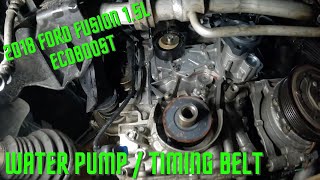
Technical Specifications
OEM Part Numbers: JX6Z-6006-V
Engine Family: Dragon; Displacement: 1.5L; Cylinders: 3 (Inline); Aspiration: Turbocharged; Fuel System: Direct Injection; VIN Code (8th Digit): 6; Engine Code: [6] 996; Oil Specification: WSS-M2C960-A1; Coolant Specification: WSS-M97B57-A1 (Motorcraft Yellow VC-13-G)
We Have This Part in Stock


The information in this article is provided for general reference and educational purposes only. Vehicle specifications, procedures, and part compatibility can vary by production date, trim level, and region. Always consult your vehicle's factory service manual and verify part numbers before purchasing or performing repairs. Safety-critical components such as airbags, seat belts, and braking systems should be installed by a qualified professional.
- Ford Bronco Sport:
- 🎬 Helpful Videos
- 🛍️ Shop This Part
- Engine Identification: Confirming Fitment for Your 2023–2024 Bronco Sport
- Common Failure Symptoms
- Diagnostic Flowchart
- Known Issues, Recalls, and Technical Service Bulletins (TSBs)
- Major Recall: Cracked Fuel Injectors and Fire Risk
- Severe Issue: Coolant Intrusion / Cracked Engine Block
- Recall: Loss of Drive Power (24S24 / 24V267000)
- Moderate Issue: Internal Oil Cooler Leak (TSB 23-2274)
- Other Noted Issues
- What Fails at Every Mileage Band
- Under 60,000 Miles
- 60,000 to 100,000 Miles
- 100,000 to 150,000 Miles
- Over 150,000 Miles
- Real Owner Experiences
- Repair or Replace?
- When Repair Makes Sense
- When Replacement is Smarter
- Questions to Ask Your Installer
- Replacement Cost Comparison
- Installation, Programming, and Consumables
- Required Consumables at Install
- Installation Gotchas and Buyer Mistakes
- Freight & Delivery Reality
- Before the First Start: Fluids and Priming
- How to Prime the Oil System (Clear Flood Mode)
- Frequently Asked Questions (FAQ)
- 🎟️ Get 5% Off