

2021-2024 Ford Bronco Sport 2.0L EcoBoost: Problems, Identification, and Used Replacement
Identify common failures, learn when to repair versus replace, and discover what to look for when buying a used OEM engine assembly.
- Always replace the one-time-use torque-to-yield (TTY) crankshaft pulley bolt (Part F5RZ-6A340-B) during installation to prevent the unkeyed pulley from slipping and causing catastrophic engine failure.
- Verify you are purchasing the correct engine for a 2.0L AWD Bronco Sport by checking for the 8th VIN digit '9' and matching part numbers (L1PE-6007-EA, L1PZ-6007-A), as engines from other Ford models will not fit.
- Installation requires Ford-specific timing tools, a CKP sensor alignment tool, and a dealer-level scan tool to perform the mandatory CKP sensor relearn and PATS security synchronization.
- Extend engine life by changing the oil and filter every 5,000-6,000 miles with full synthetic 5W-30 oil, and do not follow the longer intervals suggested by the oil life monitor.
Identifying the Correct 2.0L EcoBoost Engine

The engine used in the 2021–2024 Ford Bronco Sport is a specific version of the 2.0L EcoBoost inline four-cylinder. This engine is turbocharged and features direct injection, a technology that sprays fuel directly into the combustion chamber for improved efficiency and power. For this vehicle, it was only paired with an All-Wheel Drive (AWD) drivetrain.
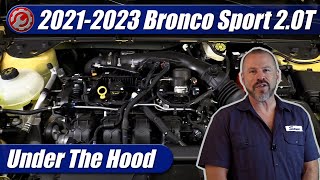
🎬 Watch: Detailed overview of the Bronco Sport 2.0L engineVIN and Vehicle Confirmation
Before purchasing a replacement engine, you must confirm it is correct for your vehicle. The easiest way to do this is by checking your Vehicle Identification Number (VIN).
- Check the 8th Digit of your VIN: If the 8th digit is a '9', your Bronco Sport is equipped with the 2.0L EcoBoost engine.
- Confirm Drivetrain: This specific engine assembly is for AWD models only. The oil pan and Power Take-Off Unit (PTU) connections differ from front-wheel-drive models.
Engine Codes and Part Numbers
To be certain you have the right part, you can match the identifying codes on the engine itself. These codes are the most reliable way to ensure a match.
- Common Part Numbers: L1PE-6007-EA, L1PZ-6007-A.
- Location: You can typically find a barcode sticker with this information on the driver-side valve cover. The code may also be stamped on the front left-hand side of the engine block, near where the transmission bolts on.
Warning: Not all 2.0L EcoBoost engines are the same. Engines from the Ford Maverick, Escape, or Lincoln Corsair may seem similar but will not fit or function correctly in a Bronco Sport. They have significant differences in engine mounting points, wiring harness connections, accessory locations, and the required computer (ECU) programming.
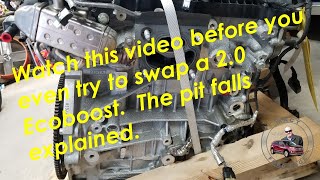
🎬 Watch: Crucial pitfalls to avoid when swapping a 2.0L EcoBoostCommon Problems and Failure Symptoms

While generally considered more reliable than its 1.5L counterpart, the 2.0L EcoBoost in the Bronco Sport has some known issues. With proper and diligent maintenance, this engine is expected to last between 150,000 and 200,000 miles.
Pro Tip: The single most critical factor for longevity is performing engine oil and filter changes every 5,000 to 6,000 miles using high-quality full synthetic oil. Extending oil changes to the 7,500-10,000 mile interval recommended by the dashboard oil life monitor is strongly discouraged, as it can lead to fuel dilution, sludge, and premature turbocharger failure.
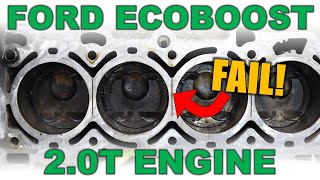
🎬 See: Complete teardown showing why these EcoBoost engines failConfirming Engine Failure
Complete engine failure is a major event. Symptoms that often mean the engine assembly needs to be replaced include:
- Deep knocking sounds from inside the engine (rod knock).
- Significant loss of power combined with engine noise.
- Large amounts of metal shavings found in the engine oil during an oil change.
- Catastrophic overheating that has warped the cylinder head or block.
- Loss of compression in multiple cylinders.
Known Issues, Recalls, and Technical Service Bulletins (TSBs)
Ford has issued several documents related to this engine and vehicle. Always check with a Ford dealer to see which recalls or TSBs apply to your specific VIN.
| Issue | Affected Models | TSB / Recall # | Description |
|---|---|---|---|
| Coolant Intrusion | Pre-2019 2.0L EcoBoost (Legacy Issue) | N/A | Earlier generations had a design flaw allowing coolant into cylinders. The 3rd Gen block in the Bronco Sport has largely resolved this, but some owners still report coolant loss. Keep a close eye on coolant levels. |
| Engine Block Heater Fire Risk | 2021–2024 Bronco Sport 2.0L | Recall 25S52 / 26S36 | The optional engine block heater element or its power cable could fail, creating a severe fire risk. A dealer must perform the recall service. |
| Engine Misfire | 2021–2024 Models | TSB 26-2210 | Relates to potential ignition coil failures causing a misfire. Inspect date codes on ignition coils during a swap. |
| Rear Drive Unit (RDU) Shudder | 2021-2022 Models (built on/before 02/28/2022) | TSB 26-2194 / TSB 25-2627 / TSB 23-2335 | Causes a shudder or chatter during low-speed turns. Fix involves an updated vent hose, fluid flush, or clutch pack replacement. |
| Oxygen Sensor DTCs | 2021-2022 Models | TSB #10218901 | Water intrusion can get into an oxygen sensor connector, causing corrosion and triggering codes P0036/P0138. |
Diagnostic Flowchart
What Fails at Every Mileage Band
Pro Tip: The mileage bands below describe what typically fails on USED replacement engines at these mileages. The checklists provided are things you should do WHILE INSTALLING the purchased engine, not general maintenance for your current vehicle.
Under 60,000 Miles
Engines in this range are relatively fresh, but early failures can still occur. Owners have reported turbocharger wastegate actuator failures (sometimes under 15,000 miles), occasional unusual oil consumption, boost sensor failures, and purge valve failures. Premature battery and water pump failures are also noted on 2021-2022 models.
- ✓Do during install (required): Switch to a 5,000-mile oil change interval with full synthetic oil. Perform all open recalls (especially the engine block heater).
- ✓Do during install (recommended): Replace spark plugs. Turbocharged engines experience greater plug wear. Replace the engine air filter.
- ✓Cheap insurance while the engine is out: Inspect and replace the serpentine belt if there are any signs of wear.
60,000 - 100,000 Miles
Turbocharger failure becomes a more noted concern in the 60,000 to 70,000-mile window. Alternator noise leading to failure has been reported around 85,000 miles. Carbon buildup on the intake valves (a common trait of direct-injection engines) can become significant enough to cause rough idling.
- ✓Do during install (required): Replace spark plugs if not already done.
- ✓Do during install (recommended): Service the PTU, RDU, and transmission fluids (owners report these are often in poor condition by 60,000 miles). Perform an intake valve cleaning (walnut blasting) to remove carbon deposits while the engine is accessible.
- ✓Cheap insurance while the engine is out: Inspect the turbocharger for shaft play and leaks. Replace all turbo-related gaskets and O-rings. Replace the water pump and serpentine belt.
100,000 - 150,000 Miles
General engine wear and tear becomes prominent, heavily linked to the previous owner's maintenance history. Carbon buildup can be severe. If the original turbo is still installed, it is likely nearing the end of its life.
- ✓Do during install (required): Assume all items from the previous bands need to be done if there is no service history.
- ✓Do during install (recommended): Strongly consider replacing the turbocharger assembly if it is original to the engine.
- ✓Cheap insurance while the engine is out: Replace the timing chain, tensioners, and guides. Replace all accessible seals and gaskets, including front and rear main seals.
Over 150,000 Miles
Failures at this mileage are highly dependent on maintenance. While similar 2.0L EcoBoost engines have reached 200,000+ miles, they require diligent care.
- ✓Do during install (required): A comprehensive refresh is critical.
- ✓Do during install (recommended): Replace timing components, water pump, and all seals.
- ✓Cheap insurance while the engine is out: Full turbocharger inspection or replacement.
Real Owner Experiences
| Source | Mileage | What Happened | Cost |
|---|---|---|---|
| broncosportforum.com | ~22,000 | Owner reported consuming oil every 1,500 miles, triggering the low oil pressure light. Dealer initially replaced a valve cap, but the issue persisted. | Under warranty |
| broncosportforum.com | under 15,000 | Owner experienced two turbo failures, diagnosed as a faulty turbo wastegate actuator. | Under warranty |
| Reddit r/BroncoSport | N/A | An owner reported a boost sensor going bad twice in one month, causing the vehicle to lose power and not shift into higher gears. | N/A |
| Reddit r/BroncoSport | 38,000 | A 2021 Badlands owner had a purge valve go bad. | N/A |
| broncosportforum.com | ~70,000 | Owner's turbo seized, causing oil pressure to blow through the turbo seals. | Out of warranty, significant |
| broncosportforum.com | 85,000 | Alternator required replacement because it was making noise. | N/A |
| BobIsTheOilGuy.com Forums | 70,000 | Owner of a 2018 Edge with a similar 2.0L EcoBoost required a motor replacement due to coolant ingestion. The replacement motor was noted to be the newer, improved design. | $8,000 (if not covered by warranty) |
| Reddit r/BroncoSport | 101,000 | Owner of a '21 Badlands reported replacing the purge valve for a second time around 99,000 miles. Otherwise, the vehicle has been reliable. | N/A |
| Reddit r/fordescape | 191,000 | Owner of a 2013 Escape with the 2.0L EcoBoost notes the engine is still running with original belts but sometimes requires adding a quart of oil between changes. | N/A |
| Reddit r/fordescape | 208,000 | Owner of a 2016 Escape with the 2.0L EcoBoost sold the vehicle while it was still running great. Maintenance included transmission fluid changes every 25,000 miles. | N/A |
| 2021+ Ford Bronco Sport Forum | 65,000 | 2016 Escape (Pre-Bronco Sport, but same engine family) replaced engine due to coolant leaking into cylinders. | $6,000 |
| Reddit - r/f150 | 115,000 | 2014 F-150 EcoBoost replaced engine with a remanufactured unit from Jasper. | $11,000 (parts and labor) |
| Reddit - r/BroncoSport | 93,000 | Water pump replaced under warranty. | $0 (Warranty) |
| 2021+ Ford Bronco Sport Forum | 5,000 | Owner of a salvaged 2025 vehicle with a damaged engine (punctured oil pan, run without oil) was considering swapping in a 2021-2024 engine because a 2025 unit was four times more expensive. | In progress |
Repair or Replace?
Deciding whether to repair your current engine or replace it entirely depends on the severity of the failure and the associated costs.
When Repair Makes Sense
This makes sense if caught early, before significant overheating has warped the cylinder head or damaged the engine block.
| Repair | Typical Cost | Notes |
|---|---|---|
| Blown Head Gasket / Coolant Intrusion | $1,474 to $3,246 | Repairable if caught before overheating warps the head or block. |
| Ignition Coil Failure / Misfire | $220 to $400 | A routine maintenance item. One owner reported a dealer charge of $400 for spark plug replacement. |
| Water Pump Failure | $500 to $1,000+ | Repairable if addressed before the engine overheats. |
When Replacement is Smarter
Replacement becomes the more sensible option when the engine has suffered catastrophic internal damage. This includes oil starvation leading to rod knock, severe overheating causing warped heads or block damage, or significant metal debris contamination from a turbo failure. An owner of a 2016 Escape with a similar engine paid $6,000 for a replacement due to coolant intrusion, and an F-150 owner paid $11,000 for a remanufactured replacement. Given these high costs, a used OEM assembly is often the most economical path to get the vehicle back on the road.
Replacement Cost Comparison
The cost to replace an engine can vary widely based on the type of replacement unit you choose and local labor rates. Labor for this job is estimated to be between 13 and 18 hours.
| Part / Service | Estimated Cost (USD) |
|---|---|
| New OEM | $7,000 - $9,000+ (Typically sourced through dealers) |
| Remanufactured | $4,500 - $7,000+ |
| Used OEM | $1,100 - $5,500 |
| Shop Labor to Install | $1,500 - $3,600 |
What's Included in a Used Assembly
A used engine is typically sold as a "long block." This means it includes the core internal components but not the accessories that bolt onto the outside.
What's Usually Included
- Cylinder block and all internally lubricated parts
- Cylinder head and valvetrain
- Oil pan
- Valve covers and timing covers
- Intake manifold
- Fuel injectors, fuel rail, and high-pressure fuel pump (HPFP)
- Throttle body
- Harmonic balancer
What's Not Included (Transfer These Parts)
- A/C Compressor
- Alternator
- Starter Motor
- Power steering pump
- Exhaust Manifold and Turbocharger*
- Engine Control Unit (ECU)
- Engine Wiring Harness
*Turbocharger: The inclusion of the turbocharger varies by seller. Always confirm whether it is included with the engine assembly before you buy.
Freight, Delivery, and Pre-Purchase Verification

Buying a used engine means dealing with heavy freight. A 2.0L EcoBoost assembly for the Bronco Sport weighs approximately 425 lbs and measures roughly 40" x 36" x 38" before crating. It ships as Less-Than-Truckload (LTL) freight on a wooden pallet—it is NOT a standard parcel delivery.
- Delivery Logistics: You will need a delivery location capable of handling freight. If delivering to a residential address or a shop without a loading dock, you must request a truck with a liftgate.
- Inspect Before Signing: When the freight carrier arrives, inspect the engine thoroughly before signing the delivery receipt. Look for broken sensors, cracked valve covers, or a crushed oil pan caused by transit damage.
- Pre-Purchase Interview: Always conduct a pre-purchase verification with the seller. Confirm the VIN 8th digit is '9', verify it is an AWD unit, and ask for the exact mileage of the donor vehicle (e.g., a donor with 8,862 miles is an excellent find).
Installation: Critical Steps and Common Mistakes

Installing this engine is a complex job recommended for advanced DIY mechanics or professional technicians. Several unique design elements require special tools and procedures.
Special Tools and Professional Requirements
This is not a basic engine swap. It requires Ford-specific tools to set the engine timing correctly.
- Crankshaft TDC Timing Peg (Ford Tool 303-507)
- Camshaft Alignment/Locking Tool (Ford Tool 303-1565)
- Crankshaft Position (CKP) Sensor Alignment Tool (Ford Tool 303-1521)
- Dial Indicator Gauge with Holding Fixture (Ford Tool 100-002 / TOOL-4201-C)
- Ford-specific diagnostic scan tool (like IDS or FDRS) for programming
Pro Tip: You must reuse your vehicle's original engine wiring harness. The harness on the donor engine may look identical, but small differences in wiring for various vehicle options and module pinouts can cause major electrical problems.
Required Consumables
Do not reuse old gaskets or fluids. You will need:
- Engine Oil: SAE 5W-30 synthetic blend or full synthetic (5.5 to 6.1 quarts capacity)
- Motorcraft FL-910-S Oil Filter
- Motorcraft Yellow Pre-Diluted Antifreeze/Coolant (Ford specification WSS-M97B57-A2)
- New OE-spec Spark Plugs
- Intake and Exhaust Manifold Gaskets
- Turbocharger mounting gaskets and oil/coolant line O-rings
- Crankshaft front seal (if front pulley is removed)
- Crankshaft Pulley Bolt (Ford Part F5RZ-6A340-B, Torque-to-Yield, MUST be replaced)
- Diamond-coated Friction Washers
- Flywheel Bolts (Torque-to-Yield, MUST be replaced)
Installation Gotchas (Read Before You Start)
Warning: The 'Unkeyed' Crankshaft Pulley. The crankshaft pulley and timing sprocket are NOT keyed to the crankshaft. They are held in place purely by friction and the clamping force of the crankshaft pulley bolt. Never loosen or remove the crankshaft pulley bolt without first installing the camshaft locking tool and the crankshaft timing peg. Turning the bolt counter-clockwise can cause the unkeyed pulley to slip, throwing the engine out of time.
- Crankshaft Position (CKP) Sensor Alignment: The CKP sensor reads off a trigger wheel on the crankshaft pulley. If the pulley is removed or replaced, you must use the special alignment tool (303-1521) to align the sensor precisely with the 20th tooth of the pulley trigger wheel.
- Crankshaft Position (CKP) Sensor Relearn: After the engine is installed, the vehicle's main computer (PCM) must be programmed to recognize the new sensor's precise position. This procedure requires a dealer-level scan tool.
- Immobilizer Synchronization: The engine computer is part of the vehicle's anti-theft system (PATS). It requires a PCM security handshake to synchronize with the rest of your vehicle's security modules.
- AWD Transfer Case (PTU) Alignment: The Power Take-Off Unit (PTU) must be carefully aligned, bolted, and sealed to the transmission and engine block. Ensure the intermediate shaft splines are clean, lubricated with high-temp grease, and fully seated.
- Fragile Direct Injection Components: The direct injection fuel system operates under extremely high pressure. Handle fuel lines, injectors, and the high-pressure fuel pump (HPFP) with extreme care.
Common Buyer and Installer Mistakes to Avoid
Warning: Reusing torque-to-yield (TTY) bolts, such as the crankshaft pulley bolt or flywheel bolts, is a critical mistake. These bolts are designed to stretch permanently upon first use and will not provide the required clamping force if reused, leading to catastrophic engine failure.
- Reusing the Crankshaft Pulley Bolt: Because this is a torque-to-yield (TTY) bolt, a reused bolt will stretch and fail to hold the proper clamping force, leading to timing slippage and catastrophic engine failure.
- Failing to Flush Turbo Lines: If the previous engine failed due to oil starvation or metal debris, that debris will be trapped in the oil feed lines, immediately destroying the transferred turbocharger.
- Assuming it's 'Plug and Play': The engine will not start and run correctly without performing the mandatory CKP sensor relearn and PATS synchronization.
- Assuming All 2.0L EcoBoost Engines are Identical: Buying a 2.0L EcoBoost from a different vehicle (like a Ford Escape or Maverick) assuming it will fit, despite differences in mounting points, wiring harnesses, and electronics.
Questions to Ask Your Installer
Before handing over your vehicle, ask your mechanic these questions to ensure they are qualified for this specific job:
- Have you worked on this specific 2.0L EcoBoost engine in a Bronco Sport before?
- Are you aware of the 'unkeyed' crankshaft pulley and do you have the required Ford-specific timing tools (303-507, 303-1565)?
- Will you be replacing the torque-to-yield (TTY) crankshaft pulley bolt and flywheel bolts with new OEM parts?
- Do you have the tool (303-1521) to perform the Crankshaft Position (CKP) sensor alignment if the pulley is removed?
- Does your quoted price include flushing the turbocharger oil feed and coolant lines?
- How will you perform the mandatory CKP sensor relearn procedure and the PCM security handshake (PATS)? Do you have an IDS or FDRS scan tool?
- Does the quoted price include all necessary gaskets, seals, fluids (Ford spec WSS-M97B57-A2 coolant), and a new oil filter?
- Will you be swapping my original vehicle's wiring harness onto the replacement engine to ensure compatibility?
Before the First Start: Priming and Fluids
A used engine often sits on a warehouse shelf for months. During this time, the oil drains away from the internal moving parts. If you start the engine dry, the metal parts will scrape together and cause instant damage. You must add fresh fluids and prime the oil system before the engine actually runs.
Mandatory Fluids
Never reuse old fluids in a replacement engine. You must install a new oil filter and fill the engine with the correct, factory-approved fluids:
- Engine Oil: Use SAE 5W-30 full synthetic motor oil. It must meet Ford specification WSS-M2C961-A1.
- Engine Coolant: Use Motorcraft Yellow Antifreeze/Coolant. It must meet Ford specification WSS-M97B57-A1. Do not mix this with older orange or green coolants, as this will clog the cooling system.
Oil Priming Procedure (Clear Flood Mode)
You must pump oil through the engine before letting it fire up. Ford vehicles have a built-in feature called "Clear Flood Mode." This lets you spin the engine with the starter motor without actually starting it.
- Get in the driver's seat and close the doors.
- Press the accelerator (gas) pedal all the way to the floor and hold it there. This tells the engine computer to turn off the fuel injectors.
- While holding the gas pedal down, press the brake pedal and push the push-to-start button.
- The engine will crank (spin) but will not start. Let it crank for 10 to 15 seconds.
- Take your foot off the start button and brake, but keep the gas pedal pressed. Wait 30 seconds to let the starter motor cool down.
- Repeat this cranking step 2 or 3 times. Watch the dashboard. Stop when the red oil pressure warning light turns off, which means oil has reached the top of the engine.
Frequently Asked Questions (FAQ)
Will a 2.0L EcoBoost from a Ford Escape or Maverick fit my Bronco Sport?
No. While the basic engine design is similar, the mounting brackets, wiring, accessory placement, and computer tuning are different. It will not interchange.
Do I need to reprogram the computer (ECU/PCM) after installation?
Yes. At a minimum, a Crankshaft Position (CKP) Sensor relearn procedure is mandatory. This requires a Ford-specific diagnostic tool like IDS or FDRS. The vehicle's anti-theft system (PATS) also requires a security handshake synchronization.
Is the turbocharger included with a used engine?
It depends on the seller. Some used engines include the turbocharger, while others do not. You must verify this before purchasing. If you reuse your old turbo, you must flush the oil feed lines to prevent transferring metal debris.
What is the most important part to replace during the install?
The crankshaft pulley bolt (Ford Part F5RZ-6A340-B). It is a one-time-use, torque-to-yield (TTY) bolt and absolutely must be replaced with a new one to prevent the unkeyed pulley from slipping and causing catastrophic engine failure.
How often should I change the oil on this engine?
You should change the oil and filter every 5,000 to 6,000 miles using full synthetic 5W-30 oil. Do not rely on the dashboard oil life monitor, which may recommend intervals of 7,500 to 10,000 miles. Extended intervals can cause sludge and premature turbo failure.
What coolant does the 2021-2024 Bronco Sport 2.0L require?
It requires Motorcraft Yellow Pre-Diluted Antifreeze/Coolant that meets Ford specification WSS-M97B57-A2. Using the wrong coolant can lead to internal corrosion and cooling system failure.
Helpful Videos
Technical Specifications
OEM Part Numbers: L1PE-6007-EA L1PZ-6007-A
Engine Type: 2.0L EcoBoost Inline Four-Cylinder; Aspiration: Turbocharged; Fuel System: Direct Injection; Drivetrain Compatibility: All-Wheel Drive (AWD) Only; VIN 8th Digit: 9; Oil Type: SAE 5W-30 Synthetic Blend or Full Synthetic; Oil Capacity: 5.5 to 6.1 quarts; Oil Filter: Motorcraft FL-910-S; Coolant Specification: Ford WSS-M97B57-A2 (Motorcraft Yellow); Weight: Approx. 425 lbs
We Have This Part in Stock


The information in this article is provided for general reference and educational purposes only. Vehicle specifications, procedures, and part compatibility can vary by production date, trim level, and region. Always consult your vehicle's factory service manual and verify part numbers before purchasing or performing repairs. Safety-critical components such as airbags, seat belts, and braking systems should be installed by a qualified professional.
- Ford Bronco Sport:
- 🎬 Helpful Videos
- 🛍️ Shop This Part
- Identifying the Correct 2.0L EcoBoost Engine
- VIN and Vehicle Confirmation
- Engine Codes and Part Numbers
- Common Problems and Failure Symptoms
- Confirming Engine Failure
- Known Issues, Recalls, and Technical Service Bulletins (TSBs)
- Diagnostic Flowchart
- What Fails at Every Mileage Band
- Under 60,000 Miles
- 60,000 - 100,000 Miles
- 100,000 - 150,000 Miles
- Over 150,000 Miles
- Real Owner Experiences
- Repair or Replace?
- When Repair Makes Sense
- When Replacement is Smarter
- Replacement Cost Comparison
- What's Included in a Used Assembly
- What's Usually Included
- What's Not Included (Transfer These Parts)
- Freight, Delivery, and Pre-Purchase Verification
- Installation: Critical Steps and Common Mistakes
- Special Tools and Professional Requirements
- Required Consumables
- Installation Gotchas (Read Before You Start)
- Common Buyer and Installer Mistakes to Avoid
- Questions to Ask Your Installer
- Before the First Start: Priming and Fluids
- Mandatory Fluids
- Oil Priming Procedure (Clear Flood Mode)
- Frequently Asked Questions (FAQ)
- 🎟️ Get 5% Off