

2021-2023 Ford Bronco 2.7L EcoBoost: Problems, Identification, and Used Replacement
Identify the 2.7L Nano V6, understand catastrophic valve failures and wet belt issues, and learn when to swap in a used OEM replacement.
- Before buying a used engine, check the donor VIN against NHTSA Recall 24V-635 (Ford 24S55) to avoid units prone to catastrophic intake valve failure.
- Strictly use SAE 5W-30 Synthetic Blend oil meeting Ford spec WSS-M2C961-A1 or WSS-M2C946-B1 to prevent the internal 'wet' oil pump belt from degrading and causing total engine failure.
- Only a 2.7L engine from a 2021-2023 Ford Bronco is a direct fit; engines from the F-150, Edge, or Lincoln models are incompatible due to different mounting points and components.
- Engine replacement is not plug-and-play; the vehicle will not start until the PCM is reprogrammed with a dealer-level tool to perform a CKP sensor relearn and security synchronization.
- When installing a used engine over 100,000 miles, it is critical to replace the wet oil pump belt and timing components while the engine is out of the vehicle.
Engine Identification: Confirming the 2.7L EcoBoost

The 2.7L EcoBoost V6 engine, part of Ford's second-generation "Nano" family, is a twin-turbocharged, direct-injection powerplant found in the 2021-2023 Ford Bronco. Before purchasing a used unit, it's critical to verify it's the correct engine for your vehicle. Here’s how to confirm a match:
🎬 Watch: 2.7 EcoBoost engine design and features explained- Check the VIN: The 8th digit of your Bronco's Vehicle Identification Number (VIN) must be 'P'.
- Verify Engine Codes: Look for a barcode label on the engine itself, typically on the front timing cover or the driver-side valve cover. This label will have an identifying code, such as "MB3E" or "PB2E".
- Visual Confirmation: This is a 60-degree V6 engine with two turbochargers. It was only available with a 4x4 drivetrain in the Bronco.
Fitment & Interchange: What Will and Won't Work
This specific 2.7L engine assembly is designed exclusively for the 2021-2023 Ford Bronco. While other Ford and Lincoln vehicles use a 2.7L EcoBoost, they are not interchangeable.
Warning: Do not attempt to use a 2.7L engine from an F-150, Edge, or Lincoln Nautilus/Aviator. These versions have different engine mounting points, oil pan designs, wiring harnesses, and accessory layouts (like the alternator bracket), making them incompatible with the Bronco chassis.
Common Failure Points and Symptoms

Several known issues can lead to engine failure or require significant repairs. Recognizing the symptoms can help you diagnose a problem before it becomes catastrophic.
Catastrophic Valve Failure
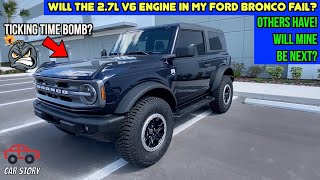
This is the most severe issue, primarily affecting engines built between May 1, 2021, and October 30, 2021. A faulty batch of intake valves can fracture, dropping into the cylinder and leading to a sudden loss of power, rough running, and complete engine destruction. An engine malfunction light is a common warning sign before failure.
🎬 Watch: Will your 2021 Bronco engine fail?Cold Start Rattle (VCT Issues)
A distinct rattling or tapping noise from the front of the engine that lasts for a few seconds on a cold start is a symptom of failing Variable Cam Timing (VCT) phasers. If left unaddressed, this can lead to rough idling and check engine light codes.
Oil Leaks
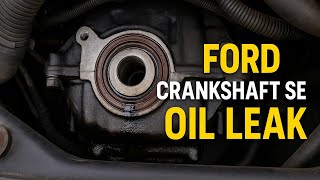
Leaks are a common complaint and can originate from several places. The composite (plastic) oil pan is fragile and prone to leaking if not handled or torqued correctly. Additionally, a known issue with the crankshaft rear main seal can cause persistent leaks near the back of the engine where it meets the transmission.
Oil Pump Failure
The engine's oil pump is driven by a 'wet belt,' which runs inside the engine and is submerged in oil. Using the incorrect specification of engine oil or neglecting oil changes can cause this belt to degrade. Belt failure leads to a sudden and total loss of oil pressure, destroying the engine.
Diagnostic Flowchart

Known Issues: Recalls and Technical Service Bulletins (TSBs)
Ford has issued several official documents addressing common problems. When inspecting a vehicle or a used engine, check if these repairs have been performed.
| Document ID | Affected Models | Issue |
|---|---|---|
| NHTSA Recall 24V-635 / Ford Recall 24S55 | 2021-2022 Bronco | Fracturing intake valves causing catastrophic engine failure. Dealers test and replace the entire engine for free if it fails. |
| TSB 24-2331 | 2018-2025 models | Crankshaft rear seal oil leak. Fix involves replacing the seal and retaining plate with an updated procedure. |
| TSB SSM 52447 / 51542 | 2021-2024 models | Cold start rattle. The recommended repair is to replace all four Variable Cam Timing (VCT) units. |
| TSB 19-2205 | N/A | Composite oil pan leaks. Emphasizes the plastic oil pan is a one-time-use part and requires a specific torque sequence. |
| TSB 24-2409 | 2021-2023 models | Check engine light with DTC P0456. Requires reprogramming the Powertrain Control Module (PCM). |
| TSB SSM 51961 | 2021-2023 models | Check engine light with DTCs P0096/P007B. Addresses intake air temperature sensor performance issues. |
What Fails at Every Mileage Band
Pro Tip: The mileage bands below describe used replacement units of that mileage. The checklists are things to do WHILE INSTALLING the purchased engine, not maintenance for your current engine.
Under 60,000 Miles
Engines in this range are generally healthy, but this is the prime window for the catastrophic valve failure (NHTSA 24V-635) to occur, sometimes under 5,000 miles. Cold start VCT rattles (SSM 52447) and oil pan leaks (TSB 19-2205) also begin showing up here.
- ✓Do during install (required): Verify with a Ford dealer if the engine falls under NHTSA Recall 24V-635 (24S55). If it does, Ford may test and replace the engine for free. Replace the composite oil pan with a new OEM part.
- ✓Do during install (recommended): Replace the crankshaft rear main seal and retaining plate to address TSB 24-2331.
- ✓Cheap insurance while the engine is out: Install an oil catch can to reduce carbon buildup on intake valves.
60,000 - 100,000 Miles
At this stage, turbocharger failures often present as a P0299 (turbo underboost) code due to a stuck wastegate. Carbon buildup on intake valves can lead to rough idle and misfires. Early signs of wear on the wet oil pump belt may appear if oil changes were neglected.
- ✓Do during install (required): Thoroughly clean or replace the turbocharger oil feed lines and their inline filters to prevent oil starvation to the turbos.
- ✓Do during install (recommended): Replace spark plugs (Motorcraft SP-594, pre-gapped to 0.028-0.032 inches). Perform a chemical or walnut-blasting intake valve cleaning service.
- ✓Cheap insurance while the engine is out: Replace ignition coils and inspect the accessory drive belt.
100,000 - 150,000 Miles
This is the danger zone for the wet oil pump belt. Degradation here can lead to catastrophic oil pressure loss. Timing chain and phaser issues, as well as turbocharger bearing wear, become more common.
- ✓Do during install (required): Replace the wet oil pump belt. While Ford gives a 150,000-mile service interval, it is a major labor item and doing it while the engine is out is critical.
- ✓Do during install (recommended): Replace the timing chains, guides, and tensioners at the same time as the oil pump belt, as the labor overlaps significantly.
- ✓Cheap insurance while the engine is out: Replace both turbocharger assemblies or, at minimum, the oil feed and drain lines with all new gaskets and O-rings.
150,000+ Miles
Engines surviving to this mileage without major repairs likely had excellent maintenance. However, general wear and tear, oil consumption, and failure of the wet oil pump belt (if original) are imminent risks.
- ✓Do during install (required): Replace the wet oil pump belt and timing components. This is not optional at this mileage.
- ✓Do during install (recommended): Assume all tasks from the 100k-150k band are mandatory if there is no proof of prior service.
- ✓Cheap insurance while the engine is out: Perform a full reseal of the engine (front and rear main seals, valve cover gaskets, timing cover gaskets).
Real Owner Experiences
| Source | Mileage | What Happened | Cost |
|---|---|---|---|
| Bronco6G / The Drive | 984 - 6,986 miles | Multiple owners reported catastrophic engine failure attributed to a dropped valve, resulting in immediate loss of power and requiring complete engine replacement. | Covered under Ford's 5-year/60,000-mile powertrain warranty. |
| The Drive / Bronco6G Forum | 1,146 miles | Engine failed due to a dropped valve and was replaced under warranty. | Covered under warranty, but repairs could take months. |
| Bronco6G Forum | 3,500 miles | Dealer replaced the rear main seal and part of the torque converter under warranty. The leak reappeared at 8,000 miles. | Covered under warranty. |
| Bronco6G Forum | 10,000 miles | Had the rear main seal replaced under warranty. | Covered under warranty. |
| Bronco6G / CarComplaints.com | As low as 10,000 miles | Owners report a ticking, tapping, or rattling noise from the front of the engine on cold starts, diagnosed as faulty VCT phasers. | Typically a warranty repair, but can be expensive otherwise. |
| Bronco6G Forum | 26,000 miles | Engine was replaced by Ford due to a severe misfire. | Covered under warranty. |
| Ford F150 Forum | ~60,000 miles | Owner's friend experienced a turbo failure. | A single turbo replacement can range from $1,800 to $2,500. |
| 90,000 miles | Seeking quotes for a replacement engine after failure. | Quoted $9,500 for a used engine with 90k miles and installation. | |
| ~90,000 miles | Owner experienced a transmission failure and both catalytic converters failed shortly after. | Catalytic converters were not covered by warranty. | |
| YouTube / Mechanic Review | 96,000 miles | Engine teardown showed significant surface cracking on the wet oil pump belt, though it had not failed. | N/A (Teardown analysis) |
| 105,000 miles | Check engine light for low compression in two cylinders, requiring significant engine work. | Implies major repair. | |
| YouTube / Mechanic Teardown | 110,000 miles | Catastrophic engine failure on a well-maintained truck, attributed to oil degradation from extended oil change intervals. | Engine replacement. |
| 115,000 miles | Replaced engine with a remanufactured unit from Jasper. | $11,000 | |
| 150,000 miles | Owner reported the truck ran without a single issue until 150k, after which it became plagued by non-stop problems. | Led to selling the vehicle. | |
| YouTube / Vehicle Review | 159,000 miles | Review of a used truck showed it was still running strong with its original engine, turbos, and transmission. | N/A |
| 230,000 miles | Owner reported reaching this mileage with no issues, only routine maintenance. | N/A |
Repair or Replace?
Deciding whether to repair your current 2.7L EcoBoost or replace it with a used unit comes down to the severity of the failure and the cost of labor.
- Crankshaft Rear Seal Oil Leak: Typical repair costs range from $600 to $1,800. This repair makes sense if the engine is otherwise healthy. The cost is primarily labor as the transmission must be removed.
- Cold Start Rattle / VCT Failure: If the issue is only the externally accessible VCT solenoids, the repair is relatively inexpensive ($331 to $469). If the timing chain-driven phasers are the cause, the repair is much more involved ($3,000 to $4,000), but still cheaper than a full engine replacement.
- Composite Oil Pan Leaks: Typical repair costs range from $400 to $800. This is a straightforward repair and makes sense as long as the engine has not been run low on oil.
- When Replacement is Smarter: Replacement is the only option for catastrophic failures like the one described in NHTSA Recall 24V-635, where intake valves fracture and drop into the cylinder. It is also smarter to replace the engine if it has very high mileage and multiple issues, as the cumulative cost of individual repairs could exceed the cost of a lower-mileage used engine. Used units typically run $1,700 to $5,200 depending on mileage.
Installation: Key Considerations

Replacing this engine is a complex job intended for experienced technicians. Several steps are critical for a successful installation.
Labor & Complexity
Expect a professional shop to quote between 15 and 20 hours of labor, costing roughly $2,250 to $4,000. This is an expert-level job for a DIY mechanic due to the need for special tools, including a Fuel Injector Puller (OTC 6999 or Ford 310-206), a Camshaft Alignment/Timing Tool Kit (OTC 6680 / 303-1248), External Torx (E-Torx) sockets, a front crank seal installer, and a harmonic balancer installer. An engine hoist and stand are mandatory.
Pro Tip: You must reuse your vehicle's original engine wiring harness. This ensures all vehicle options and modules communicate correctly. Do not use a harness from a donor vehicle.
Mandatory Programming
The vehicle will not start until the Powertrain Control Module (PCM) is programmed. This is not a plug-and-play swap. The process requires a dealer-level scan tool (like Ford's FDRS or a capable version of FORScan) to perform several procedures:
- Crankshaft Position (CKP) Sensor Relearn: Also known as Neutral Profile Correction. Prevents rough idle and diagnostic trouble codes like P0315 and P0300.
- Security Synchronization: The PCM must be electronically 'married' to the vehicle's Body Control Module (BCM) and immobilizer system (PATS). Failure to do this will result in a no-start condition.
- Fuel Injector Flow Coding (IQA): If you are using injectors from the replacement engine, their specific flow-rate codes must be programmed into the PCM.
Installation "Gotchas" & Pro Tips
-
Warning: The wet oil pump belt runs in engine oil. Using oil that does not meet Ford's WSS-M2C961-A1 or WSS-M2C946-B1 specification can cause the belt to break down, leading to catastrophic engine failure. You will need 6.0 quarts of SAE 5W-30 Synthetic Blend and a Motorcraft FL-2062-A filter.
-
Warning: The high-pressure fuel lines and crossover tubes are torque-to-yield and must be replaced if loosened. Reusing them creates a severe fire hazard.
- Torque-to-Yield Fasteners: Never reuse the crankshaft pulley bolt / harmonic balancer bolt (part number FT4Z-6A340-A).
- Turbocharger Transfer: Used engines typically do not include turbochargers. You will need to transfer your old ones. Always replace all turbo oil and coolant lines, gaskets, and O-rings to prevent oil starvation and premature failure of the turbos. You must prime the oil system before the first start.
- Cooling System: Have approximately 12.4 quarts of Motorcraft Yellow Prediluted Antifreeze/Coolant (WSS-M97B57-A2) ready for the refill.
- Accessory Mounting: Ensure all brackets and accessories from the original Bronco engine are used, as alternator mounting differs from other models.
Freight, Delivery, and Pre-Purchase Verification

Buying a used engine assembly means dealing with heavy freight. A 2.7L EcoBoost engine assembly weighs approximately 500 lbs and measures roughly 30" x 30" x 30" before crating. It ships as LTL (Less Than Truckload) freight on a wooden pallet—it is NOT a parcel shipment.
When ordering, ensure your delivery location can accommodate a freight truck. If you do not have a loading dock or a forklift, you must request a liftgate service to lower the pallet to the ground. Always inspect the engine thoroughly before signing the delivery receipt. Look for broken sensors, cracked plastic components (like the fragile oil pan or valve covers), or damage to the aluminum block.
Before purchasing, perform a pre-purchase verification interview with the seller. Ask them to confirm the 8th digit of the donor vehicle's VIN is 'P' and that the engine label prefix is MB3E or PB2E. Verify that the donor was a 4x4 Bronco. Most importantly, check the donor VIN against NHTSA recall 24V-635 to ensure you aren't buying an engine prone to dropping valves.
Replacement Engine Cost Comparison
| Part Type | Estimated Cost (Part Only) | Notes |
|---|---|---|
| New OEM | $6,000 - $10,000+ | Brand new from a Ford dealer. Highest cost but comes with a full factory warranty. |
| Remanufactured | $5,000 - $6,500 | Rebuilt to OEM specifications, often with updates to fix original flaws. Typically includes a multi-year warranty. |
| Used OEM | $1,700 - $5,200 | A direct pull from a wrecked vehicle. Price varies greatly with mileage and condition. Warranty is often limited. |
| Installation Labor | $2,250 - $4,000 | Varies by shop rate and location. Based on a 15-20 hour job. |
Arrival Inspection: Testing Your Used 2.7L EcoBoost
When your used engine arrives, you must test its internal health and turbochargers before installing it in your Bronco.
Compression and Leak-Down Expectations
A compression test measures the squeezing pressure inside each cylinder. For the 2.7L EcoBoost, expect readings between 140 and 160 PSI (pounds per square inch). The most important factor is consistency across all six cylinders. The lowest cylinder reading must stay within 15% of the highest cylinder reading.
A leak-down test pumps compressed air into a closed cylinder to measure how much air escapes. A healthy used 2.7L engine should show less than 15% air leakage. If you hear air hissing from the exhaust manifolds or intake ports during this test, the internal valves are bent or failing to seal.
Turbocharger Shaft-Play Check
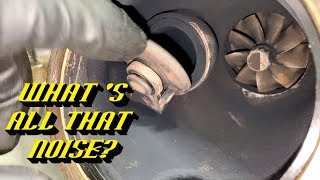
The Bronco 2.7L EcoBoost features twin turbochargers. You must check both units for shaft play, which is unwanted looseness in the spinning internal parts. Reach into the open intake side of each turbo and gently wiggle the center nut on the compressor wheel.
- Side-to-Side (Radial) Play: A tiny amount of side-to-side wiggle is normal. These turbos use fluid bearings that rely on engine oil pressure to center the shaft while running.
- In-and-Out (Axial) Play: Push and pull the shaft straight in and out. There must be zero movement. If the shaft slides in and out, the internal thrust bearing is destroyed.
Frequently Asked Questions (FAQ)
Do used engines for the Bronco come with turbochargers?
Typically, no. A standard used long block assembly includes the block, heads, and internal components, but excludes the turbochargers, alternator, A/C compressor, and starter. You must transfer these parts from your old engine.
Can I use the 2.7L engine from a Ford F-150 in my Bronco?
No. The F-150 version of the 2.7L engine has different mounting points, a different oil pan, and other accessory differences that make it physically incompatible with the Bronco.
What happens if I don't program the computer after installing the engine?
The vehicle will not start. The engine's computer (PCM) is tied to the vehicle's anti-theft system (PATS). It requires a dealer-level tool to synchronize the replacement engine's components with the vehicle's security system.
What is the most important maintenance item for this engine?
Using the correct engine oil (SAE 5W-30 Synthetic Blend meeting Ford spec WSS-M2C961-A1) and changing it strictly every 5,000 miles is critical. The wrong oil or extended intervals can damage the 'wet' oil pump belt, leading to complete engine failure.
What is the "wet belt" everyone talks about?
The wet belt is the drive belt for the engine's oil pump. Unlike traditional external belts, this one runs inside the engine block and is constantly submerged in engine oil. If it degrades and snaps, the engine loses all oil pressure instantly.
How long will a 2.7L EcoBoost engine last?
With proper maintenance, including strict 5,000-mile synthetic oil changes, the 2.7L EcoBoost is widely expected to last 200,000 to 300,000 miles. However, neglecting oil changes can lead to premature failure of the wet oil pump belt or turbochargers, significantly shortening its lifespan.
Helpful Videos
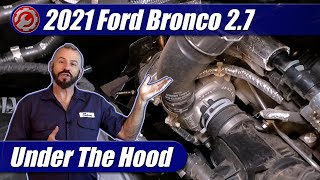
Technical Specifications
Engine Family: Second-generation "Nano"; Displacement: 2.7L; Configuration: 60-degree V6; Induction: Twin-turbocharged; Fuel System: Direct-injection; VIN Digit (8th): P; Engine Codes: MB3E, PB2E; Drivetrain (Bronco): 4x4 only; Oil Type: SAE 5W-30 Synthetic Blend; Oil Specification: WSS-M2C961-A1 or WSS-M2C946-B1; Oil Capacity: 6.0 quarts; Oil Filter: Motorcraft FL-2062-A; Coolant Type: Motorcraft Yellow Prediluted Antifreeze/Coolant; Coolant Specification: WSS-M97B57-A2; Coolant Capacity: ~12.4 quarts; Spark Plugs: Motorcraft SP-594; Spark Plug Gap: 0.028-0.032 inches; Weight (approx): 500 lbs; Dimensions (approx): 30" x 30" x 30"
We Have This Part in Stock


The information in this article is provided for general reference and educational purposes only. Vehicle specifications, procedures, and part compatibility can vary by production date, trim level, and region. Always consult your vehicle's factory service manual and verify part numbers before purchasing or performing repairs. Safety-critical components such as airbags, seat belts, and braking systems should be installed by a qualified professional.
- Ford Bronco:
- 🎬 Helpful Videos
- 🛍️ Shop This Part
- Engine Identification: Confirming the 2.7L EcoBoost
- Fitment & Interchange: What Will and Won't Work
- Common Failure Points and Symptoms
- Catastrophic Valve Failure
- Cold Start Rattle (VCT Issues)
- Oil Leaks
- Oil Pump Failure
- Diagnostic Flowchart
- Known Issues: Recalls and Technical Service Bulletins (TSBs)
- What Fails at Every Mileage Band
- Under 60,000 Miles
- 60,000 - 100,000 Miles
- 100,000 - 150,000 Miles
- 150,000+ Miles
- Real Owner Experiences
- Repair or Replace?
- Installation: Key Considerations
- Labor & Complexity
- Mandatory Programming
- Installation "Gotchas" & Pro Tips
- Freight, Delivery, and Pre-Purchase Verification
- Replacement Engine Cost Comparison
- Arrival Inspection: Testing Your Used 2.7L EcoBoost
- Compression and Leak-Down Expectations
- Turbocharger Shaft-Play Check
- Frequently Asked Questions (FAQ)
- 🎟️ Get 5% Off