

2015-2017 Chrysler 200 3.6L Pentastar V6: Problems, Identification, and Used Replacement
Identify the ERB Pentastar V6, learn what causes the infamous tick and oil leaks, and know exactly what to look for when swapping in a used OEM engine.
- Verify the engine is the correct transverse 'ERB' variant for the FWD/AWD Chrysler 200 (VIN 8th digit 'G'), as RWD versions from vehicles like the Dodge Charger or Jeep Wrangler will not fit.
- Before installing any used engine, upgrade the failure-prone plastic oil filter adapter housing to a more durable all-metal aftermarket unit to prevent common, major oil leaks.
- Inspect all 24 rocker arms and camshaft lobes for wear, especially on engines over 60k miles, and strongly consider replacing them with updated parts to prevent the 'Pentastar Tick' and subsequent engine damage.
- Ensure the installer performs a mandatory crankshaft position (CKP) sensor relearn and uses the vehicle's original PCM, as a donor computer is tied to the original vehicle's VIN and immobilizer and will not work.
Engine Identification: Confirming the Correct 3.6L V6

The engine used in the 2015-2017 Chrysler 200 is the 3.6L Pentastar V6. To ensure you have the correct engine, confirm the specifications below, especially the VIN digit. The VIN is located on a tag at the base of the driver's side windshield and on the driver's side door jamb.
| Chrysler 200 3.6L V6 Identification | |
|---|---|
| VIN 8th Digit | G |
| Sales Code | ERB |
| Configuration | 60-degree V6 |
| Valvetrain | Dual Overhead Cams (DOHC), 24 valves |
| Induction | Naturally Aspirated (Not Turbocharged) |
| Fuel System | Port Fuel Injection (Not Direct Injection) |
| Drivetrain | Front-Wheel Drive (FWD) or All-Wheel Drive (AWD) |
Warning: Not all 3.6L Pentastar engines are the same. The version in the Chrysler 200 is for a transverse (sideways) mounted FWD/AWD platform. Engines from rear-wheel-drive (RWD) vehicles like the Dodge Charger, Chrysler 300, Ram 1500, or Jeep Wrangler will NOT fit. They have different engine block castings, motor mount locations, oil pans, accessory drive layouts, and wiring harnesses.
Common Failure Symptoms

If your Chrysler 200's engine is failing, you might notice several distinct symptoms:
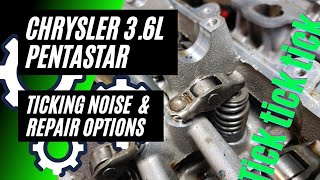
- Persistent Ticking Noise: A rhythmic ticking or tapping sound from the top of the engine, often called the "Pentastar Tick," 🎬 Watch: Diagnose and repair the Pentastar ticking noise is a classic sign of rocker arm failure. This noise may get louder as the engine warms up.
- Visible Oil Leaks: Puddles of oil under the car or oil residue in the engine valley (the 'V' between the cylinder heads) are common. This is frequently caused by a cracked plastic oil filter adapter housing or failed gaskets.
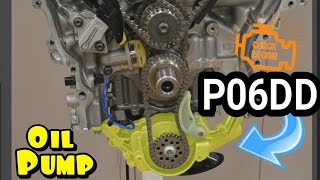
- Low Oil Pressure Warning: An illuminated oil pressure light on the dashboard can indicate a serious problem, such as a failing dual-stage oil pump (often setting a P06DD code) or a major leak from the oil filter housing.
- Engine Stalling or Rough Idle: The engine may stall unexpectedly, run poorly, or idle roughly. This can be caused by various issues, including faulty Powertrain Control Module (PCM) software or internal engine problems.
- Check Engine Light: A flashing check engine light often signals an engine misfire, which could be related to failing rocker arms or other internal issues. Common trouble codes include P0300-series for misfires, P0335 for crankshaft position, P0480 for cooling fan control, and P06DD for the oil pump.
- Engine Vibration: Excessive vibration felt in the cabin can sometimes be traced back to a failed harmonic balancer, where the rubber separating its metal parts has degraded, or worn fluid-filled engine mounts.
Diagnostic Flowchart
Known Issues, Recalls, and Service Bulletins

Before installing a used engine, be aware of these common issues. Addressing them during the swap can prevent future failures.
Rocker Arm and Lifter Failure ("The Pentastar Tick")
Severity: Severe
Affected Years: All Pentastar V6 engines
Documents: TSB S1309000016
The needle bearings in the rocker arms can fail prematurely, grinding away at the camshaft lobes and causing a distinct ticking noise and engine misfires. If left untreated, this can lead to catastrophic engine damage.
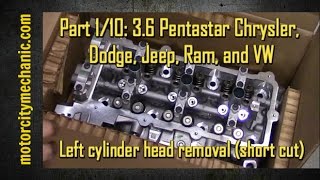
Pro Tip: Before installation, remove the valve covers and inspect all 24 rocker arms and camshaft lobes. It is highly recommended to replace all rocker arms and lifters with updated parts as a preventative measure.
Oil Filter Adapter / Cooler Leaks
Severity: Moderate to Severe
Affected Years: All Pentastar V6 engines
Documents: TSB S1809000007
The original oil filter adapter (OFA) housing is made of plastic and sits in the hot engine valley. It is extremely prone to warping and cracking, causing significant oil and coolant leaks. Overtightening the plastic oil filter cap beyond the low torque spec of 25 Nm (18 ft-lbs) is a common buyer mistake that cracks the housing.
Pro Tip: Do not reuse the old plastic housing. Before installing the replacement engine, upgrade to a more durable all-metal aluminum aftermarket housing (e.g., Dorman). At a minimum, replace the gaskets with the revised O-ring kit (Mopar Part #68191356AA) and torque mounting bolts strictly to 12 Nm (106 in-lbs).
Dual-Stage Oil Pump Failure
Severity: Severe
Affected Years: All Pentastar V6 engines
Documents: TSB 9003694
Failure of the dual-stage oil pump can lead to a loss of oil pressure, triggering a P06DD trouble code and causing rapid, severe engine damage. If this code is present, the oil pump assembly must be inspected and replaced.
Cruise Control Disengagement Failure
Severity: Severe
Affected Years: 2015-2017
Documents: NHTSA Campaign 18V332000 / FCA Recall U59
A software issue in the Powertrain Control Module (PCM) could, in a rare electrical short scenario, prevent the cruise control from deactivating. This could result in unintended acceleration. The official remedy is a software flash performed by a dealer.
Powertrain Diagnostic and System Improvements
Severity: Moderate
Affected Years: All Pentastar V6 engines
Documents: TSB 18-009-17
This bulletin addresses rough idle and Malfunction Indicator Lamp (MIL) illumination. It requires a PCM flash update to resolve DTCs like P0335 and P0480, and disables the low-idle 550 RPM setting.
Valve Cover Oil Leak onto O2 Sensor
Severity: Moderate
Affected Years: All Pentastar V6 engines
Documents: TSB 9003220
Oil leaking from the valve cover can drip directly onto the oxygen (O2) sensor, damaging it and triggering trouble codes. Repairing the valve cover leak is necessary to prevent this.
Spread Terminals in PDC Connector
Severity: Severe
Affected Years: Some 2015 models manufactured between January and September 2014
Documents: NHTSA 15V-470 / FCA Recall R24
Spread terminals in the Power Distribution Center (PDC) connector can cause electrical issues. The remedy involves replacing the connector or the transmission wiring harness.
What Fails at Every Mileage Band
Pro Tip: The mileage bands below describe used replacement units of that mileage. The checklists provided are things to do WHILE INSTALLING the purchased engine, not maintenance for your current engine.
Under 60K Miles
Even low-mileage Pentastar engines are not immune to issues. The plastic oil filter adapter housing can become brittle from engine heat cycles and crack, causing significant oil or coolant leaks. Failures have been reported at mileages as low as 17,000 miles (28,000 km), often costing $700 to $1,000+ to fix at a shop. Additionally, while more common at higher mileage, the failure of needle bearings in the rocker arms can occur early, sometimes considered a manufacturing defect.
- ✓Do during install (required): Upgrade the plastic oil filter adapter (OFA) to a new OEM unit or an aftermarket aluminum one (e.g., Dorman). This is the single most critical 'while you're in there' upgrade to prevent a common and messy failure.
- ✓Do during install (recommended): Inspect all 24 rocker arms and camshaft lobes for any signs of premature wear or scoring, even on a low-mileage unit.
- ✓Cheap insurance while the engine is out: Use new intake manifold gaskets upon reassembly.
60K-100K Miles
This is the prime mileage window for the plastic oil filter adapter to fail, typically between 70,000 and 120,000 miles. The leak often pools in the engine valley and can be misdiagnosed as a rear main seal leak. The risk of rocker arm failure also increases in this band, often linked to oil breakdown from extended change intervals. Cooling system components like water pumps and thermostats also begin to show wear.
- ✓Do during install (required): Replace the plastic oil filter housing with an aluminum aftermarket unit. If the engine came from a donor vehicle, it has been subjected to the same heat cycles that cause failure.
- ✓Do during install (required): Inspect all 24 rocker arms and camshafts. Given the mileage, it is wise to replace all 24 rocker arms with the latest revised Mopar parts as a preventative measure.
- ✓Do during install (recommended): Replace the water pump, thermostat, and spark plugs. These items are common failure points and are much easier to access with the engine out.
100K-150K+ Miles
At this mileage, rocker arm and camshaft failure is the most prevalent serious issue. If not addressed, the 'Pentastar Tick' will progress from a noise to a seized roller bearing that grinds and destroys the camshaft lobe. If the original plastic oil filter adapter is still in place, failure is a matter of when, not if. The entire cooling system, including the radiator and hoses, also becomes a point of concern as plastic components become brittle.
- ✓Do during install (required): Replace all 24 rocker arms with updated parts and replace any worn camshafts. Do not install a high-mileage Pentastar without this service.
- ✓Do during install (required): Replace the entire oil filter adapter/cooler assembly with a new aluminum unit.
- ✓Do during install (required): Replace the water pump, thermostat, all cooling system hoses, and spark plugs.
- ✓Do during install (recommended): Inspect and likely replace engine mounts and valve cover gaskets.
- ✓Cheap insurance while the engine is out: Replace the timing chain and guides. While the chains are not a primary failure point, the guides can become brittle, and replacement is cheap insurance against catastrophic failure.
Real Owner Experiences
| Source | Mileage | What Happened | Cost |
|---|---|---|---|
| DodgeForum.com | ~17,000 miles (28,000 km) | A 2014 model experienced a major oil leak from a cracked oil filter adapter housing. | Not specified, but required part replacement. |
| BobIsTheOilGuy Forums | 50,000 miles | A 2014 Grand Caravan required a new oil filter housing due to leaking O-rings. | Owner replaced it themselves; noted it was a 3-hour job plus cleaning. |
| Cars.com Review | 80,000 miles | A 2015 Chrysler 200 began overheating, leading to a $1,000 repair attempt before being diagnosed as a cracked cylinder head. | $1,000 initial attempt, quoted $2,500-$3,000 for final repair. |
| CarKiller Forum | 80,000 miles | Owner of a 2015 200C 3.6L AWD reported 'nonstop issues' after hitting 80k miles, including a required replacement of the oil filter housing. | Not specified. |
| BobIsTheOilGuy Forum User | 63k, 84k, 109k, 115k, 118k | An owner of a Jeep with a 3.6L engine reported a cascade of failures: oil cooler at 63k, oil pump solenoid at 84k, rocker arms at 109k, a second oil cooler at 115k, and another set of rocker arms at 118k. | Multiple significant repairs. |
| RamForum.com User | 101,000 miles | Owner of a 2014 Durango with the 3.6L had to replace lifters and cams out of pocket. The radiator then began leaking at 125k, and the oil cooler failed at 150k. | Significant out-of-pocket expenses for multiple major repairs. |
| BobIsTheOilGuy Forum User | 117,000 miles | The original oil cooler housing on a 2014 Jeep Grand Cherokee failed, causing a massive oil leak. The owner replaced it with an OEM part and also did spark plugs and valve cover gaskets 'while in there'. | $300 for OEM part, plus other consumables; self-installed. |
| RamForum.com User | Nearly 150,000 miles | Owner sold a Pentastar-powered minivan that ran great with no major issues reported, just regular oil changes. | N/A |
| Reddit r/MechanicAdvice | Unknown | Owner performed a DIY repair on the rocker arms and lifters on a 2011 Grand Cherokee. | Quoted $2,200 - $3,100, paid $660 in parts. |
| jlwranglerforums.com | 115,000 miles | Dealer replacing passenger side camshaft and affected rocker arms on a 2018 Jeep Wrangler. | $2,600+ |
| bobistheoilguy.com forums | Unknown | A non-dealer shop replaced the oil filter/cooler housing on a 2014 Ram 1500. | $1,100 |
Replacement Cost Comparison
Engine replacement costs vary based on the type of engine and local labor rates. The labor for this job is significant, typically estimated between 15 and 24 hours.
| Part / Service | Estimated Cost (USD) |
|---|---|
| New OEM | $6,000+ (Part only; not commonly available for direct purchase) |
| Remanufactured | $4,500 - $6,500 (Part only) |
| Used OEM | $1,800 - $3,200 (Part only, depending on mileage) |
| Labor to Install | $1,800 - $3,600 |
Repair or Replace?

Deciding whether to repair your current engine or replace it with a used unit depends on the extent of the damage.
- Oil Filter Adapter (OFA) / Cooler Leaks: Typical repair cost is $505 to $1,100. This is a common and expected repair. It almost always makes sense to repair this issue. An upgraded all-aluminum housing makes for a permanent fix.
- Rocker Arm and Lifter Failure: Typical repair cost is $2,200 to $5,200. Repair makes sense if caught early before the camshaft lobes are damaged and metal debris has circulated through the engine, especially on a lower-mileage engine.
- Dual-Stage Oil Pump Failure: Typical repair cost is $1,000 to $1,800. If there is no other internal engine damage, replacing the pump is viable.
When Replacement is Smarter: Replacement becomes the smarter economic choice when multiple failure modes are present simultaneously (e.g., rocker arm failure has damaged camshafts and the oil pump is also failing), or when catastrophic internal damage like a spun bearing or thrown rod has occurred. On a high-mileage engine (over 150,000 miles), the cost of a major repair can approach or exceed the cost of a lower-mileage used engine ($1,800 - $3,200), making replacement a more reliable long-term investment.
Questions to Ask Your Installer
- Have you confirmed this is the correct 'ERB' variant for a FWD/AWD Chrysler 200, not a RWD version from a Jeep or Dodge?
- Will you be inspecting all 24 rocker arms and the camshaft lobes for wear before installation, regardless of the reported mileage?
- Do you recommend replacing the plastic oil filter adapter housing with an upgraded aluminum one while the engine is out? What is the additional cost for parts and labor?
- Will you be replacing critical one-time-use, torque-to-yield bolts, such as those for the harmonic balancer and flexplate?
- What is your process for the mandatory crankshaft position (CKP) sensor relearn and the PCM re-marriage to the vehicle's VIN and immobilizer?
- Will you be swapping the original engine wiring harness over to the replacement unit?
- What brand and type of oil (5.9 quarts of 5W-20 full synthetic) and coolant (Mopar OAT MS-12106) will you be using?
- Can you inspect the fluid-filled engine mounts and the AWD Power Transfer Unit (PTU) splines during the swap?
Freight & Delivery Reality

When ordering a used 3.6L Pentastar engine, it is important to understand how it will arrive. This assembly weighs approximately 358 lbs and measures roughly 37" x 37" x 37" before crating. Because of its size and weight, it ships as Less-Than-Truckload (LTL) freight on a pallet—it is NOT a parcel shipment. Delivery will require a loading dock, a forklift, or a truck equipped with a liftgate. Always inspect the engine thoroughly for any shipping damage before signing the delivery receipt. A reputable supplier will conduct a pre-purchase verification interview to confirm your 8th VIN digit is 'G', whether your vehicle is FWD or AWD, and the specific oil filter cap design to ensure exact fitment.
Before the First Start: Priming and Fluids
A used engine sits on a shelf for months. The oil drains away from the moving parts. If you start it dry, the metal parts will scrape together and cause instant damage. You must add the correct new fluids and prime the oil system before the engine actually runs.
Mandatory New Fluids
Never reuse old fluids in a replacement engine. You must install a new oil filter and fill the engine with the exact fluids required by Chrysler:
- Engine Oil: Use 5W-20 viscosity oil that meets the Chrysler MS-6395 standard. The 3.6L Pentastar takes 6 quarts of oil.
- Engine Coolant: Use Mopar OAT (Organic Additive Technology) coolant meeting the MS-90032 standard. This coolant is usually purple.
Oil Priming Procedure (Crank Without Start)
Priming pumps fresh oil through the entire engine block before the engine fires up. Follow these exact steps:
- Disable the fuel system: Open the fuse box under the hood and remove the fuel pump relay or fuel pump fuse. This stops fuel from reaching the engine so it cannot start.
- Crank the engine: Turn the key to the "Start" position and let the starter motor spin the engine for 10 to 15 seconds.
- Let the starter rest: Stop cranking and wait 30 seconds. This keeps the starter motor from overheating.
- Repeat until pressure builds: Crank the engine again for 10 to 15 seconds. Watch the dashboard. Stop when the low oil pressure warning light turns off, or the oil pressure gauge shows normal pressure.
- Start the engine: Put the fuel pump fuse or relay back into the fuse box. Start the engine normally and let it idle (run slowly without pressing the gas pedal).
- Check for leaks: Look under the vehicle and around the oil filter housing for any dripping oil or coolant.
Long Block vs. Complete Assembly
When buying a used 3.6L Pentastar engine, you will usually see two options: a long block or a complete assembly. Knowing the difference helps you understand what parts you must move over from your old engine.
Long Block
A long block includes the main engine block, cylinder heads, and all internal moving parts like the pistons and camshafts. It usually includes the timing chain and front timing cover. It does not include bolt-on accessories. If you buy a long block, you will need to reuse your original:
- Alternator and air conditioning (A/C) compressor
- Upper intake manifold (the large plastic air tube on top of the engine)
- Fuel injectors and fuel rails
- Engine wiring harness
Complete Assembly
A complete assembly includes the long block plus most or all of the bolt-on accessories, intake manifolds, and fuel system parts. This makes the engine swap faster, but it usually costs more.
Frequently Asked Questions (FAQ)
Will a 3.6L Pentastar from a Jeep or Dodge Charger fit my Chrysler 200?
No. The Chrysler 200 uses a transverse (front-wheel-drive based) layout. Engines from rear-wheel-drive vehicles like the Jeep Wrangler, Dodge Charger, or Ram 1500 have different block castings, motor mounts, oil pans, and wiring that make them incompatible.
What is the "Pentastar Tick"?
This is the common term for the ticking or tapping noise caused by failing rocker arm bearings. This failure can damage the camshafts, leading to expensive repairs if not addressed promptly.
Do I have to replace the oil filter housing when I swap the engine?
It is not required, but it is one of the most highly recommended preventative repairs you can do. The original plastic housing is a known failure point that can cause major oil leaks. Upgrading to an aftermarket aluminum housing while the engine is out of the car is much easier and cheaper than replacing it later.
Can I use the computer (PCM) that comes with the used engine?
No. You must use your vehicle's original Powertrain Control Module (PCM). The PCM is programmed with your car's specific VIN and security information (immobilizer). A donor PCM will not work. After installing the replacement engine, a crankshaft position (CKP) sensor relearn procedure must be performed with a dealer-level scan tool.
What parts are typically included with a used engine assembly?
A standard used assembly includes the engine block, cylinder heads, all internally lubricated parts, oil pan, valve covers, upper and lower intake manifolds, timing covers and chain, fuel injectors, fuel rail, throttle body, and harmonic balancer. Accessories like the A/C compressor, starter, alternator, and power steering pump are usually excluded.
What special tools are required to install this engine?
Installation requires a heavy-duty engine hoist and load leveler, an engine support bar, an angle gauge for torque-to-yield bolts, a specific timing tool kit (Mopar 10200, 10202, 10369A, or Miller tool 8514), and a professional OBD-II scan tool with J2534 pass-through capability (like the Chrysler wiTECH system) for programming.
Helpful Videos
Technical Specifications
OEM Part Numbers: 68191356AA (OFA O-ring kit)
Sales Code: ERB; VIN 8th Digit: G; Configuration: 60-degree V6; Valvetrain: Dual Overhead Cams (DOHC), 24 valves; Induction: Naturally Aspirated; Fuel System: Port Fuel Injection; Platform: Transverse FWD/AWD; Oil Type: 5W-20 Full Synthetic; Oil Capacity: 5.9 quarts; Coolant Type: Mopar OAT MS-12106; Weight: ~358 lbs
We Have This Part in Stock



The information in this article is provided for general reference and educational purposes only. Vehicle specifications, procedures, and part compatibility can vary by production date, trim level, and region. Always consult your vehicle's factory service manual and verify part numbers before purchasing or performing repairs. Safety-critical components such as airbags, seat belts, and braking systems should be installed by a qualified professional.
- Chrysler 200:
- 🎬 Helpful Videos
- 🛍️ Shop This Part
- Engine Identification: Confirming the Correct 3.6L V6
- Common Failure Symptoms
- Diagnostic Flowchart
- Known Issues, Recalls, and Service Bulletins
- Rocker Arm and Lifter Failure ("The Pentastar Tick")
- Oil Filter Adapter / Cooler Leaks
- Dual-Stage Oil Pump Failure
- Cruise Control Disengagement Failure
- Powertrain Diagnostic and System Improvements
- Valve Cover Oil Leak onto O2 Sensor
- Spread Terminals in PDC Connector
- What Fails at Every Mileage Band
- Under 60K Miles
- 60K-100K Miles
- 100K-150K+ Miles
- Real Owner Experiences
- Replacement Cost Comparison
- Repair or Replace?
- Questions to Ask Your Installer
- Freight & Delivery Reality
- Before the First Start: Priming and Fluids
- Mandatory New Fluids
- Oil Priming Procedure (Crank Without Start)
- Long Block vs. Complete Assembly
- Long Block
- Complete Assembly
- Frequently Asked Questions (FAQ)
- 🎟️ Get 5% Off